FRUIT AND FLOWERS

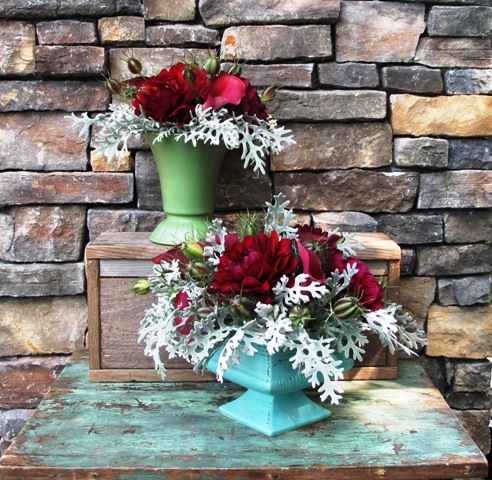
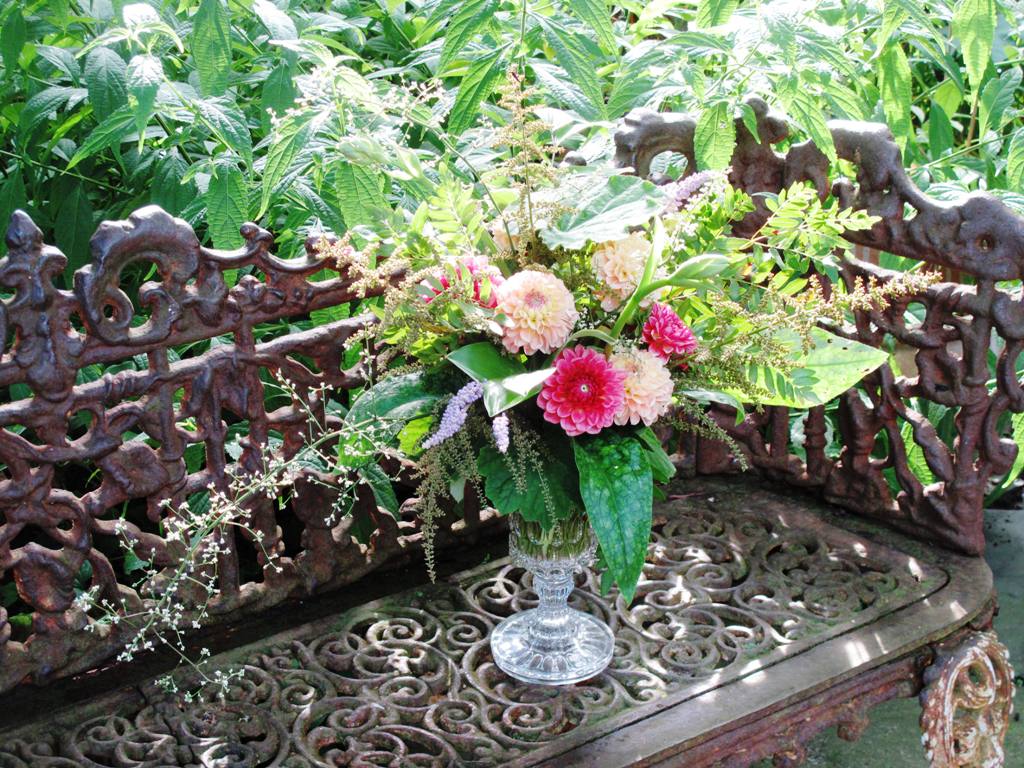
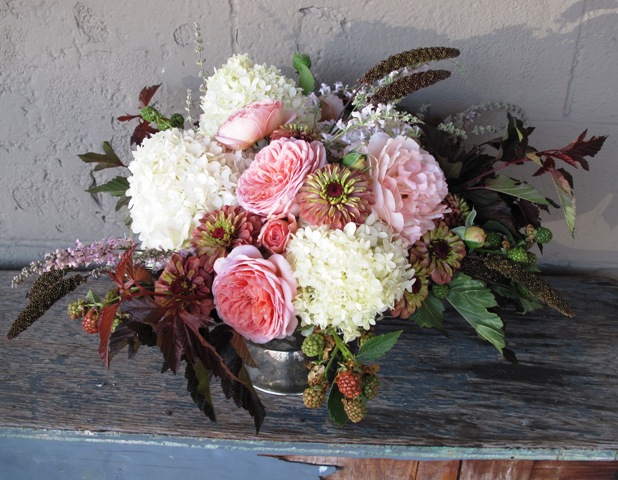
Bowls and urns are ideal for low tabletop arrangements. And this vintage silverplate bowl is perfect for summer’s best blooms.


Bowls and urns are ideal for low tabletop arrangements. And this vintage silverplate bowl is perfect for summer’s best blooms.
Podcast: Play in new window | Download
Subscribe: Apple Podcasts | Podcast Index | RSS | More

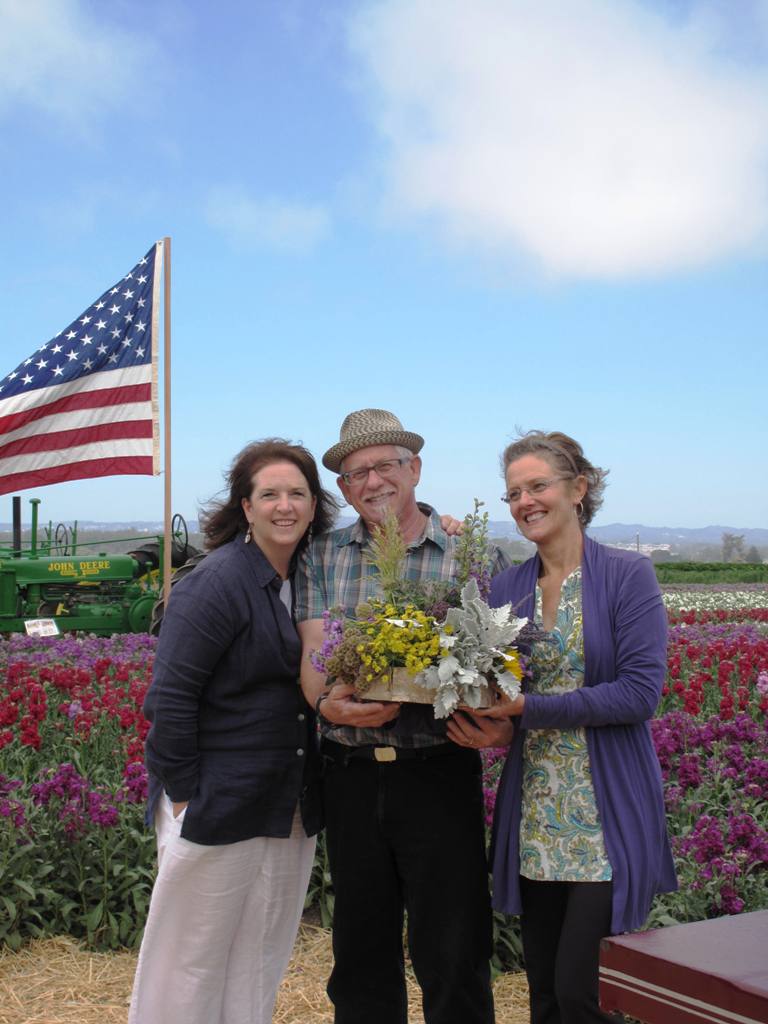
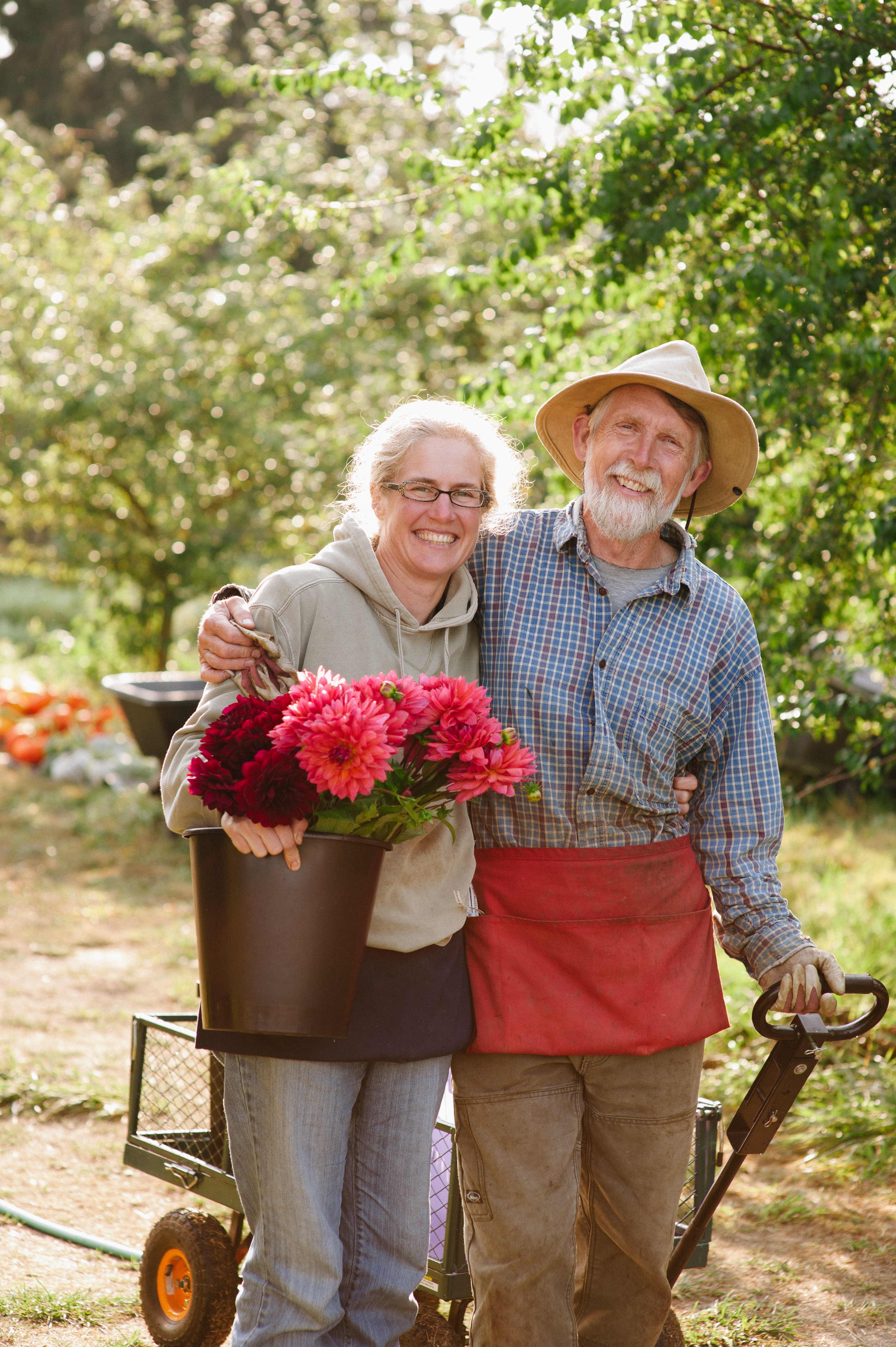
Diane Szukovathy and Dennis Westphall, photographed by Mary Grace Long (c) September 2012 at Jello Mold Farm in Mt. Vernon, Washington.
In this week’s podcast you’ll meet flower farmer Diane Szukovathy, the “cover girl” (along with floral designer Stacie Sutliff) of The 50 Mile Bouquet.
More than anyone I have met in the past five years, I credit Diane and Dennis Westphall, her husband and co-owner of Jello Mold Farm, with inspiring me and enhancing my understanding of what it means to be an American flower farmer.
I’ve interviewed and written about Diane and Dennis many times, but in today’s episode, I wanted to zero in on some of the exciting news taking place at the Seattle Wholesale Growers Market. This is an innovative, farmer-owned cooperative that Dennis, Diane and several other pioneering flower farmers launched two years ago. Their tagline is: Farmer to Florist.
Listen to my conversation with Diane as we discuss the new supermarket/mass merchandising program called “By the Bunch.”

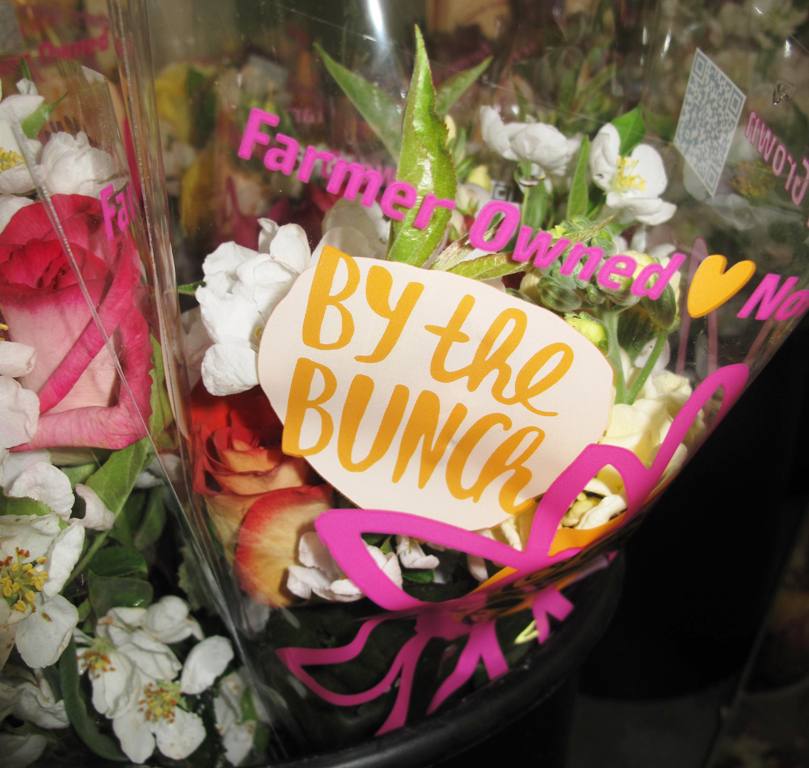
The flower-growers’ co-op provides great messaging and branding to educate customers at point of purchase.

Remember this cool logo: By the Bunch. It means these gorgeous bouquets are possible because their ingredients were grown by a bunch of awesome NW flower farmers
This is a cooperative-driven model that was designed to connect local flower farms with volume market opportunties like grocery store floral departments. Diane explains how this new program came to be and why it has so much potential to increase the income stream for people growing cut flowers.
Click here for more background on Diane and Dennis of Jello Mold Farm.
Click here for news about the 2011 launch of the Seattle Wholesale Growers Market.
Click here for an October 2012 report about the grant funding that was used to launch the new mass market program.
Click here for the post I wrote this past spring when the By the Bunch bouquet program launched.

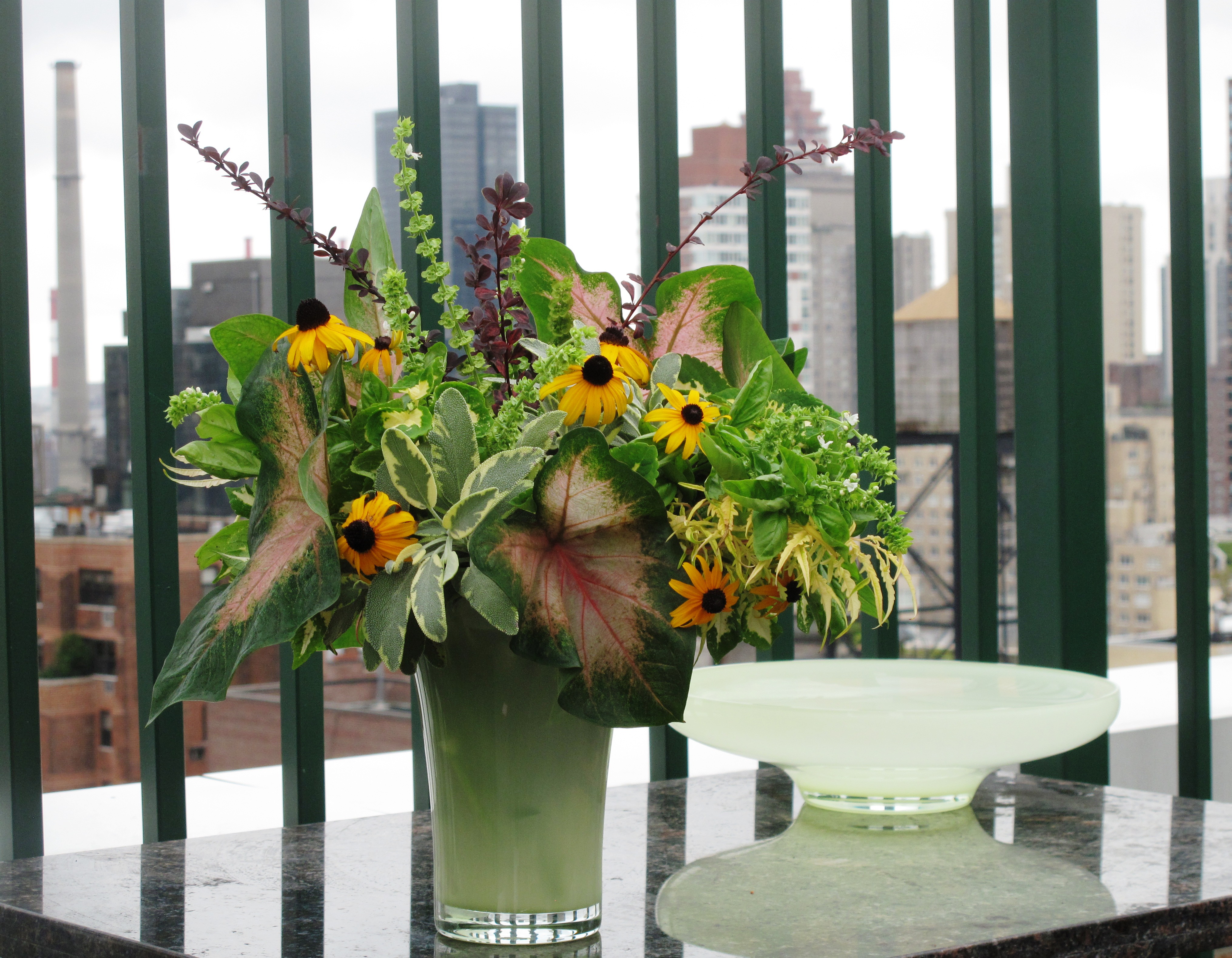
I made this bouquet at the invitation of Ellen Spector Platt, a fellow garden writer who shared her NYC rooftop bounty with me
Ingredients:

Long after I left Manhattan, Ellen redesigned the longest-lasting floral elements, using several bud vases to each display a single Caladium leaf (c) Ellen Spector Platt

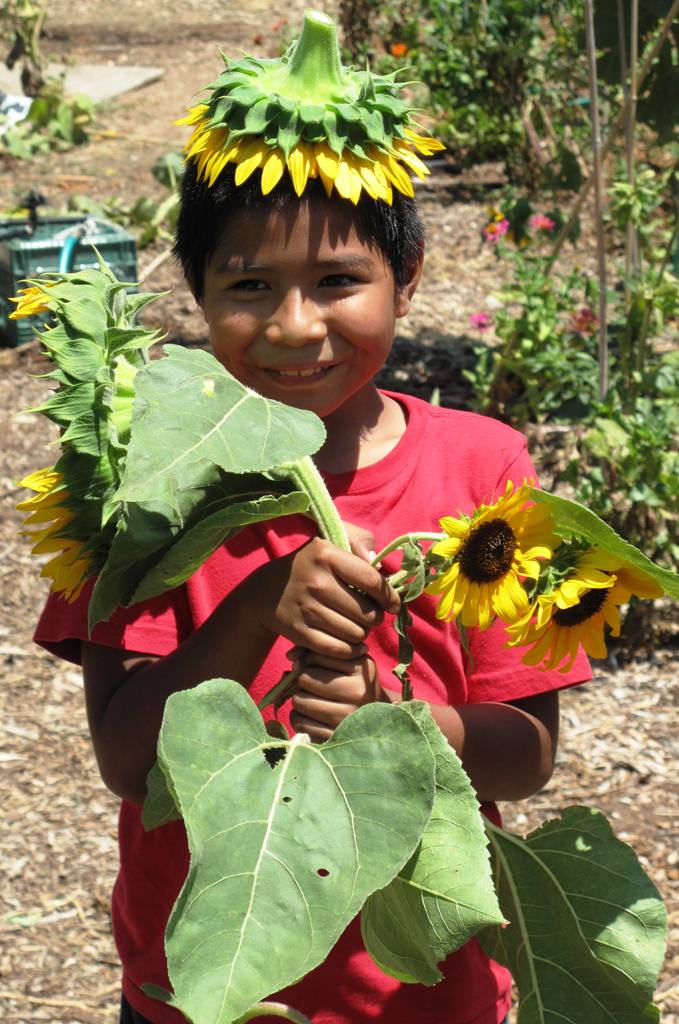
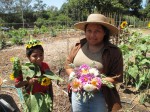
The little brother of a summer teen farmer donned a sunflower hat that Mud Baron gave him at Muir Ranch. Adorable~!
Here’s some more great news about the Urban Farming Movement.
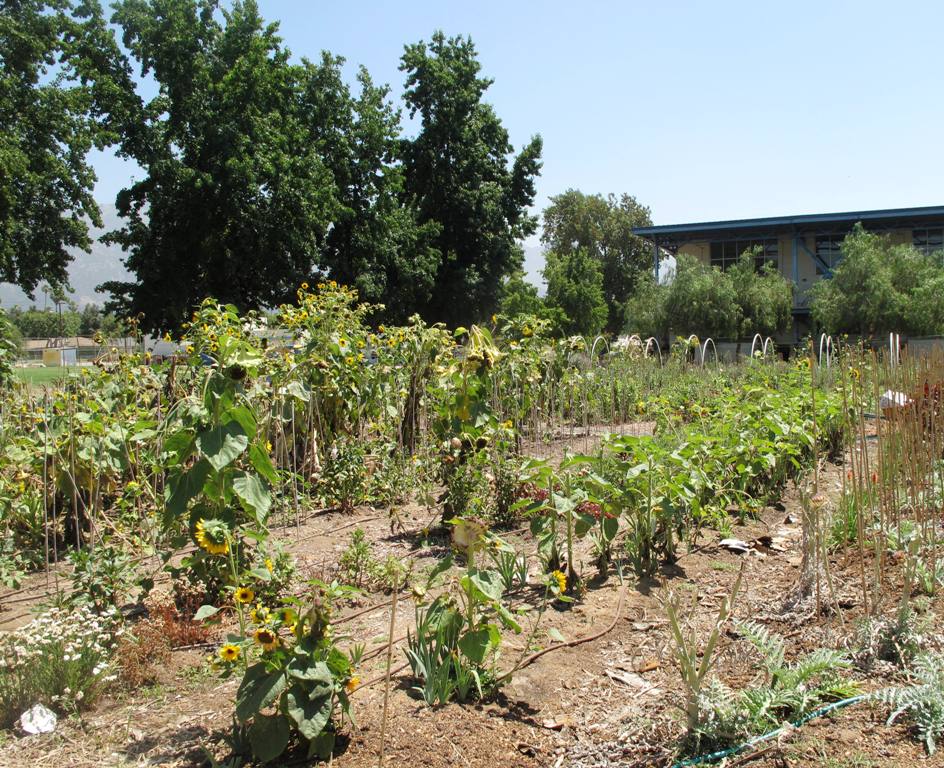
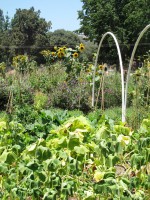
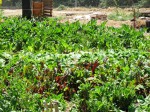
In 2011, a dedicated team of volunteer teachers and students began converting 1.5 acres of Pasadena, California’s John Muir High School campus into a school-based farm.
Today, Muir Ranch grows a variety of flowers, vegetables and fruits that are included in weekly CSA boxes as well as school cafeteria lunches. Students can complete community service or internship graduation requirements by enrolling in classes at the Ranch. Muir Ranch also provides paid internships to students, which are funded by private donations, special events, farmer’s market sales, and subscriptions to the produce box program (CSA). Every week, Muir Ranch CSA subscribers get a box or bag of about 7-10 different types of fruit and vegetables grown without the use of pesticides or chemical fertilizers. Customers pick their shares up at central distribution sites throughout Pasadena. Muir Ranch CSA partners with several local farms for seasonal fruit and vegetables to supplement what they can produce, providing tax-deductible weekly boxes to over 100 subscribers. It is the CSA program that generates much of the income that keeps this place operating.

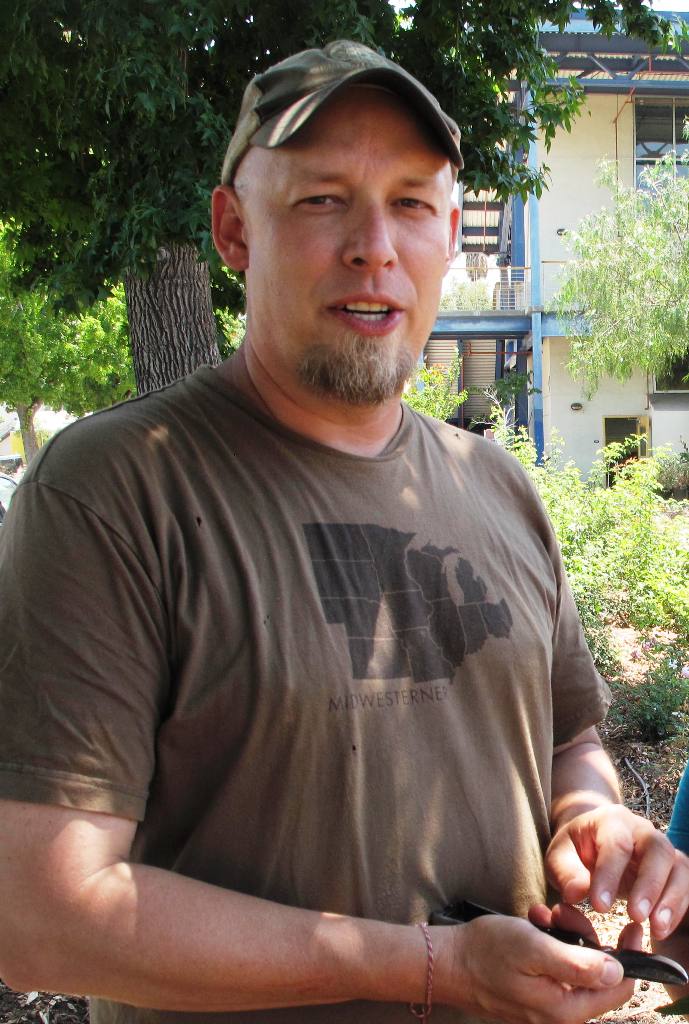
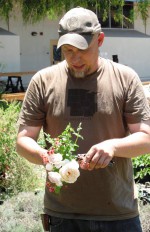
“Mud” Baron, Executive Director of Muir Ranch, is an urban farming activist and proud bouquet-maker.
One of the people at the hub of this fast-rolling wheel is Mud Baron, a passionate school garden advocate who serves as the Executive Director of Muir Ranch. That sounds like a high-falutin’ title, but in all reality, he is true to his nickname. Mud gets down and dirty – and REAL – with his kids, teenagers whose horizons are much brighter after they’ve learned to grow and sell food and flowers to local customers.
How did this former design-build contractor end up teaching gardening and farming skills to urban youth? I’m still trying to figure out the exact path of Mud’s career, but suffice it to say he’s in his element growing food and flowers. He totally lights up whether he’s shooting the breeze with one of the teen-CSA interns or sharing drinks with me and a board member (Mud ordered the Stone IPA, brewed with dandelion greens).
Board member Leelee Clement Doughty discovered Muir Ranch through the Pasadena Garden Club, which brought expert Rosarians to the farm to teach students about rose growing and rose care. She got hooked and started volunteering. “The best sales pitch is the Ranch itself,” she told me. A lifelong gardener and corporate finance escapee, Leelee digs the lessons she sees young people learning: Cooking and Catering, Marketing, Nutrition, Math and Business, Science and more. Right now, Muir Ranch is a “fiscally sponsored proeject of the Pasadena Education Foundation,” but if Leelee and Mud’s vision is realized, it will soon be a standalone nonprofit.
Many programs besides the CSA are supported under the umbrella of Muir Ranch, such as partnerships CSAs run by with other local schools and learning gardens. Muir Ranch also and hosts monthly “Plug Mobs” to help the community start their own gardens. In Mud’s mind, no Southern California-based teacher should go wanting for school garden supplies. “The Plug Mob program means that finding seeds and plants is no longer a factor for 2,000 schools,” he says. Muir Ranch operates like a plant nursery, helping source and distribute seeds, bulbs and flats of plant starts. Like modern day Johnny Appleseeds, Mud and his supporters share what they have and spread around the love.
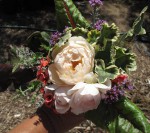
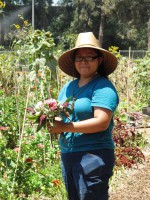
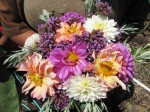
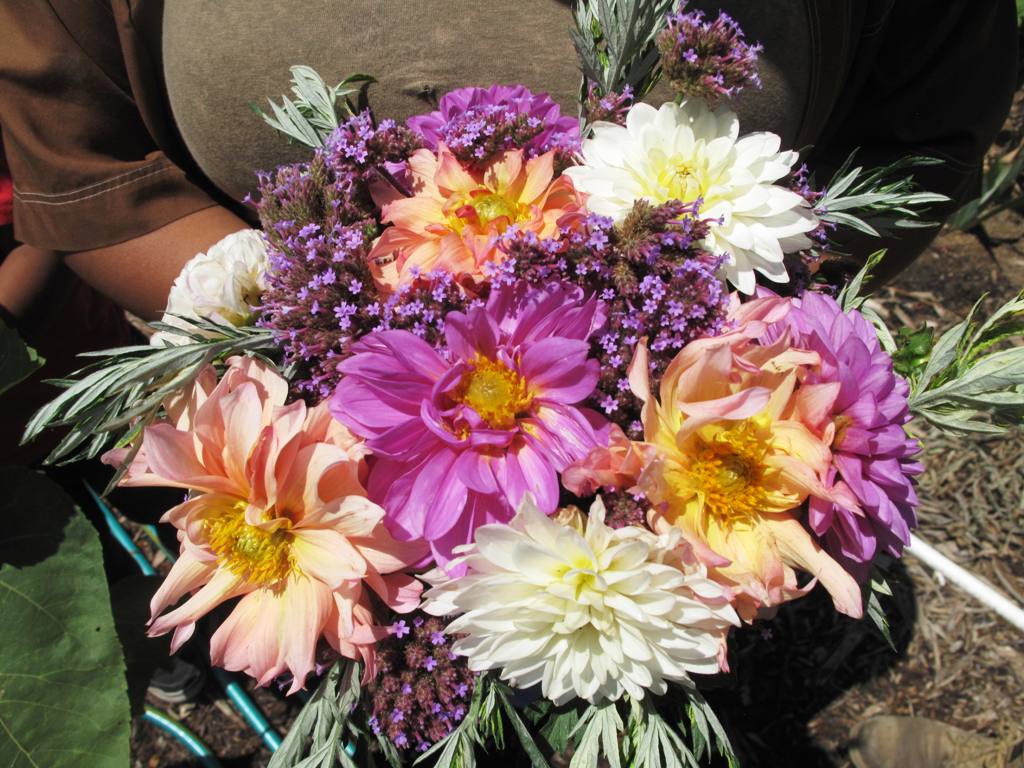
Muir Ranch hopes to add a culinary program that will connect students more closely to food systems. As young people “connect the dots,” they become involved in how food it is grown, distributed, and finally cooked into healthy meals. Besides being a center for education, Muir Ranch hosts a variety of ongoing and special events. The program is known for its floral arrangements, and I love that Mud has taught his interns and student workers how to harvest and assemble bouquets. When I visited last month, he gave two young women a challenge to create a bouquet for me. I loved the ease and confidence with which each gather flowers – mostly annuals and summer dahlias — into a custom-made bunch.
And the word is getting out about Muir Ranch’s flowers. One of Mud’s interns just earned $400 selling wedding flowers to a market customer. According to Mud, that experience has opened her eyes to possibilites for a bright future.
Volunteers are welcome (and needed) at this innovative program, especially to weed, prepare beds, turn compost, plant seeds and plugs, move worm “tractors,” maintain irrigation systems, water nursery plants and harvest crops. If you’d like to stop by and help, the regular Muir Ranch Workdays take place Monday-Friday from 8 to 11:00 a.m.
If you want to feast your eyes on more beauty from this place, follow Mud’s Instagram posts here: http://instagram.com/cocoxochitl
And follow his Twitter feed, here: @muirranch or @muirranchcsa
Podcast: Play in new window | Download
Subscribe: Apple Podcasts | Podcast Index | RSS | More

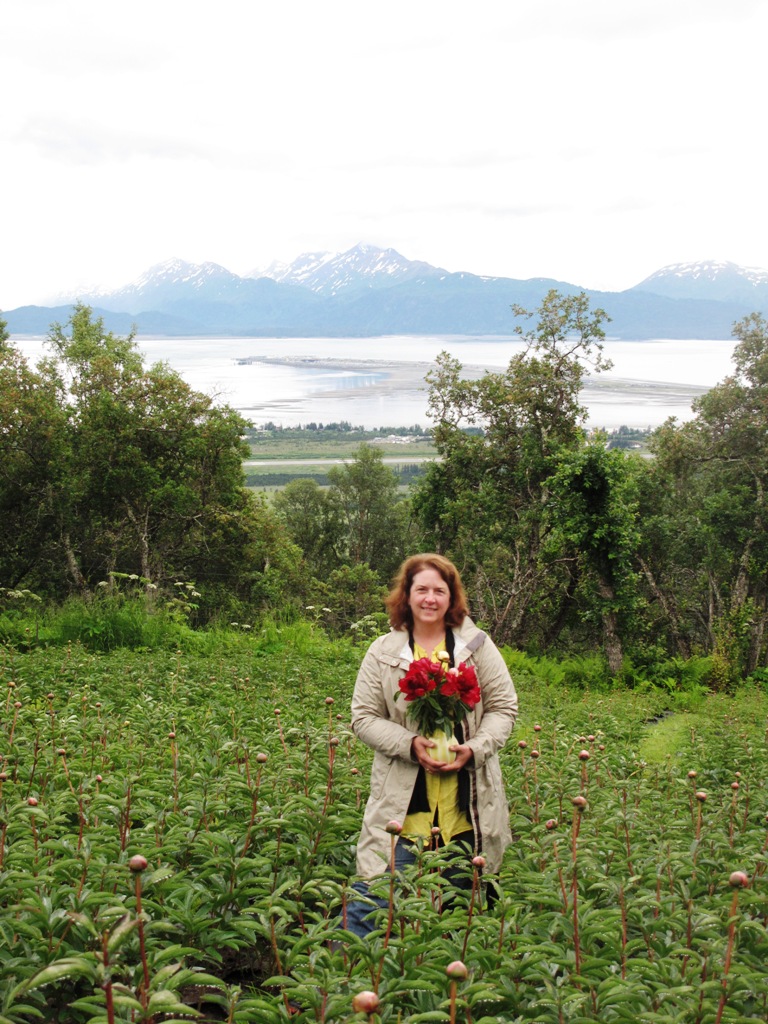
I’m standing in a Homer, Alaska, peony field at Scenic Place Peonies. It’s owned by Beth Van Sandt and Kurt Weichhand – check out the views!!!
Last summer I visited Alaska and toured about 12 cut peony farms from Fairbanks to Homer – in one week! It was a wonderful trip, made all the more special because of the many cool, welcoming flower farmers I met along the way. They hosted me for meals, spent quality time walking and talking with me along the rows of robust and beautiful plants, lent me a bed for the night, and generally adopted me into their Alaska Peony Tribe! If you want to learn more about the Peony Growers of Alaska and how to order cut flowers from some of them directly, visit the Alaska Peony Growers’ web site.
It was a thoroughly freeing time for me as a journalist because I was my own client. No editor gave me the assignment. No publication had their dibs on how the story would be reported. I used my Alaska Airlines’ frequent flier miles to book my flight into Anchorage and then rented a car with another set of airline miles.
I made reservations to tour Denali National Park on the first day – mainly because Dr. Pat Holloway, my trip advisor, insisted that I couldn’t just drive past the majestic national park while seeking peony farms! After that first day, I spent the following seven preoccupied with peonies, their cultivation, harvest, post-harvest care and ultimate journey to the hands of satisfied customers. It was pretty sweet – and I can’t wait to get back. I wrote a fun post about the week in Alaska here.
Other than selling a *tiny* story about Alaska peonies to Sunset magazine, I am happy to announce that my first big editorial placement appears in the current issue of Alaska Airlines magazine. How fitting! You can read the feature here [PDF].
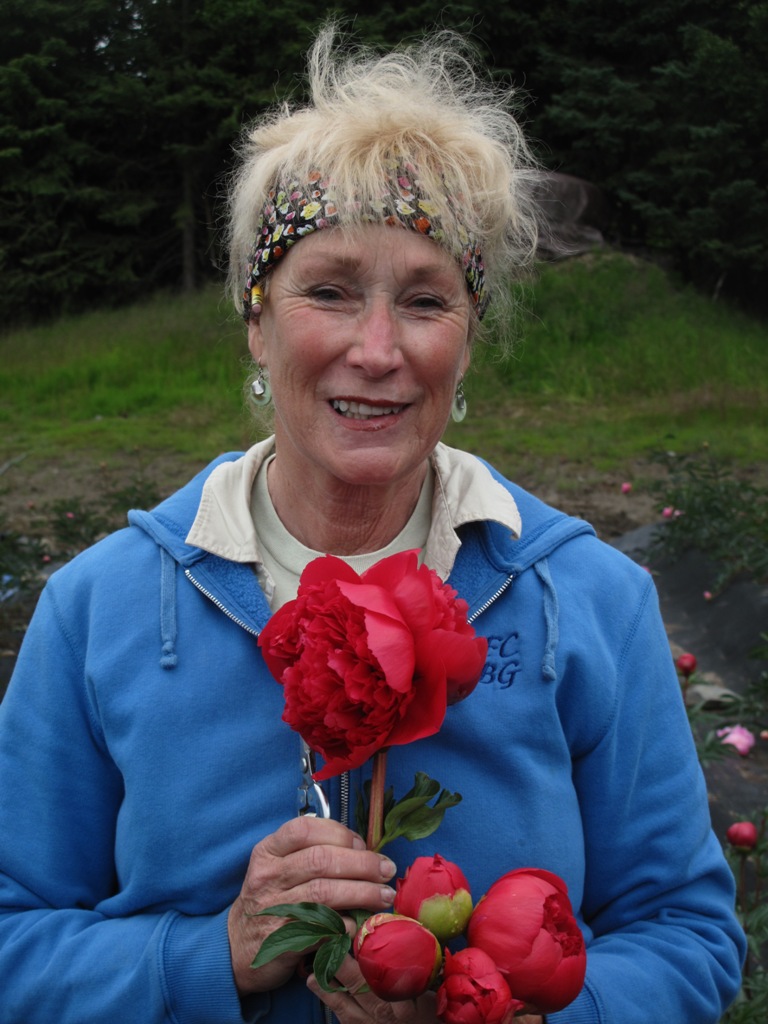
This week’s podcast features interviews with the owners of two farms I visited during my tour. First, you’ll hear my conversation with Rita Jo Shoultz of Alaska Perfect Peony in Fritz Creek on the Kenai Peninsula, one of the first growers to jump in feet first to plant peony roots. You will hear the sounds of nature around us, as we sat in her garden near the pond to talk. For some crazy reason, Nicco, her cat, was fascinated with the audio recorder’s microphone. You’ll hear a few bumps in the audio, thanks to the curious cat!
Here are some photos from Alaska Perfect Peonies:
READ MORE…

I came home from Alaska with these luscious peonies – and it seemed as if no other flower could compete for room in the vase.
Podcast: Play in new window | Download
Subscribe: Apple Podcasts | Podcast Index | RSS | More
Welcome to Episode 101 of the new SLOW FLOWERS Podcast. The audio featured here is from the July 19, 2013 panel discussion at the California Association of Flower Growers & Shippers (NORCAL) conference, moderated by Kasey Cronquist, CEO/Ambassador of the California Cut Flower Commission. Panelists included Kathy Brenzel, garden editor at Sunset Magazine; Christina Stembel, founder of Farmgirl Flowers, and me. The audience Q&A that followed our presentation was difficult to hear due to the limited number of microphones in the room, so here is the edited transcript of those questions and our panel’s answers.
Q&A following Field-to-Vase Panel discussion:
Kasey Cronquist : I hope you all have a sense of how special this group is in context of this industry. This is certainly a trend, or as Debra says, “a cultural shift,” that we’re excited about. It’s a special time because you’re not necessarily going to hear a program like this or have the chance to hear from speakers like this subject in our industry or at other floral trade conventions. I get to sit back and enjoy listening to people talk about locally-grown.
I think you have a sense here that there’s a renaissance in our midst in terms of bringing flower farmers back and of course this is a good thing for California. Where people say “California’s Flowers are America’s Flowers,” it’s because we want to back up that local claim for those florists when the season is over and they can’t source from those local farmers, California’s growing flowers all year long providing another source of American grown. I could spend each day energized by the things I’ve heard here. I want to open it up to questions:
Q: Regarding the “Farm-to-Consumer” idea or for that matter, “Farm-to-Florist.” How should our wholesalers in the room feel about this particular approach? Because I can certainly see where you’re going. We are flower growers who are strictly wholesale and we want to keep it that way. I have 185 customers and I don’t want 2,000 so how does that work for the wholesaler?
A (Debra): I totally agree that we’ve got to work on the wholesale level of this message. Maybe I’m naive, but I don’t think wholesalers should be afraid of this concept at all. They’re the ones who are on the front lines, talking to florists. And even if you don’t care about American grown, you should care about making money and branding your flowers as American grown or California grown in order to answer the question that the florists are going to be asking anyway. If they’re not asking it now, they’re very soon going to be asking it because consumers are asking them. I think from a farmer point of view if you can provide content, photography, messaging or signage that the wholesalers can use it’s going to do the work for them. I know there’s a fear that somehow the florists are going to cut around the wholesaler and come to you direct, but like you just said, you don’t want to deal with all those florists. So if you can partner with the wholesaler and make everybody succeed, I think it could be a win-win.
A (Christina): Pictures. Pictures of the farmers with content about where (the flowers) come from. People want to see a human face, so give them information about “this is the farmer who grew this.” It’s something that the wholesalers can then give to their customers. At Farmgirl Flowers, we use a wholesaler as well for some of our product and they don’t want to be photographed because they don’t want 2,000 people coming to them either. But it’s about educating the florist. And I really do see this movement shifting quickly and I think that the florists will be asking you soon, just based on the volume of questions we get. We’ve had to hire staff people just to answer the email and the phone calls that we get from florists. It’s not directly our bread and butter but we feel like it’s our mission to educate as well.
Kasey Cronquist: I want to add to that. We’ve felt that pressure on the requests for content. For wholesalers, as much as for the flowers, it’s a content marketing-supply opportunity for them. They have the relationships with the farms and they can package that relationship up and provide it to the florists who are wanting that content to share, either on Facebook or Pinterest so (the florist) has access to the farmer, not directly, but through the wholesaler’s relationship with the farmer.
READ MORE…
This charming arrangement is even more interesting when viewed from the top as the gooseneck stems appear to be flying in all directions!
Ingredients:
7 stems Dahlia ‘Coral Gypsy’, grown by Jello Mold Farm
15 stems white love-in-a-mist (Nigella damascena), grown by J. Foss Garden Flowers
5 stems chartreuse Hypericum perforatum (a florist’s variety selected for its colorful fruit), grown by Jello Mold Farm
7 stems goldenrod (Solidago sp.), grown by J. Foss Garden Flowers
11 stems white gooseneck loosestrife (Lysimachia clethroides), grown by Jello Mold Farm
20 stems burnet foliage (Sanguisorba obtusa), grown by Charles Little & Co.
Vase:
6-inch tall x 4-inch diameter glass vase
Eco-technique
Transporting bouquets: Save your arrangement and your car with a smart stabilizing trick I learned from flower farmers who make frequent bouquet deliveries. Use a box that is at least half the height of your vase; seal the
top and bottom so you have an empty “cube.” Using a utility knife, cut a large X on one side of the box. The cuts should be approximately the same size as the vase diameter. Push the bottom of the vase into the X-opening. The
triangular cardboard flaps created by the cuts should bend inward to hold the vase securely while you drive.
Podcast: Play in new window | Download
Subscribe: Apple Podcasts | Podcast Index | RSS | More
Welcome to the Show Notes for SLOW FLOWERS with Debra Prinzing, my new podcast about American flowers, the farmers who grow them and the designers who create beauty with them. Make a conscious choice and join the conversation – and the creative community. When we know where our flowers come from and who grew them, we place a much higher value on those blooms.
PART ONE of this podcast features Kierstin De West, CEO and founder of Ci (Conscientious innovation), a market research, information and consulting firm known for its early embrace of the sustainable marketplace. Read more about the mission of Ci and its origins here.
I first met Kierstin in 2010 in an accidental encounter that can only be called serendipitous. Yes, we were seated at adjacent tables in Anthony’s Restaurant at the Seattle-Tacoma International Airport. We struck up a conversation and the beginnings of a friendship in about one hour . . . before we both had to race to our respective flights. Later, I invited Kierstin to talk about her research into consumer attitudes regarding sustainability as the keynote speaker for the Garden Writers Association annual symposium in 2011.
As a subscriber to Ci’s newsletters and reports, I was fascinated to read the newest installment of the firm’s ongoing research called The Shift Report. Ci shared highlights of the omnibus study of 5,000 consumers in North America and what jumped out at me was the idea of LOCAL values surpassing other topics that you might consider ranking higher on consumers’ sustainability checklist….such as Organic or Global Warming.
Listen as Kierstin and I discuss this fascinating research and hear how her insights can influence your decisions as a consumer, floral designer, seller of flowers or grower of flowers. Here are some of the highlighted slides from her report:
” Sixty-five percent of
North Americans feel that
buying local and supporting
locally based business
is an important sustainability issue,
surpassing the importance
of both global warming
and buying organic .”
LEARN MORE. If you’d like to receive a free copy of the CONSUMERS AND LOCAL featured insights from Ci’s 2012 Shift Report, follow this link and fill out the request form.
PART TWO of this podcast features a conversation with veteran organic flower farmer Joan Thorndike, owner of Le Mera Gardens in Talent, Oregon, which is near Ashland. We talked about what LOCAL means to Joan’s floral customers while taking a walk from Joan and Dan’s home to the vibrant farmer’s market in downtown Ashland. I stayed with the Thorndike family last month while I was there to produce a story for Country Gardens magazine.
Turns out, the FARM-to-FORK dinner we were photographing for a future story featured a super-long dining table in the midst of a biodynamic winery. . . and guess what showed up on the tables?! Beautiful, seasonal flowers grown by Joan, of course! You can read more about that event here and keep an eye out for the full story with Laurie Black’s photography in a 2014 issue of the magazine.
Many of you were introduced to Joan in the “Grower’s Wisdom” section of The 50 Mile Bouquet. We introduced readers to Joan and three other seasoned flower farmers. In that short section, Joan’s articulate, insightful perspective resonated with me. She is a grower-ecologist. Joan operates on a world view that is highly inclusive and optimistic. My favorite quote from our original interview goes this way:
“When I sell my flowers, I believe I am appealing to my customer’s deeply visceral desire to observe the cadence of Nature.”
I hope you’ll enjoy our conversation as we touched on some important considerations facing American flower farmers.
© Debra Prinzing, all written and photographic content. Website design/development by Willo Bellwood/Metric Media