Debra Prinzing

Get the Email Newsletter!

Container Design Lecture

Tuesday, June 14th, 2011

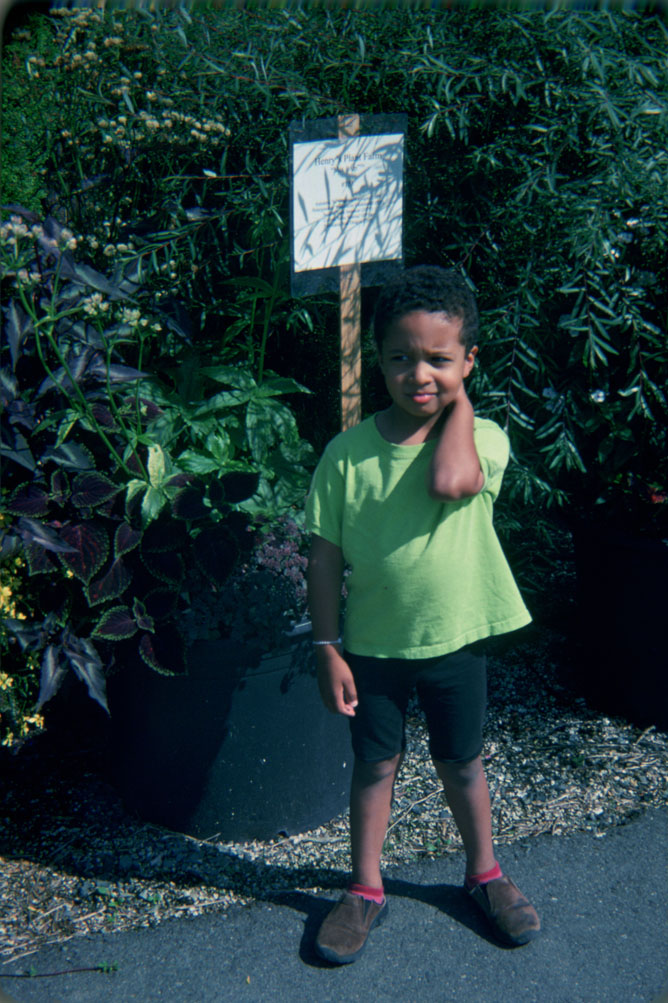
Do your containers make you happy? SCOTT EKLUND Photograph, 1997

Do you find container design a frustration?

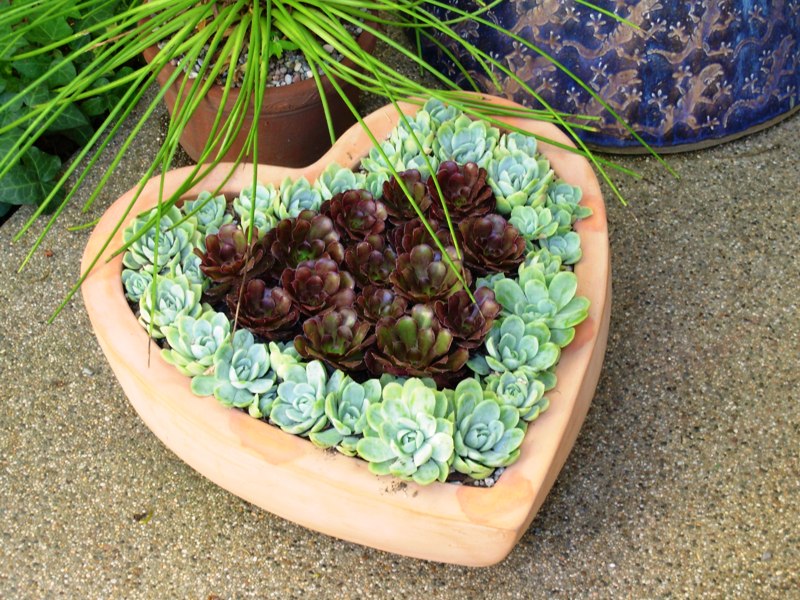
A terra cotta heart-shaped container, filled with succulents.

Recently, Andrew Buchanan, a photographer friend and former Seattle Post-Intelligencer colleague, told me that Slides.com is the best value for scanning 35mm slides into digital files. It costs about $1.00 per slide, which is a good bargain compared with $2.50 per slide that local labs charge. 

As an experiment, I sent 44 cardboard- and plastic-framed slides that have resided for years in a Kodak carousel tray to Slides.com to see what they could do.

Kay at Slides.com emailed the files to me today – just in time for tomorrow’s lecture.  As it turns out, the digitals seem crisper and brighter than the originals…and they can be manipulated, cropped and re-sized. Pretty handy! 

Happily, my talk’s opening slides look great. And they are very sweet. The little boy you see above as a baby and at left as a bored toddler who I dragged to a container plant trial is now 14 years old, about to begin High School in the fall. Time certainly flies – in the garden . . . and with children!

Concrete orb how-to

Sunday, June 12th, 2011

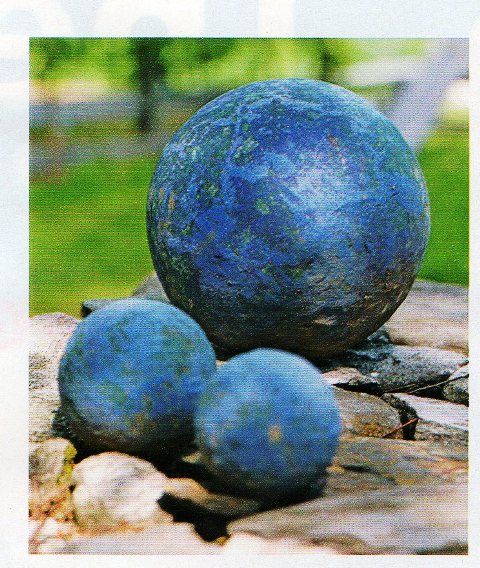
Here's the photo that inspired readers to ask: How do you make these cool orbs?

Last summer, I wrote a little piece about using orbs in the garden. Better Homes & Gardens illustrated the words with a photo depicting a trio of concrete spheres that looked like they were stained a denim blue color. Really pretty.

I posted two photo galleries of spherical ideas, emphasizing design principles for using circular and round elements in the landscape, but people still wanted to know how to make those concrete balls!

Fortunately, I found the instructions, posted by Fairegardens, a blog based in Tennessee. Francis of Fairegardens is heading to Seattle this summer to attend the Garden Bloggers Fling, an event that I’m organizing with three other writers, so it will be fun to meet in person!

Frances not only explains how to make these balls (which she first saw done on an HGTV program), she also goes into great detail on the steps, shares a supply list and many photos of the progress.

She calls these Hypertufa balls, but  explains that quikcrete mix can also be used. I hope this gets you motivated to make a big mess for satisfying results!

Contemporary trellises for your upwardly-mobile plants

Wednesday, June 1st, 2011

 Note: a version of this story appeared in the print edition of last Saturday’s LA Times HOME section and in today’s LA Times @ Home blog.

Jennifer Gilbert Asher and Karen Neill of TerraTrellis

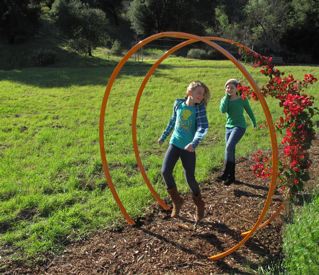
This is their beautiful "Gracie" arbor, inspired by the shape of nursery hoop houses

Instead of a spindly, mass-produced support for your rose or bougainvillea, why not give that over-achiever a sturdy structure on which to climb? And why not train those vines and tendrils on a framework that’s both artful and functional?

Los Angeles landscape designer and artist Jennifer Gilbert Asher has reinterpreted classic garden ornamentation into modern, colorful – and durable forms.  Her TerraTrellis collection of steel tuteurs, arbors and wall trellises offers a stylish alternative to the type of generic (and often impermanent) metal and wood pieces you might find online or at big-box stores.

The pod-like 'Toki,' which Jennifer says was inspired by a Faberge egg!

“Playful architectural forms and compelling colors in the garden are what’s behind this collection,” says Asher, who also creates more expensive works of modern outdoor sculpture through TerraSculpture, a studio co-owned by Karen Neill. Pieces in the TerraTrellis collection range from $279 to $579.

Like the studio’s larger sculpture pieces, TerraTrellis’s pieces are fabricated by Mario Lopez, who runs a metal studio in south Los Angeles. The steel pieces are hand-welded and use stainless-steel hardware and cables. They are oxide-finished or cloaked in a joyous array of powder-coated colors like kumquat, berry and leaf.

Familiar forms from public gardens and even the agricultural landscape inspire the designs.

Here's the lovely color palette ranging from oxidized steel to powder-coat finishes

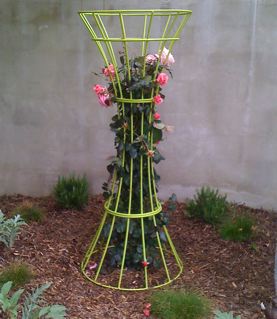
For example, the lines of TerraTrellis’s “Gracie Modern Arbor,” which looks like a 76-inch diameter double-circle emerging from a pathway, echo the shape of hoop houses that dot Southern California’s plant nurseries. The 58-inch high “Lazio Vase Trellis” is a scaled-down homage to the giant rebar artifices that contain riotous bougainvillea at the Getty Center’s Central Garden.

“These pieces are designed not only to support a plant, but to integrate with it,” Asher says. “This union ultimately forms a work of freestanding, living art in the landscape. We want people to tap into their inner landscape designer and have fun exploring interesting combinations of plant with trellis.”

Pot-ted (www.pottedstore.com) in L.A.’s Los Feliz neighborhood will carry the TerraTrellis collection. You can also order the pieces online at www.terratrellis.com

Here are some other designs in the collection – perfect for your stylish potager or rose border!

Lazio, trellis inspired by the majestic rebar structures that hold bougainvillea vines at The Getty Center

Ina, like a picture frame, for your wall or fence.

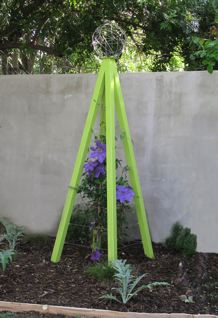
Akoris, a leaf green French-style tuteur, with a sculpted wire orb on top.

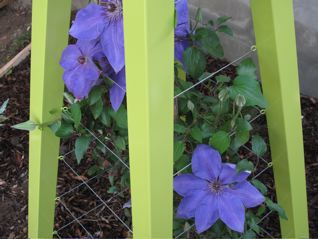
Detail, showing stainless steel cabling.

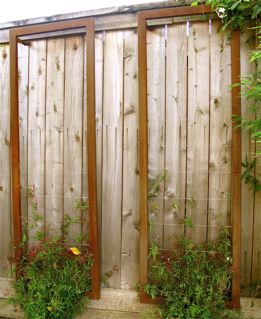
How about a pair of vertical trellises for your fence?

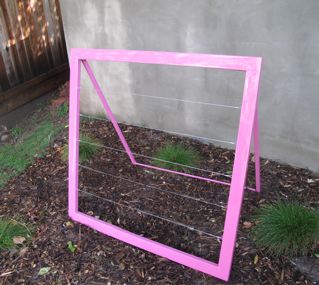
This one stands freely, like an artist's easel

Is pink this year's unexpected surprise color for the garden?

Jamie Durie’s very personal version of The Outdoor Room

Saturday, May 28th, 2011

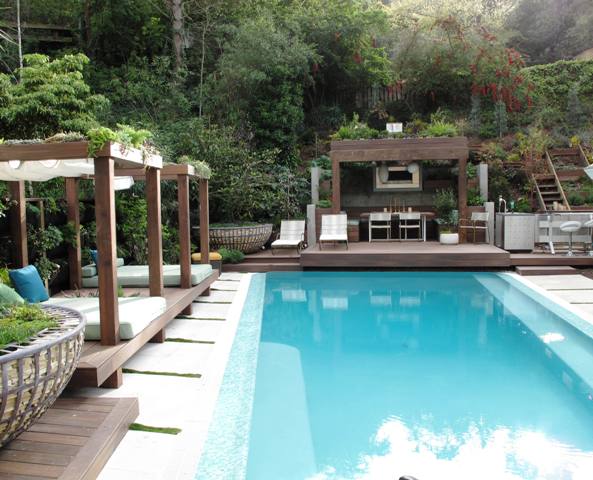
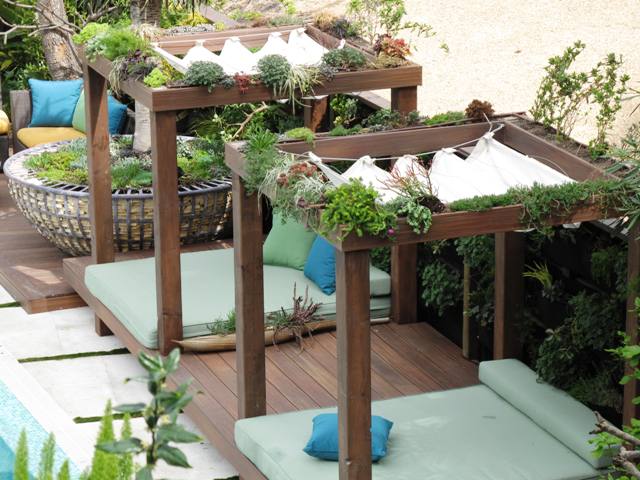
This view takes in the two cabanas on the left and the dining pavilion at the opposite end of the pool

I joined Jamie Durie, of HGTV’s “The Outdoor Room,” for brunch and an interview in LA

I’ve been after celebrity garden designer Jamie Durie for more than a year to let me come and do a story about his personal Los Angeles backyard. I sensed he was stalling because, like many of us who make gardens (or write about them) for a living, our own outdoor environment is the LAST thing to receive our attention!

Turns out, Jamie and his producers of “The Outdoor Room” on HGTV  were cooking up big plans for his hillside property in Los Angeles’s Laurel Canyon.

Jamie reimagined the long-neglected yard, dominated by a vintage 1950s swimming pool, into a gorgeous series of outdoor living spaces. The magical transformation occurred over a three week time, and became the debut episode of The Outdoor Room’s season three, which aired earlier this year (you can see a schedule of re-runs of this episode by following this link).

In late February, I received an out-of-the-blue phone call from Jamie, saying: “The garden is finished – you’re invited to come see it!” Wow – this guy is good to his word.

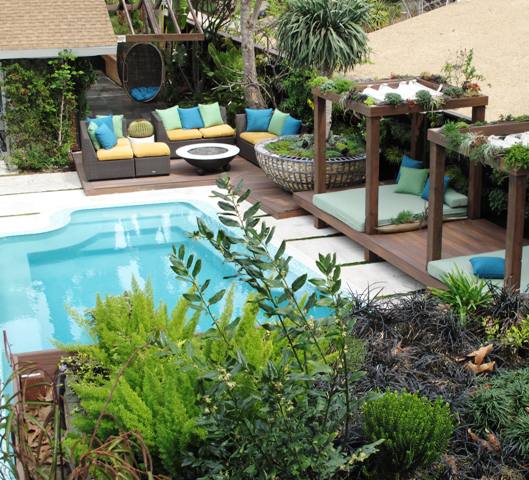
Here's a bird's-eye view of the transformed outside living space - photographed from Jamie's hillside deck

We had a narrow window of a couple week’s time in which I could get down to LA for a photo shoot and interview, since Jamie was about to fly back to Australia for several weeks to shoot another show there. Whew. That guy lives a marathon life and makes it all look effortless. But we made it work. Here is my profile of Jamie’s project, which appears in today’s print and online editions of The Los Angeles Times.

The Los Angeles Times sent one of its very best photographers, Irfan Khan, to document the beautiful landscape. You can check out his web gallery of gorgeous shots here. I also took lots of reference photos to use while writing the story, and thought I’d post some of my favorites below.

Jamie asked me to include the many great resources he used to pull together this extreme garden makeover. So in case you’re curious, here is that list:

Resources & Materials

Bath: “The Outdoor Room” craftsman Steve Zimpel created the bath using recycled cedar from Durie’s original design.

Decking: Fiberon composite decking

Doors: LaCantina bi-fold doors

Fire: Escea outdoor gas fireplace; Durie Design Fire Pit

Furniture: Walter Lamb for Brown and Jordan reproduction chairs and chaises from Design Within Reach; all-weather wicker sectional, Durie Design.

Kitchen: Fuego modular kitchen.

Plants: Monrovia

Vertical garden system: Woolly Pockets

Pool Makeover: Jamie worked with Aric Entwistle of Los Angeles-based H2o Development Inc. to replace a conventional chlorine system with Spectralight, which uses ultraviolet light to kill pathogens and waterborne bacteria. The renovated pool is solar heated with a system from Suntopia Solar. A new infinity edge was fabricated over the original coping using carbon fiberglass, resin, high-tensile adhesives and several coats of waterproofing. It’s finished with Bisazza glass mosaic tiles.  

Like a raft floating over the garden, the upper deck provides excellent glimpses of the garden below.

Here's a bird's-eye view of the transformed outside living space - photographed from Jamie's hillside deck

I love this view from above, which shows how the box-beams form planting channels, and how the Roman shades create a canopy roof for the cabanas.

Here's the exterior of two pivoting planted "walls." When opened, they connect Jamie's bedroom to the garden.

A gorgeous detail of the stacked stone contained by one of two 7-foot gabion tree planters that Jamie designed

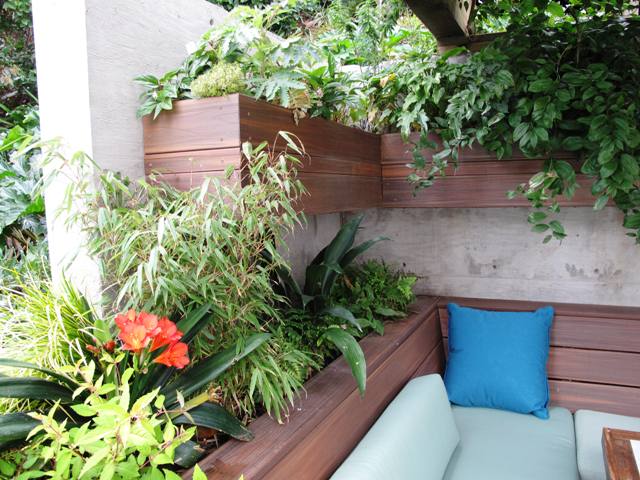
Here's a nice detail shot from inside the dining pavilion. You can see how the concrete retaining walls hold the hillside back and also form the interior walls where planters are hung and pillow-backs are rested.

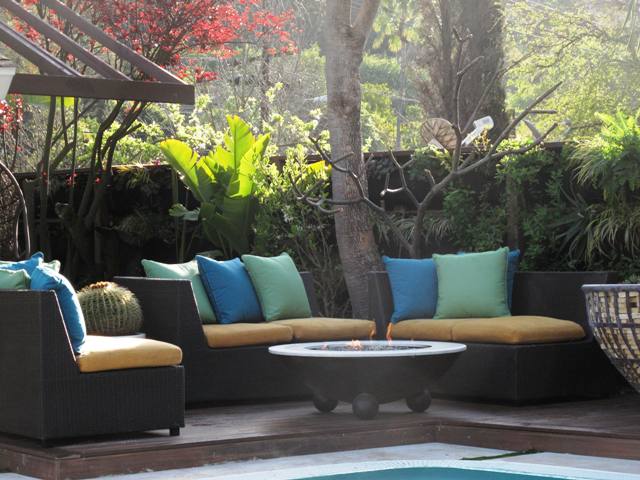
A dreamy morning shot of the outdoor living room, featuring Jamie's own all-weather sectionals and a custom fire pit.

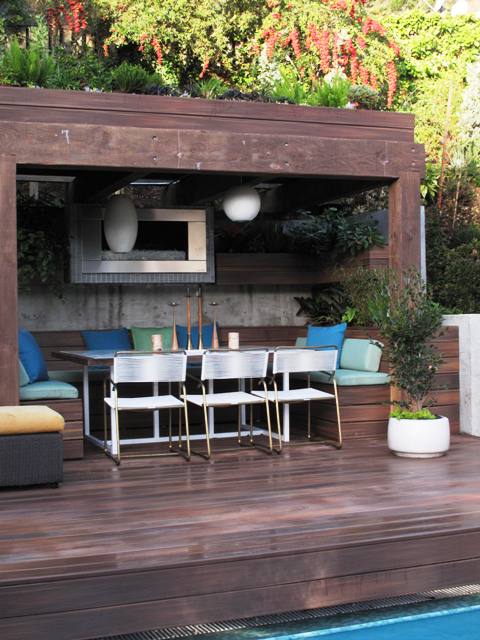
Inside the dining pavilion.

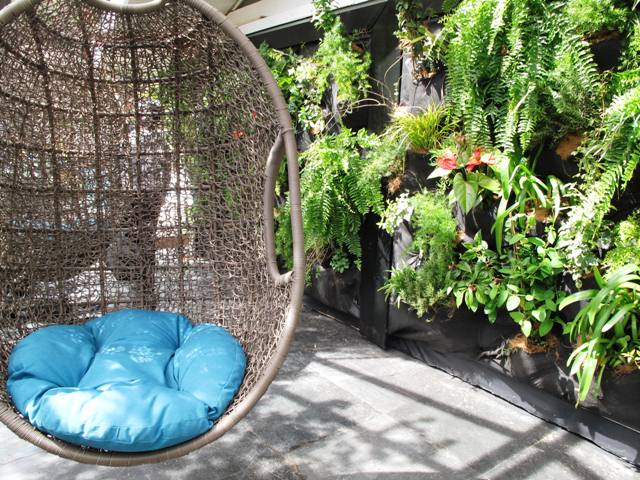
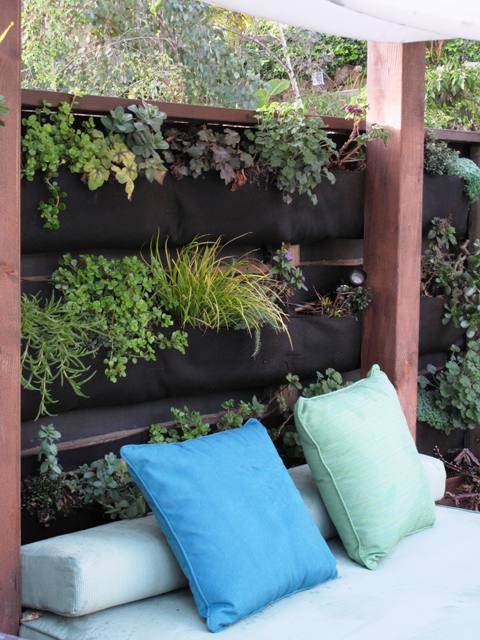
A detail showing how the Woolly Pockets vertical wall system adds foliage and flower texture behind the cabana.

The full-size view of the gabion tree planter - one of two in the garden.

At the end of my interview with Jamie, he talks about how much he enjoys living here. And it’s a perfect way to sum up the feelings I also had being in the highly personal garden environment: 

“Life just seems a whole lot more hectic in Sydney,” Durie says. “You can’t say that about Laurel Canyon. All I ever hear are birds. I’ve got squirrels running along the top of my green wall. An owl moved in once I finished the garden, and we’re starting to be visited by a ton of hummingbirds. I may not have kangaroos and koalas, but it’s kind of fun telling my mates back home that I’ve got coyotes in the canyon.”

Thank you for sharing your garden, Jamie. It was a treat! I hope you slow down long enough to really enjoy it~

Flowers, friends and fun in Colorado

Thursday, May 26th, 2011

Here I am with Arthur Williams, talented floral designer from Babylon Floral in Denver.

Where have I been lately? Last week, I hopped on an airplane and flew to Denver, which surprisingly is only 2-1/4 hours away from Seattle.

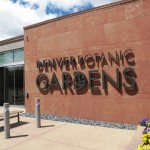
At the invitation of the Denver Botanic Gardens, my collaborator David Perry and I spent three lovely days giving talks and workshops about some of our favorite topics. We met some wonderful new friends and were inspired by the DBG’s beauty as a public space for all of Denver to enjoy.

Last Wednesday evening, I spoke about the “Personal Outdoor Dwelling,” aka “stylish sheds,” featuring many of Bill Wright’s gorgeous photos from our book Stylish Sheds and Elegant Hideaways.

Then on Thursday, David and I made a joint presentation on “A Year in Flowers: Seasonal, Local and Sustainable Ingredients.” We split the talk into two parts, an illustrated lecture and a flower design demonstration.
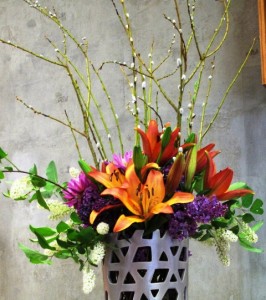
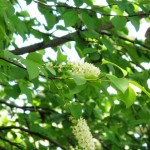
My arrangement from the demonstration, featuring Colorado-grown flowers and choke-cherry foliage from the Denver Botanic Gardens.

I was so fortunate that Denver floral artist and designer Arthur Williams, of Babylon Floral, helped procure locally-grown cut flowers for me to work with. Not only that, but he lent me some vases to use. We so enjoyed meeting Arthur and visiting his colorful shop (he’s pretty colorful, too – check out his arms!).

The following morning, Dave taught a hands-on photo workshop that wowed his students with new-found skills for their point-and-shoot digital cameras.
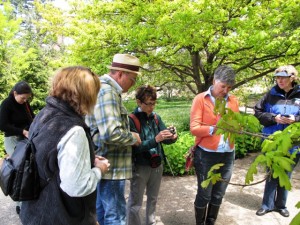
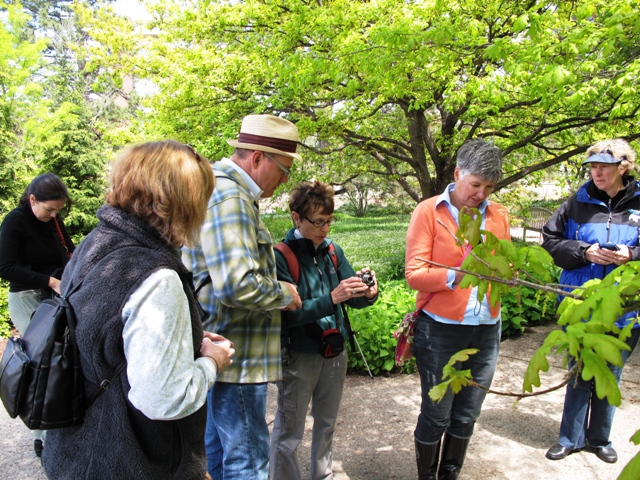
David's photography talk included practical, hands-on training at the botanic garden.

While Dave was with his students, I wandered along the Botanic Garden paths and through the various themed displays, taking in early Rocky Mountain spring day.

We found that the pace of spring’s unfolding in Denver is quite similar to Seattle’s this year. In other words, cooler than normal and later than normal. You’ll see what I mean in the photos I took.

On Friday, we spent a delightful afternoon with my friend and former editor Marlene Blessing. Marlene was my editor on The Abundant Garden and she also created the Pacific Northwest Garden Survival Guide and asked me to write it in 2004. She is an awesome writing coach and an encouraging advisor from whom I learned a lot about storytelling and book creation. I gained much confidence as a writer while working with this dear woman.

Marlene is presently the editor-in-chief of Interweave Press Books. After all the hue and cry about the publishing world falling apart, we took great comfort in the inspired, aggressive and confident approach to niche publishing embodied by this Loveland, Colorado-based imprint. With an emphasis on fiber arts and craft books, Interweave is led by a highly creative and innovative group, including Marlene. You can only imagine the compelling topics we covered during dinner later that evening. Marlene calls Interweave Press founder and creative director Linda Ligon her “Sensei,” but we kinda want to call Marlene our very own Sensei — what a breath of fresh air in a world of book-making!
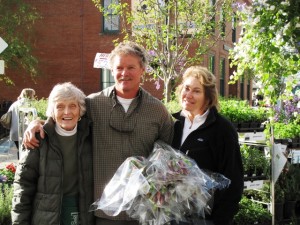
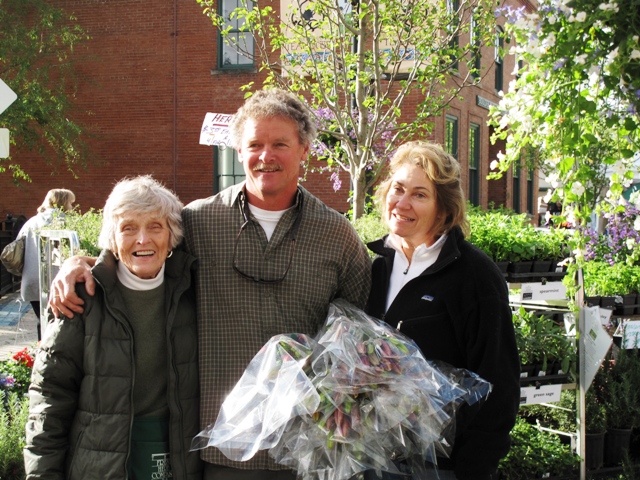
Chet Anderson (center), with his mom Belle (left) and wife Kristy (right) at their Boulder County Farmer's Market booth.

After eating a delicious meal at Sugarbeet, a hip Longmont restaurant, we retired rather late and incredibly satisfied with our productive day. Bright and early Saturday morning, I picked Dave up at his hotel and we drove about 30 minutes to Boulder. There, we met up with Chet and Kristy Anderson, owners of The Fresh Herb Co., at their Boulder County Farmer’s Market booth.

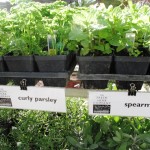
Chet and Kristy’s farm is actually in Longmont, and they sell most of what they grow through Whole Foods and other retail outlets, but they still bring herb plants, hanging baskets and cut flowers to this market every Saturday. It is the only market in this part of Colorado that requires its vendors to sell what they produce. No dealers or re-sellers here. You meet the growers, purveyors and farmers who have raised or produced their goods – from amazing mushrooms to colorful Easter egg-colored radishes, to beautiful bouquets and more.
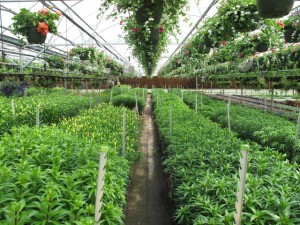
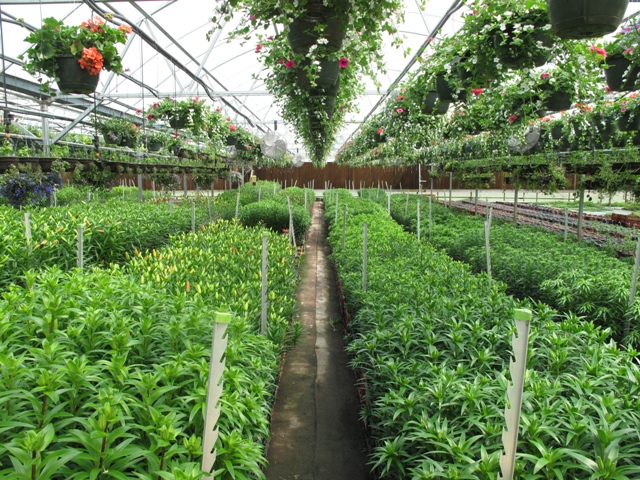
Rows and rows of luscious lilies fill 15,000-square-feet of covered growing area at The Fresh Herb Co.

It was fun to walk the market with Chet, who, I swear, could easily be called the “mayor” of the Boulder County Farmer’s Market. His popularity seems second only to his mother Belle’s popularity. She is there every week, helping at The Fresh Herb Co. booth, talking with new and returning customers, and greeting other vendors as longtime friends. It was fun to meet her!
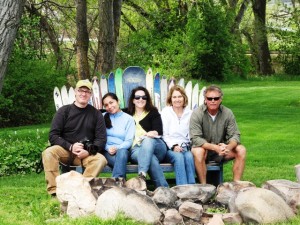
David, Leesly Leon from the Denver Botanic Garden, me, Kristy and Chet Anderson - a group portrait at The Fresh Herb Co.

We followed Chet back to the family’s homestead and farm so that David could do some photography before a tour group from Denver Botanic Garden arrived. Leesly Leon, the DBG’s adult program coordinator, lined up the field trip so that some of the students in our workshops could have a first-hand visit to a flower farm. Chet and Kristy are very successful at what they do, but they are also passionate and humble about their role in bringing flowers from their fields to the customer’s vase.

 “When you know and meet the grower, and when the flowers are fresh and locally grown, there’s no better flower bargain,” Chet told the group. We couldn’t agree more!

Here are some more photographs from our trip – I loved every moment, every visual impression, and the great people we met.

Got twigs? Branch out and decorate your garden

Monday, April 25th, 2011

As you’re tidying up the spring garden with pruning, trimming and other projects, inevitably you will end up with a pile of twigs. Yes, they can go into the chipper or the compost bin, but these pliable, young branches can also be pressed into service in the garden.

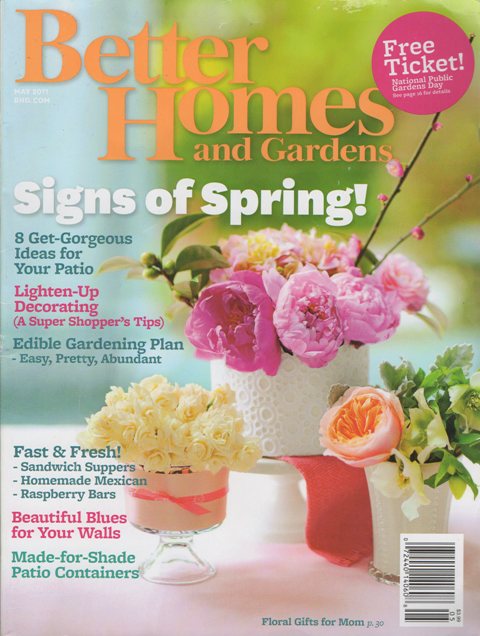
I wrote about “saving twigs” for my Debra’s Garden column in the upcoming May issue of Better Homes & Gardens (you can already find it on newsstands). All you need is a clean, sharp pair of secateurs (pruners) or loppers and a pair of gloves to protect your hands while working.

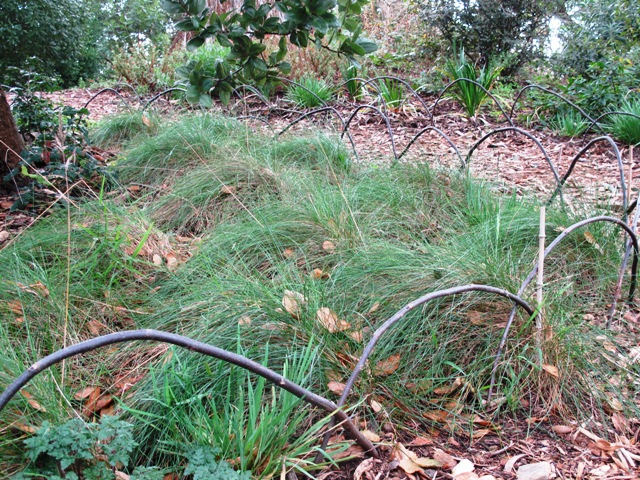
Spring pruning projects usually produce armloads of branches and twigs. Give those cuttings a new purpose and build simple, natural-looking plant supports. Use twigs to stake young seedlings — just poke sticks into the soil a few inches to anchor them. Lash three or more branches together at the top to form a tee-pee trellis for sweet peas or edible peas. I also curve thin branches into a half-circle shape — stick both ends into the soil and overlap several of them to create scalloped edging for veggie and herb beds.

Here are some photos to inspire your next pruning project:

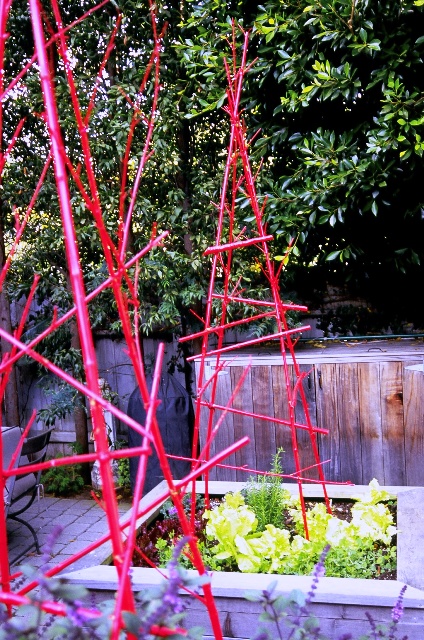
Designed by landscape architect Joseph Marek, these zesty veggie garden teepees are made by painting twigs Chinese red and lashing them together.

Twigs are bent into a half-circle, with each tip inserted into the ground; when these "scallops" overlap each other, they create a tidy edging along a path or planting bed.

P.S., someone asked about my reference to “lashing together” on my Facebook page. I do not know exactly how the teepee was lashed together, but having made similar structures in the past, I can say that I’ve used anything handy – twine, garden twistie ties, wire and even rubber bands. Use your ingenuity!

All about designing with gravel

Sunday, April 3rd, 2011

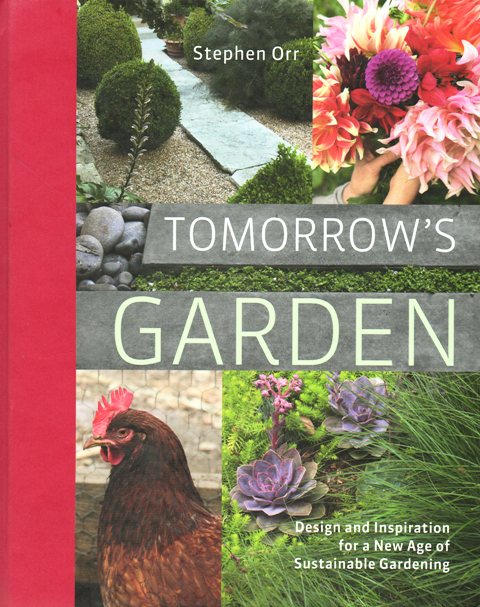
A few weeks ago I had a phone date with Stephen Orr, the guy who has held all the jobs I’d love to have: Garden Editor for House & Garden magazine; Garden Editor for Domino magazine . . . and now, garden editorial director for Martha Stewart Living magazine.

He is one of the friendliest and most genuine individuals I’ve ever had the pleasure to meet in the magazine world. It was a treat for me to interview Stephen about the publication of Tomorrow’s Garden, his first book. I’ve met Stephen in person a few times, both in Los Angeles at a Garden Conservancy symposium, and in San Francisco when I spoke at Flora Grubb Nursery after Stylish Sheds and Elegant Hideaways, my own book, was published. We garden writers really do live in a small world!

Thanks to Craig Nakano, my editor at the Los Angeles Times HOME section, for agreeing to feature my Q&A with Stephen.

You can click here for the full story. And click here for a web gallery of Stephen’s photography that accompanies his book. Here is an excerpt of my interview with Stephen:

“People don’t think much about where gravel comes from as a resource,” Orr said, yet gravel gardens are becoming increasingly popular. His book features gravel landscapes from Venice and Ojai to Austin, Texas, to Nantucket, Mass. We asked him to discuss gravel as a sustainable design material:

What appeals to you about the use of gravel?

It is such a great base for many styles, from traditional to modern. There are plenty of people in Los Angeles and San Francisco who have jumped on the bandwagon wanting to make low-water gardens, but I’m happy to see it catching on in other parts of the country. The California lifestyle is so amazing, with outdoor rooms, and they can be “floored” differently. One room could be floored with grass, another with stone pavers or gravel.

Designers praise gravel gardens as permeable and an alternative to lawns. How has your view of the material changed?

I was visiting nursery owner Flora Grubb in San Francisco, and she told me she often recommends gravel to customers. And then the question “Where does it come from?” came up. Our conversation opened my eyes to begin viewing gravel as a finite resource.

Where does it come from?

As with so many environmental choices, the decisions we make trying to do the right thing are complex and often somewhat overwhelming. In many cases, gravel does indeed come from local quarries. The Austin gardens in my book used local gravel. Those gardeners like how it matches the colors of the natural geology around them. But in other areas, its origin is a big question mark. Even after a lot of research, I found I still have a lot of questions about how responsibly gravel is mined. The EPA monitors gravel production, which is a huge industry mainly for construction and highway building. In comparison, gravel for gardening use is minor, but it’s still something to be conscious of.

What questions should homeowners be asking about the gravel they buy?

I suggest you approach it like having a local consciousness of food. Don’t buy bags of gravel if you don’t know where it comes from. It may be shipped longer distances than is environmentally responsible. Try instead to source the material close to home.

What type of gravel do you recommend?

There is a difference between “crushed stone,” which has sharper edges, and “pea gravel,” which is rounded. Some people prefer walking on the rounded pea gravel, but consider the environmental impact it takes to extract it from ancient stream-beds formed by alluvial processes over millennia. Pea gravel isn’t a manufactured product. It’s not even a renewable resource. Many forward-thinking designers are switching to more jagged, crushed limestone or granite instead.

Any tips on how gravel should be installed?

One major thing I learned is that the depth of gravel is important. If it’s laid too deep, it’s like trudging through deep snow. Most of the designers I interviewed recommend you first put down a layer of “road base,” bigger pieces of crushed stone — an inch or two in length. Lay it very flat with a compactor and then place just a few inches of crushed gravel or pea gravel on top. This approach makes a very stable surface.

What are some of the interesting ways people use gravel?

I love the modern look of some of the gardens in my book. But I also really love gravel gardens with a more traditional influence where plants are encouraged to self-sow. I’m a plant nut. I come at gardening because I love plants. So to me, the space that contains the plant — the garden — is a frame to show them off. I love seeing volunteers like verbena or a spire of silver verbascum in the gravel. Or, I like to see gravel as the flooring for a spare space containing just a water feature.

Do you see gravel as the anti-lawn?

I like to see gravel and lawn used in combination. Just as a lot of us live without wall-to-wall carpet and instead have rugs with wood floors, I encourage people to think of their lawn as an area rug. Think about using it with an element of crushed rock, such as a flat area under a tree or where you need better drainage.

Field trip: New York’s High Line Park

Thursday, March 24th, 2011

The High Line is NYC's newest public space.

I spent about 48 hours in New York City last week, staying at my favorite bed and breakfast at West 81st Street and Columbus Avenue on the Upper West side.

I mistakenly scheduled the visit to coincide with St. Patrick’s Day, one of the many days when people in Manhattan go crazy, whether they are Irish or not.

Yet, the weather was “pure spring” – certainly milder than we have had in Seattle lately – and my spirits were lifted just getting off the subway from JFK to the city.

My objective for stopping through NYC on my way to speak in Toronto was to meet some editors face-to-face and to spend time with some very dear friends. I had a half-day “free” and unscheduled, so last Thursday morning I hopped the downtown C Train across the street from Central Park and rode it to West 23rd Street. My destination: the nearly two-year-old public park called The High Line.
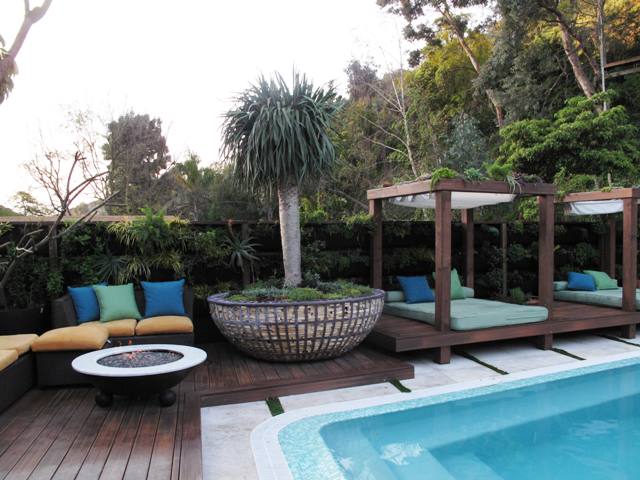
You’ve probably read about this amazing public-private endeavor – an elevated park that runs along 10 to 12 blocks on a former 1930s freight track high above Tenth Avenue between Chelsea and the Meat Packing District. I’ve read lots about it, too. But for a landscape design and horticulture observer like me, nothing compares to the first-person tour.

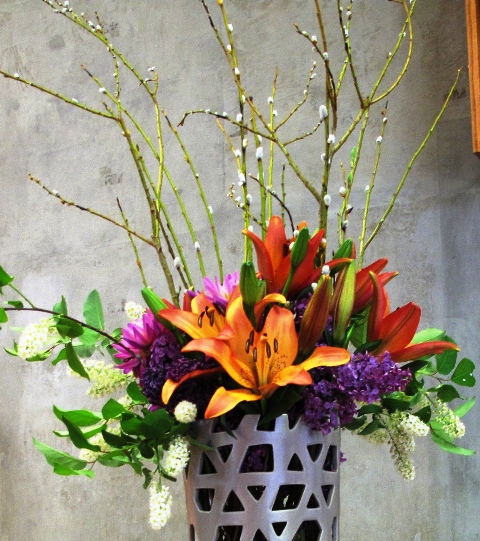
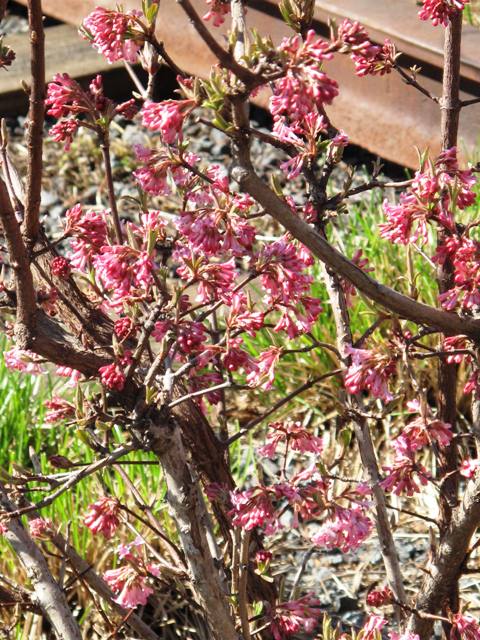
A true sign of spring: Viburnum x bodnantense 'Pink Dawn'

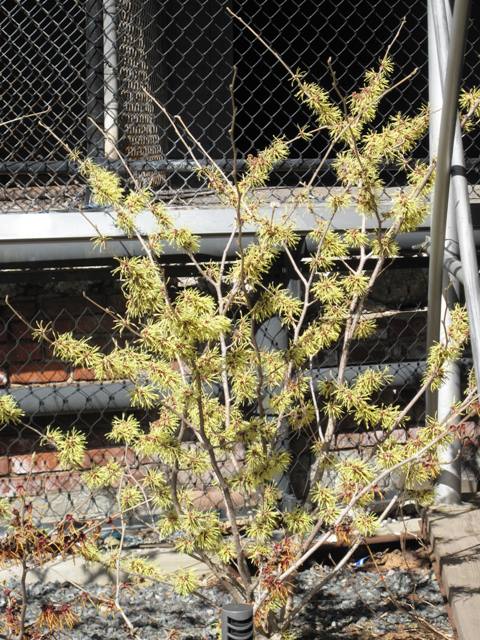
Wonderful witch hazel in bloom.

When I had dinner the night before with my talented NYC go-to-gals, Ellen Spector-Platt and Ellen Zachos, co-creators of the popular NYC gardening blog Gardenbytes, they gave me some tips on where to disembark from the subway (23rd Street Stop) and warned me that not much would be in bloom.

Blooms were not essential, yet I did enjoy spotting crocuses, witch hazel and a couple beautiful flowering ‘Pink Dawn’ viburnum shrubs showing off in the warm, spring sun.

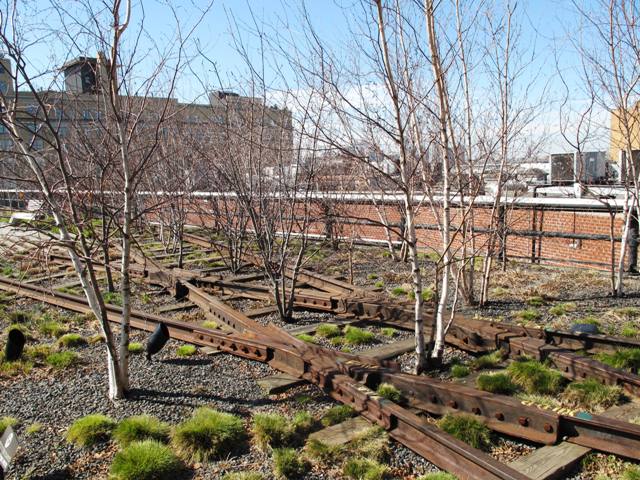
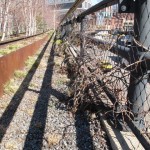
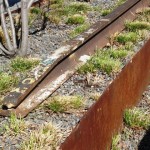
The edgy, industrial setting was just as delightful to my eyes. The rails of this RR-in-the-sky last carried a train of frozen turkeys in 1980.

Over the ensuing decades nature has had her way with the long-abandoned site. According to the High Line web site, its designers selected plants to “echo the wild, self-seeded landscape that grew up on the structure after the trains stopped running.” The landscape was designed by James Corner Field Operations in partnership with Diller Scofidio + Renfro.

A beautiful grove of trees, planted between the rails.

The origins of this reimagined public space can be traced to 1999, when community residents founded Friends of the High Line, the nonprofit public conservancy that today operates under a license agreement with the NYC Department of Parks and Recreation.

The forward-thinking citizen group fought for preservation and transformation at a time when the historic structure was under threat of demolition. Friends of the High Line now provides approximately 70 percent of its annual operating budget and is responsible for both stewardship of the park and its public programs.

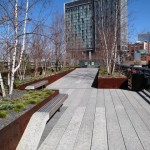
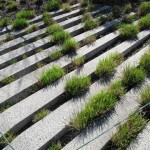
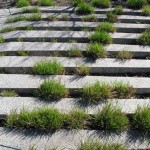
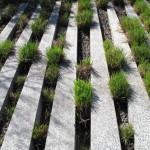
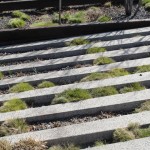
Beginning my tour at the northernmost entrance on West 20th Street, I climbed the steps and arrived to see a new view of the Hudson River and surrounding buildings. Light and airy, the park’s design has retained original crisscrossing steel tracks where groves of trees, shrubs and grasses are planted. The main walkway, which is wheelchair and stroller-friendly, appears to be formed by staggered bands of granite that emulate railroad tracks and also accommodate soft vegetation.

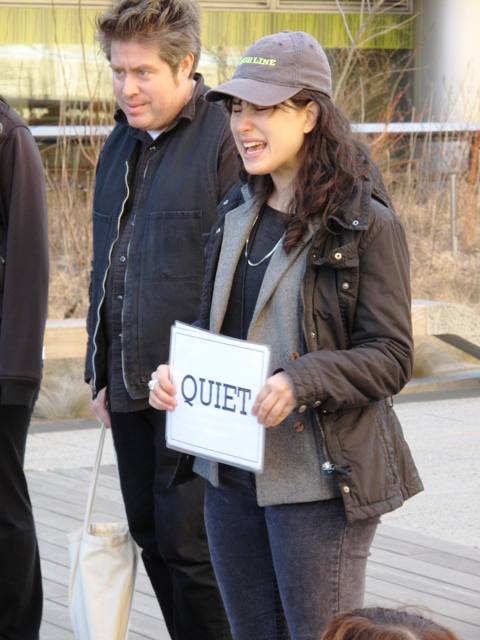
Even parks in major metropolises can be "QUIET"

Look up: it's a park!

Plenty of seating encourages people to rest, admire the scenery or eat a sandwich.

I happened upon a group of schoolchildren on a class tour near the bleacher-style amphitheatre where public performances often take place. A docent held a sign that read QUIET, and I smiled as I overheard her telling the children that the designers wanted to create a place where the noise of the city streets wasn’t so powerful. You know, quiet is one of the strongest sensations I experienced on my visit.

The juxtaposition of a park-in-the-sky with a city’s hustle-and-bustle down below seemed to amplify the silence. And I envy those folks in Manhattan who can visit The High Line whenever they want.

Spring bulbs, this time in planters

Monday, March 7th, 2011

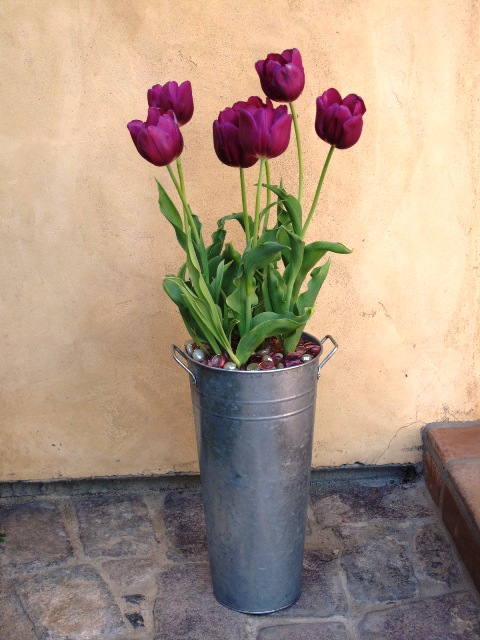
A galvanized flower bucket is paired with plum-purple tulips and shimmery pink glass as a soil topper

A year ago this month, I met my photographer friend Jack Coyier and his assistant Stuart Gow at a great location perched above the ocean in Malibu. My car was filled with flats of flowering bulbs – tulips, hyacinths, daffodils, grape muscari blooms — and an assortment of perennials and annuals as their companions. Oh, and lots of pots.

Color-coded pots, selected to match or coordinate with the blooms of spring bulbs purchased in 4-inch pots and nursery flats. It was a bulb garden in a Volvo station wagon!

March 2011 Better Homes & Gardens

We photographed a feature that I created for Better Homes & Gardens, which you can find in this month’s issue.

Called “Matched Sets,” the story gives hope and design inspiration to anyone who forgot to plant bulbs last fall.

It’s not too late to buy beautiful flowering bulbs, just peeking out of their buds. In Seattle at least, we have a variety of narcissus and daffodils, grape hyacinth, a gazillion tulip choices and at least three colors (pink, white and dark purple) hyacinth.

For a few bucks, you can plant these in a container, plunk it on your front porch or patio, and look like a genius who really did think about bulb-planting last October.

When you match the pot color to the bloom color, the design packs a punch. In some examples you see here, I tweaked the rules; in others, I didn’t deviate from the palette’s theme. It was fun working with Stuart and Jack, and seeing this story in print brings back some great memories of our day together on location in Malibu.

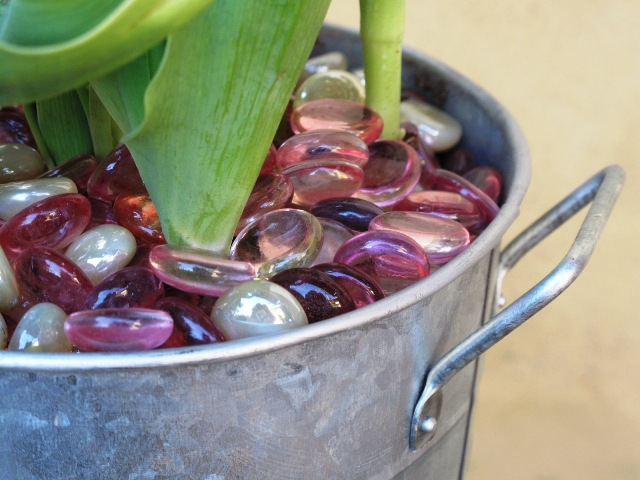
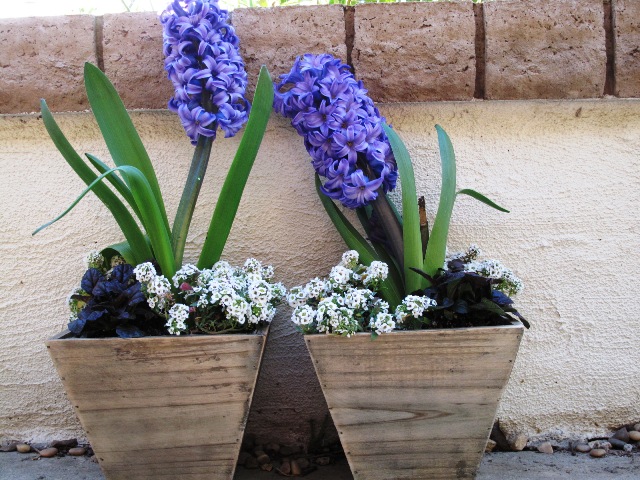
Two of the designs we shot didn’t make it to the pages of BH&G, so I’ve included them here. The first is above right. Below is a detail shot of how perfectly the glass marbles look as a color-matched soil topper, followed by a close-up of the not-used hyacinth design:

An affordable and reusable way to add color to any pot design.

The hyacinths didn't behave well that day, but I do love the checkerboard accent of white alyssum with dark purple ajuga at the base of each container.

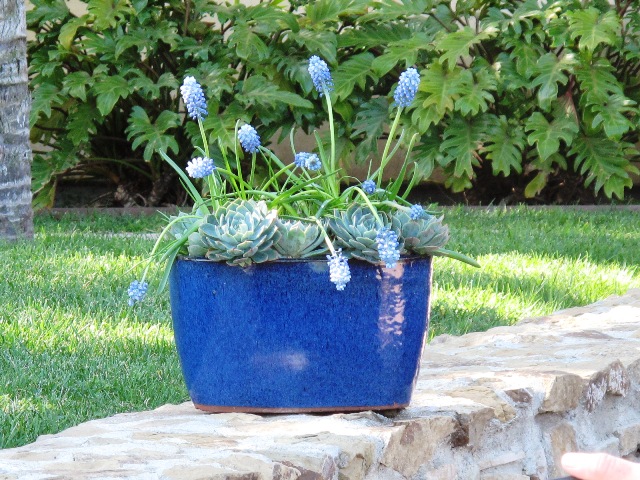
My absolutely favorite design: Oval-shaped blue-glazed pot, with blue=green echeverias and sweet blue grape hyacinth (muscari) bulbs.

Simple tips to get started:

  1. Select bulbs with blooms that match your container’s color
  2. Add cool-season annuals, grasses, succulents, or perennials that match or complement the palette
  3. Plant bulbs first, then pack other plants around them so the bulbs seem to be emerging through the plants at the base.
  4. Remember the basics: Use potting mix and a container that has proper drainage.
  5. Water regularly.

Sources: Blue pot (Sperling Nursery & Gift Shop, Woodland Hills, CA), square wood containers (Rolling Greens Nursery, Los Angeles), galvanized flower pot (Michael’s Craft Stores).

Notes from: A Year in Flowers

Thursday, February 10th, 2011

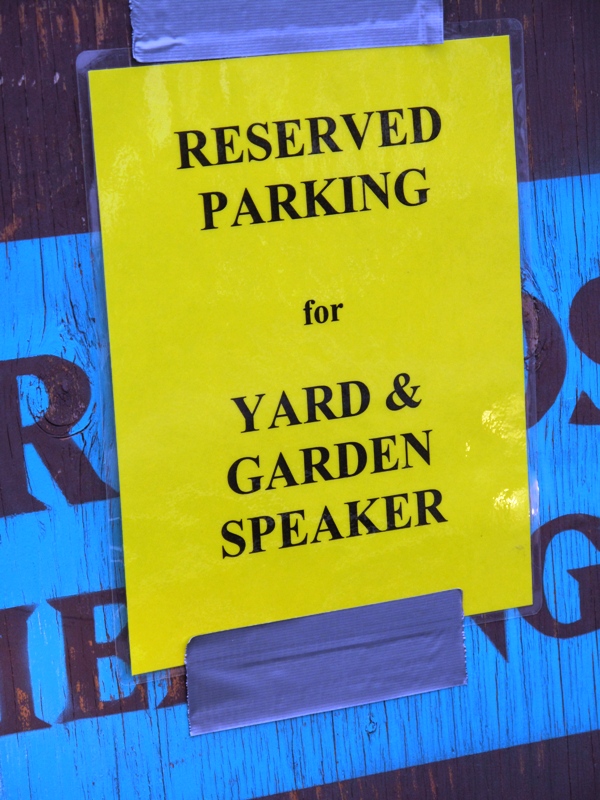
Nothing warms the heart of a speaker more than to pull into the venue and see a sign like this! Thank you Diane Threlkeld, chair of the Yard & Garden Lecture Series - how thoughtful!

Last Saturday, I traveled to Port Townsend, Washington, to speak at the Yard and Garden Series 2011, an educational program produced by the WSU Jefferson County Master Gardeners. Such a great audience of enthusiastic kindred spirits.

After my talk and floral design demonstration on Sustainable Flower Growing and Design, I promised to post some of the resources for seasonal, local, and sustainable flowers. Here they are:

California Organic Flowers (www.californiaorganicflowers.com); Here’s a link to our post about visiting this cool farm in Chico, California

Jello Mold Farm (www.jellomoldfarm.com); Our friends Diane and Dennis grow sustainable cut flowers in Mt. Vernon, Washington. Read their list of “where to buy” (including Farmer’s Market, CSA orders and Seattle area retail shops)

Peterkort Roses (www.peterkortroses.com), a fabulous, family-owned rose farm in Hillsboro, Oregon. Their roses are grown sustainably in hoop houses year ’round. The colors are pure, the scents are not cloying, and the flowers are totally fresh. While Peterkort sells wholesale only, you can ask your local florist to order from them directly. Demand for locally-grown ingredients will help give flower consumers more choices and eventually replace those steroidal mega-rose imports. ReadSandra Peterkort Laubenthal’s blog for news and updates on the rose-growing world.

Wild Ridge Organics (www.wildridgeorganics.com); Specializing in Australian and South African cut flowers, based in Salinas, California. These are the awesome exotics used in my arrangement that one lucky audience member took home with her.

Upcoming: My collaborator, photographer David Perry, and I are hitting the lecture circuit in 2011 – spreading the word about their passion for locally-grown flower crops and the designers who use these ingredients. 

If you are in the Seattle area, come hear from and meet us at the Northwest Flower & Garden Show, February 23-27, 2011. Our appearance details (click on the links below for lengthier course descriptions):

Thursday, February 24th

  • 12:15 p.m. Hood Room: “Conquering Your Digital Camera: Making Beautiful & Memorable Garden Photos,” with David Perry
  • 2:30 p.m. DIY Stage: “Floral Design with Spring Bulbs: Bring Spring Indoors with Beautiful Blooming Bouquets,” with Debra Prinzing

Friday, February 25th

  • 12:15 p.m. Hood Room: “A Year in Flowers: Seasonal, Local & Sustainable Floral Ingredients,” with David Perry
  • 2:00 p.m. DIY Stage: “The Winter Bouquet: Sustainable Floral Designs From Winter’s Bounty,” with Debra Prinzing