Debra Prinzing

Get the Email Newsletter!

A Floral Visit to San Diego

Saturday, December 15th, 2012

Rainbow Protea's just-harvested blooms - dazzling!

Earlier this week I was hosted by my dear friend and fellow Garden Writer board member Nan Sterman when I flew to San Diego to give a talk to the San Diego Horticultural Society. I love the title that Mary James  of SDHS gave my talk: “Bring me Slow Flowers” – a fun play of words on the title of my next book. Using images I’ve shot over the past several years, my lecture incorporated concepts from The 50 Mile Bouquet and Slow Flowers.

Here are the highlights of my (almost) 72 hours in San Diego:
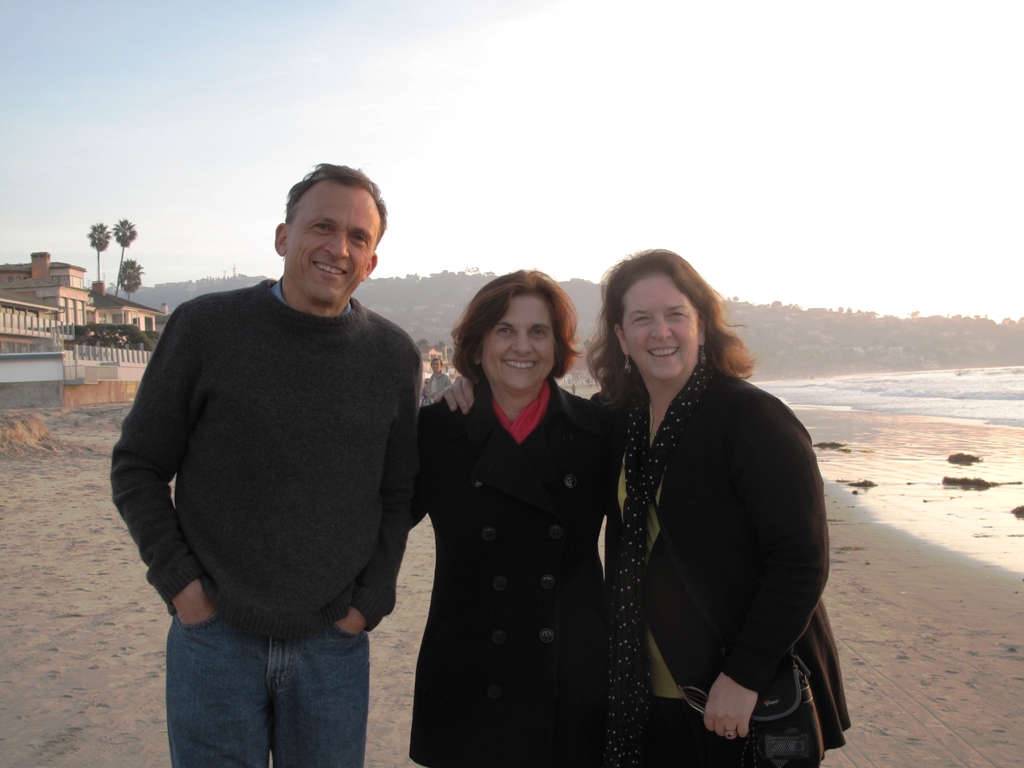
Hasan Kayali, Ayse Kayali and me - walking on the beach at La Jolla Shores, just before sunset.

First, I visited Hasan and Ayse Kayali, some of our oldest friends from college days. My husband Bruce and Hasan were jumpers (long/triple) for Harvard’s Track Team back in the day and we never, ever get to spend enough time together. However, all of us were together in Tuscany in 2009, for a week at Villa Maddalena in the town of Montisi. That was pretty special. After a late, but delicious, lunch, we took a walk on the beach at La Jolla Shores.

After I said good-bye to the Kayalis, I headed to Encinitas, just a few miles north. Nan Sterman and Curt Wittenberg welcomed me with a flavorful Moroccan chicken dinner prepared by Curt, and we stayed up way too late just talking. Nan and I figured out that after this month (December), we will see one another in January (GWA Winter Board Meeting – Austin, TX); February (Northwest Flower & Garden Show – Seattle, WA); March (SF Flower & Garden Show – San Mateo, CA); April (when I’m back in San Diego to speak) . . . and of course, in August, when our GWA annual symposium heads to Quebec City. Nice to anticipate!

So exciting.....A visit to the uber-famous and very talented floral artist, Rene van Rems!
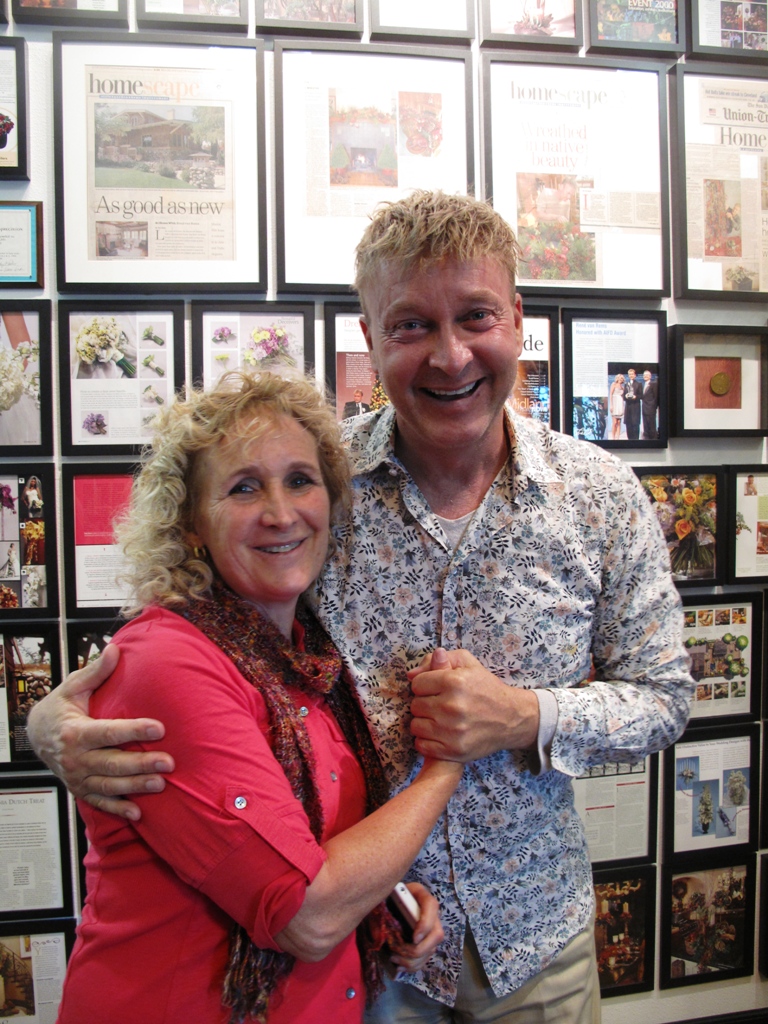
Nan and Rene are old San Diego friends in the floriculture-horticulture community.

On Monday morning, I headed over to Carlsbad, Calif., to visit the very famous René van Rems, a world-class floral designer and friend of Nan’s.

I’ve known of René because of his books (including René’s Bouquets: A guide to Euro-Style Hand-Tied Bouquets) and others. He is an internationally recognized designer, consultant and instructor, born in Holland, but based in San Diego for the past 30 years.
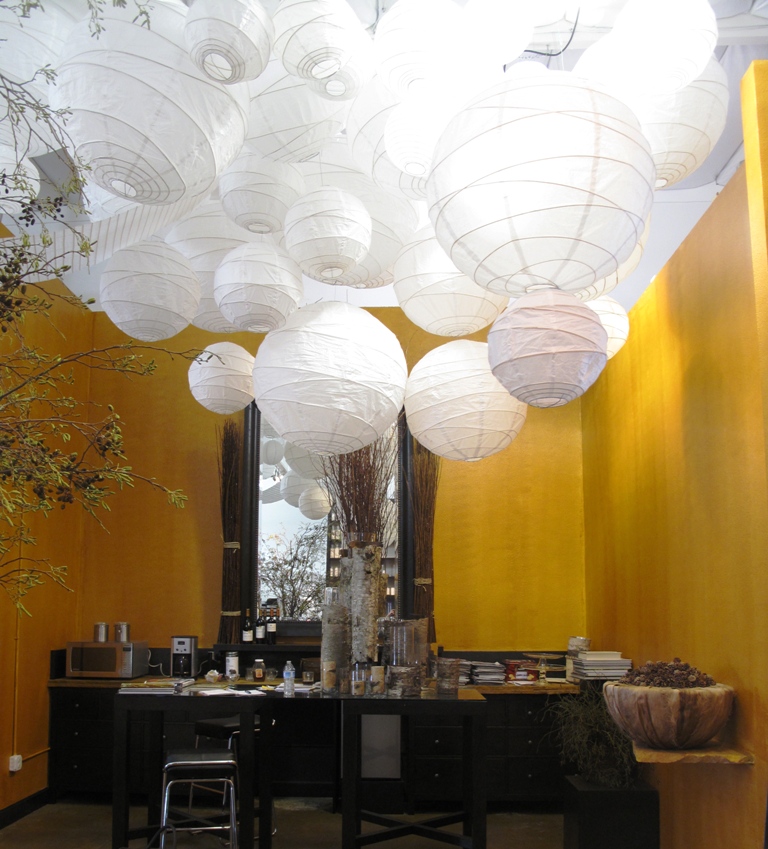
Rene's modern, colorful studio - where all the fun happens!
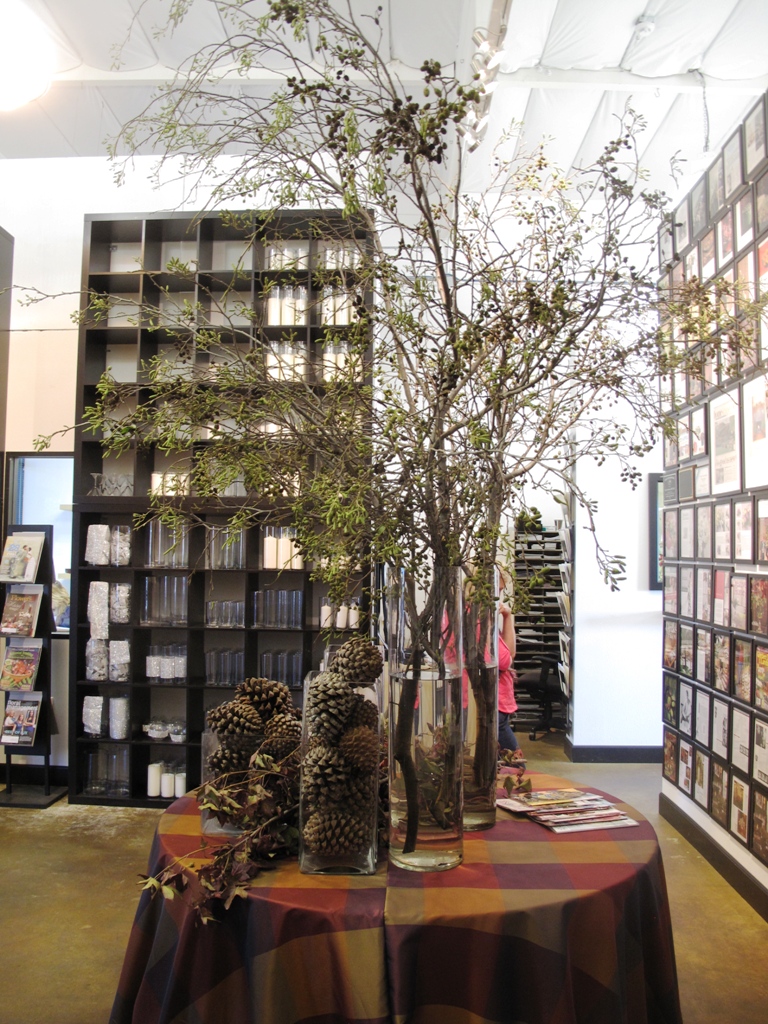
A "local" bouquet in the Rene van Rems studio - foraged Alder branches - perfect for the season.

Last year, René established a new studio in Carlsbad, north of San Diego. I was so impressed with the interior space – as you can see here. It’s suitable for large-scale production for big events, for René’s many floral design workshops, and for private events. René considers himself to be in the “business of creativity,” and he loves to teach everyone – from the DIY flower-lover to the professional who participates in his advanced Master Classes.

René signed and gifted me two of his recent books — the hardback version of René’s Bouquets and his way-cool new book: Rene’s Bouquets for Brides. I felt a little inadequate giving him a signed copy of The 50 Mile Bouquet, but he was quite gracious about it. And, he was very kind to come and attend my lecture that evening. Please check out René’s beautiful work at his website, here.
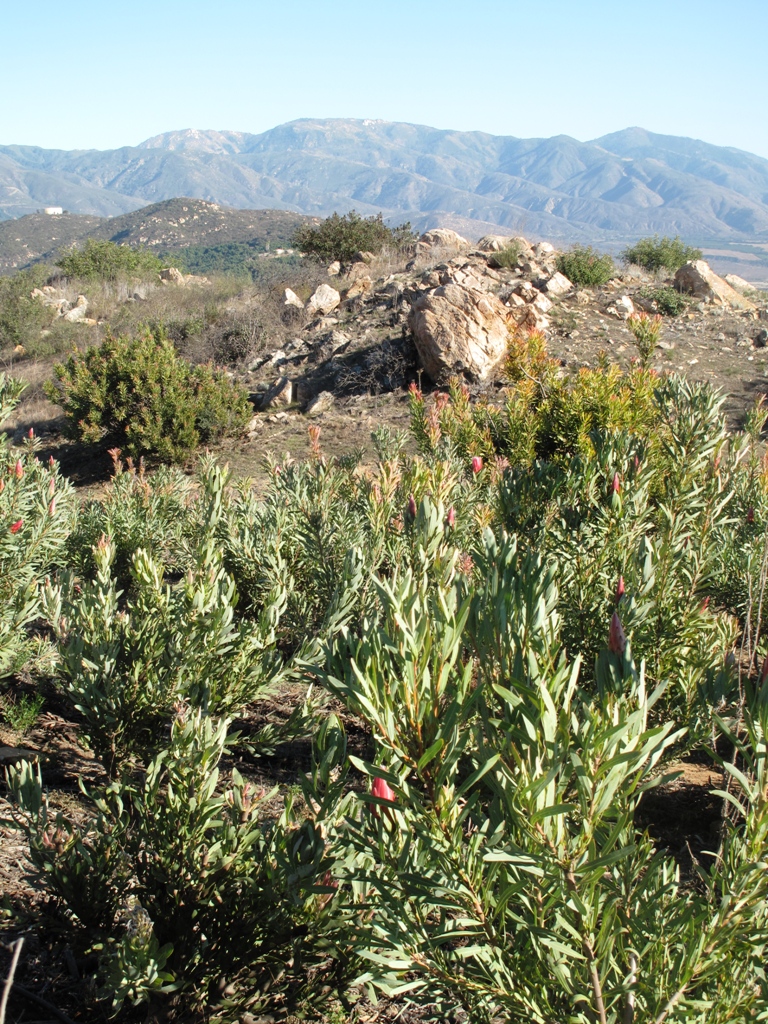
This is the incredibly stunning landscape in Fallbrook, California - home to Rainbow Protea Farms

Nan picked me up around lunchtime and we headed out to Fallbrook, Calif., about 45 minutes east of Carlsbad. We were on a floral mission: To visit Rainbow Protea, an exotic cut flower farm that grows South African and Australian flowers in the Proteaceae family.

A special thanks to Dawn Bonner, whose family owns Rainbow Protea, and to sales & marketing whiz, Kim Jernegan, who hosted us. Kim loaded Nan and me into a pickup truck and we traversed the bloom-filled hills of the 198-acre farm on a brilliant December afternoon.
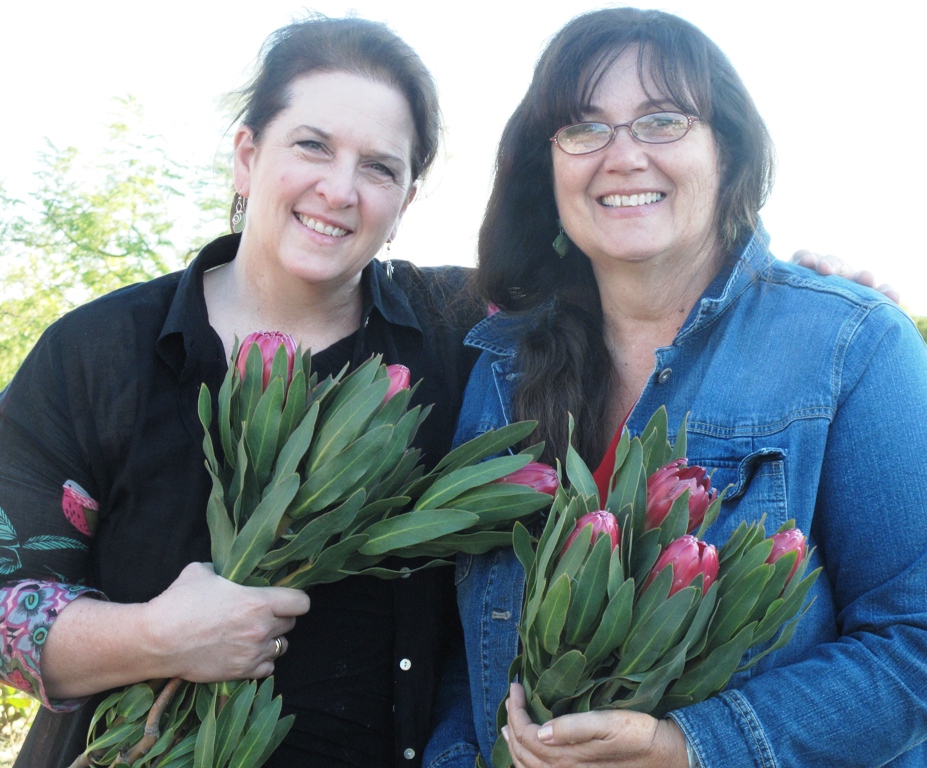
Kim Jernegan and me - holding stems of some beautiful Protea flowers.

Rainbow Protea began operations in 1985. While some may liken the hilly terrain approximately 20 miles inland from the Pacific Ocean and 60 miles north of San Diego as “similar” to South Africa, Kim begs to differ.

She points out that to grow thousands of flowering sub-tropical shrubs — Protea, Leucadendron, Leucospermum, Banksia, Leptospermum, Chamelaucium (Wax flowers), Anigozanthos (Kangaroo Paws) and other Mediterranean specimens — the farm’s crew has to use an auger-style drill and major amendments.

Those include primarily organic addititives such as fish fertilizers, worm compost, compost tea and kelp products.

Enjoy my photographs of the plants that earned my affection.

Kim sent me home with a bountiful box of blooms, which I have been enjoying all week.

The wonderful thing about these exotic members of the Proteaceae family is that they are VERY long-lasting in the vase.

You need to re-cut the stems and refresh the H20 every two to three days; but then you can plan on having an exotic, modern-looking arrangement for weeks and weeks.
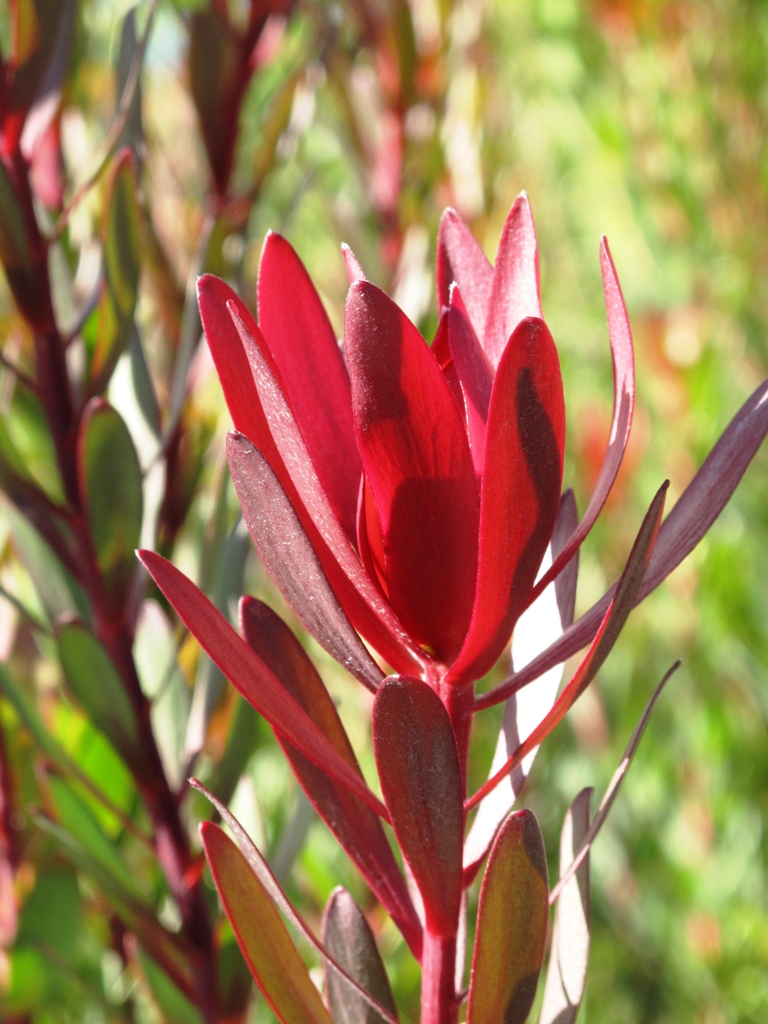
'Safari Sunset' Leucadendron
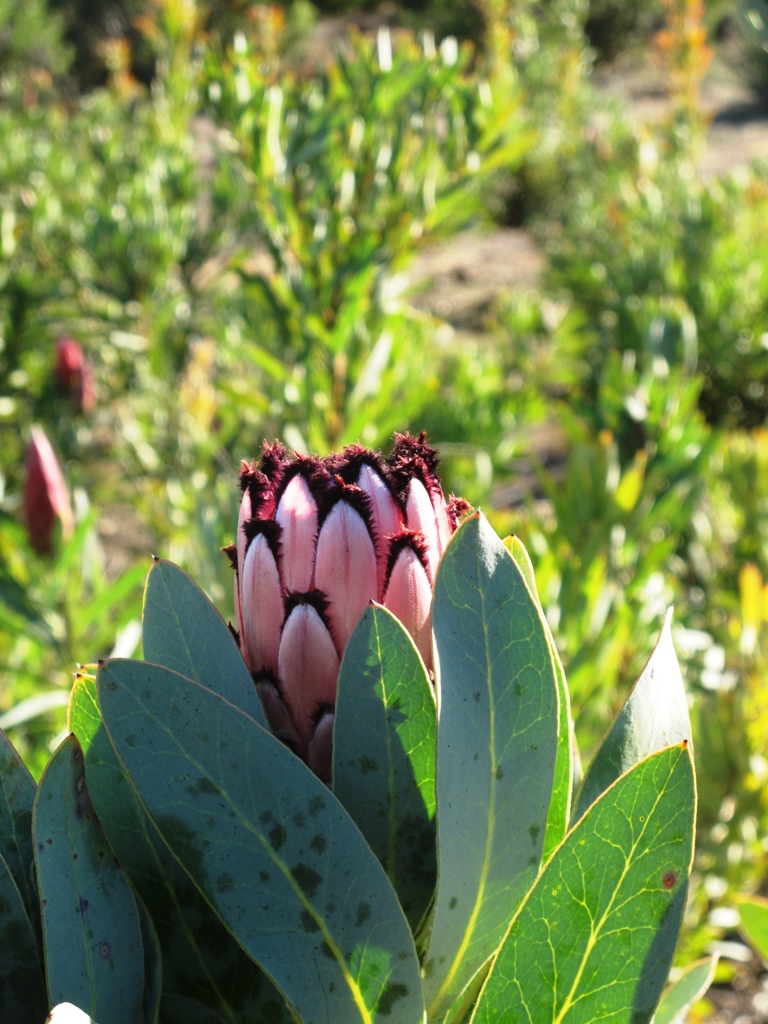
Protea 'Rosa Mink' - love the fuzzy margins on the petals!
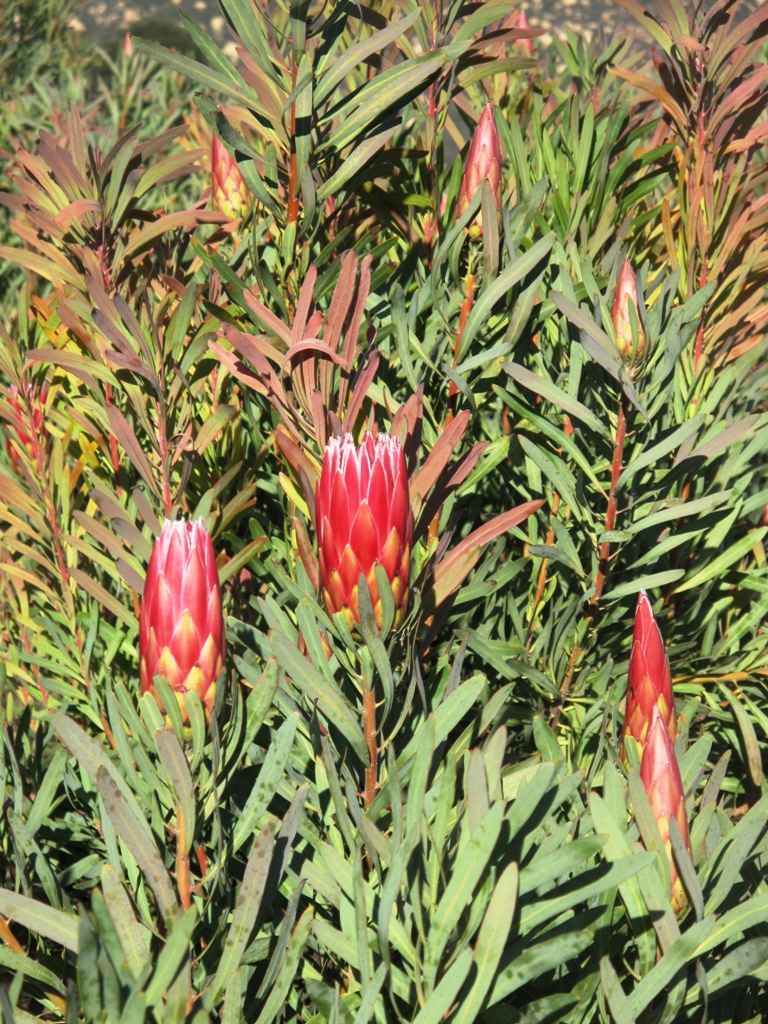
Protea 'Pink Ice' - a silky-smooth variety
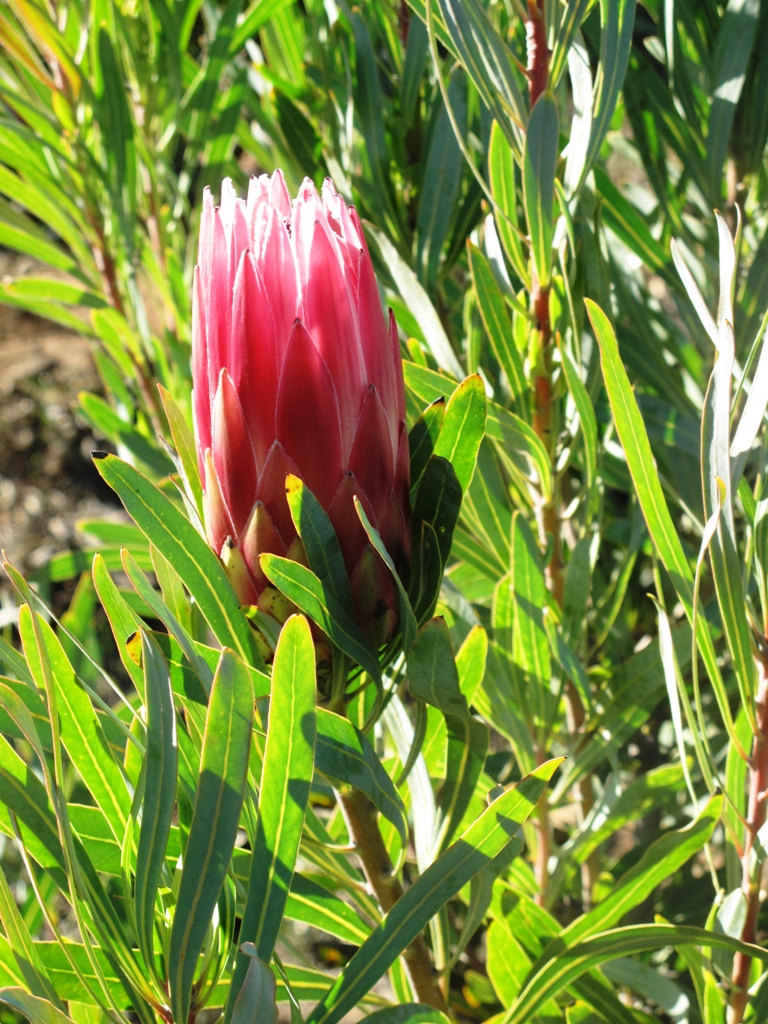
Protea 'Liebencherry' - vivid raspberry pink!
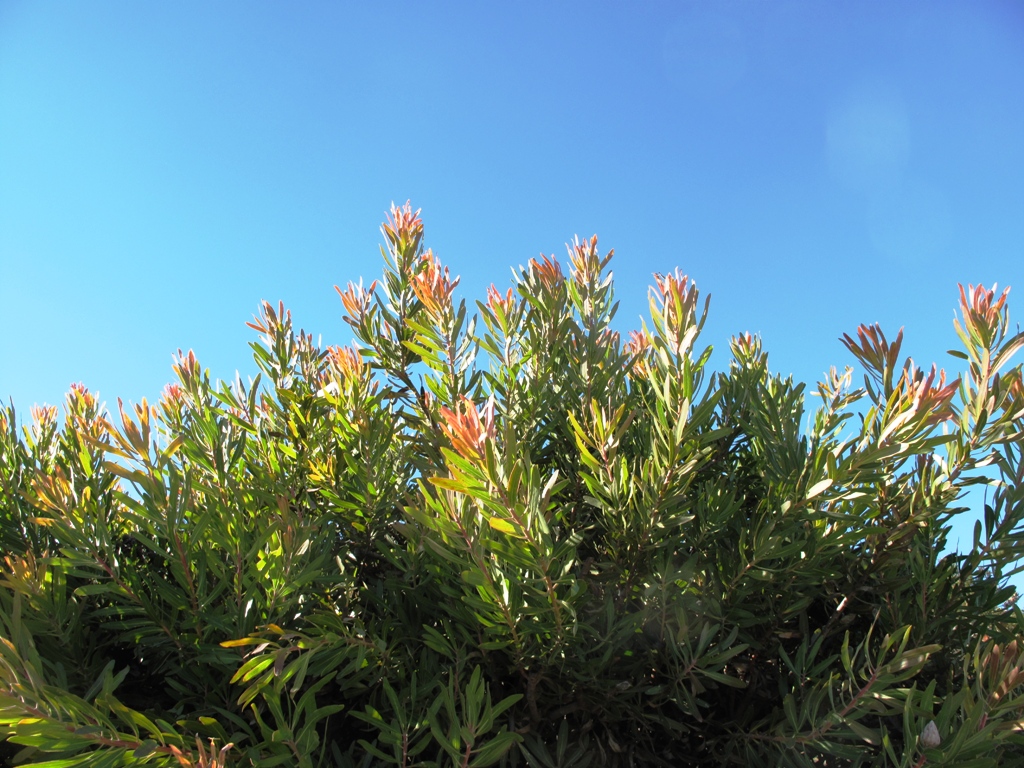
A hillside of Leucadendrons against the intense blue December sky. Unforgettable!
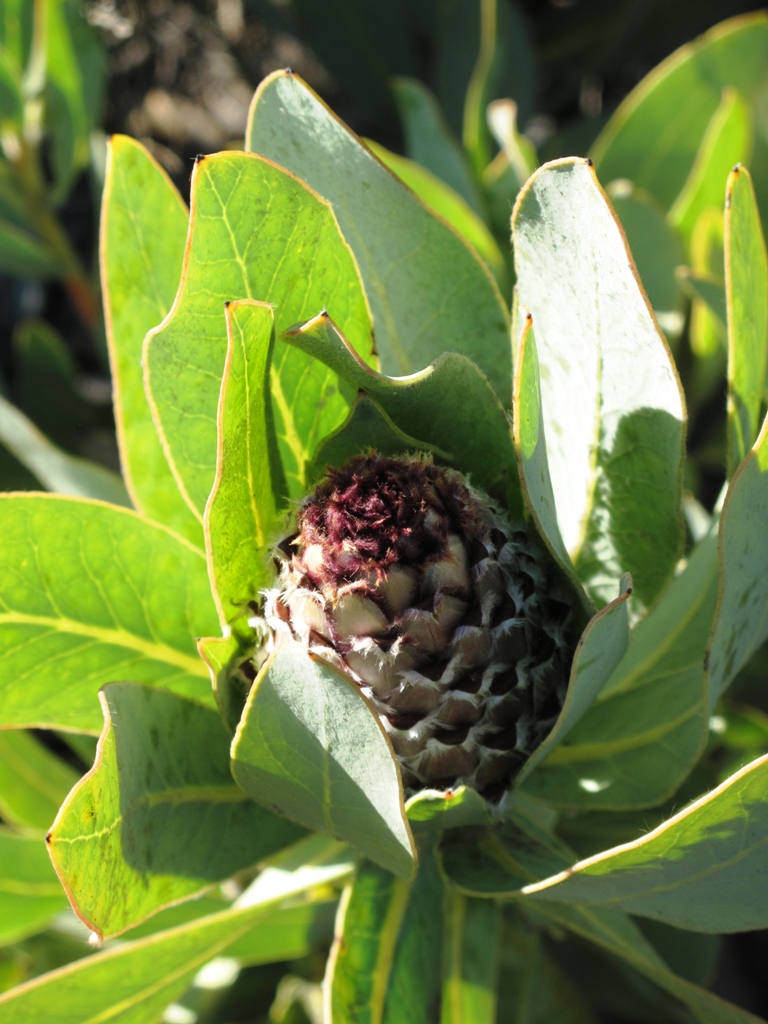
A Protea in bud - not sure of the variety, but it's sure gorgeous.
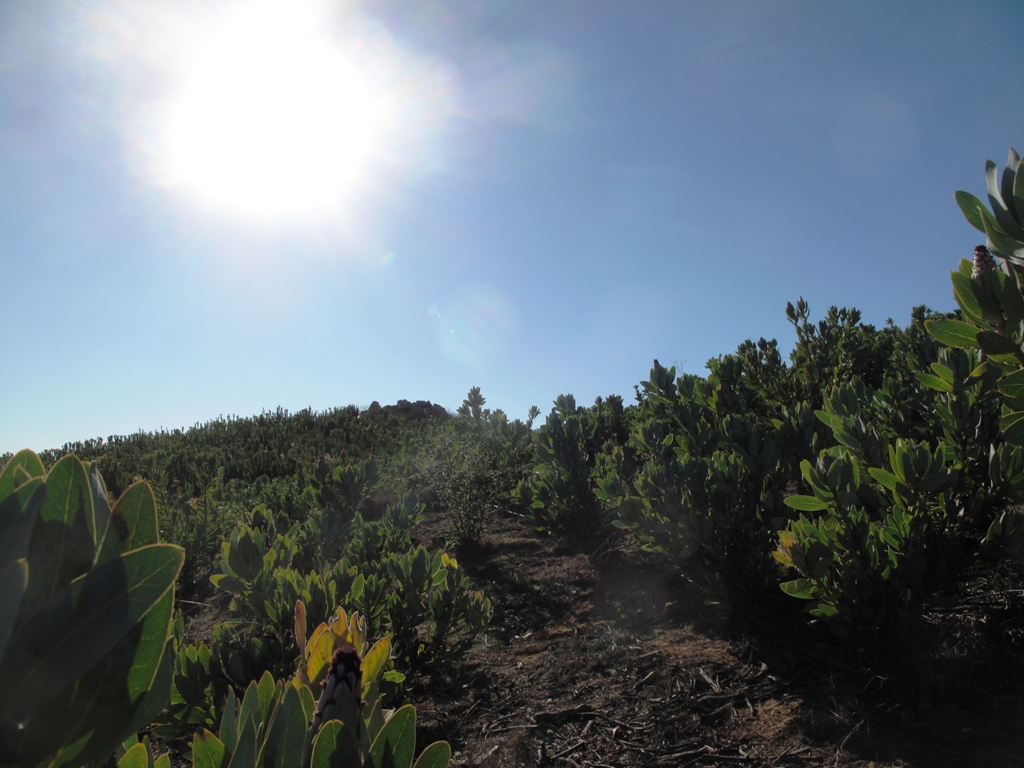
Good-bye Rainbow Protea. . . I'll be back!

Finally, I was welcomed by the members of the San Diego Horticultural Society. I felt like the room was filled with kindred spirits – gardeners who want to learn more about the plants they grow; people who are eager to try new things, including floral design. A great visit – and one that I will always cherish. Nan, Curt, Karen Bussolini (a writer/photographer friend who was in town, visiting from Connecticut), Bonnie Manion and I closed down the night with a late dinner at Il Forniao. Very satisfying!

Before I left the following morning, I squeezed in a visit to fellow garden blogger Bonnie Manion of vintagegardengal.com. I first met Bonnie in 2009 when Country Gardens magazine asked me to write about her vintage container designs for spring bulbs. The story was called “Tour de Forced Bulbs.”

Later, after we moved from Seattle to Southern California, Bonnie and I finally met in person – and we had several fun adventures, including our day-trip to the Long Beach Flea Market with Lorene Edwards Forkner and Kathy LaFleur. Bonnie is an amazing designer, writer and winemaker (with her husband John Manion). While our time was short, I was tickled to spend a little time with her, touring their newly renovated home, barn, barrel room and more…and talking about the book-biz, blogging and gardening.

Look for exciting things coming from Bonnie in the near future, including a new book on keeping chickens!

Okay, enough for now. Please enjoy these photos and check out all the people I’ve highlighted in this blog post.


Here Comes the Couple: A chance to win Free Wedding Flowers

Monday, November 19th, 2012

I’m so inspired by the creative and generous souls around me. When I see their work, I am compelled to share it!

Last week, on a visit to Seattle floral designer and flower-grower Kelly Sullivan’s, I couldn’t take my eyes off of a beautiful floral still-life arranged on her end table.

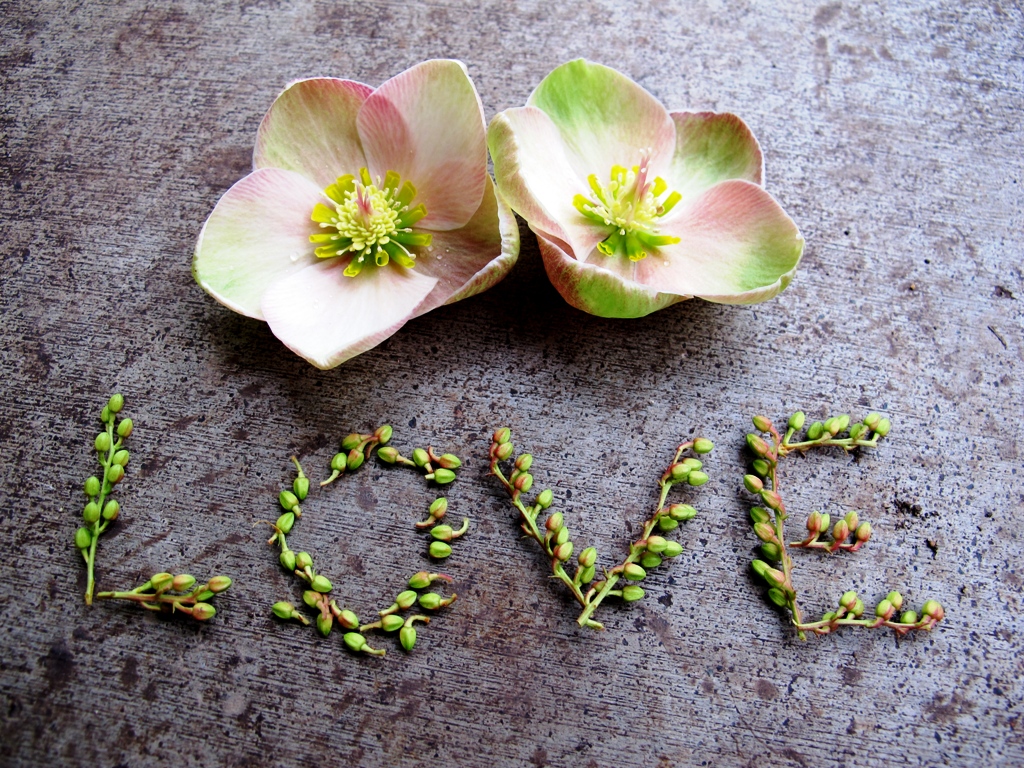
Here’s what it looked like:

For anyone obsessed with the joy of garden flowers, you’ll immediately recognize the Helleborus blooms at the top of this image and the little sprigs of Pieris japonica flowers used to spell out L-O-V-E.

“That’s gorgeous, Kelly!” I exclaimed. “What are you up to?”

“I’m giving away one-thousand dollars’ worth of wedding flowers,” she explained. “To one Washington couple getting married next year. It’s my way of honoring marriage equality.”

Kelly is the owner of Botanique Flowers, a by-appointment floral design studio in Seattle. She’s known for creating seasonally-inspired designs with a romantic, natural feeling. I previously wrote about Kelly and her subscription CSA-style bouquet program (the article was entitled “Floral Choreography,” and you can read it here). Kelly grows many of the flowers and foliage for her designs in her own cutting garden. And, she designed my cutting garden, which I’m slowly installing and hope to have finished next spring.

Kelly’s new project, the Love Is Love Sweepstakes, celebrates the passing of Referendum 74 with FREE wedding flowers for one Seattle couple who will be married in 2013. “I believe LOVE IS LOVE, period,” Kelly says. “Botanique stands behind any couple that wants to celebrate their love through marriage.”

If you’re planning on tieing the knot in the greater Seattle area anytime next year, you are eligible to win $1,000 worth of wedding floral design services from Botanique. Contestants can enter by visiting the Love is Love page on Botanique’s website and filling out the entry form.

All entries must be received by 5 p.m. (PST) on Friday, December 7th. Kelly will notify the winning couple on Monday, December 10th.

All I have to say is kudos to Kelly for dreaming up this wonderful gesture of love and support for the couples of Washington. I hope other designers are similarly inspired! The lucky couple will be doubly lucky to have Botanique Flowers as a celebratory symbol on their wedding day.

Here’s one more gorgeous floral still-life, created by Kelly:

Announcing . . . SLOW FLOWERS

Tuesday, July 10th, 2012

There’s a sequel to The 50 Mile Bouquet and you will be able to hold it in your hands come February 1, 2013!

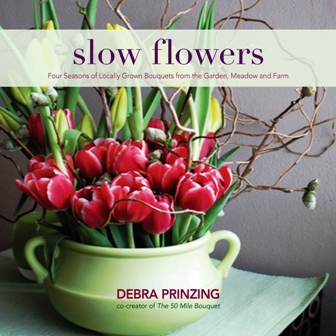
Above, you see the cover mock-up featuring my photo of a simple arrangement I created for a 2011 Northwest Flower & Garden Show demonstration. My green urn holds two types of locally grown tulips from Alm Hill Gardens in Whatcom County, as well as curly willow branches and camellia branches from my former garden. Simple and graphic. Gorgeous cover art designed by Holly Rosborough, St. Lynn Press’s art director.

Yes, the good news is that St. Lynn’s Press will publish SLOW FLOWERS: Four Seasons of Locally Grown Bouquets from the Garden, Meadow and Farm. The book features 52 weeks of seasonal floral arrangements created and photographed by Moi!

Here’s the book’s description:

The slow food movement (with its hundreds of thousands of members and supporters) has changed our relationship with the foods in our lives. Now the slow flower movement is changing the way we think about cut flowers: Yes, we’d all prefer fresh, fragrant flowers in our bouquets, not the chemical-laden “undead” blooms flown in from afar – but what to do in those seasons when not much is growing locally? Debra Prinzing challenged herself to create a beautiful, locally grown bouquet for each of 52 weeks of one year (going beyond flowers to include ornamental twigs, foliage, greenhouse plants, dried pods, and more), to demonstrate that all four seasons have their own botanical character to be celebrated. She provides extensive design tips, bouquet “recipes” and region-by-region floral ingredient lists that can be found in all climate zones through the year. Slow Flowers is written from a DIY floral designer’s point of view, to inspire anyone to go green and make a beautiful bouquet with what’s at hand, no matter the season.

More details to come, but you can help me out by pre-ordering a copy on Amazon. Yeah!!!

Sunset hails SLOW FLOWERS and the special people who grow them

Saturday, June 16th, 2012


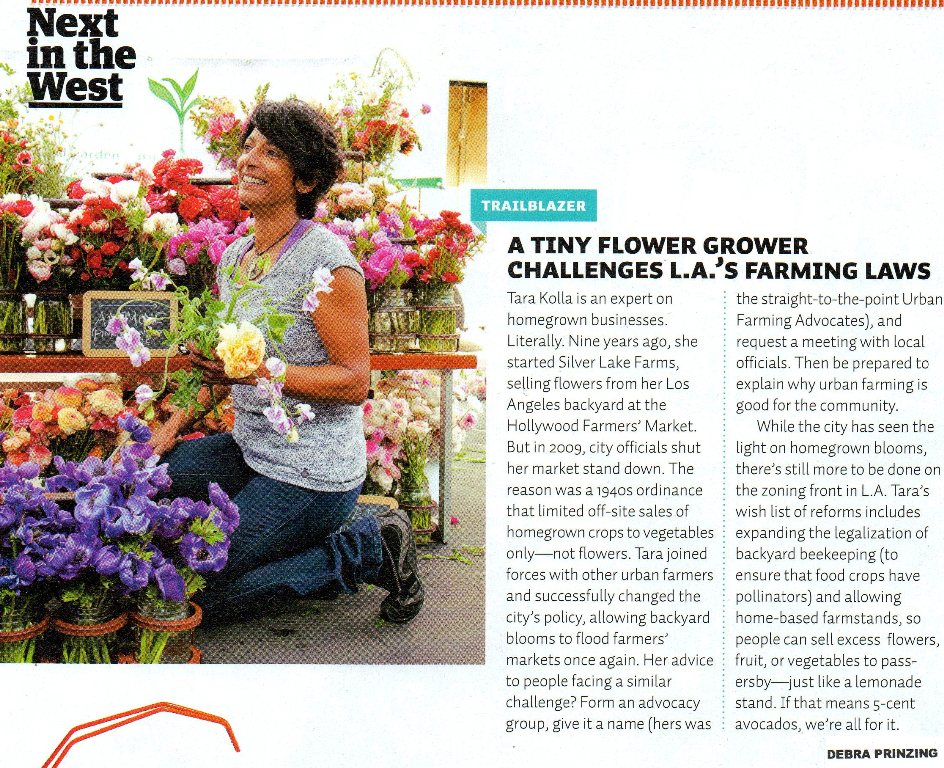
Here's how Sunset featured the interview, in its "Next in the West" section where Tara Kolla is hailed as a trailblazer for urban farmers. The photo of Tara was taken by Shelly Strazis/Sunset.

The editors at Sunset asked me to update the story about Tara Kolla, Los Angeles-based flower farmer, urban farming advocate and owner of Silver Lake Farms. In The 50 Mile Bouquet, she is profiled on pages 47-49 in a story called “Flower Patch Politics.”

It was great to have an opportunity to reconnect with Tara and learn about what she’s been up to since we visited her last November. It was no surprise to discover that Tara is up to her ears in beautiful blooms, selling them at farmer’s markets and fulfilling custom orders for regular clients who love her organic approach.

As these things go with magazines, my interview with Tara was completely rewritten into a narrative format. You can see the published piece it above, or on page 18 of the June 2012 issue, on newsstands now.

But there is a lot to learn from this talented woman. And so here, since space is not an issue, is our original Q&A:

ONE TO WATCH

Flower Patch Politics

In 2009, when Los Angeles officials shut down Tara Kolla’s backyard flower farm, citing a 1940s truck gardening ordinance that limited off-site sales of homegrown crops to vegetables, not blooms, she joined forces with fellow urban farmers to fight back. Passionate about sweet peas and the many other flowers she grows, Tara and her supporters successfully changed the city’s policy – and now the spunky owner of Silver Lake Farms has returned to the Hollywood Farmers’ Market where you can find her every Sunday selling bountiful, organic and seasonal bouquets. Her advice for other urban flower farmers:

What has been the response of your customers to your policy fight?

Some customers think I’m new because I’ve just returned to the market. Those aware of my struggle are delighted for me. It makes them feel good that L.A.’s politicians used common sense to change an antiquated law. Flower fans are now begging me to come to Santa Monica Farmers’ Market on Wednesdays – I hope that happens soon.

How might other would-be flower growers address their own community’s rules, if they face similar restrictions?

My issue was not about growing flowers, but about being prevented from selling them off-site! If someone’s facing similar opposition, I suggest creating a support group – we called ours Urban Farming Advocates. Request a meeting with local officials and be prepared with evidence as to why urban farming is advantageous for the community and why cities should support and encourage urban farmers.

Do you think the updated truck gardening ordinance means more floral variety at local L.A. farmers’ markets?

Eventually, but it is all dependent on land, time and money. I never thought I’d get rich doing this and I continue to run other facets of my gardening business to support myself, including a CSA and designing organic vegetable gardens.

On the zoning front, what still needs to be done in L.A. to support local farmers?                                           

We need backyard beekeeping to be legalized — for ensuring that food crops have pollinators and for producing organic honey. We also need home-based farm stands, meaning you could sit outside your house at a table and chair and sell your garden’s extra oranges or avocados to passersby. Kids and their lemonade stands are legal, but a farm stand with flowers, fruits or vegetables is not.

Could you argue that L.A. hasn’t kept up with other cities in the west when it comes to nurturing urban farming?

No, I think L.A. does care, but it needs to get some codes sorted out. For example, I also grow micro greens. I can sell them to chefs who shop at the farmers’ market, but I can’t go direct to restaurants because then the health department has to get involved. This is new ground and we still have some archaic laws that don’t make sense for today. 

What flower variety do you think is going to be the next big thing at farmers’ markets?

In terms of a cut flower, I think it’s cotton. I first saw cotton in the flower markets in Paris. It’s not just white; you can find cotton in sea mist green or light tan – and they look great in mixed bouquets.

–Debra Prinzing


On the road, but trying to stay local

Saturday, May 26th, 2012

The 50 Mile Bouquet shares the stage with Lila B.'s charming mini-floral arrangements.

Promoting the Slow Flower movement means one may have to travel. I realize that’s a huge contradiction, but that’s life – a series of choices, right? I rationalize my airplane journeys by trying to cram as many events into one destination as possible. Not exactly logical, but it makes me feel more efficient and keeps me away from home for a shorter period of time.

Earlier this month, I headed to San Francisco for Mother’s Day weekend. It started when Flora Grubb and Susie Nadler, two of the superstars of The 50 Mile Bouquet, invited me to be part of the Mother’s Day events at Flora Grubb Gardens. It was the perfect excuse to combine a visit to meet my own mom (and dad) in San Francisco. And then Baylor Chapman of Lila B. Flowers, another superstar of our book, invited me to be part of her activities as part of the SF Made Week. We filled those 48 hours to the brim with flowers, friends and family. A special thanks to Sophia Markoulakis, food and garden writer, for featuring The 50 Mile Bouquet and the Mother’s Day book-signings in her article for the San Francisco Chronicle, ‘Slow-flower’ movement’s power sprouts with new book.

Here are some of the photos from the trip:

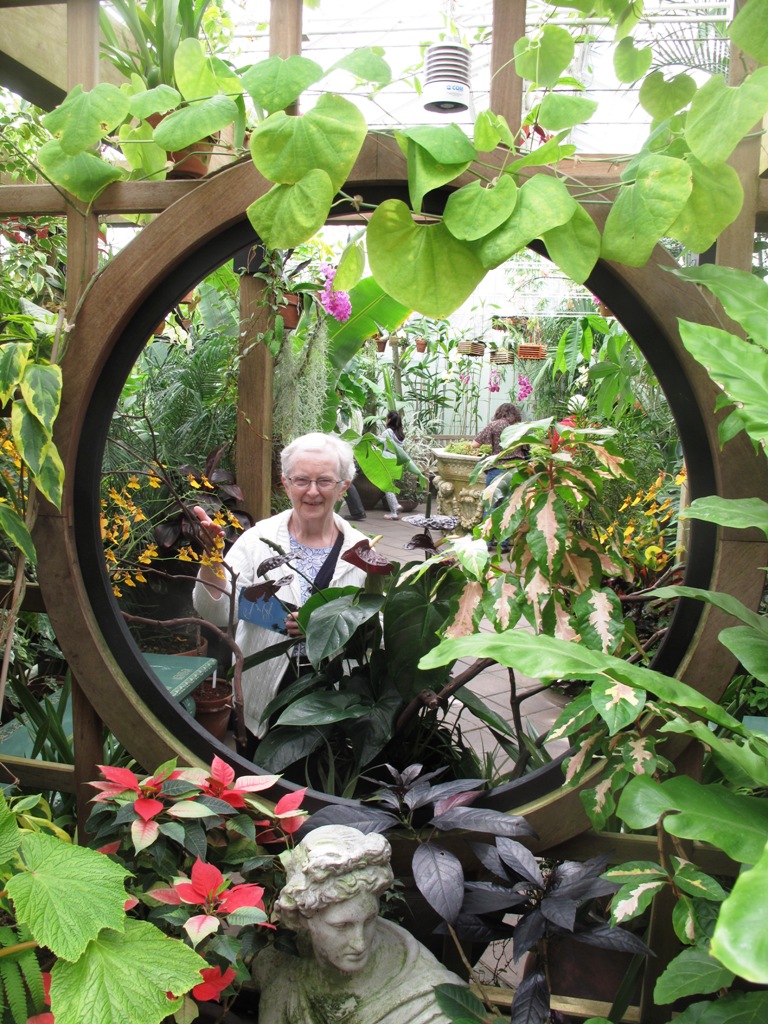
Hi Mom! Having fun with my own mom, Anita Prinzing, at the SF Conservatory of Flowers.


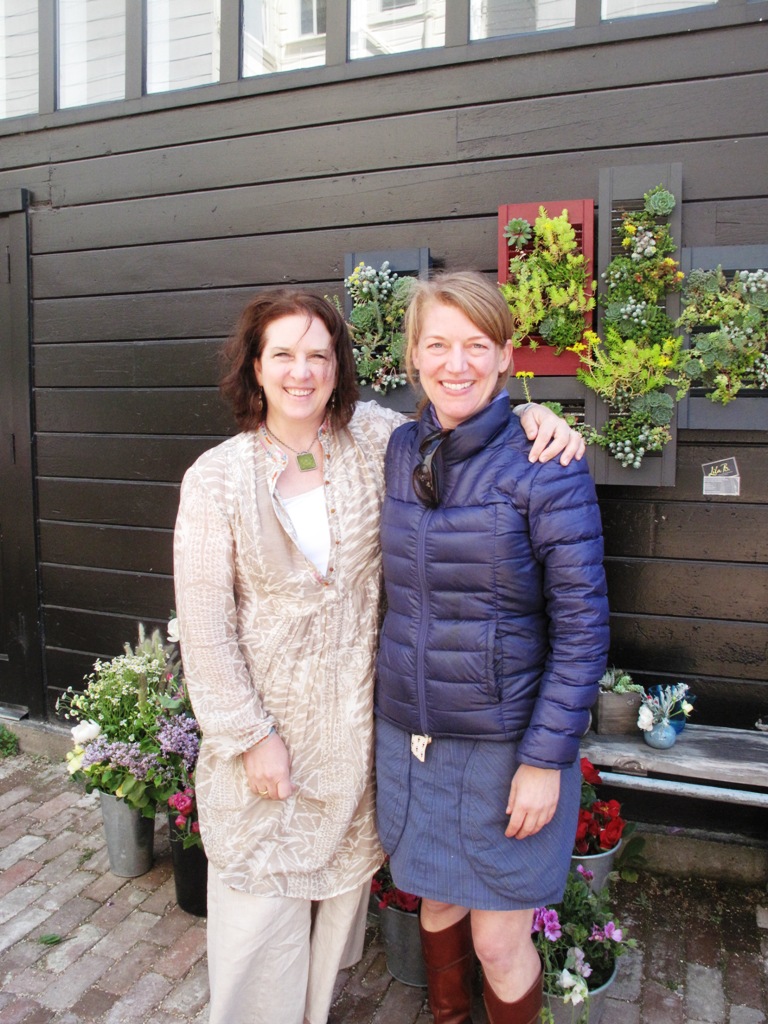
Spending time with floral artist Baylor Chapman is always a treat. We're at the Lila B. Flowers pop-up shop at the Stable Cafe on Folsom Street.


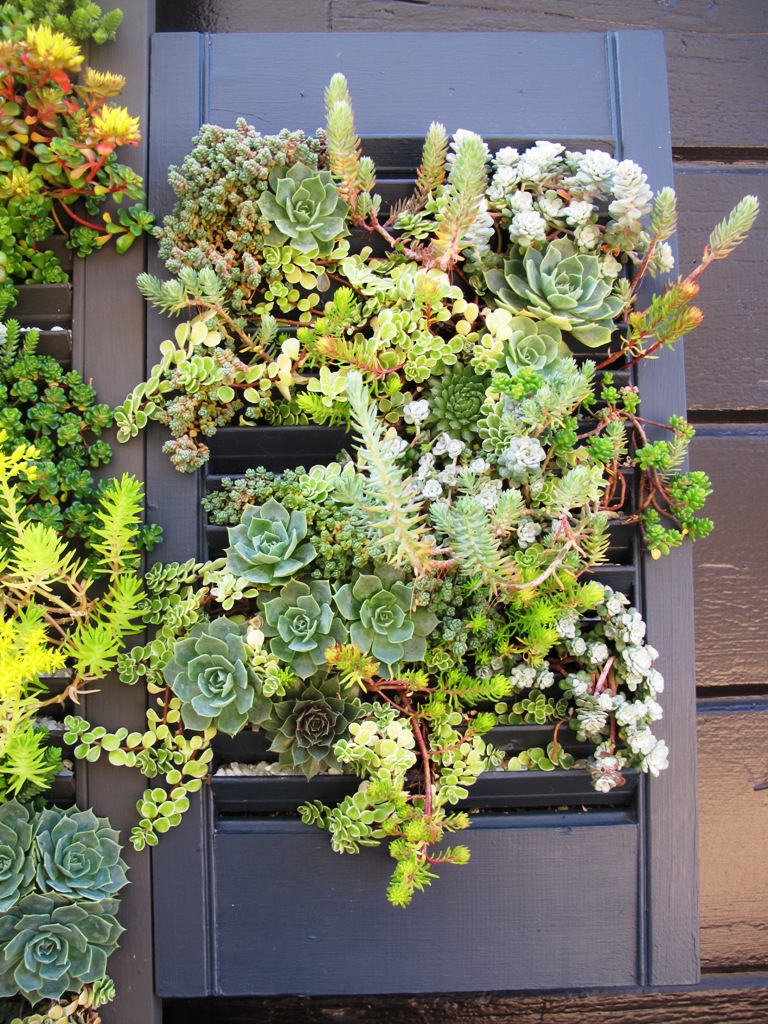
Sigh. Baylor's famous succulent-planted shutters. So beautiful!

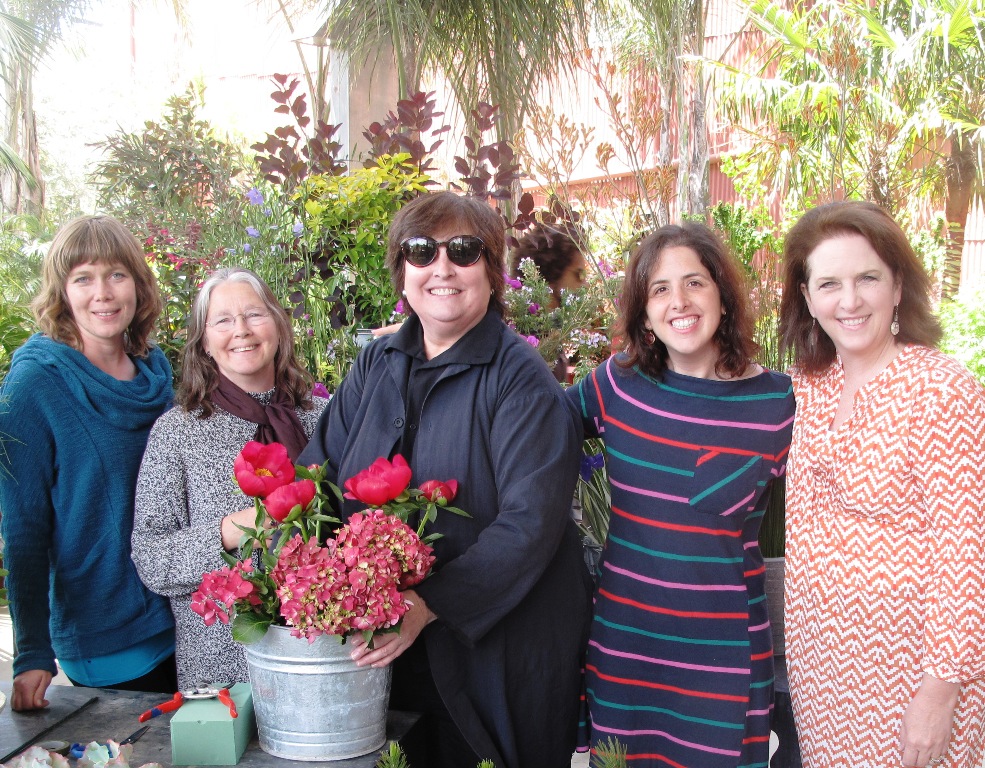
At Flora Grubb's on Mother's Day, including (from left) Flora and her mom, Susie's mom, Susie, and me.


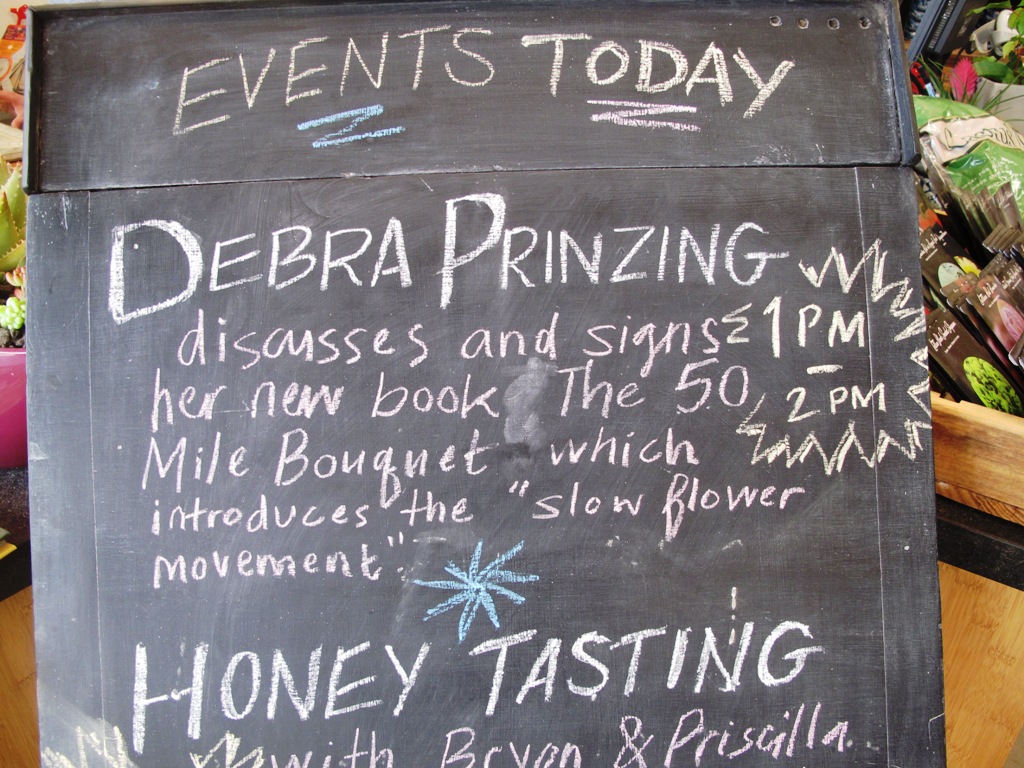
A chalkboard notice welcomes me.

Susie create a scrumptious local bouquet using ingredients from her own backyard, from local flower growers and - of course - from succulents at Flora Grubb Gardens.

Seasonal eye candy

Tuesday, April 17th, 2012

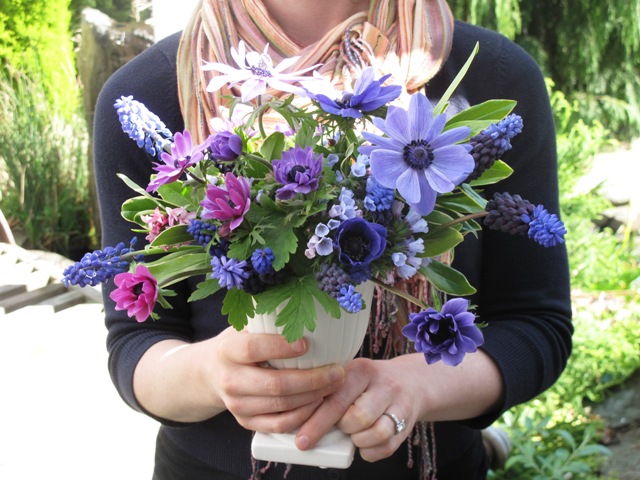
Eco-conscious flower farmer and floral designer Kelly Sullivan of Seattle’s Botanique Flowers arrived with this gorgeous bouquet at a lunch I hosted last week. I had to share it!

Kelly Sullivan's evocative spring bouquet

Here’s what she included in the diminutive urn:

From her own garden: purple-blue grape hyacinths (Muscari); pale pink and purple flowers from a groundcover called Pulmonaria; geranium foliage; and variegated foliage/scented pale-pink flowers from a shrub called Daphne odora.

From the garden center: It was too early to harvest these from her own backyard, so Kelly bought potted anemone plants and clipped several of their romantic black-centered flowers in indigo and dark pink to add to the bouquet.

Everything is stablized with a small piece of chicken wire inside the vase, which allowed the designer to get the full, cascading effect she wanted. I was smitten!

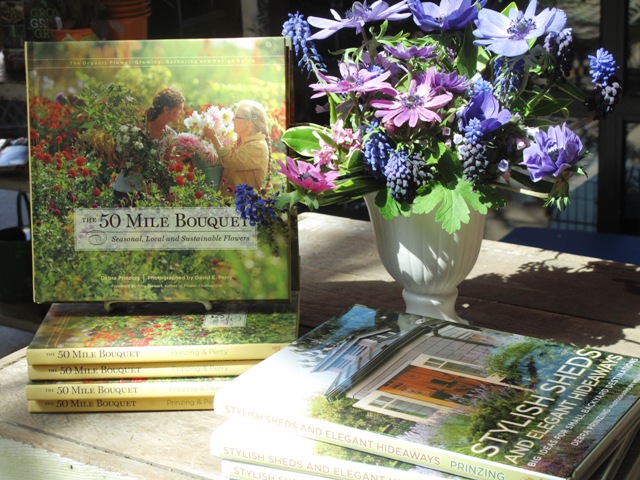
So, when we had a talk and book-signing at Ravenna Gardens on Sunday, I brought along her vase to add to the book display. It’s simply sublime!

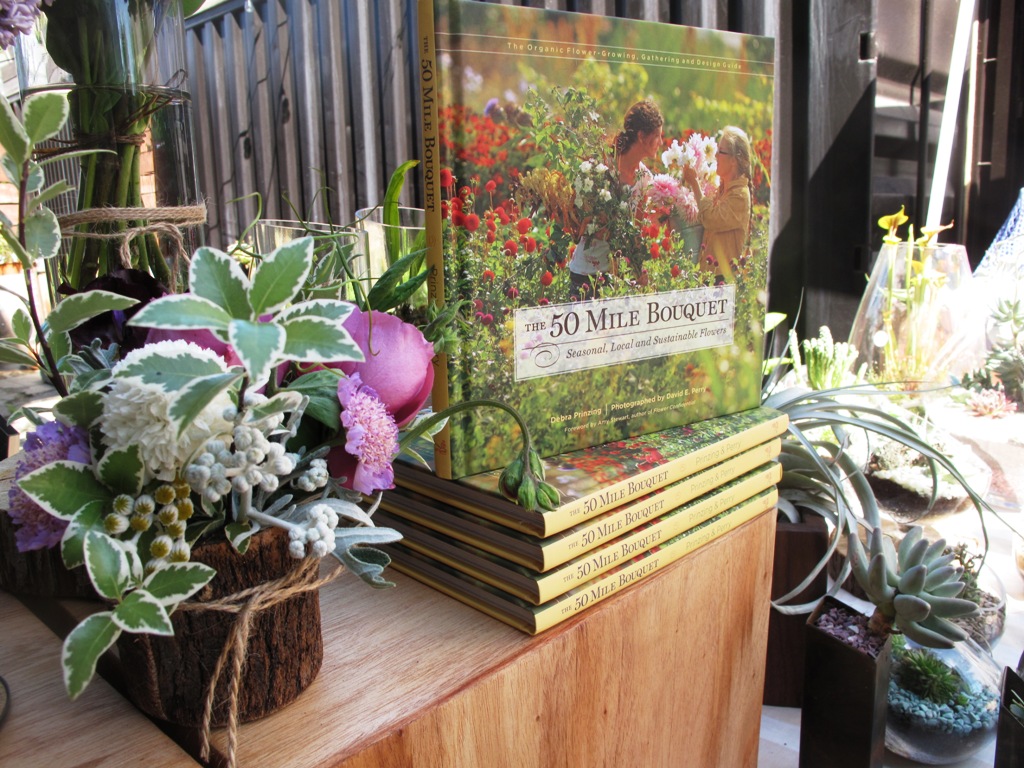
Kelly's bouquet looks pretty dazzling with our book display.

THANK YOU, Kelly!!!


Making it to the New York Times: The author’s “holy grail”

Thursday, March 29th, 2012
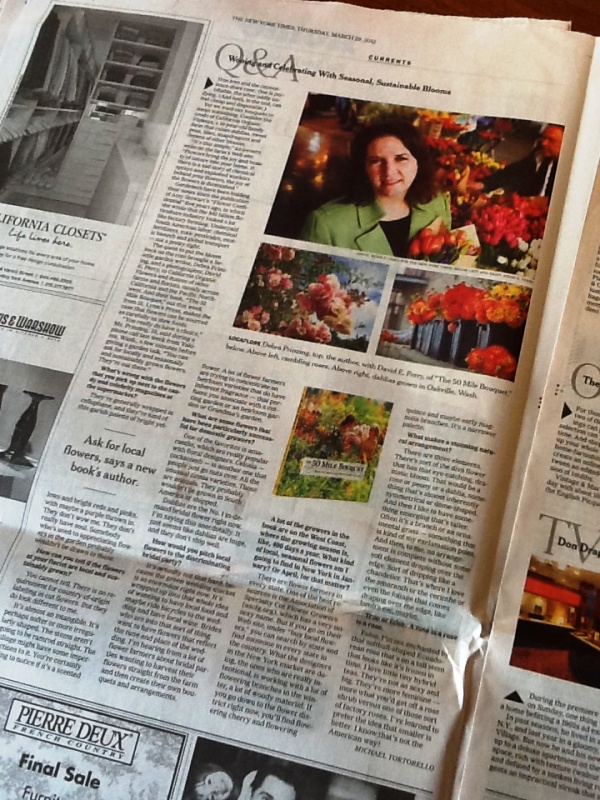
A friend emailed me the photo he took of today’s paper and wrote: “Look who I ran into”

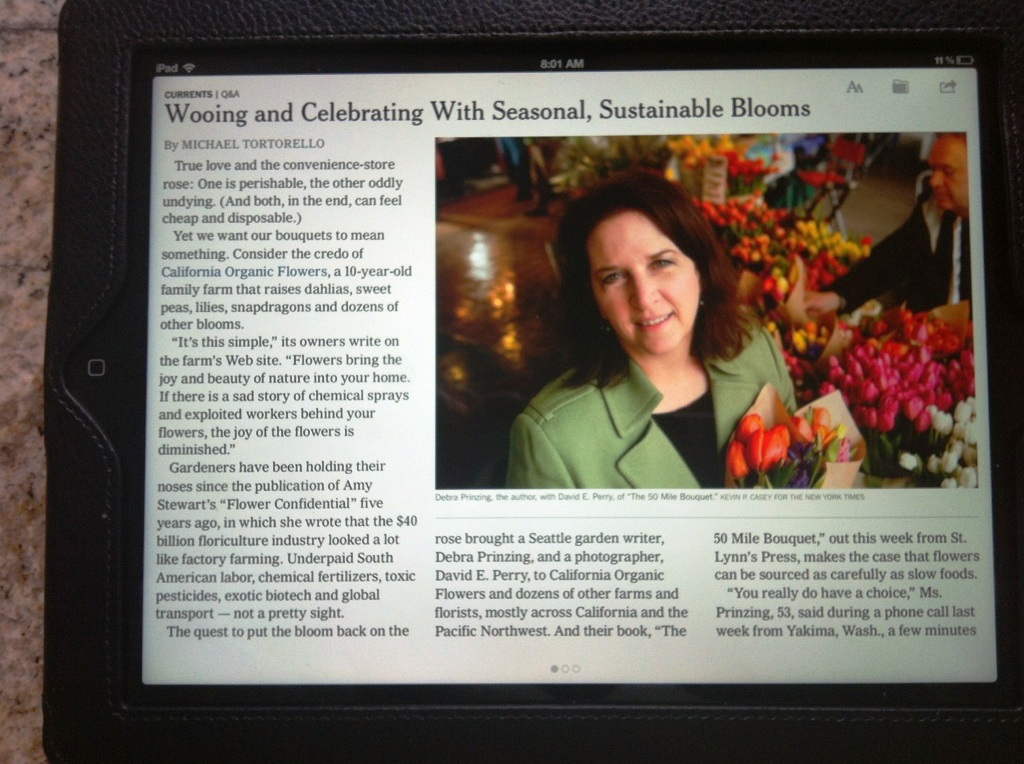
Today’s New York Times featured a piece about The 50 Mile Bouquet, complete with our book’s cover, two luscious flower photographs by David Perry, and a portrait of me. Everyone in the St. Lynn’s Press family is ecstatic, to say the least. This sort of thing doesn’t come around often, if ever, in the life of an author. Here is the full text of the Q&A.
Michael Tortorello, a gifted writer whose work regularly appears in the NYT Home section, set up a phone interview with me last week. Due to time zone differences, his travel and my own travel schedule, it turned out that between the two of us, we could only find one hour that worked for a phoner! I was literally seated in Stephanie Clevenger’s SUV, which was parked in front of The Red Barn – the gathering place for Yakima Master Gardeners. The minute Michael and I finished up the Q&A, which he recorded, I dashed into the barn and gave a Container Design presentation to about 75 MGs . Whew.

Another friend sent me a photo of her Ipad edition of the NYT.

There was a similar crunch when it came to getting a photograph, which took place earlier this week with just a few hour’s notice. Lola Honeybone of MediaWorks Nashville, a friend whose book PR skills are unparalleled, and whose help I enlisted for our book’s publicity efforts, emailed to ask: Where would be a good spot for a portrait?

I immediately thought of the brilliantly beautiful Pike Place Market stall operated by Alm Hill Gardens (Gretchen Hoyt and Ben Craft, owners). This is the single best place in Seattle for organic tulips, daffodils, hyacinths, lilies, and other amazing crops that come later in the year – like lilacs and peonies. Their farm is located in Everson, Wash., close to the Canadian border, and Alm Hill is a gold-standard flower fixture at the Market. My go-to source! Plus, since we have a 2-page spread on Gretchen and Alm Hill in The 50 Mile Bouquet, it seemed fitting to take the photo there.

I met freelance photographer Kevin Casey at the stall on Monday afternoon. My flower-seller pal Max Clement was working, as he does most Mondays, and he indulged us by stashing Kevin’s gear and my stuff while we did the photography. It was certainly less painful that I thought it would be, thanks to Kevin’s easygoing style and also the way he let me know what “worked” and what didn’t. Do I smile? Do I look serious? Ugh!

Here I am with a “taste of tulips,” posing with Kevin Casey, a NYT freelance photographer.

In the end, I’m pleased with the photo used in the story – especially because Max and the tulips appear in the frame!

But I had a chance to turn the tables on Kevin, too. I asked him to pose with me for a photo that Max shot with my Iphone. We look goofy, but who cares? It was way fun and an unforgettable experience. Turns out, Kevin is an old newspaper staffer like me, so we compared notes about editors and writers with whom we’ve both worked in the past. It really is a small world.

Last evening, I received an email from Mary Robson telling me that she’d seen the story on the NYT’s web site. It’s also fitting that I first heard from Mary, a dear friend to so many gardeners and readers from her days as a popular columnist with The Seattle Times, and as King Co.’s Extension Agent who trained hundreds of Master Gardeners over the years. Mary and I co-authored The Washington-Oregon Gardener’s Guide in 2004 (and Lola was our publicist then – see what a small world it is?). What a treat to hear it first from her – the best co-author a girl could ever have.

This morning, the “real” print edition arrived in our driveway. Bruce went out to get it first and used the edge of the Home section to tickle my face and wake me up at about 6:30 a.m. Later in the day, friends texted and emailed their own photos taken of the story in the print edition and Ipad version.

I know that the 24-hour high is about to wind down, but then again, maybe not. There is something called an after-life for stories. I know because when my own articles are posted online I’m always surprised to see that they have an extended shelf life, sometimes for years.

For now, I’m just grateful and happy to have been part of the experience. Something great is coming from the combined creative efforts of two people who adore and admire flower farmers and floral designers. So as my friend, the late Linda Plato, would have said: “It’s all good.”

Spring is blooming!

Saturday, March 17th, 2012

March 20th is just around the corner – thankfully! And blooms are everywhere – under our noses, poking through the soil, erupting from branches, and filling our vases. Hurrah!

Here are some of the hints of spring that have come my way:

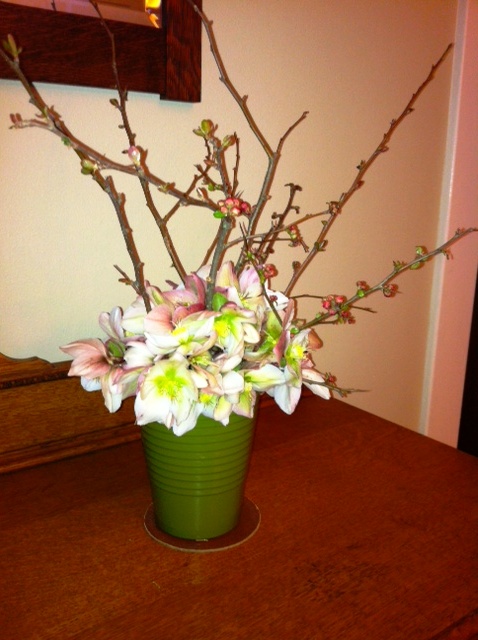
Kay's flowering quince branches and the delicate hellebores make for a stunning, early spring bouquet!

1. A DIY designer gets inspired by her own garden’s bounty. Earlier this week, an email with this charming photo appeared in my in-box from Kay Christie, who attended one of my demonstrations at the Northwest Flower & Garden Show last month. Thanks so much for sharing, Kay! And for the kind words. Keep designing!

I wanted to show you an arrangement I just made with cuttings from my garden. I really loved your demo at the flower and garden show. It gave me the idea for this. I also used chicken wire inside to hold the stems. Thanks do much for the inspirational talk.

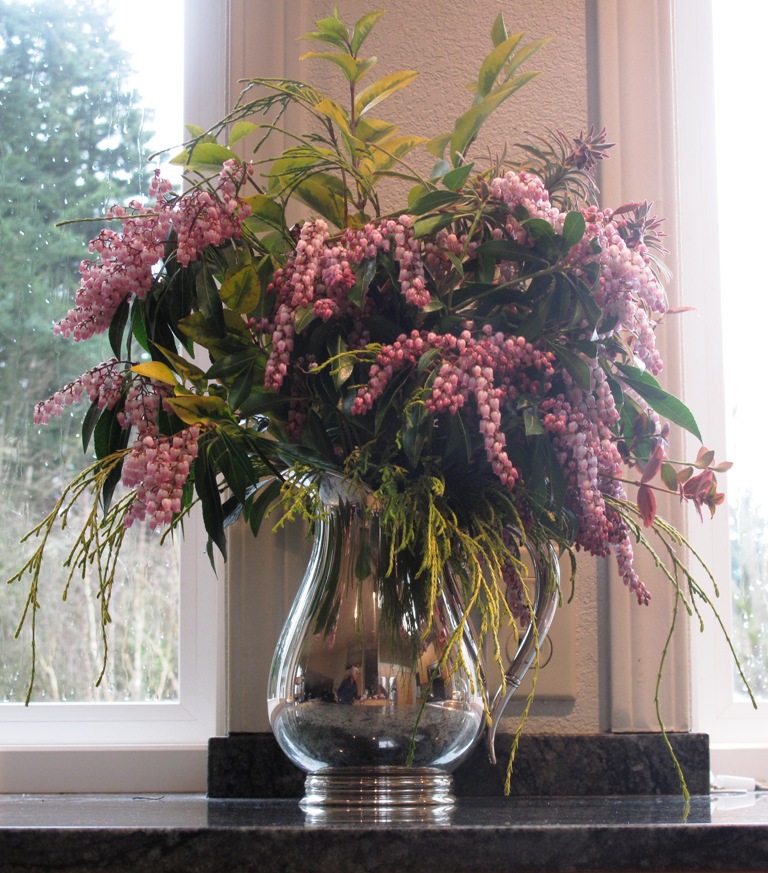
A silver pitcher contains a sublime bouquet in a pink-and-gold palette, by Peggy Shelley.

2. A talented gardener clips goodies from her backyard for a special arrangement. Like Kay, Woodinville, Wash., gardener Peggy Shelley harvests beautiful floral ingredients from her landscape. I visited Peggy and her husband Al Shelley (also a gifted gardener) earlier this month to interview them for an upcoming Better Homes & Gardens article about their garden (the feature will appear in the August 2012 edition). There was a gorgeous bouquet on the kitchen counter and of course, I couldn’t take my eyes off of it. It included pink-flowering Japanese pieris, bi-colored pink-and-green euphorbia stems, golden thread branch cypress sprigs and lemon-yellow privet foliage. Peggy told me something quite inspiring – and I’m going to remind myself of her passion every time I head into my own garden:

The biggest satisfaction of my garden comes from making a bouquet and giving it to a friend.

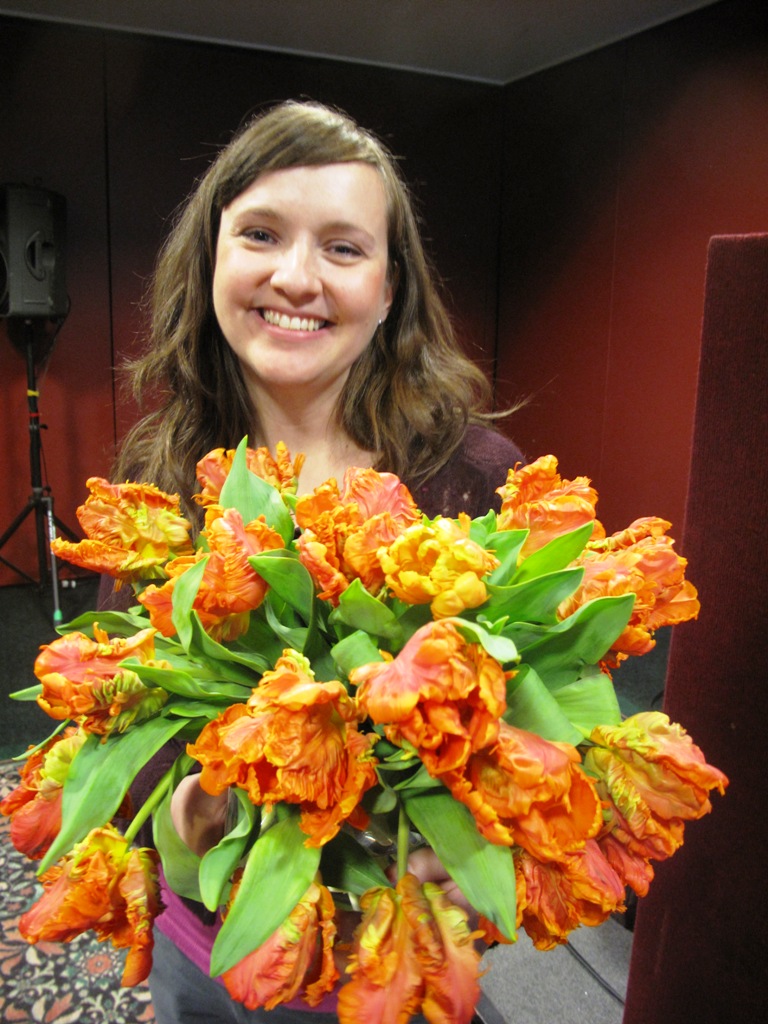
Lynn Fosbender of Pollen, an eco-friendly floral designer in Chicago, with her beautiful bouquet of local spring tulips.

3. Local flowers arrive just in time for a Chicago designer. Last Sunday, I was in Chicago to speak at the Chicago Flower & Garden Show (thanks, Bill Aldrich, for inviting me!). I called Lynn Fosbender, who owns Pollen, a sweet, ec0-conscious floral studio, and asked if she could bring a bouquet to my talk and also pass out her business cards. I wanted to showcase Lynn as a home-town resource for Chicago area floral customers, and let them know about her intentional design philosophy of using local flowers whenever possible. “I’d love to come,” she said. “But March 11th is still pretty early. I probably won’t be able to find local flowers from my sources.”

Then, to my delight, Lynn showed up with a vase of the most stunning vibrant orange-and-green parrot tulips I’d ever seen! “Spring has been mild here – and one of my local growers called me on Friday to let me know his tulips were ready to harvest,” Lynn said. What a wonderful treat. I wrote a post about Lynn when I first met her in 2012. Here’s a link to that story. I was so impressed with her vision for her business:

For several years I thought I would like to own a full-service flower shop that was eco-friendly. I knew if anyone should do it, it should be me.

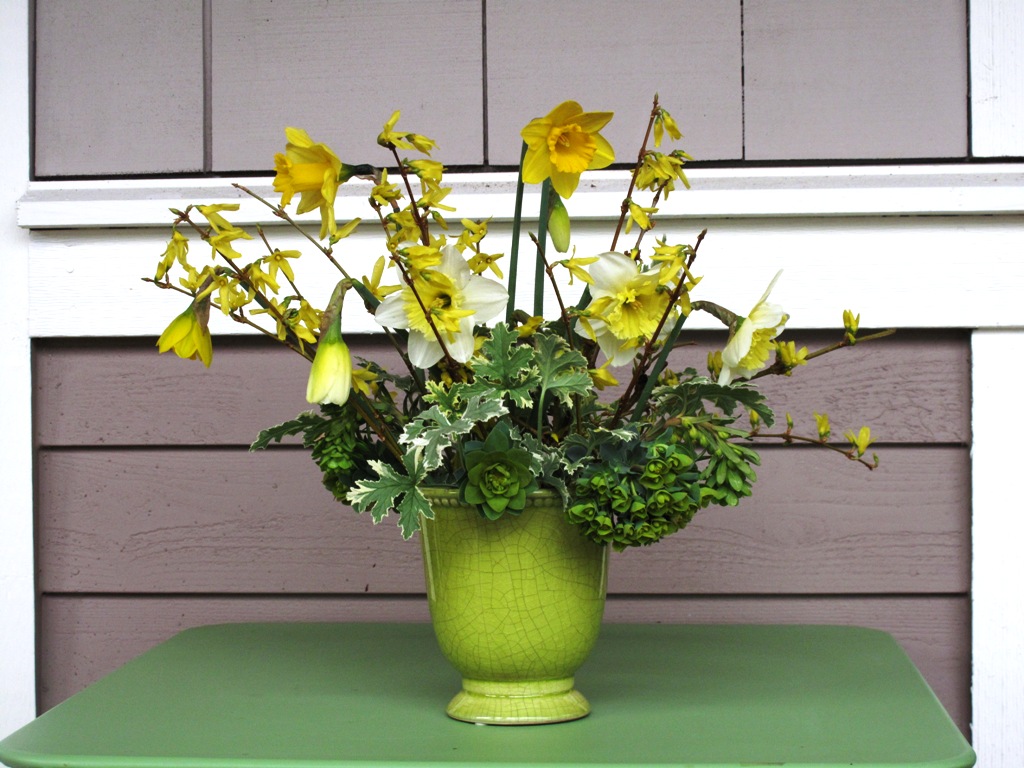
Spring's yellow and lime floral gifts collected in a green vase.

4. See what my own garden yielded this week. I’ve been making a local and seasonally-inspired floral arrangement every single week for the past 20 weeks (since the first week of November). It’s part of my plan to create a book or blog called 52-Weeks-of-Local-Flowers. It’s been fun, creative, and very educational to discover what I can source from local growers, local farmers’ markets, and of course, my own backyard.

Yellow and green are the theme of this week! I used two types of euphorbia (dipping the cut stems in boiling water helped “seal” the ends so the milky white sap didn’t drain into the vase); two types of daffodils that the prior owners of our home planted on the parking strip along the street; lots of bright-yellow-flowering forsythia; and some lovely variegated foliage from the scented geranium plant I’ve been babysitting in my garage under the shop lights. Everything came together nicely in a small green-glazed vase and a vintage flower frog held the stems in place.

Today, strangely, it’s snowing in Seattle. I soaked my sweet pea seeds in water last night and I plan to plant them in flats in the garage today. I had wanted to weed and prep the beds, but really? I think I’ll wait and see if it warms up a bit! Happy Almost-Spring!

Meet the NEW Sunset Western Garden Book

Wednesday, March 7th, 2012

SUNSET GIVEAWAY

I’ve drawn names of all those who answered my question below and here are the five “winners” of a FREE copy of The New Sunset Western Garden Book, courtesy of Sunset. The question: What is your favorite ornamental landscaping plant (shrub, grass, perennial, etc.) to harvest for a cut bouquet? yielded these winners/answers:

Jen Y: peonies

Paula: bunnytails grass blossoms or pilotus joey

Carol: Peonies, nandina branches and berry clusters

Nicole: hellebores

Kim: dahlias

CONGRATULATIONS! You will soon be hearing from Dana Smith of Sunset Publishing, who needs your mailing address.

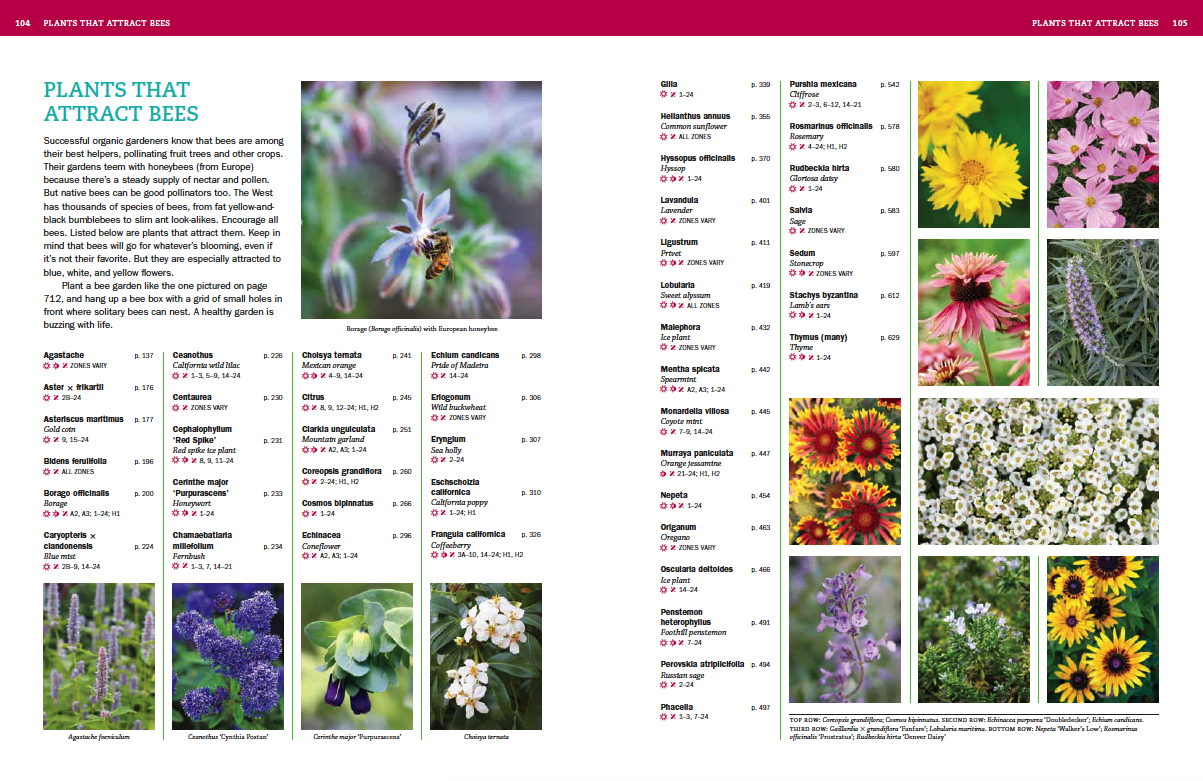
I recently had a chance to interview Kathleen Brenzel, garden editor for Sunset magazine – and editor of Sunset’s new, 2012 edition of The New Sunset Western Garden Book,  (Sunset Books, $34.95 for flexible binding, $44.95 for hardcover), a “bible” for western gardeners.

Whether you’re new to gardening or have logged many planting seasons with your hands in soil, it’s the single best go-to reference for garden-makers in our region. As chunky as the Yellow Pages, this essential guide to the West’s ornamental and edible landscape has been around for 80 years. I’ve owned every version since the early 1990s, including the most recent 2007 edition, which is dog-eared from much use.

When I got my hands on the just-released ninth edition last month, I thought: How different can this really be? I asked Kathy to walk us through the book’s 768 pages:

How did you go about updating this edition? Before we did anything else, we assembled a panel with landscape architects, horticulture educators from UC Berkeley and Cal Poly San Luis Obispo, nursery people and new graduates who had used our last edition as a textbook. The recent grads told us that in order to make “The New Sunset Western Garden Book” relevant, it had to have a digital component. They said: “We go everywhere with our smartphones, so we want to be able to take a photo of a plant we see on the hiking trail and look it up instantly.”

How did you go digital? Now you can take the best of Sunset with you to the garden center, nursery and your yard. You can get the free mobile edition of this book’s Plant Finder on your smartphone. (Search for Sunset Plant Finder.) With it, you can access more than 2,000 plants — and search by plant name, ZIP Code, climate zone, sun and water requirements, and type. There’s a companion online Plant Finder that lets you browse by color, height, spread and special needs.

How else is the book interactive? The last section of “The New Sunset Western Garden Book” is a practical guide. We’ve added a camera icon on the bottom of the pages, pointing you to corresponding videos on our website. It’s nice to read directions on planting a tomato in a pot and then watch a video of one of our editors showing you exactly how to do that.

What are the other major updates? This is the first edition to feature plant photos exclusively, rather than illustrations. There are more than 2,000 plant photos. We also updated the entire plant encyclopedia. That was the biggest job in the whole book. Every plant was reappraised, and we added many new varieties now available in nurseries. We went to growers all over the west and compared our existing plant database with what they are now offering; we asked what they thought we should include and why.

How many new plants did you add? The new book has 9,000 plants, up from 8,000 in the last edition. We also had to check the botany of every plant because botanists are constantly reclassifying plants.

What can new gardeners gain from the book? The section “Gardening Start to Finish” is more instinctive for the beginner. We walk them through the whole growing process from A to Z. We also have practical sections on gardening for wildlife and native plants, growing herbs and water-wise plants.

What can more experienced gardeners gain from the new book? The plant encyclopedia is filled with tip boxes of additional information – like how to propagate a sweet potato vine or when to cut ornamental grasses for the vase.

You have more edibles, don’t you? We asked ourselves: “What do people want most from ‘The New Sunset Western Garden Book’ right now? You’d have to be totally checked out not to notice a huge wave of edible gardening, so we wanted to amp up our coverage. I’m really happy with the “what edibles to plant when” charts for warm-season and cool-season veggies.

What’s your favorite take-away from the book? There’s an underlying theme that acknowledges how we garden now – with an interest in natural gardening and sustainability. Our gardens are smaller, but they’re stylish and sustainable.

Note: A version of this Q&A appeared in the LA Times HOME blog on February 17th.


DIY Bouquets in Dallas

Thursday, March 1st, 2012


I spent a wonderful day with floral design students at the Dallas Arboretum.

First-time floral designers and experienced arrangers converged at the Dallas Arboretum and Botanical Gardens last Saturday for a few hours of inspiring floral creativity.

In planning the hands-on workshop with education director Joy Ijams, I worried that late February in Dallas could present some challenges. That is, when it came to procuring local and seasonal design ingredients. Fortunately for the 20 folks who participated in our sold-out class, my fears were allayed.

For the success of our event, I have several awesome people to acknowledge. First of all, thanks goes to Joy – the ever-upbeat program planner who invited me to speak about The 50 Mile Bouquet in a morning lecture and then to teach what she called a “make and take” workshop after our lunch break.

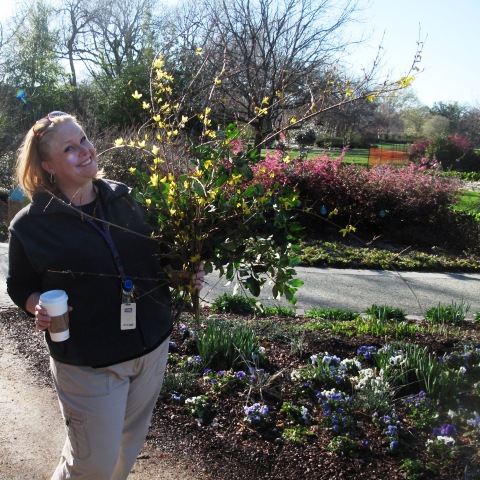
Education director Joy Ijams and I did a little “pruning” the morning of my class…to harvest branches and foliage for our student-designers to use.

It was Joy who creatively conjured up the format and got the word out to the Arboretum audience. It also was Joy who picked me up at the airport on Friday night and took me to Central Market so we could shop the flower department to augment our menu of botanical ingredients with domestic tulips and fragrant stock (she also suggested we undertake some ‘moonlight pruning’ at the Arboretum, but we were both exhausted and decided to wait until the following morning).

Joy, along with her education department colleagues and volunteers, made everything run smoothly. Our students were happy and engaged – and all the AV systems worked to perfection.

The following morning, prior to the arrival of those attending the 10 AM lecture, Joy and I headed out to the Arboretum’s display gardens with Felcos in hand. We were motivated by a concern that we wouldn’t have enough greenery otherwise. Sorry, Jimmy, but we harvested from the fringes of your borders, including clipping from the back sides of Indian hawthorn, just-blooming forsythia, phlomis, and rosemary. Oh, and a few minor branches from a saucer magnolia. 

Texas cut flower grower Cynthia Alexander is not only a great farmer, she’s a talented floral designer!

We were in pretty good shape with our supermarket flowers and the just-cut foliage. That’s because we knew Cynthia Alexander of Quarry Flower Farm was soon to arrive with goodies from her fields and orchards. In anticipation of this class, I had reached out to several of the Dallas area members of the Association of Specialty Cut Flower Growers (ASCFG) and connected with Cynthia, whose farm is located in Celina, Texas. She did not disappoint!

Cynthia agreed to harvest everything she had on hand and bring it to our class. Yes, it’s still early spring on Cynthia’s rather young flower farm, but you’d never know it by the fabulous, overflowing galvanized French flower buckets she delivered.

They contained an awesome mix of spring bulbs (several daffodil varieties); uncommon foliage (cardoons, hoar hound, and other green boughs); and lots of flowering fruit-tree branches. I’m so pleased that Cynthia joined us.

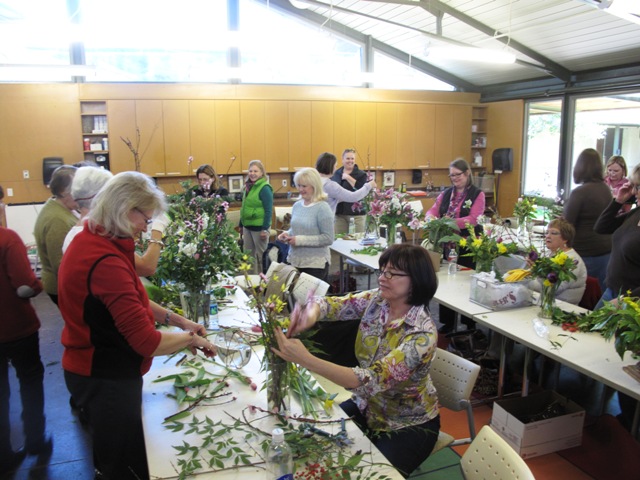
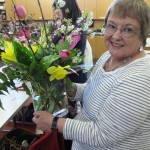
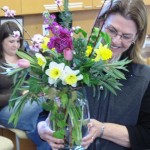
Floral design – en masse – in a classroom filled with passionate and creative women.

It allowed me to introduce her farm to students in both the morning and afternoon class. Plus, she participated in the floral design workshop – and inspired all of us with her avant-garde creation! As soon as Cynthia walked into the classroom, I recognized her; we realized that we must have met or at least spoken with one another at the 2010 Tulsa ASCFG conference. This time, we’ve become more than passing strangers and I can’t wait to return to Dallas to see Cynthia’s farm first-hand.

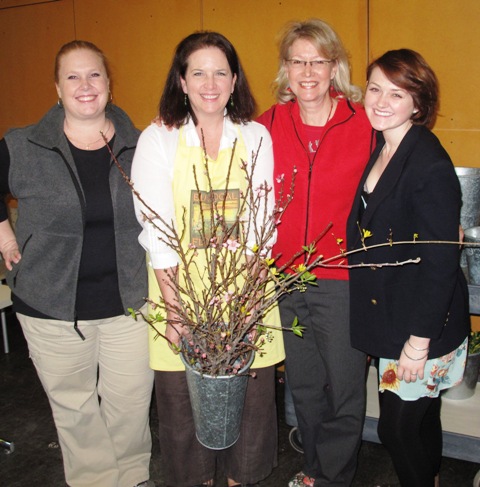
My “dream team:, from left: Joy Ijams of The Dallas Arboretum; Debra Prinzing (me); Cynthia Alexander of Quarry Flower Farm; and Whitney White, new-generation floral designer.

A few other secret ingredients enhanced the Saturday afternoon workshop — more fresh-from-the-garden floral elements and a talented florist (read on to discover to whom I’m referring). First, Joy and I had asked those who wished to do so to bring cuttings from their own gardens – and wow, what a great selection of foliage arrived! Second, I was sent an “angel” in the form of Whitney White, a twenty-something floral designer whose father Jay White is a fellow member of Garden Writers Association and an email pal of mine. Whitney arrived like a dream….Jay encouraged her to attend the morning workshop and as soon as we met I recruited Whitney to help with the afternoon class. It was nice to have her talent and that of a few other pro’s in the class to share tips about composition, line, form and color. I can’t wait to see where her career takes her. Currently, Whitney is working for a hot Dallas design firm called Bows and Arrows. They are very lucky to have her!

Once all our ingredients were assembled, I started out the class by discussing my favorite “green” floral design techniques:

  • Use a recycled or repurposed vase
  • Stabilize stems with organic or re-usable material, such as an armature of branches or twigs, wood aspen (Excelsior), old-fashioned flower frogs, chicken wire and a foliage nest.
  • Strip all foliage from the portion of the stem that will be under water; fresh-cut ever stem and plan on refreshing the water every day or two.

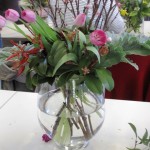
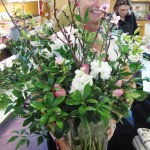
The students exceeded their own expectations with a beautiful lineup of designs. You can see some of their examples here.

Bottom line: Gardeners are ideal floral designers. We know the form, habit, bloom time and character of the ingredients in our gardens. And so we know how and when to harvest those ingredients — and arrange them in companionable displays in a vase. Perhaps this is an unscientific, alternative approach to floral design. But it makes sense to me! When you use seasonal ingredients, then they will naturally look like they belong together in a vase.

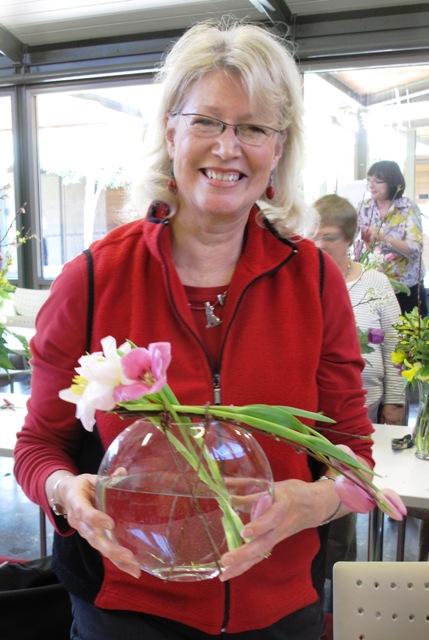
Here’s a lovely gallery of the local-seasonal-sustainable designs that filled our vases: