The Slow Flowers Podcast is the award-winning show known as the “Voice of the Slow Flowers Movement.” Launched in 2013 as the original flower podcast, we’ve devoted more than 10 years to covering the business of flower farming, floral design, and the Slow Flowers sustainability ethos. Listen to a new episode each Wednesday, available for free download here at slowflowerspodcast.com or on iTunes, Spotify, and other podcast platforms.
I first met Slow Flowers member Amy Balsters in 2018 when she was a wedding and event florist operating as Amy Nicole Floral. We both attended a floral conference and during a few days together, we made a friendly connection. Later that year, Amy relocated with her family from Southern California to the Washington, D.C., area and the timing was ideal for her to attend the 2nd Slow Flowers Summit in the nation’s capital. And she joined Slow Flower Society as a member.
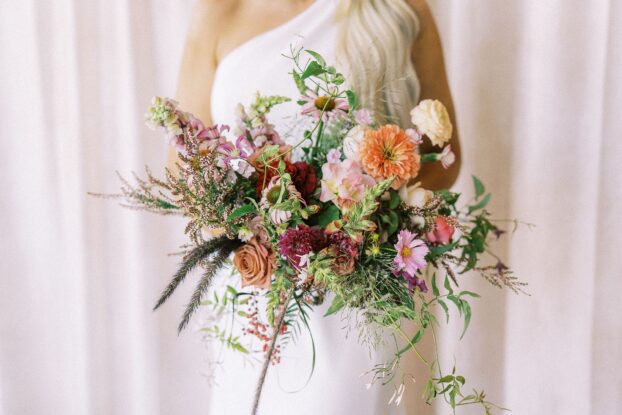
Through our social media connections, I watched as she began teaching bouquet-making skills around the country, helping florists learn the art of the loose and airy bouquet style. One of her workshops promised: “if you struggle with your bouquets feeling tight, lacking dimension or movement, or creating anxiety, this class is for you.”
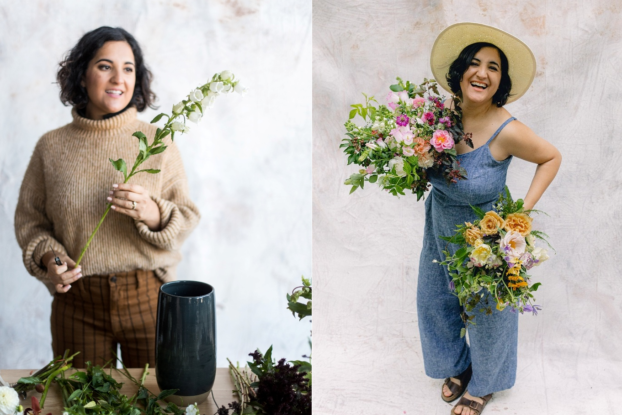
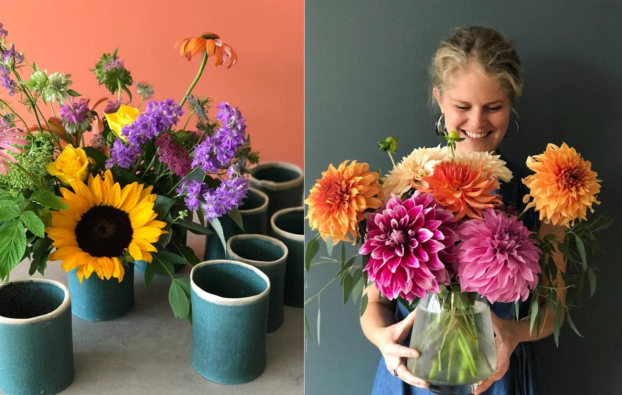
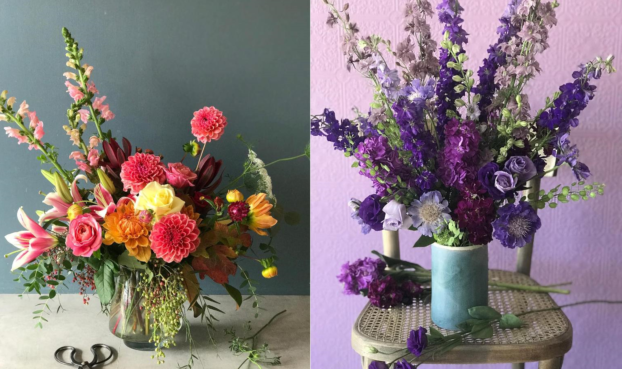
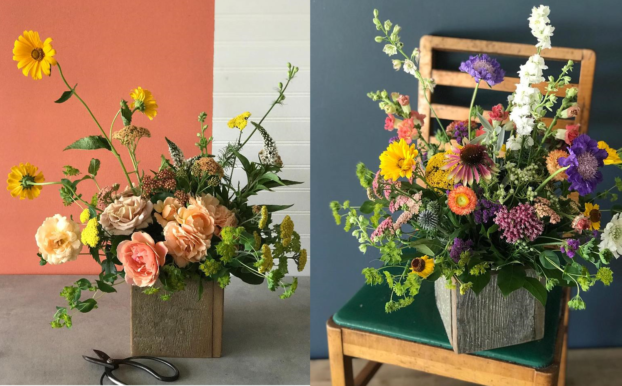
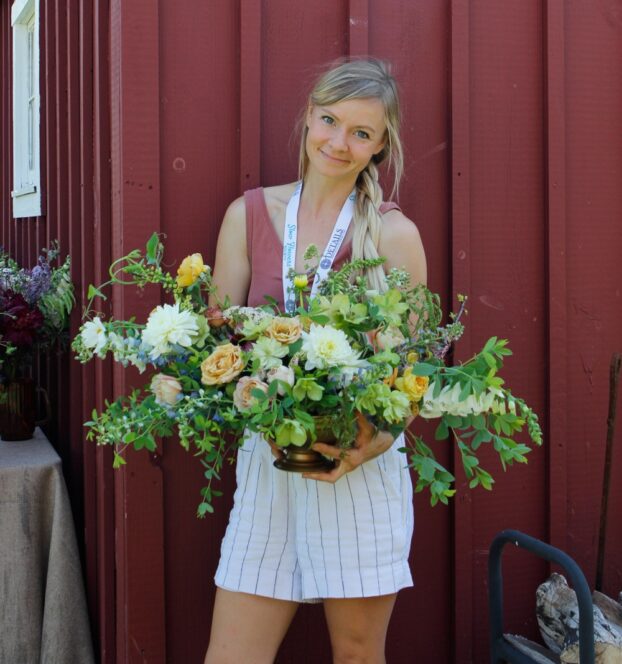
A few years ago, she rebranded her business as The Floral Coach and began to teach online and in person workshops. Classically trained, Amy is an award-winning floral design educator with vast industry experience spanning 2 decades in retail floristry, weddings, and special events. She specializes in teaching the romantic-inspired, “loose and airy style” and is the creator of Bouquet Bootcamp, a comprehensive design course and hands-on workshop series.
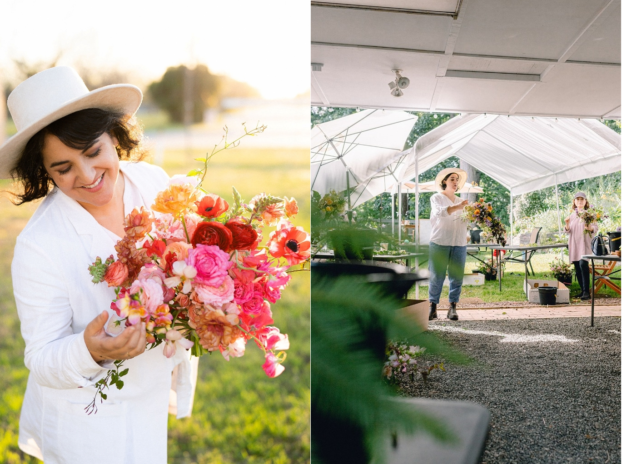
In late August, I met up with Amy in San Diego where we both participated in the CalFlowers FunNSun Conference. Amy taught two hands-on bouquet making workshops and I was a panelist for the Floral Marketing presentation. I flew in a day early so I could take Amy’s workshop and I asked her to sit down with me for a video interview.
I’m so thrilled to share her story with you –and to connect you with Amy’s educational offerings.
This week’s News: Join the Slow Flowers September 16 Meet-Up
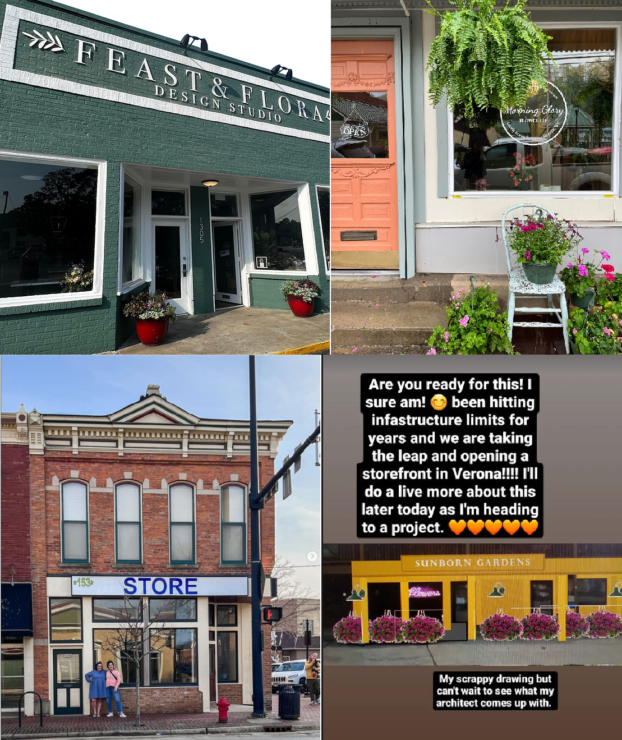
Four of the new floral storefronts welcomed in 2022 (and there are more!). Clockwise, from top/left: Feast & Flora (Charleston, SC); Morning Glory Flower Co. (Glenville, WV); Sunborn Gardens (Madison, WI); and Wilrett Flower Co. (DeKalb, IL).
It’s September and I wanted to give you a head’s up that our monthly Slow Flowers Member Meet-up is returning after our summer break! Typically, we all meet in the Zoom Room on the 2nd Friday of each month, but for this month only, we’ve scheduled the Meet-Up for the 3rd Friday – September 16th, 9 am Pacific/Noon Eastern. Our focus is “Diving into Retail Flower Shops,” and you’ll meet four Slow Flowers members who will join us (virtually) from their new retail spaces and give us a virtual tour. How can you create your community’s “favorite little flower shop”? Our member experts will share a “checklist” for anyone thinking of moving from a private studio or farm to the retail landscape.
This show is brought to you by Slowflowers.com, the free, online directory to more than 850 florists, shops, and studios who design with local, seasonal and sustainable flowers and to the farms that grow those blooms. It’s the conscious choice for buying and sending flowers.
Thank you to our lead sponsor, Farmgirl Flowers. Farmgirl Flowers delivers iconic burlap-wrapped bouquets and lush, abundant arrangements to customers across the U.S., supporting U.S. flower farms by purchasing more than $10 million dollars of U.S.-grown fresh and seasonal flowers and foliage annually. Discover more at farmgirlflowers.com.
Thank you to Red Twig Farms. Based in Johnstown, Ohio, Red Twig Farms is a family-owned farm specializing in peonies, daffodils, tulips and branches, a popular peony-bouquet-by-mail program and their Spread the Hope Campaign where customers purchase 10 tulip stems for essential workers and others in their community. Learn more at redtwigfarms.com.
Thank you to the Seattle Wholesale Growers Market, a farmer-owned cooperative committed to providing the very best the Pacific Northwest has to offer in cut flowers, foliage and plants. The Growers Market’s mission is to foster a vibrant marketplace that sustains local flower farms and provides top-quality products and service to the local floral industry. Visit them at seattlewholesalegrowersmarket.com.
Thank you to the Association of Specialty Cut Flower Growers. Formed in 1988, ASCFG was created to educate, unite, and support commercial cut flower growers. It mission is to help growers produce high-quality floral material, and to foster and promote the local availability of that product. Learn more at ascfg.org.
Thanks so much for joining us today! The Slow Flowers Podcast is a member-supported endeavor, downloaded more than 886,000 times by listeners like you. Thank you for listening, commenting and sharing – it means so much. As our movement gains more supporters and more passionate participants who believe in the importance of our domestic cut flower industry, the momentum is contagious. I know you feel it, too.
If you’re new to our weekly Show and our long-running Podcast, check out all of our resources at SlowFlowersSociety.com and consider making a donation to sustain Slow Flowers’ ongoing advocacy, education and outreach activities. You can find the donate button at slowflowerspodcast.com.
Thank you for listening! Sending love, from my cutting garden to you! (c) Missy Palacol Photography
I’m Debra Prinzing, host and producer of the Slow Flowers Show & Podcast. The Slow Flowers Podcast is engineered and edited by Andrew Brenlan. The content and opinions expressed here are either mine alone or those of my guests alone, independent of any podcast sponsor or other person, company or organization. Next week, you’re invited to join me in putting more Slow Flowers on the table, one stem, one vase at a time.
I’m excited to share today’s show with you for a number of reasons. My guest is farmer-florist Jenny Chantz of Merritt Meadows Flower Farm. Recently, we recorded this conversation about her farm, her market, her flowers and her story.
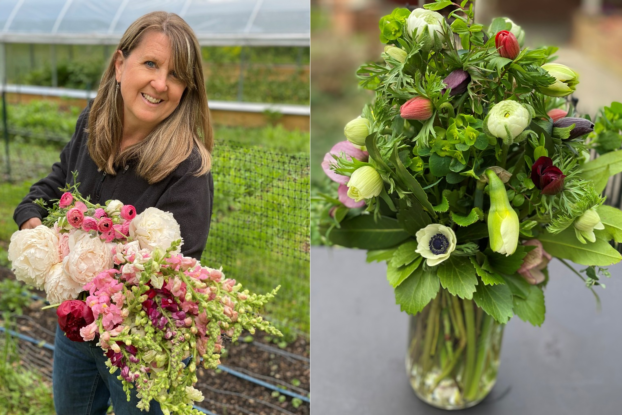
Jenny Chantz of Merritt Meadows Flower Farm (left); the spring “friendship” bouquet that Jenny made and delivered to Debra’s friend.
Our conversation began this past April, when I reached out to Jenny for help with a few floral deliveries I wanted to send a friend who was experiencing some tough medical issues. I searched the map of Slow Flowers members in the greater Philadelphia market, comparing zip codes and distances, and determined that Jenny’s Merritt Meadows Flower Farm was pretty close to the facility where my friend had been admitted.
I reached out and to my delight, what I needed was exactly the type of specialized service that Jenny offers! It was springtime, so she harvested and designed two bouquets during the season, delivering them in person to my friend. While the need for flowers was a sad one, I felt so comforted having a Slow Flowers member to call! Jenny took time to email me a list of the flowers she planned to harvest — an organic flower arrangement of anemones, ranunculus, daffodils and locally grown foliages of dusty, eucalyptus, euphorbia, privet, cherry laurel and pachysandra. She sent me photos and reassured me that it all went well.
A custom Merritt Meadows Flower Farm bouquet – grown and arranged by Jenny Chantz (shown at right)
Getting to know more about Jenny and Merritt Meadows inspired me to invite her to join me as a guest on the Slow Flowers Show. We are in for a treat!
Four of the new floral storefronts welcomed in 2022 (and there are more!). Clockwise, from top/left: Feast & Flora (Charleston, SC); Morning Glory Flower Co. (Glenville, WV); Sunborn Gardens (Madison, WI); and Wilrett Flower Co. (DeKalb, IL).
It’s September and I wanted to give you a head’s up that our monthly Slow Flowers Member Meet-up is returning after our summer break! Typically, we all meet in the Zoom Room on the 2nd Friday of each month, but for this month only, we’ve scheduled the Meet-Up for the 3rd Friday – September 16th, 9 am Pacific/Noon Eastern. Our focus is “Diving into Retail Flower Shops,” and you’ll meet four Slow Flowers members who will join us (virtually) from their new retail spaces and give us a virtual tour. How can you create your community’s “favorite little flower shop”? Our member experts will share a “checklist” for anyone thinking of moving from a private studio or farm to the retail landscape.
This show is brought to you by Slowflowers.com, the free, online directory to more than 850 florists, shops, and studios who design with local, seasonal and sustainable flowers and to the farms that grow those blooms. It’s the conscious choice for buying and sending flowers.
Thank you to our lead sponsor, Farmgirl Flowers. Farmgirl Flowers delivers iconic burlap-wrapped bouquets and lush, abundant arrangements to customers across the U.S., supporting U.S. flower farms by purchasing more than $10 million dollars of U.S.-grown fresh and seasonal flowers and foliage annually. Discover more at farmgirlflowers.com.
Thank you to CalFlowers, the leading floral trade association in California, providing valuable transportation and other benefits to flower growers and the entire floral supply chain in California and 48 other states. The Association is a leader in bringing fresh cut flowers to the U.S. market and in promoting the benefits of flowers to new generations of American consumers. learn more at cafgs.org.
Thank you to Store It Cold, creators of the revolutionary CoolBot, a popular solution for flower farmers, studio florists and farmer-florists. Save $1000s when you build your own walk-in cooler with the CoolBot and an air conditioner. Don’t have time to build your own? They also have turnkey units available. Learn more at storeitcold.com.
Thank you to Details Flowers Software, a platform specifically designed to help florists and designers do more and earn more. With an elegant and easy-to-use system–Details is here to improve profitability, productivity, and organization for floral businesses of all shapes and sizes. Grow your bottom line through professional proposals and confident pricing with Details’ all-in-one platform. All friends of the Slow Flowers Podcast will receive a 7-day free trial of Details Flowers Software. Learn more at detailsflowers.com.
Thanks so much for joining us today! The Slow Flowers Podcast is a member-supported endeavor, downloaded more than 884,000 times by listeners like you. Thank you for listening, commenting and sharing – it means so much. As our movement gains more supporters and more passionate participants who believe in the importance of our domestic cut flower industry, the momentum is contagious. I know you feel it, too.
If you’re new to our weekly Show and our long-running Podcast, check out all of our resources at SlowFlowersSociety.com and consider making a donation to sustain Slow Flowers’ ongoing advocacy, education and outreach activities. You can find the donate button at slowflowerspodcast.com.
Thank you for listening! Sending love, from my cutting garden to you! (c) Missy Palacol Photography
I’m Debra Prinzing, host and producer of the Slow Flowers Show & Podcast. The Slow Flowers Podcast is engineered and edited by Andrew Brenlan. The content and opinions expressed here are either mine alone or those of my guests alone, independent of any podcast sponsor or other person, company or organization. Next week, you’re invited to join me in putting more Slow Flowers on the table, one stem, one vase at a time.
If you’ve been following along for a while, you have noticed that 2022 is the 10-year celebration of the publication of The 50 Mile Bouquet, a book that, to be honest, started me along the journey that became the Slow Flowers Movement.
In a tribute to this small but mighty book, I’m spending this year circling back to interview as many people featured in its pages as possible. The 50 Mile Bouquet was photographed by David Perry, designed by James Forkner, and brought to market by St. Lynn’s Press publisher Paul Kelly.
The opening chapter of The 50 Mile Bouquet includes profiles of several of the flower farmers who shaped the story and influenced my understanding of domestic floral agriculture. These are people who grew specialty cut flowers long before the term Slow Flowers was coined. They are the OG’s the originals, who have quietly practiced their craft as artisan growers, supplying their customers, both flower lovers and florists, with superior quality heirloom blooms.
So, today, you will meet Charles and Bethany Little of Eugene, Oregon-based Charles Little & Co. Their story appears in a section called Growers’ Wisdom in which we introduce these inspiring growers.
Charles Little has tended to ornamental crops in the verdant Willamette Valley since 1986 and I value his perspective and insights about how flower farmers have navigated the past decade and more. You met Bethany Little earlier this year when I featured her as a guest during her appearance as a NWFGS instructor, and so this is a bonus interview.
This show is brought to you by Slowflowers.com, the free, online directory to more than 850 florists, shops, and studios who design with local, seasonal and sustainable flowers and to the farms that grow those blooms. It’s the conscious choice for buying and sending flowers.
Thank you to our lead sponsor, Farmgirl Flowers. Farmgirl Flowers delivers iconic burlap-wrapped bouquets and lush, abundant arrangements to customers across the U.S., supporting U.S. flower farms by purchasing more than $10 million dollars of U.S.-grown fresh and seasonal flowers and foliage annually. Discover more at farmgirlflowers.com.
Thank you to The Gardener’s Workshop, which offers a full curriculum of online education for flower farmers and farmer-florists. Online education is more important this year than ever, and you’ll want to check out the course offerings at thegardenersworkshop.com.
Thank you to Longfield Gardens, which provides home gardeners with high quality flower bulbs and perennials. Their online store offers plants for every region and every season, from tulips and daffodils to dahlias, caladiums and amaryllis. Check out the full catalog at Longfield Gardens at longfield-gardens.com.
Thank you to Johnny’s Selected Seeds, an employee-owned company that provides our industry the best flower, herb and vegetable seeds — supplied to farms large and small and even backyard cutting gardens like mine. Find the full catalog of flower seeds and bulbs at johnnysseeds.com.
I want to announce the winner of our special giveaway of The Flower School book by Joseph Massie, last week’s Podcast guest. We asked listeners to like and follow our @slowflowerssociety IG post and also like and follow Joseph Massie, as well as share a comment with the name or names of their favorite focal flowers. Thanks so much to all who entered our random drawing for this fantastic new book! Our winner is Whitney Muncy of Emerald Design in Evansville, Indiana! Congratulations, Whitney! We’ll get that book off in the mail to you soon.
Thanks so much for joining us today! The Slow Flowers Podcast is a member-supported endeavor, downloaded more than 881,000 times by listeners like you. Thank you for listening, commenting and sharing – it means so much. As our movement gains more supporters and more passionate participants who believe in the importance of our domestic cut flower industry, the momentum is contagious. I know you feel it, too.
If you’re new to our weekly Show and our long-running Podcast, check out all of our resources at SlowFlowersSociety.com and consider making a donation to sustain Slow Flowers’ ongoing advocacy, education and outreach activities. You can find the donate button at slowflowerspodcast.com.
Thank you for listening! Sending love, from my cutting garden to you! (c) Missy Palacol Photography
I’m Debra Prinzing, host and producer of the Slow Flowers Show & Podcast. The Slow Flowers Podcast is engineered and edited by Andrew Brenlan. The content and opinions expressed here are either mine alone or those of my guests alone, independent of any podcast sponsor or other person, company or organization. Next week, you’re invited to join me in putting more Slow Flowers on the table, one stem, one vase at a time.
Check out one of Joseph Massie’s free YouTube tutorials above
I’m thrilled today to welcome Joseph Massie back to the Slow Flowers Podcast.
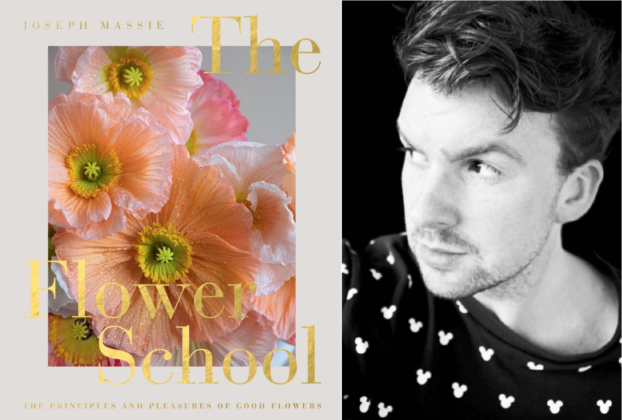
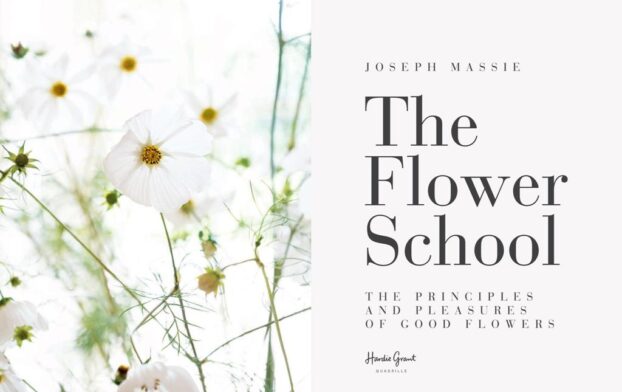
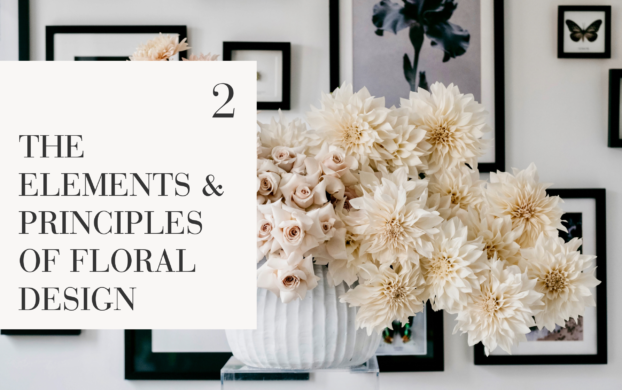
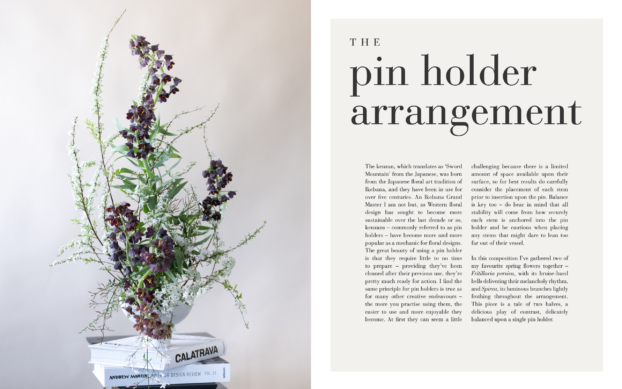
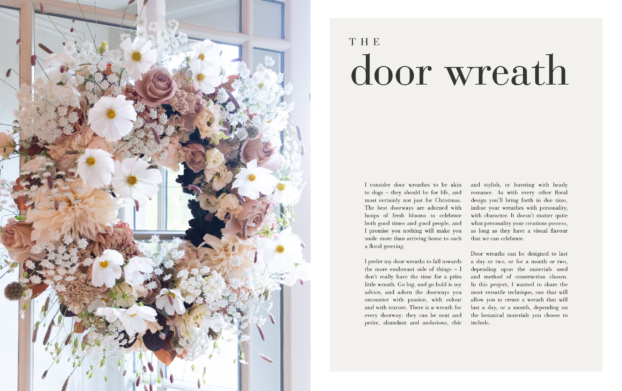
I wanted to share the great news of the arrival of Joseph’s first book,The Flower School, which has a subtitle: “the principles and pleasures of good flowers,” published by UK-based Hardie Grant and is now available online for pre-order. Click to read more about The Flower School book.
AND….we have a beautiful copy for a giveaway, so read on to learn how you can win!
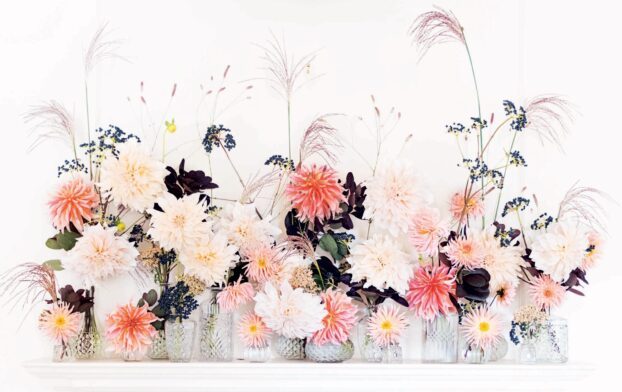
The Flower School is an impressive, 305-page book, brimming with full-color photography of the elements, principles and theory of floral design. There are 25 step-by-step floral arrangements – for the home, gatherings, celebrations and the pure pleasure of flowers.
Before we welcome Joseph, here’s a bit more of his story:
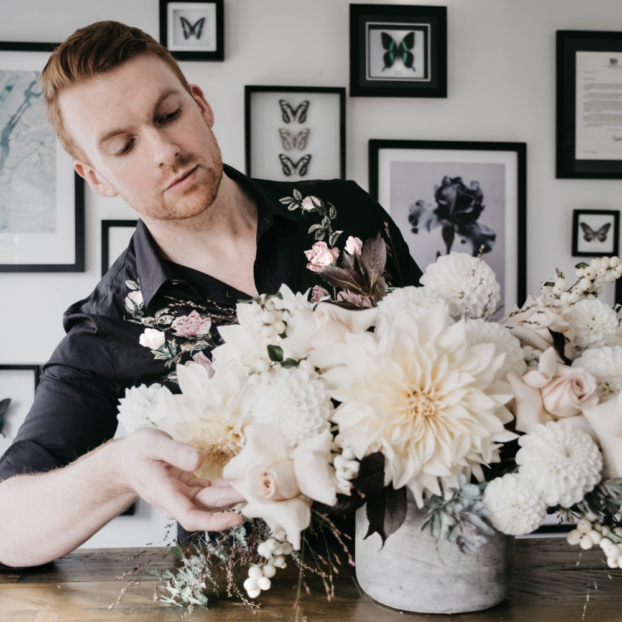
Frequently referred to by the media as ‘the floral artist of his generation,’ Joseph Massie is widely regarded as one of Europe’s top floral artists.
When he was just fourteen, Joseph desperately wanted a weekend job, and after successfully applying to the local flower stall, he began spending his weekends working there in his hometown of Liverpool, UK.
Perhaps to some it was an uncommon interest for a fourteen year old boy, but Joseph quickly found his vocation amongst the buckets of blossoms and buds.
Taking steps to pursue his passion, Joseph self funded his education and began to hone his practice and develop a creative ethos, participating in intense training sessions with top international designers and artists. To further build his artistic vocabulary, Joseph began to participate first in regional, followed by national, floral design competitions, and at age nineteen, won his first national design competition, the BFA Young Florist of the Year 2007.
With a clutch of prestigious awards, Joseph turned his attentions to artistic endeavours working across ten countries, on a wide variety of art projects including botanical couture, sculptures and installations. He has received seventeen national & international awards, including five consecutive RHS Gold Medals – and four Best in Show awards – at the world renown RHS Chelsea Flower Show — the youngest person ever to achieve this feat.
Joseph’s work has since been featured in press including The Times, The Independent, The Daily Mail and his work commissioned by international institutions and brands.
Thanks so much for joining me today. That was an inspiring conversation and I hope you were just as enchanted by Joseph’s story and love of floral design as I was.
As Joseph and I discussed, this book reflects his true passion to share his knowledge to encourage and inspire absolutely anyone who wants to work with flowers to be able to do so – and do it well.
He wants everyone — professionals and flower enthusiasts alike — to be empowered by the learning process of skills, techniques and principles for a strong floral design foundation. I couldn’t agree more.
By the way, Joseph was a guest on Episode 346, which aired April 2018, after we taught together at Tobey Nelson’s Whidbey Island Workshop. If you want to hear more about Joseph’s fascinating journey to flowers, you can listen to that conversation. I’ll share the link in today’s show notes..
If you’d like to enter our random drawing to win a copy of Joseph Massie’s new book, The Flower School, check out our Instagram promotion @slowflowerssociety — we will accept entries through Saturday, August 27th at midnight Pacific Time and announce the winner in next week’s Podcast episode.
Thank you to our Sponsors
This show is brought to you by Slowflowers.com, the free, online directory to more than 850 florists, shops, and studios who design with local, seasonal and sustainable flowers and to the farms that grow those blooms. It’s the conscious choice for buying and sending flowers.
Thank you to our lead sponsor, Farmgirl Flowers. Farmgirl Flowers delivers iconic burlap-wrapped bouquets and lush, abundant arrangements to customers across the U.S., supporting U.S. flower farms by purchasing more than $10 million dollars of U.S.-grown fresh and seasonal flowers and foliage annually. Discover more at farmgirlflowers.com.
Seattle Wholesale Growers Market, a farmer-owned cooperative committed to providing the very best the Pacific Northwest has to offer in cut flowers, foliage and plants. The Growers Market’s mission is to foster a vibrant marketplace that sustains local flower farms and provides top-quality products and service to the local floral industry. Visit them at seattlewholesalegrowersmarket.com.
Association of Specialty Cut Flower Growers. Formed in 1988, ASCFG was created to educate, unite, and support commercial cut flower growers. It mission is to help growers produce high-quality floral material, and to foster and promote the local availability of that product. Learn more at ascfg.org.
Red Twig Farms. Based in Johnstown, Ohio, Red Twig Farms is a family-owned farm specializing in peonies, daffodils, tulips and branches, a popular peony-bouquet-by-mail program and their Spread the Hope Campaign where customers purchase 10 tulip stems for essential workers and others in their community. Learn more at redtwigfarms.com.
Thanks so much for joining us today! The Slow Flowers Podcast is a member-supported endeavor, downloaded more than 879,000 times by listeners like you. Thank you for listening, commenting and sharing – it means so much. As our movement gains more supporters and more passionate participants who believe in the importance of our domestic cut flower industry, the momentum is contagious. I know you feel it, too.
If you’re new to our weekly Show and our long-running Podcast, check out all of our resources at SlowFlowersSociety.com and consider making a donation to sustain Slow Flowers’ ongoing advocacy, education and outreach activities. You can find the donate button at slowflowerspodcast.com.
Thank you for listening! Sending love, from my cutting garden to you! (c) Missy Palacol Photography
I’m Debra Prinzing, host and producer of the Slow Flowers Show & Podcast. The Slow Flowers Podcast is engineered and edited by Andrew Brenlan. The content and opinions expressed here are either mine alone or those of my guests alone, independent of any podcast sponsor or other person, company or organization. Next week, you’re invited to join me in putting more Slow Flowers on the table, one stem, one vase at a time.
Left: a selection of Kelsey’s handmade ceramic vases; Right: Kelsey Ruhland
My guest today is Kelsey Ruhland, owner of Foxbound Flowers a floral studio offering same-day flower delivery to the Eugene, Oregon, marketplace.
Her brand offers electric vehicle delivery, responsible sourcing, zero waste and non single-use plastics, as well as locally- and U.S.-grown flowers and plants. I’m especially fascinated with her flower shop hacks — using everything from upcycled cardboard and floral sleeves to create a second use for many materials that would otherwise land in the garbage or fill her recycling bin. You’ll see a few of those tricks in our interview.
Seasonal everyday arrangements featuring locally-grown flowers, designed by Foxbound Flowers
I visited Kelsey when I was in Oregon last month, eager to hear her story. Born and raised in North Dakota, Kelsey says she moved to Eugene, with her family to explore the mountains and big trees, enjoy the Pacific coast, the culinary scene, and frankly, to seek a warmer climate.
You will hear in our conversation that Kelsey has worked in the floral industry since 2008, previously owning a full-service retail floral shop in Bismarck, North Dakota, which specialized in wedding and event work. Her wedding florals have been featured on popular blogs such as Wedding Sparrow, Magnolia Rouge, Style Me Pretty, Dainty Obsessions, and in Rock and Roll Bride Magazine.
Kelsey recycles old wood fencing into beautiful, organic-looking flower vessels
When not arranging flowers, Kelsey enjoys hiking, playing piano, painting, and baking. And, as you will learn from our conversation, she is a true maker, adding ceramics, pottery, and woodworking skills to enhance one-of-a-kind offerings for customers.
I hope you grab a few takeaway tips for your own floral enterprise – I know I have.
This show is brought to you by Slowflowers.com, the free, online directory to more than 850 florists, shops, and studios who design with local, seasonal and sustainable flowers and to the farms that grow those blooms. It’s the conscious choice for buying and sending flowers.
Thank you to our lead sponsor, Farmgirl Flowers. Farmgirl Flowers delivers iconic burlap-wrapped bouquets and lush, abundant arrangements to customers across the U.S., supporting U.S. flower farms by purchasing more than $10 million dollars of U.S.-grown fresh and seasonal flowers and foliage annually. Discover more at farmgirlflowers.com.
Thank you to Details Flowers Software, a platform specifically designed to help florists and designers do more and earn more. With an elegant and easy-to-use system–Details is here to improve profitability, productivity, and organization for floral businesses of all shapes and sizes. Grow your bottom line through professional proposals and confident pricing with Details’ all-in-one platform. All friends of the Slow Flowers Podcast will receive a 7-day free trial of Details Flowers Software. Learn more at detailsflowers.com.
Thank you to Store It Cold, creators of the revolutionary CoolBot, a popular solution for flower farmers, studio florists and farmer-florists. Save $1000s when you build your own walk-in cooler with the CoolBot and an air conditioner. Don’t have time to build your own? They also have turnkey units available. Learn more at storeitcold.com.
Thank you to CalFlowers, the leading floral trade association in California, providing valuable transportation and other benefits to flower growers and the entire floral supply chain in California and 48 other states. The Association is a leader in bringing fresh cut flowers to the U.S. market and in promoting the benefits of flowers to new generations of American consumers. Learn more at cafgs.org.
Thanks so much for joining us today! The Slow Flowers Podcast is a member-supported endeavor, downloaded more than 877,000 times by listeners like you. Thank you for listening, commenting and sharing – it means so much. As our movement gains more supporters and more passionate participants who believe in the importance of our domestic cut flower industry, the momentum is contagious. I know you feel it, too.
If you’re new to our weekly Show and our long-running Podcast, check out all of our resources at SlowFlowersSociety.com and consider making a donation to sustain Slow Flowers’ ongoing advocacy, education and outreach activities. You can find the donate button at slowflowerspodcast.com.
Thank you for listening! Sending love, from my cutting garden to you! (c) Missy Palacol Photography
I’m Debra Prinzing, host and producer of the Slow Flowers Show & Podcast. The Slow Flowers Podcast is engineered and edited by Andrew Brenlan. The content and opinions expressed here are either mine alone or those of my guests alone, independent of any podcast sponsor or other person, company or organization. Next week, you’re invited to join me in putting more Slow Flowers on the table, one stem, one vase at a time.
My guest today is Colorado-based flower farmer and educator Briana Bosch. We recently met in person when Briana attended the Slow Flowers Summitand I’ve been wanting to host her on the show – so we finally got this conversation on the calendar to share with you.
Just a little bit of background: Armed with an MBA from the University of California, Briana established Blossom & Branch in 2019 with her husband. As she writes on the Blossom & Branch website:
“. . . cubicle life has just never been a fit for me. Farming runs in my blood: I am a fifth generation farmer, but I myself never thought I would get a chance to start up my own farm! We got lucky when we found 1.7 acres in the suburbs of Denver and moved to the farm in 2018.”
Briana Bosch during our Slow Flowers Summit Floral Takeover (c) Alex Brooks
The farm name Blossom & Branch refers to the unique site, which is half field (home to field-grown flowers such as annuals, roses and peonies), and half woods–where Briana and her husband focus on providing habitat for wildlife and pollinators through native plants such as chokecherries, american plum, currants, and serviceberries.
Let’s jump right in and meet Briana and learn about her farm, her focus on regenerative farming processes and carbon sequestration – and how she shares her flowers with her community of flower lovers and wedding clients.
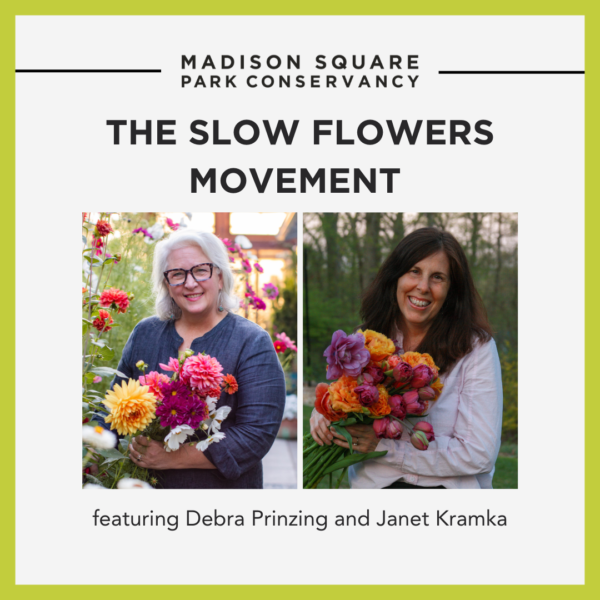
FREE Slow Flowers Webinar Madison Square Park Conservancy Lecture Series August 18, 2022
The Slow Flowers Movement is a response to the disconnect between humans and flowers in the modern era. Slow Flowers connects consumers with the source of their flowers, putting a human face of the flower farmer and floral designer behind each bouquet or centerpiece.
Join Slow Flowers Society founder Debra Prinzing and Slow Flowers member Janet Kramka, proprietor of Backyard Blooms for a free webinar 3-4 pm PT/6-7 pm ET on Thursday, August 18th. The conversation will focus on the importance of the Slow Flowers Movement, and how their work has both supported and been inspired by it. The Madison Square Park Conservancy Program is free and will be hosted on Zoom.
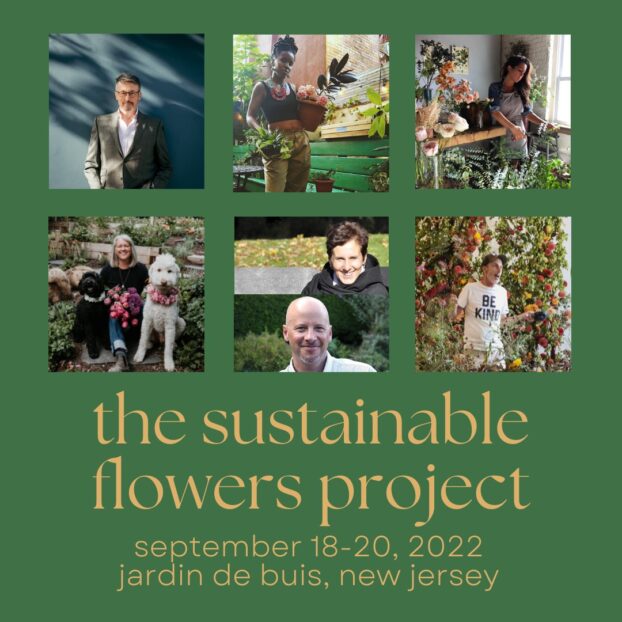
Slow Flowers Member Discount Sustainable Flowers Project Workshop September 18-20, 2022
SUSTAINABLE FLOWERS PROJECT: Slow Flowers has signed on as a partner in the September workshop produced by two of our members, Becky Feasby and TJ McGrath — the Sustainable Flowers Project. The three-day intensive + creative workshop explores sustainability with some of the biggest leaders in sustainable floristry today. The location: Jardin de Buis, in Califon, New Jersey; the dates: September 18-20, 2022. You’ll learn from Ingrid Carozzi, Tin Can Studios; British Designer Shane Connolly, Shane Connolly + Co.; flower farmer and social justice activist Amber Tamm, as well as Andrea Fillippone and Eric Fleisher, environmental designers and owners of Jardin de Buis, as well as from Becky and TJ. They have created a special $150-off promo code for Slow Flowers members who sign up. Register here with SF150.
This show is brought to you by Slowflowers.com, the free, online directory to more than 850 florists, shops, and studios who design with local, seasonal and sustainable flowers and to the farms that grow those blooms. It’s the conscious choice for buying and sending flowers.
Thank you to our lead sponsor, Farmgirl Flowers. Farmgirl Flowers delivers iconic burlap-wrapped bouquets and lush, abundant arrangements to customers across the U.S., supporting U.S. flower farms by purchasing more than $10 million dollars of U.S.-grown fresh and seasonal flowers and foliage annually. Discover more at farmgirlflowers.com.
Thanks to The Gardener’s Workshop, which offers a full curriculum of online education for flower farmers and farmer-florists. Online education is more important this year than ever, and you’ll want to check out the course offerings at thegardenersworkshop.com.
Thanks to Longfield Gardens, which provides home gardeners with high quality flower bulbs and perennials. Their online store offers plants for every region and every season, from tulips and daffodils to dahlias, caladiums and amaryllis. Check out the full catalog at Longfield Gardens at longfield-gardens.com.
Thanks to Johnny’s Selected Seeds, an employee-owned company that provides our industry the best flower, herb and vegetable seeds — supplied to farms large and small and even backyard cutting gardens like mine. Find the full catalog of flower seeds and bulbs at johnnysseeds.com.
Thanks so much for joining us today! The Slow Flowers Podcast is a member-supported endeavor, downloaded more than 874,000 times by listeners like you. Thank you for listening, commenting and sharing – it means so much. As our movement gains more supporters and more passionate participants who believe in the importance of our domestic cut flower industry, the momentum is contagious. I know you feel it, too.
If you’re new to our weekly Show and our long-running Podcast, check out all of our resources at SlowFlowersSociety.com and consider making a donation to sustain Slow Flowers’ ongoing advocacy, education and outreach activities. You can find the donate button in the column to the right.
Thank you for listening! Sending love, from my cutting garden to you! (c) Missy Palacol Photography
I’m Debra Prinzing, host and producer of the Slow Flowers Show & Podcast. The Slow Flowers Podcast is engineered and edited by Andrew Brenlan. The content and opinions expressed here are either mine alone or those of my guests alone, independent of any podcast sponsor or other person, company or organization. Next week, you’re invited to join me in putting more Slow Flowers on the table, one stem, one vase at a time.
Music credits: Enter the Room; Turning on The Lights; Gaena by Blue Dot Sessions http://www.sessions.blue