The Slow Flowers Podcast is the award-winning show known as the “Voice of the Slow Flowers Movement.” Launched in 2013 as the original flower podcast, we’ve devoted more than 10 years to covering the business of flower farming, floral design, and the Slow Flowers sustainability ethos. Listen to a new episode each Wednesday, available for free download here at slowflowerspodcast.com or on iTunes, Spotify, and other podcast platforms.
November 18th, 2015
Podcast: Play in new window | Download
Subscribe: Apple Podcasts | Podcast Index | | More
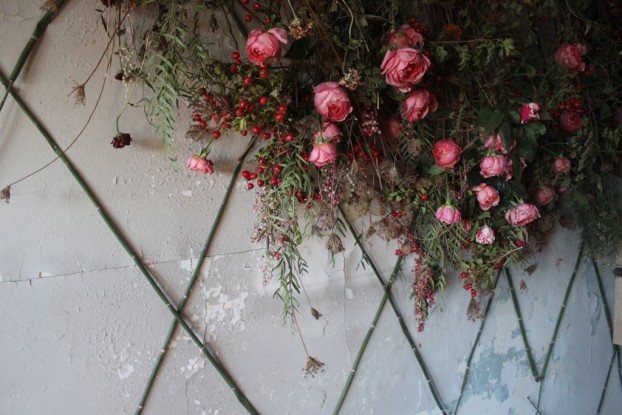
The alluring, feminine and wild interior wall of The Living Room at The Flower House, designed by today’s first three Podcast guests.
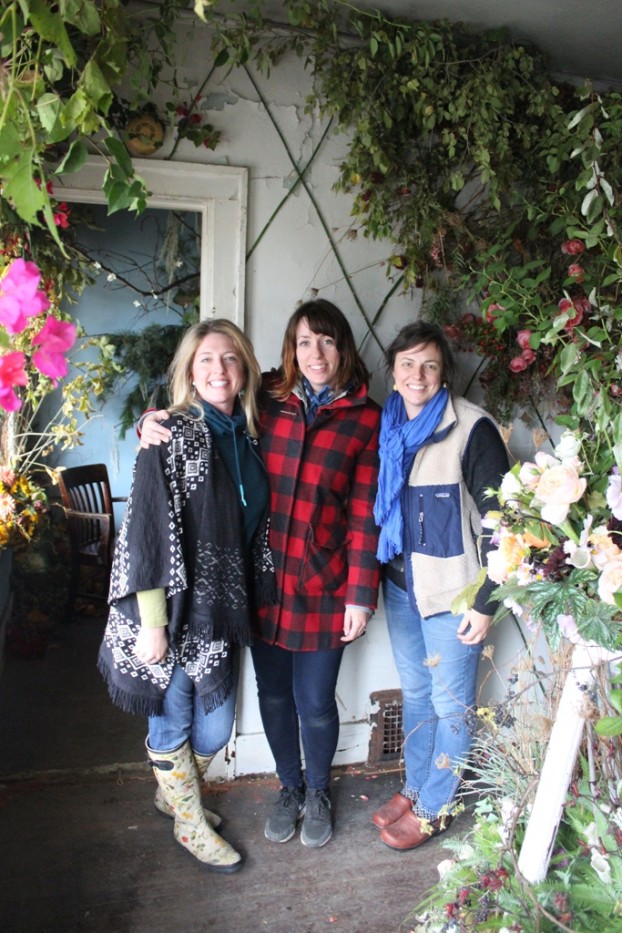
The Living Room design team, from left: Jody Costello, Kelli Galloway and Lia Colapietro
In the past few weeks I’ve shared with you a few interviews from floral designers involved with The Flower House in Detroit, the magical, celebrated, 3-day floral-art installation that was the brainchild of my friend Lisa Waud.
Today, we continue this miniseries with more conversations recorded with designers and flower farmers who came together just a month ago for this visionary project.
Please meet a trio of designers from three different states who came together to create the “living room” of The Flower House, the impactful first room that thousands of visitors were able to experience upon entering through the front door.
And you will hear from a floral designer-flower farmer duo about how their relationship has flourished this past season, culminating in the bountiful downstairs kitchen of The Flower House.
First off, please step into “The Living Room,” designed by Jody Costello of J. Costello Designs, Lia Colapietro of Lia Colapietro Floral Design and Kelli Galloway of Hops Petunia.
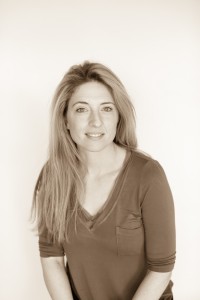
Jody Costello
Based in Royal Oaks, Michigan, outside Detroit, Jody Costello shares this statement on The Flower House web site:
detroit is my city. my parents were born and raised here, i was born and raised here. my great grandmother had a flower shop for decades in detroit. it’s been hard to witness detroit crumble. over the last few years, there’s been a change, an energy that gives us all hope that our hometown is making a comeback.
flower house to me is about recognizing detroit’s history and creating an ephemeral honor with flowers. and, i just can’t pass up the opportunity to work with such an inspiring group of very talented, supportive designers. for my space in flower house, i want the flowers to feel as if they just started growing; taking over.
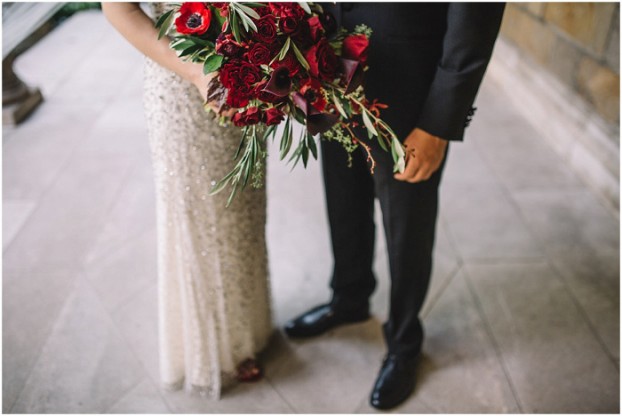
A Jody Costello-designed bouquet.
when i was 18, i lived in west virginia and i used to hike along the new river which once was filled with mining towns. they’ve all since disappeared but i loved the way nature began its takeover of the abandoned buildings. wildflowers and fern grew through the cracks of foundations and moss carpeted the roof.
i love finding just the perfect thing to put into an arrangement; gorgeous fruit from the local market, hunting down some sweet little blossom in my yard or finding a lilac bush blooming by the roadside. it’s all in the discovery and details for me.
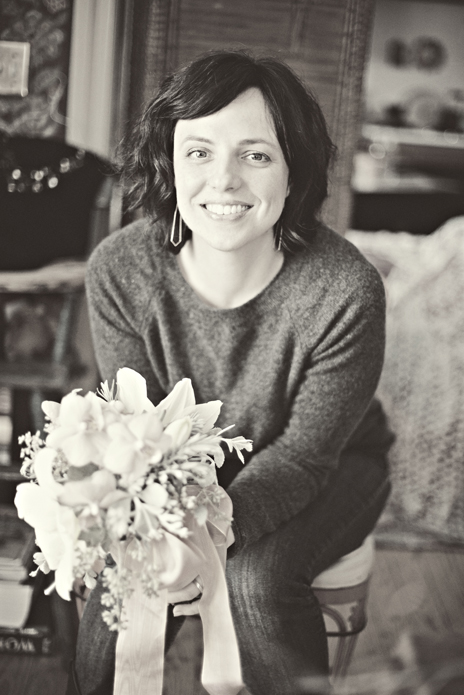
Lia Colapietro of Lia Colapietro Floral
Lia Colapietro is based in Perrysburg, Ohio, not too far from Toledo.
Here’s her statement:
what inspired me to get involved with flower house? to be honest, i just love what’s going on in detroit these days. flower house is a perfect opportunity to get involved, stretch my creativity, and work alongside gobs of talented, like minded folk.
as a hint of what i’m designing for my part, i would love play with a look that is overgrown, dreamy, and a little magical…
hands down, my favorite floral task is tromping around outside and hunting for the perfect hunk of moss, lichen-y branch, or snipping the most perfect bloom in the garden.
adding a foraged or home grown element to a project always makes a piece feel extra special. sharing that really makes my day.
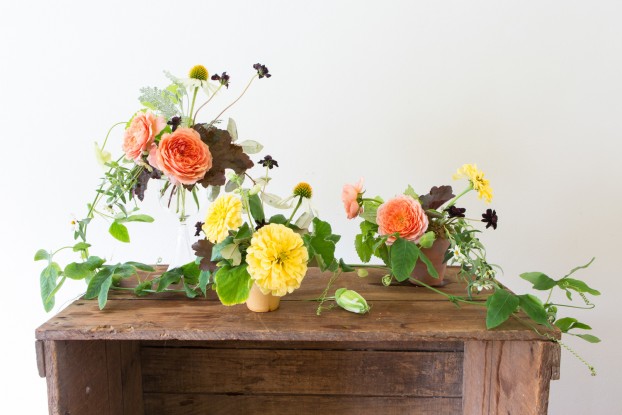
A seasonal still-life by Lia Colapietro
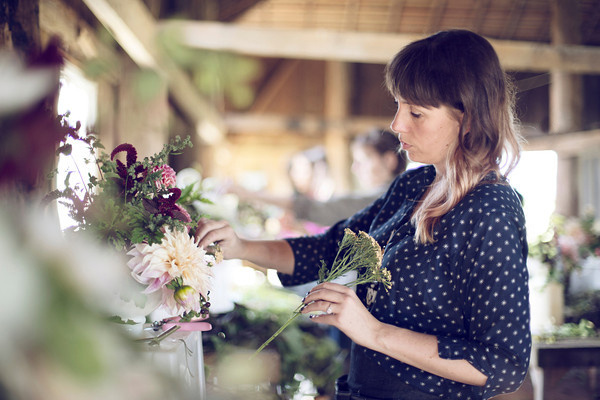
Kelli Galloway of Hops Petunia
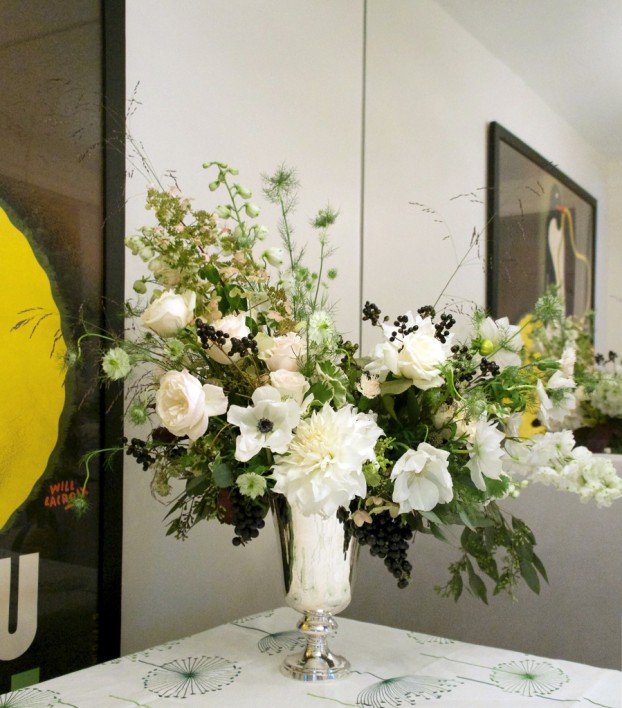
A beautiful arrangement by Kelli Galloway
Kelli Galloway of Hops Petunia Floral is based in Kingston, New York, about 1-1/2 hours north of New York City. Here are her observations:
i don’t exactly remember how i found out about the flower house project but i do remember the second i read of it i knew i needed to be a part of it. i grew up near detroit and went to college there, i spent a lot of my younger years running around that city, it holds a special place in my memories.
after i left, i was always drawn to it, i have such immense pride for it, it’s the hardest working city i know. watching it grow and change over the years and finally get the recognition it deserves, makes my heart so warm. that being said, i’ve been trying to figure out a way i could be a part of it again, both to give back and create something beautiful there. This project is the most perfect way for me to do so. i’m so honored to be a part of it.
my style is very layered and organic, like the way some of houses in detroit have become, i want to build into the house, as it would want me to, to add more layers and more shape, i plan on creating a floral room that engulfs you and hugs you, from the walls to your heart.
what do i love most as a florist? color, and the way nature can shake you when you least expect it. i love finding those special gems in a bunch of roses or anemones that is just perfectly different, the petals have fallen just so or the color isn’t quite the same, i love building drama with color, makes me giddy
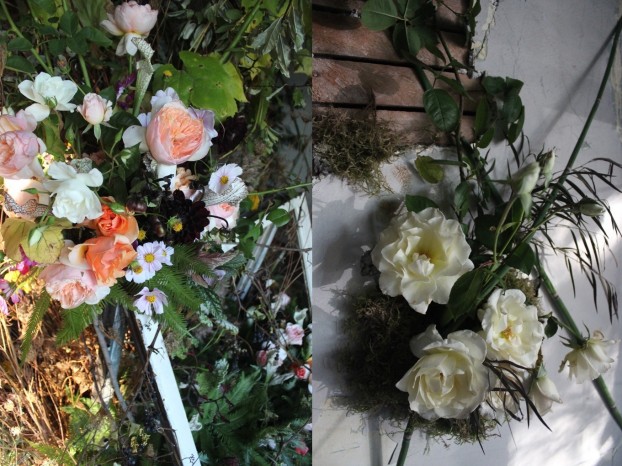
Rose details from The Living Room, created by Kelli, Jody and Lia
I recorded my interview with Lia, Kelli and Jody on October 15th, the final installation day at The Flower House. Please enjoy this short clip!
Here’s how you can follow each of the creatives you meet here today:
Follow Jody Costello on Facebook
Follow Jody Costello on Instagram
Follow Lia Colapietro on Instagram
Follow Kelli Galloway/Hops Petunia on Facebook
Follow Kelli on Instagram
Follow Kelli on Pinterest
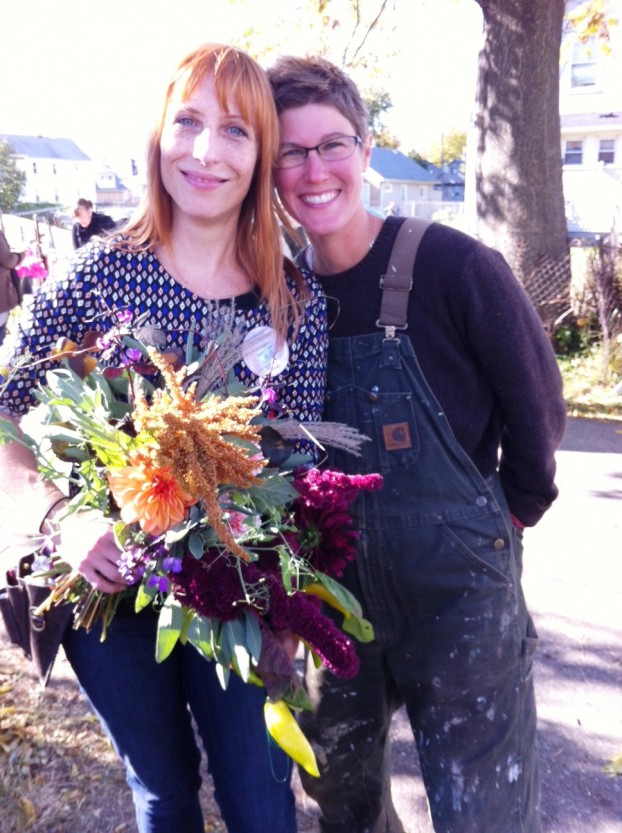
Susan McLeary (left) and Amanda Maurmann (right), photographed at The Flower House
I captured this second interview on the same day with Susan McLeary of Passionflower Design and flower farmer Amanda Maurmann of Cornman Farms.
Amanda’s Michigan-grown flowers and produce were featured in “Fruits of Labor,” the downstairs kitchen designed by Susan, Francoise Weeks and several other talented designers. Hear my recent podcast interview with Susan and Francoise here.
This interview introduces Amanda’s story and reinforces the interdependence between floral designers and flower farmers. Susan and Amanda discuss this during our conversation.
I found it especially fun because we were all seated on the ground as Sue and Amanda stripped foliage to prep stems for the beautiful Michigan-grown floral centerpieces that would decorate the Field to Vase Dinner tables that evening.
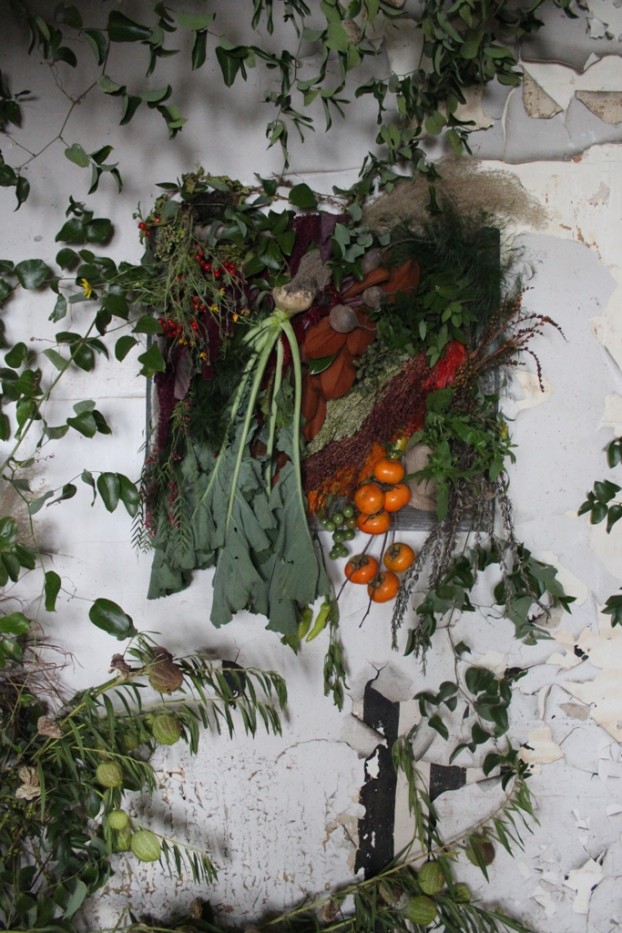
A bountiful moment appears on the wall of the downstairs kitchen, where Susan McLeary and Francoise Weeks incorporated vegetables grown by Cornman Farms.
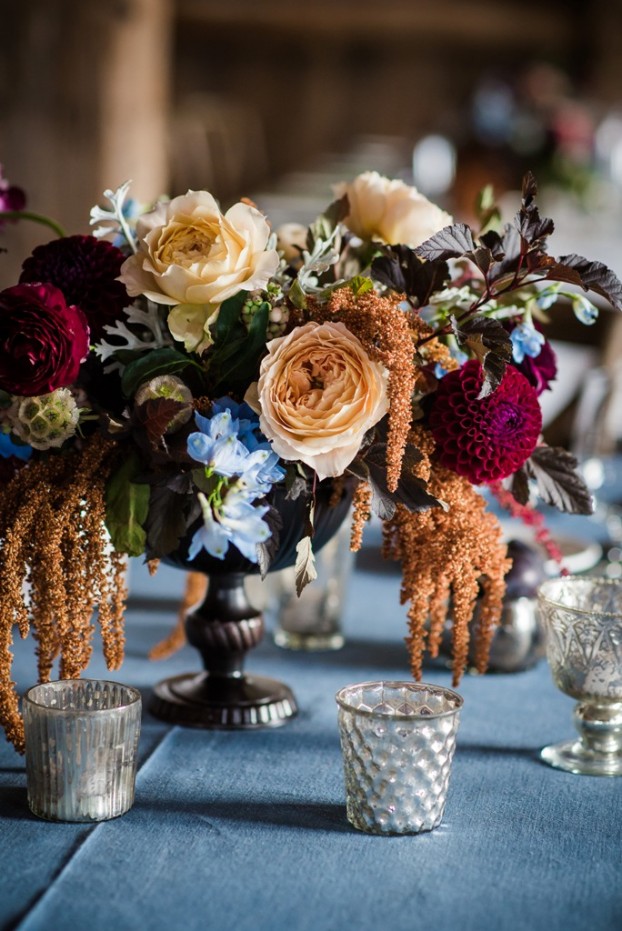
Dahlias from Summer Dreams Farm and other botanicals from Cornman Farms, in a Susan McLeary / Passionflower design (c) Chelsea Brown Photography
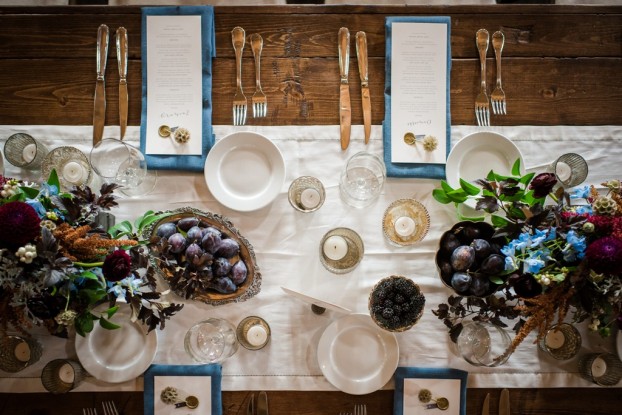
A Susan McLeary/Passionflower-designed tablescape for a recent wedding at Cornman Farms (c) Chelsea Brown Photography
Susan and Jody both mentioned their excitement about a new dahlia farmer named Michael Genovese of Summer Dreams Flower Farm in Oxford, Michigan.
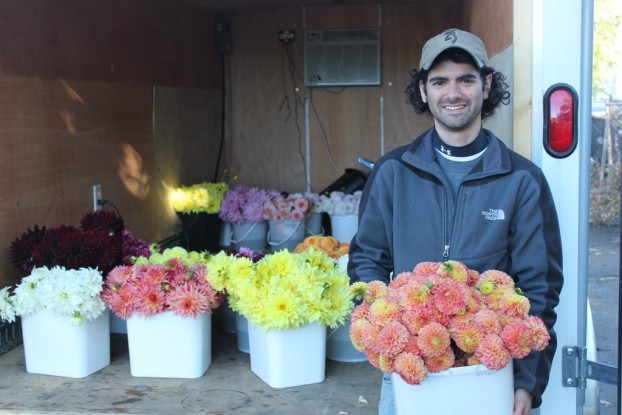
Michael Genovese, Michigan’s new dahlia farmer who shared his talents and his flowers at The Flower House.
Like Amanda of Cornman Farms, Michael and his beautiful Michigan blooms adorned The Flower House and the Field to Vase Dinner that amazing evening.
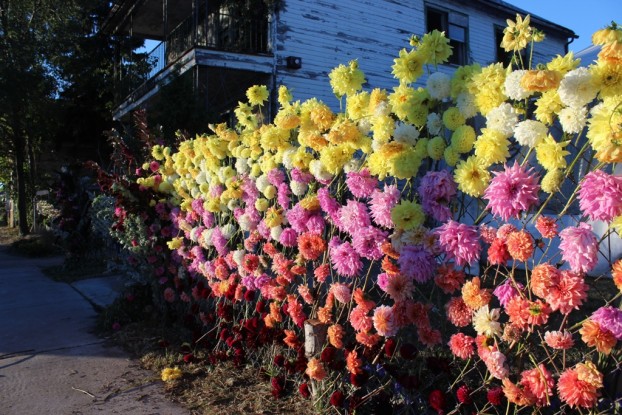
Dahlias from Summer Dreams Farm adorned the chain link fence in front of The Flower House
I want to give a special shout-out to Michael, who jumped in and helped the F2V staff and volunteers far beyond the call of duty. He lent muscle and equipment to prepare the yard where the giant dinner tent was erected – and boy do I have a ton of respect for this young man.
I hope to return to Michigan next growing season to visit Cornman Farm and Summer Dreams and share more about these flower farms with you. You can follow Michael and Summer Dreams here.
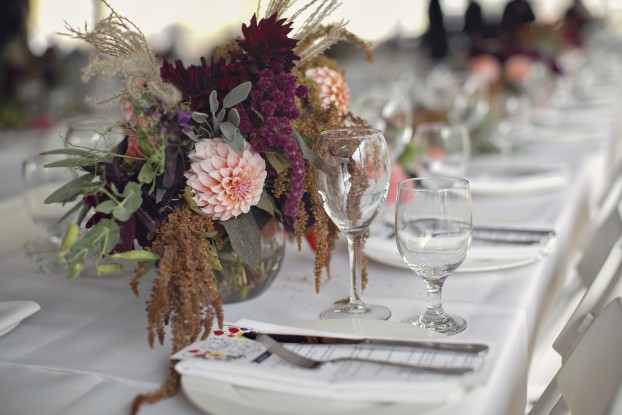
Michigan-grown flowers, from Cornman Farms and Summer Dreams Farms, adorned the Field to Vase Dinner at The Flower House, designed by Susan McLeary of Passionflower. Heather Saunders Photography for F2V
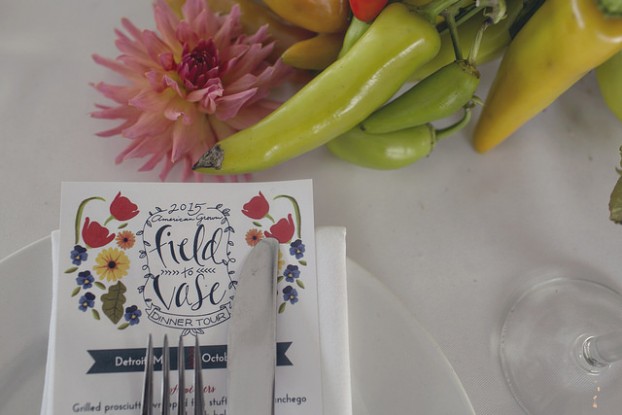
A charming pepper-dahlia detail at the place settings. Heather Saunders Photography for F2V
Episodes of the Slow Flowers Podcast have been downloaded more than 71,000 times. I thank you and others in the progressive American-grown floral community for supporting this endeavor.
Until next week, you’re invited to join me in putting more American grown flowers on the table, one vase at a time. And If you like what you hear, please consider logging onto Itunes and posting a listener review. THANK YOU to each and every one of you for downloading, listening, commenting and sharing. It means so much.
The content and opinions expressed here are either mine alone or those of my guests alone, independent of any podcast sponsor or other person, company or organization.
The Slow Flowers Podcast is engineered and edited by Andrew Wheatley and Hannah Holtgeerts. Learn more about their work at shellandtree.com.
Posted in American Grown, Blog Posts, Creativity, floral design, Flower Farming, General, Podcast Episodes, SLOW FLOWERS Podcast, Slowflowers.com the Directory of American Flowers | 1 Comment »
November 11th, 2015
Podcast: Play in new window | Download
Subscribe: Apple Podcasts | Podcast Index | | More
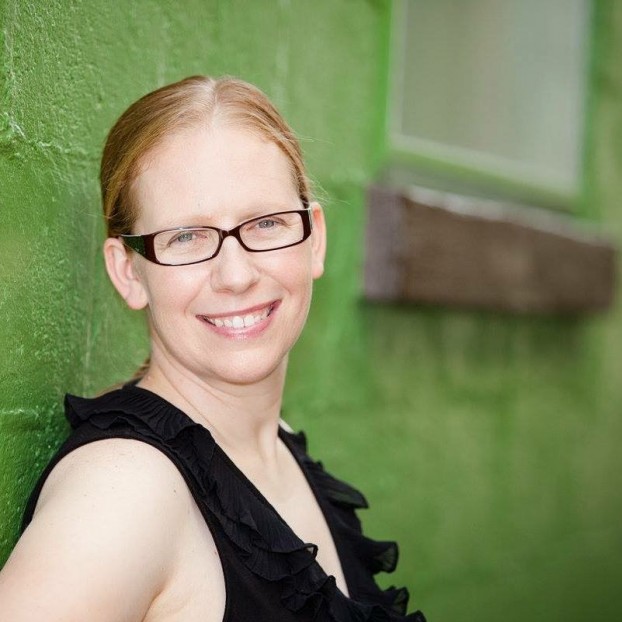
Andrea K. Grist of Andrea K. Grist Floral Art, a Kansas City, Missouri-area floral designer.
I have another great conversation to share with you this week, one that is both unique to this guest’s personal story while also thoroughly symbolic of so many who have embraced the Slow Flowers Movement.
Andrea K. Grist is a wedding and event florist and owner of Lee Summit, Missouri, based studio, Andrea K. Grist Floral Art, which serves the Kansas City metro area. Andrea and I met through a Facebook conversation, which is similar to many of our social media/floral connections.
Earlier this year, Andrea reached out and told me she had been listening to the Slow Flowers Podcast and that she also had been reading my books.
That was a flattering connection, of course, but what impressed me since then, over the course of the past six or eight months, is that Andrea shared with me links to one of her blog posts discussing her visits to Missouri flower farms and featuring her designs and styled photo shoots using locally grown and American grown flowers.
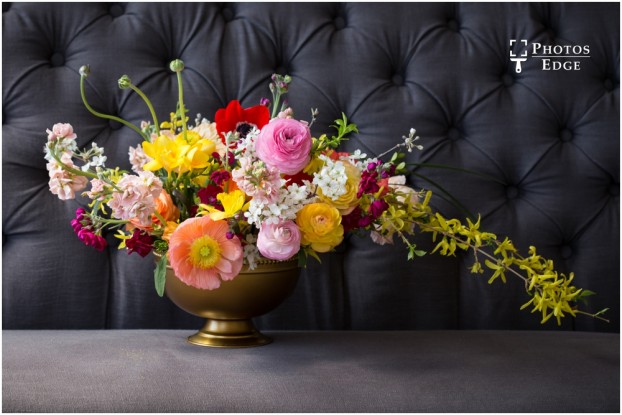
All-local Missouri flowers designed by Andrea K. Grist (c) Erin Hernandez-Reisner
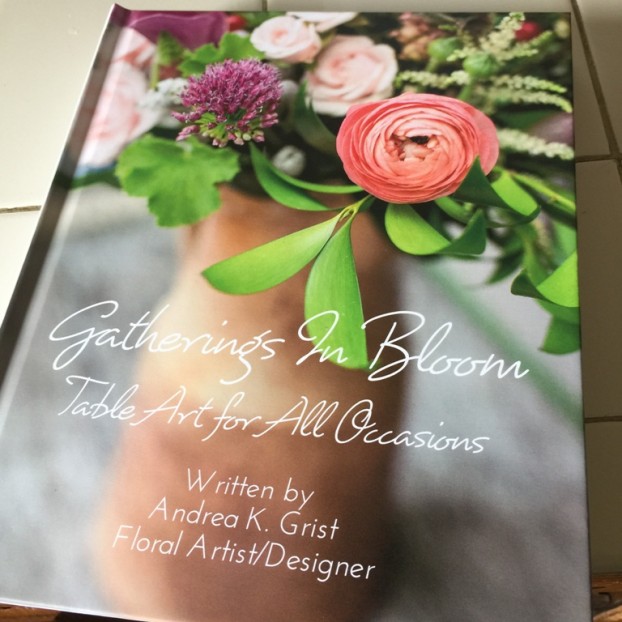
Andrea just published “Gatherings in Bloom” as a self-published e-book, also available as a print-on-demand book.
Eventually we set up a phone date to talk further and I asked Andrea to share her story on this podcast.
Andrea has had a successful career for more than 20 years, but in recent years, she wanted to stretch herself as a designer and as a small business owner.
She started seeking out what was going on in her profession and landed on the Slow Flowers Movement.
Even though most florists in her area weren’t asking for local flowers, Andrea began to do so.
One vase, one bouquet at a time, her work is changing the conversation in her community and for her customers.
Andrea is also a member of the Chapel Designers, and she recently self-published Gatherings in Bloom-Table Art for All Occasions with images by Freeland Photography.
The book is filled with beautiful images of table decor, floral design, and hometown stories about her inspirations and floral passions.
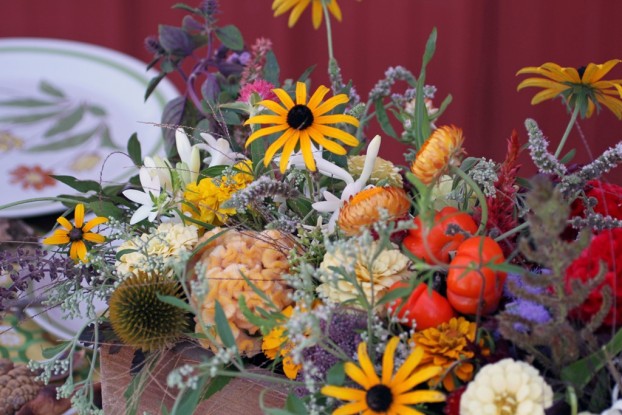
Missouri-grown flowers by Andrea K. Grist.
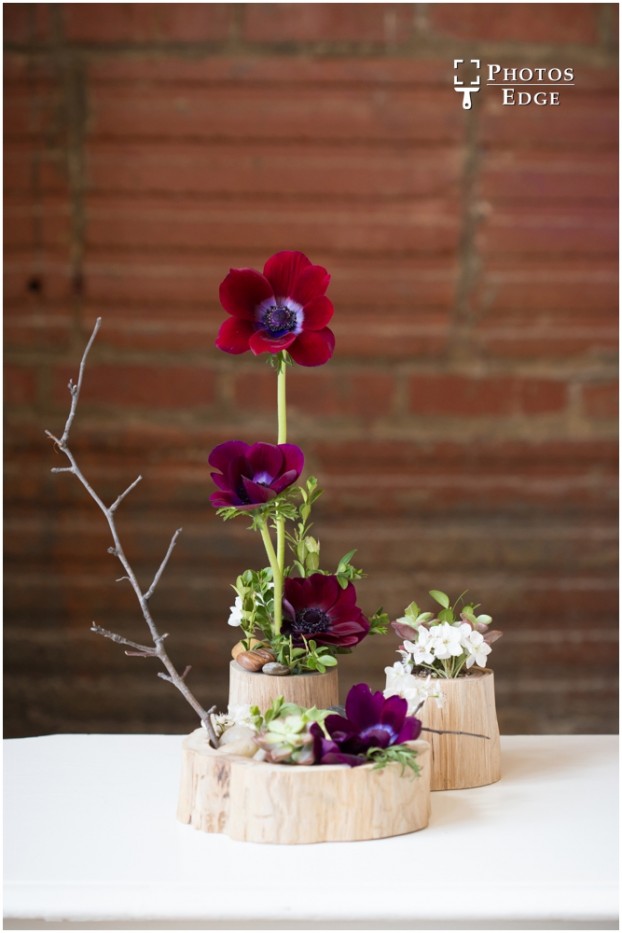
A floral still-life with local flowers and succulents (c) Erin Hernandez-Reisner
Meet and follow Andrea K. Grist here:
Read Andrea’s Blog Here
Andrea on Facebook
Andrea on Twitter
Preview and order Gatherings in Bloom here
Before we sign off, I have an announcement to share.
There is an abundance of holiday floral design and wreathmaking workshops going on right now, but one scheduled for next week promises to be unlike any other workshop I’ve heard about.
On November 17th, New York-based Slow Flowers member Elena Seegers of Le Fleuriste will be teaching a fall centerpiece how-to with branches fruits and berries.
Here’s the fun twist: The workshop will be held at Fluent City and include French conversation and vocabulary.
As Elena explained it to me Fluent City is a cool language start up where you learn and converse in different languages through social gatherings and workshops.
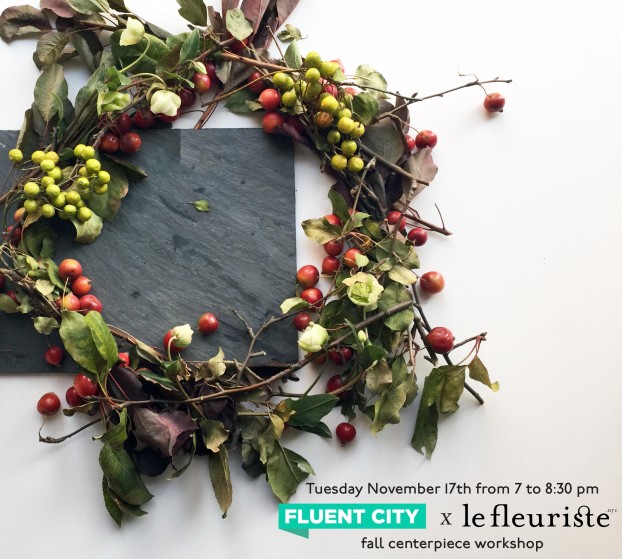
Floral Design and French Conversations!
“Students will learn how to choose and use branches and berries for their table designs, taught in a mixture of French and English.” I don’t know about you, but I would simply love to be part of this evening, which is affordably priced. [note: in the Podcast introduction I inaccurately stated a workshop price of $65. The actual price is $80 per student]
Thanks to the Slow Flowers Tribe, this podcast has been downloaded more than 71,000 times. Whether you’ve just discovered this Podcast or whether you’re a longtime listener, don’t forget that we’ve archived all of the past episodes at Debraprinzing.com – more than two years of conversations with American flower farmers and floral designers – leading voices in the progressive, American-grown community.
Until next week please join me in putting more American grown flowers on the table, one vase at a time. And If you like what you hear, please consider logging onto Itunes and posting a listener review.
The content and opinions expressed here are either mine alone or those of my guests alone, independent of any podcast sponsor or other person, company or organization.
The Slow Flowers Podcast is engineered and edited by Andrew Wheatley and Hannah Holtgeerts. Learn more about their work at shellandtree.com.
Posted in American Grown, Blog Posts, Book reviews, Creativity, floral design, Flower Farming, General, Podcast Episodes, SLOW FLOWERS Podcast, Slowflowers.com the Directory of American Flowers | 1 Comment »
November 4th, 2015
Podcast: Play in new window | Download
Subscribe: Apple Podcasts | Podcast Index | | More
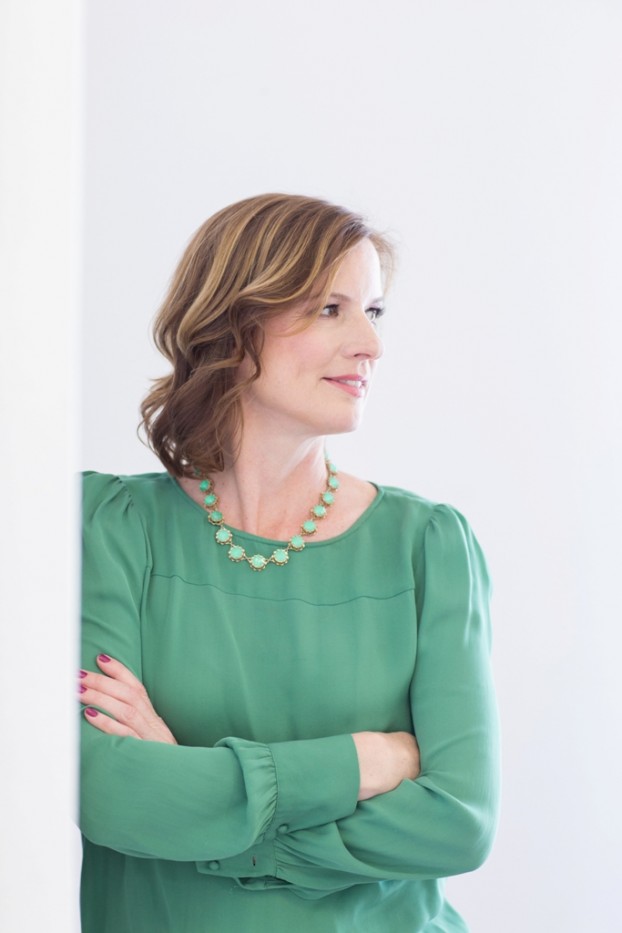
Susan Kelly of Three Sisters Custom Flowers & Events.
It is a pleasure today to share my recent conversation with Susan Kelly of Three Sisters Custom Flowers & Events, recorded at her studio in East Palo Alto, California on October 22nd.
Susan is a member of Slowflowers.com.
I featured this gifted floral artist in a short interview a few weeks ago to discuss her installation at The Flower House in Detroit, as part of a round-up podcast conversation with several of the designers involved in The Flower House a few weeks ago.
You can listen to that interview here.
When I realized that I would be in her area the following week, for a lecture and workshop I was scheduled to give at Filoli, the historic estate, I invited myself to Three Sisters Flowers for a tour and interview to share with you.
Here’s more about Susan:
As owner, lead floral designer and certified wedding coordinator, Susan really knows her flowers and celebrates abundance and natural beauty through her designs. She is constantly doing research to find the newest trends but she also enjoys creating classics.
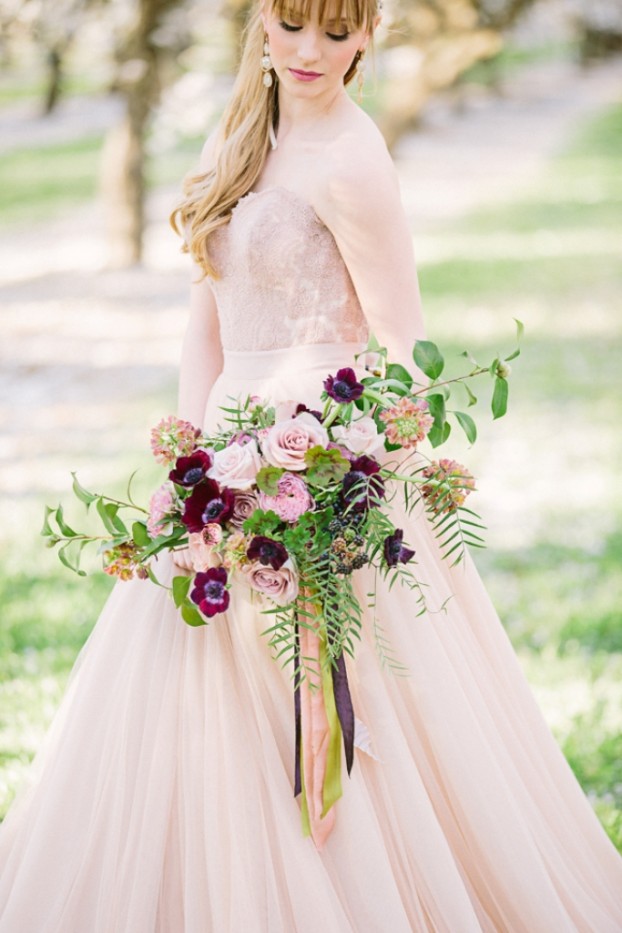
A Susan Kelly garden-inspired bouquet.
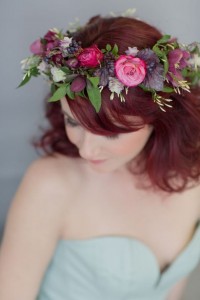
And a lovely floral crown by Susan Kelly.
Susan’s signature design style is simple, natural and elegant, mirroring nature’s effortless beauty.
Susan’s passion for floral design began when she was young. She was immersed in the world of floral design through her first job in high school at the local florist and went on to major in Ornamental Horticulture in college.
It later led her to work as a floral designer for Walt Disney World in Orlando, Florida, (one of the busiest florists in the world) and, more recently, as a freelance designer for nationally acclaimed Mark’s Garden in Los Angeles.
Susan has also worked a wedding coordinator for the gorgeous and very busy Stanford Memorial Church on the Stanford University campus.
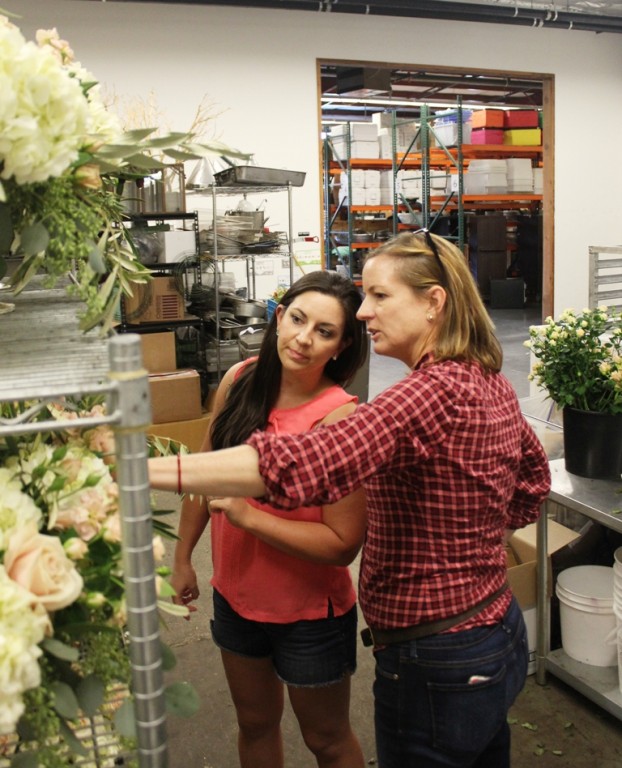
I caught this image of Susan consulting with a bridal client who stopped by to see a sneak preview of her bouquets and centerpieices.
During a hectic wedding season a few years ago, mothers of her bridal clients discovered that Susan was willing and able to step up to more than just delivering the flowers.
As a result, Three Sisters add wedding planning, coordination and consulting to their services.
Susan became certified as a Wedding and Event Consultant through WPI.
She is a member of the Board of Directors for the Silicon Valley chapter of the National Association for Catering and Events and is very active in the event and wedding industry.
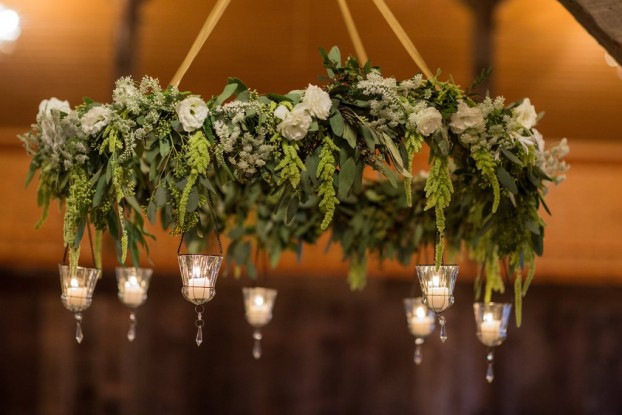
Breathtaking chandelier!
Three Sisters Custom Flowers & Events cares about the environment and Susan considers herself a “green florist,” employing the following practices:
-
Composting all our plant and organic waste
-
Recycling all packaging materials
-
Organic flowers by request
-
Locally grown flowers when possible
-
Re-using containers and supplies
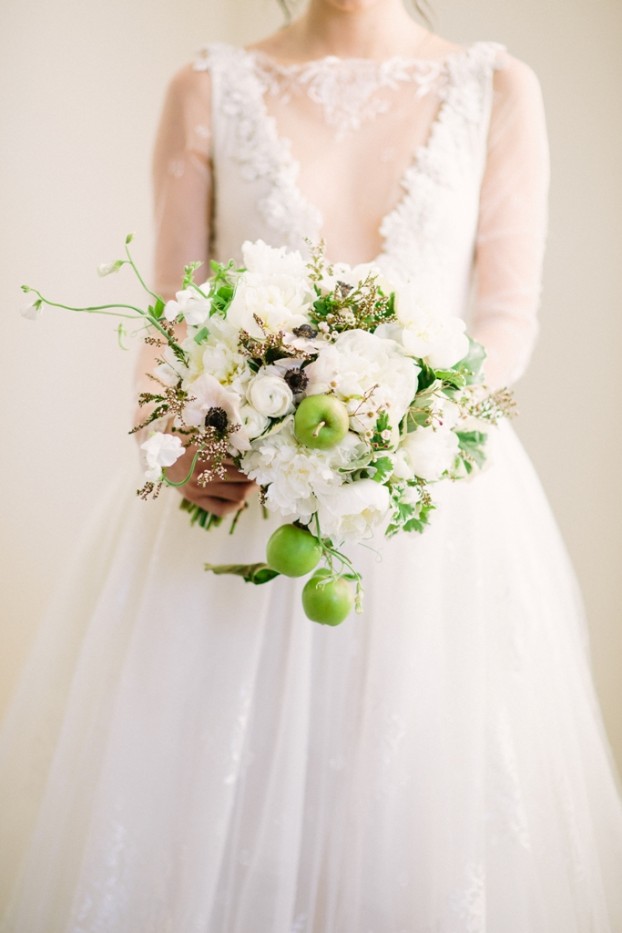
Apples! Seasonal and local!
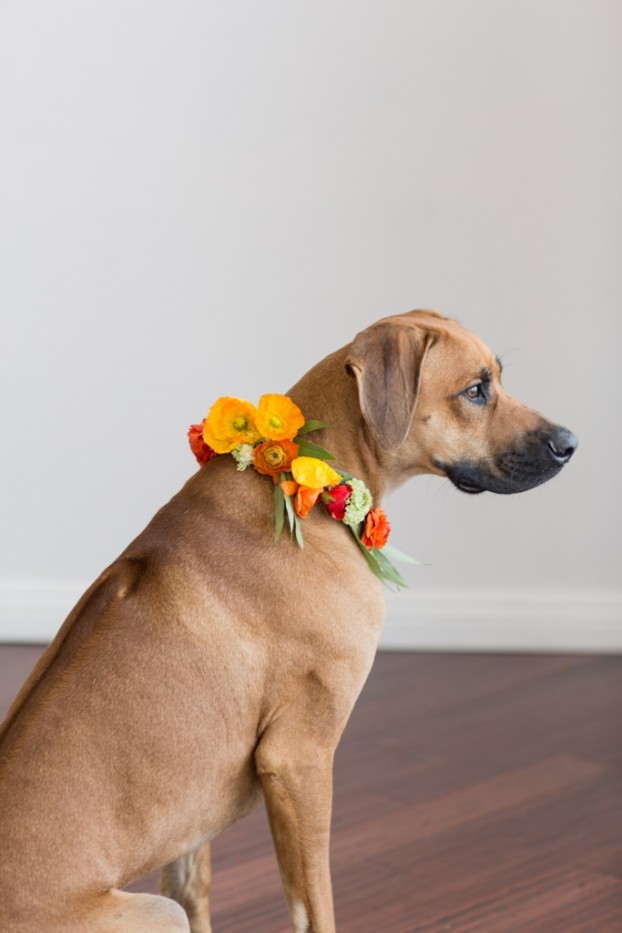
Leo in a floral collar.
Follow Susan and Three Sisters:
Three Sisters on Facebook
Three Sisters on Pinterest
Three Sisters on Instagram
Here are details about next week’s three-day Chapel Designers California conference, which Susan will host at the studio of Three Sisters Custom Floral & Events on November 9, 10 and 11.
After spending 30 minutes with Susan, I hope you feel her incredible passion for what she does.
To me, her passion is inspiring and contagious.
Susan puts her whole heart into each event and it’s no surprise that she’s has formed lasting friendships with many of the clients and professionals she has worked with.
That’s the epitome of a leader in the Slow Flowers community.
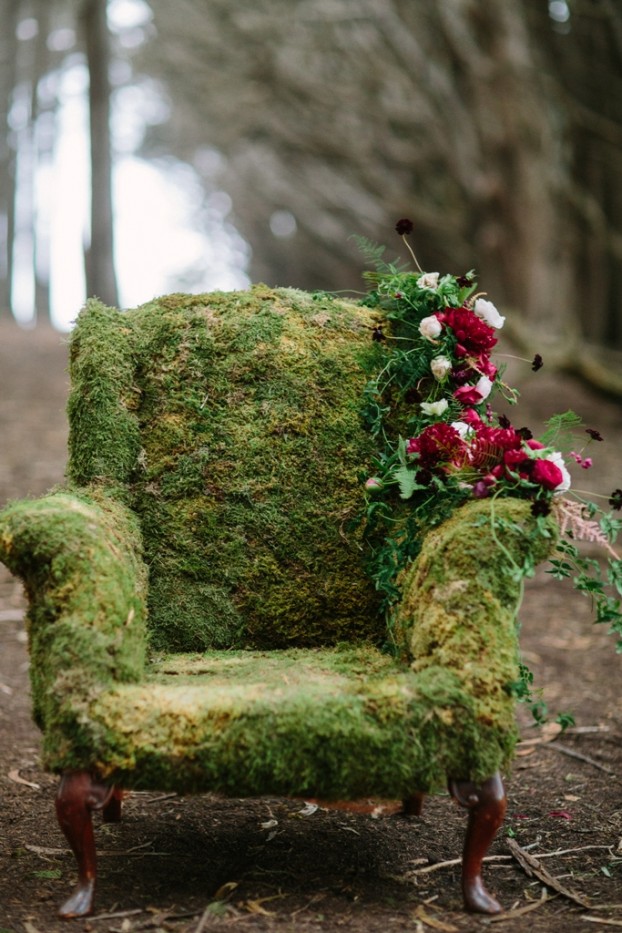
The famous moss armchair is a popular feature of many Three Sisters’ weddings, designed by Susan Kelly.
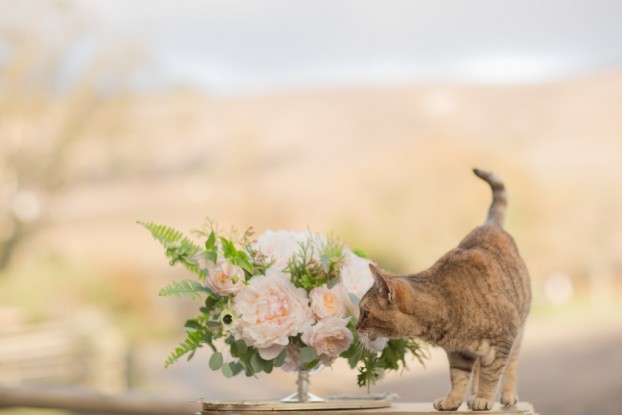
Just for fun . . .
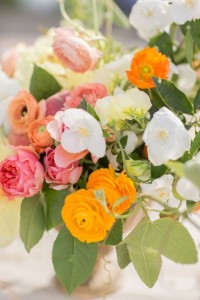
More beautiful and local flowers, artfully arranged by Susan Kelly.
Thanks to the Slow Flowers Tribe, this podcast has been downloaded more than 70,000 times.
Whether you’ve just discovered this Podcast or whether you’re a longtime listener, don’t forget that we’ve archived all of the past episodes at Debraprinzing.com – more than two years of conversations with American flower farmers and floral designers – leading voices in the progressive, American-grown community.
Until next week please join me in putting more American grown flowers on the table, one vase at a time. And If you like what you hear, please consider logging onto Itunes and posting a listener review.
The content and opinions expressed here are either mine alone or those of my guests alone, independent of any podcast sponsor or other person, company or organization.
The Slow Flowers Podcast is engineered and edited by Andrew Wheatley and Hannah Holtgeerts. Learn more about their work at shellandtree.com.
Posted in American Grown, Blog Posts, Creativity, floral design, General, Podcast Episodes, SLOW FLOWERS Podcast, Slowflowers.com the Directory of American Flowers, Writing | 1 Comment »
October 28th, 2015
Podcast: Play in new window | Download
Subscribe: Apple Podcasts | Podcast Index | | More
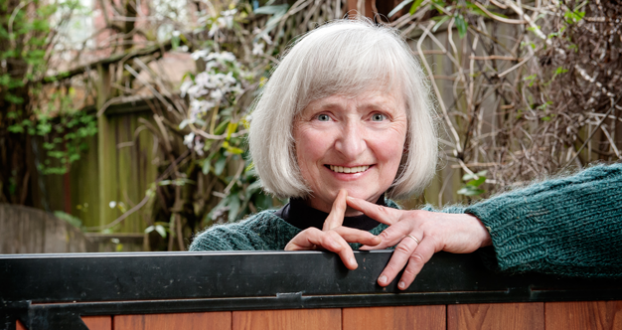
Inspiring florist and floral educator Françoise Weeks (c) Jamie Bosworth photograph
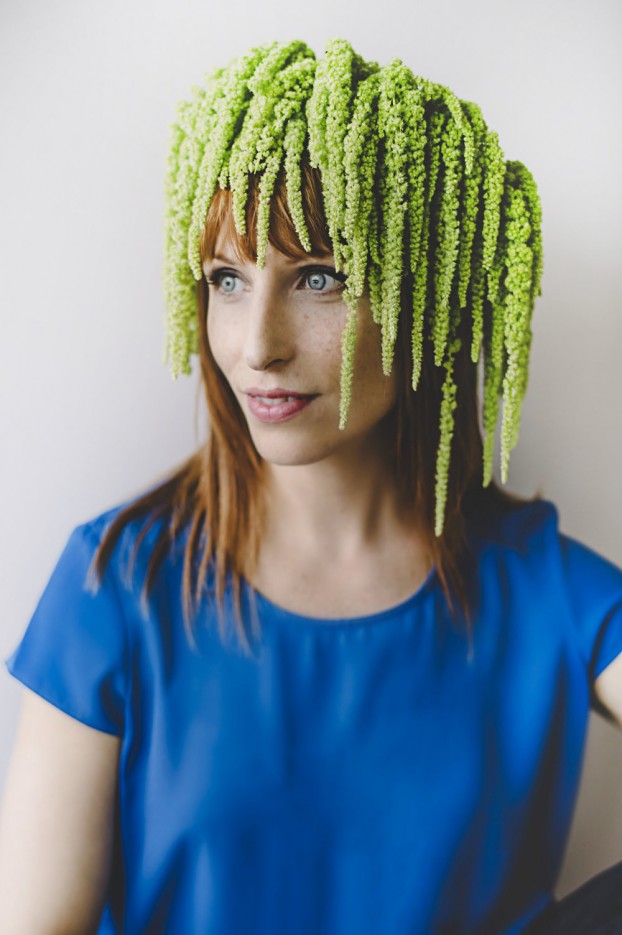
Susan McLearly of Passionflower Events, based in Ann Arbor (c) Amanda Dumouchelle Photography
I’ve had today’s first guest on my “wish list” for a couple years and due to both of our travel schedules, it has taken nearly two years for us to connect in the same time and place with a quiet moment to record today’s interview.
Our paths finally crossed when Françoise Weeks and I were in Detroit at the same time for The Flower House festivities. Françoise traveled to Detroit earlier in the week to teach a two-day workshop hosted by our second podcast guest Susan McLeary of Passionflower Events. And I was in town to co-host the final Field to Vase Dinner of 2015.
The Flower House, subject of last week’s podcast, prompted Susan to ask Françoise to collaborate with her on the first floor kitchen, called “Fruits of Labor.”
The three of us sat down for this recording on the morning after the hugely successful Field to Vase Dinner.
They were staying in a restored loft apartment in an historic Detroit neighborhood and suggested I come over to record the interview.
When I arrived, Susan and Françoise were concentrating on assembling a bridal bouquet, boutonniere and floral crown for a last-minute elopement that was to occur at The Flower House the following day. It was a lovely moment to talk with both Françoise and Susan as their hands shaped and formed tiny botanical elements into the most delicate, textural creations.
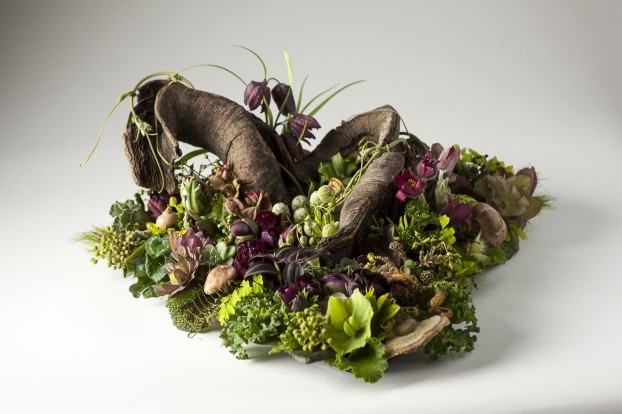
A woodland-inspired design from Françoise Weeks (c) Joni Shimabukuro photography.
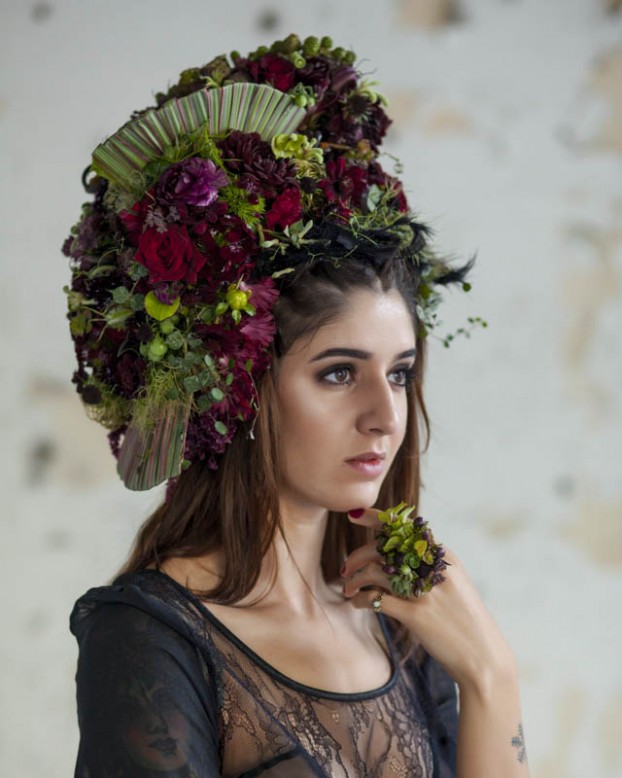
Françoise’s botanical couture headpiece (c) Ted Mishima photography
Françoise hails from Belgium, and you can hear the gentle traces of her Flemish accent when she speaks. She has been living in Portland for many years, which is where she developed her studio design business, created flowers for hundreds of weddings and shaped her distinct brand of European-inspired floral design.
Françoise and I have known one another for several years as residents of neighboring states; in fact I first met her in 2010 while on a scouting trip to Portland for The 50 Mile Bouquet.
Since that time, it has been so inspiring to watch Françoise’s career explode as an in-demand floral educator whose workshop series and classes are often sold-out with waiting lists.
Here’s a little more about Françoise:
Françoise was born in Belgium in an area romanticized by the flower arrangements of the Dutch and Flemish painters of the 17th and 18th centuries.
Honing her talents through training with the florists of Antwerp, Françoise discovered her signature—a unique lush and textural style, heavily imprinted by her love of nature and art. Since 1996 she has translated her passion into creations of flowers, herbs, fruits, vegetables and foliage in a way that the masters could only paint.
Her portfolio runs the gamut from elegant natural simplicity to the abundant and bountiful; she consistently delivers the unexpected. Françoise’s first priority is to realize the ideas and needs of her clients and bring to the process her attention to detail and unique creativity.
Recently her work has emerged into two distinctive styles: URBAN WOODLANDS—contemporary stylings of mosses, lichens, bark and forest floor gatherings and FLORAL FORWARD—exquisite botanical haute couture creations of purses, headpieces and shoes.
She shares her knowledge of floral design and mechanics with professionals and students from around the world in intimate studio classes and workshop settings. Françoise has been the subject of numerous magazine articles throughout the United States and Europe.
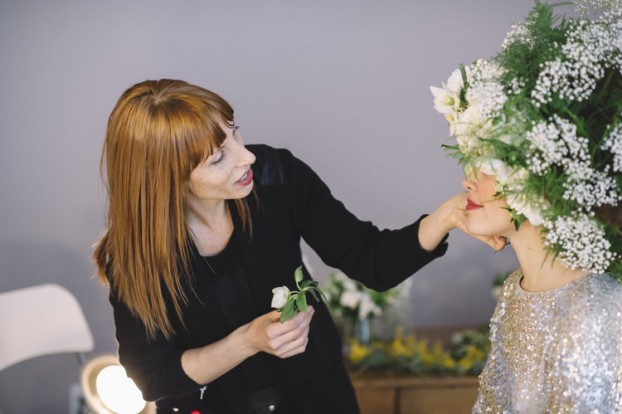
Susan McLeary designing a fabulous floral ‘fro (c) Amanda Dumouchelle photography
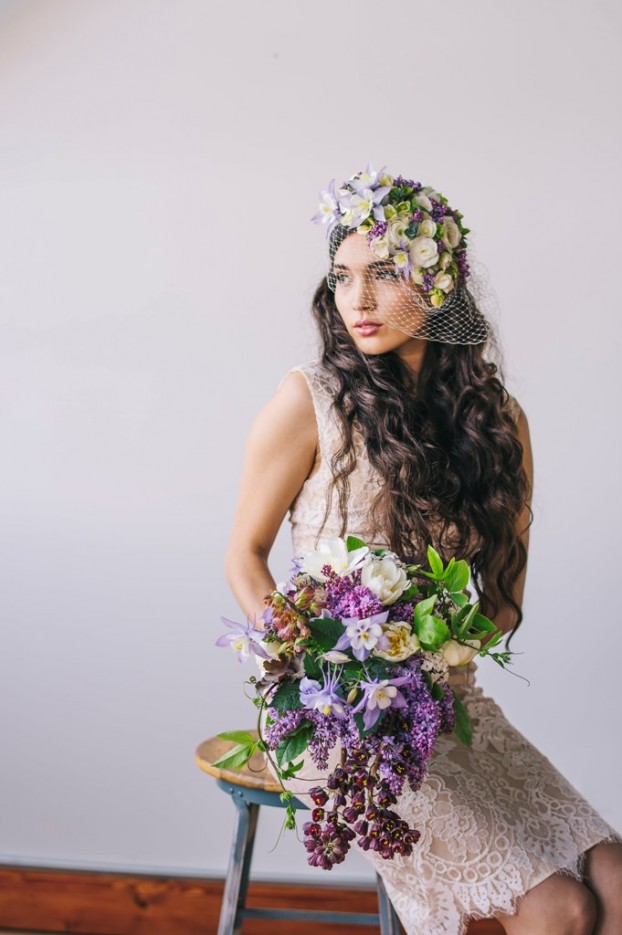
Wearable flowers by Susan McLeary (c) Amanda DuMouchelle photography
My conversation with Françoise naturally transitioned to Susan McLeary, once her student; now a good friend and fellow floral educator.
Susan and I met in 2014 when I spoke to the Chapel Designers in New York City at the invitation of Holly Chapple.
She later joined the Slowflowers.com web site (as has Françoise), which is fitting because both designers are known for working with local and seasonal blooms as a preference.
I’ve recently spent more time with Susan who was the featured designer for the Field to Vase Dinner Tour at The Flower House.
I credit Susan for nudging me to schedule this interview with Françoise.
Susan couldn’t avoid me asking her to be part of this episode, as well.
Here’s more about Susan McLeary:
 Like most of the florists in our Slow Flowers community, Susan is such a collaborative individual as an artist, designer and educator. Based in Ann Arbor, Michigan, she is known for her unusual, boundary-pushing floral art including elaborate headpieces, flower crowns, and her signature succulent jewelry. Her soulful, seasonally-inspired creations and floral wearables have been described as exquisite living artwork.
Susan has trained with some of the country’s leading floral designers, including Françoise Weeks, Holly Chapple and Erin Benzakein of floret. Yet, she has developed her own distinctive style of floral design.
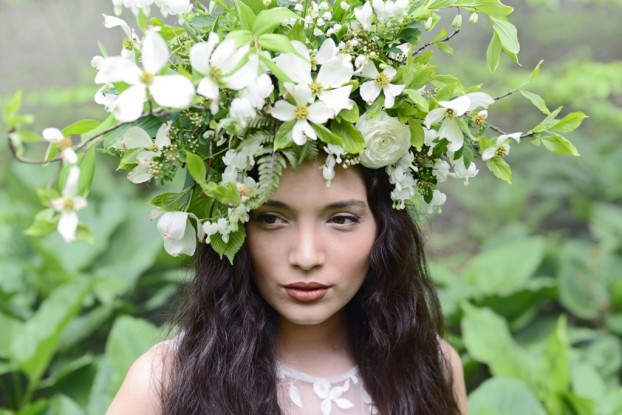
An amazing headpiece designed by Susan McLeary of Passionflower.
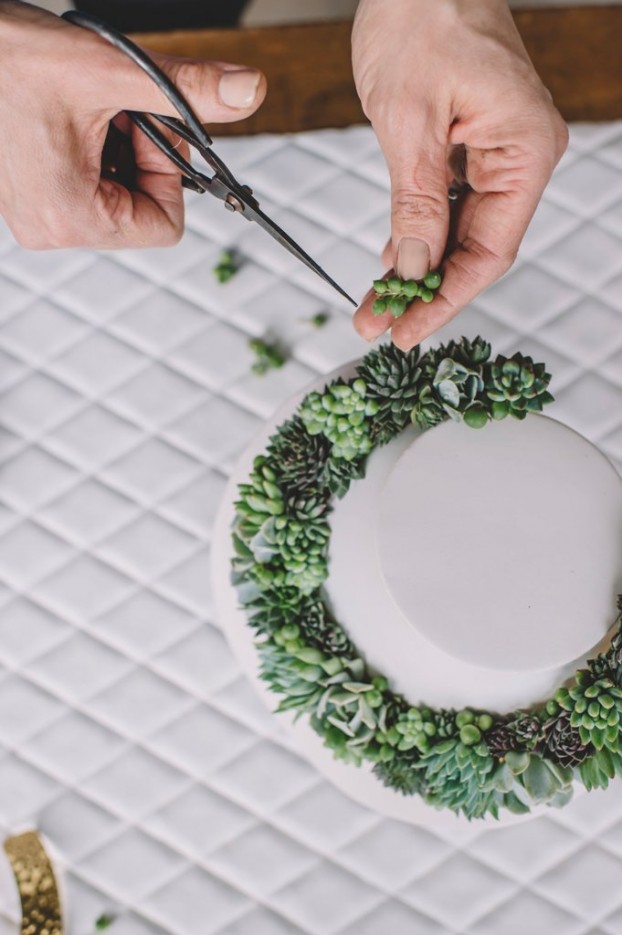
Succulent jewelry by Susan McLeary.
Considered one of the country’s top designers of floral wearables and living jewelry, Susan received one gold and three silver medals and placed second overall in the 2014 Fusion Flowers International Designer of the Year competition.
Her studio Passionflower was the only finalist in the floral category of Martha Stewart’s 2015 American Made contest!
A passionate teacher, Susan offers private design instruction for new and professional florists in her studio and through destination workshops.
Her teaching experience also includes a sold-out two-day workshop on living jewelry design in Scotland; numerous other creative collaborations workshops are planned for the coming year.
Susan’s work has been featured on the cover of Fusion Flowers Magazine and in leading industry publications and websites including Modern Wedding Flowers, Style Me Pretty and The Knot. Susan is a member of Chapel Designers, Slow Flowers and Style Me Pretty’s “Little Black Book.” A frequent featured designer on Etsy, her designs and living jewelry has been praised for its originality, sustainability and style.
Susan calls Françoise a kindred spirit, which is such a lovely way to view how the Slow Flowers Movement is bringing together many like-minded flower farmers and florists. We are kindred spirits and the more we share and give, the more we can stimulate a new normal in this profession. I’m so grateful that these two women shared their stories with you today.
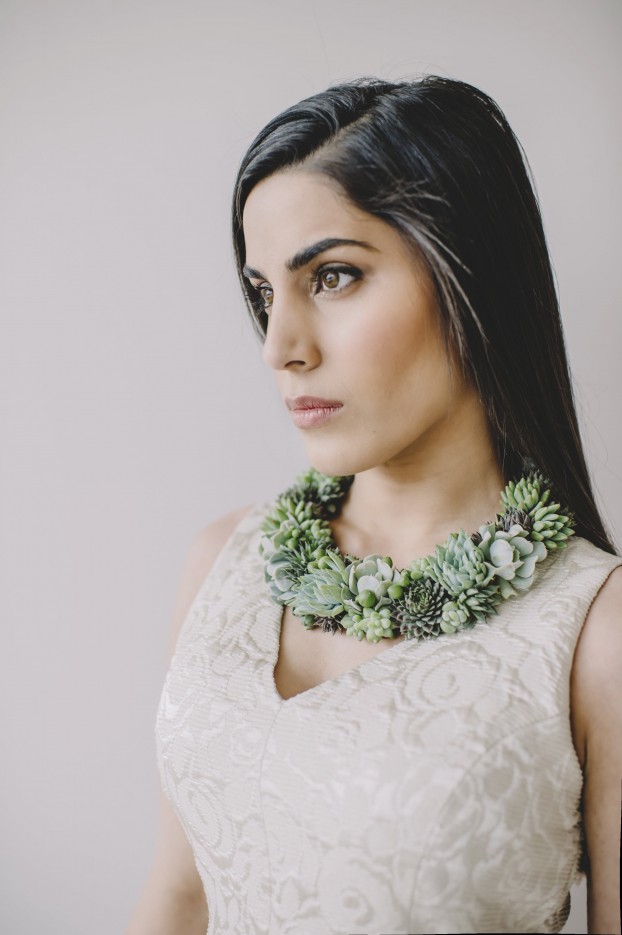
The finished succulent collar-style necklace (c) Amanda Dumouchelle Photography
Here’s how to follow Françoise Weeks:
Françoise on Facebook
Françoise on Instagram
Françoise on Twitter
Françoise on Pinterest
Susan on Facebook
Susan on Instagram
Susan on Twitter
Susan on Pinterest
Susan on Vimeo
Episodes of the Slow Flowers Podcast have been downloaded nearly 69,000 times. I thank you and others in the progressive American-grown floral community for supporting this endeavor.
Until next week, you’re invited to join me in putting more American grown flowers on the table, one vase at a time. And If you like what you hear, please consider logging onto Itunes and posting a listener review. THANK YOU to each and every one of you for downloading, listening, commenting and sharing. It means so much.
The content and opinions expressed here are either mine alone or those of my guests alone, independent of any podcast sponsor or other person, company or organization.
The Slow Flowers Podcast is engineered and edited by Andrew Wheatley and Hannah Holtgeerts. Learn more about their work at shellandtree.com.
Posted in American Grown, Blog Posts, Creativity, floral design, General, Podcast Episodes, SLOW FLOWERS Podcast, Slowflowers.com the Directory of American Flowers | 3 Comments »
October 26th, 2015
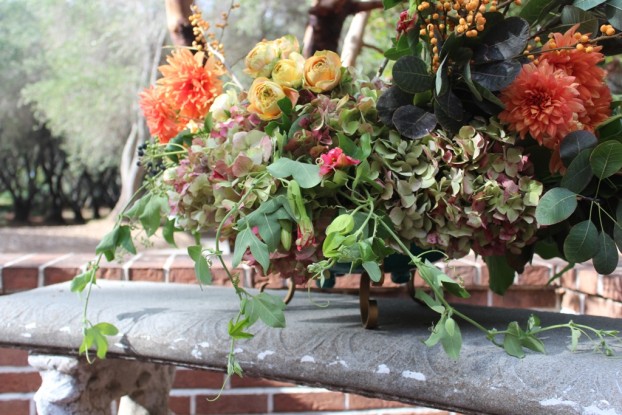
A detail of my arrangement demonstrated after my Slow Flowers lecture at Filoli. Note the lovely flowering passionvine tendrils dripping from the base.
Filoli, the iconic early 20th Century estate in Woodside, California, is listed on the National Trust for Historic Preservation. It is a cultural institution where people come to learn, explore and be inspired by nature just minutes away from the city.
Filoli is also known for its Floral Design Certificate program and that’s what brought me there last Friday to lecture and teach, thanks to the invitation of Cathy Rampley, head of education, and Katherine Glazier, one of the instructors in the floral design program.
When planning ahead to order flowers for a couple large-scale floral designs and a hands-on workshop for 20 students, I always tell the organizers that I want local, American grown flowers. Sometimes that’s easier said than done. Sometimes, like last week, it’s impossible to do otherwise. After all, we shopped at the San Francisco Flower Mart, which is where the best flowers available are California Grown.
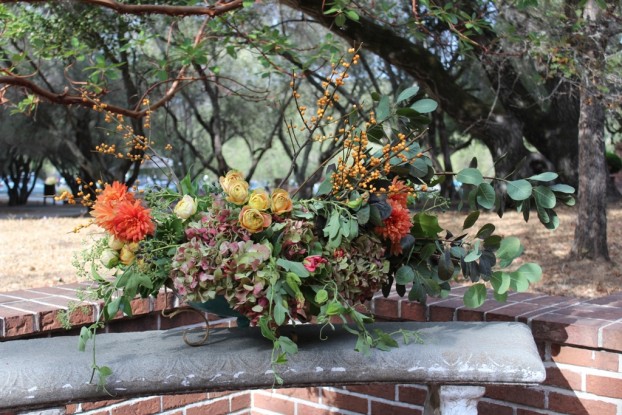
The scale of this vessel allowed me to go very wide with the branches and stems.
I had so much fun digging through the storage closets at the Filoli estate house to select vessels for my designs. The ceramic piece you see above is measures approximately 14 inches in diameter, a turquoise-glazed dish mounted in a brass stand. Its shallowness challenged me and despite the 7-inch pin frog attached to the inside base, I mounded a large piece of chicken wire to dome over the opening.
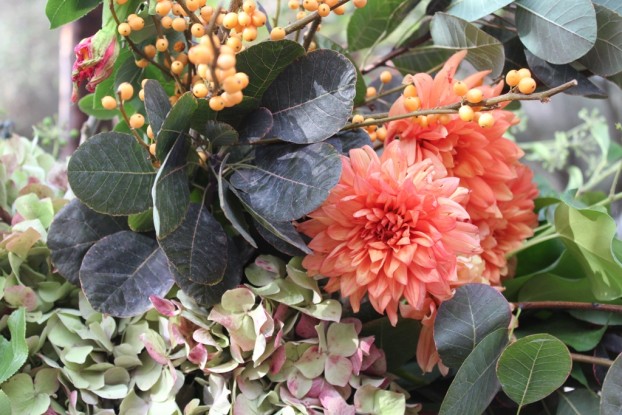
Detail of autumn colors and textures, including the Cotinus, the peachy-orange dahlias, antique hydrangeas and the yellow-orange Ilex.
This arrangement proves my theory that when a vase is shallow, you can build the bouquet 2- to 3-times the width of the opening. Using smoke tree (Cotinus) clipped from Filoli by the gardening staff and inserted so it soars off to one side allowed me to exaggerate the horizontal. Several antique hydrangea blooms, sourced from Half Moon Bay nearby, rest on the rim of the bowl and anchor it visually. I needed quite a bit of greenery to fill the volume and hide the mounded chicken wire (seriously, this piece was larger than a basketball cut in half!). Lots of the foliage was sourced from Filoli, including a type of large-leaf ivy and coffee berry branches.
READ MORE…
Posted in American Grown, Blog Posts, Creativity, floral design, General, Slow Flowers Challenge | 1 Comment »
October 21st, 2015
Podcast: Play in new window | Download
Subscribe: Apple Podcasts | Podcast Index | | More
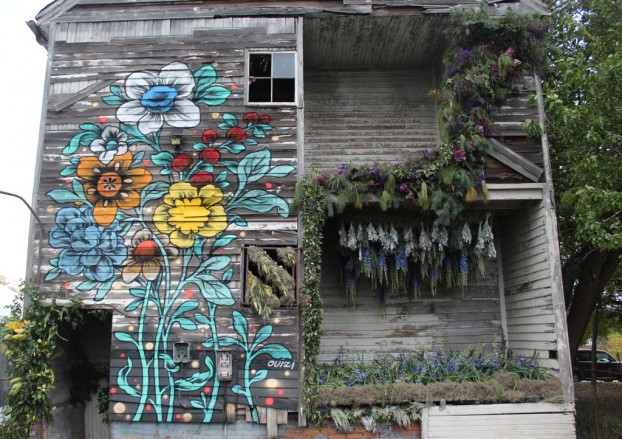
Upstairs and downstairs, the open-air porches of The Flower House were designed by Lisa Waud
This week’s episode is dedicated to my friend Lisa Waud and to the flower farmers and florists who created The Flower House. Here’s a recap, by the numbers:
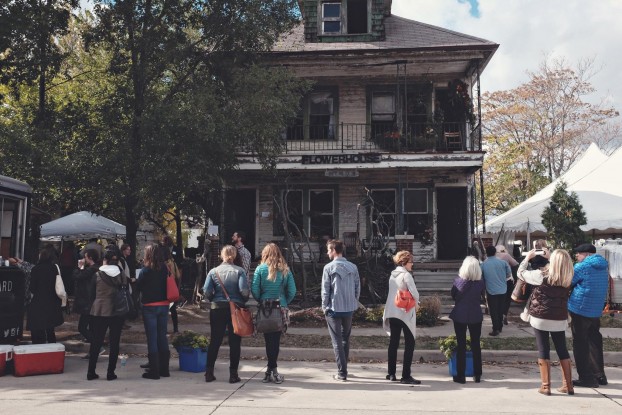
(c) Heather Saunders the official photogapher of The Flower House, captured this opening day image from Oct. 16th
 1 Elderly home, circa early 1900s
15 rooms, closets, hallways and porches
30-plus floral designers
3 days
2,000-plus visitors
25,000 to 40,000 individual stems of flowers and foliage; the count keeps climbing and changing!
hundred of potted plants
dozens of American flower farms and farmers
180 Field to Vase Dinner Guests
And now that the Flower House event is over? There will be one glorious Detroit flower farm called Flower House Farm.
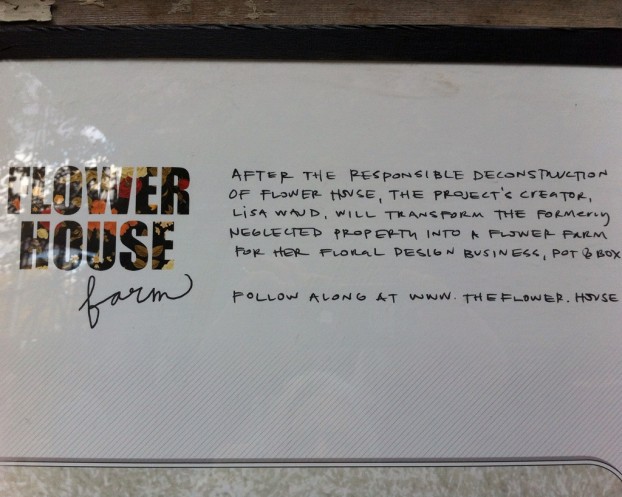
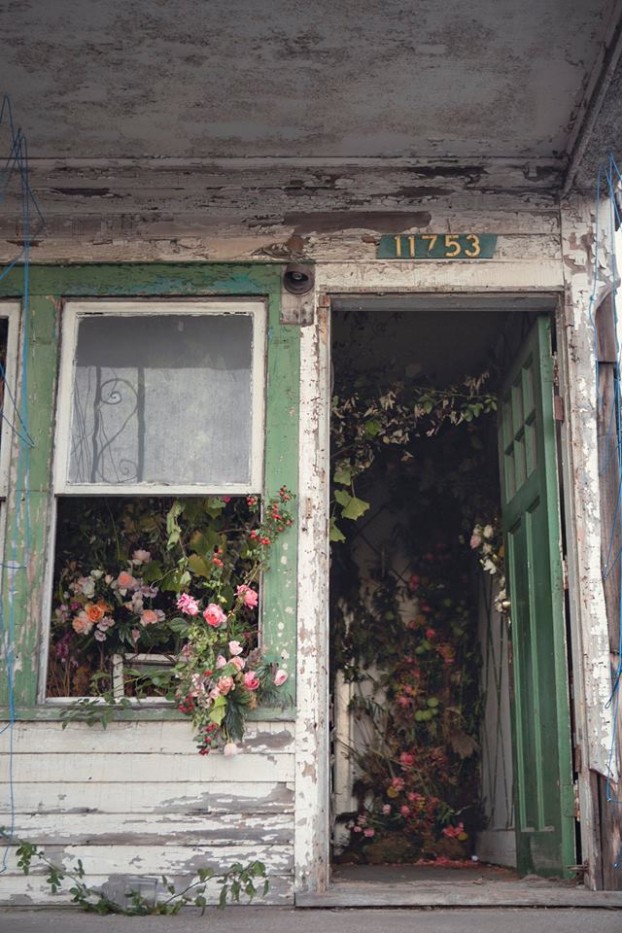
(c) Heather Saunders. The doors to The Flower House opened on October 16th.
Last week I had the honor and privilege of returning to The Flower House, a project I visited the first weekend in May when creator Lisa Waud and her fellow designers decorated two rooms of an adjacent building, now called “the little house,” for a press preview to introduce the ultimate exhibition to come in October.
That event took place last weekend, a three-day, flower-themed wonderland that has garnered international attention, including a huge story last Thursday in the New York Times.
This podcast has the distinction of being the first media outlet to share the story of The Flower House when we aired the original interview with Lisa Waud this past February.
I now feel like the fairy godmother who granted a tiny wish to help Lisa get the word out — and look what a fantastic and beautiful dream it blossomed into!
Officially, I was at The Flower House in Hamtramck, Michigan, a hamlet just outside downtown Detroit, to co-host the final of 10 Field to Vase Dinners for 2015.
What a perfect way to go out with a huge bang — a floral fireworks show that sold out days in advance (for tour tickets and dinner tickets), making this the most successful Field to Vase Dinner of all.
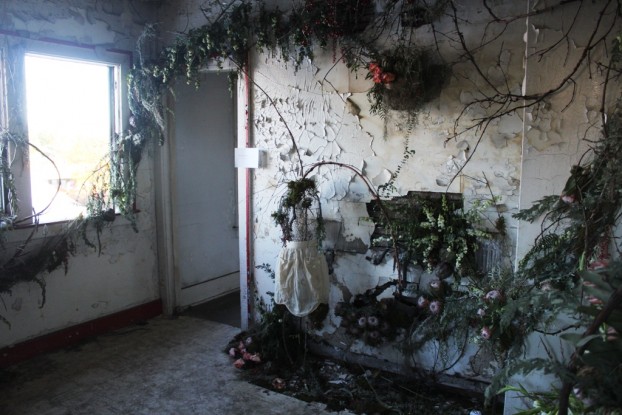
“Nature Takes Back,” the upstairs kitchen of The Flower House, created by Sally Vander Wyst and Courtney Stemberg of Wisconsin Flower Co.
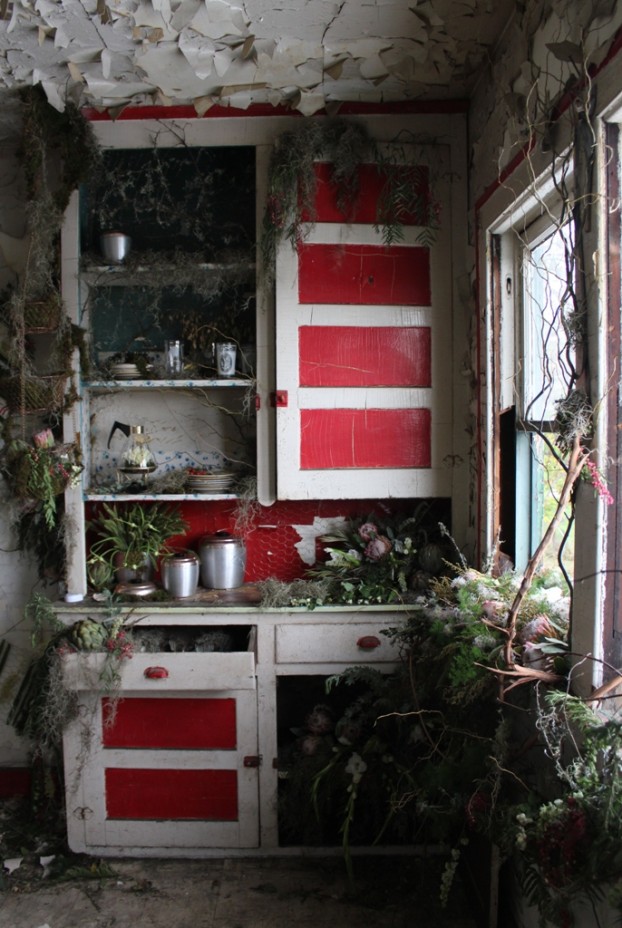
Look at this charming cupboard, which Sally and Courtney styled with vintage goods.
I arrived at The Flower House late last Wednesday, having grabbed a lift from the airport with my Seattle flower gal-pal Bev Burrows. Bev is a Detroit native who works in the floral, events and visual display world here in Seattle and she simply could not stay away from the lure of The Flower House in her hometown.
We jumped out of her brother’s car and started hyperventilating as we saw florist friends new and old (a few of our friends from the PNW had flown in just to volunteer for a few days, Slow Flowers members Adria Sparkhawk of Thicket in Portland and Erica Knowles of Botany 101 in Seattle). Then I found Lisa and greeted her with hugs, smiles and a few tears of happiness.
There was much going on with the opening less than 36 hours away. Lisa was busily installing her 2-story display on the home’s upstairs and downstairs porches (see that portion above).
And 14 other spaces were in various stages of installation, too. Buckets of American grown flowers were stacked everywhere and the orderly chaos promised something huge was about to be unveiled.
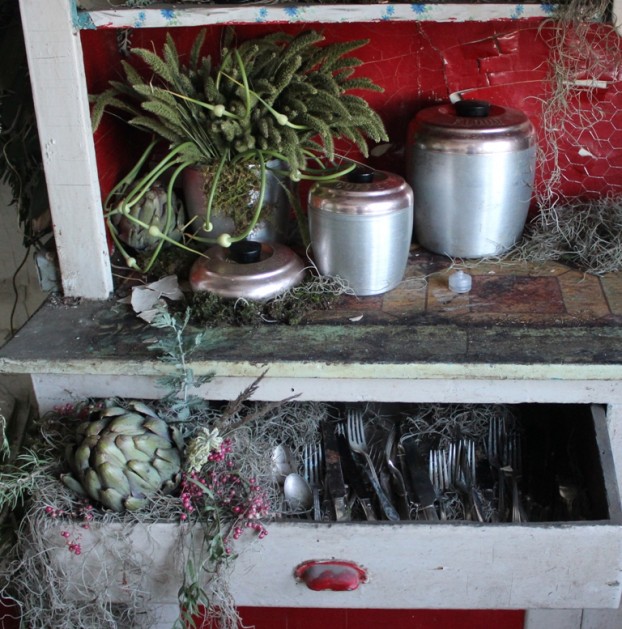
A tiny, wild moment in Sally and Courtney’s kitchen. “If Mother Nature was a Florist . . . “
Over the next several weeks I’ll be sharing clips from interviews with as many of the Flower House designers as have been able to record.
Today you will hear from designers of four of the rooms; I grabbed these conversations as the designers introduced me to the specific space they embellished with flowers, and as they described the inspiration, vision and design process.
There is one unifying thread that weaves together these stories. Each designer cares deeply about sourcing American grown botanical ingredients from local flower farms and from farms in other parts of the U.S.
They want to showcase the bounty and beauty of the season and help tell the floral industry and the floral consumer that it’s important to make a conscious choice when buying flowers.
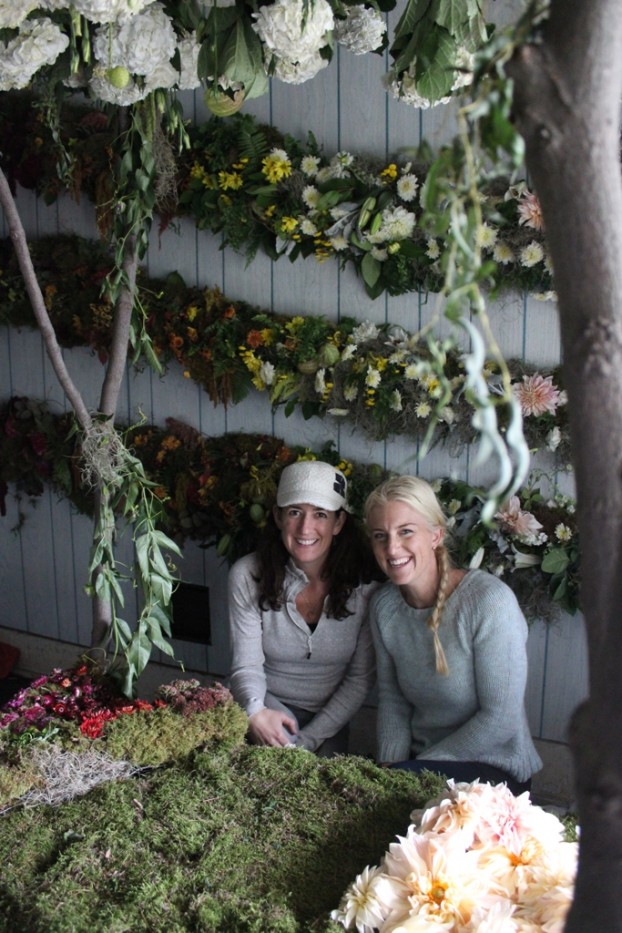
Susan Studer King and Caroline Waller, Ohio designers, in the child’s bedroom they designed.
First up, you will meet SALLY VANDER WYST of the MILWAUKEE FLOWER CO., a Slowflowers.com member who created a Wisconsin-filled kitchen called “Nature Takes Back.”
Then you’ll hear from SUSAN STUDER KING of BUCKEYE BLOOMS, Slowflowers.com member and a past guest of this podcast, and her collaborator, fellow Ohioan CAROLINE WALKER of PASSIFLORA STUDIO as they introduce us to the child’s bedroom entitled “Foraged Foliage.”
The third space I visited was entitled “Sweet Mossy Dreams,” a closet and tiny hallway decorated in a most fantastical way by Slowflowers.com member SUSAN KELLY of THREE SISTERS FLOWERS, based in East Palo Alto, California.
And finally, you’ll meet past podcast guests and Slowflowers.com members JENNIFER HAF and LARISSA FLYNN of BLOOM FLORAL DESIGN, based in Petosky, Michigan, as they describe the vivid and electrifying upstairs bedroom, “Wild, Floral Graffiti.”
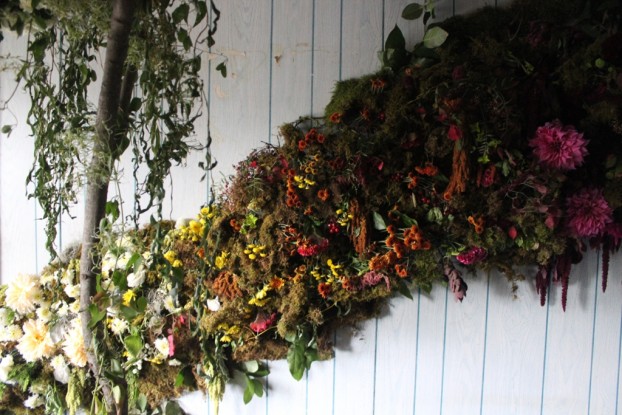
The walls of Susan and Caroline’s “Foraged Floral”-themed bedroom are banded with wooshes of floral color.
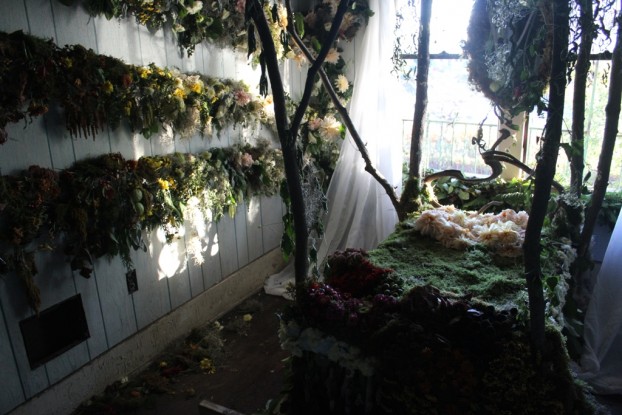
A wider view of the bedroom, sunshine pouring through the windows.
I’ll introduce these Flower House designers individually at the beginning of each clip, so follow along and enjoy this first installment and virtual tour of the rooms within The Flower House.
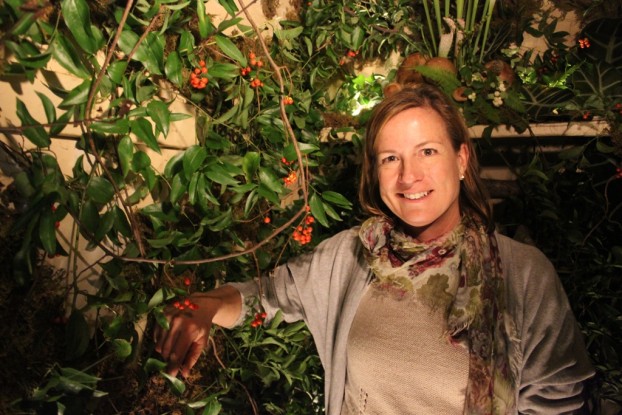
Susan Kelly of Three Sisters Flowers, tucked into her “Sweet Mossy Dreams” closet and hallway.
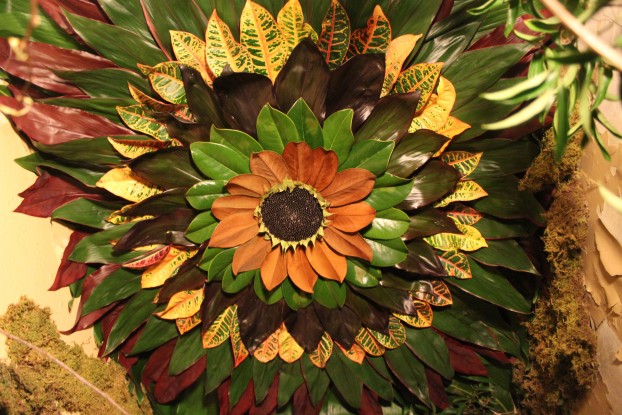
The botanical medallion on the ceiling of Susan’s tiny closet space – amazing!!! Incorporating 237 leaves and a sunflower, it was inspired by a ceiling she saw at the Museum of the Hunt in Paris.
I think it’s so exciting that you’ll be hearing from designers who hail from Wisconsin, Ohio, California and Michigan – they’re just a few of the many talents whose voices will appear here in the coming weeks.
I especially love the contagious passion and urge to create that exudes from this project. Whimsy, joy, wonderment, sentiment, poignancy, surprise — all combine in this dream of a project.
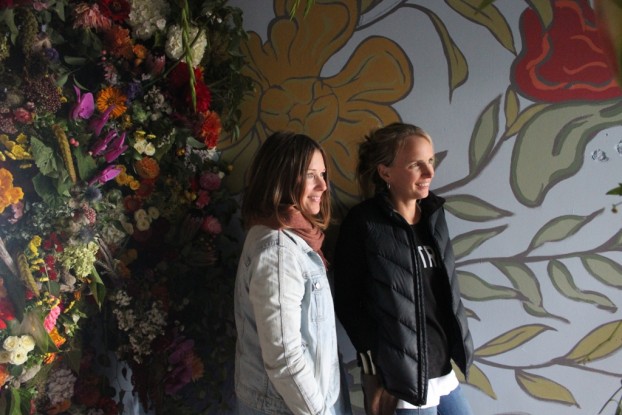
Larissa Flynn and Jennifer Haf of Bloom Floral Design in their “Wild, Floral Graffiti” space.
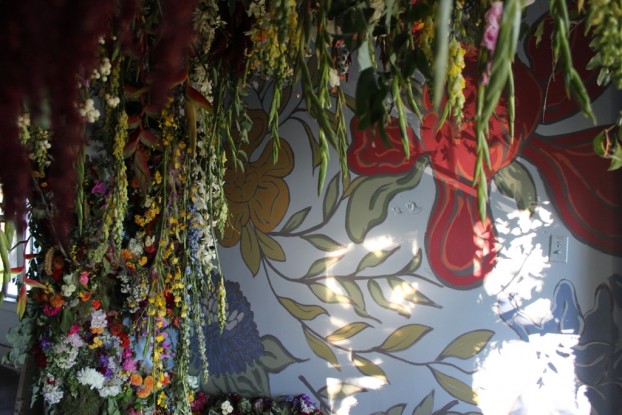
The floral-inspired graffiti underlay seen on the walls of Jennifer and Larissa’s space pays homage to Detroit’s street art.
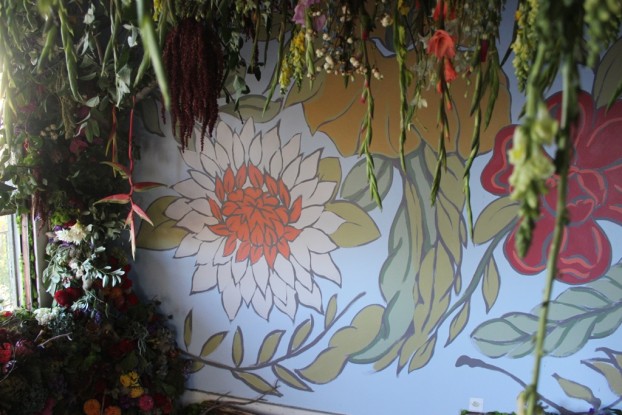
Love these giant flowers on the walls of “Wild, Floral Graffiti,” that complement the all-American flowers.
My hat is off to all of the designers and especially to Lisa Waud. Once the dust settles and Lisa has transitioned from her role as Flower House creator to urban flower farmer for her successful design business Pot and Box, we’ll invite her back for a recap of the project.
In the meantime, I leave you with this impression that Jen and Larissa shared. It has stuck with me as a perfect description of their room and many of the other rooms within the four walls of The Flower House: In designing their room, the women said they experienced a WILD CRAZY FREEDOM.
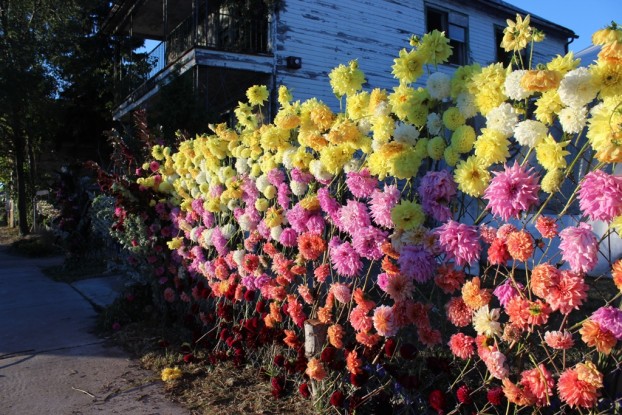
Extra dahlias grown by Michael Genovese of Summer Dreams Farm, a local Michigan resource — spontaneously woven into the chain link fence in front of The Flower House.
And I wish that sentiment for you to experience as well. It can happen when you connect with nature and with flowers that have been grown by the hardworking hands of American flower farmers.
Episodes of the Slow Flowers Podcast have been downloaded 68,000 times. I thank you and others in the progressive American-grown floral community for supporting this endeavor.
Until next week, you’re invited to join me in putting more American grown flowers on the table, one vase at a time. And If you like what you hear, please consider logging onto Itunes and posting a listener review. THANK YOU to each and every one of you for downloading, listening, commenting and sharing. It means so much.
The content and opinions expressed here are either mine alone or those of my guests alone, independent of any podcast sponsor or other person, company or organization.
The Slow Flowers Podcast is engineered and edited by Andrew Wheatley and Hannah Holtgeerts. Learn more about their work at shellandtree.com.
Posted in American Grown, Blog Posts, Creativity, floral design, Flower Farming, General, Plants, Playfulness, Podcast Episodes, SLOW FLOWERS Podcast | 5 Comments »
© Debra Prinzing, all written and photographic content. Website design/development by Willo Bellwood/Metric Media