Debra Prinzing

Get the Email Newsletter!

Archive for the ‘Slowflowers.com the Directory of American Flowers’ Category

SLOW FLOWERS Podcast: Pittsburgh’s Local & Seasonal Floral Designers – Jimmy Lohr & Jonathan Weber of greenSinner (Episode 155)

Tuesday, August 19th, 2014

Last week, this podcast came to you from Homer, Alaska.

This week, my travels brought me to Pittsburgh, Pennsylvania.

Let’s just say I’m coping with a little jet lag, but summer is my busy season for lectures and photo shoots, so I’ve learned to enjoy my MVP Gold status on Alaska Airlines.

Green_Sinner_IMG_1067But the other thing I have thoroughly enjoyed has been the chance to connect with great flower farmers and floral designers – coast to coast – who are part of the Slow Flowers movement. In the coming weeks you’ll hear from several of these awesome folks who I first “met” virtually, through social media and — more importantly — because they have joined Slowflowers.com.

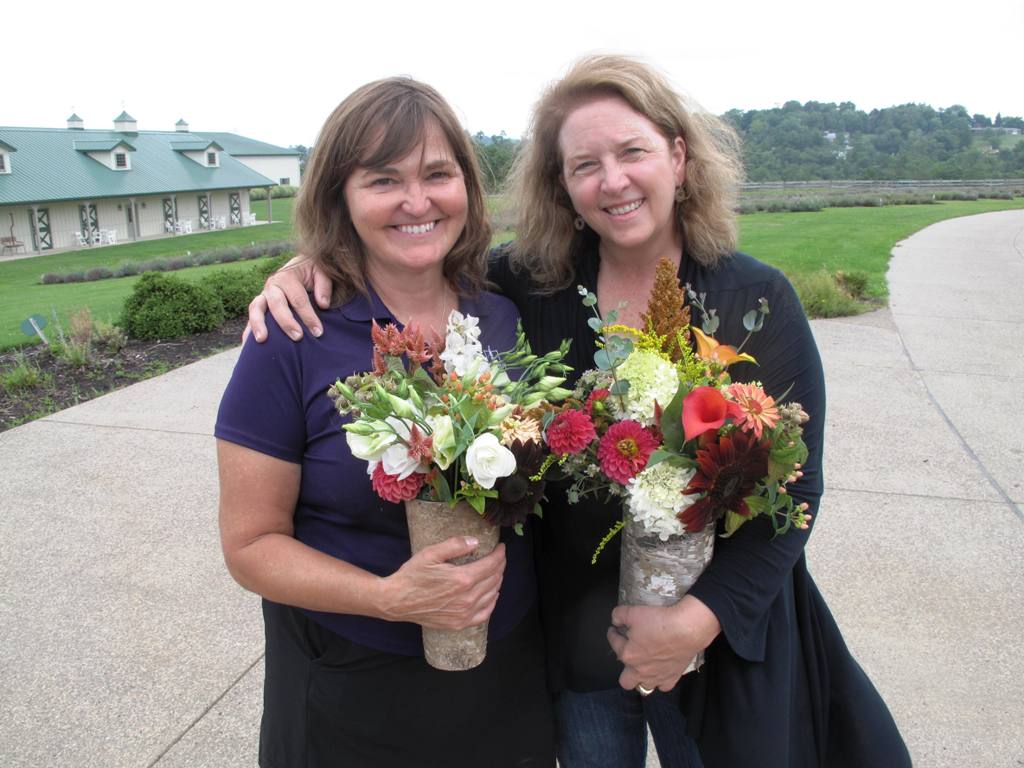
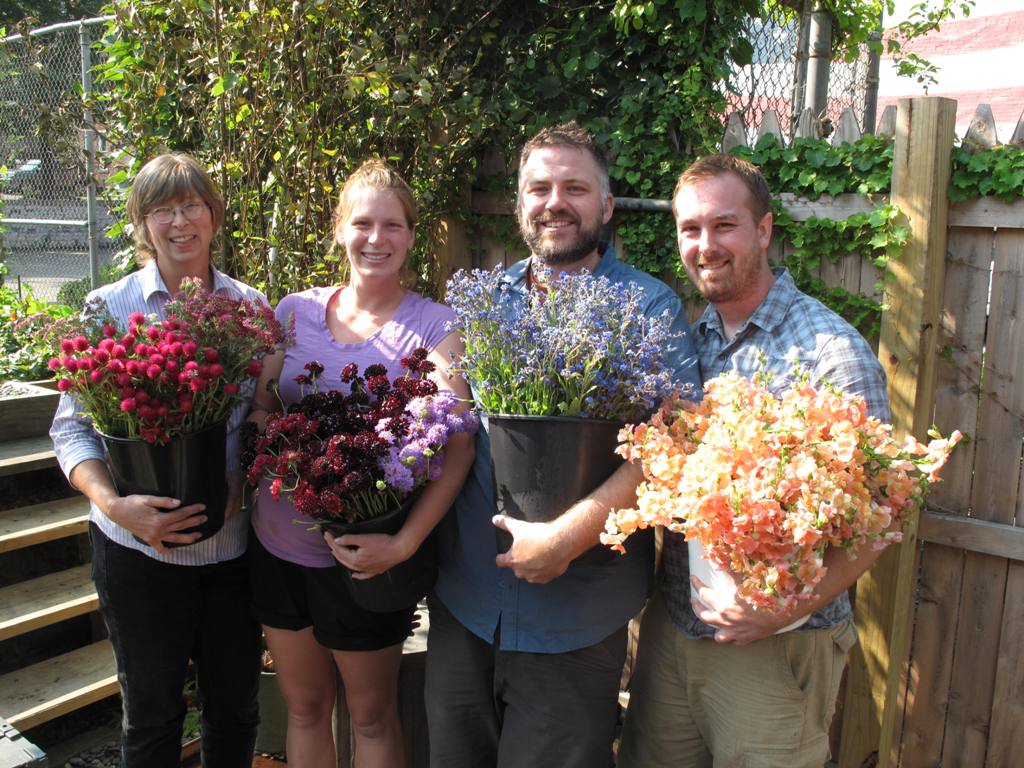
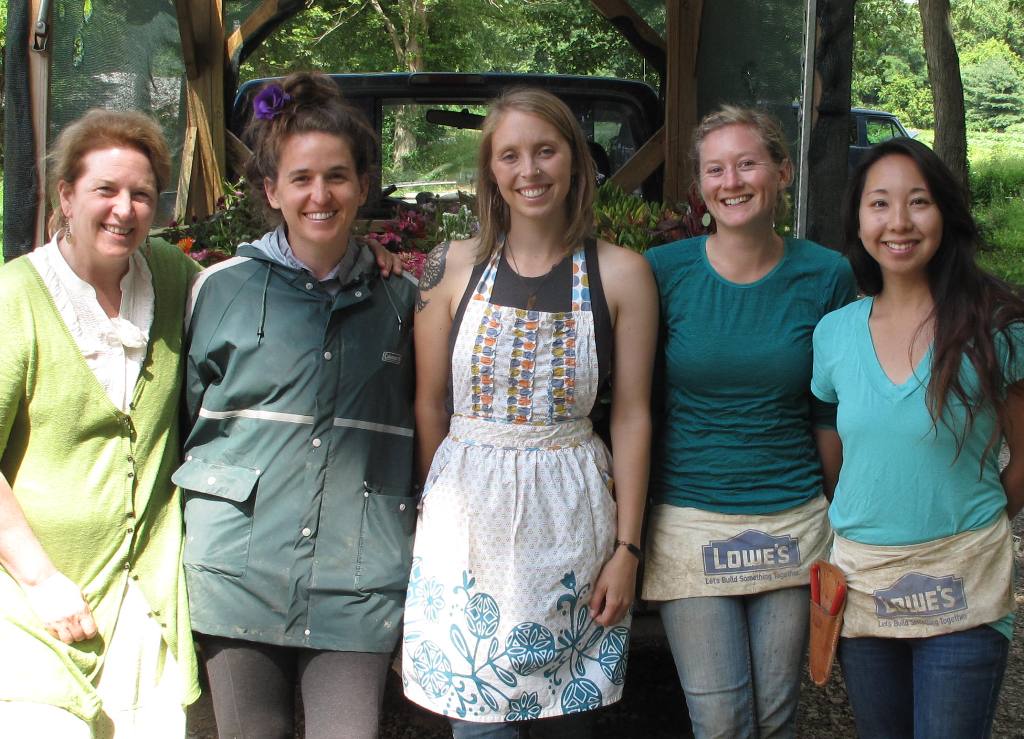
Pittsburgh's Floral "Who's Who" -- from left, Margie Dagnal and Kate Dagnal of Goose Creek Gardens, Jimmy Lohr and Jonathan Weber, owners of greenSinner.

Pittsburgh’s Floral “Who’s Who” — from left, Margie Dagnal and Kate Dagnal of Goose Creek Gardens, Jimmy Lohr and Jonathan Weber, owners of greenSinner.

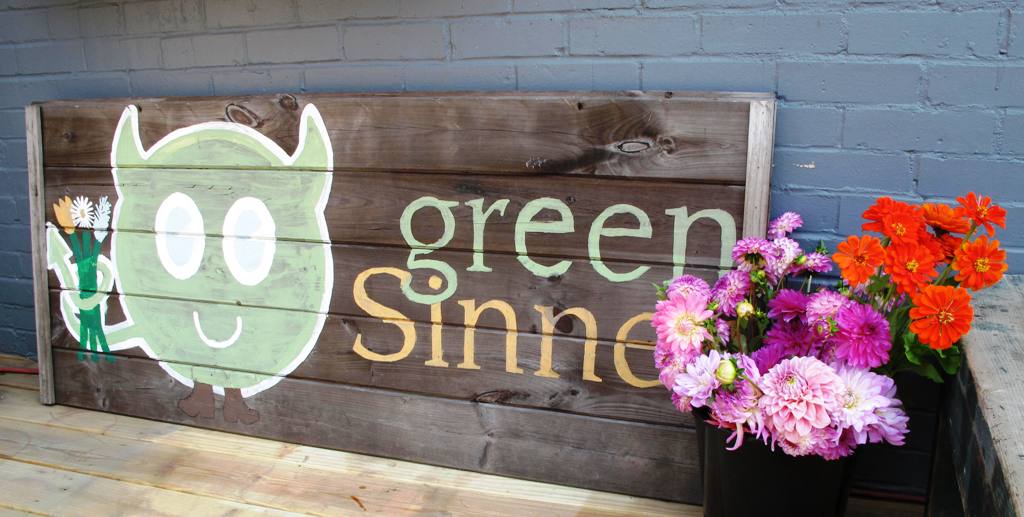
Today you will meet two of them: Jimmy Lohr and Jonathan Weber, owners of greenSinner, an urban role model that promotes American-grown flowers in the heart of Pittsburgh’s Lawrenceville neighborhood (by the way, Lawrenceville is now called “new Brooklyn” for hipster, indie, design-focused vibe).

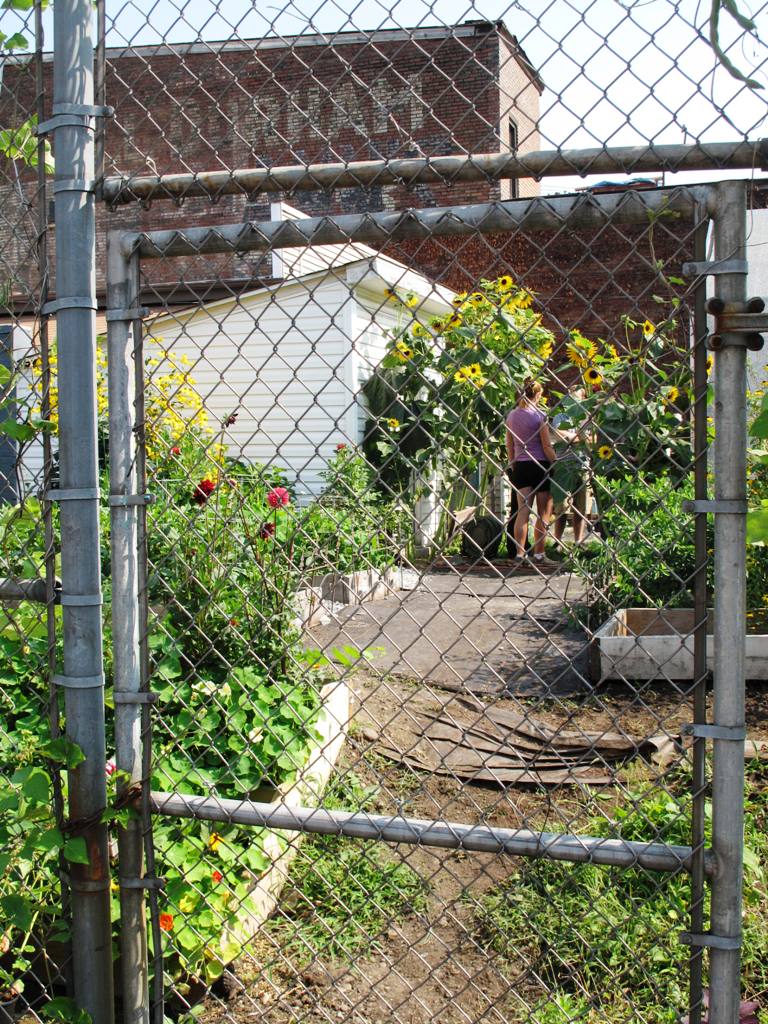
Peek through the chain link fence - from the urban parking lot into greenSinner's cutting garden.

Peek through the chain link fence – from the urban parking lot into greenSinner’s cutting garden.

Jonathan and Jimmy state their beliefs up-front-and-center on the home page of their web site:

“greenSinner brings you local, sustainable cut flowers and plants. We love fresh flowers (don’t you?), but we don’t love that they come from Ecuador drenched in chemicals (yuck). We’re trying to make the world — our world and yours — a little greener and a little more beautiful. We grow flowers right here in western PA and source as many materials and plants as we can in a 500-mile radius. Not only is it better for the environment, but you also get fresher flowers and more local and unusual varieties. Beyond flowers, we focus on vintage or re-purposed containers and event decor and sustainable practices.”

The guys at greenSinner first caught my attention when they contributed to the Slowflowers.com campaign on Indiegogo earlier this year. Not knowing anything about their business, I looked them up and sent them a note of thanks.

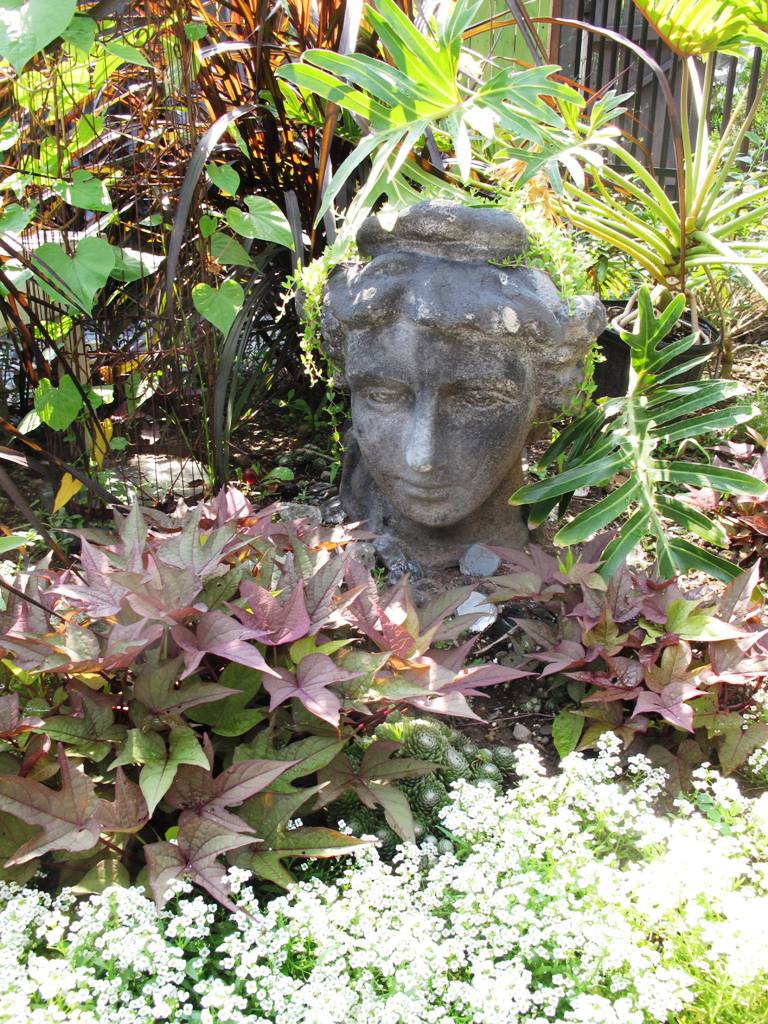
A littleclassical detail in the "front garden" at greenSinner's studio.

A littleclassical detail in the “front garden” at greenSinner’s studio.

Only a few weeks after the campaign ended, I found myself in early March attending Holly Heider Chapple’s NYC Chapel Designers’ conference, where I was included in the speaker lineup. Of course, I was there to encourage her members to consider joining the American Grown flower movement, to refocus their wedding and event work to include seasonal and local flowers and to introduce these designers to the notion of working closely with flower farmers.

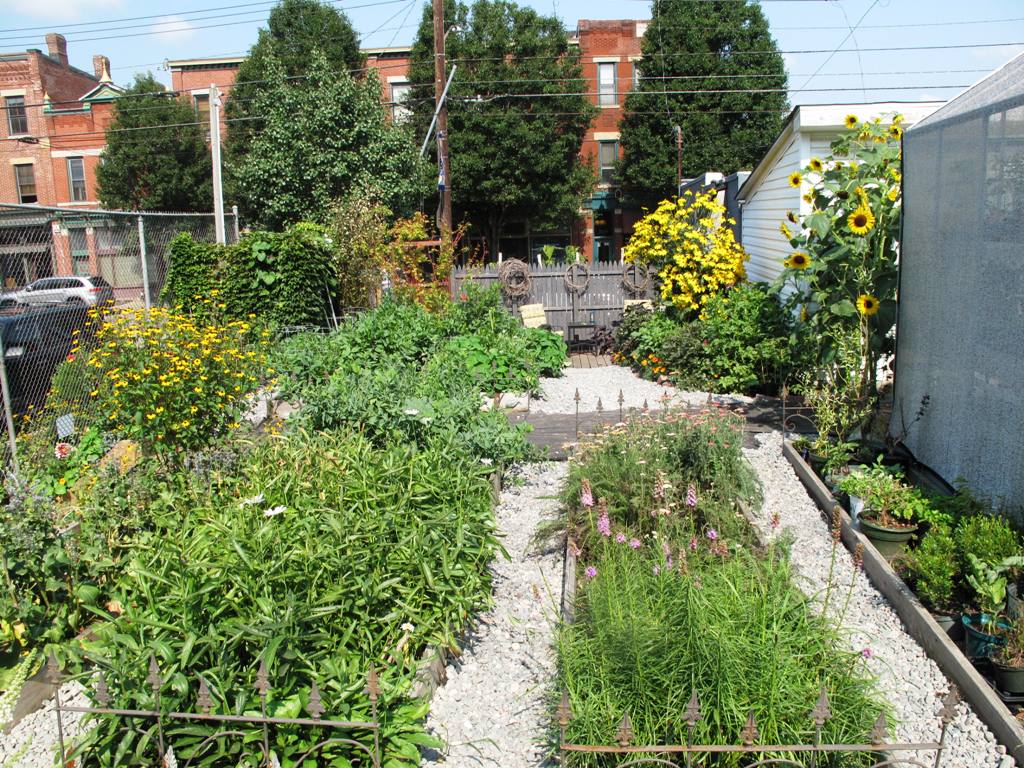
Tidy and enchanting, the cutting garden is wedged between greenSinner's studio and the adjacent city parking lot.

Tidy and enchanting, the cutting garden is wedged between greenSinner’s studio and the adjacent city parking lot.

And there was Jimmy, a charming teddy bear of a guy, front and center, making me feel welcome. He wasn’t the only one who “got it,” but he was definitely the most enthusiastic. I learned that he and his partner Jonathan believe in designing weddings and events with locally grown flowers and plants and that they owned a postage-stamp-sized cutting garden behind their shop. We made plans for me to visit in August when I knew I’d be in Pittsburgh for the Garden Writers Association’s annual symposium.

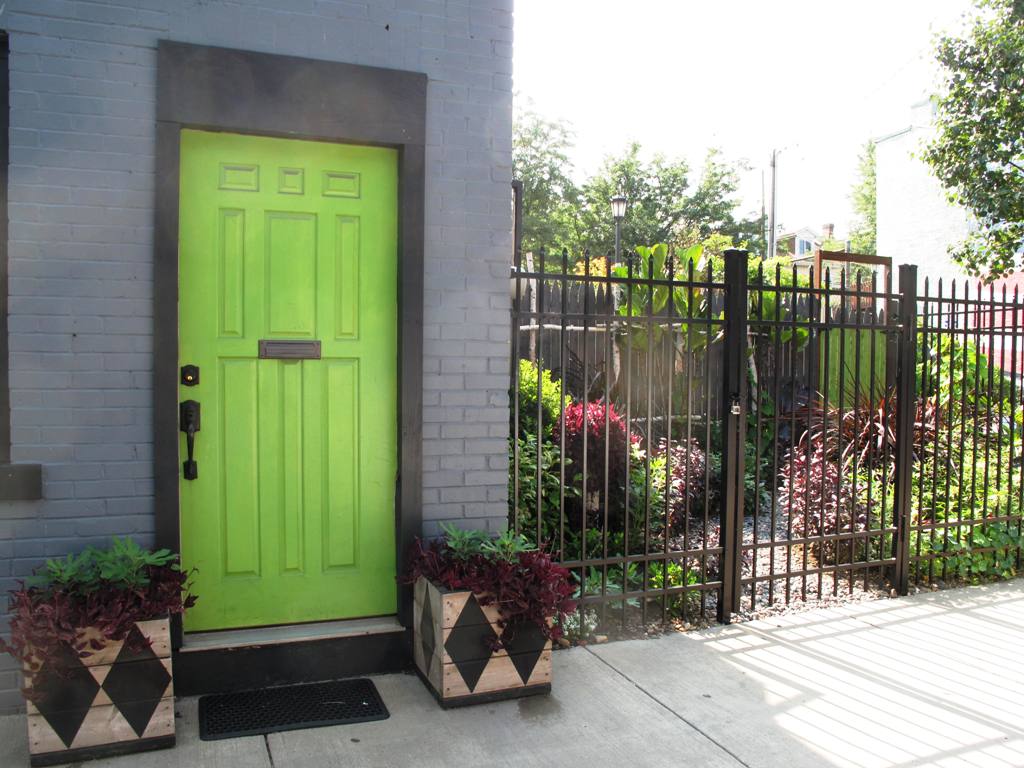
Pedestrians love to peer through the front fence to see what's growing within.

Pedestrians love to peer through the front fence to see what’s growing within.

In the ensuing months, not only did we stay in touch, but when I worked with Kasey Cronquist on the launch announcement of the Certified American Grown brand on July 1st, we invited Jimmy to speak on behalf of floral designers.

Jimmy picked me up at my hotel in downtown Pittsburgh early one morning and we drove a short distance to greenSinner’s studio. After a walking tour to see their backyard growing operation, their greenhouse and the small cutting garden they planted behind a neighboring studio where their stained-glass artist friend works, we sat down for a short podcast interview.

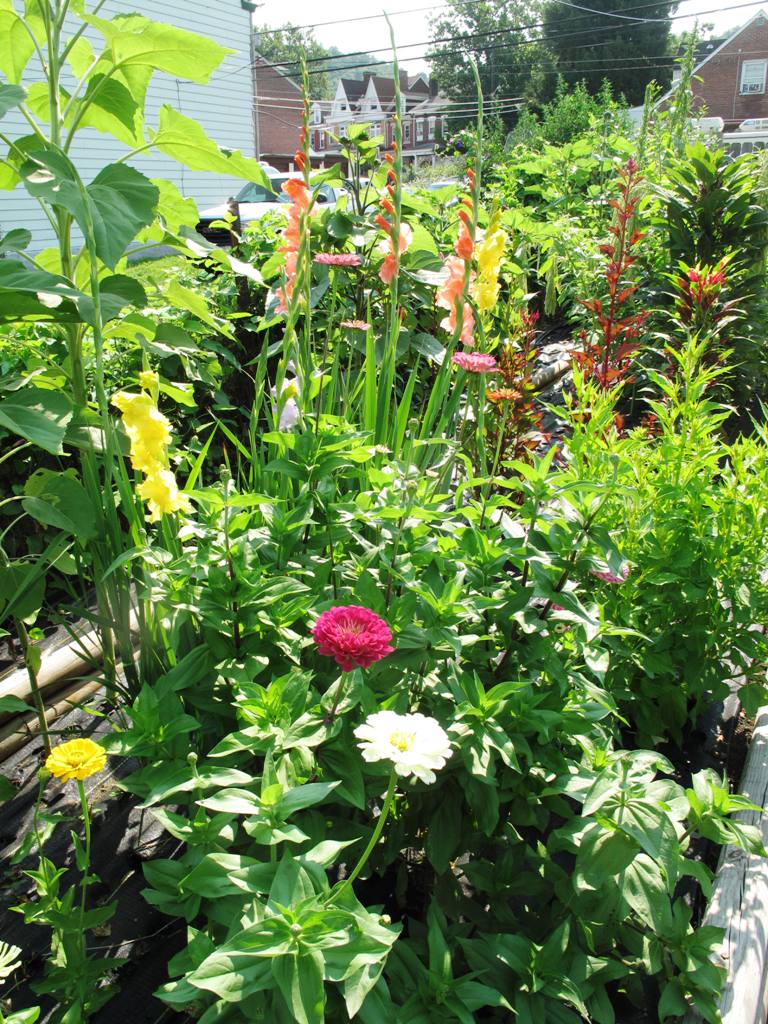
A peek at the cutting garden behind the greenSinner studio.

A peek at the cutting garden behind the greenSinner studio.

Before we get started, let me introduce you to the two men you’ll hear next. This is straight from greenSinner’s web site:

Jimmy Lohr, Chief Eccentric Officer:

Jimmy, in a limerick:
There once was a boy from the sticks
Who grew up and left all the hicks.
He studied the arts
And big event parts
Then moved home to share all his tricks.

Jonathan Weber, Farmer-General
Jonathan, in a haiku:
Jonathan Weber
internet marketing dude
now he’s a farmer

These guys definitely express their values in everything they do as designers and business owners – and it was such a pleasure to spend time on their turf in Pittsburgh.

Thanks for joining this lively conversation. I’m grateful for listeners like you who have downloaded this flower-powered podcast more than 18,000 times. If you like what you hear, please consider logging onto Itunes and posting a listener review.

Please join me in putting more American grown flowers on the table, one vase at a time. I promise that when you tune in next week, you’ll hear another insightful and educational episode of the Slow Flowers Podcast.

The Slow Flowers Podcast is engineered and edited by Hannah Holtgeerts and Andrew Wheatley. Learn more about their work at hhcreates.net

SLOW FLOWERS Podcast: Farmer-Florist News – from Gretel Adams, Elizabeth Bryant and Kailla Platt (Episode 153)

Wednesday, August 6th, 2014

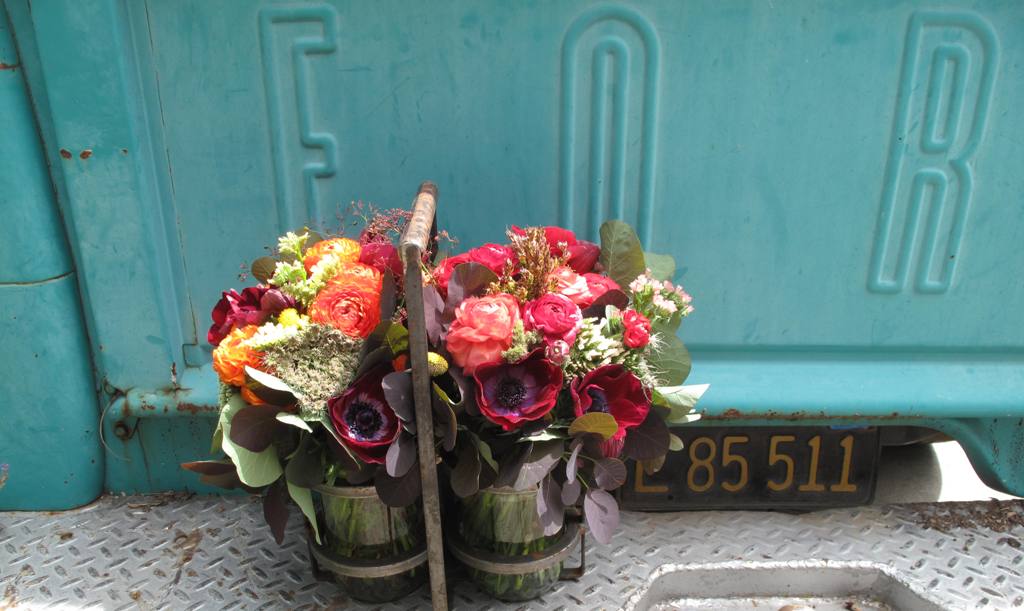
This iconic photo is showing up everywhere and I am so lucky it's mine! So symbolic of American Grown. Design and truck: Tara Kolla, Silver Lake Farms (Los Angeles) (c) Debra Prinzing

This iconic photo is showing up everywhere and I am so lucky it’s mine! So symbolic of American Grown. Design and truck: Tara Kolla, Silver Lake Farms (Los Angeles) (c) Debra Prinzing 

It’s summertime and the Slow Flowers Podcast is on the road. And it’s no surprise to learn there’s at least one awesome American flower farmer everywhere I seem to go.

There are passionate floral designers to be discovered right alongside and that means more beautiful Slow Flowers experiences for the nation’s consumers, coast to coast.

This week I’m sharing a fabulous conversation with a farmer-florist team from Portland, Oregon – Elizabeth Bryant, owner of Rose Hill Flower Farm, and Kailla Platt, owner of Kailla Platt Flowers.

But first, a bonus conversation that I recorded on July 16th at Sunny Meadows Flower Farm in Columbus, Ohio.

Owned by Steve and Gretel Adams, previous guests on this podcast, Sunny Meadows is leading the way in changing how flowers get to market in several Ohio cities. The reason for my return to Sunny Meadows was to work with James Baggett, editor-in-chief of Country Gardens magazine, and Kritsada, an uber-talented photographer, to produce a feature story about Gretel and Steve – and their farm, flowers and floral design.


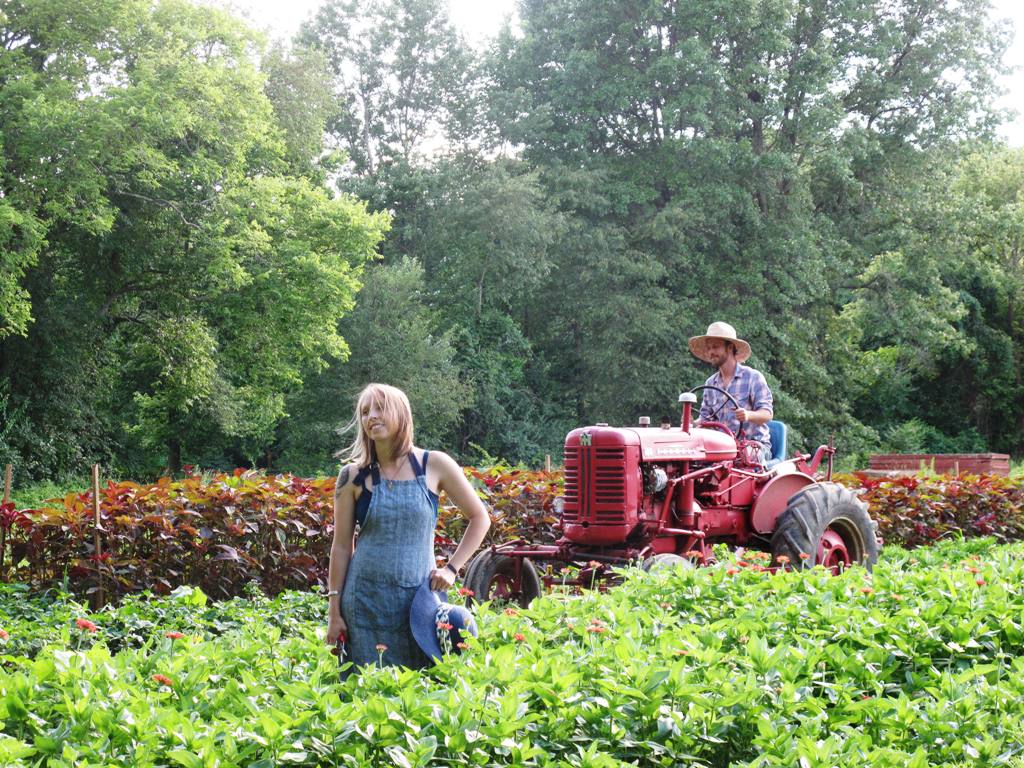
Some might call this "flower farm porn," but who cares? Gretel and Steve were really good sports about posing in the flower fields (isn't that vintage tractor a great "prop"?)

Some might call this “flower farm porn,” but who cares? Gretel and Steve were really good sports about posing in the flower fields (isn’t that vintage tractor a great “prop”?) 

You can keep an eye out for that nothing-but-gorgeous story in the summer of 2015 – and of course, I’ll remind you here when the magazine hits the newsstands.

I recorded a short interview with Gretel and two of her summer design interns, Katie Vontz and Danica Jones. They all agreed to chat briefly about what is becoming a popular way for would-be flower farmers and new floral designers to gain training: via internships, apprenticeships or seasonal work-study-style programs. I think you’ll be intrigued and inspired to hear how Gretel filled her need via social media, too.

This is the "ad" that Sunny Meadows used on Instagram to recruit its summer design interns.

This is the “ad” that Sunny Meadows used on Instagram to recruit its summer design interns. 


From left: Me, design intern Katie Vontz, Gretel Adams (Sunny Meadows Flower Farm co-owner), design intern Danica Jones and Sunny Meadows floral designer   Kumiko Matsuura.

From left: Me, design intern Katie Vontz, Gretel Adams (Sunny Meadows Flower Farm co-owner), design intern Danica Jones and Sunny Meadows floral designer Kumiko Matsuura.

Next up: A dynamic conversation with collaborators Elizabeth Bryant and Kailla Platt. 

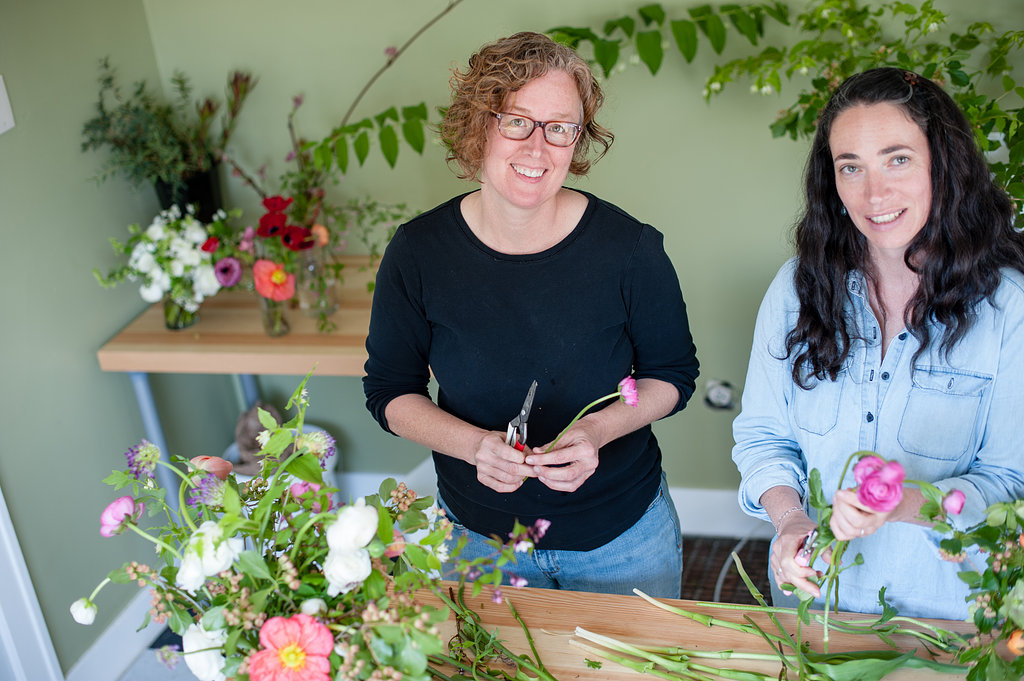
Elizabeth Bryant (left) and Kailla Platt (right), photographed in their Portland studio.

Elizabeth Bryant (left) and Kailla Platt (right), photographed in their Portland studio. 

Kailla was trained in fine art and landscape architecture and logged a decade designing gardens. But she traces her primary training in floral design to time spent in the lush green of Oregon’s Willamette Valley, where she fell under the floral spell cast by her grandmother Jane K. Platt. 

Kailla's work, a seasonal and local floral bouquet.

Kailla’s work, a seasonal and local floral bouquet.

As Kailla puts it: “she filled my young heart with a love of gardens, plants and flowers.  She would generously send me out into her amazing garden with a basket and clippers, telling me I could pick anywhere.  Then, as we selected frogs and filled vases, she would tell me the names and the stories of all these beautiful flowers.  Her garden was a fairy land to me as a child and it continues to inspire me and influence my work today.”

Kailla Platt Flowers, a delightful composition.

Kailla Platt Flowers, a delightful seasonal composition.

Kailla Platt Flowers is a young floral studio inspired by Kailla’s lifelong relationship with flowers. On her website, Kailla writes: “I care about where my flowers come from. I want to know the farmer who grew them.  When possible, I want to gather and forage botanical material myself.  The flowers we give to others, wear in our hair and lift to our faces and smell, should be free of pesticides and harmful chemicals.  Farm to table, garden to vase, me to you.” 

Seasonal design by Kailla Platt Flowers.

Seasonal design by Kailla Platt Flowers. 

Kailla works collaboratively on wedding and event design with another amazing force, Elizabeth Bryant, a flower farmer, floral designer, and founder of Rose Hill Flower Farm, a small, sustainable urban flower farm and design studio in Portland. 

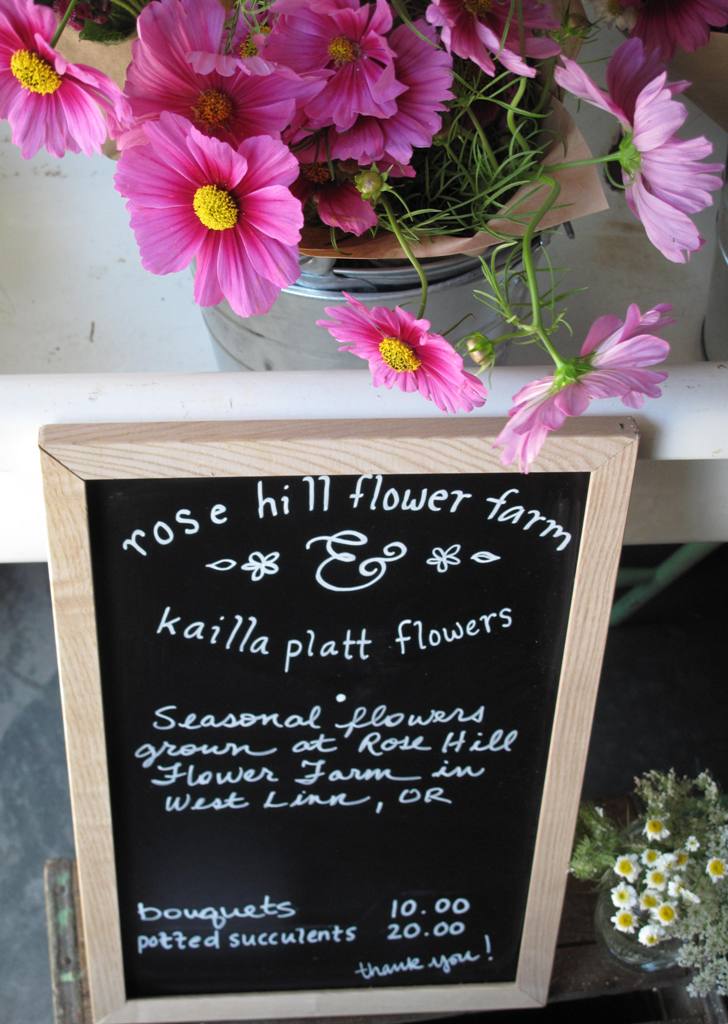
Elizabeth and Kailla at Prettyman's General, a neighborhood mercantile where they  sell their local bouquets.

Elizabeth and Kailla at Prettyman’s General, a neighborhood mercantile where they sell their local bouquets.

Elizabeth and her wife Jill grow flowers on three acres of family land in West Linn, Oregon, about 15 miles southeast of Portland. 

She says: “Our farming and land-care practices are organic and ecologically grounded, with the utmost care given to creating a healthy soil ecology and rich pollinator habitat.  We grow a range of both common and unique specialty cut flowers for use in weddings and events, through our CSA, and direct to florists.”  Rose Hill also provides lush, locally grown arrangements weekly for restaurants, businesses and individuals, or for any special occasion.  

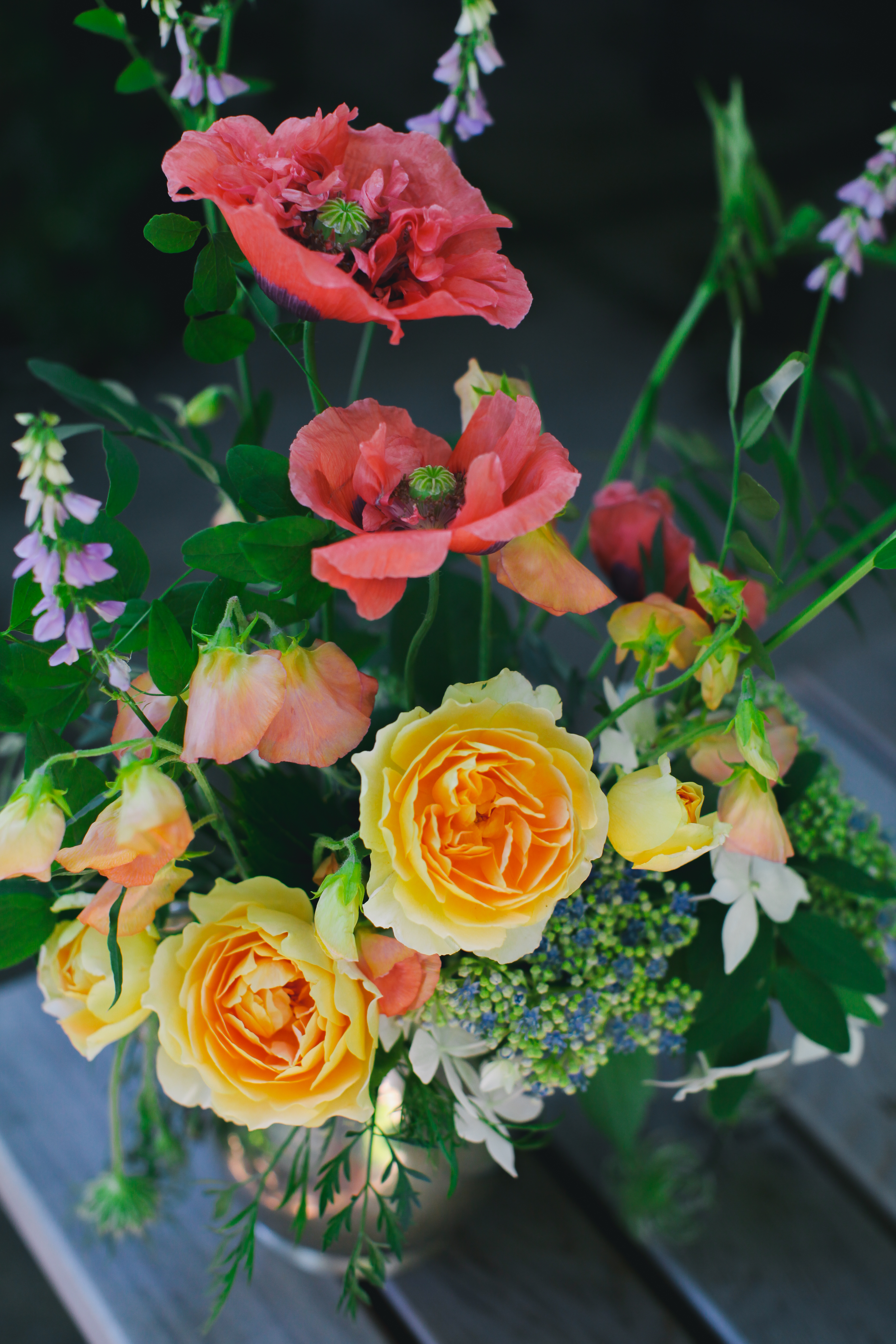
Mixed bouquets by Rose Hill Flower Farm.

Mixed bouquets by Rose Hill Flower Farm.

What you’ll enjoy about this interview is hearing how two creatives – Elizabeth Bryant and Kailla Platt – have distinct points of view and floral businesses that are different from one another, but that they also are collaborative in a way that benefits both of their work – and their clients.

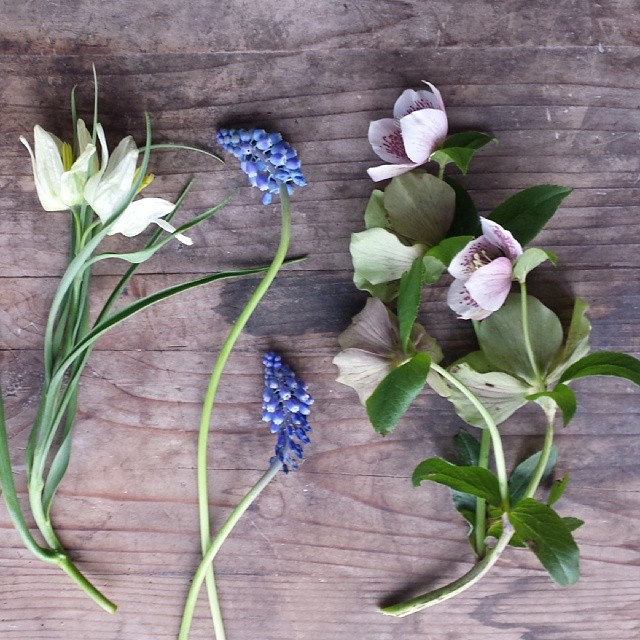
Spring ephemerals, grown by Rose Hill's Elizabeth Bryant.

Spring ephemerals, grown by Rose Hill’s Elizabeth Bryant.


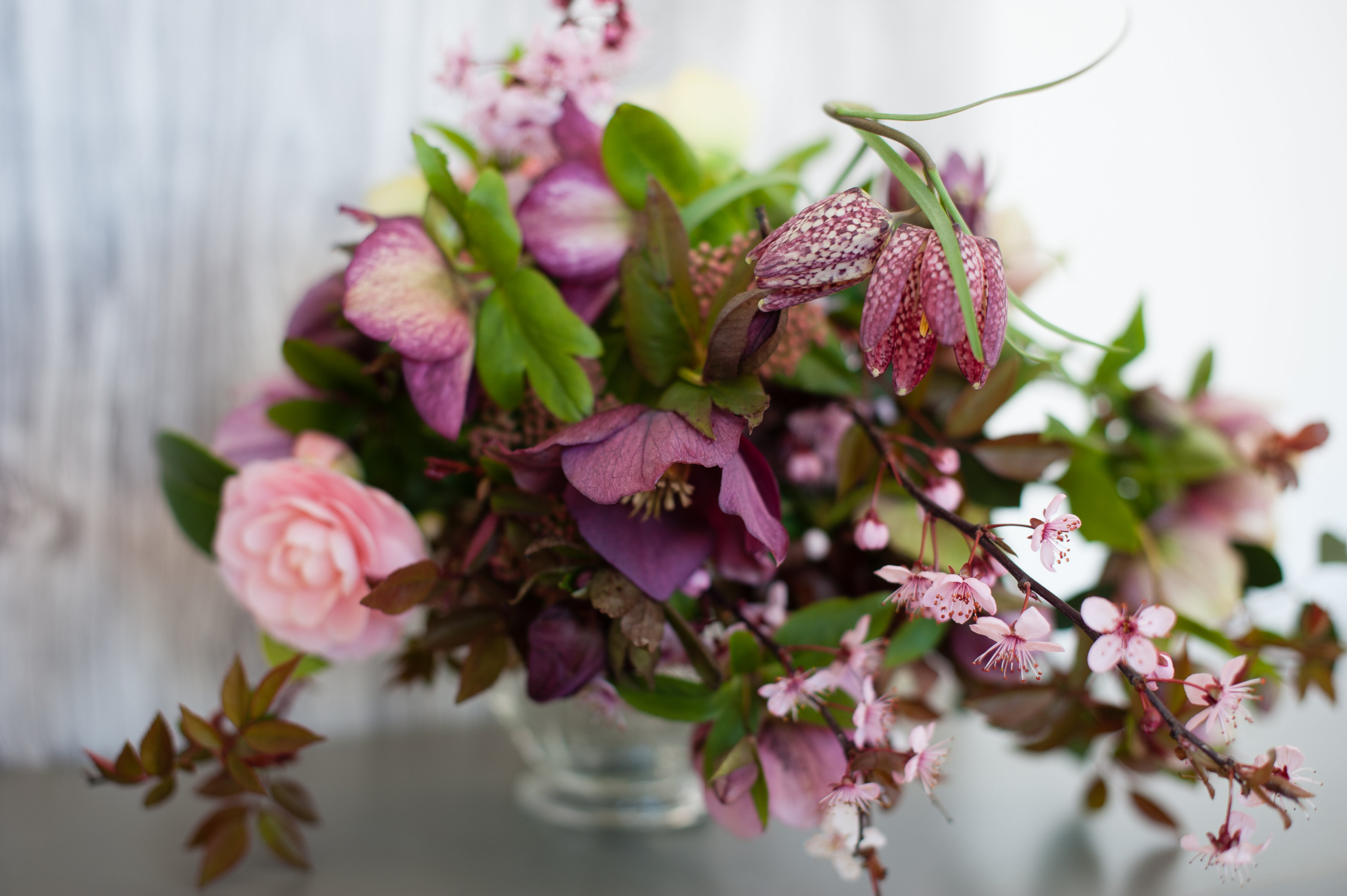
Rose Hill's Elizabeth Bryant's flowers and floral design.

Rose Hill’s Elizabeth Bryant’s flowers and floral design.

Kailla and Elizabeth share studio space with Portland photographer Katie Prentiss. In a charming little cottage in Southeast Portland, the three us a combined design and meeting/event space for floral projects.  Together they enjoy great artistic synergy and often partner on projects, including weddings and large events requiring florals.

A floral collaboration.

A floral collaboration.

Thank you for joining me today to hear some of the exciting voices in American flower farming and floral design. Even after a year of producing and hosting the Slow Flowers Podcast, I can guarantee that the list of future guests is very long and I don’t imagine running out of names we need to hear from – inspiring people who are changing the way Americans gather and enjoy flowers in all aspects of life.

Floral design by Kailla Platt.

Floral design by Kailla Platt.

Next week Slow Flowers comes to you from Homer, Alaska, where I’ve happily returned after my 2012 peony-hunting excursion. After that, the road tripping continues, and you can anticipate Slow Flowers interviews with flower farmers and floral designers in Pittsburgh and Philadelphia. 

Thanks to listeners like you, this podcast has been downloaded more than 17,000 times. In fact, the month of July was our all-time most popular month of interviews with 2500 downloads – and I’m jazzed to know that more listeners are discovering this flower-powered podcast every day.

If you like what you hear, please consider logging onto Itunes and posting a listener review.

Until next week please join me in putting more American grown flowers on the table, one vase at a time. 

The Slow Flowers Podcast is engineered and edited by Hannah Holtgeerts and Andrew Wheatley. Learn more about their work at hhcreates.net

SLOW FLOWERS Podcast: An All-American Celebration for our One-Year Anniversary (Episode 151)

Wednesday, July 23rd, 2014
Lots of great news to celebrate! Our 1st Anniversary and more than 15k downloads!

Lots of great news to celebrate! Our 1st Anniversary and more than 15k downloads!

Today I’m celebrating the one-year anniversary of the Slow Flowers Podcast

During the past year, I produced and hosted weekly episodes of this podcast — with news and insights of the American Grown flower movement. 

The people who have been guests on this series have generously and passionately  shared their time and knowledge. 

Our inspiring and straight-forward dialogue has prompted thousands of listeners to return, week after week, downloading the audio files to their various devices, to listen in the design studio, in the flower fields and wherever else they spend their days. 

ButtonMakers Pattern Template

The Slow Flowers Podcast is now a must-hear medium connecting  listeners across our country with creative and influential voices and exciting points of view. 

Thank you for joining me and please get ready for the next 52 weeks of great conversations.

We’re in full bloom, so to speak, and there’s an abundance of great information I’m eager to bring you! 


Kasey Cronquist, CEO & Ambassador for the California Cut Flower Commission.

Kasey Cronquist, CEO & Ambassador for the California Cut Flower Commission.

It is fitting that today I welcome Kasey Cronquist, CEO and ambassador of the California Cut Flower Commission, the largest and most progressive organization in the American floral industry. As I said when he was my podcast guest last September, Kasey is a kindred spirit who is supremely passionate about saving our homegrown flower farms and preserving the agricultural way of life as a part of our country’s vibrant landscape. 

Our conversation took place last week at Cultivate ’14, the green industry trade show formally called OFA Short Course in Columbus, Ohio. 

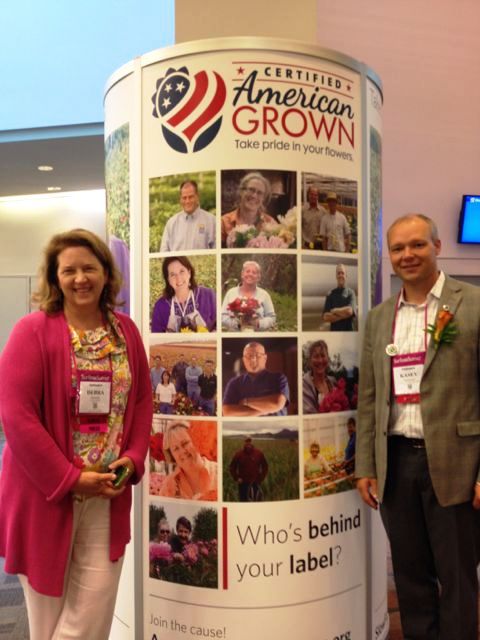
At the invitation of AmericanHort, the host organization and trade show producer, Kasey and I partnered to promote two initiatives that go together like a bunch of just-picked sunflowers and a big white ceramic pitcher: Slowflowers.com and Certified American Grown Brand.

Coming Soon to a Supermarket Near Yout: the Certified American Grown Brand.

Coming Soon to a Supermarket Near You: the Certified American Grown Brand.

Slow Flowers is pleased to be a stakeholder in the launch of the brand new Certified American Grown Brand – a beautiful identity that will – for the very first time – inform and assure consumers of the domestic origins of the flowers they purchase at the cash register. 

I asked Kasey to discuss the implications of Certified American Grown labeling – and to give us some historic perspective about what led to the unveiling on July 1st and the debut at last week’s Cultivate conference. 

Kasey (left) and I teamed up to cross-promote Slowflowers.com and the Certified American Grown Brand at the recent Cultivate '14 Show.

Kasey (left) and I teamed up to cross-promote Slowflowers.com and the Certified American Grown Brand at the recent Cultivate ’14 Show.

This initiative was unveiled on July 1st at an industry Webinar involving all of the stakeholders who bring flowers to the consumer. A second webinar is scheduled soon – if you’re interested in being included, sign up here. 

I’m motivated by one thing – and that is spreading the news about  local, seasonal and domestic flowers. The most asked questions I hear from audiences are these:

How do I know the source of my flowers? Who grew these flowers and how far did they have to travel to get to me? How can I spend my floral budget wisely?

Last July, about the same time this podcast launched, I started developing the Slowflowers.com web site. 

Slowflowers.com went live in early May as a one-stop resource to help consumers find American flowers and the farmers, designers, studios and shops that provide those blooms.

With the introduction of the Certified American Grown Brand, I now have a second resource — a trusted brand that points consumers coast to coast to domestic cut flowers. I love the tagline: “Take Pride in Your Flowers.”

This is so much more than a visually compelling, red-white-and-blue logo that evokes pride and confidence. It symbolizes American family farms, agricultural revitalization and economic strength in our rural communities.

It is a brand that I endorse 100-percent and that I am proud to share with you.

Thanks to listeners like you, this podcast has been downloaded nearly 16,000 times in one year. I truly appreciate the guests, listeners and sponsors who have supported the Slow Flowers Podcast with Debra Prinzing!!! Together, we’re changing the broken floral industry for the better!!

If you like what you hear, please consider logging onto Itunes and posting a listener review.

Until next week please join me in putting more American grown flowers on the table, one vase at a time. 

I always conclude the episode by saying “The Slow Flowers podcast is engineered and edited by Hannah Holtgeerts and Andrew Wheatley.”

I owe them both a huge bouquet of thanks for their creativity and professionalism as together we’ve built this podcast. Thanks so much! You can learn more about this talented pair at hhcreates.net.

SLOW FLOWERS Podcast: A new brand of floral entrepreneur, Bess Wyrick of Celadon & Celery (Episode 149)

Wednesday, July 9th, 2014
Bess Wyrick of Celadon & Celery, wearing one of her beautiful floral crowns (c) Jana Williams

Bess Wyrick of Celadon & Celery, wearing one of her beautiful floral crowns (c) Jana Williams

CC_Logo_final.ai-page-001Today’s guest is Bess Wyrick, founder and creative director of Celadon & Celery, a floral design and events studio based in New York City and Los Angeles. 

I first learned of Bess when researching florists to possibly feature in The 50 Mile Bouquet – I wanted to document the emerging business model of floral designers who actively promoted green practices, such as using seasonal and local flowers, embracing earth-friendly products and promoting anti-mass market style. 

I later learned that this category is called “eco-couture,” and it’s quite possible that Bess coined the phrase herself.


May 5, 2013 cover of New York Magazine, featuring Bess Wyrick's floral crown on the head of artist Jeffrey Koons.

May 5, 2013 cover of New York Magazine, featuring Bess Wyrick’s floral crown on the head of artist Jeffrey Koons.

In 2009, Bess’s Celadon & Celery was featured in a New York Times blog post about “organic flower” sourcing. The writer cited Bess’s policy of sourcing flowers within a 200-mile radius of NYC and also noted that when seasonal flowers aren’t available, she purchased Fair Trade, Veriflora and USDA organic flowers from certified vendors. 

The following year, in 2010, BizBash, a web site devoted to event planning, published a piece about Celadon & Celery that stated: “. . . sustainability is important to Wyrick. She composts, grows many of her own plants in her Chelsea studio, sources flowers from local growers or certified organic suppliers, and scavenges for materials to repurpose.” 

Bess shared this photo of a floral teepee, a recent installation.

Bess shared this photo of a floral teepee, a recent installation.

To read about that philosophy today – in 2015 – doesn’t seem all that unusual. But five years ago, it was rare. Believe me, I counted on one hand the number of designers proactively taking the green approach. I saved that article in my folder of inspiring designers. 

So how cool was it that when Celadon & Celery brought its floral design workshop series to Los Angeles, Bess’s publicist pitched me to write the story. 

Local flowers in a beautiful palette, designed by Celadon & Celery

Local flowers in a beautiful palette, designed by Celadon & Celery 

I was definitely intrigued. Intimate hands-on floral design workshops had hit the East Coast, and the New York Times had run a piece in 2010 about The Little Flower School of Brooklyn (and owners Sarah Ryhanen and Nicolette Owen, two recent guests of this podcast). I’d even led a few seasonal floral workshops for Ravenna Gardens in Seattle in 2010, but I hadn’t seen much like this happening elsewhere on the West Coast. 

My editor at the Los Angeles Times agreed, and I did a short Q&A interview with Bess about the workshop series in fall 2011. At the time, Celadon & Celery was charging $300 for its two-hour sustainable-design workshops at Bess’s loft-studio in New York’s Chelsea Flower District. For the Los Angeles expansion, she dropped the tuition to $125 and used social media channels to promote the classes. 

Overwhelmed by the positive response, Bess rented a photography studio in downtown Los Angeles and turned it into a classroom. She hired a few local freelancers to help and ran three classes a day for three weeks. “In that time we taught floral design to more than 800 people,” Bess marvels.

bliss! a Celadon & Celery seasonal creation

bliss! a Celadon & Celery seasonal creation

50MileBouquet_bookI was able to witness the excitement in person and cover it for a chapter in The 50 Mile Bouquet. In the book’s pages, you can read about the explosion of DIY interest in floral design.

In that piece, Bess offered this observation: “The word ‘eco’ has a bad reputation implying something weedy,” Bess says. “But we’re creating flowers that are sophisticated, chic and tailored. ” You can read the entire chapter by clicking this link.

I’ve connected with Bess many times since the publication of The 50 Mile Bouquet, in both New York and Los Angeles, depending on where our travels intersect. She is a generous supporter of the new Slowflowers.com and you can find Celadon & Celery featured in the online directory under studio florists and weddings/events.

I’ve been wanting to have her on as a guest and I’m delighted to include our conversation here today. Please enjoy our discussion about how floral design – and this designer in particular – has evolved to encompass event production, conceptual storytelling and artistic installations.

a singular bouquet.

a singular bouquet.

You’ll learn that floral design can be as multidisciplinary and multidimensional as you choose it to be. And, according to Bess, florists who advocate for their vendors, the family flower farm in particular, have an edge. She says: “I like to sell the fact that I’m a luxury brand and luxury brands work with really small artisans and that’s really important because you want to make sure that your flower farm vendors keep doing what they’re doing and creating unique and unusual flowers that the higher luxury market will pay for.”

(c) Jana WIlliams

(c) Jana WIlliams

I love how generous and frank she is and a few more of her interview comments really resonated:

For one thing, volunteering on flower farms has educated Bess to understand that “it’s not okay for clients to negotiate the cost of flowers because it is back-breaking work and there aren’t enough people who know how to grow flowers.”

And second: This quote is powerful and I hope it more than a few people in the floral industry to rethink their practices: “I don’t think that any florist in California should be importing flowers at all. That’s just being lazy.”

(c) Jana Williams

(c) Jana Williams

Ahem. Thank you, Bess, for stating the obvious. You’ve lent a lot of credibility to the Slow Flowers Movement with that proclamation!

Here are links to all of Bess’s social outlets:

Life with Bess Blog

Facebook

Twitter

Pinterest

Flickr

Instagram

And Thanks to listeners like you, this podcast has been downloaded nearly 15,000 times.

If you like what you hear, please consider logging onto Itunes and posting a listener review.

Until next week please join me in putting more American grown flowers on the table, one vase at a time. 

The Slow Flowers podcast is engineered and edited by Hannah Holtgeerts and Andrew Wheatley. Learn more about their work at hhcreates.net.

A July 4th Homegrown Bouquet, from an American flower farm

Friday, July 4th, 2014
Just picked, from the cutting garden and fields at Rose Story Farm in Carpinteria, CA

Just picked, from the cutting garden and fields at Rose Story Farm in Carpinteria, CA

Composing this arrangement for the July 4th holiday is my reward for 48 hours of hard work.

I’ve been here in Southern California on assignment for Country Gardens magazine and Deck, Patio & Outdoor Rooms magazine.

I worked with Michael Garland, an LA-based photographer, to capture two wonderful garden stories that you’ll see in the pages of these publications next year (summer 2015). 

Today, after wrapping up at Rose Story Farm in Carpinteria, which has been the subject of past blogs and a podcast interview with founder Danielle Hahn, I got to play with the extra flowers from our photo shoot.

Everything that grows here is lush, and organic, and seasonal and simply devine! Here’s what my flower playtime yielded. Only in Santa Barbara area do the dahlias, roses, hydrangaes and succulents look at their peak on the same day.

If you have to work on a holiday, let it be July 4th and let it be at a American flower farm, right?

SLOW FLOWERS Podcast: Heidi Joynt and Molly Kobelt, two dynamic flower farmers and owners of Chicago’s Field and Florist (Episode 148)

Wednesday, July 2nd, 2014
Molly Kobelt and Heidi Joynt of Field & Florist, pictured at their flower farm outside Chicago.

Molly Kobelt and Heidi Joynt of Field & Florist, pictured at their flower farm outside Chicago.

Before introducing you to this week’s guests, I want to share some of the highlights that have recently come my way, thanks to friends and members of the Slowflowers.com site.

These incidents may seem small, but when gathered together, they encourage me that the message of this podcast and the usefulness of Slowflowers.com are increasingly important.

WebFirst, we recently added “Floral Workshops & Classes” as a listing category. Maryann Nardo, owner of 7 Petals Floral Design in San Rafael, California, just let me know she booked her first student through a Slowflowers.com customer who was searching for floral design classes. That’s awesome news!

Second, Sarah Pabody of Triple Wren Farms, a recent guest of this podcast, shared news that a floral designer in her Bellingham, Washington, area – someone who’s taken a workshop of mine — found Triple Wren on the Slowflowers.com site and has since subscribed to the farm’s flower CSA for the rest of this summer. Sarah wrote: “I thought you might like to know both that it helped our farm and that she is super inspired to continue in what you taught her.”

And finally, Kate Richards of the Farmhouse 38 blog, sent this awesome piece of news.

“One of my guests at my blogger dinner this weekend is getting married in Rhode Island in September. She’s incredibly ecologically minded, and had opted to not do any flowers at the wedding because she is pretty much ‘over’ the current floral industry. Between my recent blog post about the Slow Flowers movement and my blogger dinner featuring all local, CA-grown flowers (and food), my friend had her eyes opened to the idea of slow flowers (she called it ‘life-changing’, lol). She hadn’t even considered that there could be a proximate flower farm where she could get local, responsibly raised flowers. So she went on slowflowers.com and sure enough, she discovered Robin Hollow Farm, not too far from where she’s getting married—and they are officially doing her wedding flowers now! Huzzah!!!”

These stories are simply fantastic – just what I had hoped for when I created Slowflowers.com. If you want to make my day, I’d love to hear how this movement, this podcast and the online directory is helping you as a flower farmer, retailer or florist.

fieldandflorist

It’s no surprise to learn that today’s guests are also part of the Slowflowers.com directory. Pictured above, Heidi Joynt and Molly Kobelt of Field & Florist, are based in the Chicago area. A few weeks ago, I was able to visit their idyllic growing grounds in Barrington, IL, about 30 minutes northwest of the city. After touring the fields to see what flowers are emerging from those lovely long rows, we sat down for a fun interview.

Field & Florist Farm. Photo by Jaclyn Simpson Photography

Field & Florist Farm. Photo by Jaclyn Simpson Photography

I first met Heidi when she attended the Association of Specialty Cut Flower Growers’ conference that was held in Tacoma during the fall of 2012.

We ended up sharing a car ride back to Seattle from a farm dinner in Skagit Valley, along with several other awesome young farmer-florists. For me, it was a memorable 90 minutes: ideas and energy bounced around the inside of my Subaru. Each person had something vital to share and we were all eager to learn about how our fellow passengers were developing their own floral businesses – from Seattle to Chicago to Columbus, Ohio — similar things are happening to connect local flowers with eager floral customers.

In the two subsequent years, Heidi and I have stayed in touch and corresponded about her business. She’s a model farmer-florist who has done so many exciting things to educate and inspire her customer base — from holding fun “work parties” on the farm that gets city folks out to the country and leaves a little dirt under their nails; to producing pop-up shops at hip Chicago venues, to designing beautiful seasonal wedding flowers for many happy couples.

Engagement photo bouquet. Photo by Ashley Bosnick Photography

Engagement photo bouquet. Photo by Ashley Bosnick Photography

Heidi is no longer a solo farmer and in this interview you will meet her new business partner Molly Kobelt. The two women have known one another for a couple years, through Dose Market – an innovative Chicago hub for all things local. Molly worked for Dose Market handling promotions and marketing; Heidi brought her flowers to sell. They recognized in each other a kindred spirit in their philosophy that being passionate about one’s work is important. Earlier this year, they joined forces when Molly came onboard as a partner in Field and Florist.

Ampersand Pop-Up Dinner Arrangement. Photo by Michael Litchfield

Ampersand Pop-Up Dinner Arrangement. Photo by Michael Litchfield

Check out “A Taste of a Floral Arrangement,” an awesome video produced by Rabbit Hole Magazine at Kinmont Restaurant in Chicago with Field and Florist. In the “small world” category of our intersecting lives, my son Ben works at this restaurant – and he originally shared the clip with me before he knew Heidi and I were friends. That connection makes me very happy.

Field and Florist grows and harvests a wide array of beautiful blooms from April to October – that’s about the maximum amount of time you can source locally in Chicago’s climate. In the winter months, Field and Florist sources from certified sustainable sources within the U.S.

I hope you enjoy hearing from these two talented farmer-florists, as we talk about all the successes and challenges of their venture.

Recent bridal + bridesmaid bouquets. Photo by Averyhouse

Recent bridal + bridesmaid bouquets. Photo by Averyhouse

Thank you for joining today’s conversation with Heidi and Molly.

Here are links to sign up for the Field and Florist newsletter

Consider subscribing to their floral CSA – they’re taking orders for September right now.

Thanks to listeners like you, this podcast has been downloaded nearly 15,000 times.

If you like what you hear, please consider logging onto Itunes and posting a listener review.

Until next week please join me in putting more American grown flowers on the table, one vase at a time. 

The Slow Flowers Podcast is engineered and edited by Hannah Holtgeerts and Andrew Wheatley. Learn more about their work at hhcreates.net.

Make a Bouquet: Step-by-Step

Wednesday, June 25th, 2014
June Bouquet with ornamentals and edibles.

June Bouquet with ornamentals and edibles.

Last weekend I was involved with the Hardy Plant Study Weekend as a speaker and a participant. This is an annual event, held every June. I rotates between Washington, Oregon and British Columbia, and this year was hosted and produced by the Northwest Perennial Alliance.

I was asked to present a floral design demonstration at Saturday night’s gala, held at Wells Medina Nursery. What could be better than attending a fun dress-up party with the theme “50 Shades of Green” (get it?). Surrounded by horticulture friends old and new, many of them who wore awesome green outfits, I demonstrated “The Marriage of Ornamentals and Edibles in the Vase.”

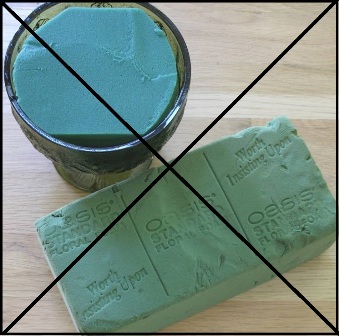
Here is a recreation of that arrangement, using most of the same flowers that I included in the first arrangement. I used a sizeable cast-iron urn (7 inches wide x 9 inches high) and filled it with a 5-inch vintage flower frog (cage style). NO FOAM, people! It’s not necessary and it actually shortens the vase life of flowers like these.

Step One: Choose an awesome container. This image gives you a good idea of the vessel's shape and scale.

Step One: Choose an awesome container. This image gives you a good idea of the vessel’s shape and scale.


Gather together your foliage. Start with something large and dramatic.  Artichoke/Cardoon foliage is a great summer element- straight from the veggie garden.

Gather together your foliage. Start with something large and dramatic. Artichoke/Cardoon foliage is a great summer element- straight from the veggie garden.


Step Two: Add the largest foliage first. I placed three leaves asymmetrically.

Step Two: Add the largest foliage first. I placed three leaves asymmetrically.


Step Three: Add the larger textural elements, like hydrangeas - straight from my garden.

Step Three: Add the larger textural elements, like hydrangeas – straight from my garden.


Step Four: Add more texture for contrast. Here, I added ladies mantle - lime green and super fluffy. Also straight from my garden.

Step Four: Add more texture for contrast. Here, I added ladies mantle – lime green and super fluffy. Also straight from my garden.


Step Five: Add smaller, darker, glossier foliage. Like sprigs of mint. They smell fantastic!

Step Five: Add smaller, darker, glossier foliage. Like sprigs of mint. They smell fantastic!


Step Six: Now, the diva flowers. Like these locally-grown garden roses.

Step Six: Now, the diva flowers. Like these locally-grown garden roses.


Step Seven: The final "viney" elements! Love the nasturtium. It lasts surprisingly long in the vase. PS, one vivid yellow poppy!

Step Seven: The final “viney” elements! Love the nasturtium. It lasts surprisingly long in the vase. PS, one vivid yellow poppy!

How do you keep this looking fresh for an entire week? Place this urn down inside the sink and run water inside (using the nozzle on the sink faucet). Give this vase a drink for 2-3 minutes and let the excess water spill over the edge. You’ll basically replace old, clouded water with fresh, clean water!

SLOW FLOWERS Podcast: Media entrepreneur Margot Shaw, creator of flower magazine (Episode 147)

Wednesday, June 25th, 2014

Before we get started with today’s awesome guest, I’ve got a little self-promotion to share. The Slow Flowers “brand” is a lovely bouquet with several unique blooms in the vase.

PodcastLogoThere is this podcast, of course, and we’re coming up on our one-year anniversary on July 23rd (we’ll have an exciting announcement from a special guest to celebrate our 52nd episode!).

 Web

And there is the Slowflowers.com online directory, which is growing every day – up to 325 vendors on the site as of this week.

600_600_SLOWFLOWERSFrtCvrrevBut it all started with the book: Slow Flowers, four seasons of locally-grown bouquets, from the garden, meadow and farm. St. Lynn’s Press published this little gem in early 2013 and it has been the creative inspiration to launch the Slow Flowers Movement.

14-silver-logoWe just got word that Garden Writers Association has awarded Slow Flowers with one of two Silver Medals of Achievement for Overall Book product this year. I couldn’t be happier and I’m so pleased to receive the recognition because it reflects what together our American grown floral community has achieved in changing the dialogue and changing the relationship consumers have with their flowers. Congratulations to the entire St. Lynn’s Press creative team for making my words and images into such a beautiful little book: Paul Kelly (Publisher), Catherine Dees (Editor) and Holly Rosborough (Art Director). They are the dream team! 

TODAY’S GUEST: MARGOT SHAW, flower magazine

Margot Shaw, "flower magazine" founder and editor-in-chief

Margot Shaw, “flower magazine” founder and editor-in-chief  


"To Flower" ~ the definition embodies the spirit of this magazine.

“To Flower” ~ the definition embodies the spirit of this magazine.

Now, it is entirely fitting that I introduce you to Margot Shaw of flower magazine, my interview subject today. Margot has coined the phrase “a floral lifestyle,” a term I thoroughly embrace – and I know you will, too.


Margot calls herself a “late bloomer” when it comes to the art of floral design. A self-proclaimed “call-and-order-flowers girl,” Margot’s “a ha moment,” her view of flowers, changed when planning her daughter’s at-home wedding.

Working alongside the floral and event designer, she recognized the artistry and inspiration involved in “flowering” and soon began apprenticing with that same designer.

After a few years, enamored with all things floral but unable to locate a publication that spoke to her passion, she set about creating one. 

With a clear vision, a deep appreciation for beauty, a facility with words, a hometown uniquely geared towards publishing, and the advice and counsel of generous industry professionals, Margot launched flower in March of 2007. 

I snapped this photo of the flower magazine staff back in January 2011 when I visited Birmingham, Alabama, for a get-to-know meeting. That's Margot, second from the left.

I snapped this photo of the flower magazine staff back in January 2011 when I visited Birmingham, Alabama, for a get-to-know meeting. That’s Margot, second from the left.
Originally filled with floral, garden, and event design, the niche publication has gradually broadened to include content that trumpets a floral lifestyle—interiors, art, travel, fashion, jewelry, and entertaining.
“It has something for everyone who likes flowers—and who doesn’t like flowers?!” Shaw proclaims.

Since its debut, flower has continued to grow at a steady pace, recently moving from quarterly to bimonthly, and available in all 50 U.S. states and 17 countries.

Here’s some more information on the publication and its influence on our floral community:

Here's what you'll find on the pages of flower magazine ~

Here’s what you’ll find on the pages of flower magazine ~


Here's who reads the magazine.

Here’s who reads the magazine.


Here's more about the circulation and geographic distribution.

Here’s more about the circulation and geographic distribution.

Want to check out the current issue of flower magazine? Margot has generously shared the “secret” log-in password with listeners of the SLOW FLOWERS Podcast. Click here to read the digital edition and use TUBEROSE as the password. 

Next week’s guests are Heidi Joynt and Molly Kobelt, partners in Field & Florist of Chicago. You won’t want to miss it!

Thanks to listeners like you, this podcast has been downloaded 13,700 times.

If you like what you hear, please consider logging onto Itunes and posting a listener review.

Until next week please join me in putting more American grown flowers on the table, one vase at a time. 

The slow flowers podcast is engineered and edited by Hannah Holtgeerts and Andrew Wheatley. Learn more about their work at hhcreates.net.

SLOW FLOWERS Podcast: The Emerging Family Flower Farm, with Sarah & Steve Pabody of Triple Wren Farms (Episode 145)

Wednesday, June 11th, 2014
Steve and Sarah Pabody of Triple Wren Farms, Ferndale,Washington

Steve and Sarah Pabody of Triple Wren Farms, Ferndale,Washington

Earlier this week I headed north from the city and drove to Bellingham, Washington, close to the US-Canadian Border.

There, in lovely Whatcom County, I met Sarah Pabody for lunch at a charming cafe serving organic and locally-grown food. That seemed apropos because we were ready to talk about putting more flowers – edible and non-edible alike – into the agricultural conversation. 

I’ve known Sarah and her husband Steve Pabody since their flower-growing operation Triple Wren Farms joined the Seattle Wholesale Growers Market two years ago. Sarah and I served together on the co-op’s board for a while and she has impressed me with her level-headed approach to our discussions and the thoughtful and inclusive way she makes decisions as a leader at the market. 

Harvesting with Sarah.

Harvesting with Sarah.

We’ve been talking about me visiting Triple Wren, and now that it’s flower-growing season, the time was right to make the trip. I warned Steve and Sarah in advance that I wanted to record our conversation for the Slow Flowers Podcast – and fortunately for you, they were game! 

After lunch and a whirlwind chat, I followed Sarah even further north up the highway to the town of Ferndale. What beautiful countryside, where only a few miles off the interstate you can find apple orchards and flower fields surrounding a charming farmhouse with a deep, covered, wraparound porch, perfect for sitting down with Sarah and Steve, and a jug of their cold, refreshing, home-pressed apple cider. Steve poured and we forgot about the recorder and you can join in vicariously.  

Gentleman orchardist, Steve Pabody.

Gentleman orchardist, Steve Pabody.

I wanted you to meet Sarah and Steve because they are a young flower farming couple who are nearly 100-percent self-taught. Trial and error doesn’t seem daunting to them, though. Steve, a former Baptist pastor, has an incredibly gregarious personality, a can-do attitude and the willingness to poke fun at himself while tackling challenges like raising chickens, pruning thousands of apple trees and installing irrigation lines. He’s sort of a city boy who has taken to farming with a passion. [And PS, as the daughter of a Baptist pastor and pastor’s wife, I have a soft spot for Steve and Sarah – and their personal journey,]

Trey Pabody, inspiration for "Triple," as he is named Steve Pabody, the third.

Trey Pabody, inspiration for “Triple,” as he is named Steve Pabody, the third.

 Like Steve, Sarah has an infectious smile and the type of optimism you hope rubs off on you. This is not an easy path, but it’s one they are committed to walking together. And without owning the land on which they farm, Sarah and Steve are mindful of the steps they need to take to sustain Triple Wren for their future.

I know you’ll be inspired by their story, whether you’re a young farmer, too, or if you’re more established.

And by the way, their farm name celebrates the two reasons Sarah and Steve are so devoted to creating a family enterprise. First, their son Trey (Triple) and their daughter Chloe Wren (Wren). The children are a huge part of the farm’s energy and joy – as you can see in the family photos Sarah shared here.  

Chloe Wren, little sister and inspiration for "Wren" in the farm's name.

Chloe Wren, little sister and inspiration for “Wren” in the farm’s name.

Triple Wren Farms is located in the heart of Sm’Apple’s U-Pick Apple Orchard, which Steve manages for the Smith family, owners of the farm. During the fall U-Pick visitors are also able to harvest dahlias, zinnias, sunflowers and pumpkins to purchase.

Sarah, with Steve’s help, has developed two acres surrounding the orchard where she grows cut flowers and seasonal produce.

As you’ll hear in our interview, they got started with sunflowers just three seasons ago — and the mix of annuals, perennials, edibles, bulbs and woody floral ingredients they now grow for the floral marketplace has exploded. Since joining Seattle Wholesale Growers Market, Triple Wren has achieved Salmon Safe designation. The farm uses sustainable and non-certified organic practices.

In addition to being part of the Seattle Wholesale Growers Coop, Triple Wren sells to local florists and groceries in Bellingham, Ferndale and Lynden – and this year launched a very successful DIY Wedding Flowers program.

More farm photos, shared by Sarah and Steve:


Columbine and poppies, inside the hoophouse.

Columbine and poppies, inside the hoophouse.


Sarah, flower mama extraordinare (and a cool farmer, too!)

Sarah, flower mama extraordinare (and a cool farmer, too!)


Cosmosssssss!!!! Simple and so perfect!

Cosmosssssss!!!! Simple and so perfect!


Sarah snapped this lovely rose portrait at dawn. Sigh.

Sarah snapped this lovely rose portrait at dawn. Sigh.


Perfect foliage: Pea vines.

Perfect foliage: Pea vines.


Apples . . . everywhere! To eat, to press into cider . . . and to show up in bouquets (especially the flowering branches of spring and the tiny fruited branches of crabapples).

Apples . . . everywhere! To eat, to press into cider . . . and to show up in bouquets (especially the flowering branches of spring and the tiny fruited branches of crabapples).

The message to take from today’s episode is one that both Sarah and Steve emphasized: Mentorship is important. Perhaps it’s essential.

I encourage all you veteran flower farmers to reach out and share your expertise, experience, years of knowledge with someone just getting started. Pay it forward. . . and soon, those young flower farmers will, in turn, follow your example and share with the next generation that comes after them. It’s key to saving our American-grown floral industry!

Thank you for joining today’s conversation with Triple Wren’s Sarah and Steve Pabody. Please enjoy this fabulous Q&A that Alicia Schwede of Flirty Fleurs conducted with Sarah last fall.

Here’s how to follow Triple Wren’s activities, day by day:

Triple Wren on Facebook.

Triple Wren on Instagram

Triple Wren on Pinterest

Please join me next week for another insightful and educational episode of the Slow Flowers Podcast. Thanks to listeners like you, this podcast has been downloaded more than 13,000 times.

If you like what you hear, please consider logging onto Itunes and posting a listener review.

Until next week please join me in putting more American grown flowers on the table, one vase at a time. 

The slow flowers podcast is engineered and edited by Hannah Holtgeerts and Andrew Wheatley. Learn more about their work at hhcreates.net.

ARE YOU A SLOW FLOWERS FLORIST?

Thursday, June 5th, 2014

Join Slowflowers.com to share the news about your floral studio, shop, store or farm

and feature your American-grown botanicals!

mockupwithnewcontent


What is Slowflowers.com?

Slowflowers.com is a project of Debra Prinzing, writer, speaker, designer and consumer advocate. She created Slowflowers.com as a free, searchable directory that makes it easy for customers to find florists, shops, studios and farms who share a commitment to sourcing local, seasonal and domestic American-grown flowers. 

Why should you list your business?

This unique resource positions you and your business as a floral industry leader whose values and ethos promotes local, seasonal and domestic flowers. By being part of the Slow Flowers Movement, you gain market differentiation from the competition – and strengthen your brand in the eyes of consumers and your distinct marketplace. 

What if you also sell/design with imported flowers?

We understand that some members may continue to import from global sources. Floral businesses featured on Slowflowers.com will be asked to highlight and feature their American-grown product and to supply domestic, seasonal and local flowers when their customers request it. 

How do consumers use the site?

Slowflowers.com enables users to:

  • Search by state, city or zip code to find a floral resource
  • Search by category or key word
  • Find studios and retailers who specialize in green weddings, weekly subscriptions and other services.
  • Discover local flower farms that sell direct to the DIY consumer
  • Provide reviews and raves about their experience with a specific vendor. 

How can you list your business?

You have two options:

The FREE Standard Listing includes your business name, address, phone number, email and web site URL.

The PREMIUM Listing can be purchased on a yearly basis and allows you to create your personal page on Slowflowres.com. It includes the following: Business name, address, phone number, e-mail, website URL, logo, photo gallery of designs, summary and detailed descriptions, video and customer ratings/reviews. 

Please follow the USER GUIDE instructions to take advantage of the introductory Premium Listing offer of $119 (that’s only $10/month). This offer expires July 1, 2014, when new listing rates go into effect ($199/year). 

For more information, contact: debra@slowflowers.com