Debra Prinzing

Get the Email Newsletter!

Archive for the ‘Playfulness’ Category

SLOW FLOWERS Podcast: Fun with Flowers and J Schwanke (Episode 109)

Wednesday, October 2nd, 2013

SLOW FLOWERS Podcast: Fun with Flowers and J Schwanke (Episode 109)

Debra and J Schwanke

I’ve been having fun running into American-grown flower advocate and floral industry personality J Schwanke. He was one of the friendly faces I enjoyed seeing in Miami earlier this year.

The name J Schwanke is synonymous with flowers and floral design and I’m pleased to introduce you to this energetic and super-talented guy. J is the owner and CEO of uBloom.com, a web site devoted to everything flowers – and the platform for J’s weekly web-based flower television show, “Fun with Flowers and J.”

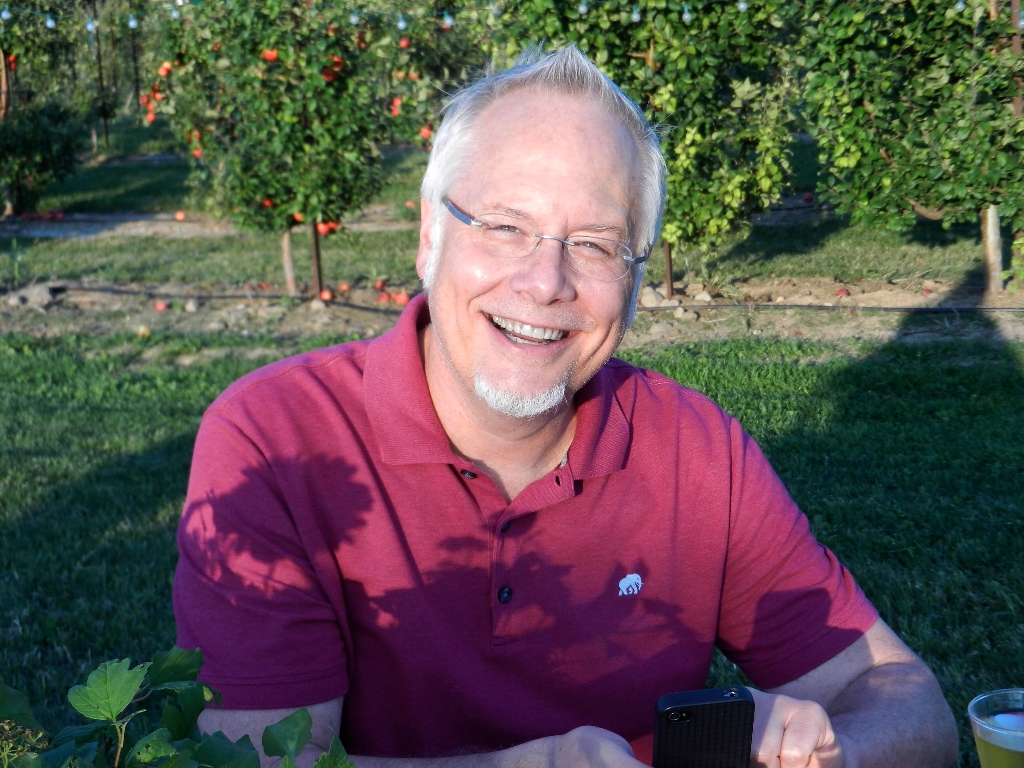
J Schwanke

J Schwanke, photographed on a recent fall day after he created the centerpieces for a Farm-to-Table orchard dinner.

He has been promoting American Grown flowers for so much longer than I have – and I credit J for pioneering the message that I’ve also embraced as my personal cause. It’s wonderful to have someone out there already trumpeting the message – and to join together in promoting the Slow Flowers movement.

Since I come from the gardening and DIY floral world and J is very well known in the professional floral world, I didn’t really know who he was during the years I was reporting and writing The 50 Mile Bouquet book. I first met J on my computer screen when I watched one of his California Grown Experience videos, which he produced in 2010-2011 as a series of online tours of California flower farms and related businesses such a floral wholesalers. That’s when J’s telegenetic personality, passion for flowers, and ability to draw out people and their stories impressed me. “Who is this guy, anyway?” I thought.

Florida with J and Debra

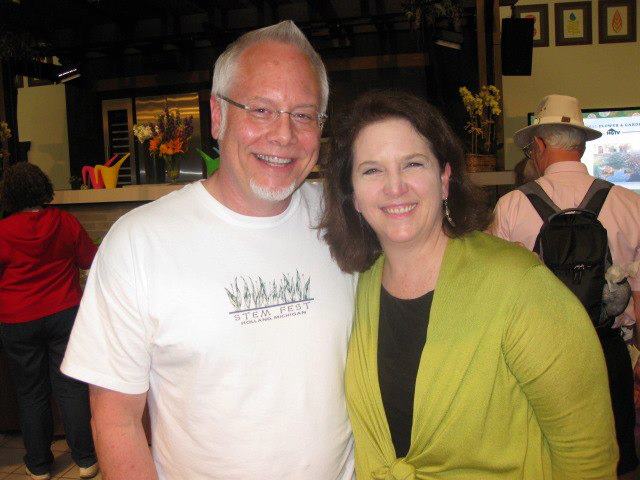
Kelly Blank snapped this photo of J and me on the day we finally met – in late April – at Disney’s EPCOT flower show.

Through our mutual friend and colleague Kasey Cronquist, I eventually met J via phone conference calls in which we both participated.

Then, earlier this year, J and his partner Kelly James Blank surprised me by attending one of my presentations at EPCOT’s International Flower & Garden Festival in Orlando.

That was pretty serendipitious – and it led to an evening of conversation, cocktails and dinner together – talking about our favorite subject: Flowers (former Garden Design magazine editor Sarah Kinbar was also with us – and that was such a treat to be together!)

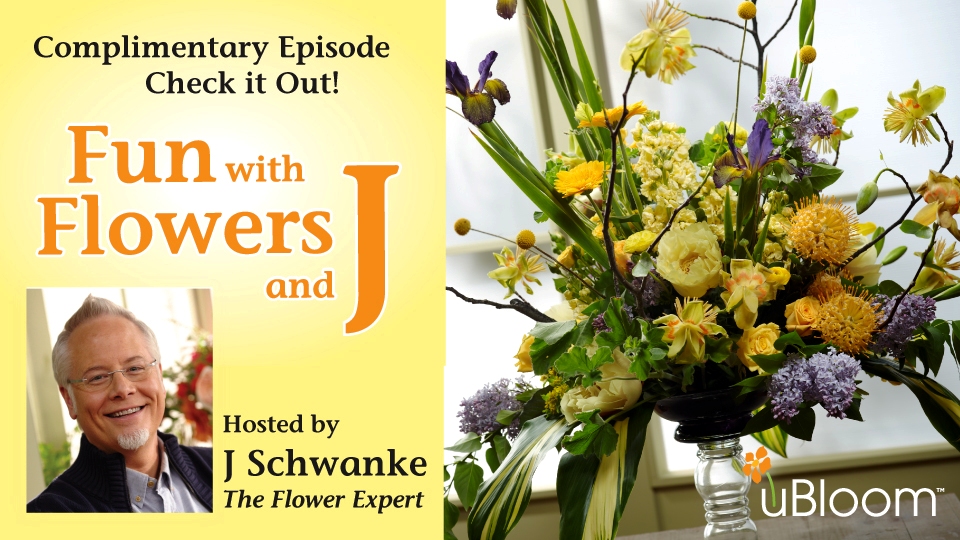
Fun with Flowers and J is the weekly how-to Web series you can find at uBloom.com

Fun with Flowers and J is the weekly how-to Web series you can find at uBloom.com

The California Grown Experience is featured on uBloom.com, the first Web-Based TV Show about Flowers, which J created in 2006 – and which continues to air today. Every Monday, J releases a new “FUN with Flowers” episode.  You can find a collection of more than 500 how-to videos and flower farm documentaries on the site, including a new series called the “Florida Fresh Flower and Foliage Tour.” Previews of all J’s shows are included free on the site; viewers can purchase downloads for $1-$2 or subscribe to uBloom for $30 a year to receive complete access to the entire archive. 

J with mom 1966

1966: J in a greenhouse with his mother. Pretty darned cute~

J has lived his entire life surrounded by flowers, in fact, his mother gave birth to him a flower convention she and his father were running. A fourth-generation florist and foremost expert in cut flowers and foliage, J received the prestigious Tommy Bright Award, lifetime achievement recognition for flower communication. and the Crystal Rose Award, denoting him a “Living Legend” in the world of flowers.

J is a member of the American Academy of Floriculture (AAF) and the American Institute of Flower Designers (AIFD). He is a Certified Flower Designer (CFD) and a designated Professional Flower Communicator International (PFCI). His deep source of energy has sent J around the globe to give presentations, demonstrations and hands-on workshops in all 50 States, Canada, Mexico, and throughout Europe.

I invite you to listen in on our conversation and meet J, too. Then, mosey on over to uBloom.com to learn about all of its features, sign up for J’s free newsletter and learn more about the extensive content offered there. 

One of J’s newest ventures, which we discuss on the podcast, is the Professional Resource Guide. This is a free directory that lets professionals and DIY floral designers find WHERE TO BUY the many products and supplies featured on uBloom.com. Here is the link to that excellent new resource. 


Floral design in Tuscany

Friday, September 27th, 2013
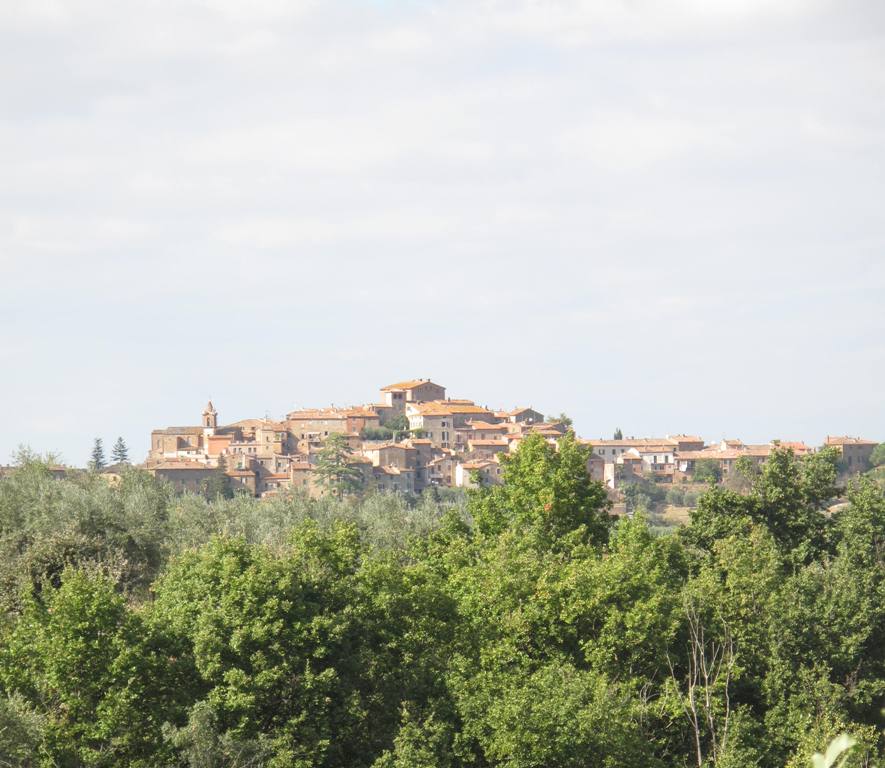
The approach to Montisi, a small Tuscan village that has been our home this week.

The approach to Montisi, a small Tuscan village that has been our home this week.


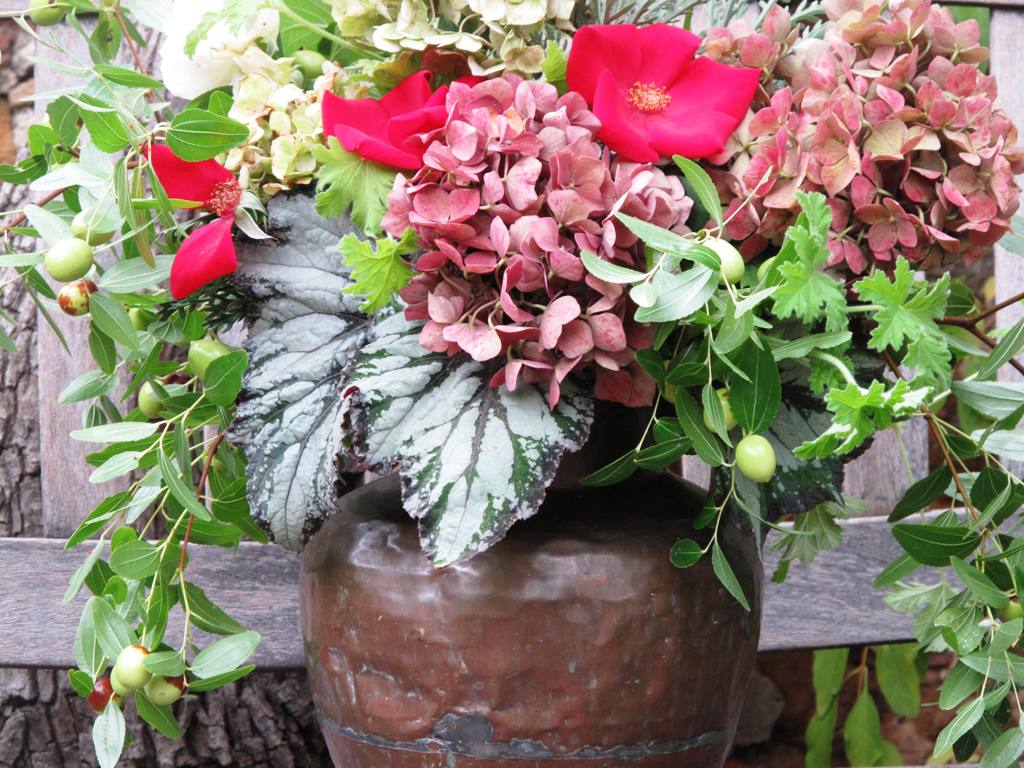
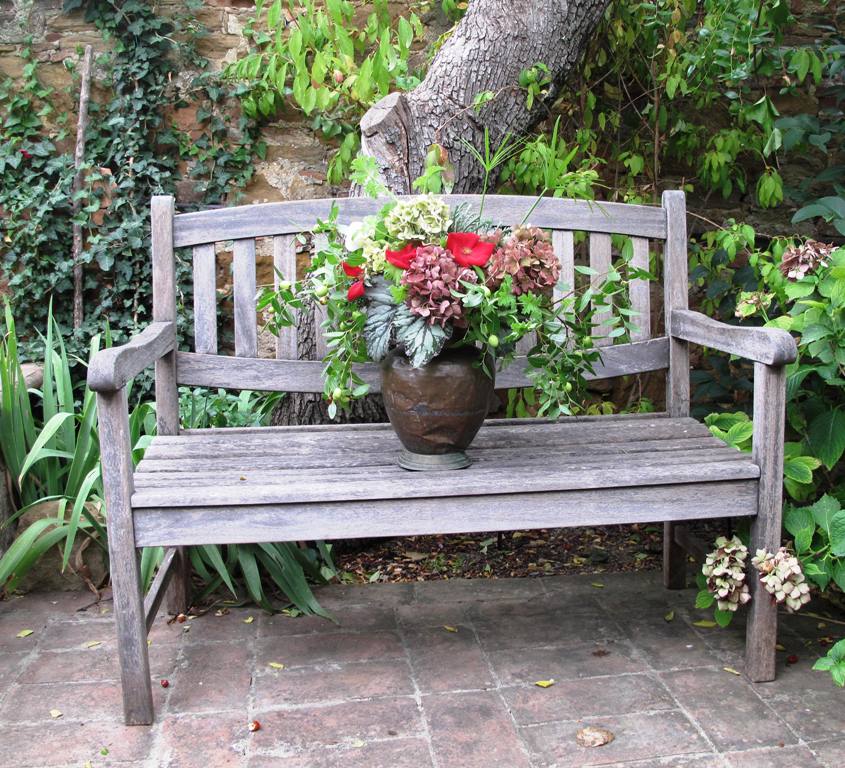
Detail: An autumn bouquet from a Tuscan garden. Olives, roses, hydrangeas, scented pelargonium leaves, Rex begonia leaves - seen here.

Detail: An autumn bouquet from a Tuscan garden. Olives, roses, hydrangeas, scented pelargonium leaves, Rex begonia leaves – seen here.

This morning at the villa, two friends went off for watercolor lessons with resident expat artist Liz Cochrane.

After walking down to Il Barrino for hot tea and a croissant, I came back totally determined to make a bouquet for our group’s last night together.

We have a dinner coming in from Allesandro, the local chef (Marty organized the menu, which includes Ribollita, a Tuscan soup; sliced pork with balsalmic vinegar; zucchini flan; and that popular italian desert, Apple Pie!)

The Flower Arrangers’ Guild of Tuscany commenced its first session.

This garden is in its waning moments of late summer-early autumn. But it does not disappoint. So much to work with and we judiciously snipped, without hurting or denuding a single plant.

I had spotted a copper urn, weathered and slightly dented, sitting on the floor in the Lemonaio (the garden room). It inspired my palette – faded, tarnished and of the moment.

A rustic wooden garden bench, a perfect place to display and photograph my Tuscan bouquet in a timeworn copper vessel.

A rustic wooden garden bench, a perfect place to display and photograph my Tuscan bouquet in a timeworn copper vessel.

Here are the ingredients I began with:

1. Scented pelargonium foliage

2. Papyrus stems from the water pond

3. Hydrangeas – two types

4. Roses – two types

5. Olives branches w/fruit

6. Marguerite daisy foliage

7. Rex begonia foliage

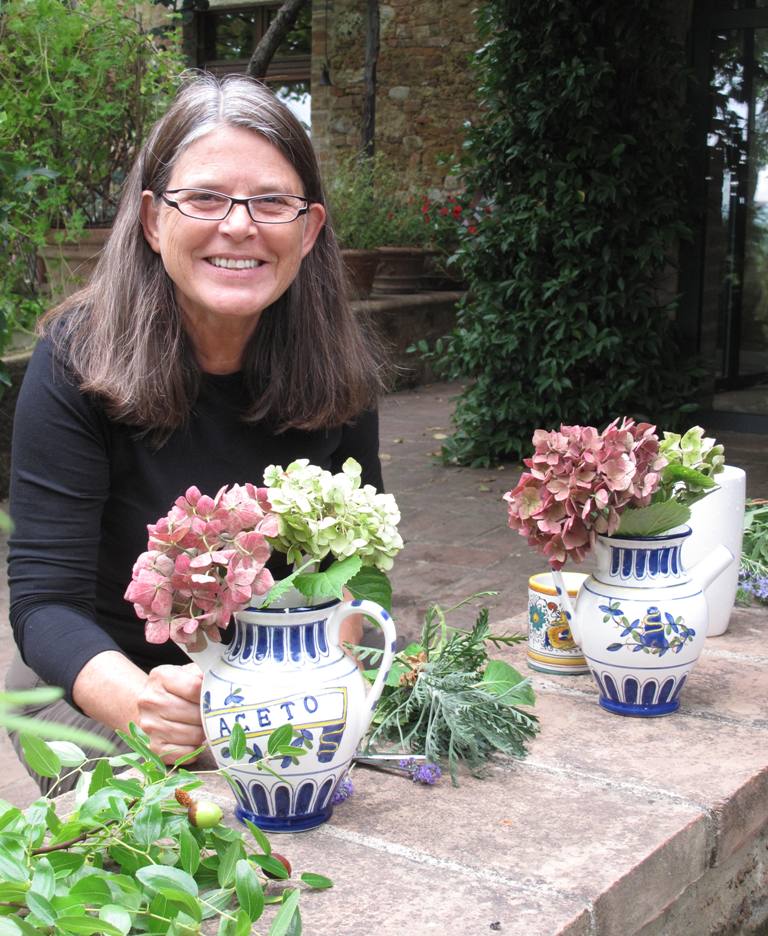
Mary Watson joined me in the garden, eager to make something beautiful. She made two adorable bouquets:

Mary Watson, a new friend who I met through Marty Wingate. She is an art educator and bon vivant! Right when I started arranging this morning, Mary jumped into the fun.

Mary Watson, a new friend who I met through Marty Wingate. She is an art educator and bon vivant! Right when I started arranging this morning, Mary jumped into the fun.


READ MORE…

SLOW FLOWERS Podcast: Farmgirl Flowers & Christina Stembel (Episode 108)
Wednesday, September 25th, 2013

SLOW FLOWERS Podcast: Farmgirl Flowers & Christina Stembel (Episode 108)

Christina and Debra

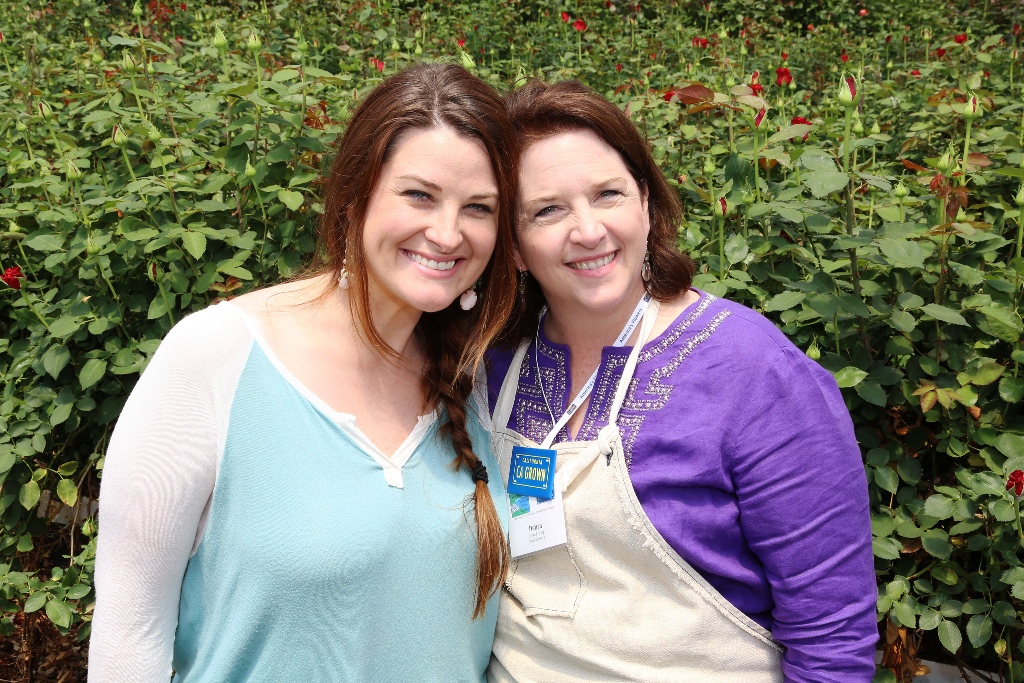
Christina Stembel and I were guests of the California Cut Flower Commission’s Monterey Bay event in June. We were photographed on a tour of Pajarosa Roses, a wonderful source for cut roses.

If the term “imitation is the highest form of flattery,” then my friend Christina Stembel has been over-flattered, multiple times.
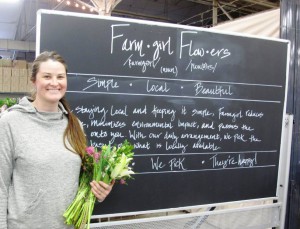
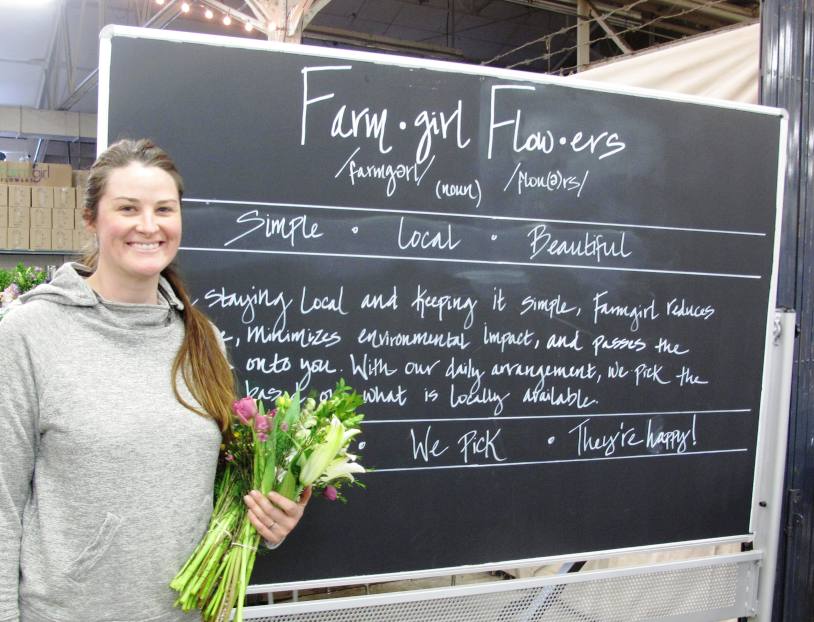
Christina Portrait

Meet Christina Stembel at her SF Flower Mart stall, which is where all the beauty happens!

The creator of Farmgirl Flowers in San Francisco, Christina has poured considerable heart, soul and personal resources into developing her innovative floral design business. Customers and the media have responded enthusiastically (see Martha Stewart Living). And her reward in part has been the explosion of copycat businesses, not just in the Bay Area but in other major cities around the country.

That’s the downside of being a successful and creative business like Farmgirl Flowers. But  to me, the upside for Christina is that no one can imitate her personality or character. People can try, but they never will be the original.

Christina is an original. She shares her story in our interview, but you can read a little background here:

I’m Christina, also known as the farm girl behind Farmgirl Flowers. I grew up on a farm in Northern Indiana, and while I set my sights on leaving the farm for big dreams in New York City, I now appreciate more than ever my farm upbringing. Ten years ago, after moving around a bit, I settled in the Bay Area and, like so many others, decided to make it home.

In the past, ahem, years, I’ve had the privilege of working in many industries, mostly in hospitality and event planning. Pretty quickly, I noticed an exorbitant amount of money was spent on flowers. So, I started doing my own arrangements and realized tremendous savings along the way. Now, being the overly curious individual that I am, I wanted to know just why do flowers cost so much?
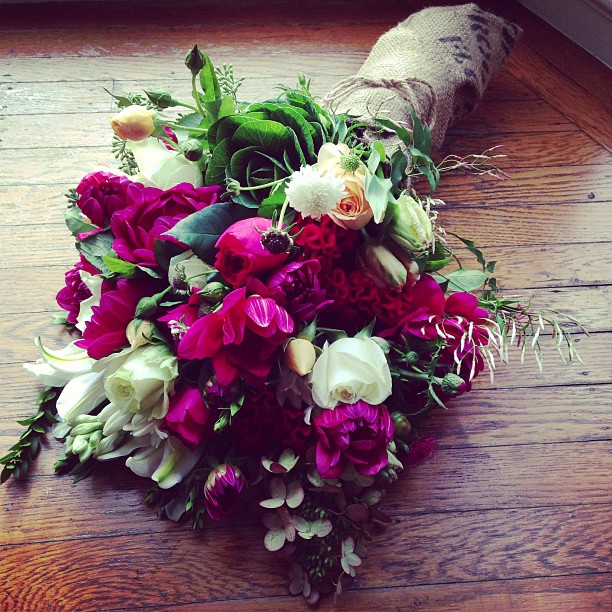
Burlap Wrapped Bouquet

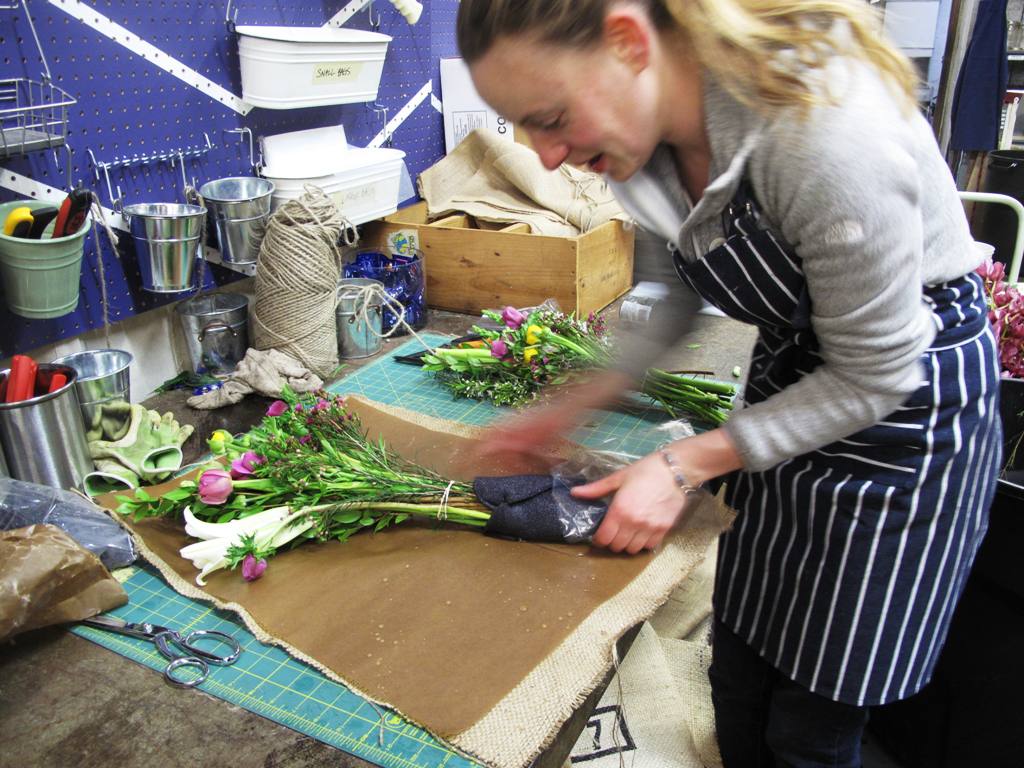
Here’s one of Farmgirl Flowers popular Trademarked Burlap Wrapped Bouquets – using all local, CA Grown Flowers. Sublime~

I started researching the reasons and came to some pretty startling conclusions. The flower industry has gone through a very tumultuous time in the past 20 years, and is pretty much in the same boat as the industries that numerous documentaries have been made about in recent years (ie: textiles, coffee, technology, etc). What used to be a big domestic business is now being whittled away due to imports. I had no idea that 75% of our flowers were being shipped in from other countries. It just didn’t make sense to me when over 75% of the domestic supply is grown right here in California. I don’t want to bore you with more stats – hopefully you see where this is headed.

The bottom line is that local farmers are going out of business left and right because they can’t compete with the prices of flowers imported from South America and other countries. And, normal people like me can’t afford to send flowers to friends and loved ones because it ends up costing an absurd amount of money. Not to mention all of the environmental damage caused by flying flowers across the globe – they have to be shipped in chemicals just to make it to your door.

And, another huge source of waste is having so many choices of flower arrangements. As a result of this approach, a huge percentage of flowers end up as waste, and are never even sold! We’re making our landfills so beautiful, but, really, isn’t there a better way?

I thought so, and devised a plan to fix the problems that have caused the inflated prices and high environmental impact, which is how Farmgirl Flowers was born!

What’s that saying about being able to take the girl out of the country, but not the country out of the girl?
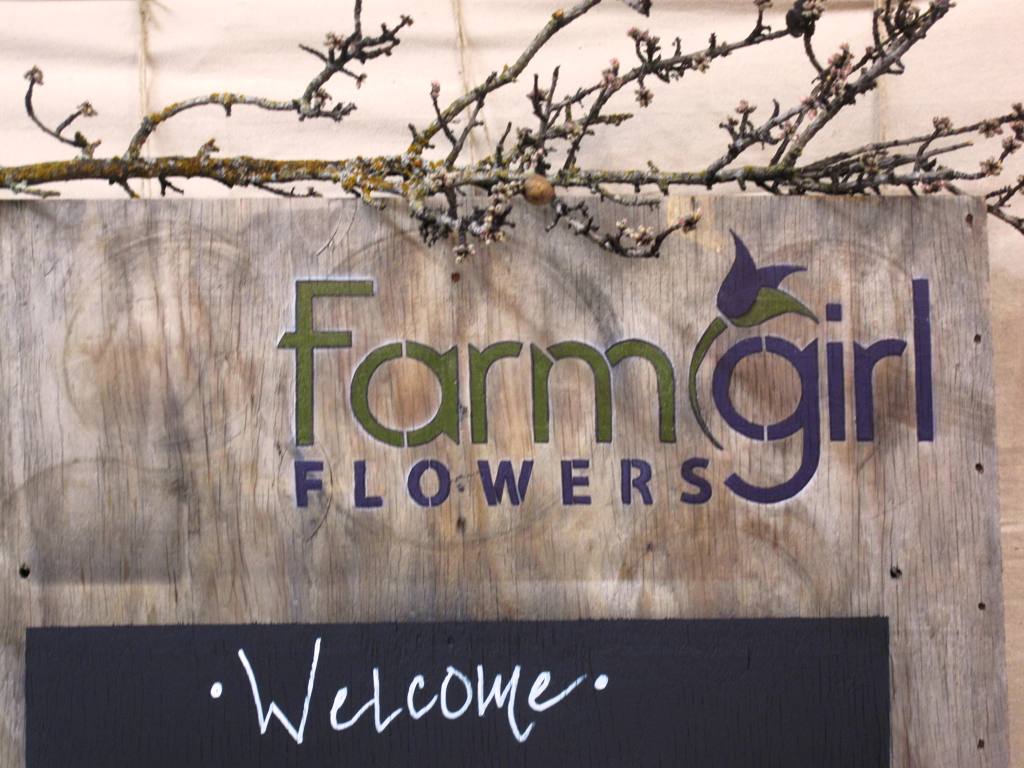
Farmgirl Sign

There’s a charming vibe at Farmgirl Flowers, down to the logo and signage. 
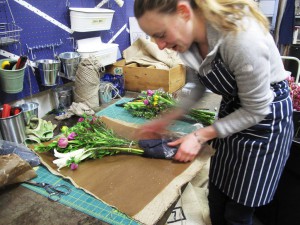
 

Making Bouquets

One of the designers who works for Farmgirl Flowers wraps a bouquet at the studio.

Click on the “Why we’re different” page at Farmgirl Flowers where you will see a chart comparing the LOCAL bouquets Christina and her staff design with wire services, aka “the competition.” It’s amazing when you look at these very different business models side-by-side.

Here’s a link to the Podcast Episode 101, in which Christina Stembel of Farmgirl Flowers and I joined Sunset Magazine’s Kathy Brenzel to discuss the Local Flower Movement. 

The Slow Flowers Podcast with Debra Prinzing is edited and engineered by the very talented Hannah Holtgeerts of HH Creates. Check out her web site here. 

#Friendlyflowers with Kathleen Williford & Debra Prinzing

Tuesday, September 10th, 2013

Maybe we’re onto something here!

vase from Kathleen to Debra

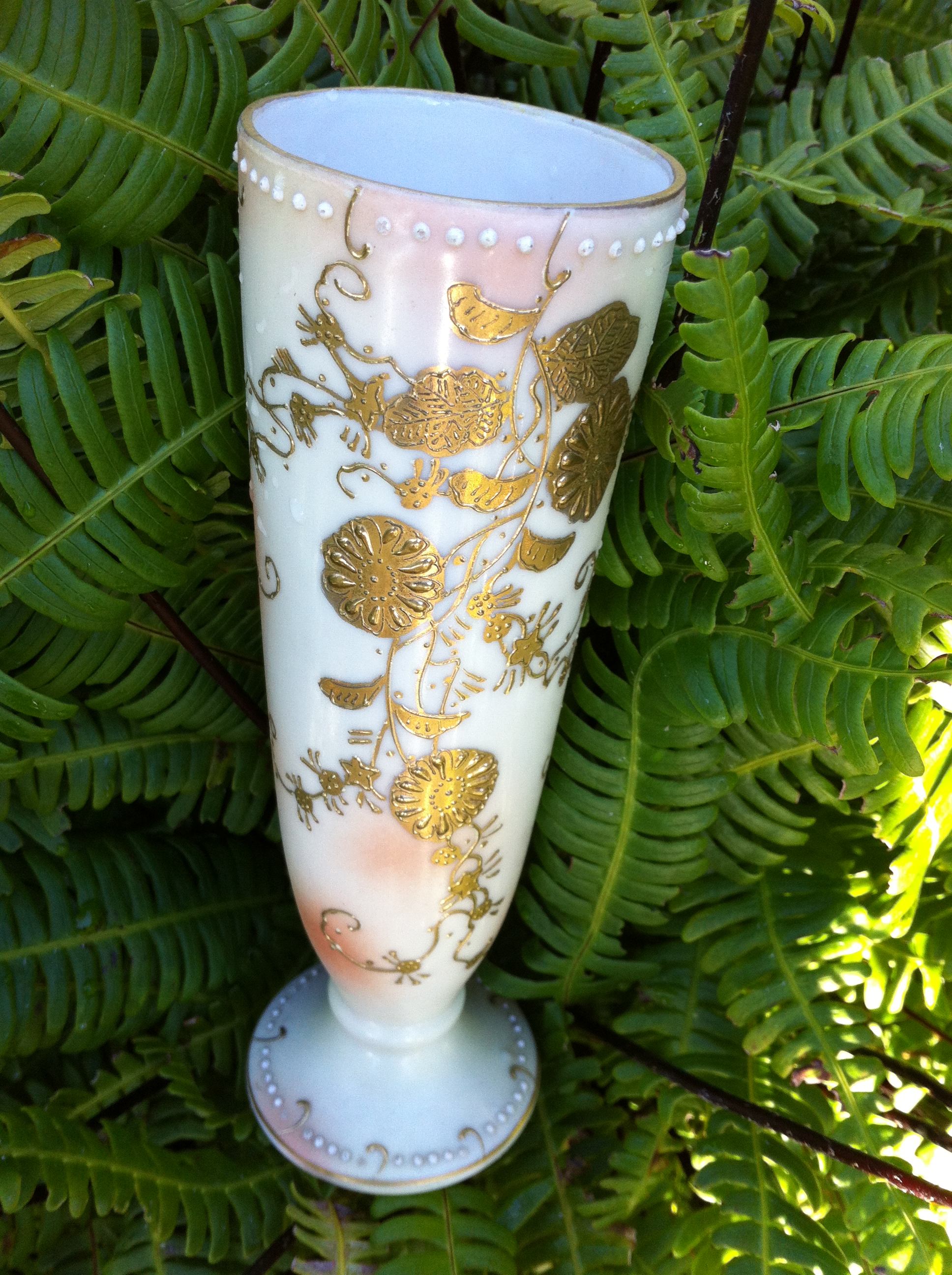
Here’s the vase I received in the mail, which Kathleen Williford found online.

It all started just before Labor Day weekend on August 30th, when my friend Kathleen Williford, special events manager for the Monterey Bay Greenhouse Growers event, texted to tell me she had fractured the bottom of her fibula. “My ankle will not stop me,” she texted. But still, for a very active person, Kathleen felt sidelined. And I could tell she was discouraged.

“We should come up with a joint project,” I texted back. “How about a $10 challenge to find the perfect vintage vase online?”

“OK, you are on!,” she typed. “So we find the vase online, flowers local, $10 max.”

September 5th:

“A beautiful vase arrived today,” Kathleen texted. “I LOVE it!” I had sent her a vintage olive-green glass pedestal vase, just like one I own (and LOVE). Kathleen admitted to not really having much experience arranging in pedestal vases, however, she also admitted to being a sucker for colored glass anything.

September 6th:

“Just arrived! So lovely!,” I texted when the vase Kathleen ordered for me arrived. The slender porcelain vessel was embellished with a gold filigree design. And it had this imprint on the base: “Made in occupied Japan,” which I think means it was manufactured during the American occupation of Japan after World War II, from 1947 to 1952.

Yesterday we both posted our respective vases on Facebook, Twitter and Instagram, letting people know about the #friendlyflowers challenge. One of my friends saw the photo of the vase Kathleen sent me and she commented: “It’s so gypsy euro retro-ish!” — love that description.

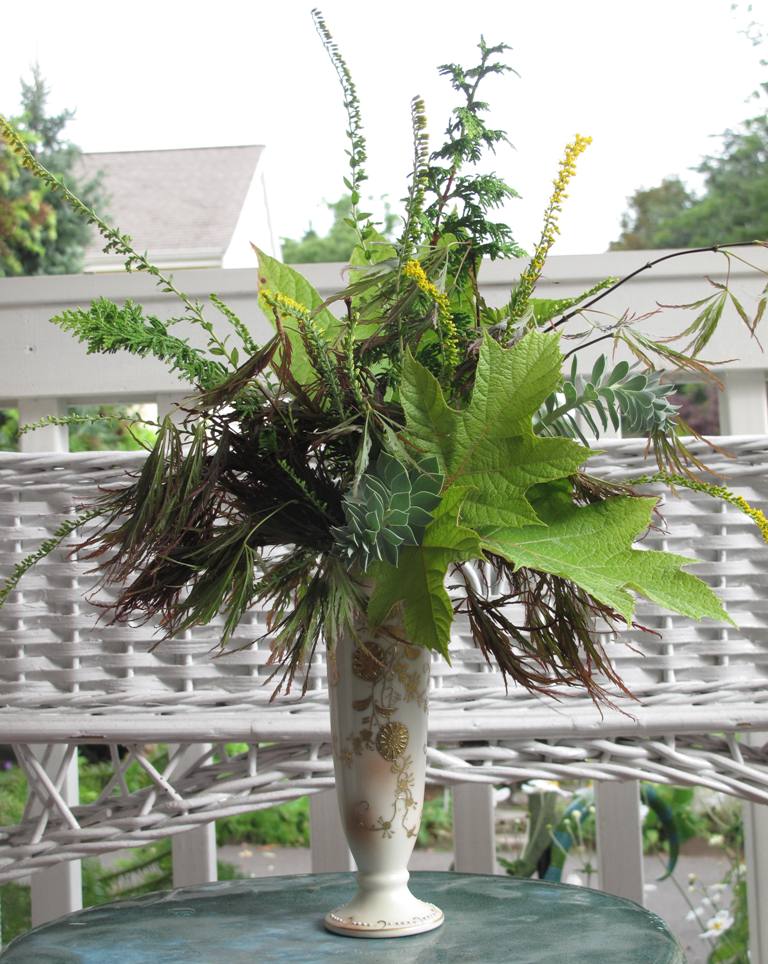
Today, September 10th, Kathleen and I posted our designs. Here is mine:

Friendly Flowers 1.0

A truly local bouquet using all foliage from my garden and my neighbor’s garden. In a very special #friendlyflowers vase

Ingredients include all the goodies I was able to glean while gardening this week:

  • Burgundy Japanese maple foliage, deeply cut. This is a weeping form tree, so you can see how nicely those fringed leaves drape
  • Goldenrod (Solidago rugosa ‘Fireworks’), from my neighbor Colleen. Actually, it’s a flower, not foliage. But I tried to get the greenest stems still in bud
  • False Hinoki cypress – one spray from a container plant (Chamaecyparis obtusa, unknown cultivar)
  • Euphorbia myrsinites (Donkey tail euphorbia)
  • Lime-green leaves from the oakleaf hydrangea (Hydrangea quercifolia), also in Colleen’s garden

Here’s the vase I sent Kathleen:

Green glass vase with beautiful square pedestal. Flowers: TO COME!~

See her finished bouquet at Kathleen’s Facebook page, Twitter (@kathinated) or Instagram (caflwrpower)

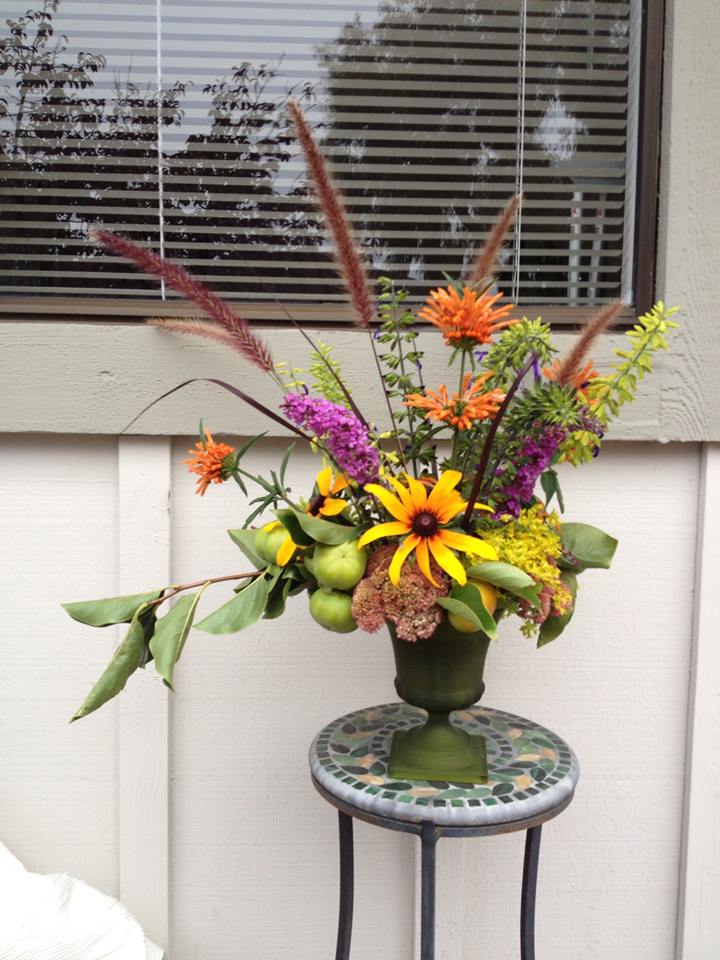
Here’s the bouquet from Kathleen, using flowers from her parents’ garden:

Kathleen used persimmons, sedum, grasses, assorted salvia, butterfly bush blossoms, and lions beard. Stunning~

Kathleen used persimmons, sedum, grasses, assorted salvia, butterfly bush blossoms, and lions beard. Stunning~

If you like this idea, we encourage you to start your own #friendlyflowers challenge. The rules are easy:

1. $10 maximum vase budget

2. Send a vase to your friend and have him/her do the same for you

3. Fill it with #americangrown #slowflowers – all local

4. Post and share to inspire other friendly flower lovers!

Into the Garden with Charles Anew

Wednesday, August 28th, 2013
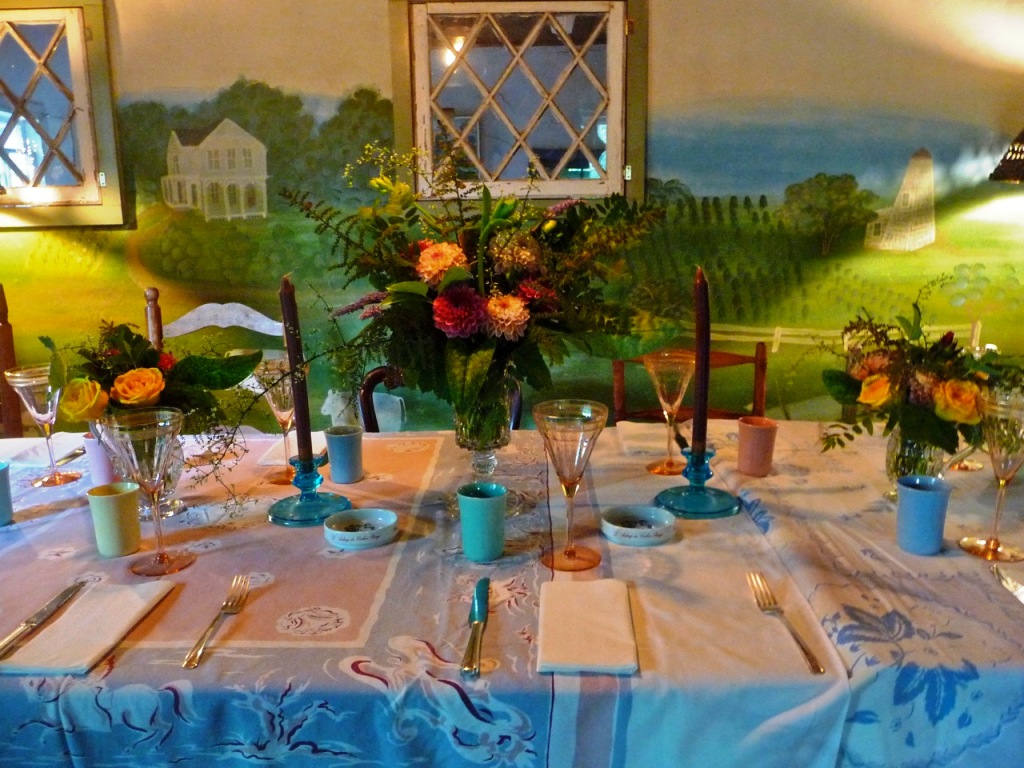
Table Arrangement

A lovely table arrangement where the vases seem to blend into the primitive wall mural of Orient, New York . . . as imagined and painted by Skip many years ago.

Last April 2012, I wrote about the beautiful memoir by my late friend Clyde “Skip” Wachsberger.

The book is called Into the Garden With Charles.  It was first published privately by friends of Skip’s (under the guidance of editor and friend Karen Braziller) in December 2010. Farrar, Straus and Giroux published it commercially in early 2012, although Skip did not live to see that event. Read more about the book here.

I have not been able to visit Orient, New York, or see Charles Dean, Skip’s surviving husband, since January 2012, when I traveled there for the memorial service honoring Skip’s life. I love this place and all of the friends I’ve met through these two men. The garden during summertime at Adsworthy, where Skip and Charles made their home, is very special. And for some reason, my trips in recent years were during fall or winter, so I hadn’t toured that verdant place during its peak since 2005 or so. Too long!

Last week I was fortunate to return for a mere 36 hours. It wasn’t nearly enough time, but every moment was filled with wonder, delight, friendship and memories. 

One of the highlights was getting ready for a big, yummy, community dinner prepared by the man Charles has now found to spend his life with. That is Charles’s very personal story to tell, so I won’t say more. I’ll only add that he is now with a dear, charming person and I’m pleased to see Charles so happy.

Skip’s presence is still very much evident in his garden. I was mindful of his exuberant spirit watching over me as I snipped stems, leaves and flowers from uncommon specimens that he originally selected, planted and tended to over the years. The opportunity to create the centerpieces for our wonderful dinner party was all the more special for the connection I felt between those plants and Skip. While the bouquets’ dahlias came from a local flower farm stand and the yellow roses were a gift to Charles from a family friend visiting his sister, artist Frieda Dean, everything else came from Skip’s garden. I relied on his plants for bold and fine foliage, tiny buds, fern fronds and seed heads. Charles supplied the beautiful cut glass urn and two small cream pitchers for the vases. 

Our table sparkled with vintage linens, pottery, silver and stemware. You can see how it looked above.

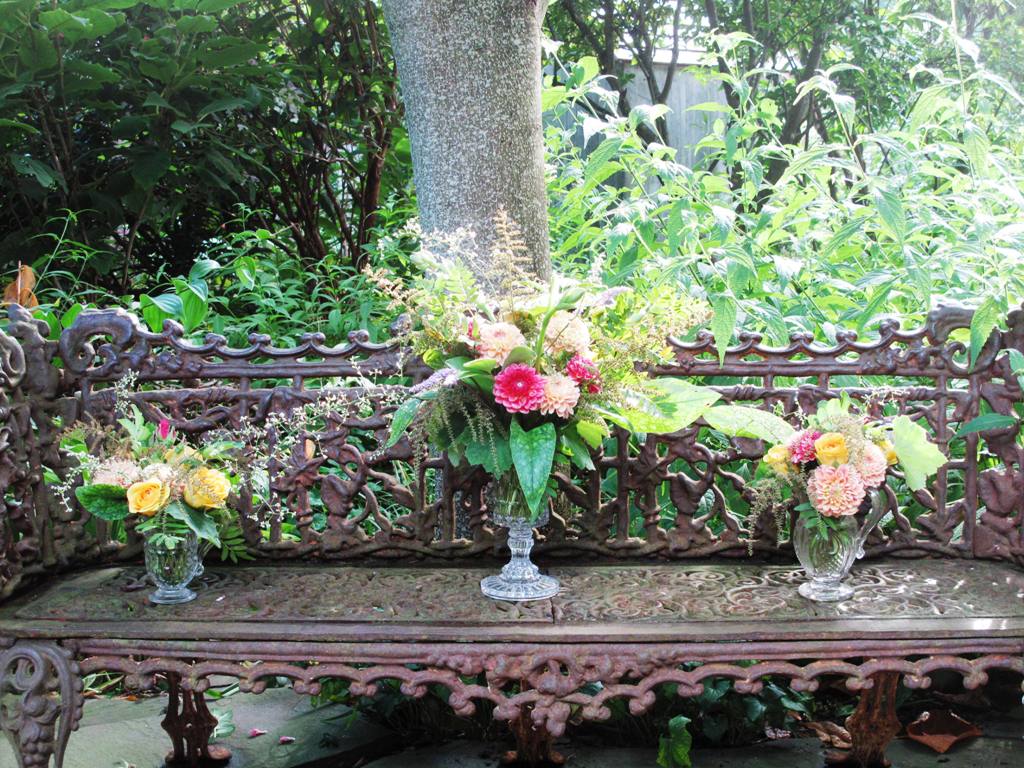
Here are some more images of the bouquets, in the garden:

Bench with three vases

A still life with three bouquets, on a vintage cast-iron bench in the garden.


Small glass pitcher of flowers

A small glass pitcher looks so beautiful in the dappled light that spills onto an iron garden chair.


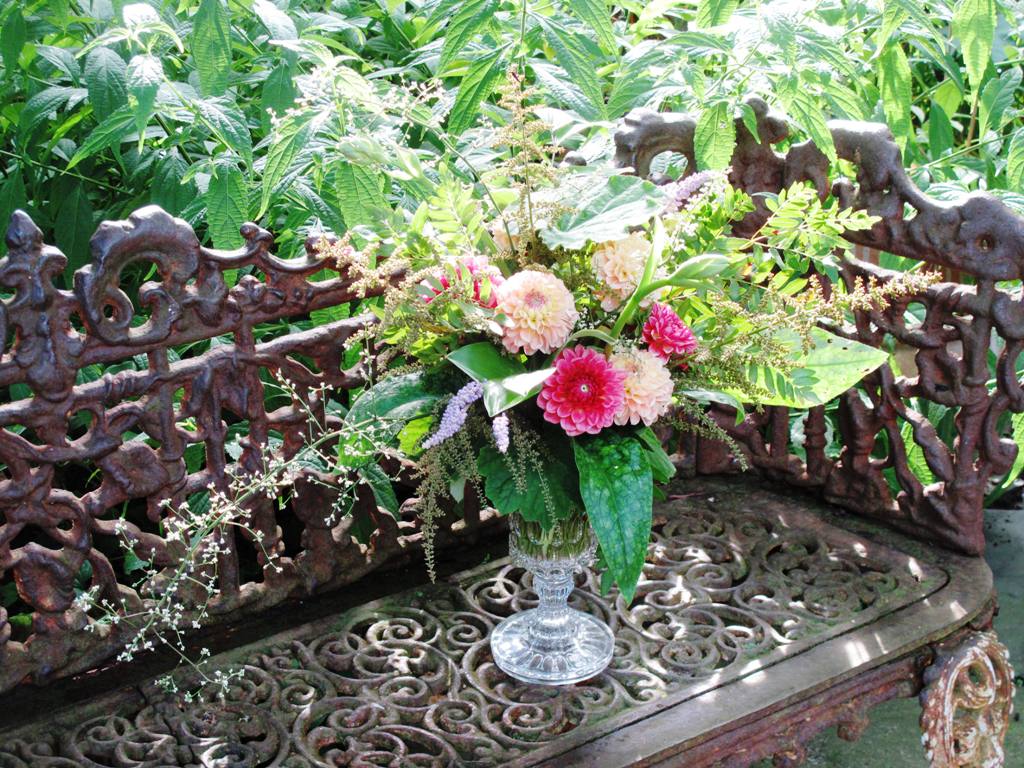
Iron Bench

The larger vase features all sorts of gorgeous leaves, fronds and stems from Skip’s garden.

I’ll close with one of Skip’s quote about his garden, excerpted from Into the Garden with Charles:

 “I had been presented with a blank canvas, a large one at that. For an artist, this was ideal. I gardened the way I painted: I began with a picture in my mind and then I figured out how to create it. The only difference was that my colors and textures were living beings with a thirst for life; they would grow every which way once I had placed them on the canvas. I had no intention of ever finishing the painting.”


What does Slow Flowers mean, anyway?

Friday, June 21st, 2013
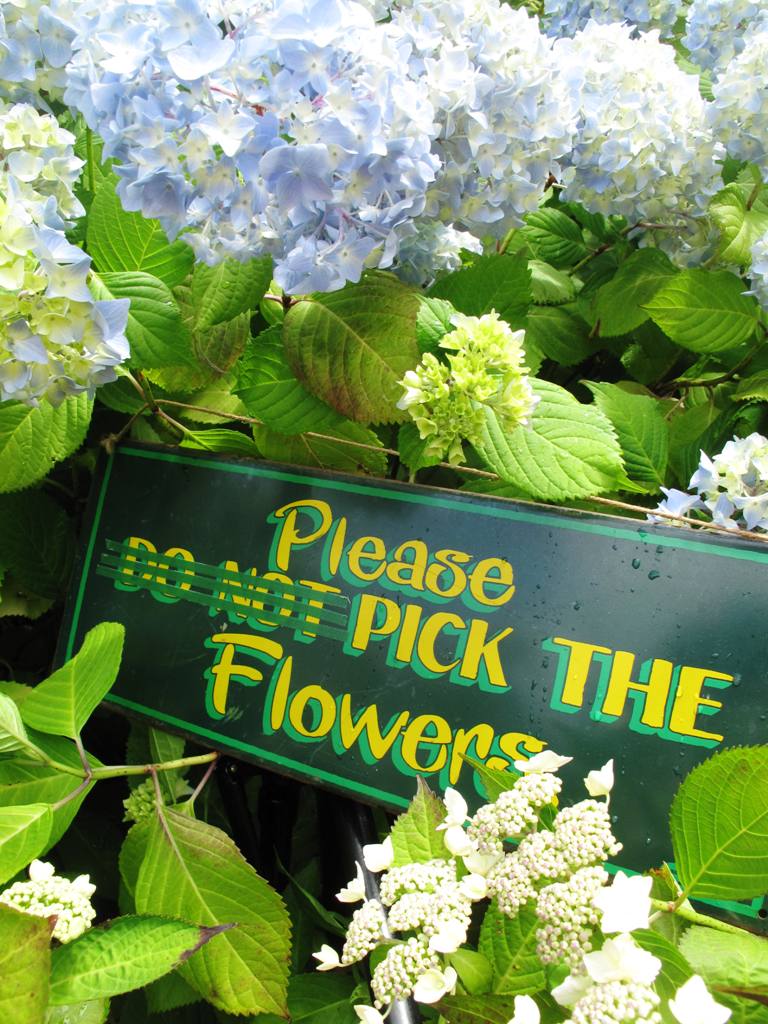
Please Pick sign

After I found this sign in a garden shop, I took the liberty to cross out the words “DO NOT” so the message better fits my philosophy of floral design!

I’ve been eating, sleeping, breathing, writing and speaking about SLOW FLOWERS for so long that it’s good to sometimes be reminded that not everyone understands what that phrase means. Recently, one of my flower farmer friends emailed to ask: Tell me again what Slow Flowers mean. I know it’s USA flowers but SLOW?

Fair enough. With all due respect to my fellow garden writer Felder Rushing, who coined the phrase “Slow Gardening,” let me outline my personal definition of SLOW FLOWERS. This is excerpted from my introduction to the book, Slow Flowers: Four Seasons of Locally Grown Bouquets from the Garden, Meadow and Farm (St. Lynn’s Press, 2013).

Thanks to the culinary pioneers who popularized the Slow Food movement, it now seems like you can put “slow” in front of any term to convey a different philosophy or approach to that subject. When I say the  phrase “slow flowers,” there are those who immediately understand it to mean: I have made a conscious choice. 

My blooms, buds, leaves and vines are definitely in season; not, for example, grown and brought in from elsewhere in the world during the wet, cold winter months in my hometown of Seattle. So, come December and January, my commitment to sourcing locally-grown floral materials sends me to the conifer boughs, colored twigs and berry-producing evergreens – and the occasional greenhouse-grown rose, lily or tulip, just to satisfy my hunger for a bloom. 

Slow Flowers (the concept and the book) is also about the artisanal, anti-mass-market approach to celebrations, festivities and floral gifts of love. I value my local sources. If not clipped from my own shrubs or cutting garden, I want to know where the flowers and greenery were grown, and who grew them. Having a relationship with the grower who planted and nurtured each flower is nothing short of magical. I call so many flower farmers around the country my friends. They are the unsung heroes – the faces behind the flowers we love. 

Finally, Slow Flowers reflects life lived in the slower lane. My family, friends and professional colleagues know that it’s almost impossible for me to do anything slowly. I’m the queen of multitasking; I just can’t help myself. There are too many exciting opportunities (or bright, shiny objects) that command my interest. But this “year in flowers” was altogether different. I can only compare it to the practice of praying or meditating. I didn’t realize that those few hours I spent each week, gathering and choosing petals and stems, arranging them in a special vessel, and then figuring out where and how to capture the finished design  through my camera lens, would be so personally enriching.
And speaking of the phrase, Slowflowers.com is also the name of my newest project, announced this past week. With a scheduled Fall 2013 launch, this will be a free, online database that helps connect consumers with floral designers, studio florists, florists and supermarket floral departments who are committed to designing with American-grown flowers. Please sign up – either for consumer updates on our official launch, or to be listed as as SlowFlowers.com designer.
SlowFlowersScreenShotSo I guess you can also say that the idea of “Slow Flowers” is also a resource that I hope many will find useful. Here is the description of this project:

Join the Slow Flowers Movement, an All-American philosophy that supports grown-in-the-USA flower farms as well as floral designers, florists and retailers committed to using American-grown ingredients.

Origin matters! Slowflowers.com is a free, searchable database that makes it easy for customers to find designers who share their values and ethos. Log onto our home page to add your listing. Let’s tell consumers that there is a better way to beautiful – and they can find it at Slowflowers.com.

Slowflowers.com enables users to:

* Search by state or city and by keyword for the type of florist they seek.

* Find studios and retailers who specialize in green weddings, weekly subscriptions and eco-florals.

* Discover local flower farms that sell direct to the DIY consumer.

* Access coupons and promotions from individual studios, shops and farms.

* Provide reviews and raves about great American flower sources and comment on

experiences.

* Map the location of a desired destination.

I hope this helps! I invite you to add your own thoughts about “Slow Flowers” and what it means to you.

Eight Days: From Santa Barbara to San Diego . . . and points in between

Wednesday, April 24th, 2013

Here’s what I’ve been up to lately. I traveled to Southern California all of last week  – from Saturday, April 13th through Saturday, April 20th.  I experienced many great highlights; too many to mention. Here are some of them:

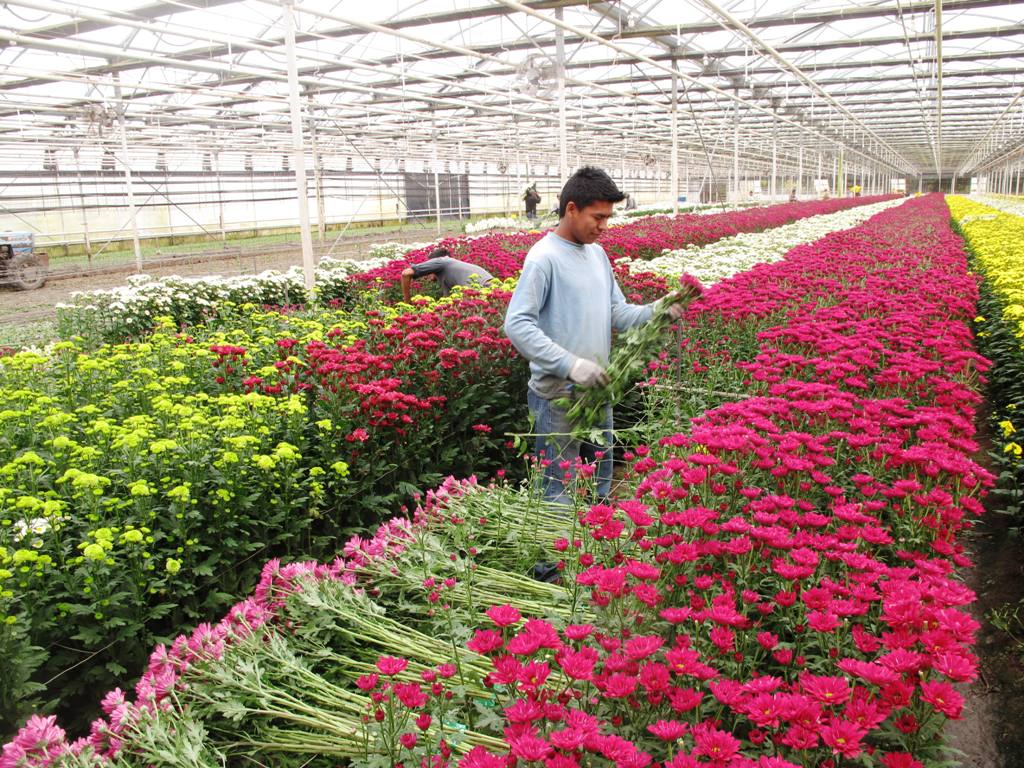
Miles of mums at Ocean Breeze

Tours focused on the entire process – from planting and growing to harvesting and grading. Mums, also known as pom poms, are one of the last commercially grown flowers still grown in soil.

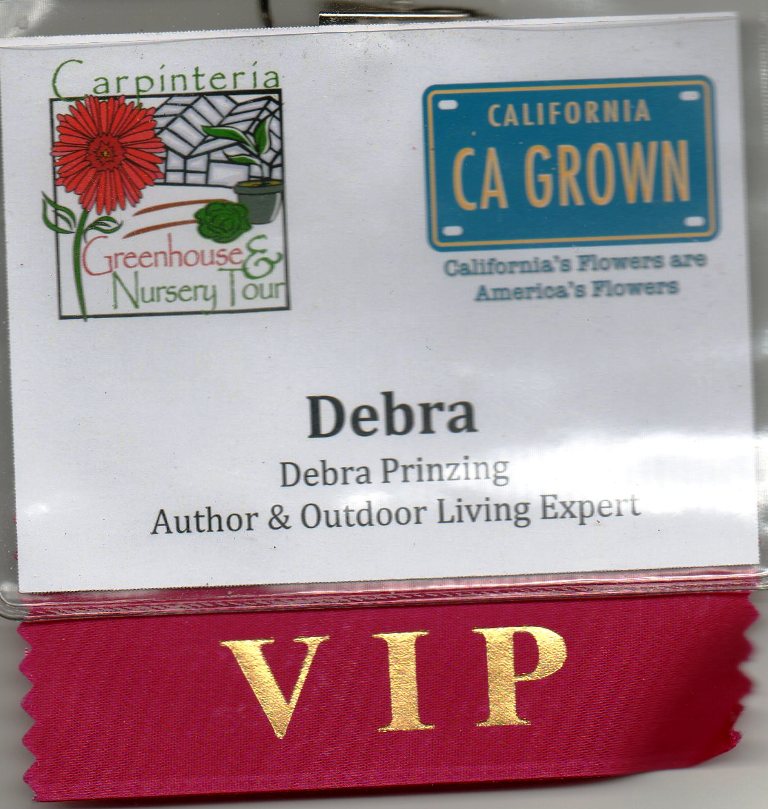
My name badge

Fun to wear the VIP badge!

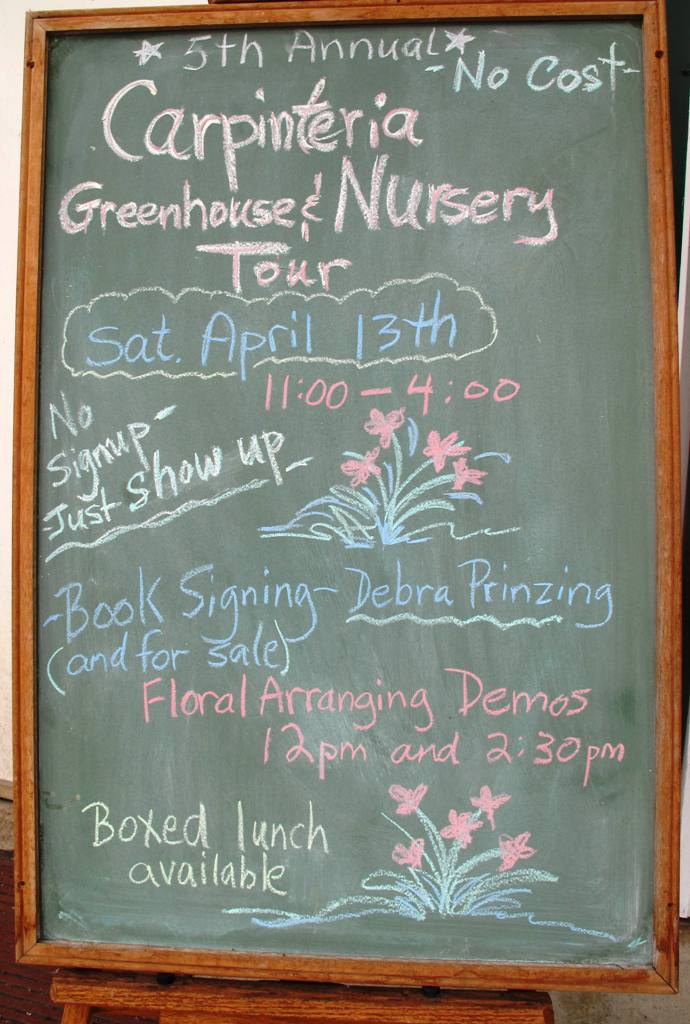
Chalkboard welcome

Chalkboard welcome at Padaro Floral in Carpinteria, California

DAY One: Carpinteria Greenhouse & Nursery Tour, sponsored by the California Cut Flower Commission. I was hosted by Harry and Michele Van Wingerden, the great folks at Myriad Roses and Padaro Floral Design for a day of book-signings and eco-floral demonstrations. A special thanks to the Van Wingerden family, CCFC CEO/Ambassador Kasey Cronquist and Event Planner Anna Kalins for making it a successful and enjoyable day!

botanik owner Erin Taylor

Erin Taylor, designer of flowers, interiors, landscapes and more~ The talented owner of botanik in Summerland, California hosted my lovely book event.

DAY Two: Book signing and flower demos at botanik in Summerland. Loved spending time with very talented owner Erin Taylor and her team. After several hours at botanik, I met up with Cristi Walden and we headed to Sea Crest Nursery, her father Jack Stevenson’s palm and cycad collection. It was so exciting to return to this beautiful place and hear how my talented friend is learning the business of growing and selling amazing landscaping plants (oh, and propagating, too!).

READ MORE…

SLOW FLOWERS: Week 12

Sunday, March 24th, 2013

Zen in Bloom

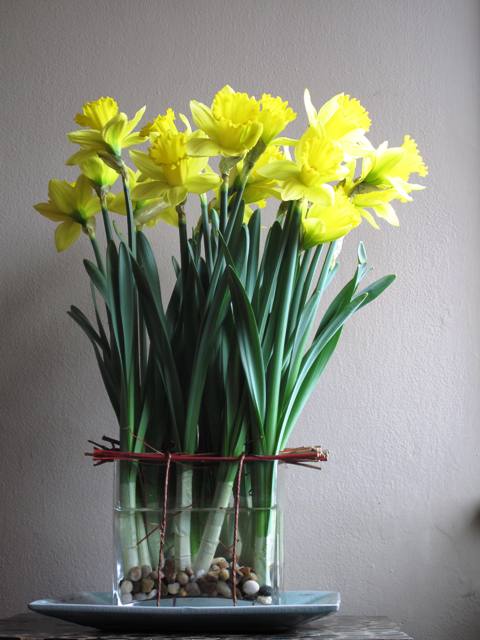
Showcasing a single type of flower - here, it's spring daffodils - this technique is easy and carefree.

Showcasing a single type of flower – here, it’s spring daffodils – this technique is easy and carefree.


Ingredients:

15 stems common daffodils, from my garden

Multiple lengths of coral-pink twig dogwood, cut approximately 2 inches wider than the vase opening. Any straight, woody branch will work, including vine maple, pussy willow or the colorful twig dogwood (Cornus sanguinea or C. sericea)

Vase:

6-inch tall x 6-inch square glass vase (this design adapts to any square or rectangular glass vase)

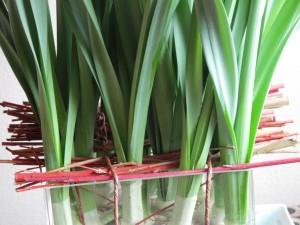
The daffodil stems are stabilized by a "raft" of twigs, lashed to cover the opening of the vase.

The daffodil stems are stabilized by a “raft” of twigs, lashed to cover the opening of the vase.

Other supplies:

Decorative pebbles

Twine-wrapped wire (available at craft stores in natural or green)

Design 101

Borrow inspiration: The idea for this bouquet came from a project featured in Design, a publication of The Flower Arranging Study Group of the Garden Club of America. Whenever you’re inspired by another designer’s technique, it’s important to give it your own twist rather than make a direct copy. For example, the original creation used florist’s foam inside the container, but I found it unnecessary, especially since the pebbles and twigs are enough to hold the daffodil stems in place.

NOTE: Each Sunday of this year, I will post my photographs, “recipe” and tip for that week’s floral arrangement, created for my new book, Slow Flowers.

Enjoy the floral journey through 52 weeks of the year~


SLOW FLOWERS: Week 7

Sunday, February 17th, 2013

“Lilies, Two Ways”

Two "lily" elements fill my antique majolica cachepot, set in the dining room window to catch the rare winter rays of sunshine

Two “lily” elements fill my antique majolica cachepot, set in the dining room window to catch the rare winter rays of sunshine

Ingredients:
12 stems lily-of-the-valley shrub (Pieris japonica), harvested by Oregon Coastal Flowers
5 stems white ‘Navona’ Asiatic lilies, grown by Peterkort Roses
Vase:
9-inch tall x 9¼-inch diameter majolica cachepot from the late 1800s. I found this unique piece in Palm Springs, in a shop otherwise filled with 1950s art glass. I simply couldn’t resist the botanical charm of the piece, so I splurged and ended up flying home with it on my lap!
A detail from inside the vase . . .

A detail from inside the vase . . .

Eco-technique

Flower frogs: I’ve made it a personal goal to stabilize flower stems with organic methods rather than the conventional florist’s foam or “Oasis.” That product, I have learned, contains formaldehyde and does not break down in landfills. An old-fashioned flower frog (in ceramic, glass or metal) is a great alternative. You can find flower frogs at flea markets or tag sales for a few dollars (or raid your grandmother’s supply). One of my favorites is a half-dome cage. It sinks to the bottom of the container and has ¾-inch square openings, ideal for woody stems. This is an arranging tool of the past, seriously useful for the present-day!

NOTE: Each Sunday of this year, I will post my photographs, “recipe” and tip for that week’s floral arrangement, created for my new book, Slow Flowers. Enjoy the floral journey through 52 weeks of the year~


A wintry postcard from the Pacific Northwest

Friday, December 21st, 2012

An evergreen yew and topiary forms are frosted with just a little snow on a December afternoon at Old Goat Farm.

Snow came early to the outerlying parts of Seattle this week, dusting the evergreen topiary forms at Old Goat Farm in Orting, Washington. Owners Greg Graves and Gary Waller hosted a holiday tea to benefit Pacific Horticulture Society, and Lorene Edwards Forkner and I drove down to the farm for the festivities. Lorene, of course, is the editor of Pacific Horticulture magazine, a wonderful quarterly journal for gardeners on the West coast (or anyone who loves reading about the hort world in Washington, Oregon and California).

Lorene asked me to donate a seasonal floral arrangement and a copy of The 50 Mile Bouquet to the event’s silent auction. How fun to step out of our car and look across Greg and Gary’s wonderful garden at the sparkling white-and-green scene. There was an old log stump and it seemed like the perfect “pedestal” for placing my bouquet for a last-minute portrait before the party.

The locally-grown lilies, snowberry, eucalyptus and dogwood branches create a special holiday arrangement. There are a few stems of melaleuca tucked in. I brought them home from San Diego last week!

Everything else here sparkled, too. Enjoy the glimpses captured by my lens. And if you want to read more, follow this link to a post from an Old Goat Farm holiday tea from 2010. Visiting at Christmas, seeing the century-old Victorian farmhouse, hearing the clucking chickens and (of course) eating delicious food . . . what a chance to while away an afternoon.

Gary, a talented floral designer and retail display wizard, decorated the barn door with a lovely wreath.

Yes, these are old goat sugar cookies. Very tasty! And eye-catching, too!

This is a picture-perfect farmhouse. Absolutely love it! Especially that wraparound porch!

Gary and Greg's famous compost fence. It even made the cover of Pacific Horticulture magazine's fall 2012 issue~

Decorative chicken (or are they roosters?) cookies!

A beautiful detail of my bouquet.

Here’s to a wonderful holiday season! And a New Year to come~