Debra Prinzing

Get the Email Newsletter!

Archive for the ‘Plants’ Category

Week 19 // Slow Flowers Challenge with Flowering Branches

Friday, May 15th, 2015
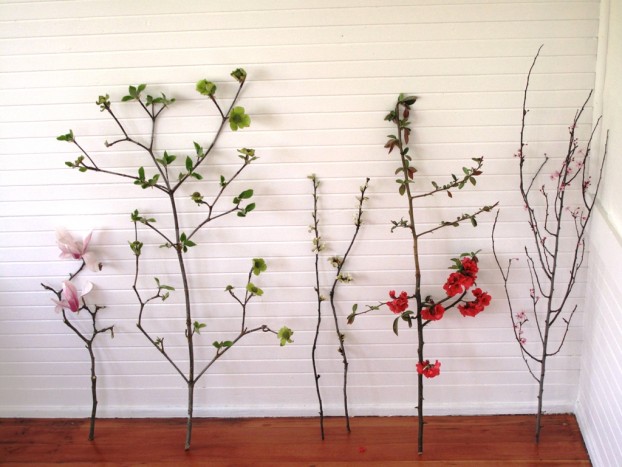
Some of Springtime's most alluring flowering branches include: Magnolia, Dogwood, Apricot, Quince and Plum.

Some of Springtime’s most alluring flowering branches include: Magnolia, Dogwood, Apricot, Quince and Cherry.

We’re digging into the archives this week for the  Slow Flowers Challenge. That’s what happens when I find myself on too many airplanes, which is ironic, isn’t it? It’s sort of the opposite of my “Slow” aspirations!

However, I’m just back home from speaking and teaching in Orlando, Florida. And now, after recharging for the past five days in Seattle, I’ve re-packed and am heading to the airport tonight to fly to London!!!

That’s right! I’m off to the RHS Chelsea Flower Show. I’ll also be meeting many of the people active in the British Flowers scene – U.K. flower farmers and florists who have many of the same objectives that we have here in the U.S. To put local, seasonal and sustainably-grown flowers at the center of our tables!

Stay tuned, because I promise that next week’s Slow Flowers Challenge will be decidedly British!

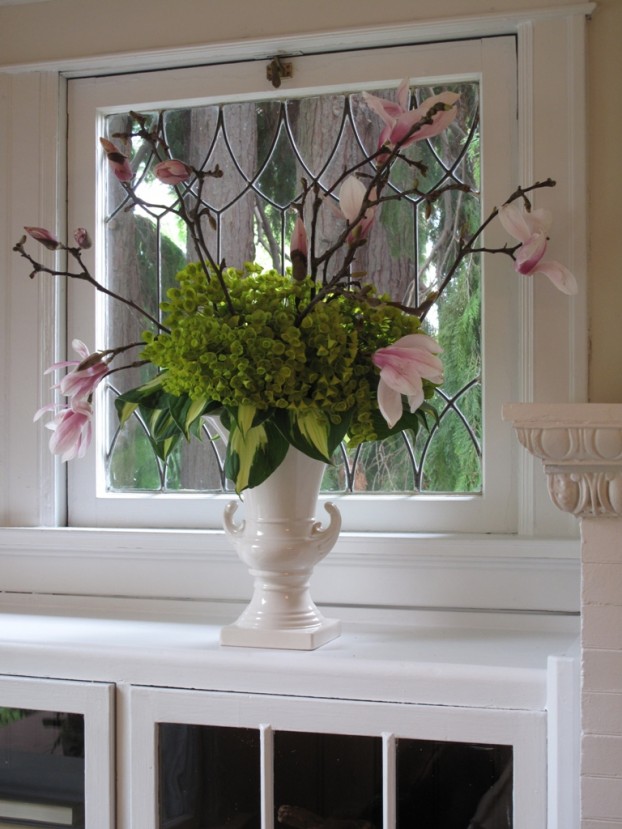
The acid green of variegated hostas and euphorbia create a "skirt" effect for flowering magnolia branches.

The acid green of variegated hostas and euphorbia create a “skirt” effect for flowering magnolia branches.

I absolutely love the images you see here. I created these arrangements for a national magazine story that was, sadly, never published. The editors, as they say, went in a different direction.

But my photos live on and I’m delighted to share them with you here.

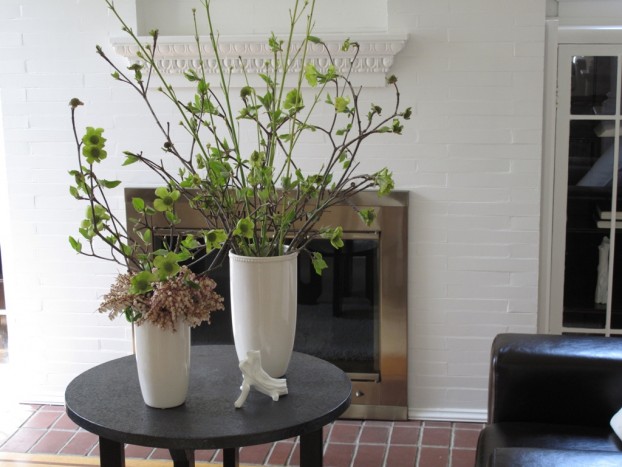
The vase at left is filled with Pieris and Dogwood; the vase at right has both flowering Dogwod and twig dogwood.

The vase at left is filled with Pieris and Dogwood; the vase at right has both flowering Dogwod and twig dogwood.

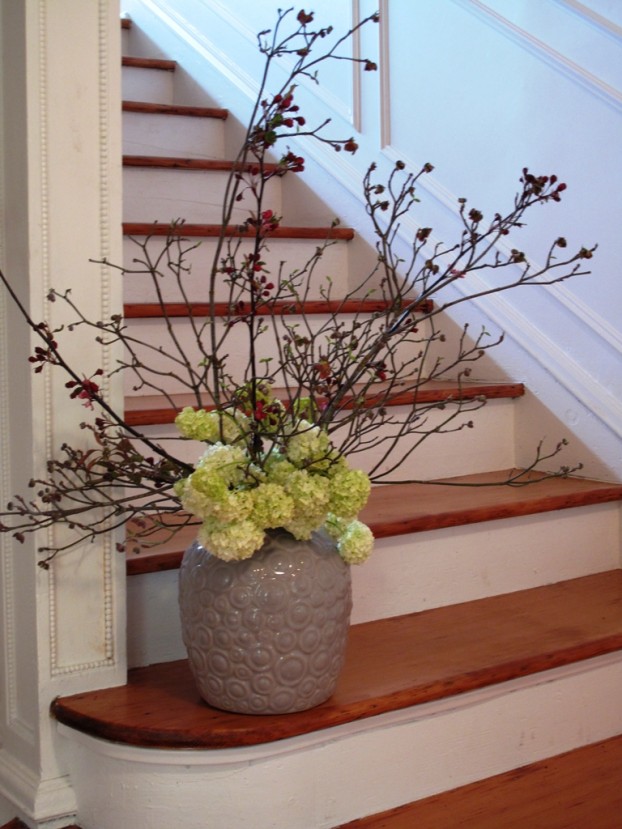
Flowering Cherry with Snowball Viburnum.

Flowering Cherry with Snowball Viburnum.

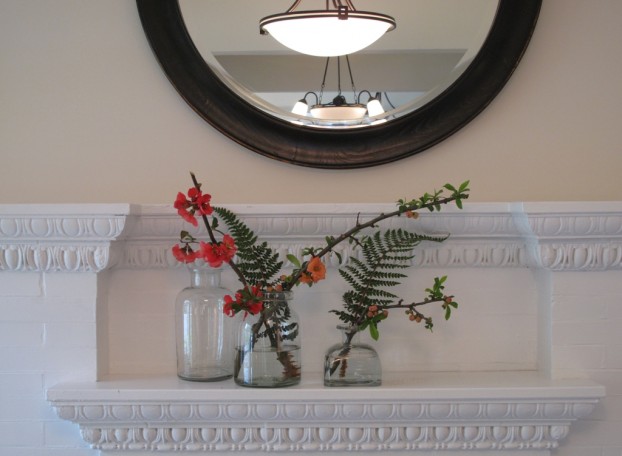
Simple: Quince in two hues, plus swordfern.

Simple: Quince in two hues, plus swordfern.

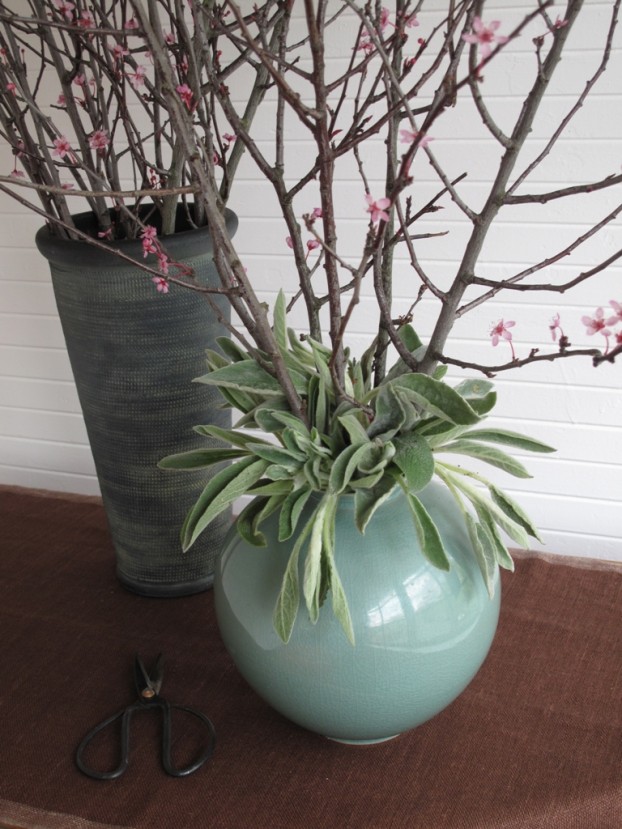
Flowering plum, paired with Lamb's Ear foliage.

Flowering plum, paired with Lamb’s Ear foliage.

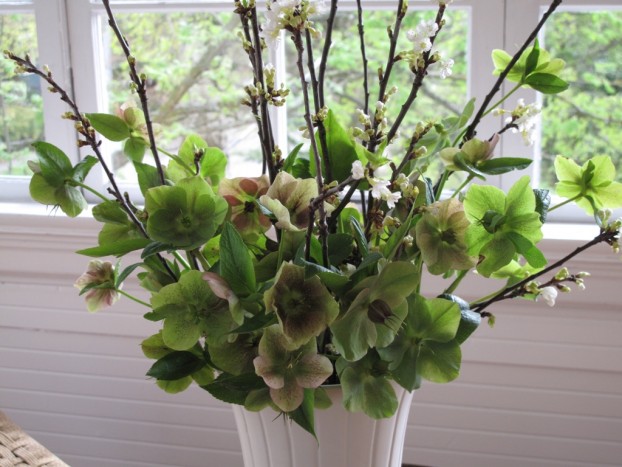
Spring hellebores paired with flowering apricot branches.

Spring hellebores paired with flowering apricot branches.

Week 18 // Slow Flowers at Disney Epcot

Tuesday, May 12th, 2015
Three Days. Six Workshops. Hundreds of American Grown Flowers, including some very special Florida-grown varieties.

Three Days. Six Workshops. Hundreds of American Grown Flowers, including some very special Florida-grown varieties.

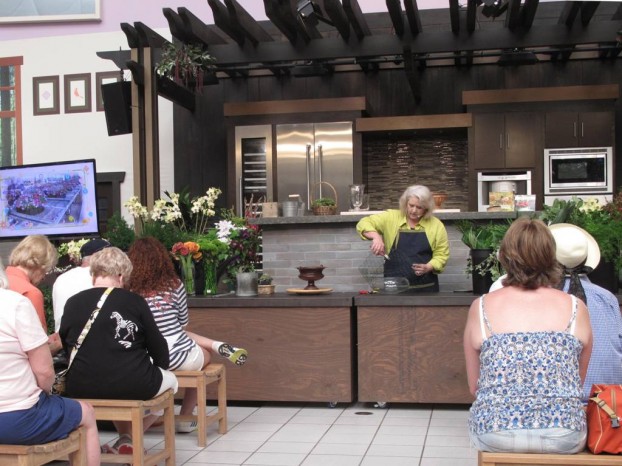
Having Fun on the Festival Stage at Disney Epcot.

Having Fun on the Festival Stage at Disney Epcot.

Last week, the Slow Flowers Challenge took place in Orlando, at the International Flower & Garden Show at Epcot. This was the third time I’ve been invited to present at Epcot since 2010 – and I was thrilled to return. If you love horti-tainment (and that’s what I call the combination of talented horticulture staff let loose on plants, Disney-style), you’ve got to visit this 10-week spring celebration of flowers and gardening, usually staged between March and May.

There are no fewer than 21 planted topiary characters throughout the park, from my personal favorites, Farmers Mickey & Minnie, to the hottest new offering: Anna and Elsa from the animated film “Frozen.”

Each morning for three days running I shared the story of “American Beauty: the Slow Flowers Movement,” featuring the successful renaissance of flower farming and creative floral design that’s inspired by local and domestic American-grown flowers. Each afternoon, audiences were able to see that same story brought to life with flowers and foliage. Here are some of those arrangements:

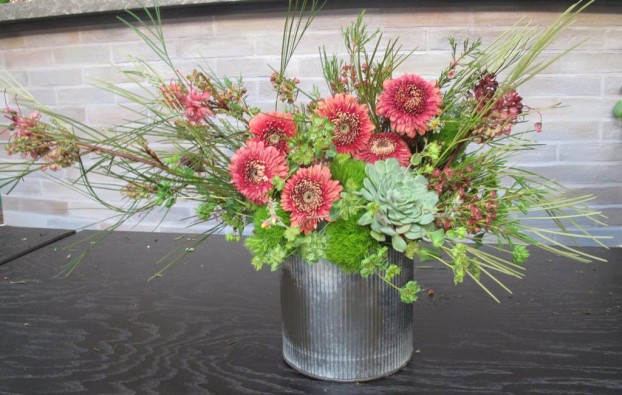
Love this palette featuring grevillea, Gerrondo gerberas, bupleurum, 'Green Ball' dianthus and an echeveria.

Love this all-California-grown palette featuring grevillea, Gerrondo gerberas, bupleurum, pink wax flowers,’Green Ball’ dianthus and an echeveria.

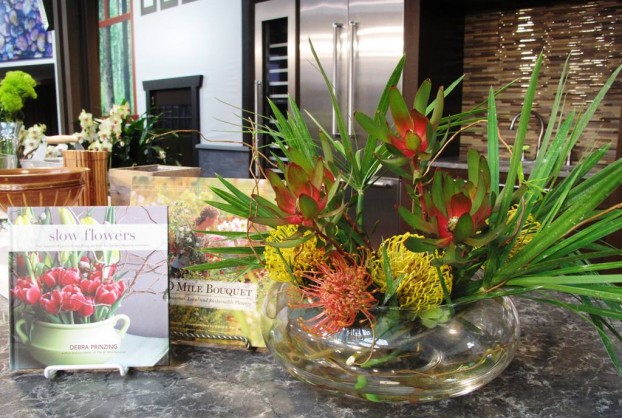
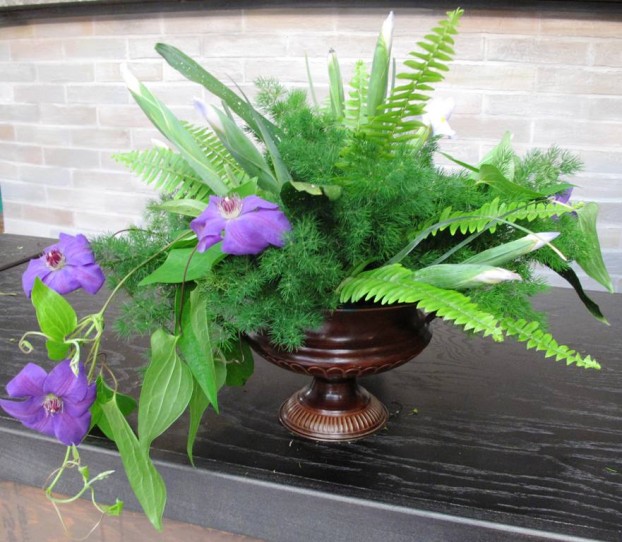
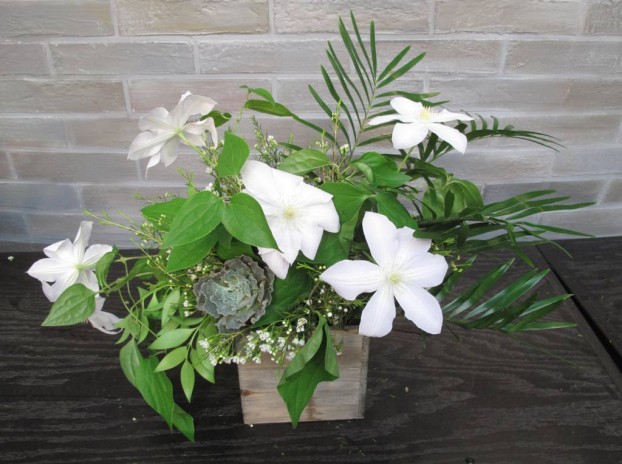
An all Florida arrangement featuring three types of foliage and ferns combined with trailing clematis.

An all Florida arrangement featuring three types of foliage and ferns combined with trailing clematis.

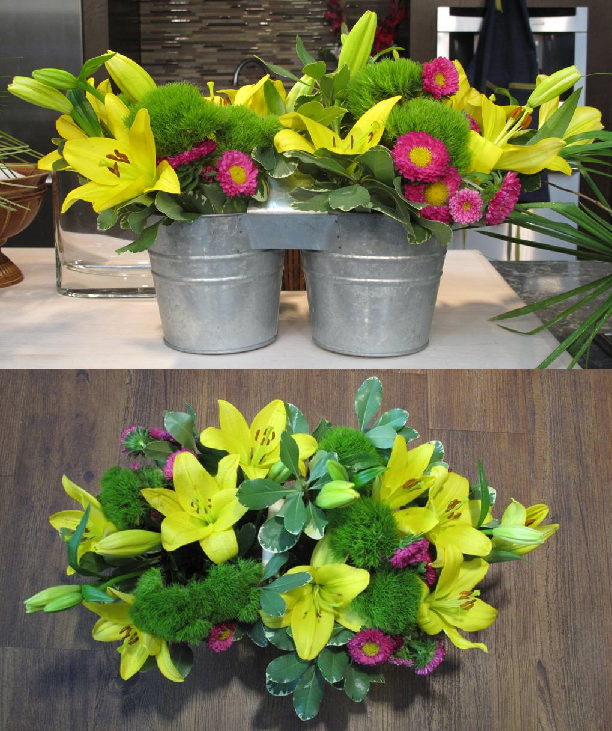
A whimsical arrangement with a Disney-fun palette of yellow lilies, hot pink Matsumoto asters and 'Green Ball' dianthus - California grown.

A whimsical arrangement with a Disney-fun palette of yellow lilies, hot pink Matsumoto asters and ‘Green Ball’ dianthus – California grown – arranged into a base of variegated Florida-grown pittosporum foliage.

A truly favorite all-Florida bouquet with ferns, foliage and clematis, topped off with an echeveria.

A truly favorite nearly all-Florida bouquet with ferns, foliage and clematis, topped off with an echeveria. White waxflower is from California.

The big takeaway? People want to know more! They understand the importance of keeping things local – from saving farmland to the environment to jobs! I consider it a privilege to tell that story while playing with the flowers grown by people I respect and admire!

California Grown-American Grown, with Tony Ortiz of Joseph & Sons (Episode 192)

Wednesday, May 6th, 2015
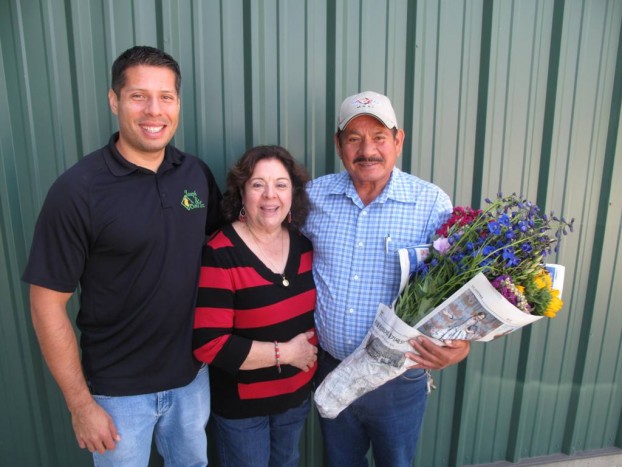
Tony Ortiz (left), with his parents Mercedes and Joseph Sr.

Tony Ortiz (left), with his parents Mercedes and Joseph Sr.

Today’s guest is an up-and-coming leader in cut flower farming in California and the U.S.-American grown cut flower world.

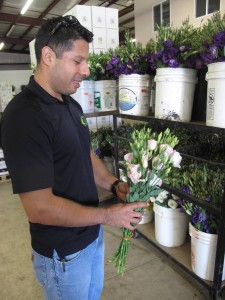
Tony shows off some of the fresh, just-picked flowers from Joseph & Sons' fields.

Tony shows off some of the fresh, just-picked lisianthus from Joseph & Sons’ fields.

I met Tony Ortiz last year when he and his father Joseph Ortiz, Senior, were part of a delegation of U.S. flower farmers who traveled to Washington, D.C., for meetings with their Representatives. Their family farm, Joseph & Sons, is based in Santa Paula, California (Ventura County), where the vast majority of their flowers are field-grown.

I always have a soft spot in my heart for field-grown flowers, so I was excited to schedule a visit to tour the Joseph & Sons’ operation when I was in Southern California last month. In Santa Paula, they grow 58 acres of flowers, as well another 1 million square feet of greenhouse-varieties.

To get to Joseph and Sons you drive north from Los Angeles on the Ventura Freeway (Hwy 101) and turn east once you hit the city of Ventura. I felt quite a bit of nostalgia heading up to Santa Paula, traveling that same route I drove for four years when our family lived in Thousand Oaks from 2006-to-2010. So may familiar stops that brought a flood of memories along with the sunshine that required me to wear sunglasses (not something that happens much in the winter up here in Seattle).

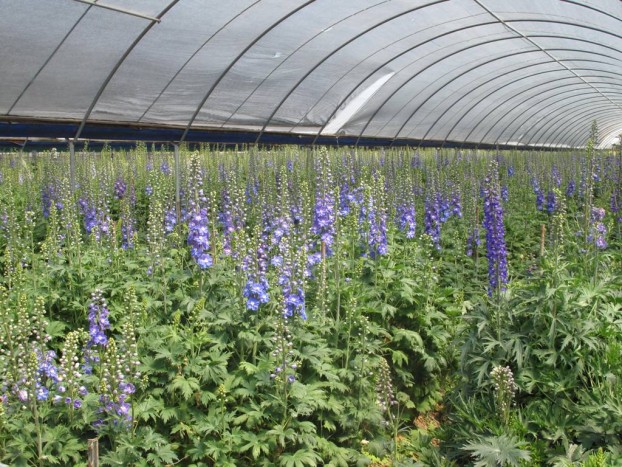
Beautiful blue delphiniums in the high tunnel.

Beautiful blue delphiniums in the high tunnel.

At Hwy 126 I turned east, away from the Pacific Ocean, and after a few miles, I exited and made my way through agricultural fields growing nursery plants and food crops.

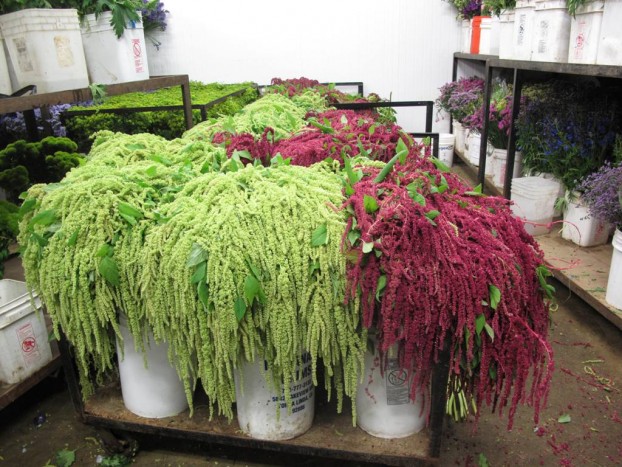
Look at this gorgeous, healthy amaranthus!

Look at this gorgeous, healthy amaranthus!

I arrived at Joseph & Sons on Telegraph Road where Tony met me and led me on a tour of the flower processing and packing facility, then outdoors, through the rows of high tunnel covers that protect tidy rows of Joseph & Sons’ flowers:

  • Amaranthus
  • Bells of Ireland
  • Bupleurum
  • Delphinium
  • Larkspur
  • Lisianthus
  • Stock
  • Snapdragons
  • Statice
  • Bupleurum
  • Iris
  • Matsumoto Asters
  • Pepperberry
  • Queen Anne’s Lace
  • Ranunculus
  • Seeded Eucalyptus
  • Sunflowers
  • Main Blue
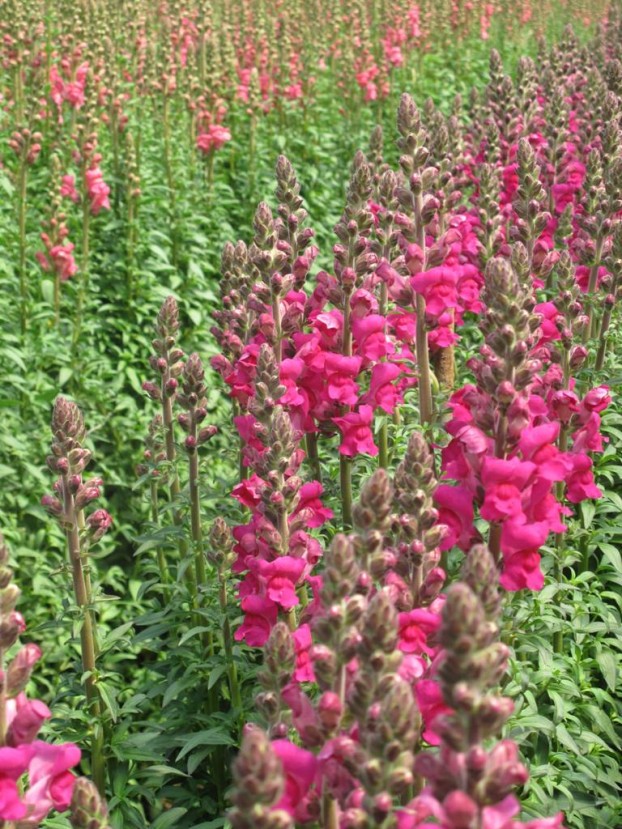
Hot pink snapdragons.

Hot pink snapdragons.

By the way, as you’ll hear in my interview with Tony, Joseph & Sons also grows flowers in two other California regions: Lompoc, in Central California, where Joseph & Sons has 280 acres of field grown flowers, and Imperial Valley, in San Diego County, where the company grows 75 acres of seasonal flowers. Joseph & Sons is a Certified American Grown flower farm selling flowers across the U.S.

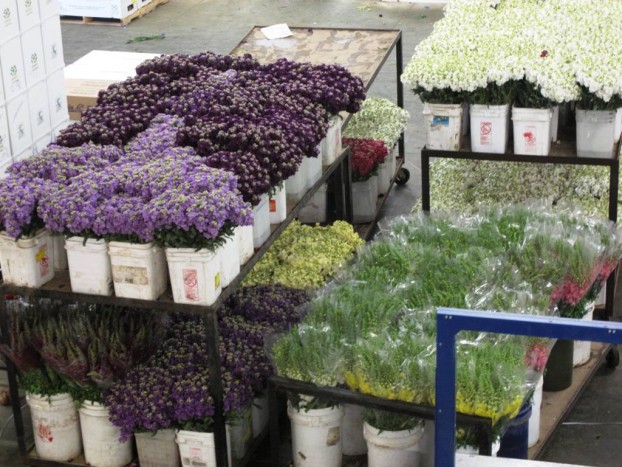
A birds-eye view of the packing operation.

A birds-eye view of the packing operation.

The family-owned and operated business has more than 50 years of growing and shipping experience. Founded by Joseph Senior, a man who allegedly was born with a green thumb that others have tried in vain to duplicate, these flower growers are dedicated to making sure the best growing practices are followed.

And here are two videos I wanted to share:

First, the Joseph & Sons story on J Schwanke of uBloom’s California Grown Experience Web Series:

And just for fun, follow this link to J’s “Happy Video” ~ you can’t miss Tony (and the rest of his family) dancing to Pharrell Williams’ song!

Here are other ways to connect with Joseph & Sons:

Joseph & Sons on Facebook

Joseph & Sons on Pinterest

Joseph & Sons on Instagram

Listeners like you have downloaded the podcast more than 46,000 times. Until next week please join me in putting more American grown flowers on the table, one vase at a time. And If you like what you hear, please consider logging onto Itunes and posting a listener review.

The content and opinions expressed here are either mine alone or those of my guests alone, independent of any podcast sponsor or other person, company or organization.

The Slow Flowers Podcast is engineered and edited by Andrew Wheatley and Hannah Holtgeerts. Learn more about their work at shellandtree.com.

Week 16 // Spring’s Bright Outlook

Sunday, April 26th, 2015
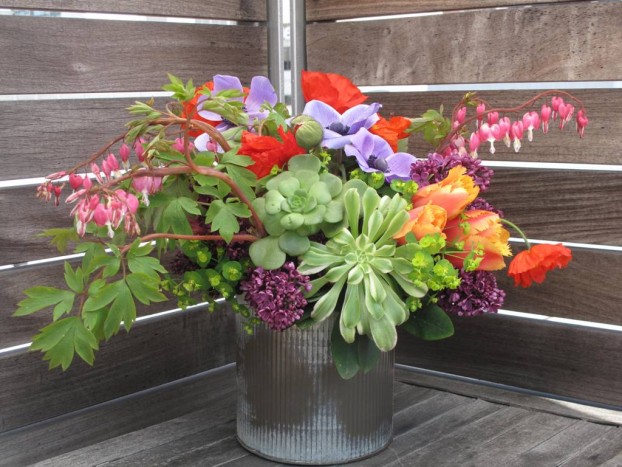
week16For Earth Day a local real estate mangement firm asked me to give a talk and demonstration during a lunchtime event held on the rooftop garden of a hot LEED-Certified building in Seattle’s Southlake Union neighborhood.What a great chance to speak with office-bound hipsters from architecture, design and advertising agencies about LOCAL flowers and ECO design!

 
And what a perfect time to do this – when the vivid hues of springtime are exploding from my favorite Northwest flower farms!
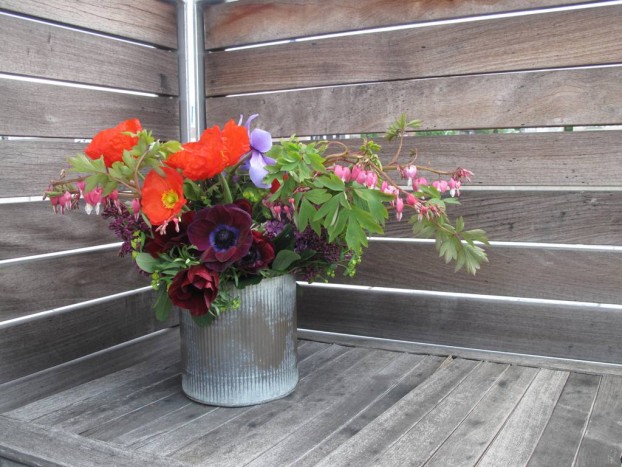
Local ornamental shrubs, perennials and flowering bulbs, with a few succulents tossed into the mix.

Local ornamental shrubs, perennials and flowering bulbs, with a few succulents tossed into the mix.

Here’s what I included in my design demonstration:

Euphorbia foliage, grown by Jello Mold Farm

Lilac blooms, grown by Jello Mold Farm

Poppies, grown by Jello Mold Farm

Anemones (pale purple), grown by Sonshine Flower Farm

Anemones (maroon-red), grown by Everyday Flowers

Fancy orange tulips, grown by Sonshine Flower farm

Bleeding hearts, grown by Ojeda Flower Farm

Potted succulents

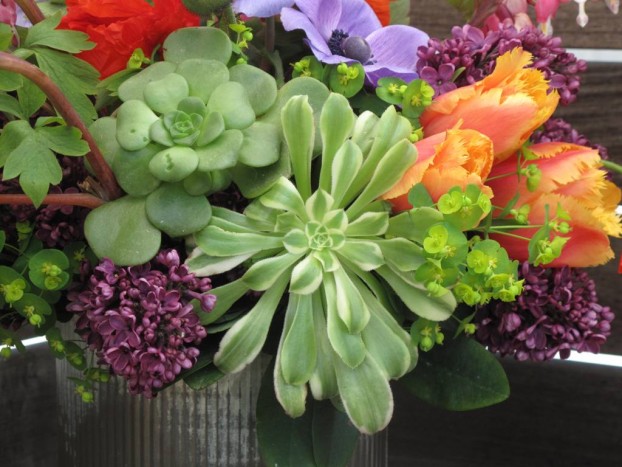
Detail showing the variegated aeonium and green rosette-style succulent.

Detail showing the variegated aeonium and green rosette-style succulent.

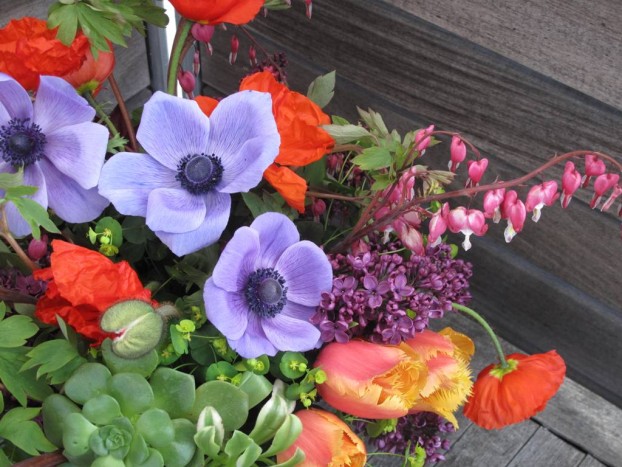
Nice overhead detail that captures all of nature's glorious forms and colors.

Nice overhead detail that captures all of nature’s glorious forms and colors.

Back view: showing off those maroon anemones!

Back view: showing off those maroon anemones!

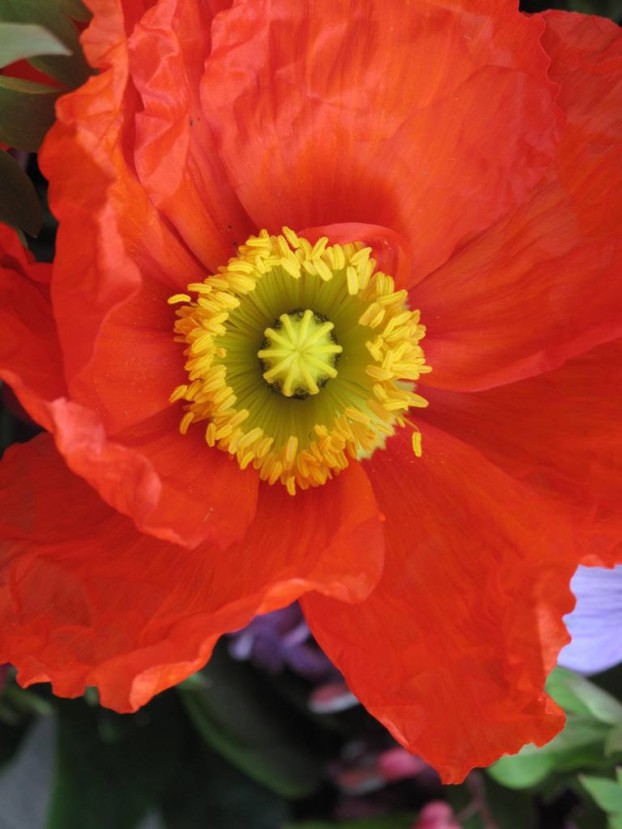
A burst of Earth Day sunshine in this lovely Washington-grown poppy!

A burst of Earth Day sunshine in this lovely Washington-grown poppy!

Earth Day with Updates from Peterkort Roses and Floral Soil (Episode 190)

Wednesday, April 22nd, 2015

Earth-Day-Logo-2015This week’s episode coincides with Earth Day, fittingly symbolic for the Slow Flowers Movement and flower farmers, floral designers and product innovators who are working to change our industry and push for progress to alter the status quo.

So I’d like to share a few news items as well as two follow-up interviews featuring guests of past Slow Flowers Podcast episodes.

Listen closely to find out how you can win prize packages from each of our guests – you’ll want to get in on the good stuff!

First off, if you enjoyed last week’s interview with Jenny Elliott and Luke Franco of Tiny Hearts Farm in New York’s Hudson Valley and Rachel Gordon of Taproot Flowers of Brooklyn, please check out more photos that I’ve added to the show notes. They’re onto something really special and I encourage you to listen if you missed that episode – and enjoy the beautiful flowers the three of them grow and arrange in their worlds.

FRD_posters_2015_photography_loweres2Second, I want to share details about this week’s Fashion Revolution Day, which takes place on April 24th.

If you believe in Slow Flowers, you should also embrace and support Slow Fashion, which has so many parallels in terms of labor practices, environmental concern and trade policy.

Slow Fashion asks questions about the origins of the clothing we wear that are virtually identical to the questions Slow Flowers asks about the bouquets we bring into our homes.

Fashrev2015Fashion Revolution Day 2015 marks the second anniversary of the Rana Plaza disaster in Dhaka, Bangladesh, which killed 1,133, and injured over 2,500 people.

According to Fashion Revolution’s data, one in six people work in the global fashion supply chain. It is the most labor-dependent industry on the planet, yet the people who make our clothing are hidden from us, often at their own expense, a symptom of the broken links across the fashion industry.

Wow, doesn’t that sound identical to the floriculture industry? On April 24th, coordinated teams around the world will challenge global fashion brands to demonstrate commitment to transparency across the length of the value chain, from farmers to factory workers, brands to buyers and consumers.

Zady.com, an innovative online fashion brand based in New York City, is serving as U.S. chair of Fashion Revolution Day. Slow Flowers has been invited to help promote the cause. Check out this Slow Fashion/Fashion Revolution event taking place in Brooklyn. Slow Flowers hopes to have ongoing involvement with Slow Fashion in the future.

unnamed-1

I am inspired by what the fashion industry has done in just two years to mobilize conscious consumers to care about the origins of their clothing — and in the future, I hope the floral industry will be just as vocal. I don’t wish for a fatal disaster to occur at an unregulated flower farm in a distant land to make us all wake up and start asking about the origins of our flowers.

What you can do on April 24th is to use your own social channels to get active. Take a photo of yourself wearing an item of clothing inside out. Tag the brand, share the photo on Facebook, Twitter and Instagram with the hashtags: #whomademyclothes and #fashrev.

Not to take away from this important endeavor, but perhaps you’ll be inspired to ALSO take a photo of yourself holding flowers that came from a US mega-retailer, big box store or supermarket and tag that retailer on your social sites with the hashtags: #whogrewmyflowers and #slowflowers. Just a thought.

Thanks for caring!

READ MORE…

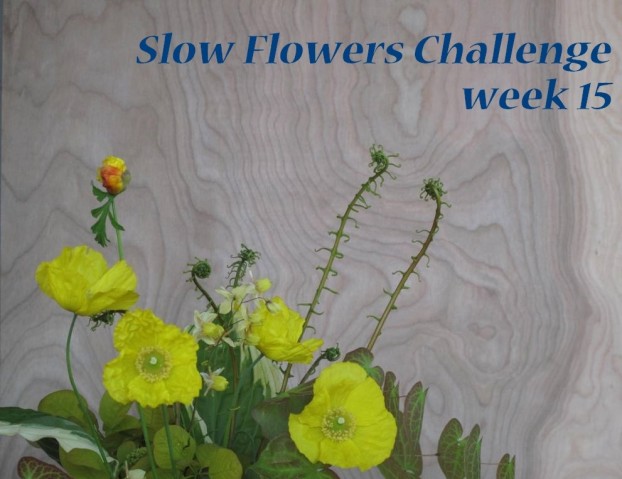
Week 15 // Spring Awakening

Sunday, April 19th, 2015
The pods and buds are waking up. They're shouting, "we're here!"

The pods and buds are waking up. They’re shouting, “we’re here!”

It’s been a crazy week here in Slow Flowers Land, but after 8 days of travel, I’m so delighted to be home in Seattle for a week. Seattle has been good to us, with mid-60s to 70-degree weather.
 
Today was no exception. I clipped a bit of this and that – all from my awakening garden. It truly is a Spring Awakening here!
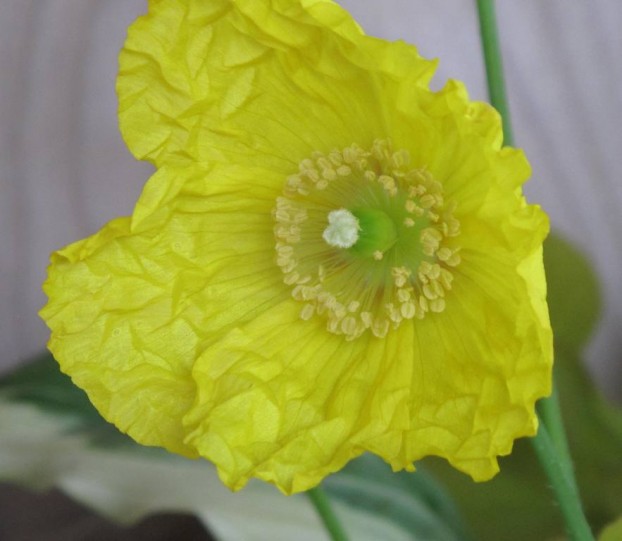
Just unfurled: a vivid yellow poppy

Just unfurled: a vivid yellow poppy

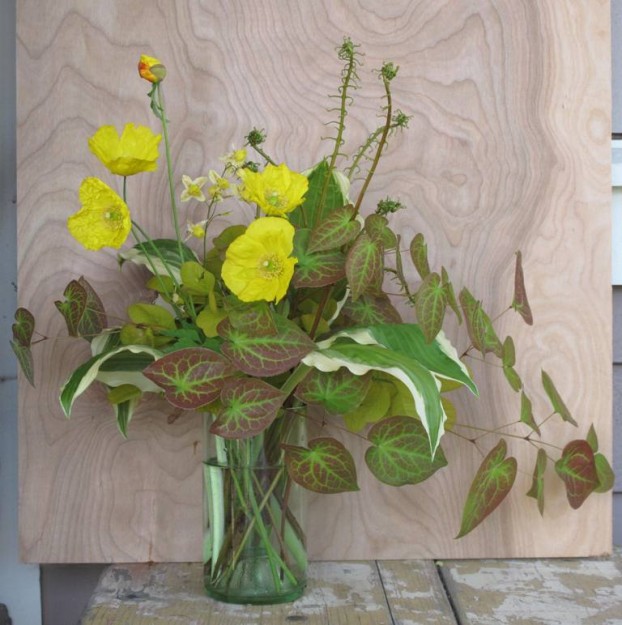
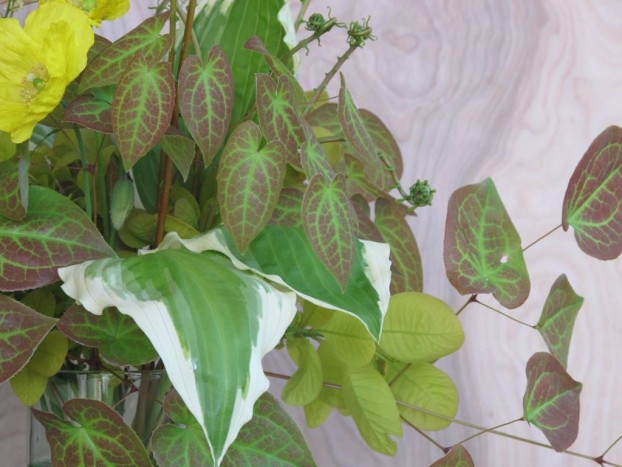
The delicate leaves and flowers that are pushing up through the April soil are each special in their own way. Here’s what I included in my spontaneous spring arrangement:

Variegated hosta leaves
Acid yellow smoke bush (Cotinus coggygria ‘Golden Spirit’)
The young tips of deer fern (Blechnum spicant)
Green-and-rust-variegated Epimedium leaves and a few flowering stems
Yellow poppies, flowers & buds

The final arrangement - all from April 18th in the garden

The final arrangement – all from April 18th in the garden

Love how all the season's new foliage works together.

Love how all the season’s new foliage works together.

A word about the vase. Christina Stembel of Farmgirl Flowers turned me onto“Wine Punts,” 100% recycled, made in USA, these beautiful vessels are wine bottles that have been repurposed into drinking glasses. Or, small vases. Available in sets of 4 in many colors. Love the size and the pale green hue.

Week 14 // A Visit to Laguna Beach to Play with Local Flowers & New Friends

Sunday, April 12th, 2015
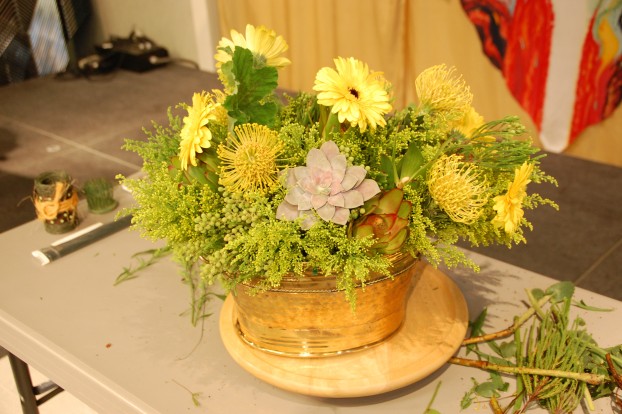
A golden and green floral palette - with a beautiful echeveria as a focal element

A golden and green floral palette – with a beautiful echeveria as a focal element. (c) Perry Stampfel


Welcome to Week 14 of the Slow Flowers Challenge! 

Greetings from Southern California, where I have been teaching this week! It’s a great excuse to show off some of the flowers grown in Encinitas, California – by Dramm & Echter, an established farm that grows beautiful blooms.

At the invitation of Lynn Stampfel of Laguna Beach Garden Club, I traveled to Southern California earlier this week. This established and active group of gardeners graciously welcomed me to lecture about American Grown Flowers and the Slow Flowers Movement. We had 125 in attendance and it was a whirlwind. Why? Well, for some crazy reason, I had agreed to give a 30-minute slide lecture, followed by a 30-minute eco-design demonstration.

Above is the arrangement I created for the demo. I used a vintage brass planter – low and wide – in order to show how to use chicken wire as the internal mechanics of the container.


The floral elements were all grown locally – well, the next county over – at Dramm & Echter, an American grown flower farm with 40 acres of field-grown crops and 950,000 square feet of greenhouses. Dramm & Echter’s primary floral crops are gerberas, lilies, spray roses and protea varieties. Then there’s so much awesome foliage and textural varieties, including solidago, leucadendron, ruscus, eucalyptus and more.

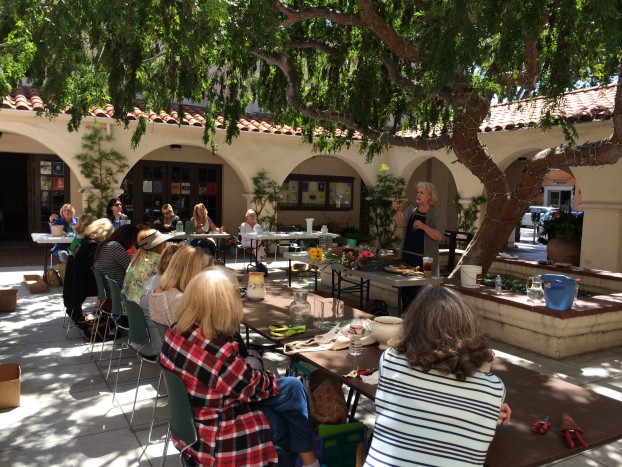
Demonstrating with the flowers from Dramm & Echter

Demonstrating with the flowers from Dramm & Echter. (c) Perry Stampfel

Working with the Dramm and Echter sales team, I ordered $800 of their flowers and foliage varieties for Laguna Beach Garden Club’s afternoon event: A hands-on design workshop.

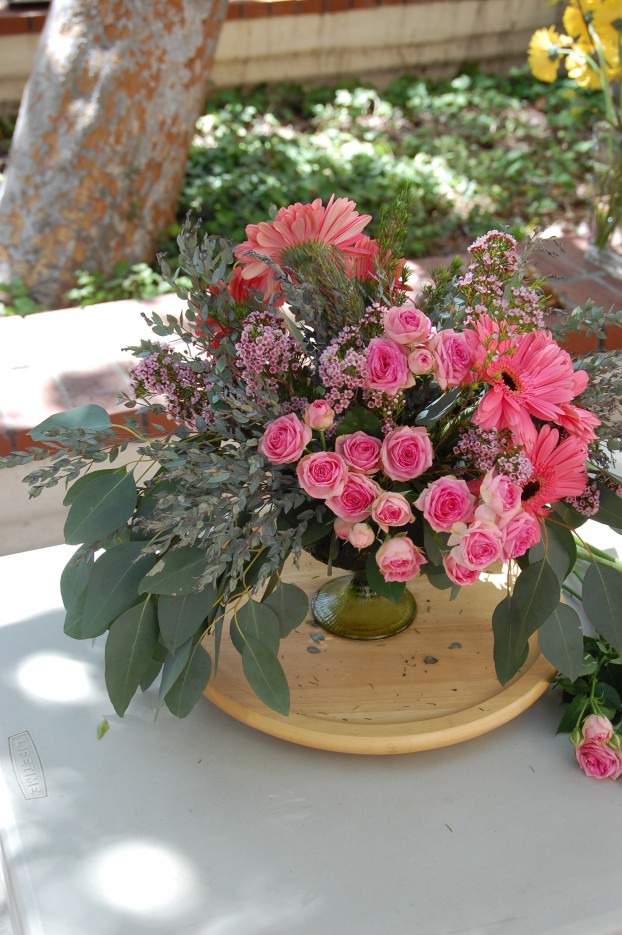
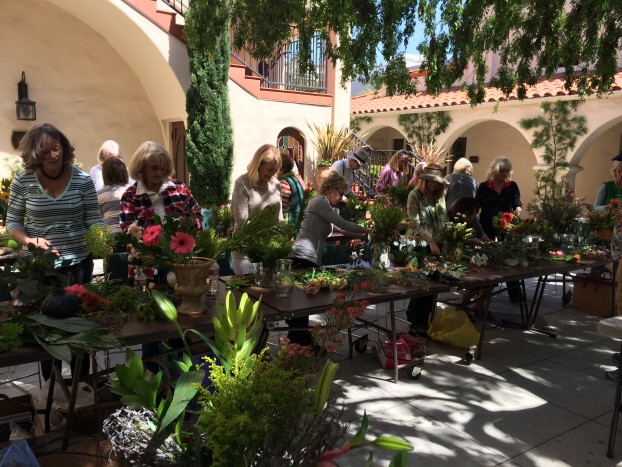
Twenty-five participants gathered in the courtyard of the local church that hosted our workshop under the lovely canopy of a melaleuca tree, we spent two hours arranging with those blooms. Everyone was encouraged to try using chicken wire or fluffy foliage or curly willow as the stabilizing matrix — all great alternatives to conventional chemical-base flower foam. I’m pleased to have been able to demonstrate the brand new Floral Soil plant-based product in one of my designs, shown below.

This vintage footed glass bowl contains Dramm & Echter florals, including gerberas, spray roses, wax flower, and two types of eucalyptus branches.

This vintage footed glass bowl contains Dramm & Echter florals, including gerberas, spray roses, wax flower, and two types of eucalyptus branches. (c) Perry Stampfel

Twenty-five Slow Flowers designers, all members of the Laguna Beach Garden Club, at work on their personal projects.

Twenty-five Slow Flowers designers, all members of the Laguna Beach Garden Club, at work on their personal projects. (c) Perry Stampfel

Floral Friendship: The Florist (Betany Coffland of Chloris Floral) and The Farmer (Lennie Larkin of B-Side Farms) (Episode 188)

Wednesday, April 8th, 2015
Betany Coffland (left) and Lennie Larkin (right). This photograph captured the friends holding flowers they grew for Chica Bloom Farm (Betany) and Petaluma Bounty (Lennie).

Betany Coffland (left) and Lennie Larkin (right). This photograph captures the friends holding flowers they grew for Chica Bloom Farm (Betany) and Petaluma Bounty (Lennie).

BsidelogoChloris Floral logoAttention emerging flower farmers and #farmerflorists!
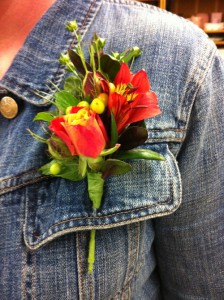
A B Side boutonniere.

A B-Side boutonniere.

I know you’ll appreciate this week’s guests because they are both in the early phases of launching their floral businesses.

Either you’ve already been there so parts of their stories will sound familiar or you’re in the thick of building a floral enterprise – farming and/or design – and will draw inspiration from their candor about the challenges, opportunities and decisions about the direction to take.

With planting and harvesting season and months of weddings upon us, I can assure you that our episode is timely. Like all of my guests on the Slow Flowers Podcast, there is much to learn from what they have to share.

Please welcome Betany Coffland of Chloris Floral and Lennie Larkin of B-Side Farm. Together, they embody a unique collaboration for people who are growing and designing American flowers. Be wowed by the collective beauty of their work.

Betany, performing "Carmen" - Photo by Pat Kirk

Betany, performing “Carmen,” photo by Pat Kirk

This episode was recorded in the San Jose hotel lobby after the conclusion of ASCFG’s “Growers’ Intensive” last month.

Betany Coffland has always possessed an artistic soul. Her first career lies in singing opera where she trained at the Juilliard School of Music.

Often gifted with an armload of bouquets on opening night, Betany frequently imagined herself in a Jane Austen novel.

The quintessential professional, Betany has given us permission to include snippets of her operatic performances, including the French art song, “A Chloris.” Check out her professional opera site here. 

After moving to Sonoma County and reading the book, The Dirty Life, she was inspired to volunteer at a local flower farm to see if she would enjoy getting dirt under her nails and having the outdoors as an office.
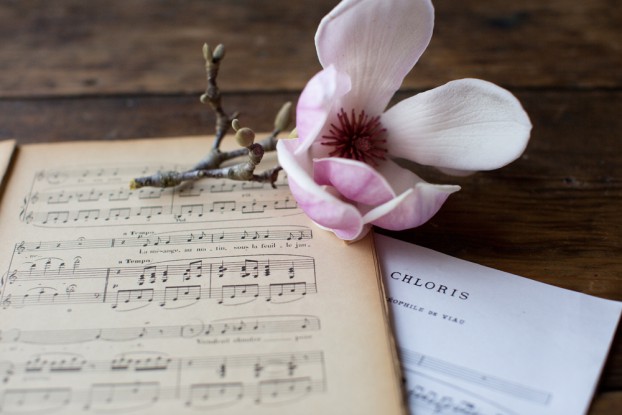
A Chloris inspiration, photo by Paige Green
A Chloris inspiration, photo by Paige Green

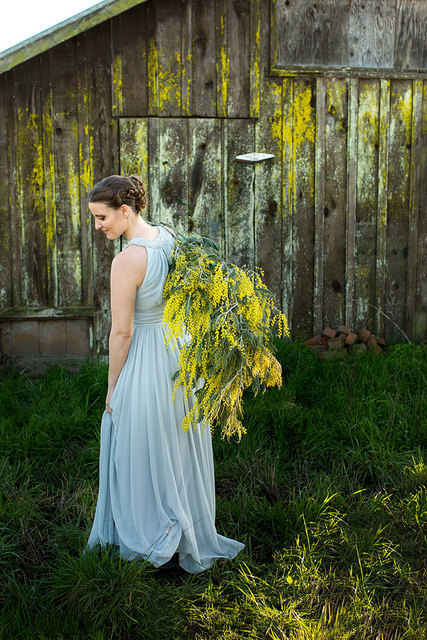
Betany Coffland, portrayed in an scene inspired by Chloris, the Greek goddess of flowers, photo by Paige Green

Betany Coffland, portrayed in an scene inspired by Chloris, the Greek goddess of flowers, photo by Paige Green

Betany swiftly and deeply fell entranced with how stunning and heartbreakingly gorgeous locally grown flowers are.

For 18 months, she co-owned Chica Bloom Farm, acting as the lead designer and wedding coordinator.

She especially loved getting to know her community through delivering weekly flower CSA bouquets.

In the winter of 2014, Betany launched Chloris Floral. The namesake Chloris perfectly combines her two artistic endeavors, classical singing and floral design.

Not only is Chloris the Greek goddess of flowers, she is also the heroine of Betany’s favorite French art song, “A Chloris,” by Reynaldo Hahn.

This song has special meaning because it was performed by a dear friend at Betany’s wedding to her husband Joseph. Now part of Betany’s repertoire, she continues to perform A Chloris.
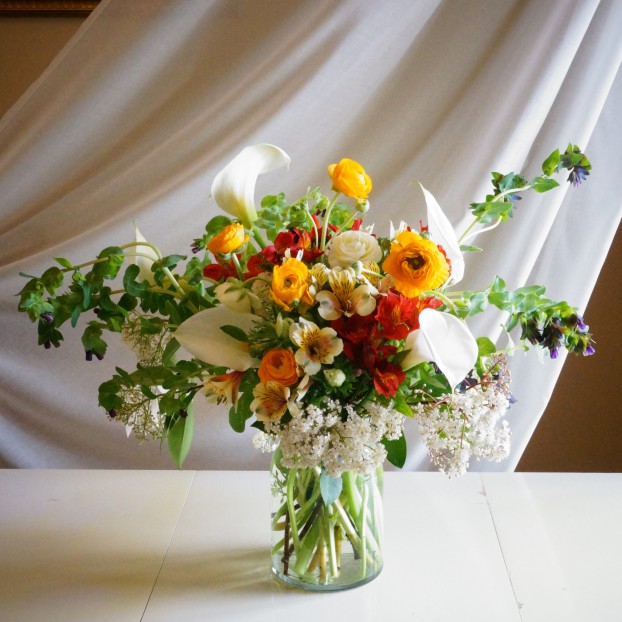
A Chloris Floral spring bouquet inspired by Vivaldi's Spring Concerto from The Four Seasons
A Chloris Floral spring bouquet inspired by Vivaldi’s Spring Concerto from The Four Seasons

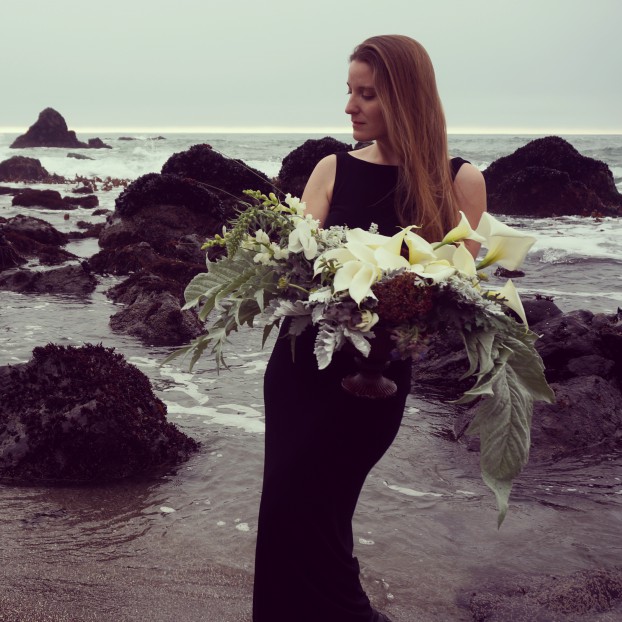
Betany and her floral arrangement, Inspired by Debussy's symphonic work- La Mer

Betany and her floral arrangement, Inspired by Debussy’s symphonic work- La Mer

Chloris Floral is a flower design studio in Sonoma County committed to using 100% local and seasonal blooms grown using organic practices. By supporting and building upon the strength of the local farming community, Chloris ensures the availability of fresh, locally grown blooms necessary to create achingly beautiful old world designs.
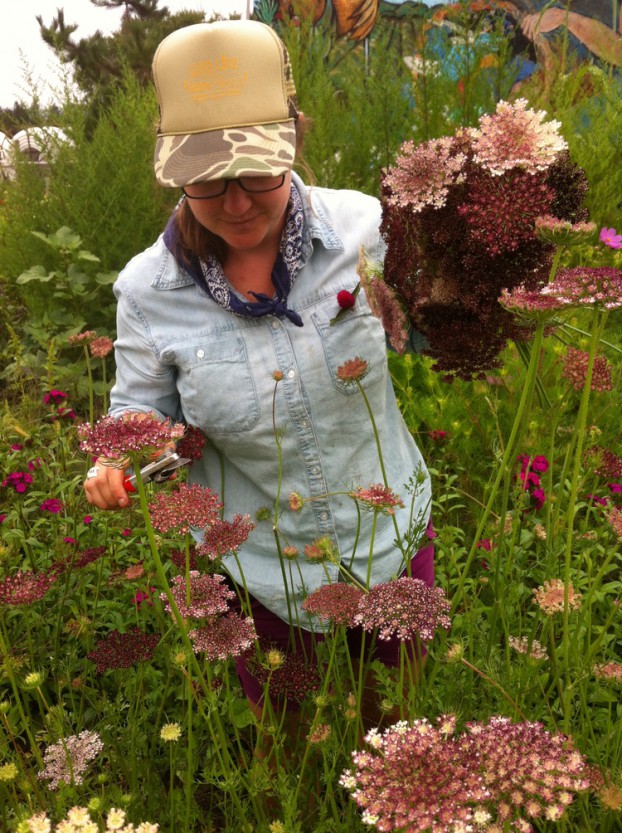
A little bit country: flower farmer, Lennie Larkin
A little bit country: flower farmer, Lennie Larkin

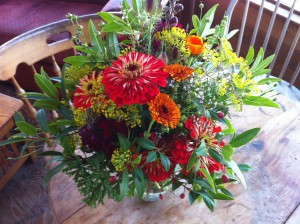
A lush B-Side bouquet, by Lennie Larkin.

A lush B-Side bouquet, by Lennie Larkin.

In her “day job,” Lennie Larkin is the community farm manager at Petaluma Bounty, a nonprofit community farm that  works to create a healthy and sustainable food system for everyone in Petaluma, California.

At Petaluma Bounty, Lennie grows lots of vegetables and a seriously beautiful patch of flowers that are sold locally, including at farmers’ markets.

She will share her story, so I don’t want to give too much away, but let me quickly introduce Lennie’s new flower farming business, B-Side Farm.
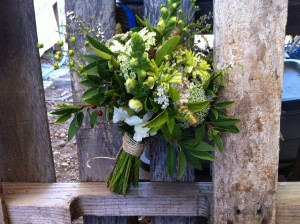
B-Side Beauty, by Lennie Larkin

B-Side Beauty, by Lennie Larkin

She describes B-Side as a small, bustling flower farm that grew out of her obsession with fragrant blossoms.

It sits on a fertile piece of land in the rolling hills of Petaluma, in the southern pocket of Sonoma County, California. From show-stopping dahlias to rare foliages and simple herbs, B-Side specializes in favorite old-fashioned flowers, picked daily and bursting with dreamy scents.

Lennie’s flowers and arrangement supply a family of local-minded florists and specialty stores in Petaluma, San Francisco, and Oakland, and she welcomes orders of loose flowers and specialty arrangements for pickup straight from the farm. Read Lennie’s extended bio from her new web site.
NBflowercollectiveLennie and Betany are founding members of the North Bay Flower Collective, a group of flower farmers and floral designers in the North SF Bay Area.

I love the motivation that led to the formation of the North Bay Flower Collective: To lean on each other for support and pull our resources together to build a flower growers’ alliance helping each farmer and florist to grow and thrive. 

Here are the links to Betany’s social sites for Chloris, to Lennie’s social sites for B-Side and to the North Bay Flower Collective.

You’ll want to follow these talented individuals and watch how their coming design season unfolds:

Find Betany here:

Chloris Floral on Facebook

Chloris Floral on Instagram

Chloris Floral Web Site

Find Lennie here:

B-Side Farm on Facebook

B-Side Farm on Instagram

B-Side Farm Web Site

Thank you so much for joining me this week and please return again, as I continue to share insightful and educational episodes recorded exclusively for the Slow Flowers Podcast.

Listeners like you have downloaded the podcast more than 42,000 times. Until next week please join me in putting more American grown flowers on the table, one vase at a time. And If you like what you hear, please consider logging onto Itunes and posting a listener review.

The content and opinions expressed here are either mine alone or those of my guests alone, independent of any podcast sponsor or other person, company or organization.

The Slow Flowers Podcast is engineered and edited by Andrew Wheatley and Hannah Holtgeerts. Learn more about their work at shellandtree.com.

Week 13 // It started with the apricot hyacinths

Friday, April 3rd, 2015
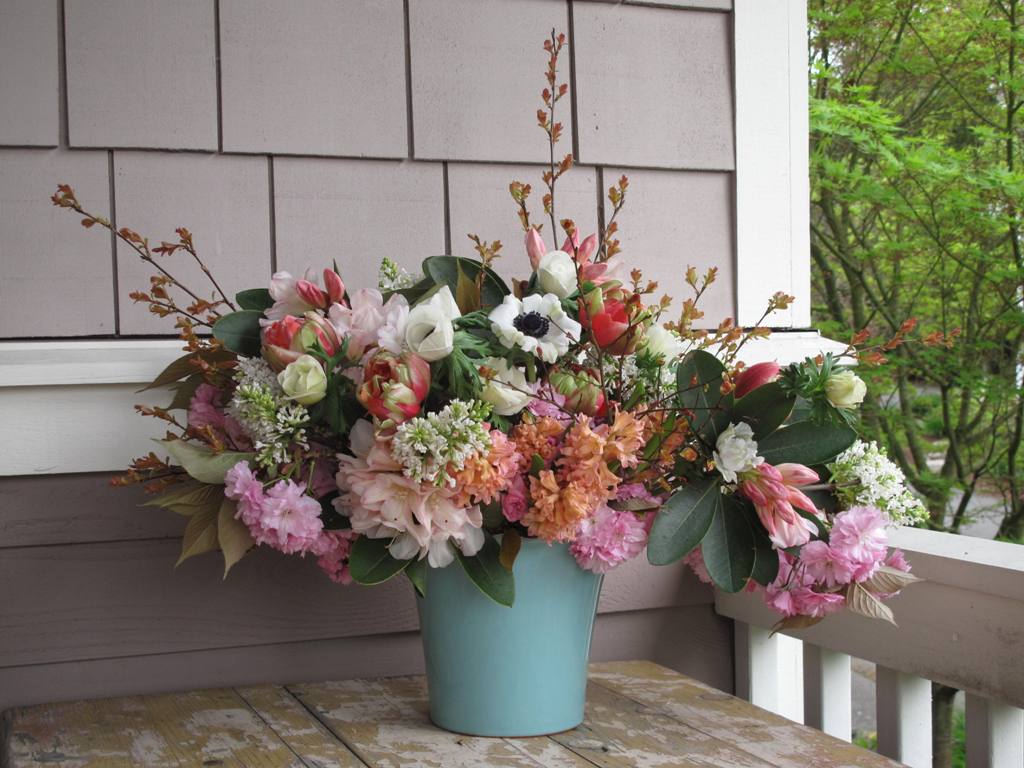
Here is the full view, photographed today on my back porch. So wonderful that the Japanese maple in the background is leafing out, too.
Here is the full view, photographed today on my back porch. So wonderful that the Japanese maple in the background is leafing out, too.

Welcome to Week 13 of the Slow Flowers Challenge!
To be perfectly honest, it started with those yummy apricot-hued hyacinth and the very first fragrant lilacs of the season – both from Northwest fields.
I love  the soft, billowy generosity of spring's early blooms - weed that right now after a winter of stiff conifers.

I love the soft, billowy generosity of spring’s early blooms – weed that right now after a winter of stiff conifers.

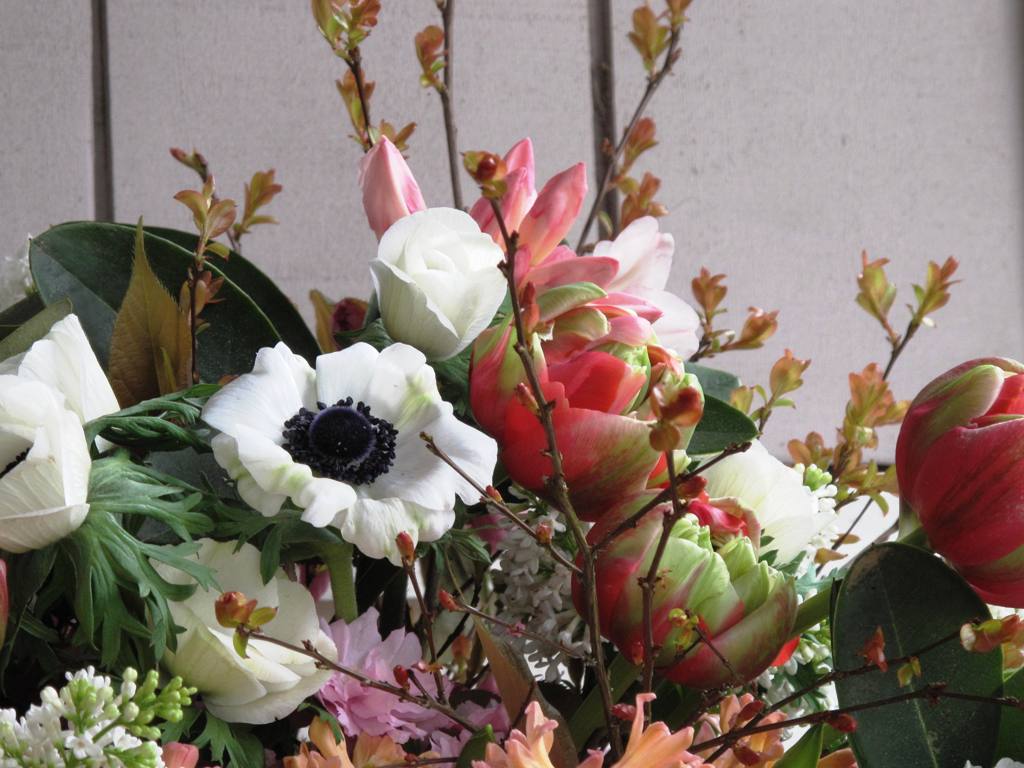
And then I couldn’t take my eyes off of the most luscious of tulips, a two-toned pink and green variety called ‘Renown Unique’, grown by my friends Pam and Kelly Uhlig of Sonshine Farms on Whidbey Island, Washington. (You can find incredible fancy tulips and bulbs grown by them and other local farms at the  Seattle Wholesale Growers Market right now).

In addition, I came home with a bunch of the dark-centered white anemones, also grown by Pam and Kelly. All are quite lovely but I wanted to add some goodies from my own garden to enhance this week’s arrangement.

You can see that the cotton-candy-pink flowering cherry branches and the pale blush-apricot rhododendron clusters — and the just leafing out apricot foliage of an old azalea add their seasonal sparkle to the farmers’ flowers. Combining gifts from the garden with gifts from flower fields is a good thing!

My dear friend and San Diego garden TV personality  Nan Sterman gave me this lovely pot for a birthday several years ago. I’m using it for my Easter bouquet, but I’m sending her best wishes for a blessed Passover celebration that I’m sure she’s having with her family tonight.Our worlds continue to overlap and connect, especially when we love the garden, plants and nature.

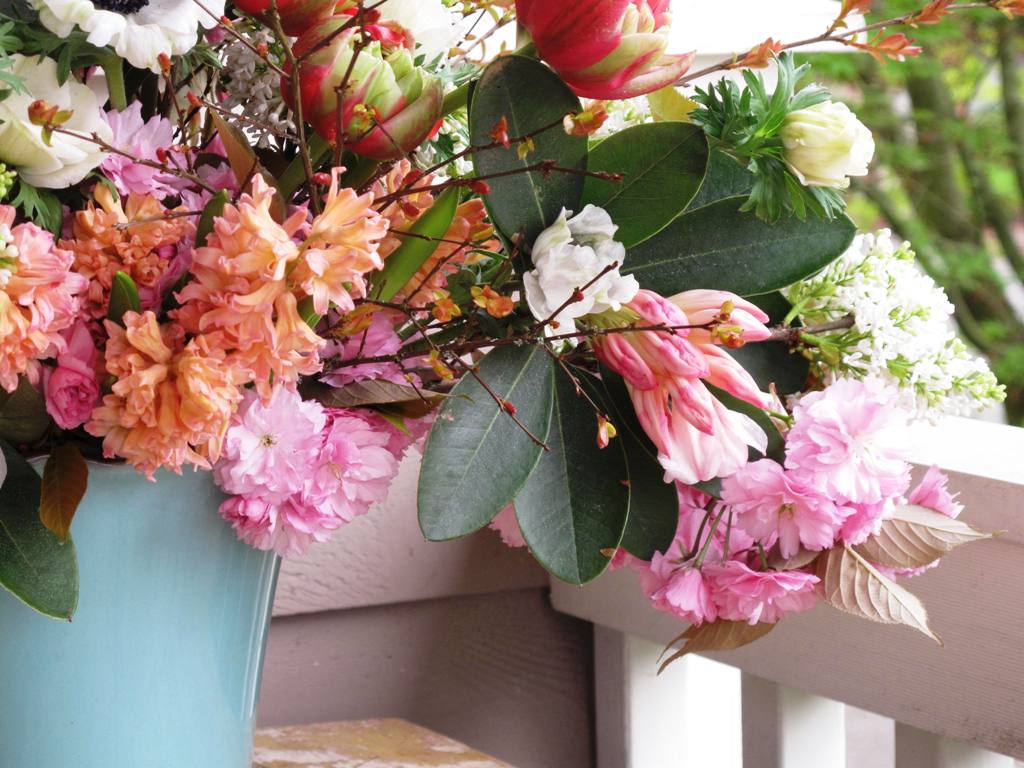
A close-up shows those tulips, anemones and the delicate azalea foliage.

A close-up shows those tulips, anemones and the delicate azalea foliage.

Here is the entire recipe:

From my garden: Flowering cherry branches, rhododendron clusters (cut when most of the flowers are in bud, to encourage a longer vase life) and branches of just-emerging azalea foliage.

From the flower farm:

  • Apricot-peach hyacinths, grown by Oregon Flowers in Aurora, OR
  • White lilacs, grown by Tosh in Snohomish, WA
  • Renown Unique pink-and-green tulips, grown by Sonshine Farm on Whidbey Island, WA
  • White anemones with a black center, grown by Sonshine Farm on Whidbey Island, WA

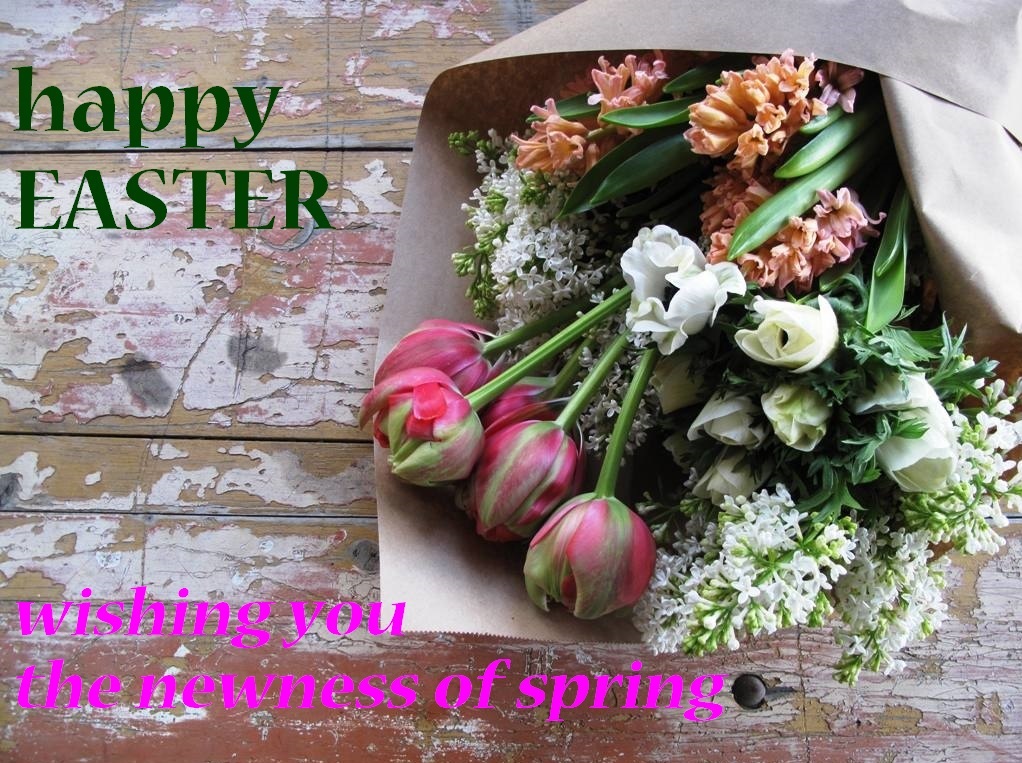
HappyEaster

Santa Cruz’s Teresa Sabankaya of Bonny Doon Garden Co. draws inspiration from her own garden and nearby flower farms (Episode 187)

Wednesday, April 1st, 2015
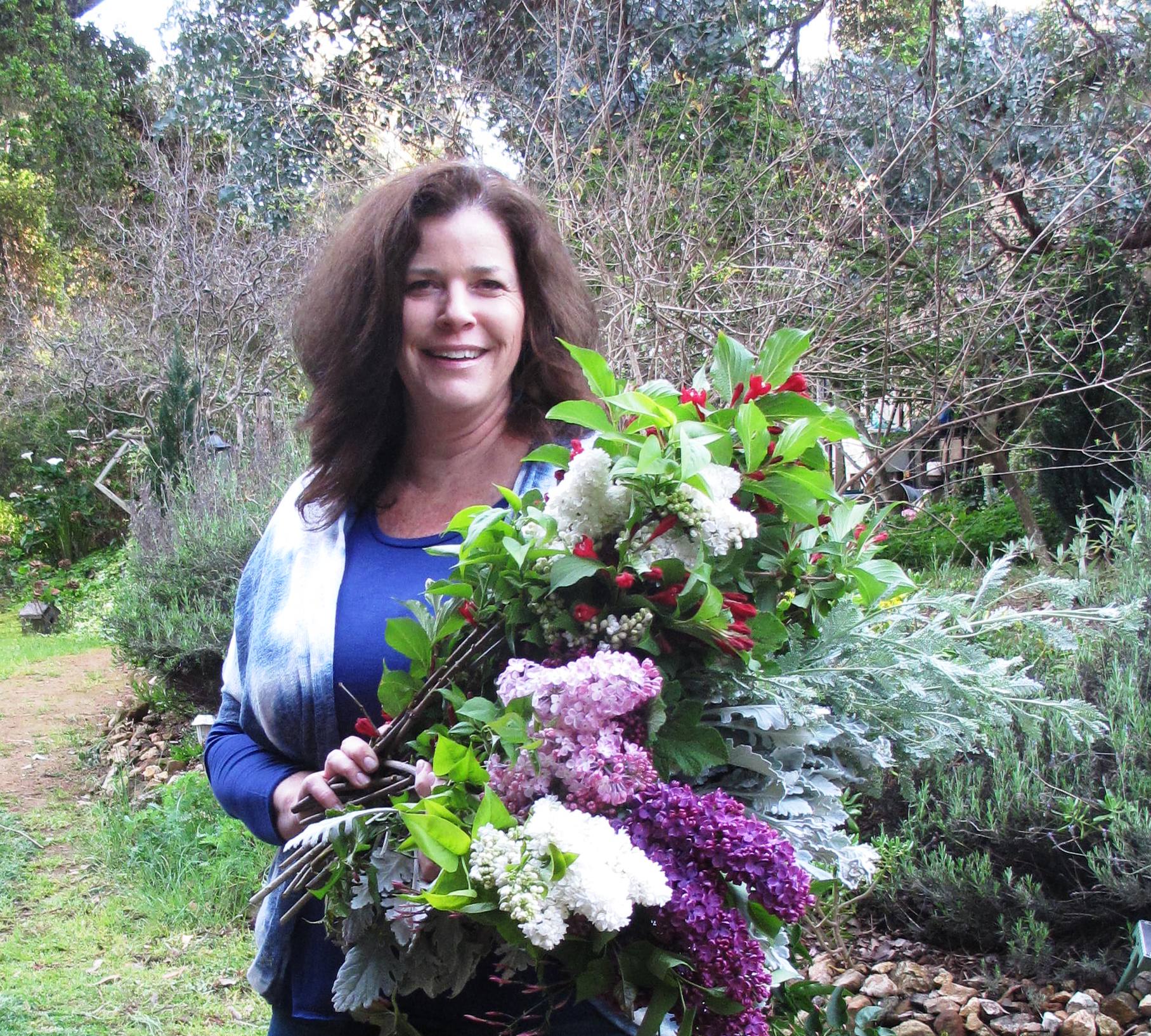
Inspiring floral designer Teresa Sabankaya of Bonny Doon Garden Co.

Inspiring floral designer Teresa Sabankaya of Bonny Doon Garden Co., captured while gathering flowers in her garden

In 2007, Amy Stewart’s Flower Confidential introduced readers to a Santa Cruz-area floral designer named Teresa Sabankya. She wrote:

Teresa Sabankaya has the kind of flower shop that you would dream about opening, if you are the kind of person who dreams of opening a flower shop. It’s in a little green metal kiosk outside Bookshop Santa Cruz in coastal California. The flowers – all interesting, unusual, old-fashioned, ephemeral, perfumy, not-your-typical-florist kind of flowers – dance and wave from buckets crowded around the stall. Her inventory is highly seasonal: in summer you’ll find larkspur and poppies, and in winter it’s all heathers and holly and berries. If you’ve been so busy that you haven’t noticed that spring has arrived, you’ll stop short at the sight of the pink cherry blossom branches bursting out of her shop in early March, and it’ll make you resolve to slow down and enjoy the season. Even if you don’t buy a flower – and Teresa would be happy to sell you a single flower – just the sight of her little stall will lift some of the weight off your shoulders. Anyone who doubts whether flowers can change a person’s emotional state has never watched the people walking by Teresa’s shop.” 

Amy continued: ” . . . The Bonny Doon Garden Company fit with my idea of how floral commerce must work – you’d grow some flowers in your garden, you’d buy some from a farmer down the road, and you’d put them in buckets and sell them to your neighbors.”

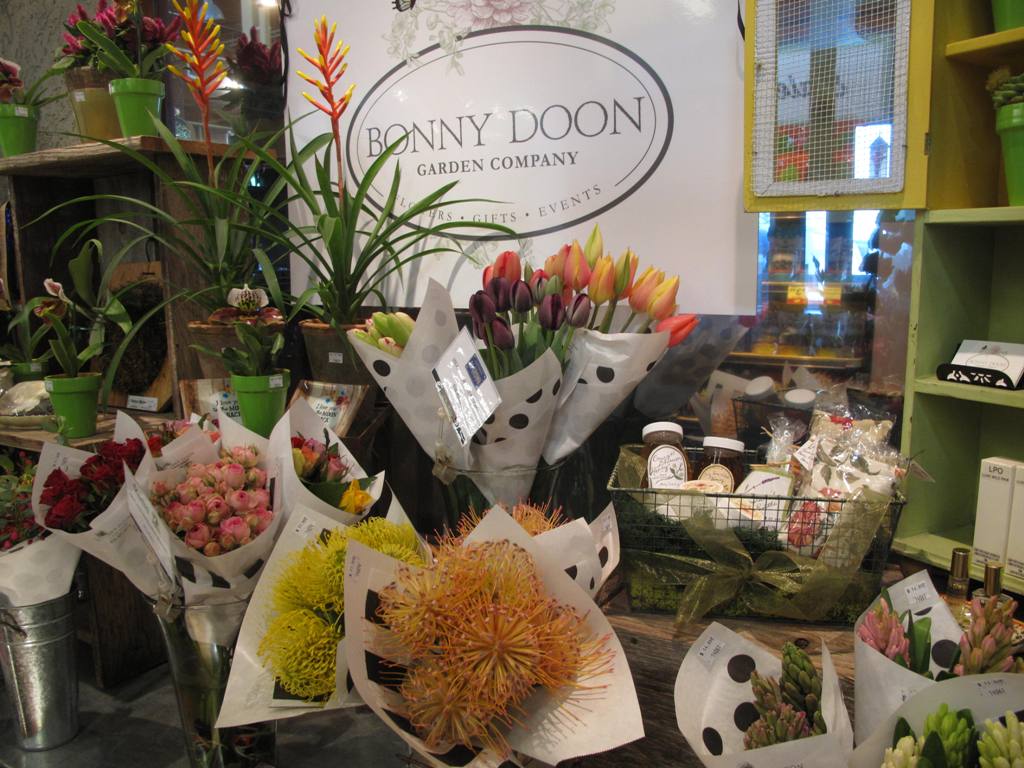
Bonny Doon's retail space inside New Leaf Market in Santa Cruz, CA.

Bonny Doon’s retail space inside New Leaf Market in Santa Cruz, CA.

Well, anyone who read all of Flower Confidential knows that it’s about the international, multibillion dollar floriculture industry – a far cry from the charm of selling flowers from one’s garden in Santa Cruz.

I was always in awe of Teresa – she was a rock star profiled by Amy Stewart, for goodness sake’s. Until last week, Teresa and I had never met in person, but we felt connected through our friendship with Amy and because we both want to advance a new normal in the floral industry: where mindful practices of local, seasonal and sustainable flowers trump designing with imported ones.

Last year, when I launched the Slowflowers.com web site, Teresa created a listing for Tessa’s Garden, her studio business, and we started an occasional email correspondence.

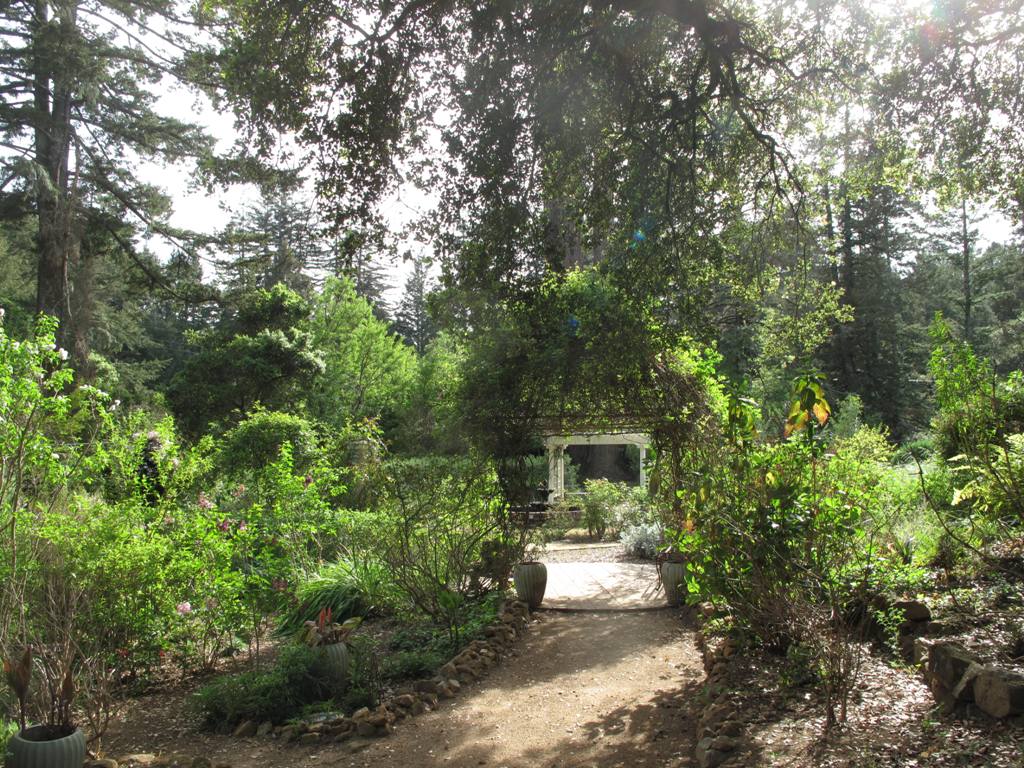
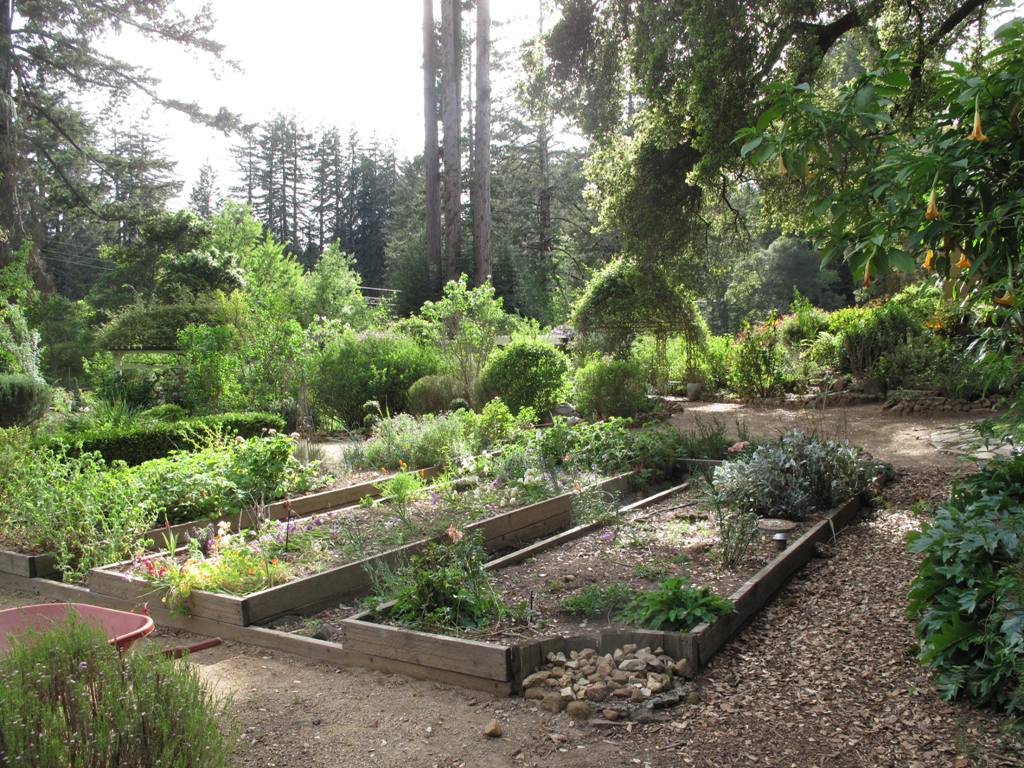
Oh my gosh: the dream garden! Here's where many of the flowers, branches, herbs and vines that Teresa uses originate . . . in her private garden.

Oh my gosh: the dream garden! Here’s where many of the flowers, branches, herbs and vines that Teresa uses originate . . . in her private garden.

Another view, including the veggie and herb garden in the foreground.

Another view, including the veggie and herb garden in the foreground.

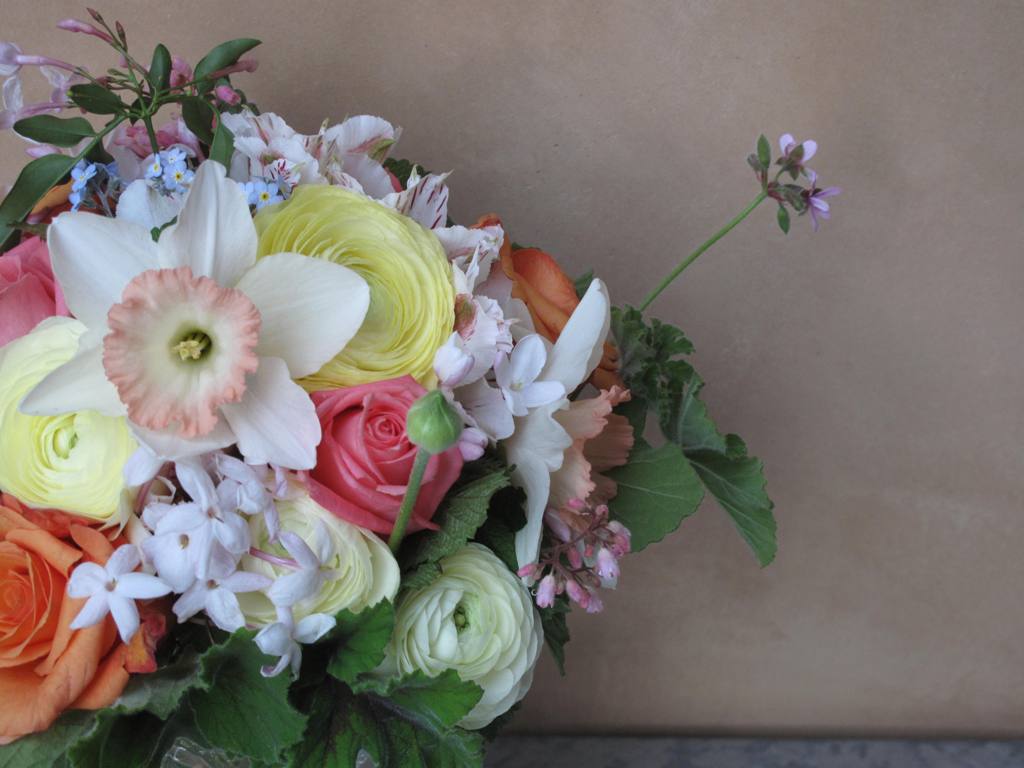
An intricate detail in the Posie that Teresa created for me.

Intricate details emerge as part of the hand-tied Posie that Teresa created for me.

Teresa had taken a break from the fast pace of running a retail flower shop and sold The Bonny Doon Garden Co. in 2012.

She then pivoted toward wedding and event design work, including hosting private ceremonies under the giant redwoods at her bountiful landscape in the hamlet of Bonny Doon, a few miles up the Coastal Highway from Santa Cruz.

Earlier this year, Teresa extended an invitation for me to stay a few days in the bridal cottage on her family’s property.

We planned ahead to schedule that visit – and this podcast interview – after my gig speaking at the San Francisco Flower & Garden Show on March 22nd.

READ MORE…