Debra Prinzing

Get the Email Newsletter!

Archive for the ‘Gardening’ Category

SLOW FLOWERS Podcast: A Day in the Life of Vivian Larson of Everyday Flowers (Episode 152)

Wednesday, July 30th, 2014
Vivan Larson, of Everyday Flowers

Vivan Larson, of Everyday Flowers    


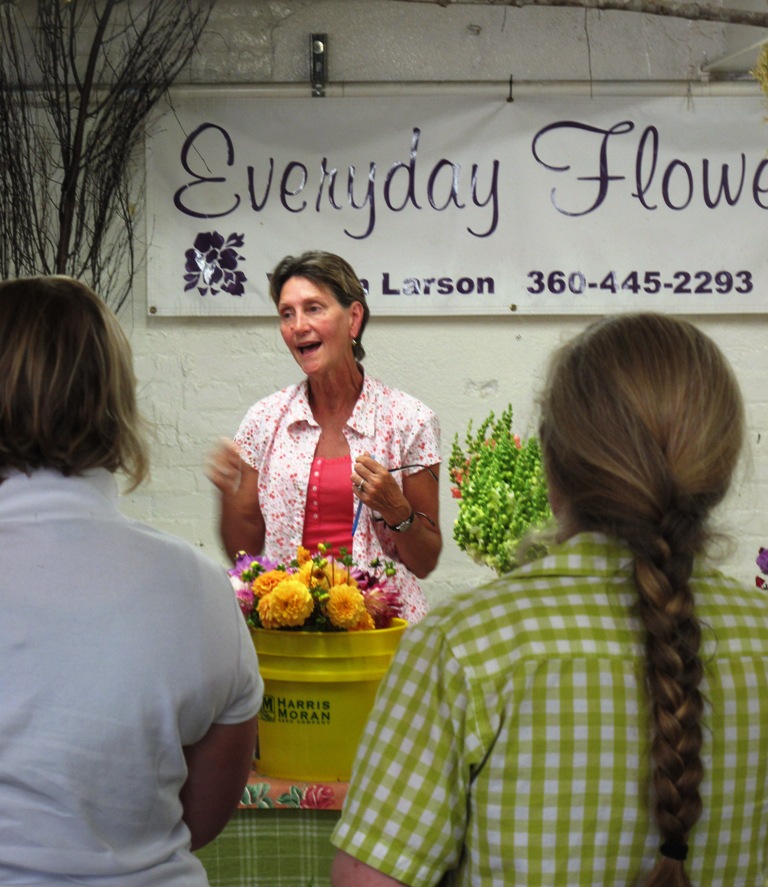
Vivan often takes times to educate her customers and visitors to the Seattle Wholesale Growers Market.

Vivan often takes times to educate her customers and visitors to the Seattle Wholesale Growers Market.

As we launch this podcast’s second year, I’m honored to continue bringing great conversations to you each week.

Some of the most rewarding side benefits of interviewing flower farmers, floral designers and other influential voices in the field-to-vase floral industry are the “field trips” that bring me close-up and in-person to see the sources of our American flowers – the farms, the studios, and the retail spaces where such amazing beauty connects us with nature and the seasons. 

This happened again last week when I invited myself to Everyday Flowers in Stanwood, Washington, for a visit.

Owned by veteran grower Vivian Larson, this established cut flower farm is a sight to behold. Viv is a precision grower, who cares deeply about her flowers – from the first seedlings emerging from trays of and trays of soil to the voluptuous bunches of blooms that are picked with great attention to detail, processed, bunched and delivered to her design customers.  

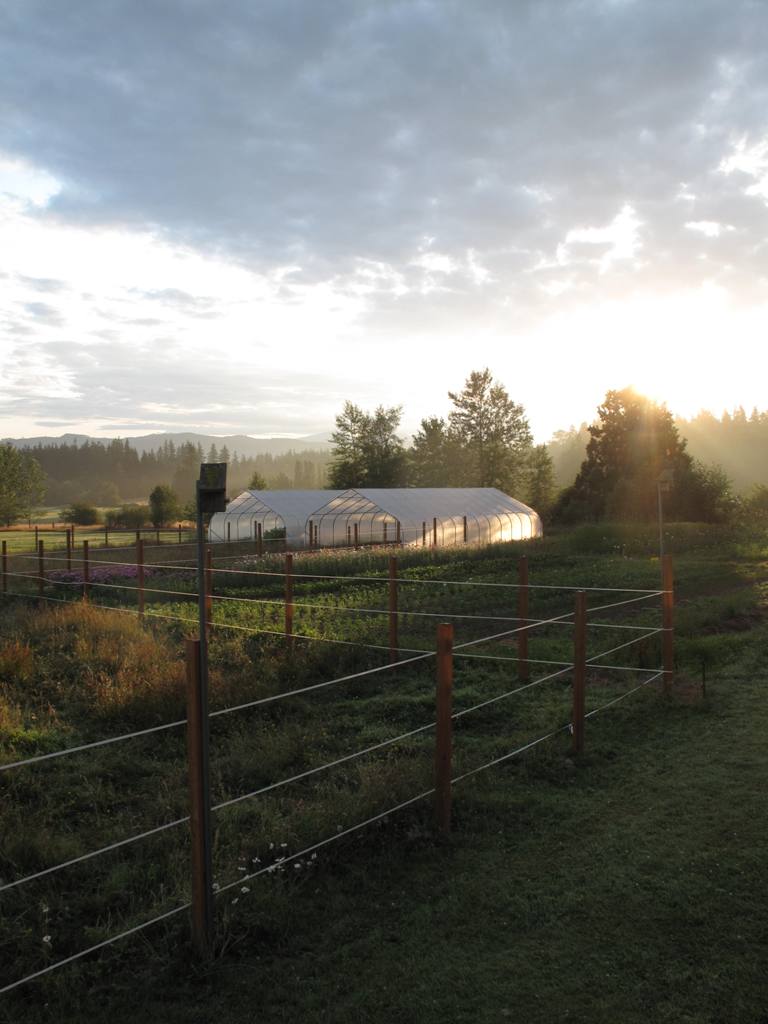
What a lovely way to wake up and view the flower fields from the guest bedroom at Viv's house.

What a lovely way to wake up and view the flower fields from the guest bedroom at Viv’s house.

Located about an hour north of Seattle, Everyday Flowers is situated on a gorgeous piece of land with a more than 180-degree view to the Puget Sound’s many islands – Camano, Whidbey, the San Juans – all the way up to Canada – and north toward Mount Vernon. Vivian and her husband Jim, a commercial fisherman, raised two children here and are now helping raise three grand-children. It is a bucolic place with a beloved horse who adds agricultural character to the scene, as well as rows and rows of field-grown annuals and perennials located next to several large and very tidy hoop-houses containing even more flowers. 

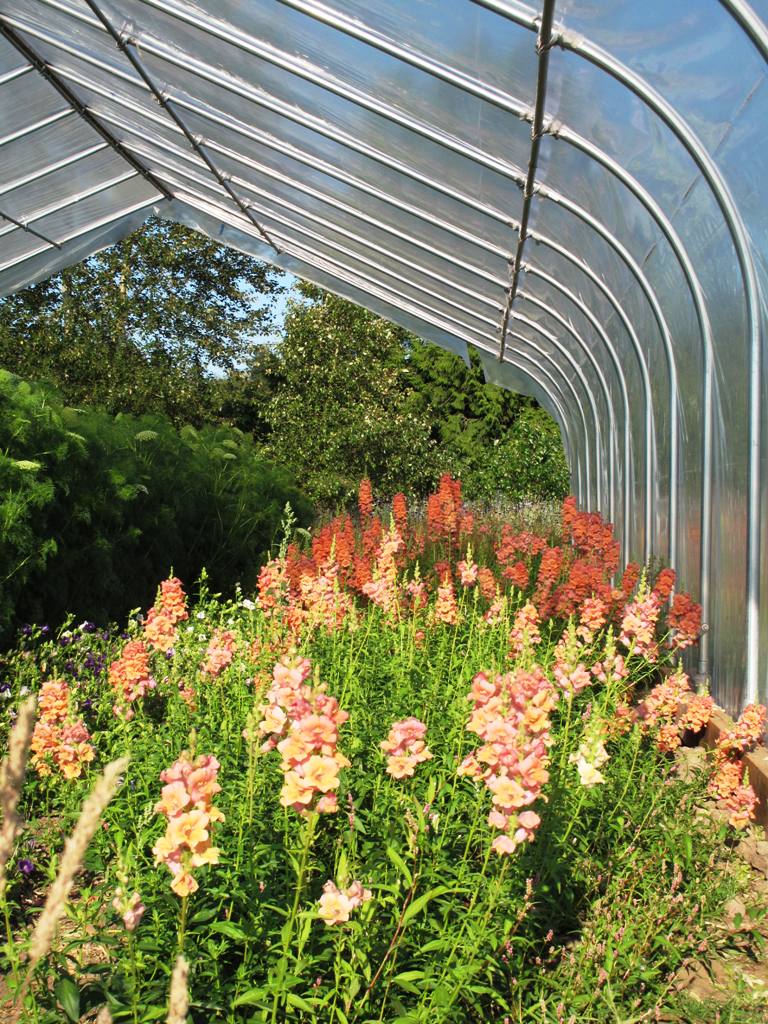
Here are the apricot-hued snapdragons we discussed - one of Viv's specialty crops.

Here are the apricot-hued snapdragons we discussed – one of Viv’s specialty crops.

Vivian is a founding member and board vice president of the Seattle Wholesale Growers Market, and I’ve known her for several years through that relationship. Some would say she is the glue that holds that place together, a true diplomat when it comes to synthesizing points of view and navigating the true meaning of a cooperative – one that benefits all members for the greater good. 

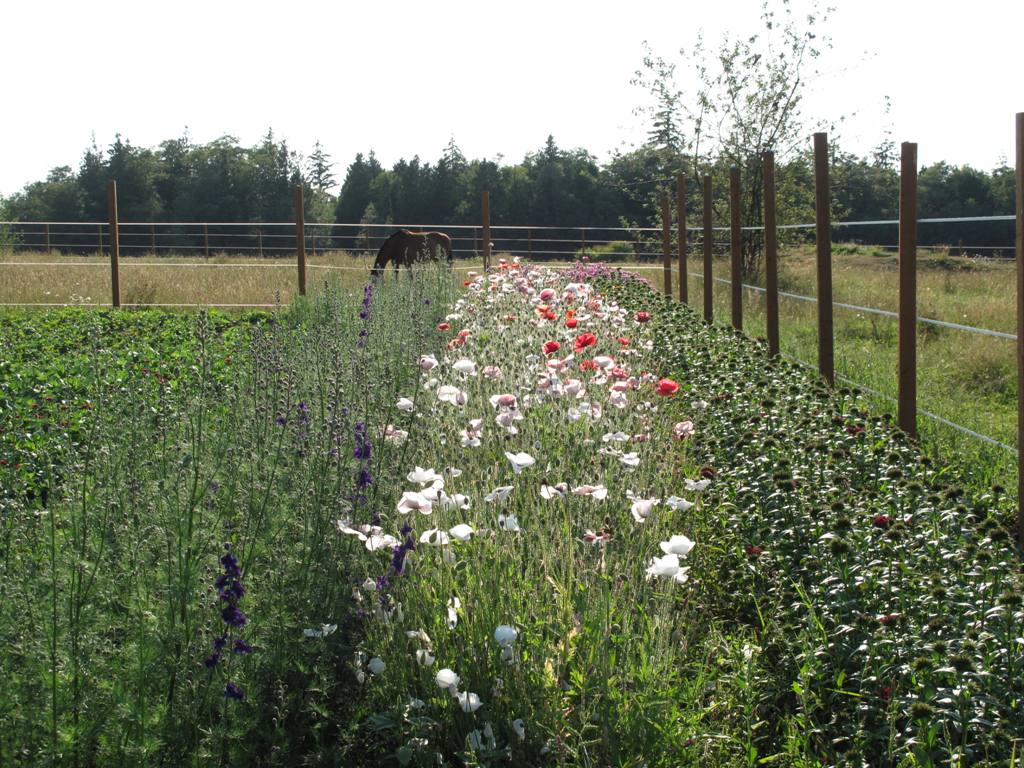
Poppies and other field-grown varieties thrive in neat rows at Everyday Flowers.

Poppies and other field-grown varieties thrive in neat rows at Everyday Flowers. That’s “Sassy” grazing in the background.

Vivian is the daughter of farmers who taught her those intangible skills of building good soil and caring for the land. “I always had a patch of earth where I grew flowers as a child,” she recalls. When Vivian’s own children were small, in 1990, she asked her husband to prepare a large area of ground. She began growing flowers and selling her bouquets at a nearby farm stand. “People would wait there to get my flowers or I’d have standing orders,” Vivian recalls. “Good flowers sell themselves – I’ve never had to advertise.” 

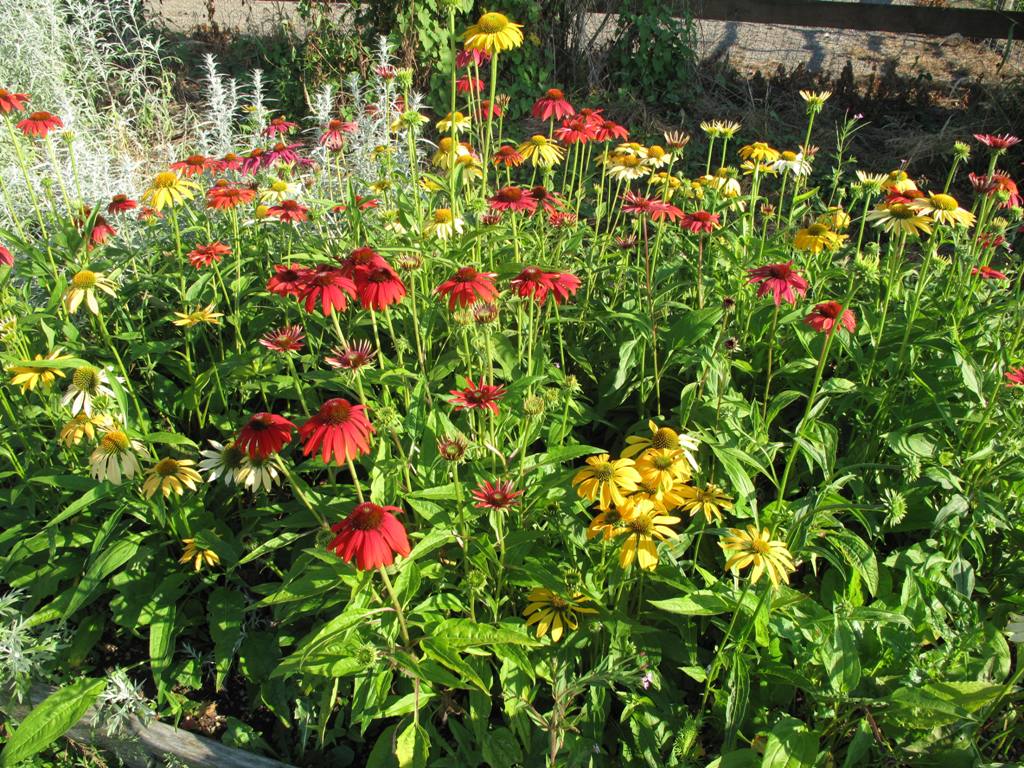
A current obsession: specialty echinaceae varieties.

A current obsession: specialty echinaceae varieties.

Experience has taught Vivian to know which varieties are successful as cut ingredients, which colors are reliable over time and which flowers produce the longest stems. “I’ve always known there were certain types of flowers that lasted better than others, especially if cut at the right time, and treated properly post-harvest,” she explains. “The fact is, I have a choice of what to grow and I choose to grow plants that are going to be happy at my farm and hold well in the vase.” 

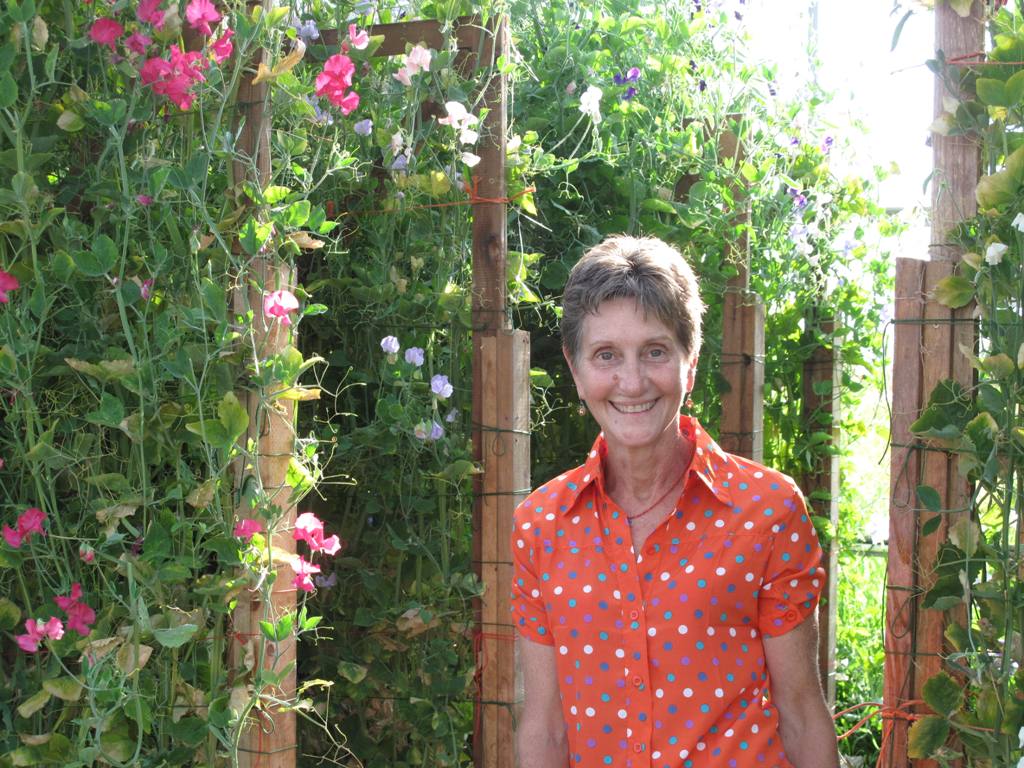
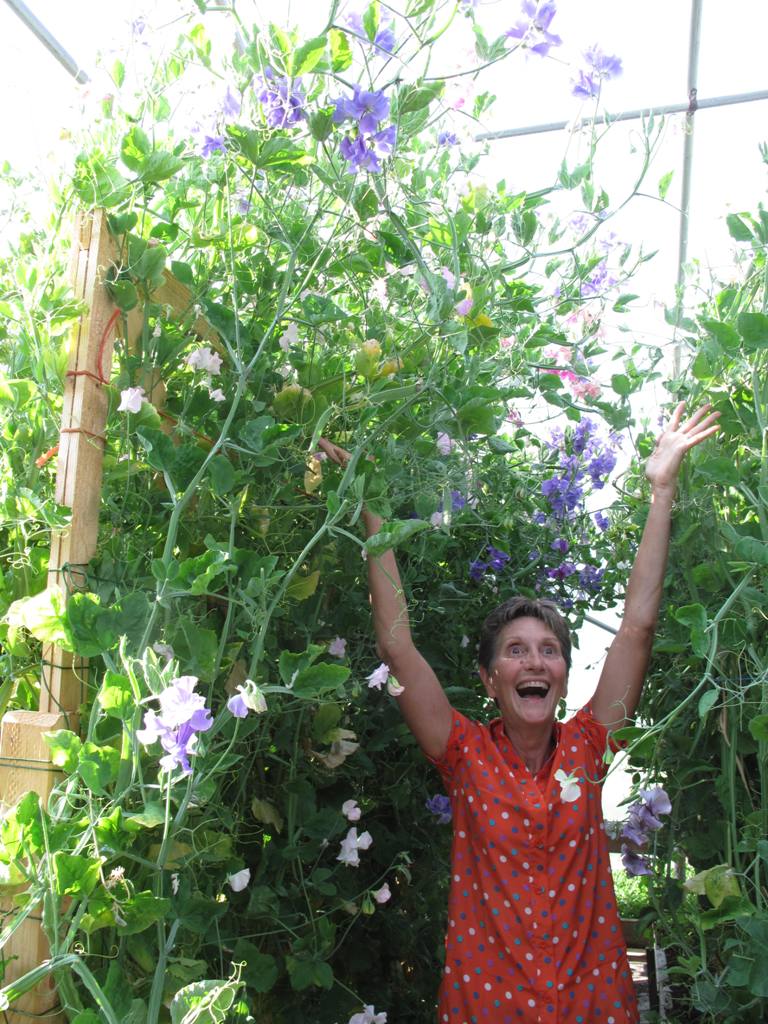
This shot is a little silly, but viv humored me when  I asked her to reach for the top of the sweet pea trellises!

This shot is a little silly, but Viv humored me when I asked her to reach for the top of the sweet pea trellises!

For example, Vivian grows larger quantities of white, pink and yellow lilies because they are more popular with buyers. Similarly, the Karma dahlias have been bred for 18-20 inch-long stems and longer vase life, so she focuses on those. 

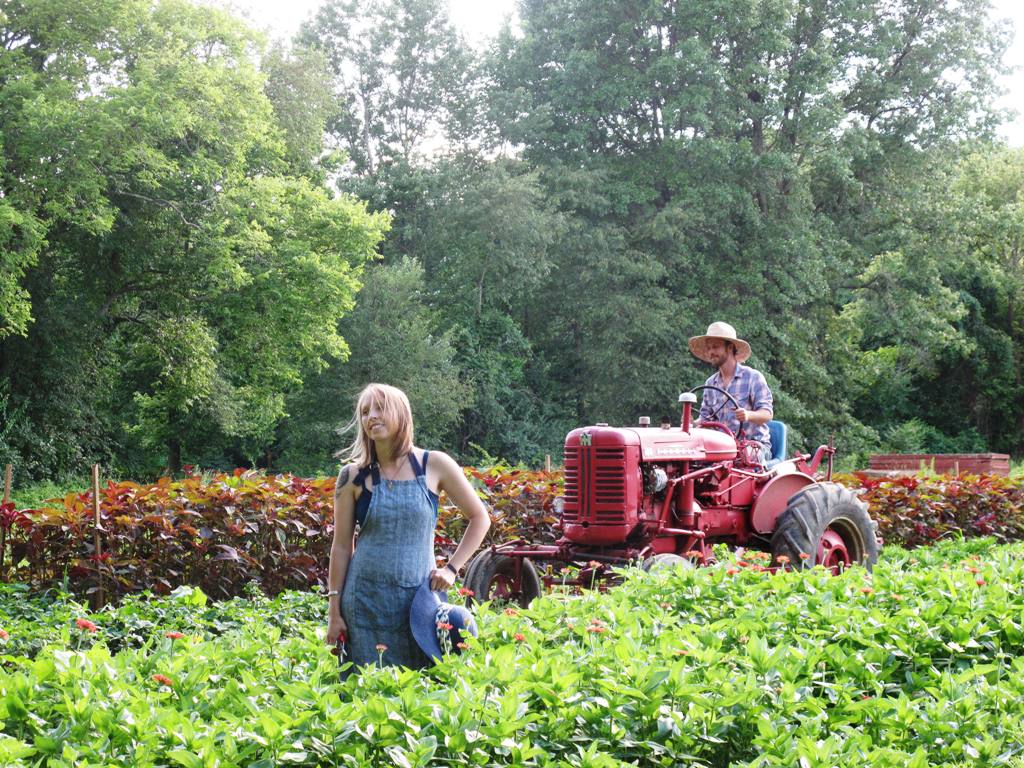
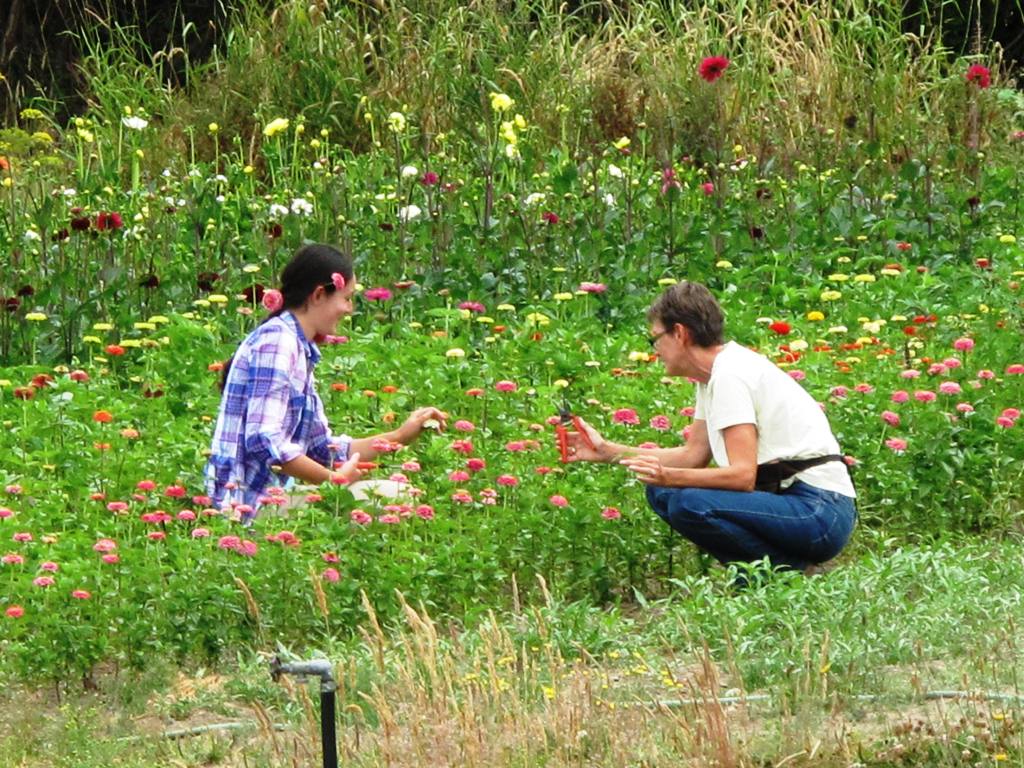
Vivian working with and teaching one of her seasonal workers, Kelly Uhlig. Kelly's mom Pam Uhlig was a horticulture intern at Everyday Flowers this past spring.

Vivian working with and teaching one of her seasonal workers, Kelly Uhlig. Kelly’s mom Pam Uhlig was a horticulture intern at Everyday Flowers this past spring.

Vivian has a good idea of what wedding designers and their clients are looking for and how they use each flower. While she has in the past done some of her own design work, the bottom line is that Vivian is first of all a flower farmer. “Honestly, I just enjoy growing more than anything else!”  

Alicia Schwede of Flirty Fleurs, going a little bloom-crazy during our early morning harvest.

Alicia Schwede of Flirty Fleurs, going a little bloom-crazy during our early morning harvest.


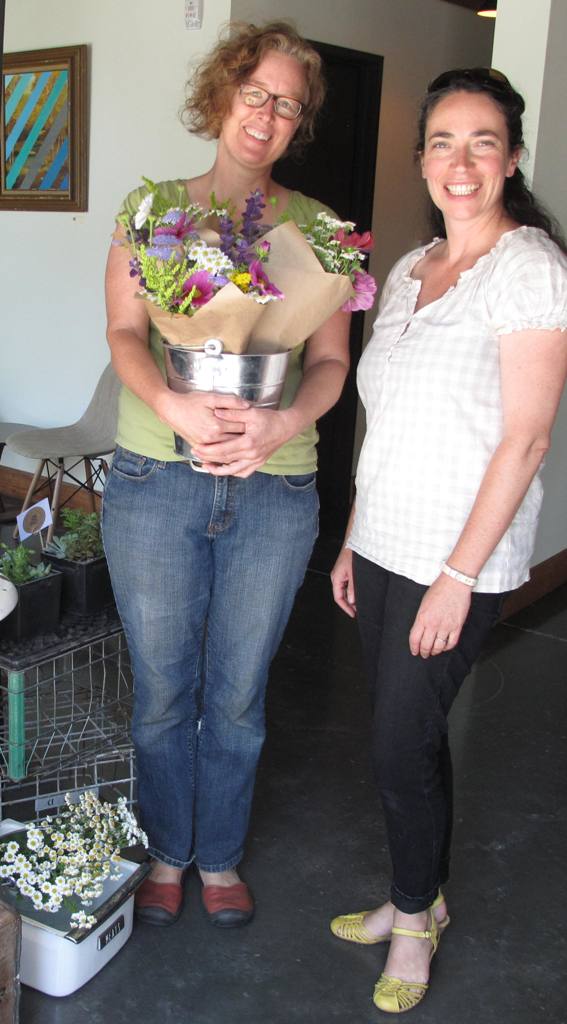
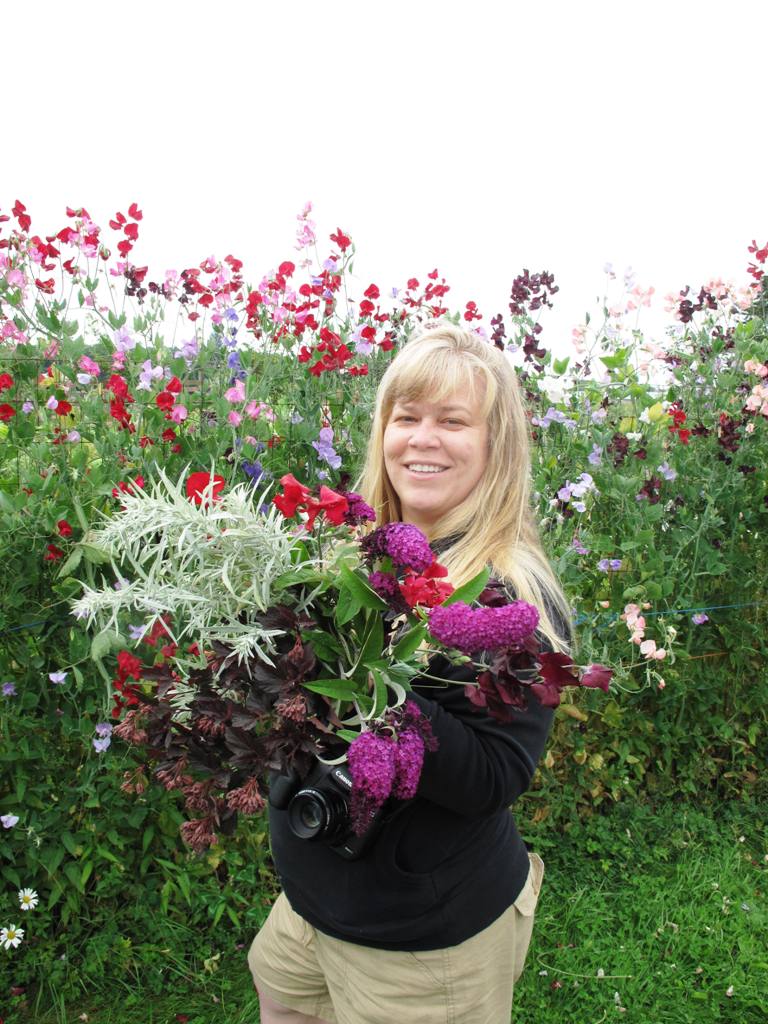
Alicia's gorgeous bouquet using all local and seasonal ingredients from Everyday Flowers.

Alicia’s gorgeous bouquet using all local and seasonal ingredients from Everyday Flowers.

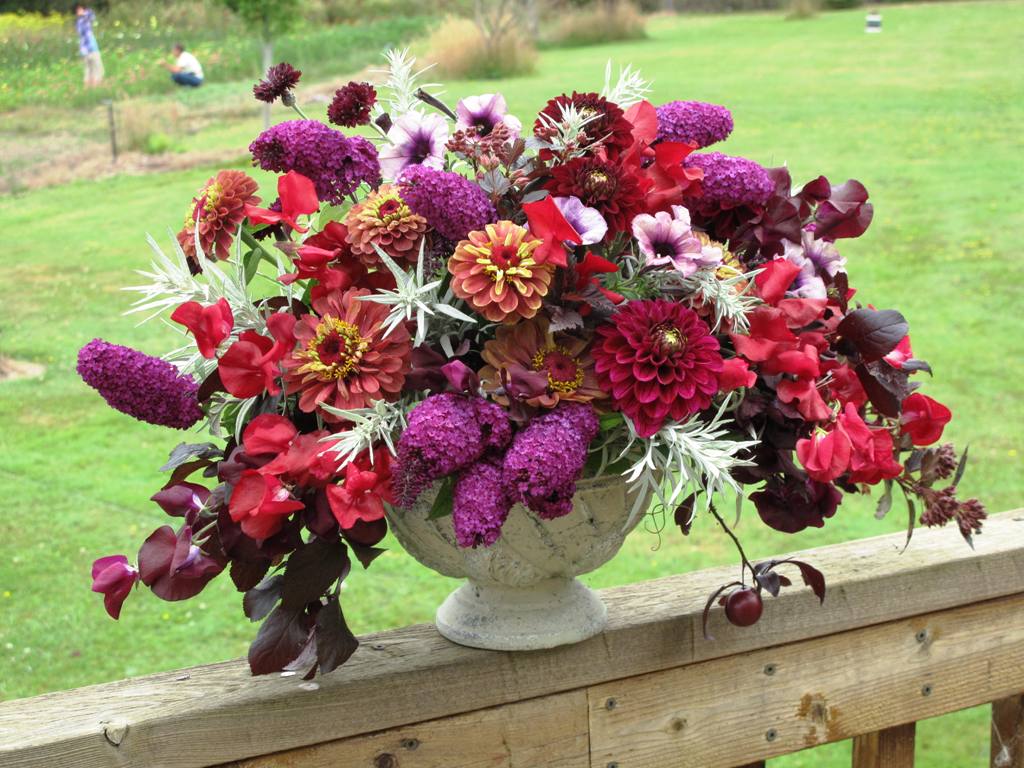
We were lucky to have another guest along for my flower adventure – Alicia Schwede, a floral designer and owner of the Flirty Fleurs blog, joined Vivian and me for dinner and then returned early the following morning, clippers and urn in hand – for a floral designers’ whirlwind session. We loved creating arrangements and bouquets with Vivian’s flowers.

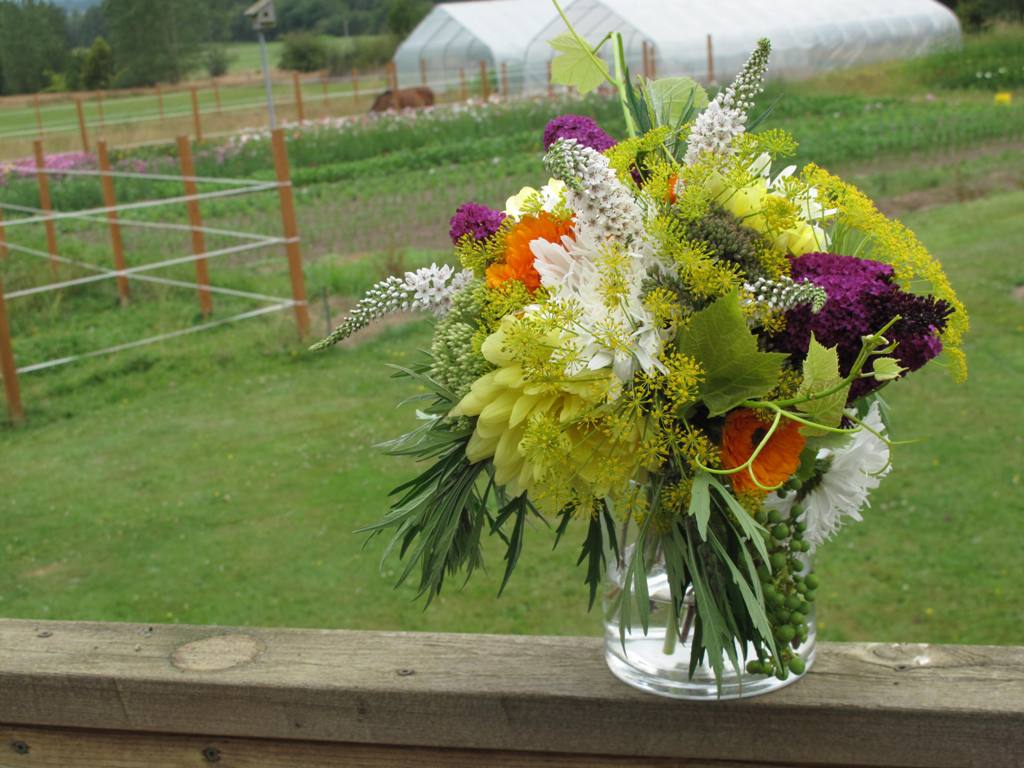
I made this hand-tied bouquet from yummy elements, including a cluster of unripe grapes.

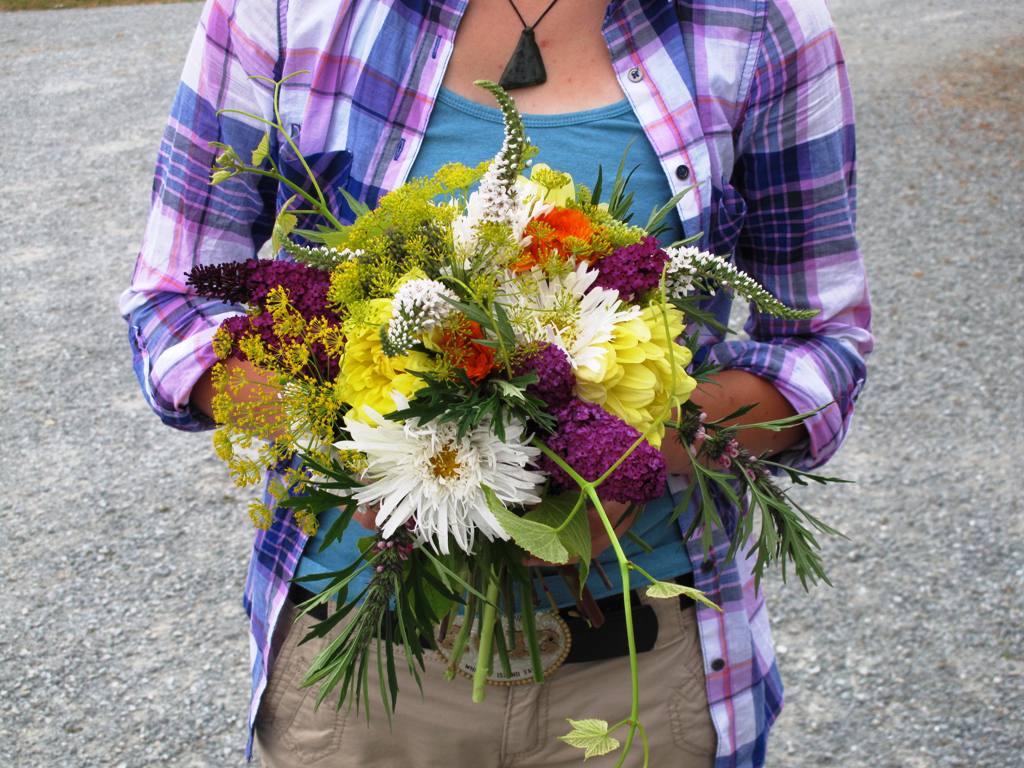
I made this hand-tied bouquet from yummy elements, including dahlias, budleia, golden dill, calendula, Shasta daisies, leonitis, gooseneck loosestrife, and a cluster of unripe grapes and grape tendrils.


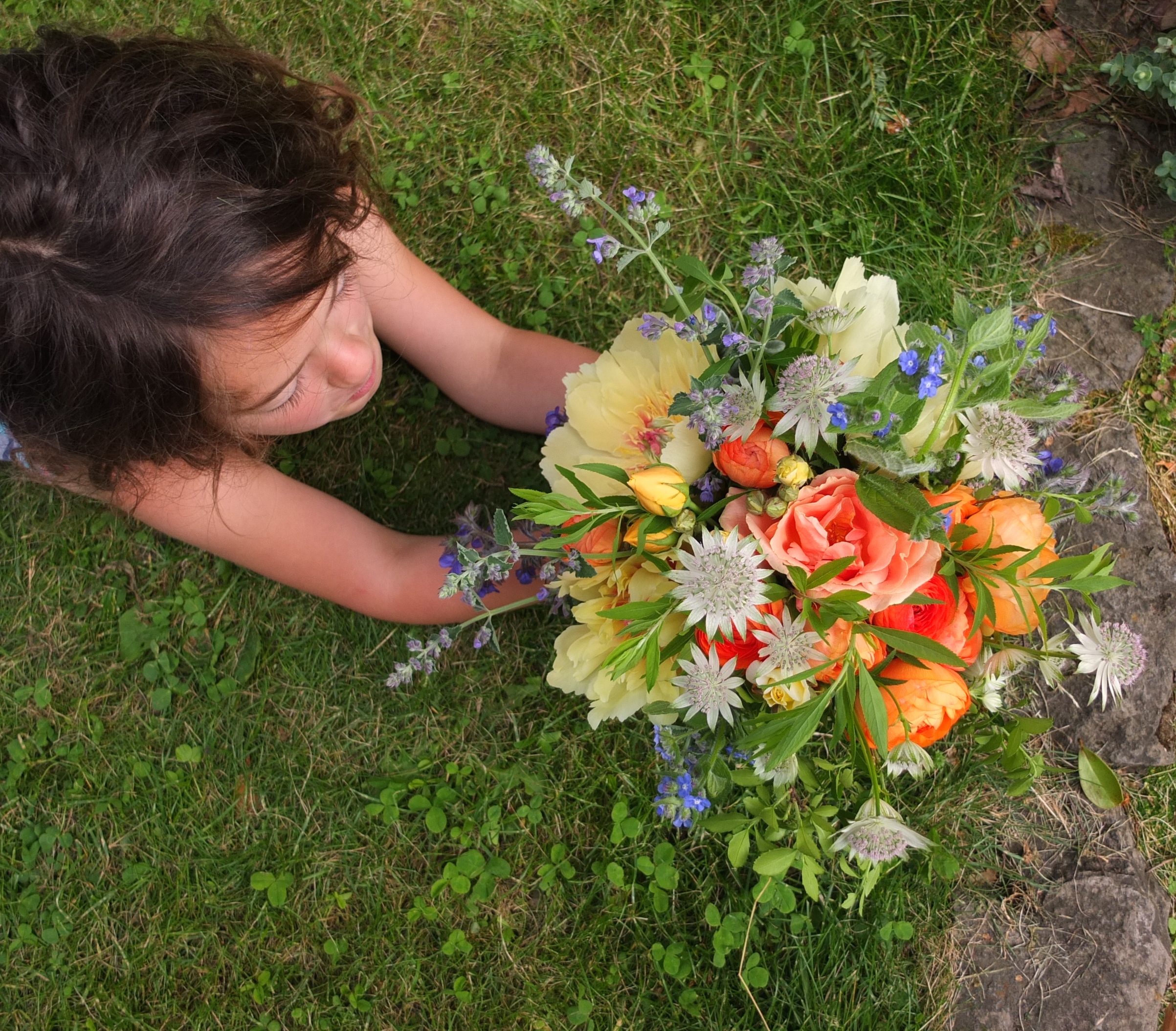
Kelly indulged to hold my bouquet for a different perspective.

Kelly indulged to hold my bouquet for a different perspective.

Everyday Flowers uses sustainable growing practices and the farm is Salmon Safe certified. No herbicides are used on the farm and on the rare instance when insecticides are used, they are OMRI-approved (Organic Materials Review Institute) products, Vivian explains. 

“I have a good beneficial insect population, including bees and ladybugs and I grow cover crops to suppress weeds and add more organic matter back in the soil,” Vivian explains. “I also have ‘Sassy’ my horse who does her share by producing great compost.” 

Thanks to listeners like you, this podcast has been downloaded more than 16,000 times. I truly appreciate the guests, listeners and sponsors who have supported the Slow Flowers Podcast with Debra Prinzing! Together, we’re changing the broken floral industry for the better!!

If you like what you hear, please consider logging onto Itunes and posting a listener review.

Until next week please join me in putting more American grown flowers on the table, one vase at a time. 

The Slow Flowers Podcast is engineered and edited by Hannah Holtgeerts and Andrew Wheatley. Learn more about their work at hhcreates.net.

SLOW FLOWERS Podcast: Floral and Event designer McKenzie Powell (Episode 150)

Wednesday, July 16th, 2014
A McKenzie Powell floral bouquet, photographed by Jasmine Star.

A McKenzie Powell floral bouquet, photographed by Jasmine Star.

I’ve experienced real joy in producing and hosting the Slow Flowers Podcast this past year.

You could say it’s purely selfish to have a personal, 30-minute conversation with an influential and interesting leader in the American floral industry, right?

Yet I am so happy to invite you to share in our dialogue; doing so has allowed flower farmers, floral designers and flower sellers to reach so many others by simply sharing their personal stories. And I sincerely hope that listeners who care about the source, seasonality and growing methods of the flowers they enjoy in their lives are inspired by the guests I’ve been able to feature this past year.  

MPD-logo-newToday’s delightful guest is McKenzie Powell, a young floral artist and event producer based in Seattle. I’ve been wanting to interview McKenzie for a couple of years. And too often, when we run into one another at the flower market, we promise, “let’s get together for coffee, okay?”  

This past week, we finally made that happen. McKenzie’s star is on the ascent. In just four years since she launched her studio, the work of this talented designer has been showcased twice in Martha Stewart Weddings, as well as in local bridal publications in our area like Seattle Bride and Seattle Met Bride & Groom. After recording our interview, she also sent me this link to a 2013 project of hers that landed on Martha Stewart’s Real Weddings’ blog. 

McKenzie Powell with one of her beautiful arrangements (c) Belathee Photography.

McKenzie Powell with one of her beautiful arrangements (c) Belathee Photography.

She’s also been showcased on a gazillion websites, including but not limited to: Junebug, 100 Layer Cake, Coco & Kelly, Elizabeth Ann Designs, Style me Pretty, Once Wed, Apartment Therapy, Wedding Wire, and others.

McKenzie says this about her business: We are a boutique and floral event design studio located in Seattle, Washington, and available for travel. We bring flair, elegance, and creativity to each and every event – from an intimate dinner party to a grand affair. Our goal is to learn your story, your style, your vision – then design an event unique to you and incredibly beautiful. 

A wedding tablescape, all-white and lovely.

A wedding tablescape, all-white and lovely. (c) Bryce Covey

McKenzie was raised among gardens and trained as a graphic designer. She brings a broad appreciation and knowledge of design to the floral and event industry, a niche that combines so much of what she enjoys and finds inspiring. Interiors, flowers, fashion, food, travel – they all seem to play an important part in a well-crafted and thoughtful event. 

A Summer Bouquet from McKenzie's Seattle Garden.

A Summer Bouquet from McKenzie’s Seattle Garden.

After two years working for an angel investment firm, planning large-scale corporate events, she launched McKenzie Powell Floral & Event Design, quickly earning a reputation for her lush, romantic designs. While her floral work may be what she is most notably known for, she encourages her clients to think beyond the centerpiece. Using an approach that considers the entire table, the entire environment, McKenzie creates truly beautiful events. 

Her perfect lazy day is spent lakeside at her family’s cabin, in the company of a good book, a fresh grapefruit cocktail, and her handsome husband. 

You can find and follow McKenzie at these places:

McKenzie on Facebook

McKenzie on Instagram

McKenzie on Twitter

McKenzie on Pinterest

We are coming up on a one year anniversary next week. I have a very special guest who is going to share a big announcement about American Grown Flowers, so be sure to tune in.

Last week, thanks to listeners like you, this podcast hit the 15,000 download mark and I couldn’t be more grateful. I truly appreciate the guests, listeners and sponsors who have supported the Slow Flowers Podcast with Debra Prinzing!!! Together, we’re changing the broken floral industry for the better!!

If you like what you hear, please consider logging onto Itunes and posting a listener review.

Until next week please join me in putting more American grown flowers on the table, one vase at a time. 

The slow flowers podcast is engineered and edited by Hannah Holtgeerts and Andrew Wheatley. Learn more about their work at hhcreates.net.

SLOW FLOWERS Podcast: A new brand of floral entrepreneur, Bess Wyrick of Celadon & Celery (Episode 149)

Wednesday, July 9th, 2014
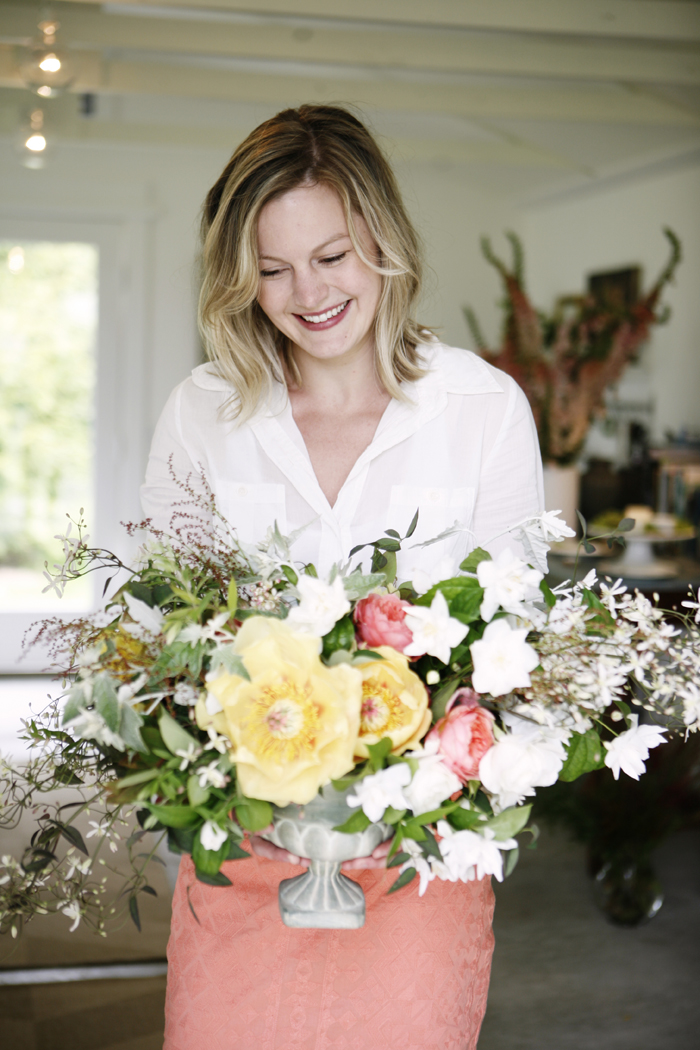
Bess Wyrick of Celadon & Celery, wearing one of her beautiful floral crowns (c) Jana Williams

Bess Wyrick of Celadon & Celery, wearing one of her beautiful floral crowns (c) Jana Williams

CC_Logo_final.ai-page-001Today’s guest is Bess Wyrick, founder and creative director of Celadon & Celery, a floral design and events studio based in New York City and Los Angeles. 
I first learned of Bess when researching florists to possibly feature in The 50 Mile Bouquet – I wanted to document the emerging business model of floral designers who actively promoted green practices, such as using seasonal and local flowers, embracing earth-friendly products and promoting anti-mass market style. 

I later learned that this category is called “eco-couture,” and it’s quite possible that Bess coined the phrase herself.


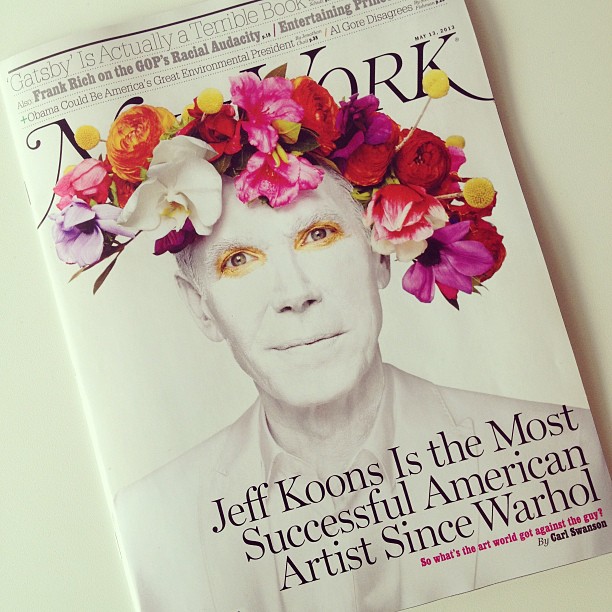
May 5, 2013 cover of New York Magazine, featuring Bess Wyrick's floral crown on the head of artist Jeffrey Koons.

May 5, 2013 cover of New York Magazine, featuring Bess Wyrick’s floral crown on the head of artist Jeffrey Koons.

In 2009, Bess’s Celadon & Celery was featured in a New York Times blog post about “organic flower” sourcing. The writer cited Bess’s policy of sourcing flowers within a 200-mile radius of NYC and also noted that when seasonal flowers aren’t available, she purchased Fair Trade, Veriflora and USDA organic flowers from certified vendors. 

The following year, in 2010, BizBash, a web site devoted to event planning, published a piece about Celadon & Celery that stated: “. . . sustainability is important to Wyrick. She composts, grows many of her own plants in her Chelsea studio, sources flowers from local growers or certified organic suppliers, and scavenges for materials to repurpose.” 

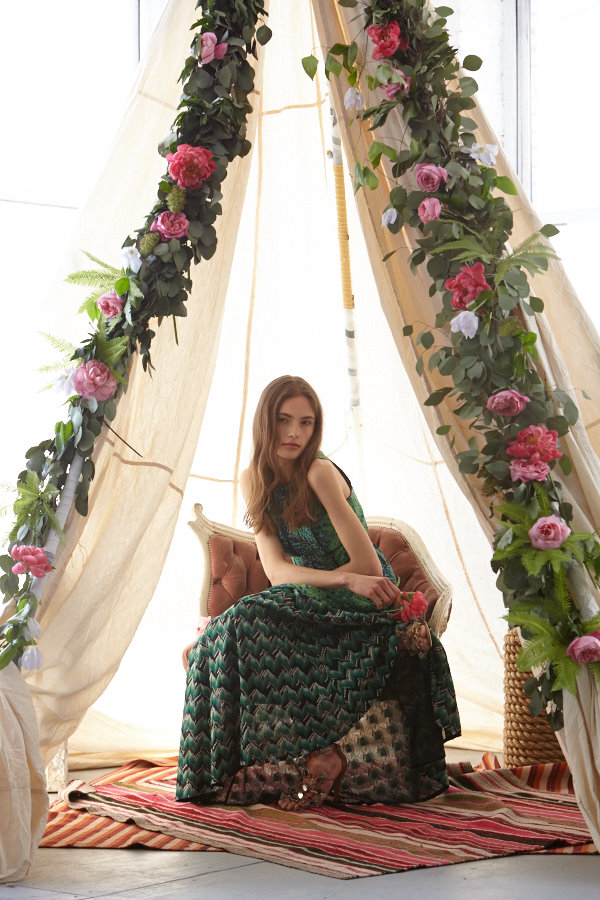
Bess shared this photo of a floral teepee, a recent installation.

Bess shared this photo of a floral teepee, a recent installation.

To read about that philosophy today – in 2015 – doesn’t seem all that unusual. But five years ago, it was rare. Believe me, I counted on one hand the number of designers proactively taking the green approach. I saved that article in my folder of inspiring designers. 

So how cool was it that when Celadon & Celery brought its floral design workshop series to Los Angeles, Bess’s publicist pitched me to write the story. 

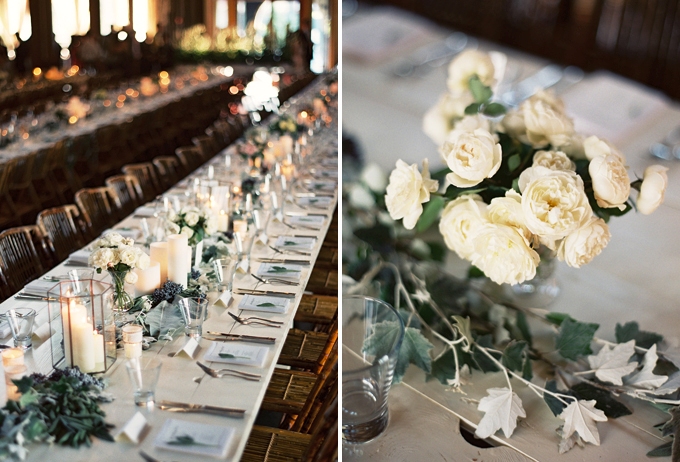
Local flowers in a beautiful palette, designed by Celadon & Celery

Local flowers in a beautiful palette, designed by Celadon & Celery 

I was definitely intrigued. Intimate hands-on floral design workshops had hit the East Coast, and the New York Times had run a piece in 2010 about The Little Flower School of Brooklyn (and owners Sarah Ryhanen and Nicolette Owen, two recent guests of this podcast). I’d even led a few seasonal floral workshops for Ravenna Gardens in Seattle in 2010, but I hadn’t seen much like this happening elsewhere on the West Coast. 

My editor at the Los Angeles Times agreed, and I did a short Q&A interview with Bess about the workshop series in fall 2011. At the time, Celadon & Celery was charging $300 for its two-hour sustainable-design workshops at Bess’s loft-studio in New York’s Chelsea Flower District. For the Los Angeles expansion, she dropped the tuition to $125 and used social media channels to promote the classes. 

Overwhelmed by the positive response, Bess rented a photography studio in downtown Los Angeles and turned it into a classroom. She hired a few local freelancers to help and ran three classes a day for three weeks. “In that time we taught floral design to more than 800 people,” Bess marvels.

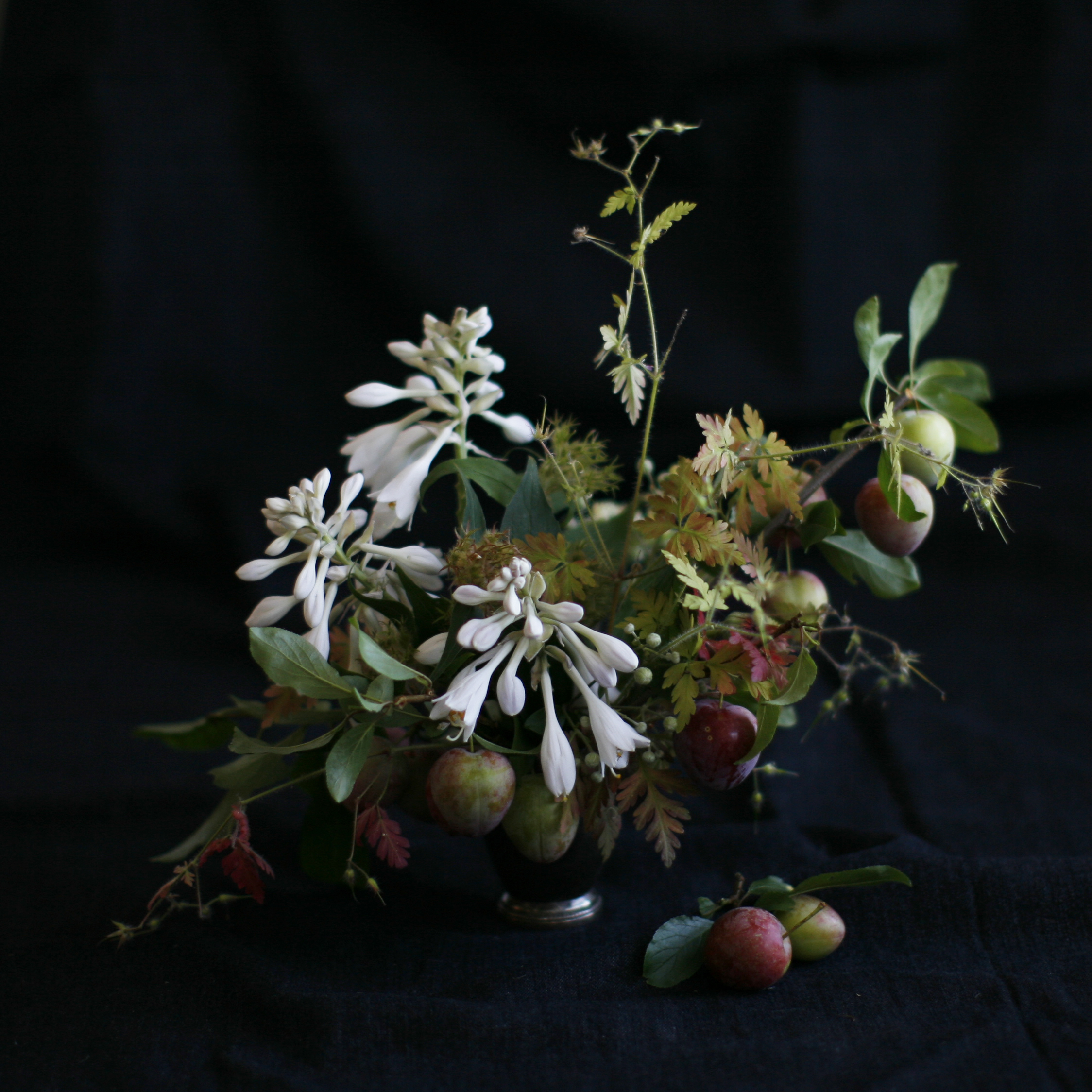
bliss! a Celadon & Celery seasonal creation

bliss! a Celadon & Celery seasonal creation

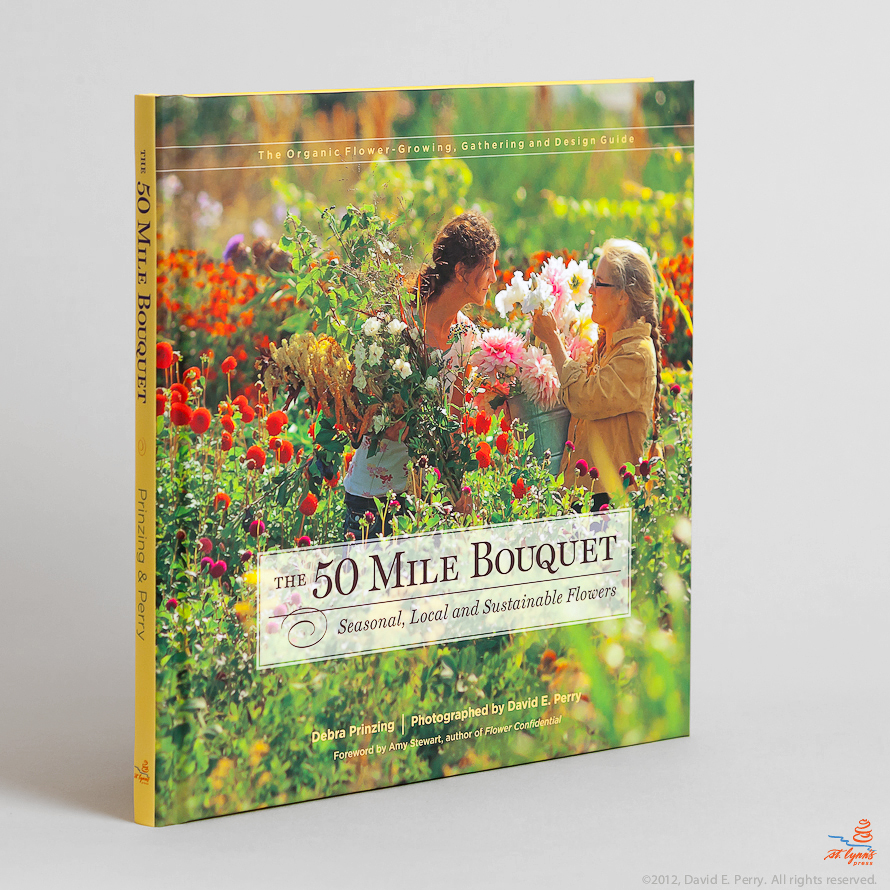
50MileBouquet_bookI was able to witness the excitement in person and cover it for a chapter in The 50 Mile Bouquet. In the book’s pages, you can read about the explosion of DIY interest in floral design.

In that piece, Bess offered this observation: “The word ‘eco’ has a bad reputation implying something weedy,” Bess says. “But we’re creating flowers that are sophisticated, chic and tailored. ” You can read the entire chapter by clicking this link.

I’ve connected with Bess many times since the publication of The 50 Mile Bouquet, in both New York and Los Angeles, depending on where our travels intersect. She is a generous supporter of the new Slowflowers.com and you can find Celadon & Celery featured in the online directory under studio florists and weddings/events.

I’ve been wanting to have her on as a guest and I’m delighted to include our conversation here today. Please enjoy our discussion about how floral design – and this designer in particular – has evolved to encompass event production, conceptual storytelling and artistic installations.

a singular bouquet.

a singular bouquet.

You’ll learn that floral design can be as multidisciplinary and multidimensional as you choose it to be. And, according to Bess, florists who advocate for their vendors, the family flower farm in particular, have an edge. She says: “I like to sell the fact that I’m a luxury brand and luxury brands work with really small artisans and that’s really important because you want to make sure that your flower farm vendors keep doing what they’re doing and creating unique and unusual flowers that the higher luxury market will pay for.”

(c) Jana WIlliams

(c) Jana WIlliams

I love how generous and frank she is and a few more of her interview comments really resonated:

For one thing, volunteering on flower farms has educated Bess to understand that “it’s not okay for clients to negotiate the cost of flowers because it is back-breaking work and there aren’t enough people who know how to grow flowers.”

And second: This quote is powerful and I hope it more than a few people in the floral industry to rethink their practices: “I don’t think that any florist in California should be importing flowers at all. That’s just being lazy.”

(c) Jana Williams

(c) Jana Williams

Ahem. Thank you, Bess, for stating the obvious. You’ve lent a lot of credibility to the Slow Flowers Movement with that proclamation!

Here are links to all of Bess’s social outlets:

Life with Bess Blog

Facebook

Twitter

Pinterest

Flickr

Instagram

And Thanks to listeners like you, this podcast has been downloaded nearly 15,000 times.

If you like what you hear, please consider logging onto Itunes and posting a listener review.

Until next week please join me in putting more American grown flowers on the table, one vase at a time. 

The Slow Flowers podcast is engineered and edited by Hannah Holtgeerts and Andrew Wheatley. Learn more about their work at hhcreates.net.

A July 4th Homegrown Bouquet, from an American flower farm

Friday, July 4th, 2014
Just picked, from the cutting garden and fields at Rose Story Farm in Carpinteria, CA

Just picked, from the cutting garden and fields at Rose Story Farm in Carpinteria, CA

Composing this arrangement for the July 4th holiday is my reward for 48 hours of hard work.

I’ve been here in Southern California on assignment for Country Gardens magazine and Deck, Patio & Outdoor Rooms magazine.

I worked with Michael Garland, an LA-based photographer, to capture two wonderful garden stories that you’ll see in the pages of these publications next year (summer 2015). 

Today, after wrapping up at Rose Story Farm in Carpinteria, which has been the subject of past blogs and a podcast interview with founder Danielle Hahn, I got to play with the extra flowers from our photo shoot.

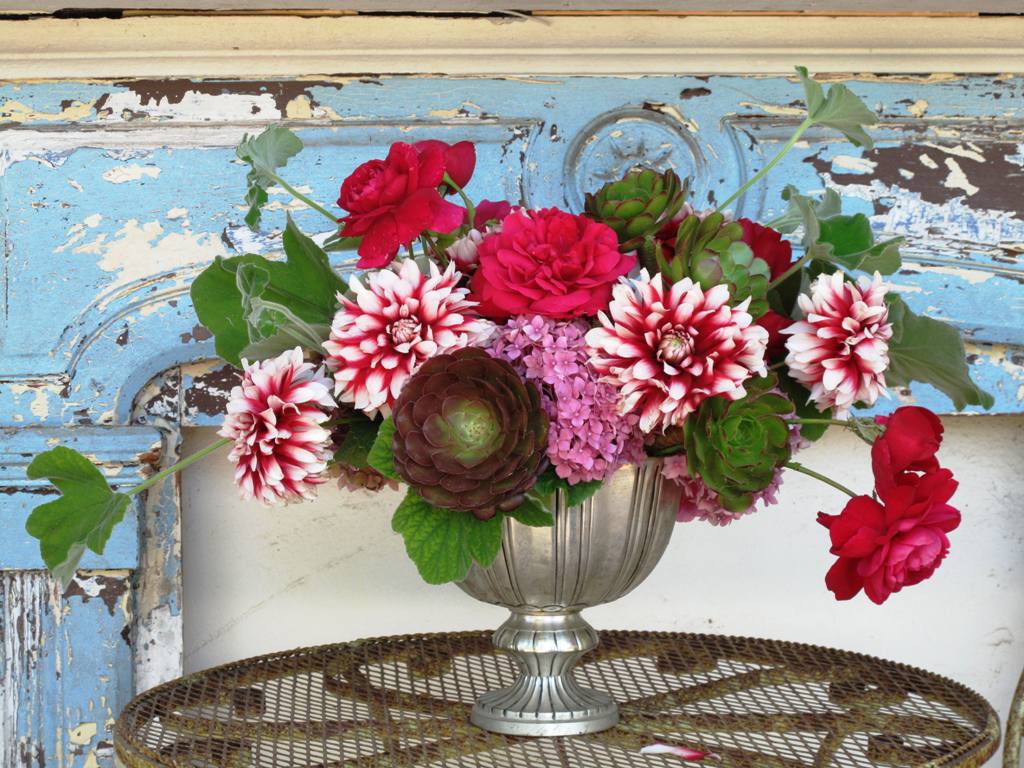
Everything that grows here is lush, and organic, and seasonal and simply devine! Here’s what my flower playtime yielded. Only in Santa Barbara area do the dahlias, roses, hydrangaes and succulents look at their peak on the same day.

If you have to work on a holiday, let it be July 4th and let it be at a American flower farm, right?

Make a Bouquet: Step-by-Step

Wednesday, June 25th, 2014
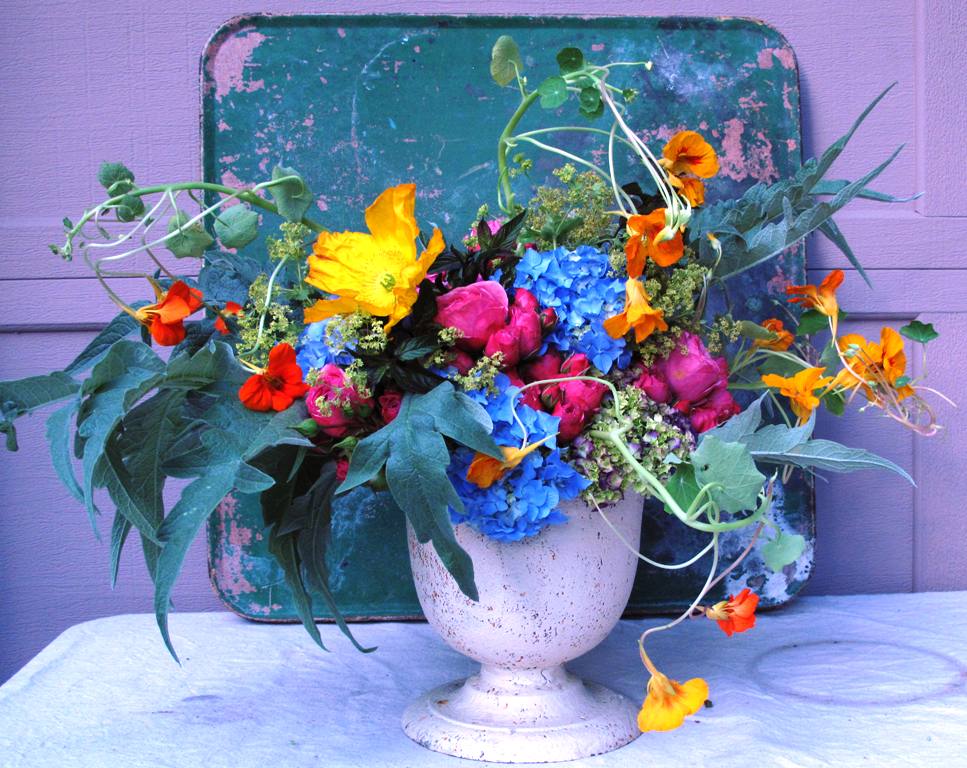
June Bouquet with ornamentals and edibles.

June Bouquet with ornamentals and edibles.

Last weekend I was involved with the Hardy Plant Study Weekend as a speaker and a participant. This is an annual event, held every June. I rotates between Washington, Oregon and British Columbia, and this year was hosted and produced by the Northwest Perennial Alliance.

I was asked to present a floral design demonstration at Saturday night’s gala, held at Wells Medina Nursery. What could be better than attending a fun dress-up party with the theme “50 Shades of Green” (get it?). Surrounded by horticulture friends old and new, many of them who wore awesome green outfits, I demonstrated “The Marriage of Ornamentals and Edibles in the Vase.”

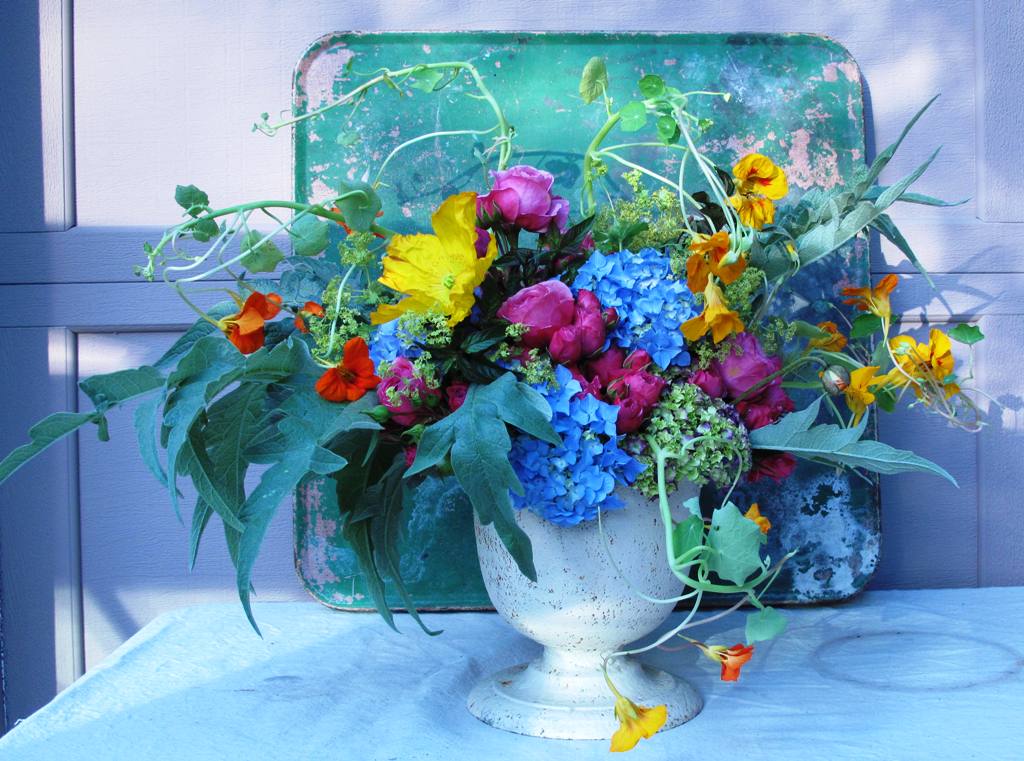
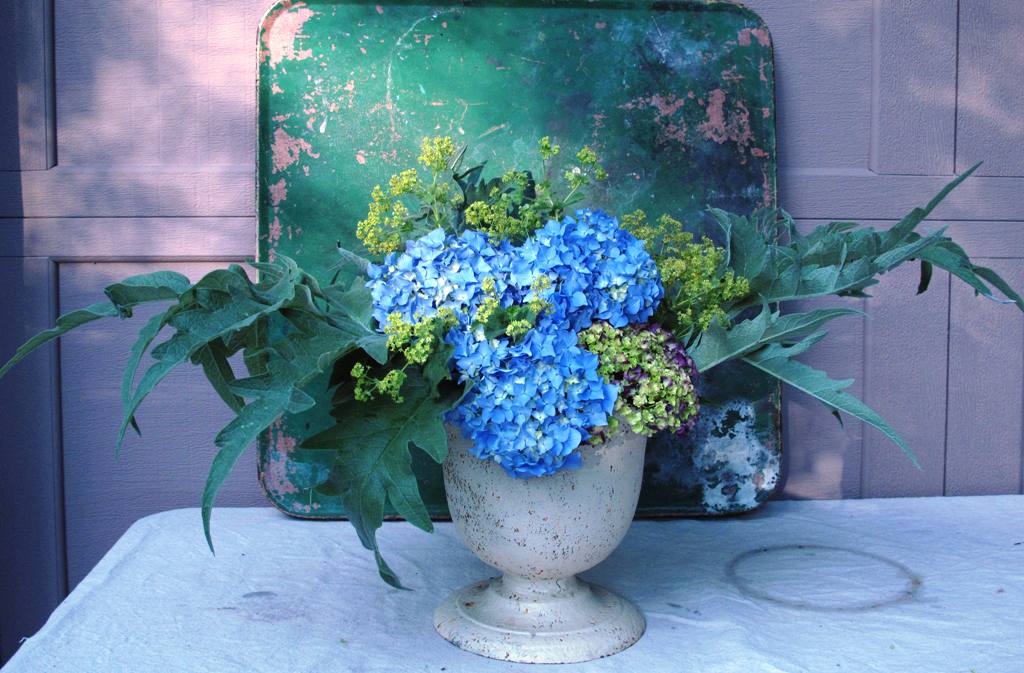
Here is a recreation of that arrangement, using most of the same flowers that I included in the first arrangement. I used a sizeable cast-iron urn (7 inches wide x 9 inches high) and filled it with a 5-inch vintage flower frog (cage style). NO FOAM, people! It’s not necessary and it actually shortens the vase life of flowers like these.

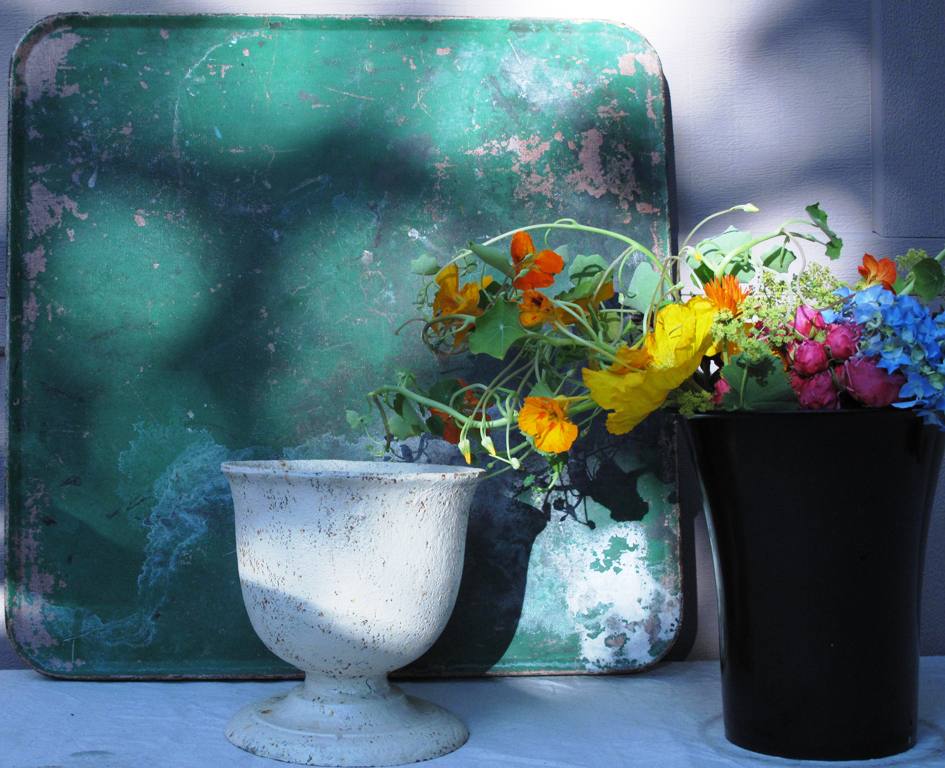
Step One: Choose an awesome container. This image gives you a good idea of the vessel's shape and scale.

Step One: Choose an awesome container. This image gives you a good idea of the vessel’s shape and scale.


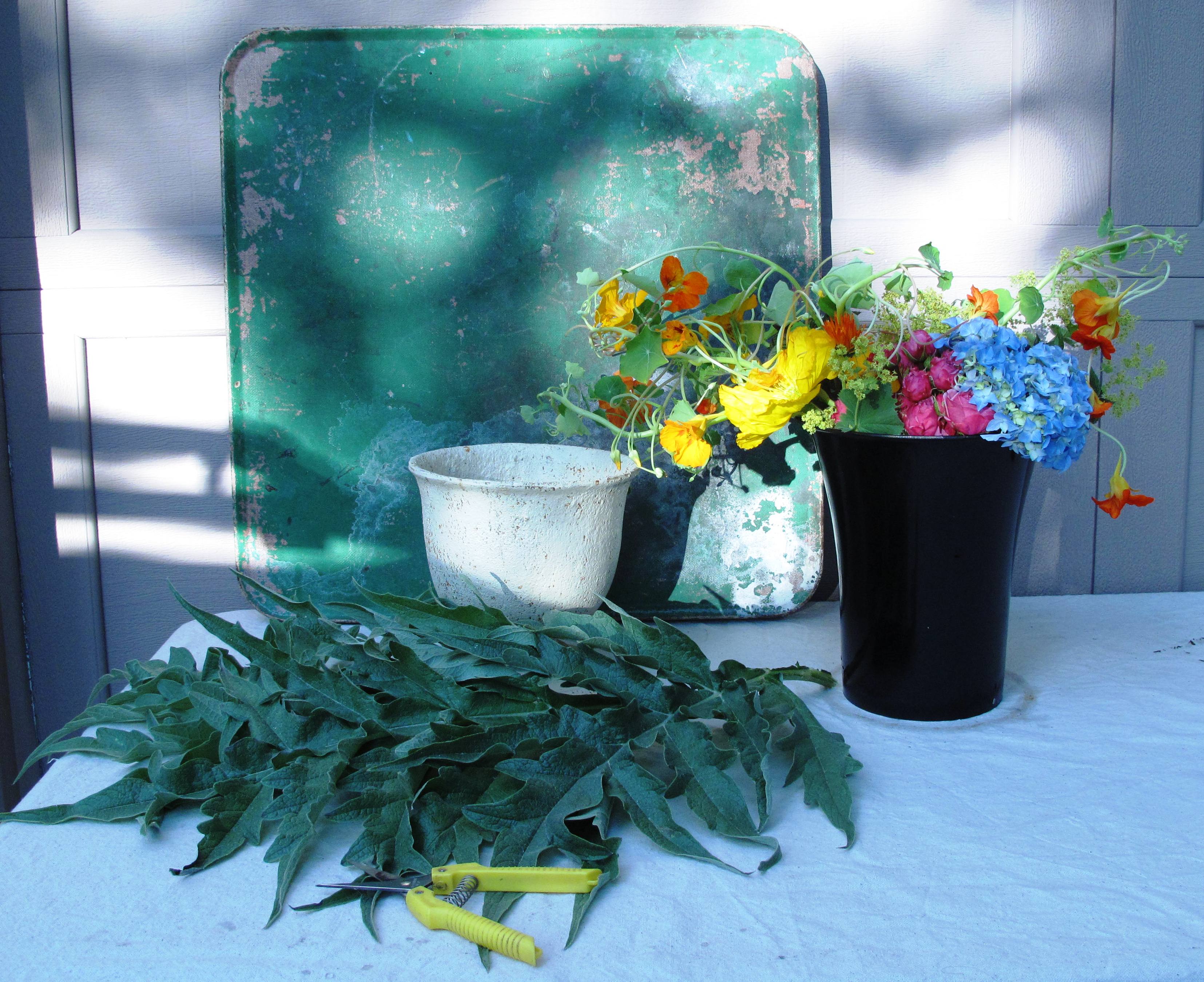
Gather together your foliage. Start with something large and dramatic.  Artichoke/Cardoon foliage is a great summer element- straight from the veggie garden.

Gather together your foliage. Start with something large and dramatic. Artichoke/Cardoon foliage is a great summer element- straight from the veggie garden.


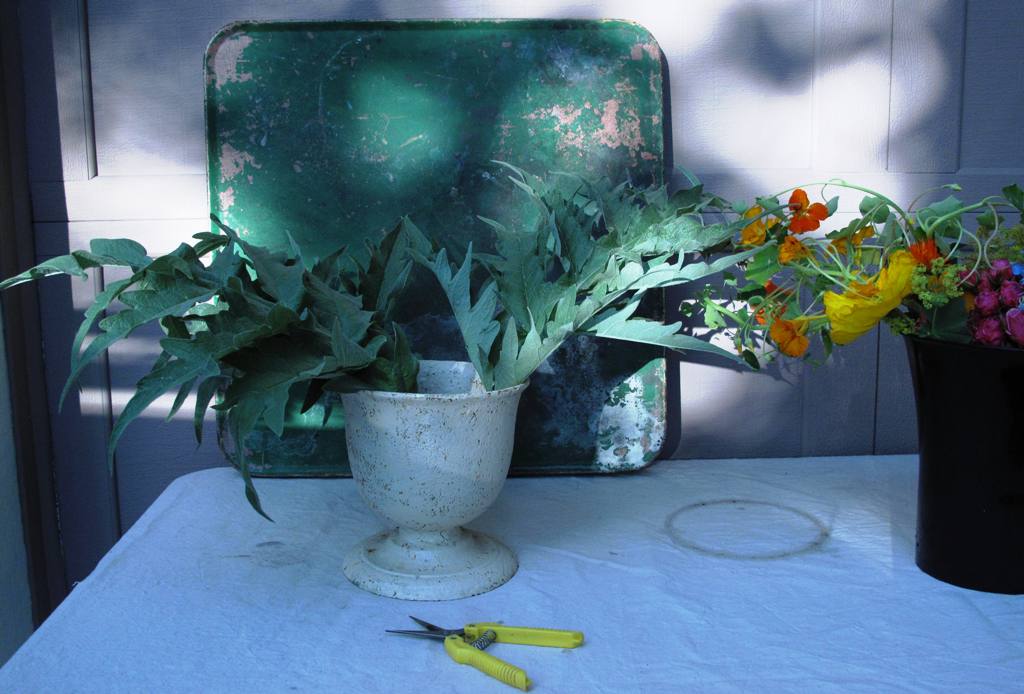
Step Two: Add the largest foliage first. I placed three leaves asymmetrically.

Step Two: Add the largest foliage first. I placed three leaves asymmetrically.


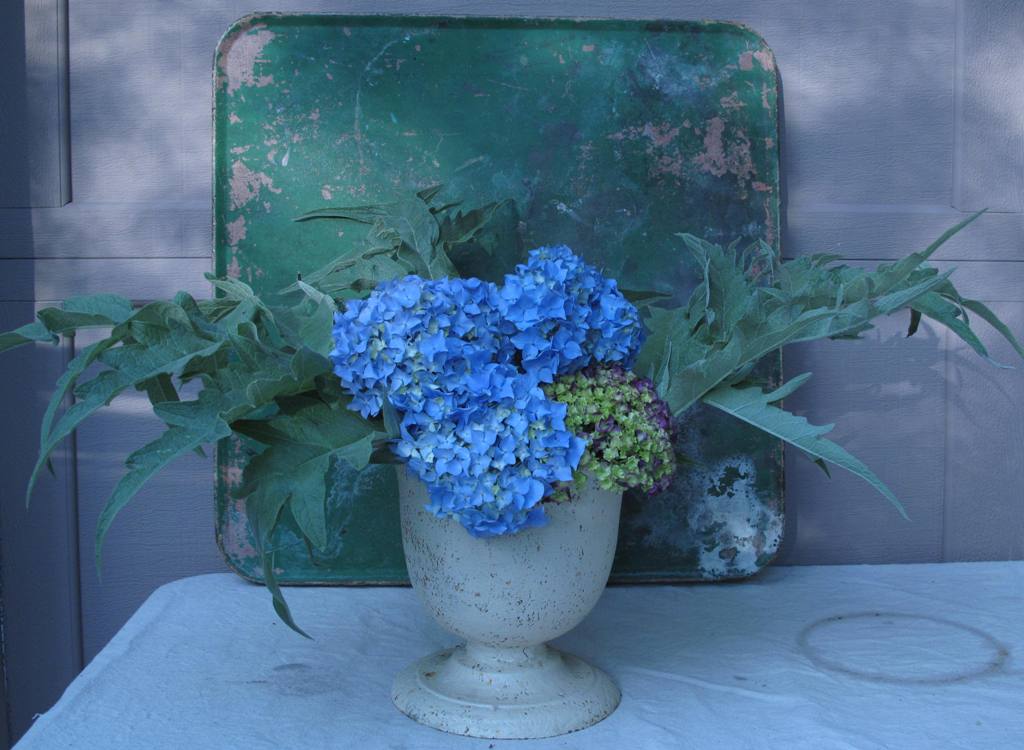
Step Three: Add the larger textural elements, like hydrangeas - straight from my garden.

Step Three: Add the larger textural elements, like hydrangeas – straight from my garden.


Step Four: Add more texture for contrast. Here, I added ladies mantle - lime green and super fluffy. Also straight from my garden.

Step Four: Add more texture for contrast. Here, I added ladies mantle – lime green and super fluffy. Also straight from my garden.


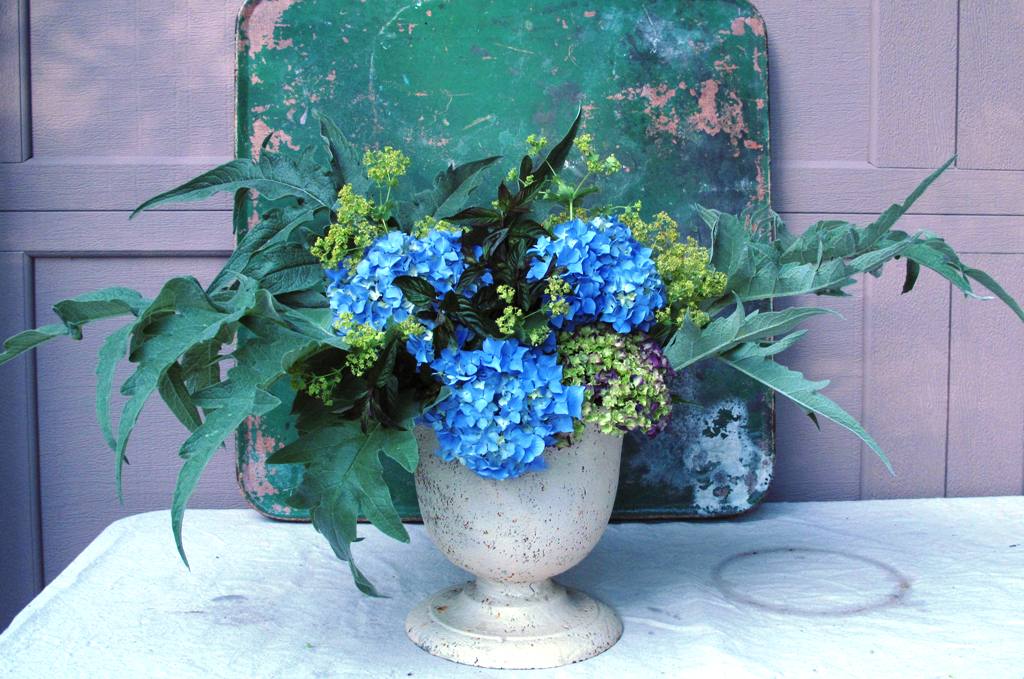
Step Five: Add smaller, darker, glossier foliage. Like sprigs of mint. They smell fantastic!

Step Five: Add smaller, darker, glossier foliage. Like sprigs of mint. They smell fantastic!


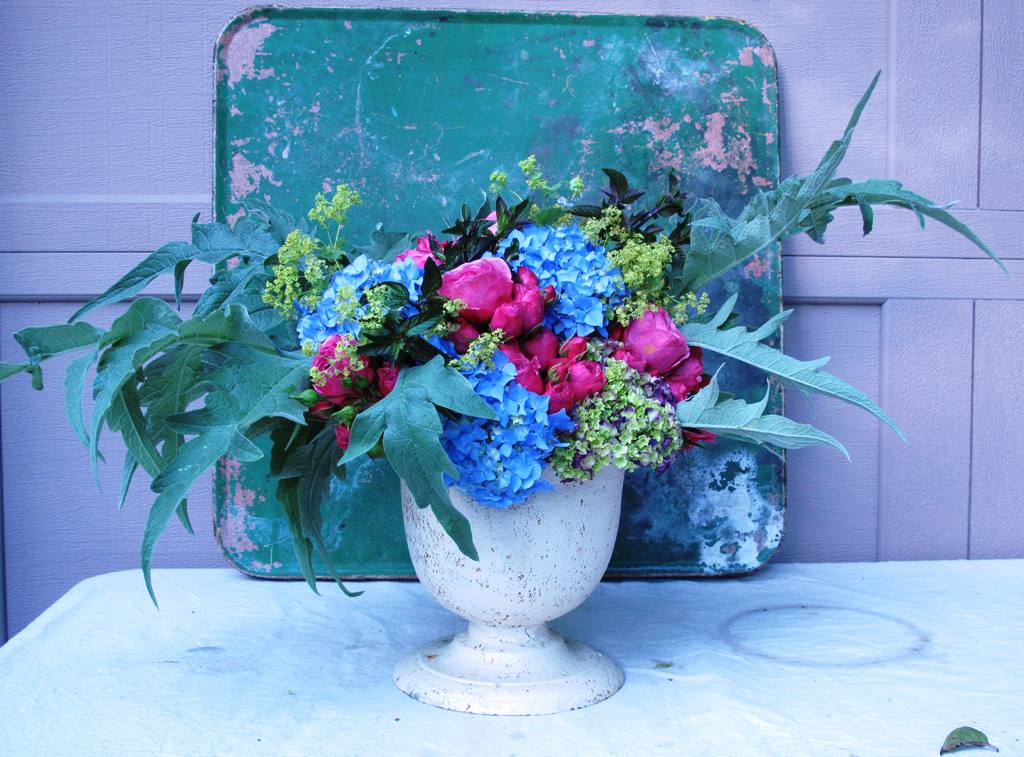
Step Six: Now, the diva flowers. Like these locally-grown garden roses.

Step Six: Now, the diva flowers. Like these locally-grown garden roses.


Step Seven: The final "viney" elements! Love the nasturtium. It lasts surprisingly long in the vase. PS, one vivid yellow poppy!

Step Seven: The final “viney” elements! Love the nasturtium. It lasts surprisingly long in the vase. PS, one vivid yellow poppy!

How do you keep this looking fresh for an entire week? Place this urn down inside the sink and run water inside (using the nozzle on the sink faucet). Give this vase a drink for 2-3 minutes and let the excess water spill over the edge. You’ll basically replace old, clouded water with fresh, clean water!

SLOW FLOWERS Podcast: Media entrepreneur Margot Shaw, creator of flower magazine (Episode 147)

Wednesday, June 25th, 2014

Before we get started with today’s awesome guest, I’ve got a little self-promotion to share. The Slow Flowers “brand” is a lovely bouquet with several unique blooms in the vase.

PodcastLogoThere is this podcast, of course, and we’re coming up on our one-year anniversary on July 23rd (we’ll have an exciting announcement from a special guest to celebrate our 52nd episode!).

 Web

And there is the Slowflowers.com online directory, which is growing every day – up to 325 vendors on the site as of this week.

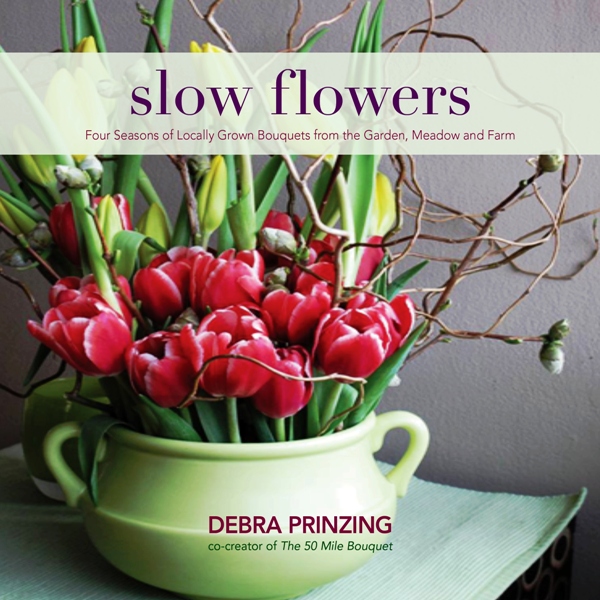
600_600_SLOWFLOWERSFrtCvrrevBut it all started with the book: Slow Flowers, four seasons of locally-grown bouquets, from the garden, meadow and farm. St. Lynn’s Press published this little gem in early 2013 and it has been the creative inspiration to launch the Slow Flowers Movement.

14-silver-logoWe just got word that Garden Writers Association has awarded Slow Flowers with one of two Silver Medals of Achievement for Overall Book product this year. I couldn’t be happier and I’m so pleased to receive the recognition because it reflects what together our American grown floral community has achieved in changing the dialogue and changing the relationship consumers have with their flowers. Congratulations to the entire St. Lynn’s Press creative team for making my words and images into such a beautiful little book: Paul Kelly (Publisher), Catherine Dees (Editor) and Holly Rosborough (Art Director). They are the dream team! 

TODAY’S GUEST: MARGOT SHAW, flower magazine

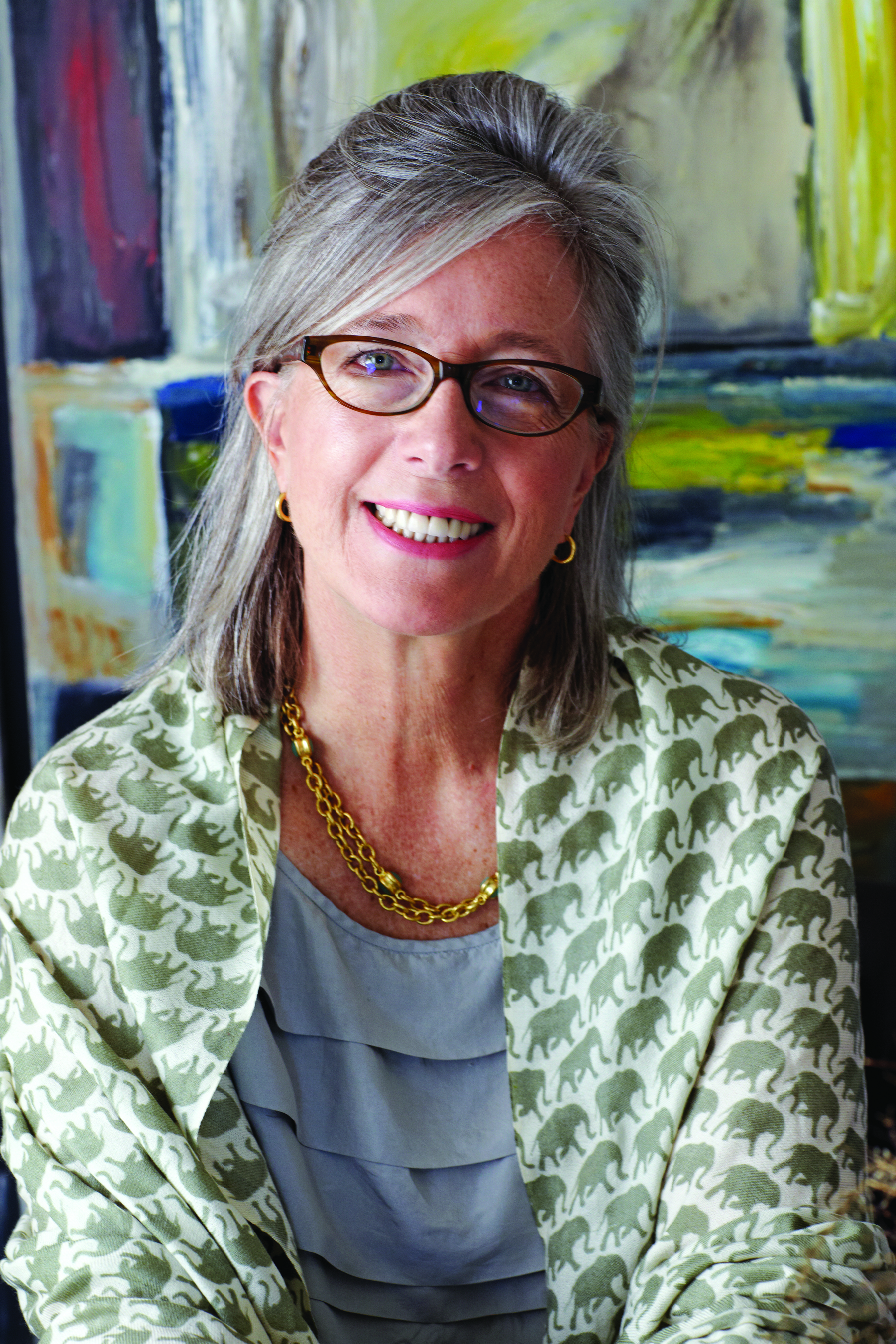
Margot Shaw, "flower magazine" founder and editor-in-chief

Margot Shaw, “flower magazine” founder and editor-in-chief  


"To Flower" ~ the definition embodies the spirit of this magazine.

“To Flower” ~ the definition embodies the spirit of this magazine.

Now, it is entirely fitting that I introduce you to Margot Shaw of flower magazine, my interview subject today. Margot has coined the phrase “a floral lifestyle,” a term I thoroughly embrace – and I know you will, too.


Margot calls herself a “late bloomer” when it comes to the art of floral design. A self-proclaimed “call-and-order-flowers girl,” Margot’s “a ha moment,” her view of flowers, changed when planning her daughter’s at-home wedding.

Working alongside the floral and event designer, she recognized the artistry and inspiration involved in “flowering” and soon began apprenticing with that same designer.

After a few years, enamored with all things floral but unable to locate a publication that spoke to her passion, she set about creating one. 

With a clear vision, a deep appreciation for beauty, a facility with words, a hometown uniquely geared towards publishing, and the advice and counsel of generous industry professionals, Margot launched flower in March of 2007. 

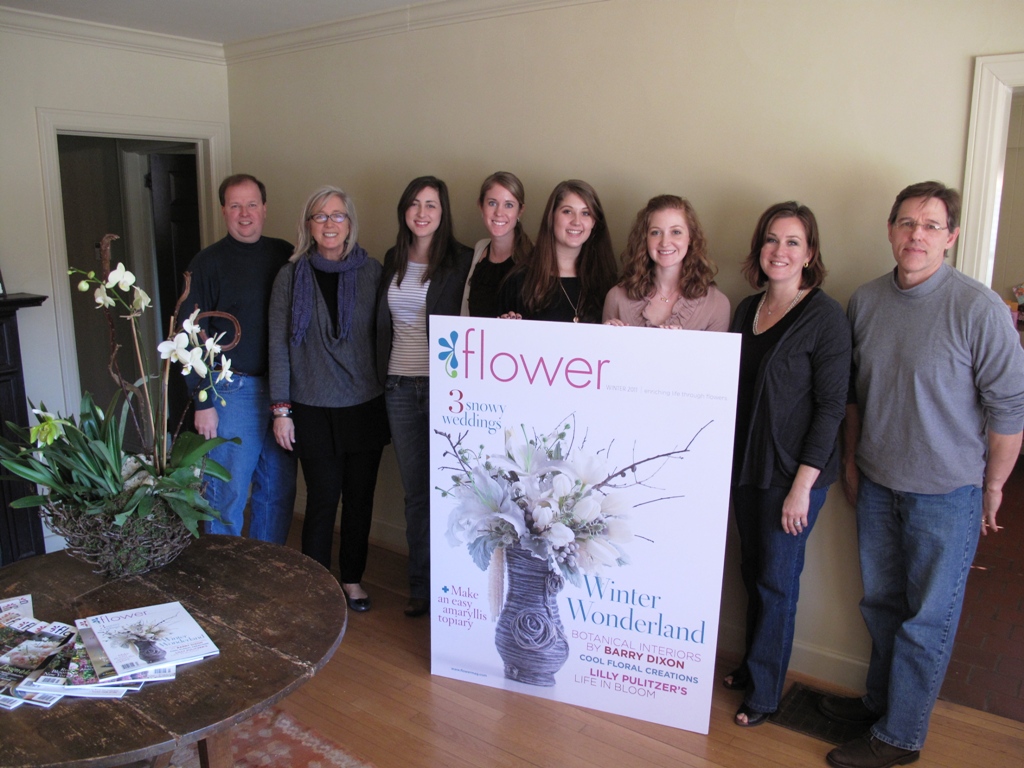
I snapped this photo of the flower magazine staff back in January 2011 when I visited Birmingham, Alabama, for a get-to-know meeting. That's Margot, second from the left.

I snapped this photo of the flower magazine staff back in January 2011 when I visited Birmingham, Alabama, for a get-to-know meeting. That’s Margot, second from the left.

Originally filled with floral, garden, and event design, the niche publication has gradually broadened to include content that trumpets a floral lifestyle—interiors, art, travel, fashion, jewelry, and entertaining.

“It has something for everyone who likes flowers—and who doesn’t like flowers?!” Shaw proclaims.

Since its debut, flower has continued to grow at a steady pace, recently moving from quarterly to bimonthly, and available in all 50 U.S. states and 17 countries.

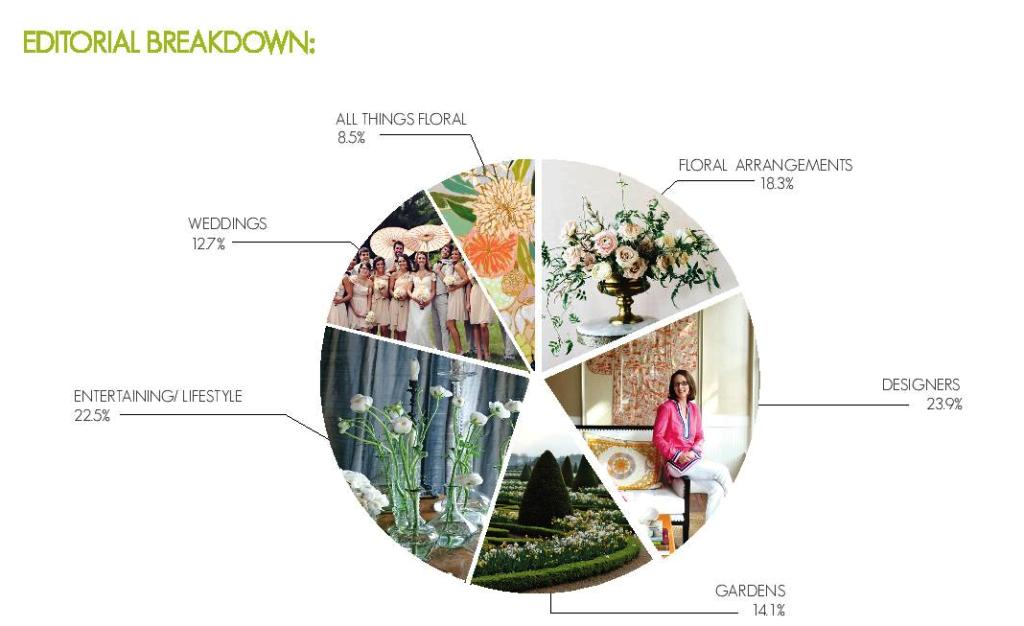
Here’s some more information on the publication and its influence on our floral community:

Here's what you'll find on the pages of flower magazine ~

Here’s what you’ll find on the pages of flower magazine ~


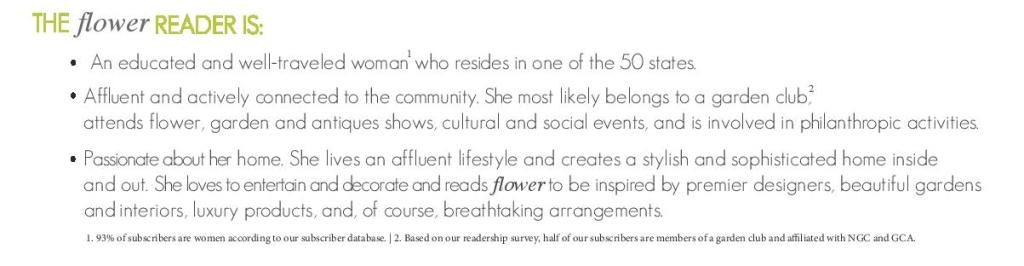
Here's who reads the magazine.

Here’s who reads the magazine.


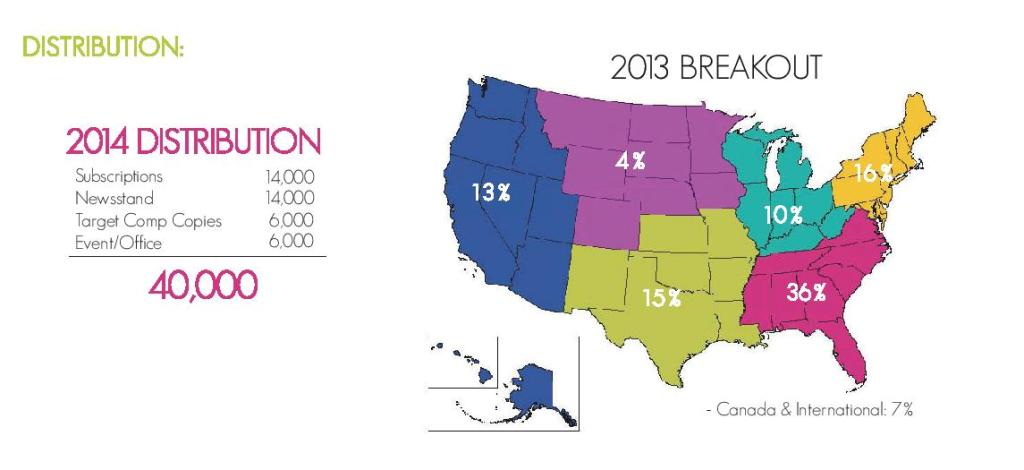
Here's more about the circulation and geographic distribution.

Here’s more about the circulation and geographic distribution.

Want to check out the current issue of flower magazine? Margot has generously shared the “secret” log-in password with listeners of the SLOW FLOWERS Podcast. Click here to read the digital edition and use TUBEROSE as the password. 

Next week’s guests are Heidi Joynt and Molly Kobelt, partners in Field & Florist of Chicago. You won’t want to miss it!

Thanks to listeners like you, this podcast has been downloaded 13,700 times.

If you like what you hear, please consider logging onto Itunes and posting a listener review.

Until next week please join me in putting more American grown flowers on the table, one vase at a time. 

The slow flowers podcast is engineered and edited by Hannah Holtgeerts and Andrew Wheatley. Learn more about their work at hhcreates.net.

SLOW FLOWERS Podcast: The Little Flower School of Brooklyn comes to Oregon (Episode 143)

Wednesday, May 28th, 2014

flowerschoolheader_2012

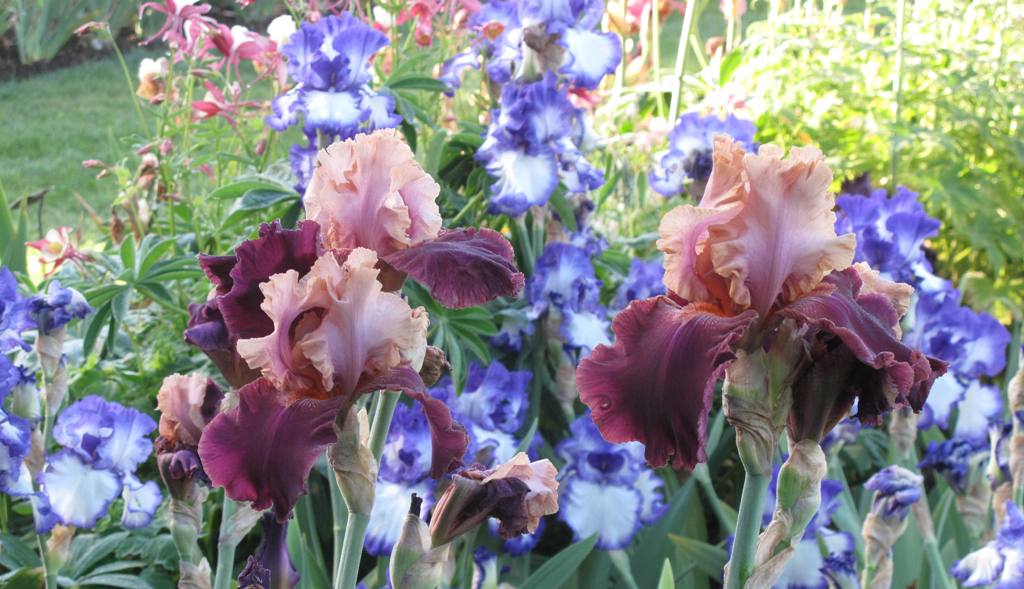
'Who needs a prince' - seriously great iris name!

‘Who needs a prince’ – seriously great iris name!

Last week was quite amazing in so many ways. First of all, I was on assignment for Country Gardens magazine, working with the uber-talented photographer Laurie Black, my collaborator in so many great articles that we’ve created over the years for editor James Baggett and art director Nick Crow.

With her partner-husband Mark King (ever the calm one and a genius when it comes to all the technical aspects of location photography), Laurie and I were tasked with capturing the story of Schreiner’s Iris Farm, the lovely and alluring bearded iris, and the two women who are nearly single-handedly reviving interest in these old-fashioned spring flowers. 

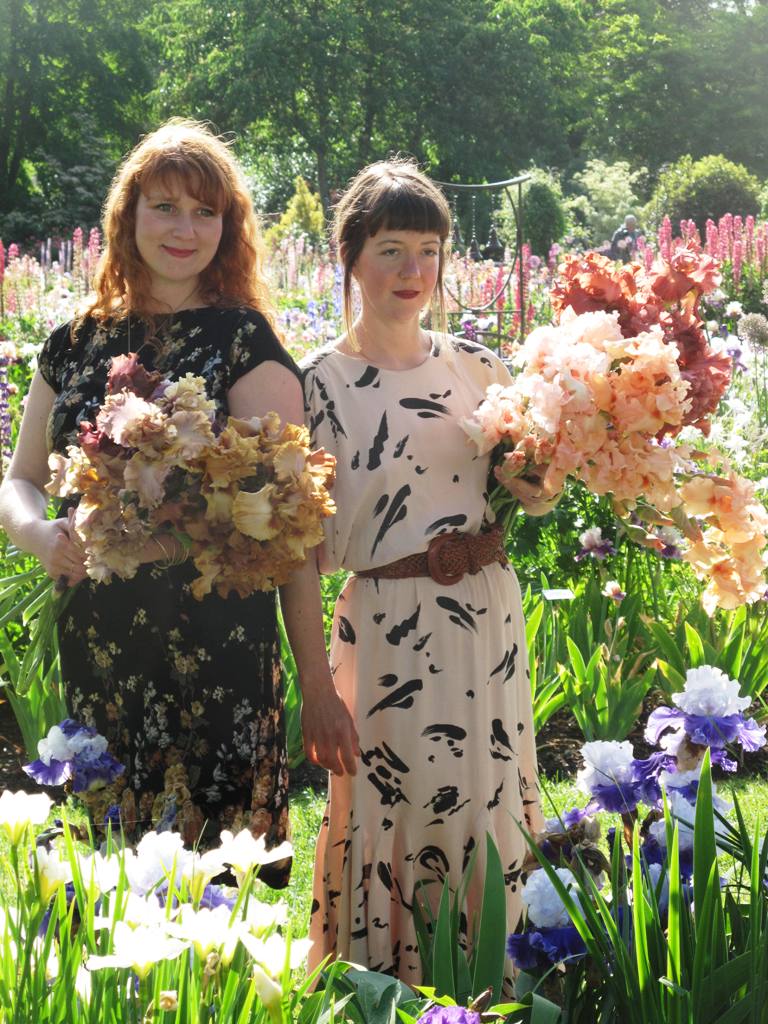
Nicolette (left) and Sarah (right), at their happy place in the iris garden.

Nicolette (left) and Sarah (right), at their happy place in the iris garden.

Those women are my guests today – Sarah Ryhanen of Saipua and Nicolette Owen of Nicolette Camille. While they independently own their own Brooklyn-based floral studios, together the friends collaborate as teachers through The Little Flower School of Brooklyn. 

'Oh Jamaica'

‘Oh Jamaica’

Smitten by the bearded iris, especially watercolor-washed varieties in apricot-peach-pink; smoky browns; mustardy-yellow; mahogany and silvery-lavender spectrums, Nicolette and Sarah have been fans of Schreiner’s Irises for years.

They worked with the Salem, Oregon-based, third-generation family farm to create a one-day Iris-intensive and invited students to join the fun.

Here’s how the workshop was described:

In this class, students will bask in the glory of the fields at peak bloom, and in a tour of the display gardens witness first hand the incredible diversity of color and form this unique perennial offers. We’ll discuss and demonstrate the tenets of composing an arrangement in our elegantly layered Little Flower School style. Special emphasis will be placed on flower selection, color blending and the mechanics of building a low lush sprawling arrangement without the use of floral foam. Working with the very best of the Schreiner’s specimens, along with a menagerie of other locally grown Oregon flowers, students will receive in-depth. one-on-one instruction as they build their own rambling garden style arrangement.

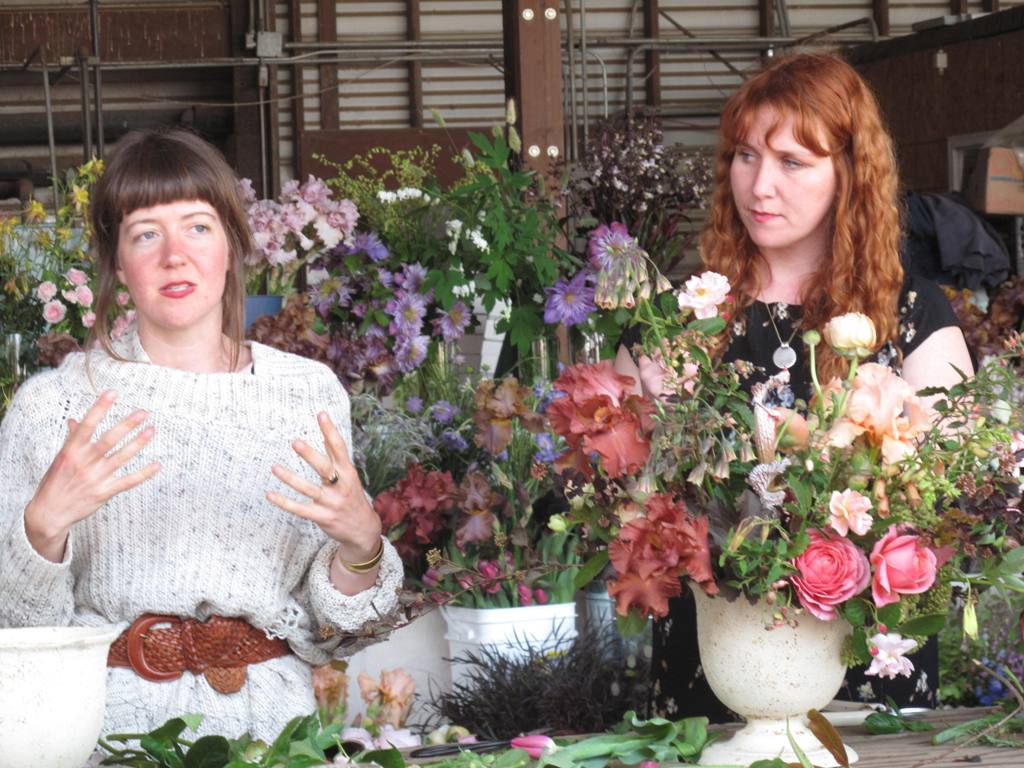
Generous in sharing their knowledge, Sarah and Nicolette demonstrated with their favorite irises and perennials.

Generous in sharing their knowledge, Sarah and Nicolette demonstrated with their favorite irises, annuals, foliage and perennials.

The day was packed with beauty and creativity. It was an inspired, sublime experience — from the first moment when we met, toured the gallery of irises and the gorgeous display beds showcasing irises and their favorite companion perennials — to an afternoon of floral design instruction. Meeting many members of the Schreiner family was a bonus! Thanks to Steve Schreiner, Ray Schreiner and sister Liz Schmidt (plus we met sister Paula, who stopped by while leading an iris tour for Portland’s Japanese Garden).

About 18 students gathered for the workshop, from established floral designers to apprentices and those considering a career switch, and me – a floral dilettante! Together, we fixated on Sarah and Nicolette’s language of flowers. 

These two communicate with such beautiful interlocking poetry and prose. And you’ll just have to wait for the summer 2015 issue of Country Gardens to learn more, read my story and see Laurie’s awesome photography!


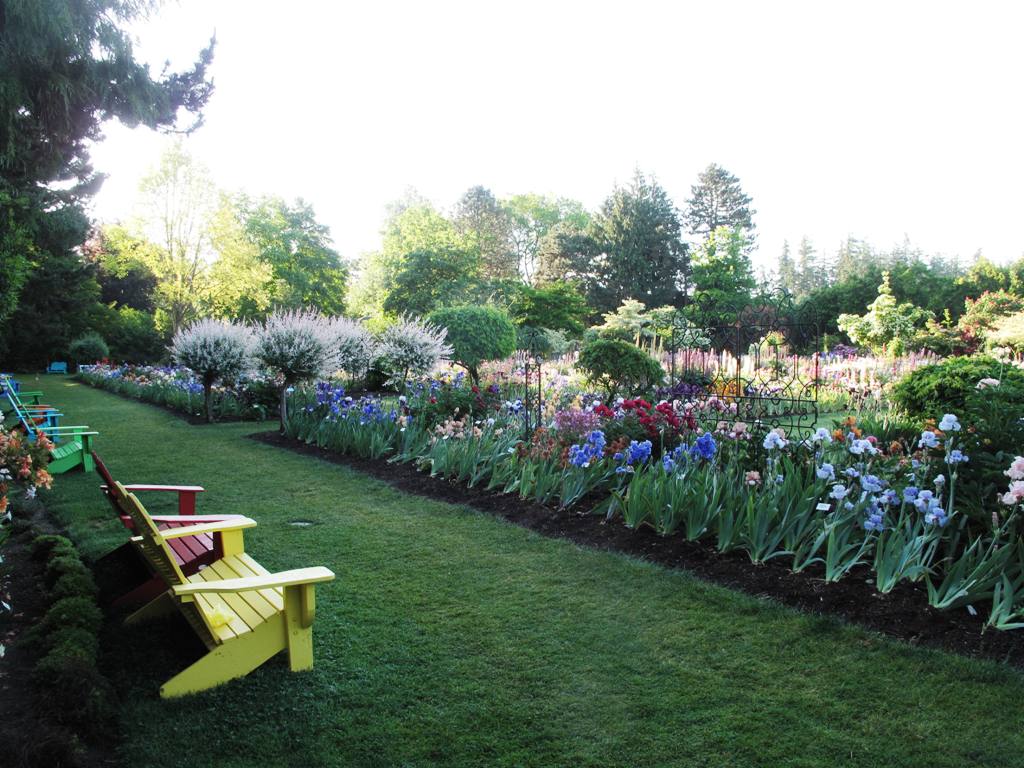
Love these colorful benches at Schreiner's Iris Farm.

Love these colorful benches at Schreiner’s Iris Farm.

After our workshop, however, the three of us sat down in the double-Adirondack benches so generously provided by the Schreiner family. We talked a lot about the farmer-florist concept, the Slow Flowers movement, and the importance of staying close to the source of your flowers.


Nicolette at work.

Nicolette at work.

Here’s a little more about The Little Flower School of Brooklyn:

The Little Flower School is the teaching project of Nicolette Owen (Nicolette Camille) and Sarah Ryhanen (Saipua); each known for their loose, natural, garden-focused floral designs. Fueled by their reverence for flowers and penchant for travel, the two traverse the globe teaching, learning, and hunting down the most beautiful floral specimens.

Sarah and Nicolette first met over dinner in July of 2008 – a time when each of their separate floral businesses were first establishing. As distinct competitors, their friendship championed a spirit of collaboration and – they hope – has helped to foster an atmosphere of sharing and collaboration amidst a new wave of New York floral designers.

Students of The Little Flower School are men and women; novices, floral enthusiasts, designers in other medium, those looking to start their own floral business, and those with established floral businesses looking to broaden their design knowledge. Classes are seasonally oriented and often exalt a particular flower or design concept. 

Here’s more about Nicolette: 

Nicolette Owen runs her custom floral design studio, Nicolette Camille Floral, in Brooklyn NY. Her work is known for its romantic effusions, nuanced color and texture. Each arrangement is evocative of both the wild and formal garden. Nicolette’s first book collaboration, Bringing Nature Home, was released by Rizzoli in April 2012.


Sarah extolling the virtues of foxgloves - biannual and perennial forms.

Sarah extolling the virtues of foxgloves – biannual and perennial forms.

And more about Sarah: 

Sarah Ryhanen is a self taught flower designer, grower and  co-founder of Saipua. Her compositions have a haunting, sensual quality. Her work has appeared in publications such as The New York Times, Vogue and Martha Stewart. She splits her time between the Saipua studio in Red Hook Brooklyn and Worlds End, her new flower farm in upstate NY.  And listen to my earlier podcast interview with Sarah here, in which we speak of her decision to begin growing her own flowers with her partner Eric Famisan.

Please enjoy this conversation and join in by sharing your comments below. 

Thank you for joining me this week. Because of the support from you and others, listeners have downloaded episodes of the Slow Flowers Podcast more than 12,200  times! I thank you for taking the time to join to my conversations with flower farmers, florists and other notable floral experts. 

If you like what you hear, please consider logging onto Itunes and posting a listener review.

Until next week please join me in putting more American grown flowers on the table, one vase at a time. 

 The Slow Flowers Podcast is engineered and edited by Hannah Holtgeerts and  Andrew Wheatley. You can learn more about their work at hhcreates.net.

A Personal Cutting Garden That You Can Eat, Too!

Monday, May 26th, 2014
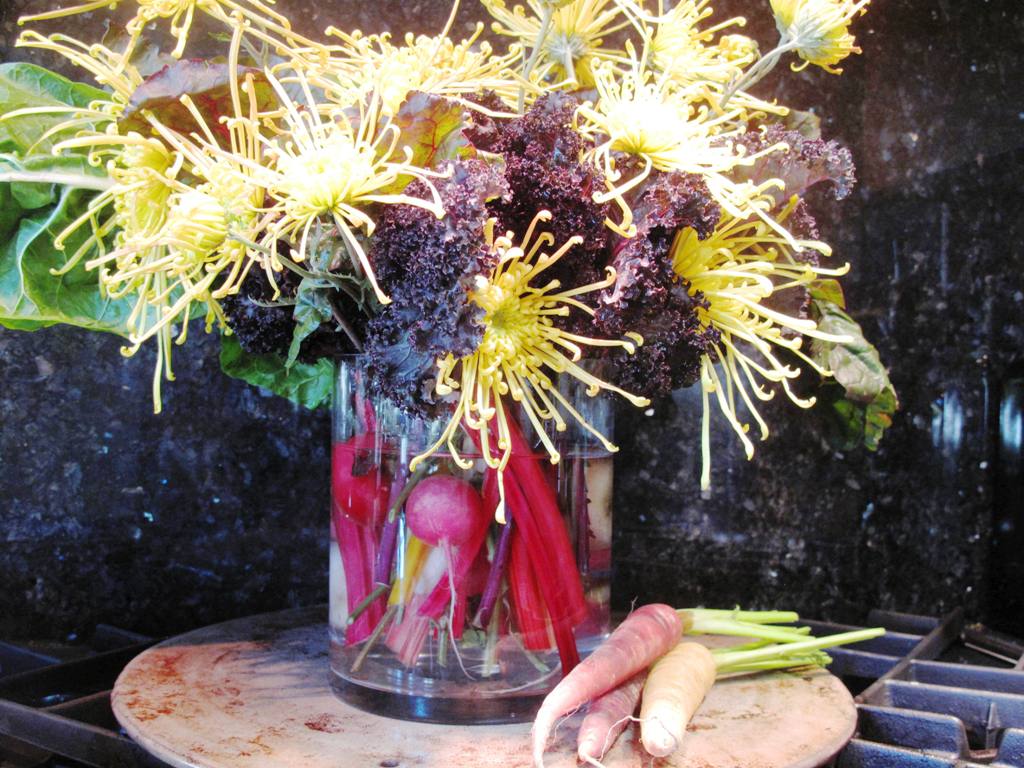
Root veggies, purple kale and spider mums.

Radishes, rainbow chard, purple kale and spider mums.

GroundbreakingFoodGardensThis just in: A New Kind  of Hors d’Oeuvre

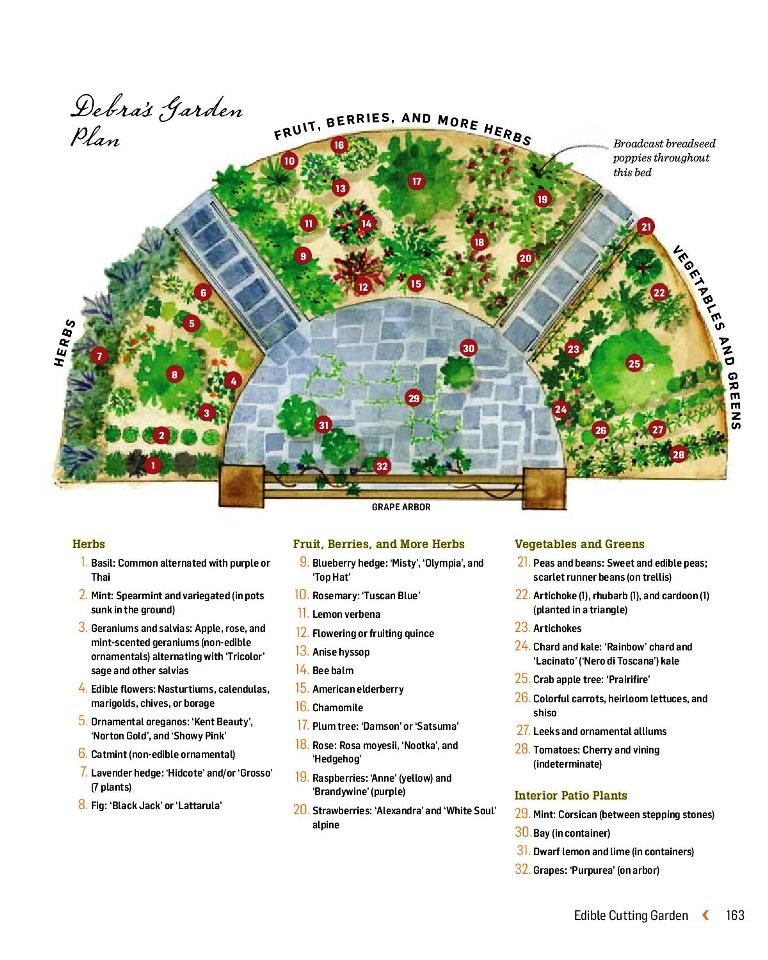
When entertaining, Debra recommends impressing your guests by gathering edible flowers and food from her garden plan to craft a simple, but unique amuse-bouche. The guests can snack on the centerpiece before the main meal is served – but only if your garden is organic!

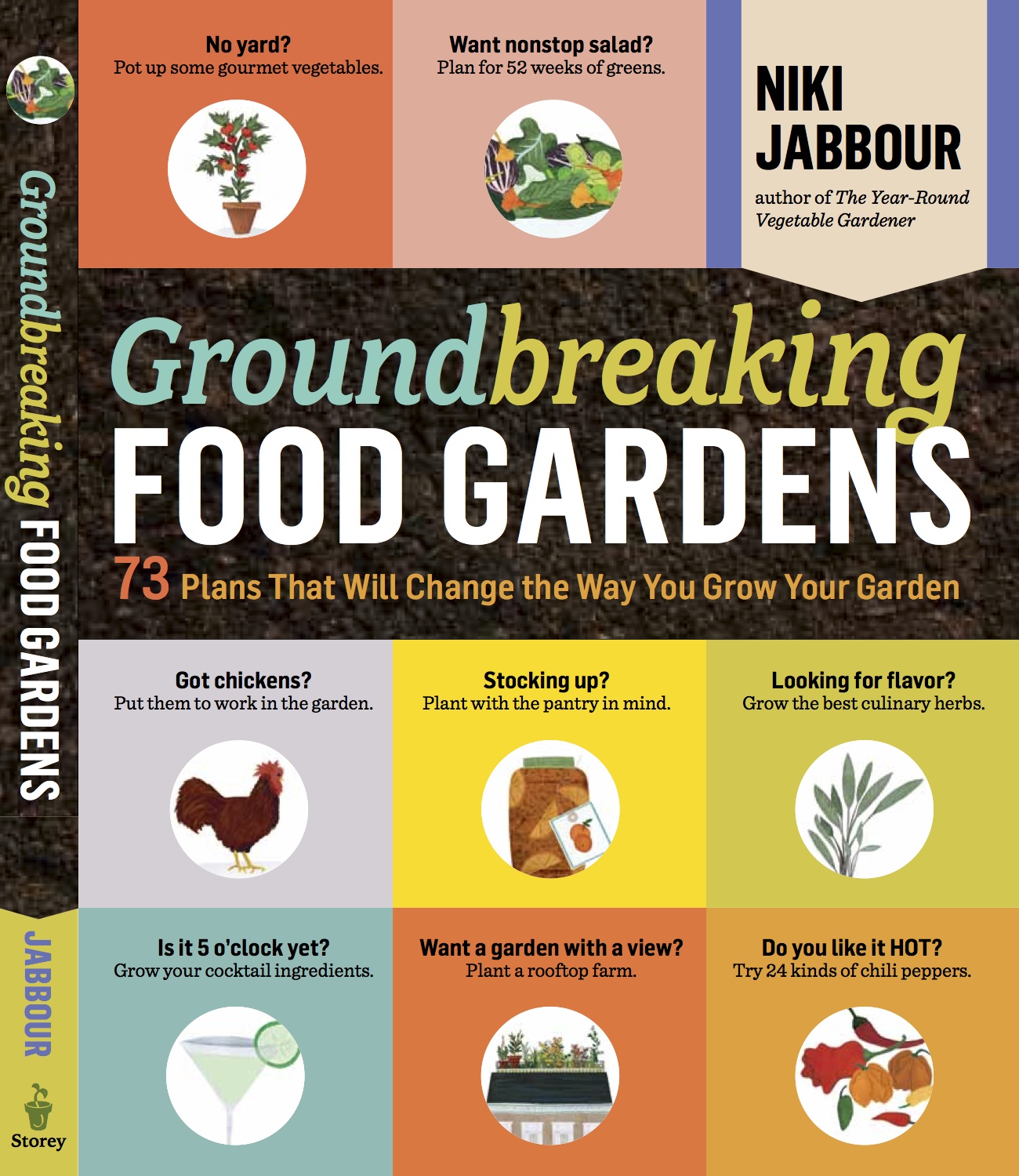
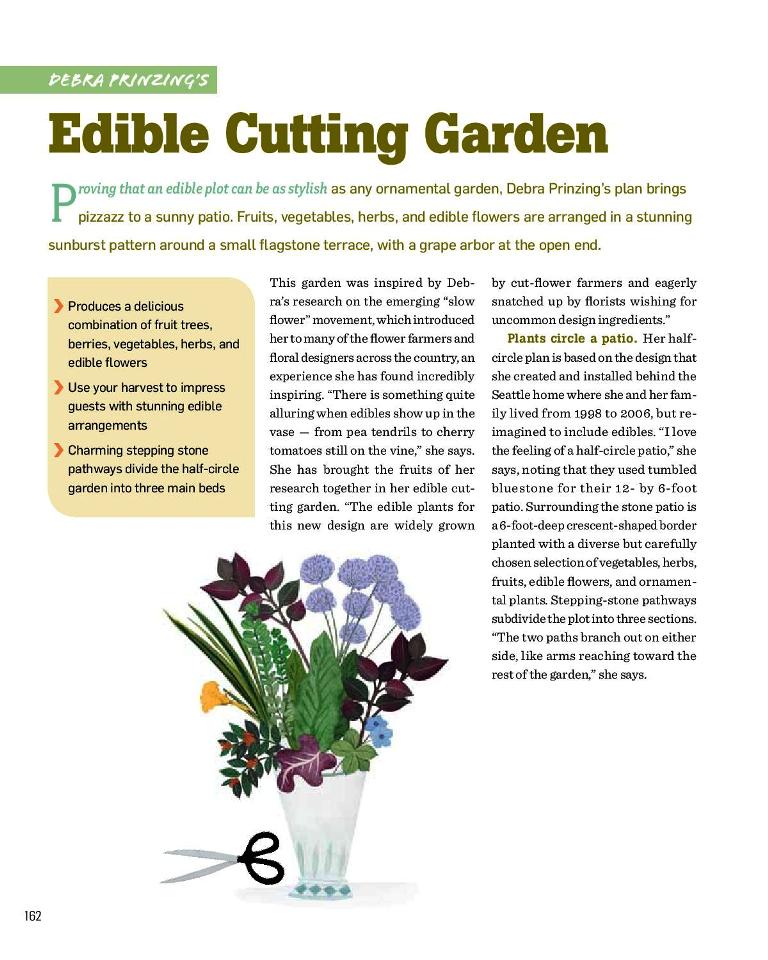
I owe an (edible) bouquet of thanks to fellow garden writer Niki Jabbour for including my “Edible Cutting Garden” plan in her new book Groundbreaking Food Gardens (Storey Publishing, 2014). Along with planting plans and designs contributed by 72 others, this is an inspiring reference book that will change the way home gardeners thank about growing food. 

Here’s a sneak peek of the pages featuring my project, and some ideas for how to incorporate edibles into your floral designs.

Prinzing_FINAL (1)-page-001

Debra Prinzing’s Edible Cutting Garden — a half-circle design based on an ornamental garden I created in Seattle, circa 1998-2006. 


Prinzing_FINAL (1)-page-002

Each section features different edible categories — from herbs to fruits/berries to veggies and more.

This garden shown above was based on a design I made and installed behind the Seattle home where we lived from 1998 to 2006. I love the feeling of a half-circle patio. This one is paved in tumbled bluestone and measures about 12 feet wide by 6 feet deep. Two paths branch out on either side, like arms reaching toward the rest of the garden. The paths divide the 6-foot-deep crescent border into three sections.

READ MORE…

A (American Grown) Flower-filled April, Part One

Sunday, April 27th, 2014
Agaves and climbing roses thrive in companionable harmony at Rose Story Farm.

Agaves and climbing roses thrive in companionable harmony at Rose Story Farm. 

My 11-day road trip took me by plane to Southern California and back home again behind the wheel of a rental car as I happily drove north on U.S. Hwy. 101 through a beautiful and ever-changing coastal landscape.

The trip began on April 6th when I landed at Burbank Airport, my favorite airport destination these days. I picked up the rental car and hit Ventura Freeway, passing by scenery so familiar to me from the four years we lived in this area. 

The arbor creates a rose allee that intersects growing fields - with the natural landscape creating a lovely backdrop

The arbor creates a rose allee that intersects growing fields – with the natural landscape creating a lovely backdrop

My destination was Carpinteria and Rose Story Farm. The setting sun ahead of me as I drove northwest, I turned off of the freeway at Casitas Pass Blvd. and headed away from the ocean, toward the foothills.

A humble sign, “Rose Story Farm,” greeted me at the end of a long, one-lane driveway (curses, speed bumps!) that runs along the edge of several acres of farmland. Current crop: sunflowers. Then, up ahead, towering palm trees, their presence here oddly normal, and an iron gate. I rang and heard Danielle Hahn’s voice through the speaker box: “Welcome! We’re just about to eat dinner – meet us in the barn.”

The facade of the old stables is clad in a vigorous climbing rose.

The facade of the old stables is clad in a vigorous climbing rose. 


The roses are in the foreground; the stable's rooftop in the background.

The roses are in the foreground; the stable’s rooftop in the background.

I’ve been to Rose Story Farm on three previous occasions (read previous blog posts here and here), and yet the charm and old-Santa-Barbara character still excites. Dani and her husband Bill Hahn have converted the former horse stables into the headquarters for their organic cut rose business. What once was the large tack room is now a grand family room, with a giant stone fireplace, soaring beams, cozy upholstered sofas and a big trestle table where three generations of the family were sharing dinner. I joined them for some of the most delicious Mexican take-out I’ve ever eaten.

I shared that meal with Dani and Bill, their son Will and his girlfriend Anne, and Dani’s lovely mother Patti D’All Armi. The stimulating conversation set the tone for a magical visit surrounded by friendship and fragrant roses. It was just the beginning of my three days in the Carpinteria-Santa Barbara area.  

The gathering location for my Slow Flowers/American Grown lecture to the Garden Club of Santa Barbara

The gathering location for my Slow Flowers/American Grown lecture to the Garden Club of Santa Barbara

The impetus for my arrival was Dani’s invitation a year in advance to speak to the Garden Club of Santa Barbara at one of its monthly meetings. We dreamt up a two-part event, with my Monday morning lecture about the American Grown Flower Movement, followed by a lunch break, leading to a hands-on floral design workshop.

Typically, I like to cap hands-on design workshops at 25 students, maximum. Well, somehow this workshop climbed to 52!!! Yikes, without Dani, Patti and Anne’s help, not to mention a few other people on the Garden Club program committee, we could not have pulled it off.  

Anne Steig saved the day in so many ways - I'm so grateful she was there to help us with the workshop.

Anne Steig saved the day in so many ways – I’m so grateful she was there to help us with the workshop.

Here we were in the “flower basket” of America, the one place in our country where more cut flowers are produced than anywhere else. And while one might worry that I would be “preaching to the choir,” it simply wasn’t the case. The reaction to my lecture was sadly familiar. Comment after comment, as I signed books, visited with the Garden Club members, or helped a student assess her arrangement, went like this: “I had NO idea that so many flowers are imported. I am so glad to learn what I can do to change this practice.” 

Workshop participants were asked to bring their own containers and tools, as well as greenery from their gardens to share. We were able to underscore the message about the benefits and pleasures of local, seasonal flowers with a powerful visual aid: ROSES! Bless her heart, Dani harvested and donated 500 gorgeous roses from her fields. Talk about intoxicating! These old garden roses, David Austins, pre-1950s American hybrid tea roses and European varieties are simply stunning. The colors, forms, petal shapes and fragrances will instantly convert you into a believer in locally-grown flowers.

One of my demonstration arrangements features all California-grown roses, anemones, scented geranium foliage and more.

One of my demonstration arrangements features all California-grown roses, anemones, scented geranium foliage, lilacs, agonis and more.


A yummy detail, featuring a dark purple rose that is so gorgeous it made me faint!

A yummy detail, featuring a dark purple rose that is so gorgeous it made me faint!

In addition to using roses and several other cool ingredients from Rose Story Farm (including velvety scented geranium foliage), we procured some donations from other local sources. I want to thank Florabundance, a floral wholesale business owned by Joost and Alex Bongaerts, for their generous donation to match our purchase of a variety of really beautiful, healthy and unique annuals, perennials and foliage – all California grown. And two other flower farms donated interesting varieties for our students to use. Thanks to Marcus Van Wingerden of Pyramid  Flowers Inc., of Oxnard, and Igor Van Wingerden of Ocean Breeze Farms in Carpinteria, for their support.

That evening, after the day-long workout hauling huge buckets of flowers and standing on our feet all day, Dani pulled off yet another classy event. She hosted a garden party for her fellow committee members to celebrate our successful day. It was a delight – and I know you’ll be mesmerized by the enormous arrangements that her staff created for the evening. I certainly was seduced by them, especially in that dewy, coastal air as the sun descended toward the Pacific, illuminating each petal in vivid relief.

sm_yellow_bucket_IMG_9420 sm_wagons_IMG_9433 sm_wagon_roses_IMG_9434 sm_table_IMG_9416 sm_french_bucket_IMG_9421 sm_bouquet_IMG_9418 backlit_IMG_9424 bicolored_IMG_9501 lavender_citrus_IMG_9456 bench_roses_IMG_9540 Rose_Story_IMG_9414

After a late-night gab, Dani’s family long since retired for the night, we finally stopped talking and headed to bed ourselves. My destination: The Hydrangea Cottage. This was my home in the midst of the rose fields. How lucky can one woman be? 

Here's where I stayed for three days . . . a charming vintage cottage, courtesy of the Hahns and Rose Story Farm. Sublime!

Here’s where I stayed for three days . . . a charming vintage cottage, courtesy of the Hahns and Rose Story Farm. Sublime!

Lots more took place during the ensuing days, but I have so many wonderful photos to share from my time at Rose Story Farm that I need to postpone the narrative for subsequent chapters! To be continued . . . 

SLOW FLOWERS Podcast: The Urban Flower Farmer, Tara Kolla of Silver Lake Farms (Episode 137)

Wednesday, April 16th, 2014
Urban flower farmer Tara  Kolla, owner of Silver Lake Farms in Los Angeles.
Urban flower farmer Tara Kolla, owner of Silver Lake Farms in Los Angeles.
This week we’re celebrating a huge milestone for this young floral-focused podcast. The first episode of the Slow Flowers Podcast debuted last July. As of this week, more than 10,000 episodes have been downloaded! This is such encouraging news – and I thank YOU for listening and allowing me to share my interviews with influential leaders in flower farming, floral design and other related topics each week.

For the past 10 days, I’ve been teaching, reporting and traveling in California, working my way from south (Los Angeles) to north (Eureka-Arcata) and points between (Carpinteria-Santa Barbara, San Luis Obispo and SF). Eventually, I’ll get home to Seattle. The excursion has offered me a wonderful chance to sit down for some face-to-face interviews with new guests whose voices you’ll hear on the Slow Flowers Podcast in the coming weeks.


I snapped this cute photo of Tara and her flowers on April 10th. She was preparing luscious bouquets for her CSA deliveries.

I snapped this cute photo of Tara and her flowers on April 10th. She was preparing luscious bouquets for her CSA deliveries.

The first person I’d like to introduce you to is Tara Kolla, owner of Silver Lake Farms in Los Angeles. We met at her urban farm (ahem. her backyard!) for a little lunch and then turned on the recorder in order for me to catch up on her 10-year career as a flower farmer specializing in organic blooms in all 12 months.
In 2012, when we published The 50 Mile Bouquet, I was delighted to tell Tara’s story of flower farming, despite many odds, in the heart of Los Angeles.

The narrative began in 2004, when Tara left her career in public relations and marketing to follow her dream to be an organic urban farmer. She planted sweet peas in her half-acre backyard and sold the fragrant flowers by the bunch at her local farmers’ market.


A twin-carrier, filled with two yummy bunches for the upcoming market delivery.

A twin-carrier, filled with two yummy bunches for the upcoming market delivery.

In doing so, she never expected to become the poster child of the city’s urban farming movement.  I called the chapter “Flower Patch Politics,” and shared her tale of tenacity and passion as she endured an enforced shut-down from LA’s Department of Building and Safety.


A detail of a Silver Lake Farms bouquet. Check out that anemone!

A detail of a Silver Lake Farms bouquet. Check out that anemone!

That experience lasted nearly two years and involved Tara’s work to reverse an obscure 1946 “truck gardening” law that limited residential farms to only the cultivation of vegetables for off-site sale – not flowers. 

Facing fines, jail time or a costly legal battle to obtain a land-use variance, Tara dug in her heels and decided to lobby for a change to the ordinance.

“I didn’t want to lose, give in or submit,” she says. Tara’s fierce belief in justice helped sustain her during a yearlong fight for what became known as the Food & Flowers Freedom Act, although she acknowledges that it took a toll on her physically, emotionally and financially.

Yet Tara feels grateful for the wave of support from her community, including longtime Silver Lake Farmers’ Market customers and fellow urban farming activists.

The media thrust Tara into the role as spokesperson for everything from sustainable agriculture to the plight of the small family farm.

Flowers for market, year 'round, organic and fresh!

Flowers for market, year ’round, organic and fresh!

Ultimately victorious, she’s been back in the business of growing flowers for several channels of distribution for nearly four years. Tara’s story is a huge inspiration and you’ll find its happy ending heavily seasoned with reality. We’ll discuss that in today’s podcast as we cover everything from diversification, branding, marketing and the future plans for Silver Lake Farms and its bountiful, healthy, organic and fresh flowers.

Here’s an overview (from Tara’s web site) of her flower farm and its many offerings. Take note of the links to various locations and social media platforms where you can find Silver Lake Farms’ flowers:

Silver Lake Farms was started in 2004 by Tara Kolla in the back yard of her home.

We now grow more than 100 different kinds of organic flowers and greens on less than an acre in Silver Lake and Glassell Park – so close to Downtown LA!

Typically our season begins with layers and layers of soft pastel petals in deep violets, blues and pinks. From late Jan to Mother’s Day: delicate dreamy ranunculus, anemones, and oh so fragrant sweet peas. Spring covers the field with antique wildflowers, adding an air of romance to our palette, and a delicate, natural touch: larkspur, Queen Anne’s lace, soft grasses, airy branches…

From Summer to Fall, it’s all about passion, texture, drama! Velvety, papery, tassely forms saturated in color: cockscomb, amaranths, strawflowers. But the Summer season’s main protagonist has to be, of course, the dahlia.  Who can resist our Cafe Au Laits?….

We grow everything naturally, employing biological, organic and sustainable farming practices, without chemicals or pesticides. This way, our flowers are stronger, more vivid in color, longer lasting and richer in depth of tone and fragrance.
You can purchase our flowers in a number of ways.  We’re at the Hollywood Farmers’ Market every Sunday from 8am-1pm. We’re there from February 1 thru October 31st.
Our flowers are also available through our Flower CSA, through FarmboxLA,GoodEggsLA, and on the first Saturday of every month we pop up outside Valerie Echo Park.

Love our blooms? We do floral design for weddings and private parties.  For more information, contact flowers@silverlakefarms.com

Follow us on InstagramTwitterFacebook.

“For a truly sustainable event, think about what’s on the table, not just what’s on the plate.” 

Because of the support from you and others, listeners have downloaded episodes of the Slow Flowers Podcast more than 10,000  times! I thank you for taking the time to join to my conversations with flower farmers, florists and other notable floral experts.

If you like what you hear, please consider logging onto Itunes and posting a listener review.

Until next week please join me in putting more American grown flowers on the table, one vase at a time. 

The Slow Flowers Podcast is engineered and edited by Hannah Holtgeerts. Learn more about her work at hhcreates.net.