Debra Prinzing

Get the Email Newsletter!

Archive for the ‘Blog Posts’ Category

SLOW FLOWERS Podcast: American Grown flowers from a California Point of View (Episode 107)
Wednesday, September 18th, 2013

SLOW FLOWERS Podcast: American Grown flowers from a California Point of View (Episode 107)

Debra and Kasey

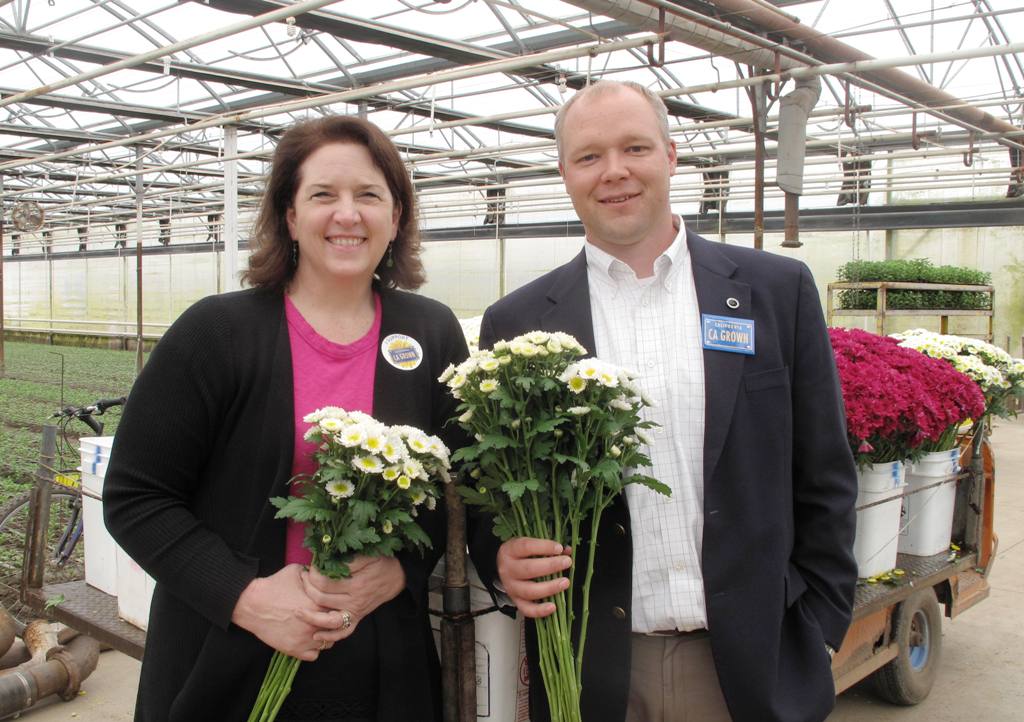
Kasey Cronquist and I toured a Carpinteria, California, greenhouse together in April 2013. 
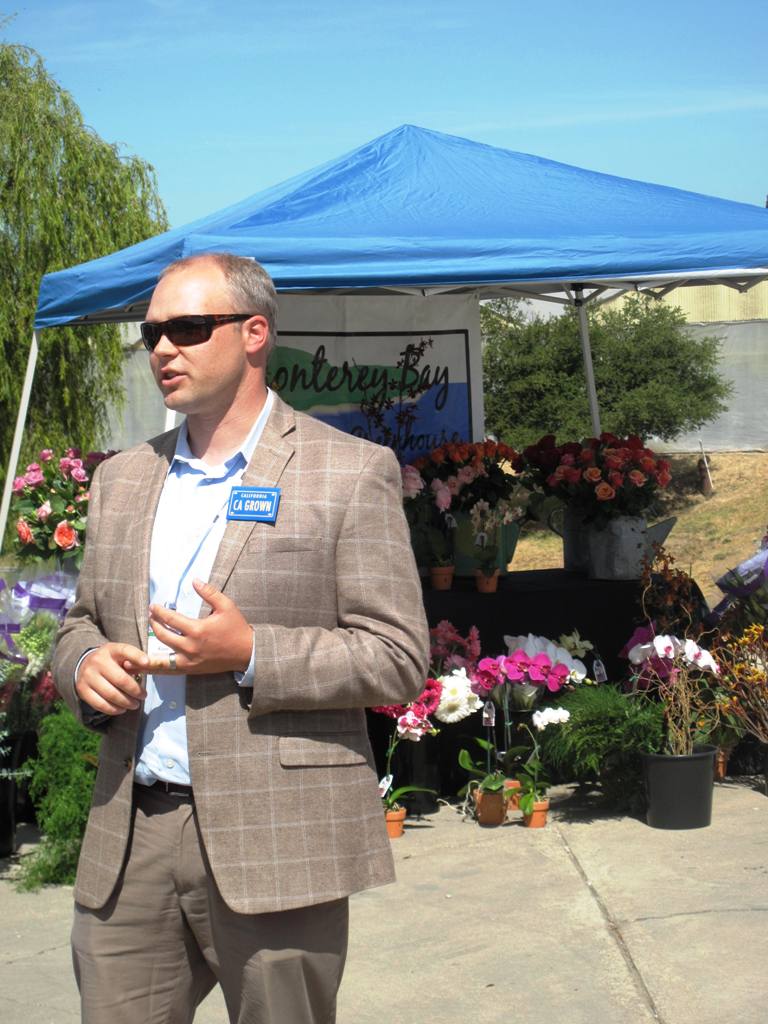
 

Kasey Cronquist

Here’s Kasey discussing the importance of supporting America’s cut flower industry – at the Monterey Bay Greenhouse Growers – Open House this past June.

I’m so pleased to introduce you to Kasey Cronquist. I truly value Kasey’s leadership, counsel and friendship. He is the CEO and Ambassador of the California Cut Flower Commission, the largest organization of its kind promoting American Flowers.

And he is a kindred spirit who is supremely passionate about saving our homegrown flower farms and preserving the agricultural way of life as a part of our country’s vibrant landscape.

Kasey and I first met by phone in 2010 when I called him for a quote to include in an article for the Los Angeles Times. I was writing about organic flowers for Valentine’s Day and Kasey sure set me straight, changing the focus from organic (and possibly imported flowers) to a locally grown priority.  He pointed out: “We believe California flowers are the green alternative, whether we stick a label on them or not.”

It was the beginning of my own evolution as an American flower advocate.

Since joining the CCFC in 2007, Kasey has spearheaded an aggressive public affairs program targeting lawmakers at the state and federal level. He is a dynamic spokesman for flower farming both among his home state constituents and nationally and is a master at social media communications. Kasey understands the power of blogging, tweeting, posting and using visual social media platforms and he has brought flower farming into the modern era in that regard. More than all his talents, though, I’ve mostly been impressed with Kasey’s community-building gestures to bring together small and large flower growers across America with a united voice. 

In March 2012, I wrote a post called “Meet the Ambassador of Local Flowers,” profiling Kasey for The 50 Mile Bouquet blog. You can read this extensive interview here in which Kasey shares many inspiring ideas about the American cut flower industry.

One quote of his particularly impressed me:

“We can’t move that ball, but we can create market demand for local flowers. We leaned into the CA Grown campaign and now California’s flower farmers are the single largest licensee of that agricultural program — out of all the other commodity crops in the state. The future is in educating people to buy local, to buy U.S.-grown flowers.”

Read Kasey Cronquist’s Field Position blog at Americasflowers.org

FB page: https://www.facebook.com/CaliforniaGrownFlowers

Twitter: @kaseycronquist and @cagrown


SLOW FLOWERS Podcast: Local Color Flowers (Episode 106)

Wednesday, September 11th, 2013

SLOW FLOWERS Podcast: Local Color Flowers (Episode 106)

Today’s interview will introduce you to Ellen Frost, a Baltimore-based floral designer who is committed to using only 100% locally-grown flowers in her work. I am so impressed with her business philosophy and her contagious enthusiasm for using flowers from farmers she knows and supports. 

Vote

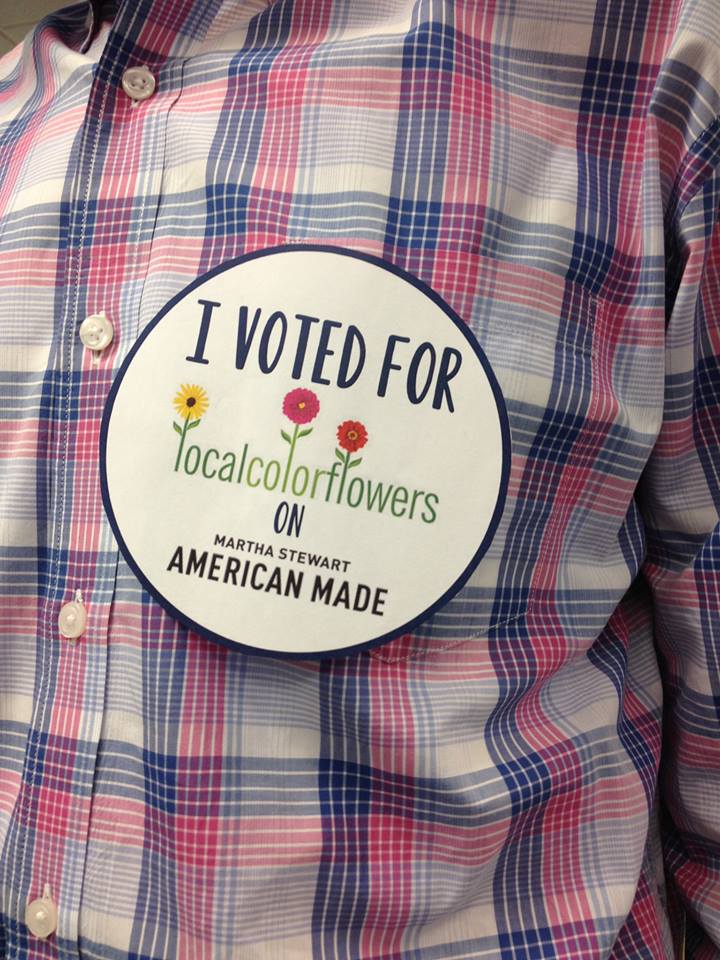
Vote for your favorite SLOW FLOWERS florist: Ellen Frost’s Local Color Flowers of Baltimore, Maryland


Our Mission

Ellen_LoCoFlo

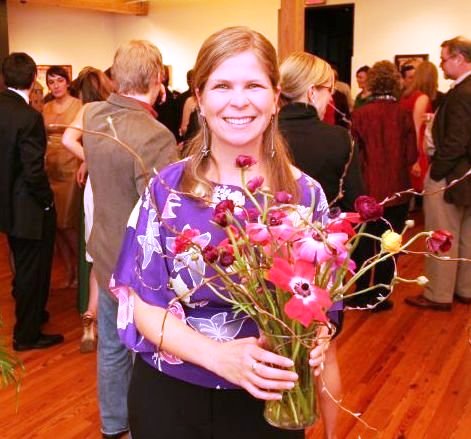
Creative florist Ellen Frost, founder of Local Color Flowers in downtown Baltimore.

Local Color Flowers is a Baltimore-based floral design business. We create personalized arrangements and bouquets from fresh, seasonal, and sustainable flowers cultivated by local specialty growers. We are committed to responsible use of resources, supporting the local economy and promoting neighboring farms. We provide our clients an environmentally and socially conscious alternative when purchasing flowers.

Our Vision

Local Color Flowers seeks to create and support a sustainable community; where people choose local products and services; where flower farms and farm families are thriving; where there is a diverse, strong local economy; and where people are connected to the living world around them.

Our Passion

We love flowers. We love our clients, growers, and partners. We are social entrepeneurs motivated by our relationships and the connections we create. We want our clients to know where their flowers were grown. We want our growers to know how our clients appreciate their products. We want all of our partners to know how we’re green. We want to share our joy and values through our flowers.

IMPORTANT LINKS:

Local Color Flowers’ web site

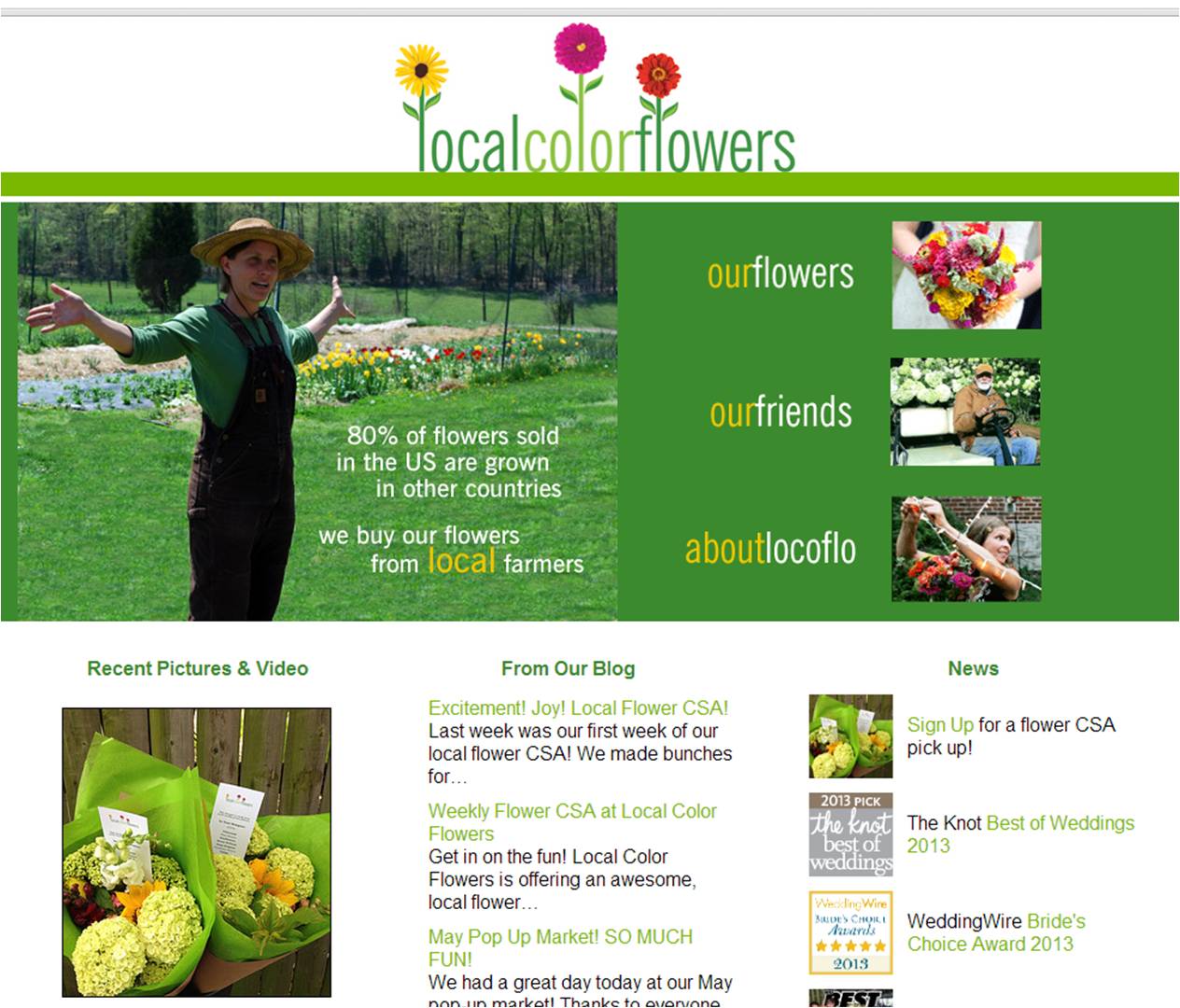
Home page for Local Color Flowers' web site.

Home page for Local Color Flowers’ web site. Note the compelling “promise” shared with customers who visit Locoflo.com


Martha Stewart's 2013 American Made Campaign.

Martha Stewart’s 2013 American Made Campaign.

Vote here for LoCoFlo on Martha Stewart American Made contest.


Ellen at Work

Ellen at work, designing one of 100 weddings and events on her calendar this year.

#Friendlyflowers with Kathleen Williford & Debra Prinzing

Tuesday, September 10th, 2013

Maybe we’re onto something here!

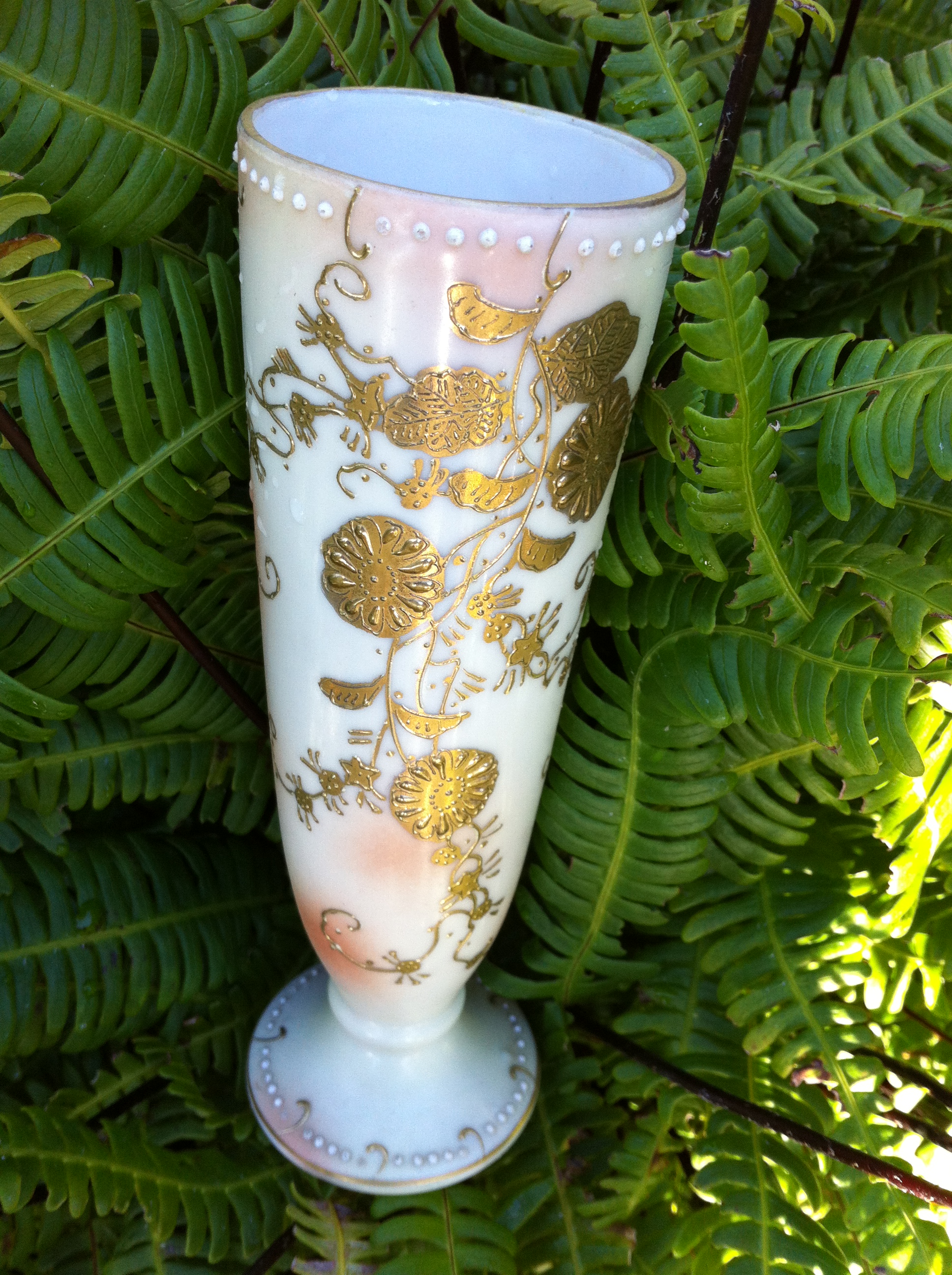
vase from Kathleen to Debra

Here’s the vase I received in the mail, which Kathleen Williford found online.

It all started just before Labor Day weekend on August 30th, when my friend Kathleen Williford, special events manager for the Monterey Bay Greenhouse Growers event, texted to tell me she had fractured the bottom of her fibula. “My ankle will not stop me,” she texted. But still, for a very active person, Kathleen felt sidelined. And I could tell she was discouraged.

“We should come up with a joint project,” I texted back. “How about a $10 challenge to find the perfect vintage vase online?”

“OK, you are on!,” she typed. “So we find the vase online, flowers local, $10 max.”

September 5th:

“A beautiful vase arrived today,” Kathleen texted. “I LOVE it!” I had sent her a vintage olive-green glass pedestal vase, just like one I own (and LOVE). Kathleen admitted to not really having much experience arranging in pedestal vases, however, she also admitted to being a sucker for colored glass anything.

September 6th:

“Just arrived! So lovely!,” I texted when the vase Kathleen ordered for me arrived. The slender porcelain vessel was embellished with a gold filigree design. And it had this imprint on the base: “Made in occupied Japan,” which I think means it was manufactured during the American occupation of Japan after World War II, from 1947 to 1952.

Yesterday we both posted our respective vases on Facebook, Twitter and Instagram, letting people know about the #friendlyflowers challenge. One of my friends saw the photo of the vase Kathleen sent me and she commented: “It’s so gypsy euro retro-ish!” — love that description.

Today, September 10th, Kathleen and I posted our designs. Here is mine:

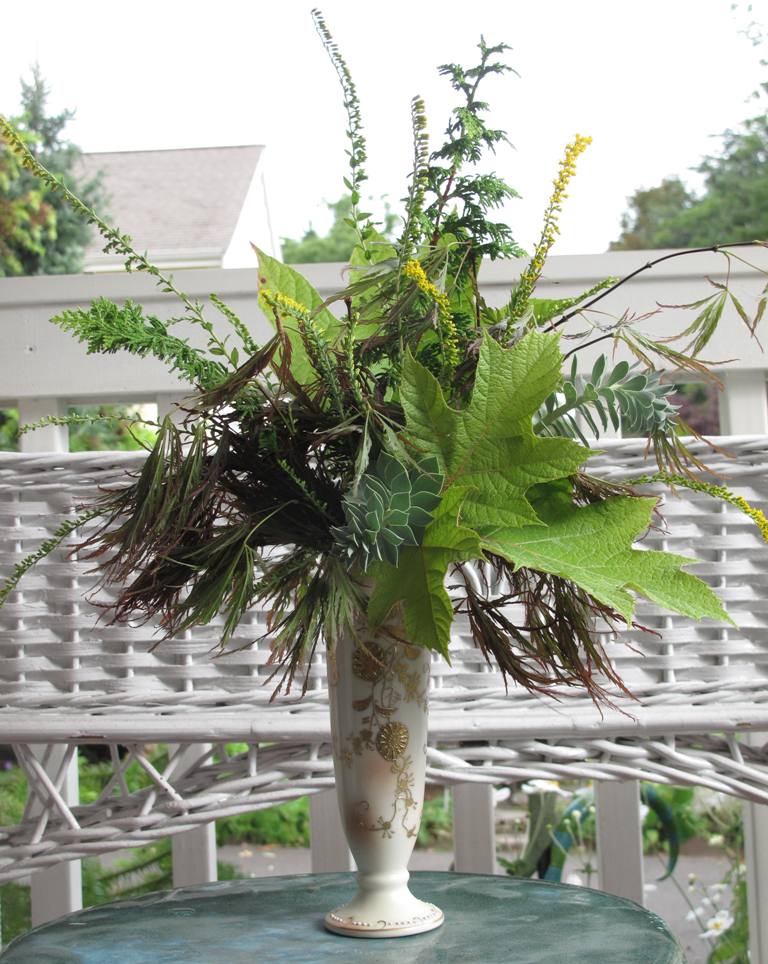
Friendly Flowers 1.0

A truly local bouquet using all foliage from my garden and my neighbor’s garden. In a very special #friendlyflowers vase

Ingredients include all the goodies I was able to glean while gardening this week:

  • Burgundy Japanese maple foliage, deeply cut. This is a weeping form tree, so you can see how nicely those fringed leaves drape
  • Goldenrod (Solidago rugosa ‘Fireworks’), from my neighbor Colleen. Actually, it’s a flower, not foliage. But I tried to get the greenest stems still in bud
  • False Hinoki cypress – one spray from a container plant (Chamaecyparis obtusa, unknown cultivar)
  • Euphorbia myrsinites (Donkey tail euphorbia)
  • Lime-green leaves from the oakleaf hydrangea (Hydrangea quercifolia), also in Colleen’s garden

Here’s the vase I sent Kathleen:

Green glass vase with beautiful square pedestal. Flowers: TO COME!~

See her finished bouquet at Kathleen’s Facebook page, Twitter (@kathinated) or Instagram (caflwrpower)

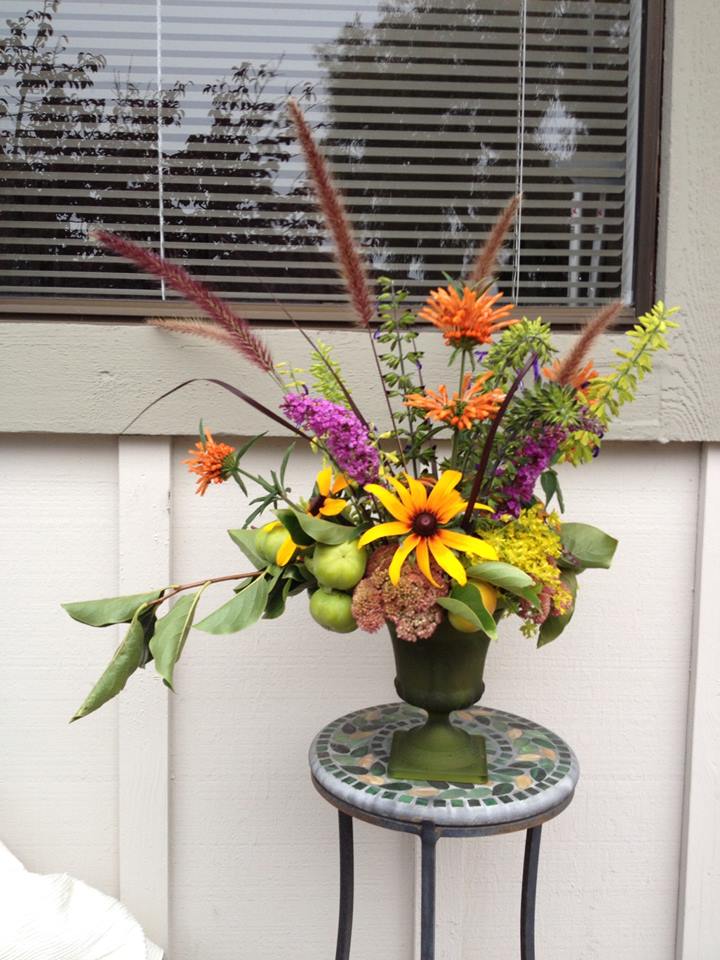
Here’s the bouquet from Kathleen, using flowers from her parents’ garden:

Kathleen used persimmons, sedum, grasses, assorted salvia, butterfly bush blossoms, and lions beard. Stunning~

Kathleen used persimmons, sedum, grasses, assorted salvia, butterfly bush blossoms, and lions beard. Stunning~

If you like this idea, we encourage you to start your own #friendlyflowers challenge. The rules are easy:

1. $10 maximum vase budget

2. Send a vase to your friend and have him/her do the same for you

3. Fill it with #americangrown #slowflowers – all local

4. Post and share to inspire other friendly flower lovers!

Color of the Moment

Saturday, September 7th, 2013
Detail of my color palette

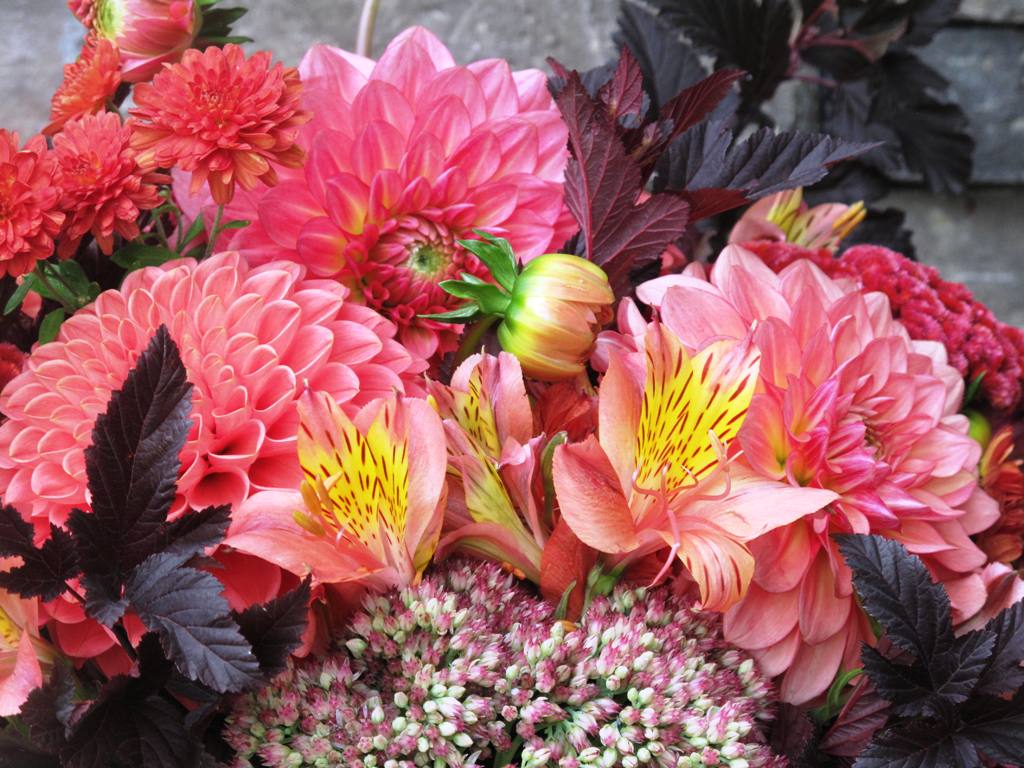
Coral pinks, rosy oranges, a touch of faded terracotta and some dark burgundy foliage.

The overall scheme of the flowers I played with this week is hard to name. I’ve come up with the following:

Terracotta Pink

Coral Pink

Peachy Apricot

Pinkish Orange

Faded Terracotta

I’m up for suggestions on how to describe these yummy colors!

Dan Pearson of Dan’s Dahlias grew the two types of dahlias – one leans more toward the pink end of the spectrum; the other is more like that faded terracotta color I mentioned.

The antique pink-hued Celosia were grown by Diane Szukovathy and Dennis Westphall of Jello Mold Farm.

As I was leaving the Seattle Growers Wholesale Market the other day, Janet Foss of J. Foss Garden Flowers handed me the bunch of alstroemeria as a gift. These little beauties have flecks of dark maroon on a pale orange-pink throat. I love the way they tie together the more solid colored flowers.

Peaches and Cream Trio

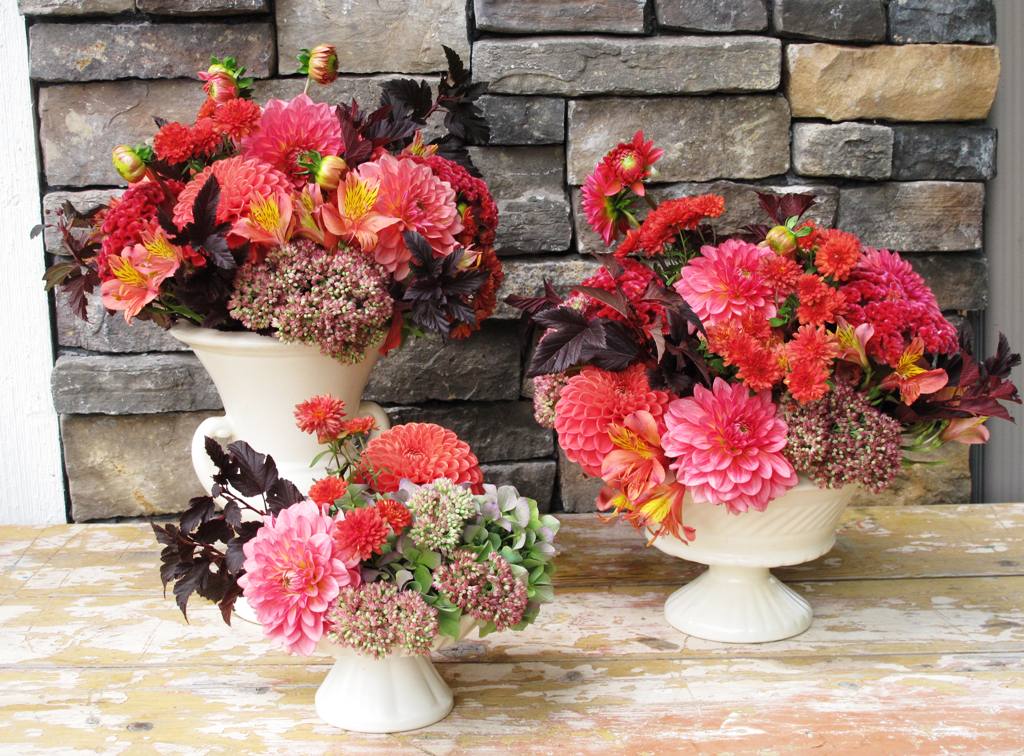
There is a peaches-and-cream (with rapsberries added) mood to this trio of vases.

I came home wondering what to do with these evocatove botanical elements. I pulled down three ivory vases – one is vintage Haegar; two are vintage Hull (from my recent trip to Iowa). It felt right to use these vessels, each of which has an eggshell-like color and texture.

I walked around my garden and snipped dark maroon foliage from the Ninebark shrub, which as you can see really helped to define the spaces between the flowers. I also snipped Sedum ‘Autumn Joy’ in pinkish bud and a few sprays of an inherited chrysanthemum, the flower heads toned dark terra cotta.

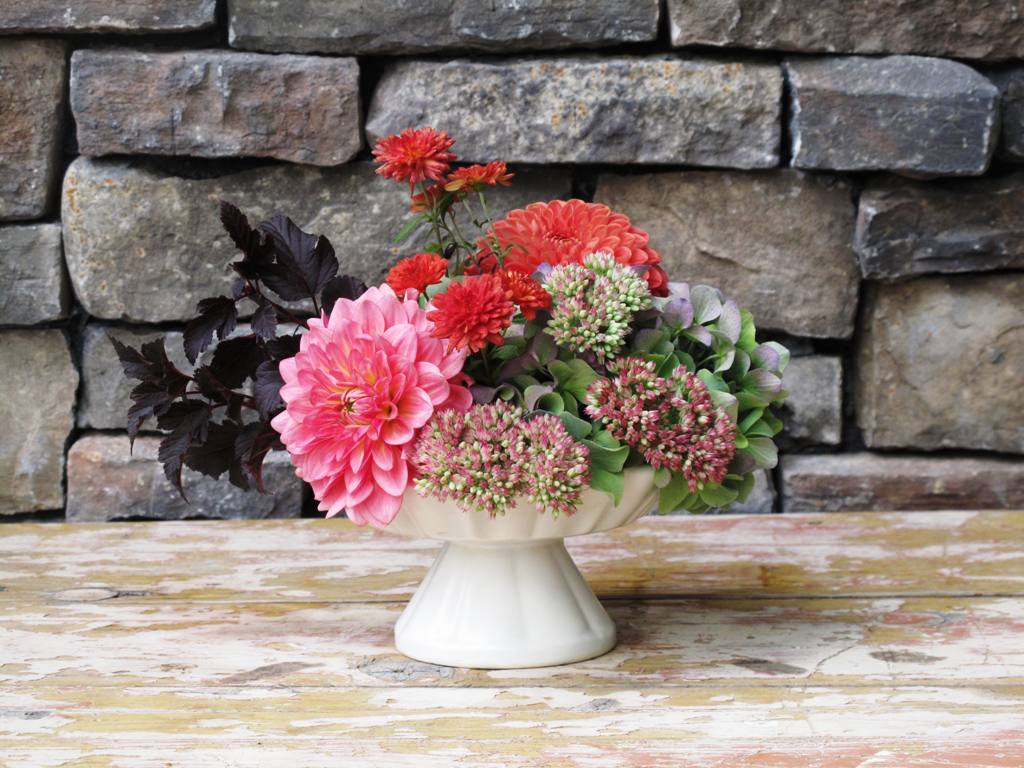
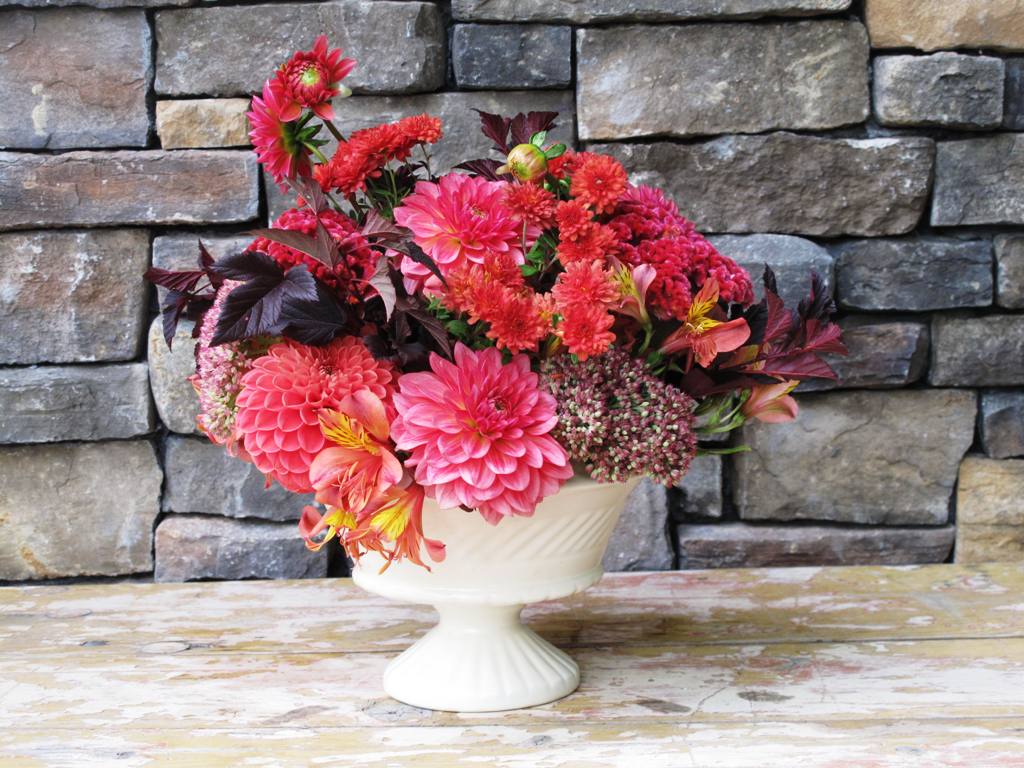
A few more shots, showing the designs for my medium and small vintage pedestal bowls:

Small Vase

This little saucer didn’t have a lot of room for stems. So I used a hydrangea flower as a fresh “frog” to organize the other short stems.


Medium Vase

A fabulous, creamy white vintage compote-style bowl, used with a cage-shaped flower frog for this color-intensive bouquet.

Everything seems to come together as a lovely gathering of a beautiful hue. The color of the moment!


SLOW FLOWERS: Week 35

Sunday, September 1st, 2013

Made – and Grown – in America

Dahlias and Callas Two Ways

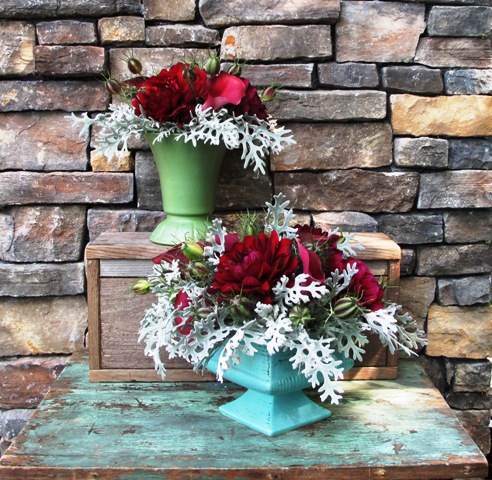
Two vintage vases with lovely matte glazes contain simple bouquets of ruby-red dahlias and calla lilies. The silvery Dusty Miller foliage ties it all together. 

Ingredients (for each vase):
11 stems Dusty Miller (Centaurea cineraria), grown by Charles Little & Co.
5 stems Dahlia ‘Naomi’, grown by Jello Mold Farm
5 stems ‘Hot Lips’ calla lilies, grown by Oregon Coastal Flowers
12 stems love-in-a-mist (Nigella damascena ‘Persian Violet’), grown by Charles Little & Co.
 
Vases:
6¼-inch tall x 5½-inch diameter vintage Haeger vase (green) 
5¼-inch tall x 5½-inch square vintage McCoy vase (turquoise)
 
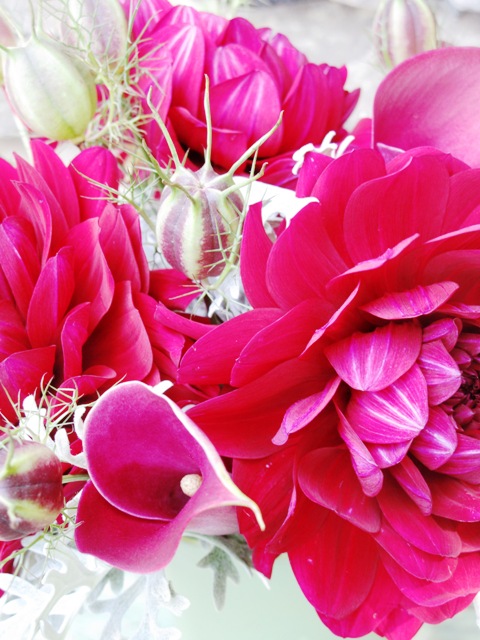
Detail

This detail photo shows how the calla lilies and dahlias are in perfect harmony with the little strips of the love-in-a-mist.

Eco-technique

Green couture: More than ever, floral designers and their customers are adopting green practices, and the vase itself is one important way to be more sustainably-minded. For example, instead of using inexpensive, made-in-China glass floral vases, I opt for something unusual (and usually just as affordable).
 
Great vases can come from flea markets, garage sales, thrift stores and hand-me-downs from relatives. For less than $15 at a time, I purchase a case of one dozen made-in-the-USA Ball canning jars – ideal vases for last-minute gift giving. In fact, I’ve trained my neighbors to return their jars so I can reuse them for future bouquets.


SLOW FLOWERS Podcast: Marketing Local Flowers the Co-op Way (Episode 103)

Wednesday, August 14th, 2013
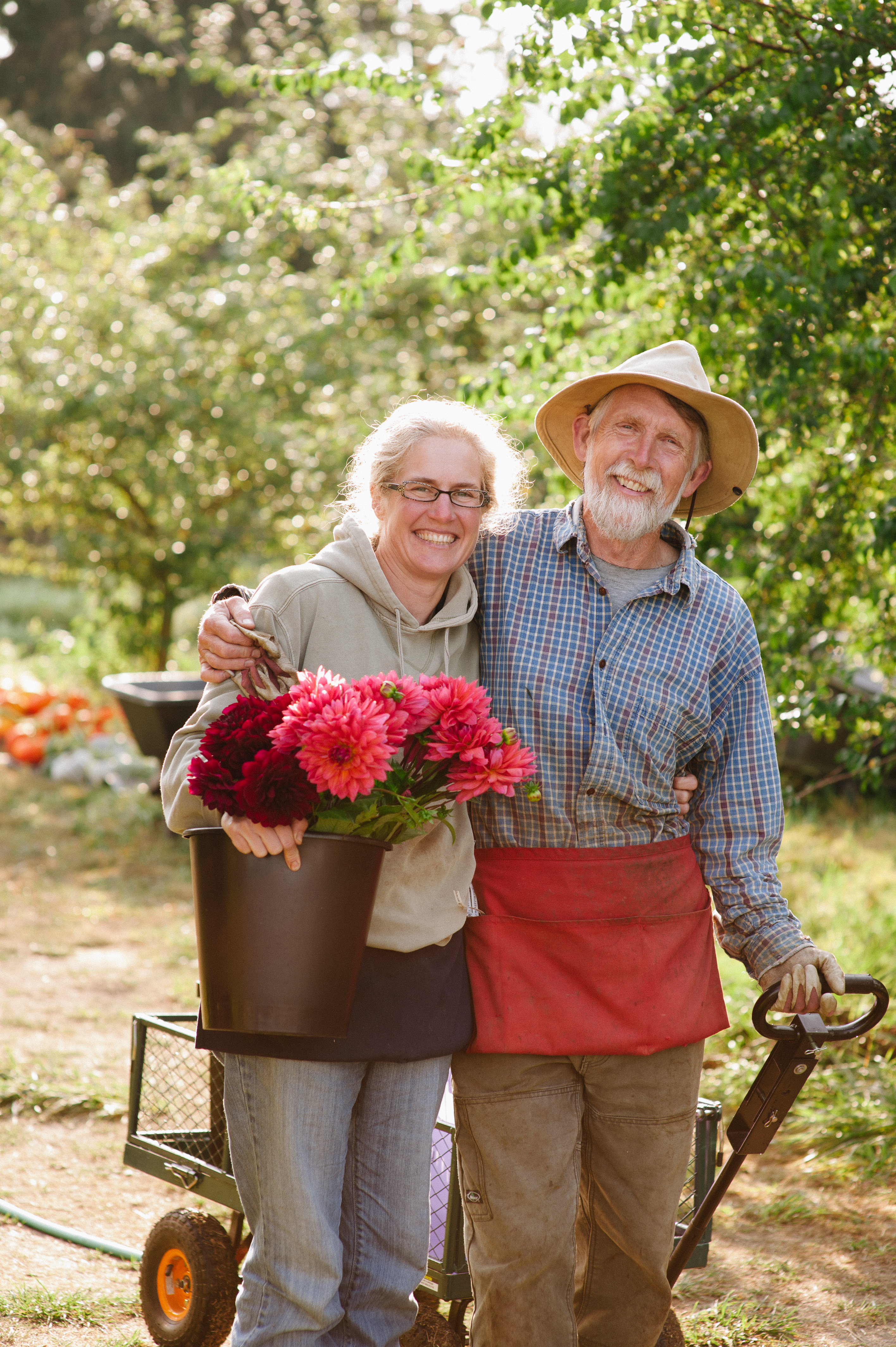
Diane Szukovathy and Dennis Westphall, photographed by Mary Grace Long (c) September 2012 at Jello Mold Farm in Mt. Vernon, Washington.

Diane Szukovathy and Dennis Westphall, photographed by Mary Grace Long (c) September 2012 at Jello Mold Farm in Mt. Vernon, Washington.

In this week’s podcast you’ll meet flower farmer Diane Szukovathy, the “cover girl” (along with floral designer Stacie Sutliff) of The 50 Mile Bouquet.

More than anyone I have met in the past five years, I credit Diane and Dennis Westphall, her husband and co-owner of Jello Mold Farm, with inspiring me and enhancing my understanding of what it means to be an American flower farmer. 

I’ve interviewed and written about Diane and Dennis many times, but in today’s episode, I wanted to zero in on some of the exciting news taking place at the Seattle Wholesale Growers Market. This is an innovative, farmer-owned cooperative that Dennis, Diane and several other pioneering flower farmers launched two years ago. Their tagline is: Farmer to Florist.

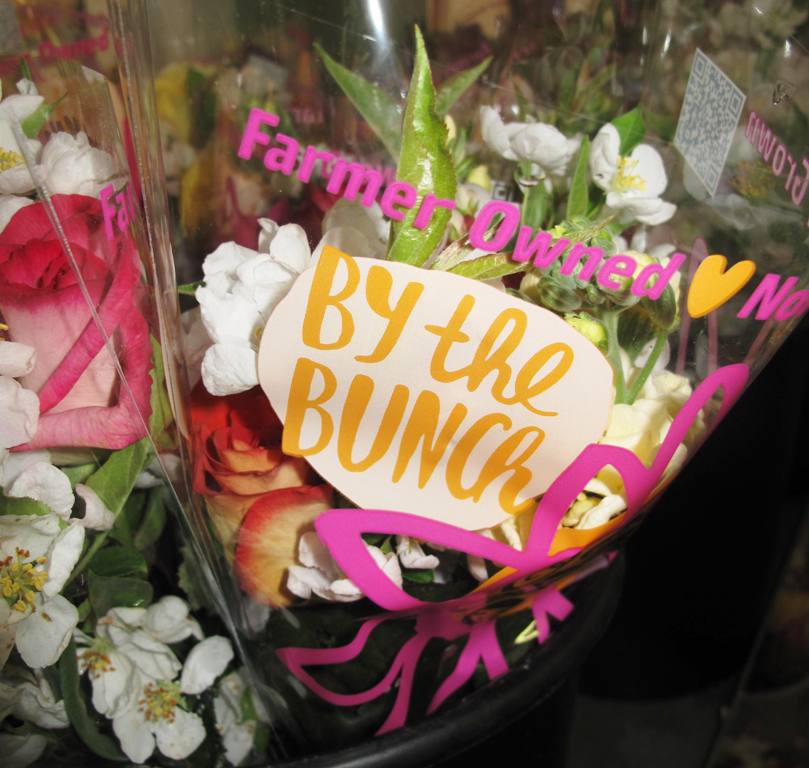
Listen to my conversation with Diane as we discuss the new supermarket/mass merchandising program called “By the Bunch.”

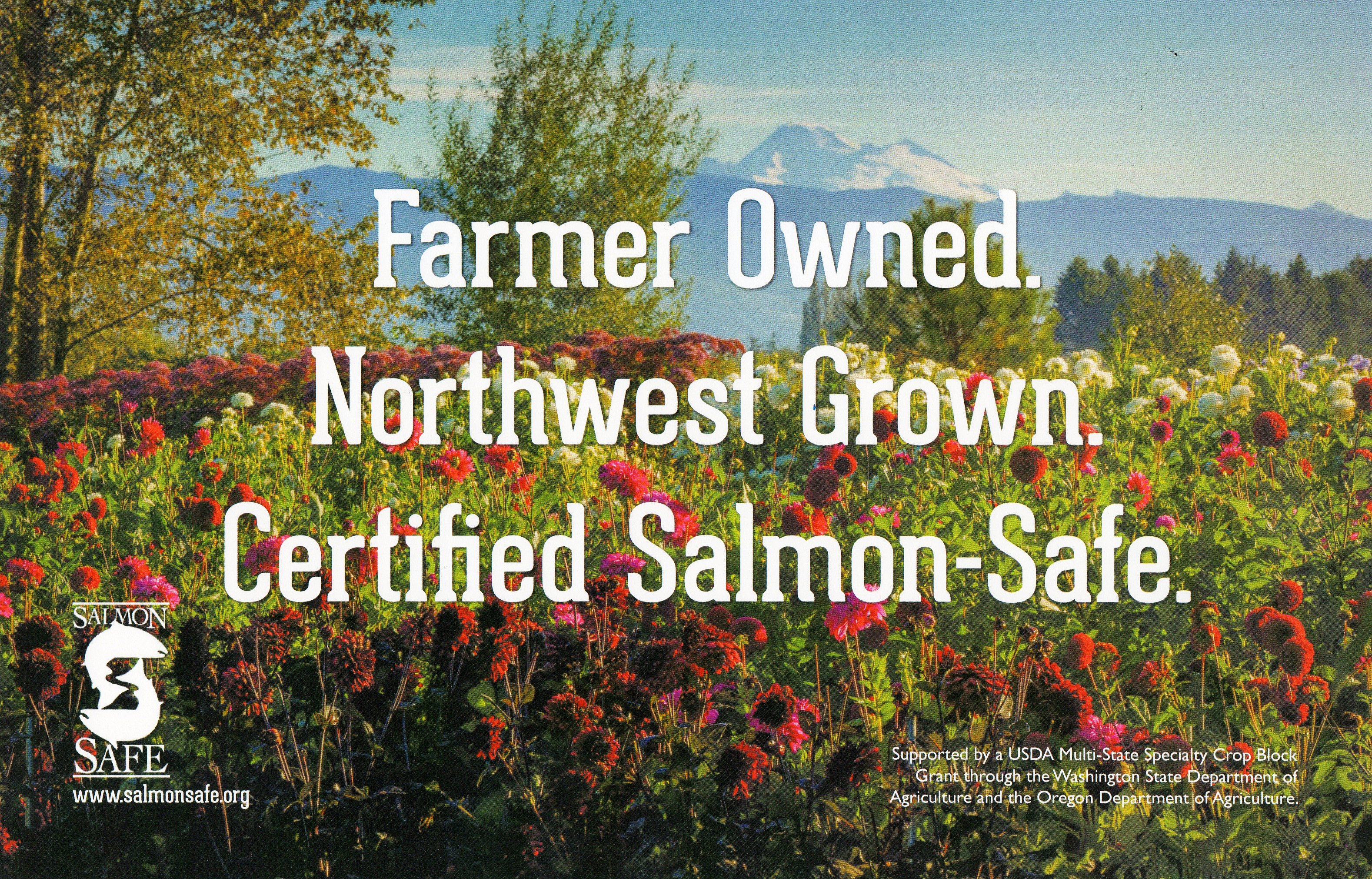
The flower-growers' co-op provides great messaging and branding to educate customers at point of purchase.

The flower-growers’ co-op provides great messaging and branding to educate customers at point of purchase.


By the Bunch

Remember this cool logo: By the Bunch. It means these gorgeous bouquets are possible because their ingredients were grown by a bunch of awesome NW flower farmers

This is a cooperative-driven model that was designed to connect local flower farms with volume market opportunties like grocery store floral departments. Diane explains how this new program came to be and why it has so much potential to increase the income stream for people growing cut flowers.

Click here for more background on Diane and Dennis of Jello Mold Farm.

Click here for news about the 2011 launch of the Seattle Wholesale Growers Market.

Click here for an October 2012 report about the grant funding that was used to launch the new mass market program.

Click here for the post I wrote this past spring when the By the Bunch bouquet program launched.