Debra Prinzing

Get the Email Newsletter!

Author Archive

A week filled with Stylish Sheds

Saturday, December 13th, 2008

About a month ago, while reading Alex Johnson’s wonderful blog, Shedworking, I saw his post about an artist named Sarah Lynch. She has spent 2008 posting an original painting EVERY DAY on her blog.

Alex had discovered one of Sarah’s posts from July, featuring a charming garden shed entitled “Shed with Hollyhocks.” It was enchanting and I immediately went to her blog and subscribed to receive her daily artwork. Sarah is an English-Canadian woman living in Southern Ontario. You can find her work for sale via her blog (where there are links to some online galleries also selling her art).

I don’t know her at all, but Sarah has brought me a small dose of happiness every morning. Opening the link to see her next piece is one of the very first things I do after making my cup of tea and sitting down to read email at the start of the day.

I think Sarah may love sheds as much as I do, because today she offers a charming piece entitled: The Lonely Shed (7″X5″ WC pencil on paper):

The year is almost over and I’m worried that Sarah may stop posting her artwork. I like reading her brief, personal artist statements that accompany each drawing, illustration or painting. She has alluded to her readiness for a slower pace, perhaps creating three paintings a week instead of seven. Get in on the last few weeks of the year and subscribe to this little piece of joy that will arrive in your in-box each morning. I, for one, am hoping for MORE SHEDS!

IN OTHER NEWS. . .

On Sunday (12/7) we received a mention in Irene Virag’s column in Newsday. She included Stylish Sheds and Elegant Hideaways in her “Gift List,” featured at the end of her longer piece on Ken Druse. 

Stylish Sheds and Elegant Hideaways (Clarkson Potter, $30): Author Debra Prinzing and photographer William Wright showcase 28 sheds from Southampton to Seattle. From clematis-covered potting sheds to writers’ retreats, these structures enhance lifestyles and landscapes.

READ MORE…

are you a SHEDISTA?

Thursday, December 11th, 2008

If you, like me, are enchanted with sublime and soulful backyard destinations once merely called “sheds,” consider yourself a Shedista

According to some Internet searches, the term Shedista has been appropriated (originated?) by the boutique wine industry. In France, these clever folks are called “Garagistes,” because they make incredible wine in their garages. Kind of an underground movement!

To quote Wordspy.com: “Shedista: A professional, low budget wine maker, particularly one who processes grapes in a shed-like building.”

I first discovered this term in Jay McInerney’s “Uncorked” column for (now defunct) House & Garden magazine: It was titled “The Shedistas.”

He wrote about a “warehouse gang” of Santa Barbara winemakers who “maxed out credit cards to rent a shed, buy a few tanks and a few tons of Syrah grapes, design a label, and make [their] own wine.”

Those who know me well know I have no desire to steal a moniker from winemakers. However, if you do an Internet search of the word, I bet you’ll find nearly three-quarters of the Shedista entries appearing are ones that I’ve generated. Yup, I’m out to change the meaning of this alluring term.

Here’s my definition: “Shedista: A person who creates and occupies a small-scale shelter in the garden for personal enjoyment and the pursuit of any creative passion.”

My UK shed friend, Uncle Wilco, who publishes a blog at his We [heart] Sheds site, calls himself a “Sheddie.” It’s a close cousin to “Shedista,” and we can all feel free to use both terms! Another friend coined the word Shedquarters to describe his backyard office. In other words, shedistas find shelter in their shedquarters. I like it!

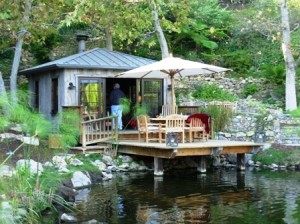
If you wish to see some of the very best examples of personal escapes, aka “sheds,” check out my book: Stylish Sheds and Elegant Hideaways. Welcome to all Shedistas!

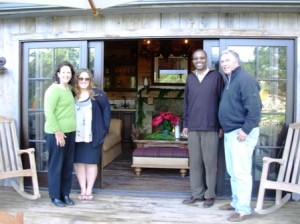
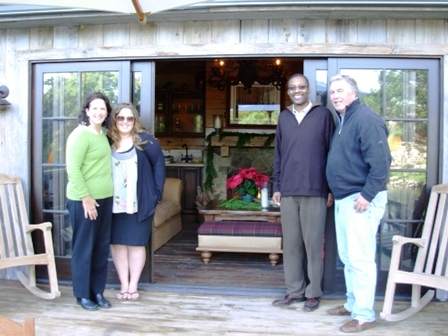
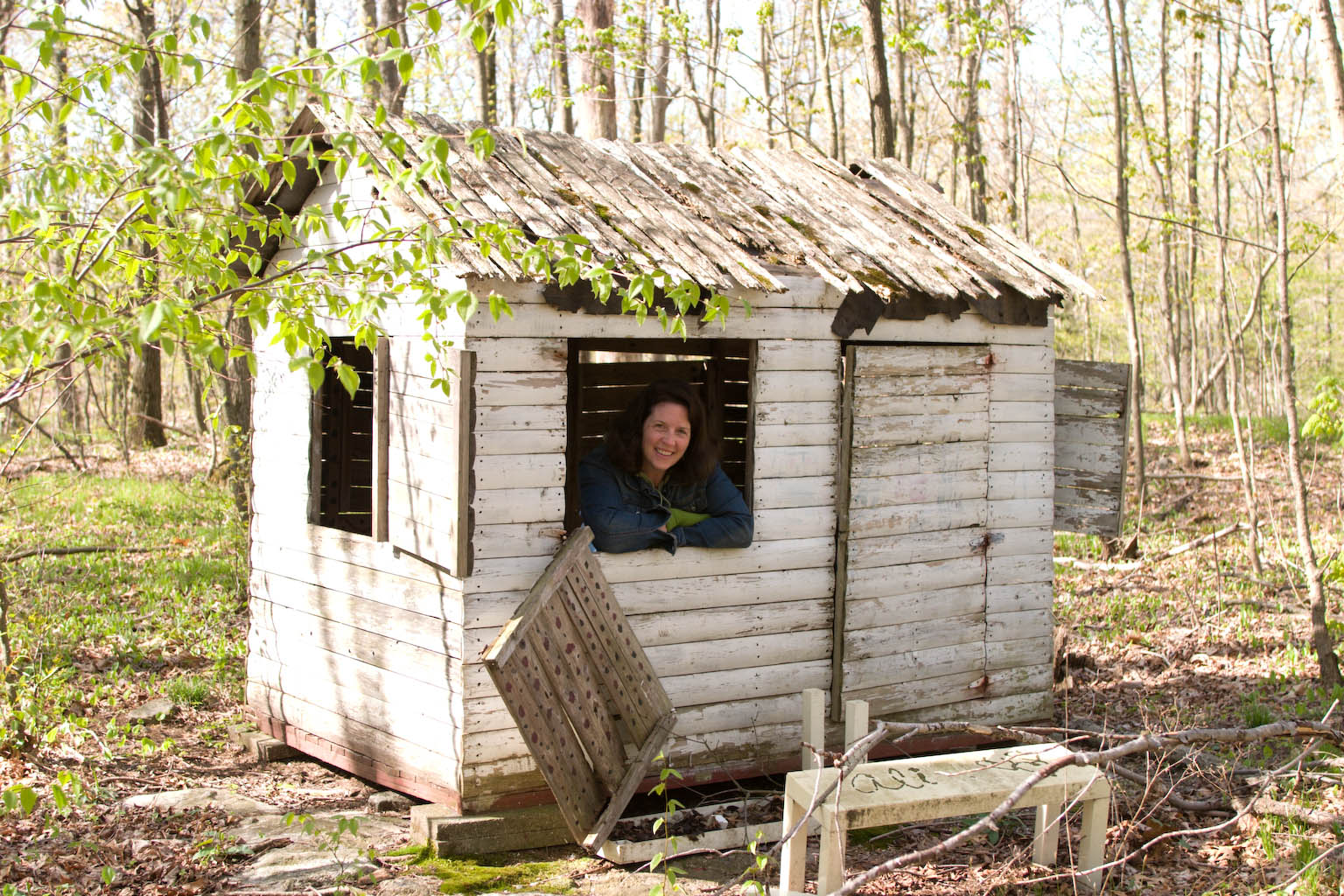
Photos: (c) William Wright; top left: taken in July 2007 in Atlanta – in the doorway of Betsy Hansen’s beautiful potting shed. Lower right: taken in May 2007 (as a joke) at an abandoned child’s playhouse in Connecticut. We were on location at author Amy Bloom’s property and noticed this “shack” on a hill near her property. We couldn’t resist!

A Post-Script, Uncle Wilco just tipped me off to his December 14, 2006 post “What is a Shedista?” in which he quoted the same Wordspy definition I’ve used. I like what he wrote after that:

sounds great, but who is someone who brew beer in their sheds, maybe a shedbrewhaha

As I wrote in a reply to him: Of course, while I was running around the country trying to find sheds to photograph and write about, there he was . . . steps ahead of me! Thanks Uncle Wilco!


Building raised beds for the vegetable garden

Sunday, December 7th, 2008

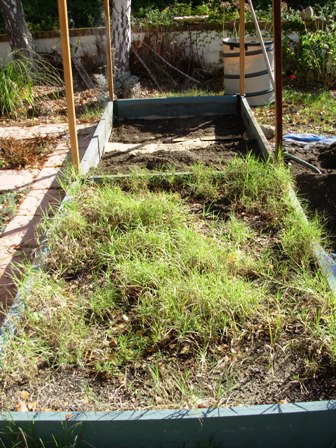
The subtitle to this post should be “Haste makes waste.”

But before I tell you my woeful tale of rushing a gardening project and living to regret it, I will tip you off to a wonderful product that helps non-carpenter types like me build raised beds for backyard vegetable gardening.

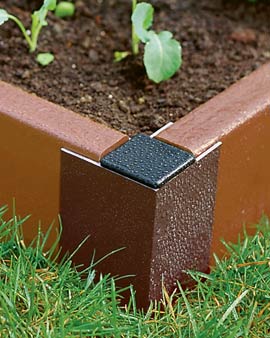
Gardener’s Supply has designed and fabricated a very cool piece of hardware – a corner bracket – that allows you to build a raised bed rather simply, with sections of lumber. Having previously built wobbly raised beds with L-shaped brackets screwed inside two 2-by-10s at a 90-degree angle, I think this Gardener’s Supply solution is far superior (see corner bracket, left).

All you need are four powder-coated, aluminum corner brackets. Slip the boards into the fitted sections of each bracket and secure them with Philips screws inserted in the pre-drilled holes.

There are also side brackets that allow you to extend the raised bed from 4-feet to 8-feet long.  And not to sound too Xenophobic, but – hurrah! – these brackets are made in Vermont by Gardener’s Supply. It really is nice to know that something is still manufactured in the U.S. of A. these days.

So, to create one 4-by-8 foot raised bed, you need the following:

  • 4 pieces of 2-by-10 lumber measuring 8 feet long
  • 3 pieces of 2-by-10 lumber measuring 4 feet long
  • 4 corner brackets from Gardener’s Supply
  • 2 side brackets from Gardener’s Supply

READ MORE…

Gifts for Gardeners: Hoe, HOE, Hoe

Wednesday, December 3rd, 2008

Garden writers often dread the perennial assignment that happens around August or early September when an editor summons us to say: “It’s time to do that round-up story on holiday gifts for gardeners.” 

For as many of these puff-pieces that I’ve written over the years, I guess people really do read them. I’ve witnessed first-hand how such stories influence the behavior of desperate gift-givers with the calendar racing toward December 25th.

One year, when I was “The Weedy Reader” newsletter editor at Emery’s Garden nursery in Lynnwood, Washington, we sent around gift ideas to local columnists. We had this rather funny non-gardening item ~ a paper-mache pig with wings. It was about the size of a piggy bank. We had them hanging from the ceiling of the cashier-checkout area and someone (probably Amy Tullis, our genius marketing manager), put up a sign that read: When Pigs Fly.

The famous and widely-followed Ann Lovejoy picked up on the pun and mentioned Emery’s pig-figures in her column for the Seattle Post-Intelligencer. We couldn’t keep those pigs in stock. They really did fly — straight out the door! There were piles of fine hand tools, lovely leather gloves, and beautiful plant books. But everyone wanted a pig. Who knew?

This year, a few really good ideas just plopped in my lap from the gift gods. I’m sending up thanks to them this very moment (I should actually call this unseen, heavenly entity “The Patron Saint of Deadlines,” because he/she has so often appeared just when I so desperately need an idea while on deadline!).

I met a few people at the Garden Writers Association annual symposium who suggested ideas; I received some other tips unsolicited by mail. Editors and their market scouts even did some of the legwork for me. Yay! Oh, I did find one great gift all by myself – an ExOfficio hat that I purchased at SeaTac Airport. It’s probably designed for people who go fly-fishing, but I think it’s an excellent gardening hat.

I wrote two December stories – one for Seattle Homes & Lifestyles and one for 805 Living Magazine. Isn’t that funny? The former periodical is published in my prior environs – Seattle; the latter is circulated here in Southern Cal’s Ventura and Santa Barbara Counties, where I now reside. Is it possible to be contributing garden editor for both? I really do have two lives!

Before I run Debra’s list of great gifts for gardeners, I want to tell you what I’m giving my gardening pals this year. The idea is part of the Alternative Christmas Market that my parish is hosting this Sunday. I’ve already perused the fine catalog of gifts with meaning for worthy causes in Haiti, Kenya, Mexico, Thailand, Turkey and our own country.

One program in the catalog really stood out to me. It’s run by FLORESTA, a non-profit Christian agency that “plants hope” in communities through environmental restoration, community development, micro lending and more. 

Floresta’s programs enable farmers to make the best possible use of the resources available to them. Programs teach agroforestry, reforestation, soil conservation, and a host of other sustainable techniques. One way to support Floresta includes funding the planting of trees to restore deforested areas ($10 pays for an orchard of 10 trees; $100 pays for a forest of 100 trees). You can also finance a small farm loan ($25 pays for a vegetable garden; $100 pays for an agroforestry loan). I like the idea of giving a gift on behalf of one of my gardening friends to truly help a person in need change their life for the better. Imagine: giving up lattes for a week could transform the lives of a family in need? Gardening is truly a powerful source for change around the world

Read on for OTHER HOLIDAY GIFTS GARDENERS WILL LOVE:

READ MORE…

December has arrived!

Monday, December 1st, 2008

It was 74 degrees and sunny here today in Southern California, but I have wintry visions dancing in my head.

To get into the holiday spirit (even though the leftover turkey and stuffing is still packed in the fridge), I picked up the December issue of Better Homes & Gardens magazine, out on newsstands now. That’s where my pal Susan Appleget Hurst serves as the talented senior associate editor for gardens and outdoor living. She blogs as The Everyday Gardener (with colleague Eric Liskey).

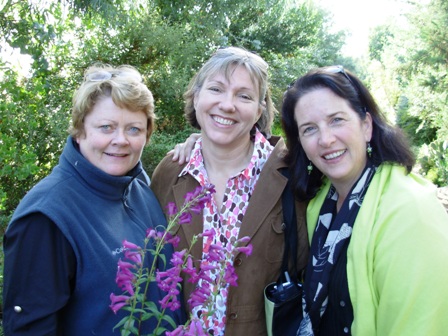
When we were last together in September, Susan mentioned that she had worked on a wintry design for iced botanical containers to hold votive candles. (Photo at right: Mary Ann Newcomer aka Idahogardener.com; Susan, and me, taken while gallivanting around Portland in September).

The idea Susan described sounded gorgeous and sparkly, a creative new way to use favorite ingredients from the garden — leaves, berries, colorful branches and conifer sprays — for holiday decorations. Her twist on the traditional luminaria even found a new use for poinsettias, which are rarely successful as cut flowers.

I spoke with Susan today and congratulated her on the alluring designs, which are splashed across five pages of the magazine. She sent me a web link to a BH&G video demonstration, which makes the project easy-to-understand and replicate.

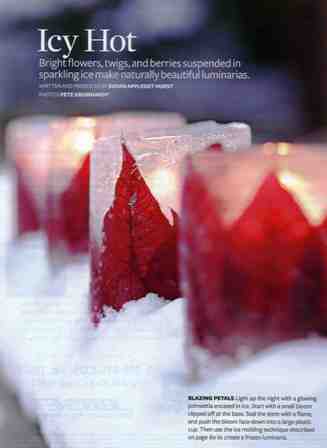
All you need are a few ingredients and space in the freezer to transform a watery concoction into frozen floral luminarias. Susan’s article begins on page 58 of BH&G. It’s titled “Icy Hot: Bright flowers, twigs, and berries suspended in sparkling ice make naturally beautiful luminarias.”

Susan has a culinary and herb-gardening background, so it didn’t come as a surprise to learn that she has used a similar technique to freeze blooms and herbs into ice rings to float in punch bowls. That handy trick, combined with the editorial challenge of showing readers new ideas for using their garden during the depths of winter, added up to the holiday-on-ice project. The frozen floral ring, best employed for a summery brunch, also taught her that distilled (rather than tap) water is preferred because it freezes clear rather than cloudy.

Susan first captured ruby red poinsettia bracts in a flexible plastic container, arranging each leaf so it’s evenly spaced (see finished project, above). Pour in a little bit of water, say 1/2-way to the top. Then insert a smaller plastic cup, sinking it with a few stones. Pop the entire vessel into the freezer until it’s frozen solid. There are tips in Susan’s article for choosing the right containers and for slightly thawing your creation in order to remove the finished product from the plastic molds.

The poinsettia votive holder was so successful that Susan experimented with colorful cut branches, arranged to stick out around the top of a luminaria like a beautiful nest for an exotic winged creature.

“How on earth did you fit that into the freezer?” I asked.

She laughed and pointed out that the water-and-branch-filled mold (actually a big plastic cake carrier) froze in the outdoor environment of her Des Moines, Iowa, backyard.

“I just needed sustained, freezing temperatures,” she added (assuring me that these conditions do not occur every winter in Des Moines, but they did last year when Susan played around with this project).

Um, okay. Well, since we don’t have an open-air freezer here in my SoCal yard, perhaps I’ll stick to Susan’s smaller projects. Like the ones that use 1-litre and 2-litre pop bottles with the tops cut off.

The Icy Hot story illustrates Susan’s gifted floral design skills. She’s got more tricks up her sleeve and you can find them in future editions of Better Homes & Gardens. Here’s what I managed to get out of her: The February 2009 issue will feature Susan’s inspired new way to design with forced branches and fresh flowers. In April 2009, look for her egg story. I don’t want to give away the details, but suffice it to say she is NOT cooking an omelet or quiche with her eggs!

Happy December. I hope it’s filled with joy and peace for everyone.

What’s a Ramada?

Monday, November 24th, 2008

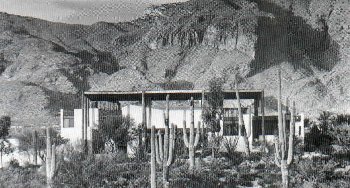
If you’re following my ongoing Glossary of Garden Architecture, check out this just-added “definition” of a Ramada. [photo source: Arid Lands Newsletter, 1989]

Part arbor-trellis, part pavilion, the open-air structure protects and shelters its occupants from the high-noon sun and also invites breezes to cool and comfort.

According to Allwords.com, the word ramada appears in at least two citations of American literature – in 1909 (Vanished Arizona, by Martha Summerhayes) and 1992 (All the Pretty Horses, by Cormac McCarthy).

1992: “They sat in the shade of the pole and brush ramada in front of the place and sipped their drinks and looked out at the desolate stillness of the little crossroads at noon. ” Cormac McCarthy, All the Pretty Horses

1909: (footnote) “A sort of rude awning made of brush and supported by cottonwood poles.” Martha Summerhayes, Vanished Arizona

Read further to discover why it’s important to learn and understand regional influences and cultural origins of architectural terms like ramada.

A shed that walks

Saturday, November 22nd, 2008

Couldn’t resist sharing this wacky invention called The Walking House, which appeared in the New York Times’ House & Home section two days ago.

Apparently, the design of this jet-black structure, which looks like a giant, six-sided building-block with “windows” on each end, was inspired by 18th and 19th century Gypsy carriages.

A Danish art collective called N55 created it during a residency at the Wysing Arts Center in Cambridge, England (The Walking House photo is from this web site).

Envisioned as a “high-tech form of nomadic living,” The Walking House measures 60-square-feet. Inside: a bed, a kitchen, a toilet, a shower, and a wood burning stove.

The computer-controlled legs were created by a M.I.T. engineer. You can watch a little video of The Walking House’s snail-like movements here:

httpv://uk.youtube.com/watch?v=CvxIB83Y0PA

There are some pretty funny comments – hundreds of them, actually – on the YouTube post. I’ll paraphrase three that caught my attention:

What happened to using good, old-fashioned wheels?

What about just walking – you could move a lot faster!

This looks like it was designed for obese people to transport themselves to McDonald’s for a Big Mac

Uh-huh. I dunno, it seems like a lot of work to get this behemoth on six legs to s-l-o-w-l-y meander at the speed of 196 feet per hour.

All I know is that the real Gypsy carriage I visited in Sun Valley this past summer seemed quite a bit more sensible – and it has four old-fashioned wheels.

Inside, there is a full-sized bed, a little cooking area, charming lace curtains, and lots of appeal! Imagine sleeping here, with the canvas roof overhead like a big canopy.

Throw open the door and watch nature’s display; or, perch on the steps with a mug o’ coffee and admire the sunrise. Glorious!

This green-and-red Basque sheep wagon was restored by a craftsman named Cotton Riley (how’s that for authentic?) for Cindy Hamlin, a passionate garden designer and friend of Mary Ann Newcomer’s. I felt very lucky that Cindy shared her hideaway-on-wheels with me!

Cindy’s abode may not be high tech, but it’s got a whole lotta character – and I bet it’s more comfy than The Walking House, too. Vive le difference!

Here’s what I’m reading – a blogging “meme” (or is it a “tag”?)

Thursday, November 20th, 2008

I’m the kind of person who may be vaguely aware of a trend but I don’t have a clue what it’s actually called.

Case in point: the hip blogging term “MEME.” I kept hearing about this word, but didn’t know its meaning. I thought perhaps it was an acronym (as in multi-electronic-marketing-expression – huh?).

When I moderated the “Blogging Success Stories” panel at the Garden Writers Association annual symposium in September, Dee Nash of Red Dirt Ramblings made a comment about “meme” this and “meme” that. I just smiled and nodded, as if to say: Oh, I am in the know. I really get what you’re talking about.

Except I didn’t. That’s how non-technical I am.

Then last week, my friend Lorene Edwards Forkner sent me a “tag” challenge, one that she received from another Internet girlfriend, “Flowergardengirl” (aka Anna). I received Lorene’s nudge, but I’ve been so swamped that my follow-through has been belated for seven days.

I looked up the word MEME, which I thought might apply to Lorene’s “what are you reading right now?” tag, and discovered the following:

Meme: (Noun) A unit of cultural information, such as a cultural practice or idea, that is transmitted verbally or by repeated action from one mind to another.

Okay, tonight is the night. I’m down to one kid (the other kid is performing in a play and has informed me he is going to the midnight opening of teen-vampire flick “Twilight” after his show – who cares about first period choir tomorrow anyway? And husband Bruce is conveniently away at a 2-day graduate school commitment), so I can finally sit down and “play” with Lorene. She understands the delay and distractions. I know she does!

The challenge is as follows: Grab the nearest book at hand (no fair looking for something intellectual, just what’s within arm’s reach of your keyboard). Turn to page 56, go to the 5th sentence and post your results – include the 2-3 sentences that follow to provide some sort of context. Then turn around and “tag” 5 or more blogging friends to do the same.

READ MORE…

Gifts from the Gardener

Thursday, November 20th, 2008

The month of November seems to generate an abundance of magazine articles about being “thankful.” For many of us, the notion of giving thanks is top of mind this season. Not only am I hugely grateful for my family, friends, home, garden and writing career, I’m so often reminded how rare these gifts truly are.

When it was time to write my “In the Garden” column for the November issue of my local magazine, 805 Living, my editor Lynne Andujar mentioned choosing Volunteerism as the month’s theme. You can see how nicely this idea is communicated on the cover, which reads: “Give Thanks, Give Back.”

The assignment made me think of Master Gardeners, some of the most volunteer-minded souls in the gardening world. I first learned about the MG program in the early 1990s, when my friend Jean Zaputil trained as a Master Gardener in King County, the local Seattle area program. I was always so impressed that Jean did this, especially when she managed the herb department for the local MG plant sales. That experience, combined with her BFA in Interior Design, soon led Jean to start her successful landscape design business.

Wanting to expand my own horticultural knowledge about the time I was trying to switch from business writing to home and garden feature writing, I applied to enroll in the 1998 Master Gardener class (also in King County). I spent many enjoyable years actively involved with the organization, including three years as PR chair for our annual plant sale.

When I moved to Southern California, I thought I’d re-apply and get in on the excellent training that comes directly from local horticultural experts. That’s when I discovered the Ventura County MGs require trainees to volunteer (“give back”) 80 hours of community service in their first year. The math just didn’t add up for me, at least at this time in my life. But the application and interview process introduced me to my local MG group, and piqued my interest in learning more.

What better way to get to know the Master Gardeners in my own back yard than by writing about them? (I always say that “I write in order to learn,” so it makes sense!).

READ MORE…

Tree Houses (Huts? Sheds?) in Manhattan

Monday, November 17th, 2008

Alerted by my British shed-pal Alex Johnson, of www.shedworking.co.uk,  to news that a village of tree houses had sprung up in Manhattan’s Madison Square Park, I was determined to see the spectacle with my own eyes. While in NYC for a brief 48 hour visit last weekend, I added a stop at this midtown Manhattan public exhibit of sheds-in-trees.

My son, Ben, and I spent 2 days in New York, en route home from a not-so-happy occasion (my mother-in-law’s funeral). The exposure to theater and art was a welcome respite. Last Sunday, before departing to take the train out to JFK Airport, we squeezed in a subway ride on the Downtown R train to 23rd Street & Fifth Avenue.

Emerging from underground into the beautiful autumn weather, we crossed the street and entered a verdant, 6.2-acre patch in the heart of urban hustle. Looking up, built around the trunks and suspended amid branches of six or seven tall shade trees, we spied the underneath sides of the Tree Huts. While quite humble, constructed with an apparent lack of precision from 2-by-4s and nails, each little hut seems perfect in its imperfection. The mere essentials of shelter are provided: roof overhead; floor beneath; walls to protect; window or doorway for access and light. All that is missing is a rope ladder or steps made by pieces of lumber nailed up the tree trunks. I was eager to scramble the heights and enter one of these engaging structures!

READ MORE…