Debra Prinzing

Get the Email Newsletter!

Episode 740: The Lily Episode with Jessica High of Flamingo Holland Bulbs and Peterkort Roses’ Year-Round Lily Program with Norman Peterkort and Sandra Laubenthal

Wednesday, October 29th, 2025

We’ve been working closely this past year with lily bulb growers around the country, with the goal of providing more lily education to both farmers and florists. For today’s Lily Episode I wanted to learn more about what’s required to have a year-round lily program. I began my conversations with Jessica High of Flamingo Holland Bulbs, a Southern California-based vendor of Dutch-grown lily bulbs for specialty cut flower growers. That’s followed by a visit to Peterkort Roses, a longtime Slow Flowers member, known not only for growing beautiful roses, but also for Oriental, Asiatic, and LA Hybrid lilies around the year. I toured the lily greenhouse with Norman Peterkort, followed by a more extensive conversation with his sister, Sandra Laubenthal, who manages their lily program. What a great introduction to this beautiful and classic flower – I’m mesmerized and you’ll be, too.

Lily design inspiration

I’m excited to bring you today’s conversation about the world of easy-to-grow lilies. If you’re a field farmer, or a garden grower like me, lilies are stars of the summer season. But, amazingly, lilies can be planted to bloom in succession, with  year-round availability. At Peterkort Roses, that means growing Oriental, Asiatic, and LA Hybrids undercover in their heritage greenhouses in Hillsboro, Oregon, outside Portland.

Peterkort Roses in the lily greenhouse

By planting lily bulbs in crates on a weekly succession of about 1,500 lilies per rotation, Peterkort ensurses that lilies are available for Portland and Seattle area florists who have standing orders for their coolers, and for event designers who need dazzling lilies for statement pieces and installations. For each floral holiday, from Christmas and Valentine’s Day to Easter and Mother’s Day, to the fall harvest table, the lily has a perennial presence in Peterkort’s lineup of local blooms.

'Mikaela' lily
‘Mikaela’ lily

As we discuss, innovations in lily breeding are pushing the envelope with double lilies, a wider palette of lilies, as well as fragrance and pollen-free varieties. And those features are attracting a new batch of customers, from the farmers’ market buyer to the client with a luxury vibe.

The episode introduces lily bulb vendor Jessica High, of Flamingo Holland, based in Southern California. Then we jump to Peterkort, which sources lily bulbs from a number of distributors, including Flamingo Holland.
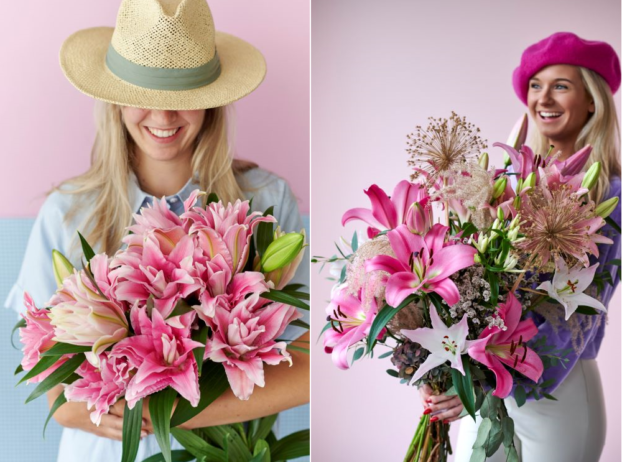
Armloads of lilies -- who could resist?!
Armloads of lilies — who could resist?!

Find and follow Peterkort Roses on Instagram and Facebook
Find and follow Flamingo Holland Bulbs on Instagram and Facebook

More Lily Resources from Flowerbulbdotcom, a Slow Flowers Podcast sponsor


Free Download: Lily Master Class


Slow Flowers WORLDWIDE Summit 2026 — Save $50 off Early Bird Tickets

2026 Slow Flowers WORLDWIDE Summit Speakers
In Slow Flowers Summit NEWS, this is the last week for grabbing your Early Bird Ticket to the 2026 Slow Flowers WORLDWIDE Summit, taking place online, January 30-31. Join Slow Flowers’ doers and thinkers for two days of progressive ideas,
creative connections and business inspiration. You’ll learn from some inspiring floral experts covering must-know intel, from sustainable floral design and botanical couture, to growing gorgeous flowers for weddings, events, and the everyday market, to business advice for your future. Thirteen incredible presenters will are joining the two-day event at a great price.
Save $50 off Summit Registration through October 31st. Members pay only $189. Thank you to Dee Hall Goodwin of Black Flower Farmers for co-producing the Summit with us and creating two special presentations that she will moderate. You can see the entire lineup of topics and speakers in our show notes at slowflowerspodcast.com – We hope to see you there!

Thank you to our SPONSORS!

This show is brought to you by slowflowers.com, the free, online directory to more than 700 florists, shops, and studios who design with local, seasonal and sustainable flowers and to the farms that grow those blooms. It’s the conscious choice for buying and sending flowers.

Royal Anthos Lily Bulbs

Thank you to our lead sponsor, Flowerbulb.eu and their U.S. lily bulb vendors. One of the most recognizable flowers in the world, the lily is a top-selling cut flower, offering long-lasting blooms, year-round availability, and a dazzling petal palette. Flowerbulb.eu has partnered with Slow Flowers to provide beautiful lily inspiration and farming resources to help growers and florists connect their customers with more lilies. Learn more at Flowerbulb.eu.

Thank you to the Seattle Wholesale Growers Market, a farmer-owned cooperative committed to providing the very best the Pacific Northwest has to offer in cut flowers, foliage and plants. The Growers Market’s mission is to foster a vibrant marketplace that sustains local flower farms and provides top-quality products and service to the local floral industry. Visit them at seattlewholesalegrowersmarket.com.

Our next sponsor thanks goes to Longfield Gardens, which provides home gardeners with high quality flower bulbs and perennials. Their online store offers plants for every region and every season, from tulips and daffodils to dahlias, caladiums and amaryllis. Check out the full catalog at Longfield Gardens at longfield-gardens.com.

Slow Flowers Podcast Logo with flowers, recorder and mic

Thank you for joining me today! The Slow Flowers Podcast is a member-supported endeavor, downloaded more than 1.5 million times by listeners like you. Thank you for listening, commenting and sharing – it means so much. As our movement gains more supporters and more passionate participants who believe in the importance of our domestic cut flower industry, the momentum is contagious. I know you feel it, too. If you’re new to our weekly Show and our long-running Podcast, check out all of our resources at SlowFlowersSociety.com.
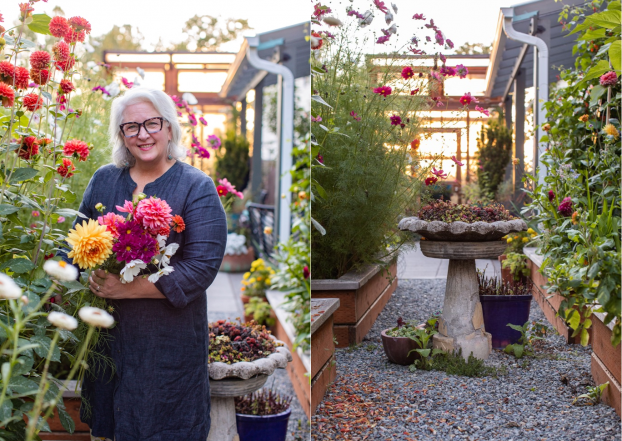

Debra in the Slow Flowers Cutting Garden
Thank you for listening! Sending love, from my cutting garden to you! (c) Missy Palacol Photography

I’m Debra Prinzing, host and producer of the Slow Flowers Show & Podcast. The Slow Flowers Podcast is engineered and edited by Andrew Brenlan. The content and opinions expressed here are either mine alone or those of my guests alone, independent of any podcast sponsor or other person, company or organization. Next week, you’re invited to join me in putting more Slow Flowers on the table, one stem, one vase at a time. Thanks so much for joining us today and I’ll see you next week!


Music credits:

Drone Pine; Gaena; Feathersoft
by Blue Dot Sessions
http://www.sessions.blue

Lovely
by Tryad 
http://tryad.bandcamp.com/album/instrumentals
http://creativecommons.org/licenses/by-sa/3.0/

In The Field
audionautix.com

Earth Day with Updates from Peterkort Roses and Floral Soil (Episode 190)

Wednesday, April 22nd, 2015

Earth-Day-Logo-2015This week’s episode coincides with Earth Day, fittingly symbolic for the Slow Flowers Movement and flower farmers, floral designers and product innovators who are working to change our industry and push for progress to alter the status quo.

So I’d like to share a few news items as well as two follow-up interviews featuring guests of past Slow Flowers Podcast episodes.

Listen closely to find out how you can win prize packages from each of our guests – you’ll want to get in on the good stuff!

First off, if you enjoyed last week’s interview with Jenny Elliott and Luke Franco of Tiny Hearts Farm in New York’s Hudson Valley and Rachel Gordon of Taproot Flowers of Brooklyn, please check out more photos that I’ve added to the show notes. They’re onto something really special and I encourage you to listen if you missed that episode – and enjoy the beautiful flowers the three of them grow and arrange in their worlds.

FRD_posters_2015_photography_loweres2Second, I want to share details about this week’s Fashion Revolution Day, which takes place on April 24th.

If you believe in Slow Flowers, you should also embrace and support Slow Fashion, which has so many parallels in terms of labor practices, environmental concern and trade policy.

Slow Fashion asks questions about the origins of the clothing we wear that are virtually identical to the questions Slow Flowers asks about the bouquets we bring into our homes.

Fashrev2015Fashion Revolution Day 2015 marks the second anniversary of the Rana Plaza disaster in Dhaka, Bangladesh, which killed 1,133, and injured over 2,500 people.

According to Fashion Revolution’s data, one in six people work in the global fashion supply chain. It is the most labor-dependent industry on the planet, yet the people who make our clothing are hidden from us, often at their own expense, a symptom of the broken links across the fashion industry.

Wow, doesn’t that sound identical to the floriculture industry? On April 24th, coordinated teams around the world will challenge global fashion brands to demonstrate commitment to transparency across the length of the value chain, from farmers to factory workers, brands to buyers and consumers.

Zady.com, an innovative online fashion brand based in New York City, is serving as U.S. chair of Fashion Revolution Day. Slow Flowers has been invited to help promote the cause. Check out this Slow Fashion/Fashion Revolution event taking place in Brooklyn. Slow Flowers hopes to have ongoing involvement with Slow Fashion in the future.

unnamed-1

I am inspired by what the fashion industry has done in just two years to mobilize conscious consumers to care about the origins of their clothing — and in the future, I hope the floral industry will be just as vocal. I don’t wish for a fatal disaster to occur at an unregulated flower farm in a distant land to make us all wake up and start asking about the origins of our flowers.

What you can do on April 24th is to use your own social channels to get active. Take a photo of yourself wearing an item of clothing inside out. Tag the brand, share the photo on Facebook, Twitter and Instagram with the hashtags: #whomademyclothes and #fashrev.

Not to take away from this important endeavor, but perhaps you’ll be inspired to ALSO take a photo of yourself holding flowers that came from a US mega-retailer, big box store or supermarket and tag that retailer on your social sites with the hashtags: #whogrewmyflowers and #slowflowers. Just a thought.

Thanks for caring!

READ MORE…

SLOW FLOWERS Podcast: Make my Valentine’s Flowers American-Grown, Please! Thanks, Peterkort – an Oregon Rose Farm (Episode 128)

Wednesday, February 12th, 2014

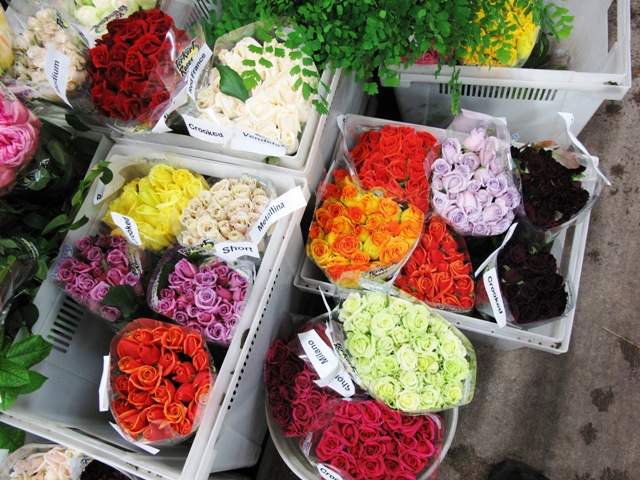
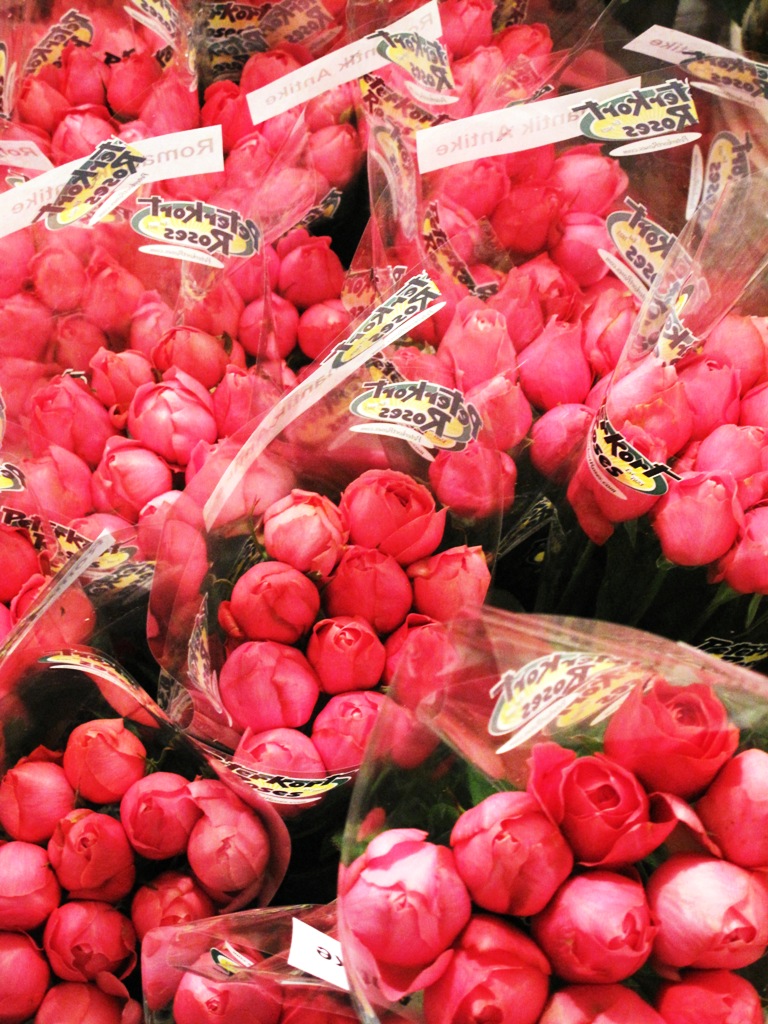
A rainbow of rose colors grown in Oregon by Peterkort Roses. Love this palette!

A rainbow of rose colors grown in Oregon by Peterkort Roses. Love this palette!   


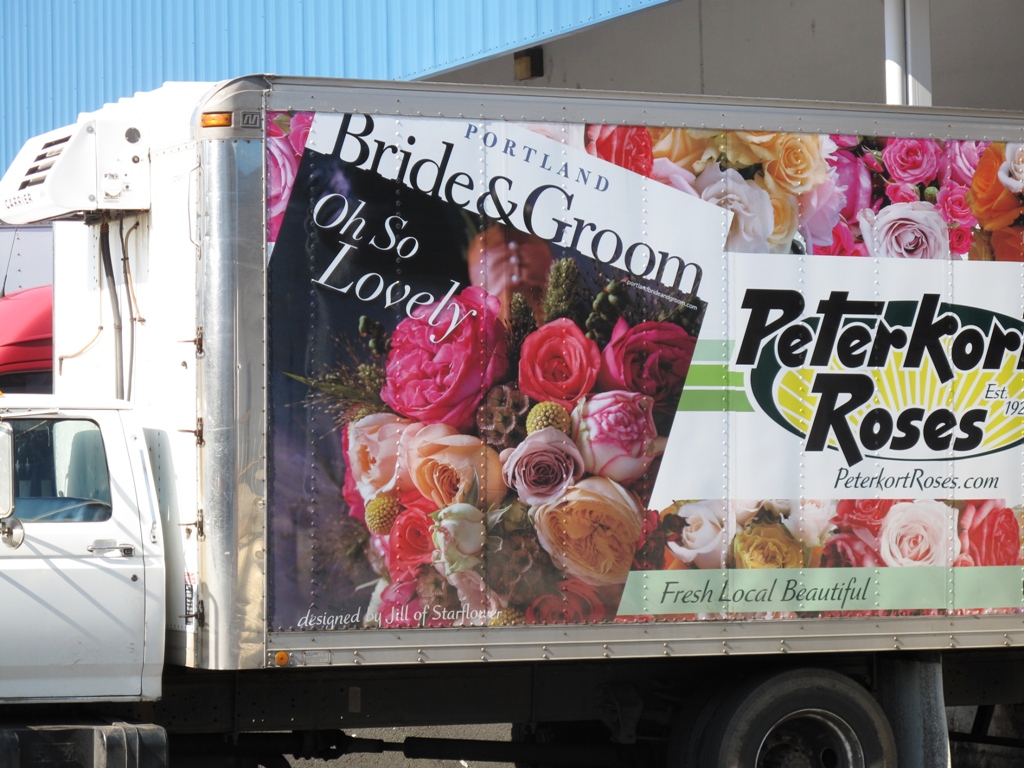
Love this graphic messaging on the side of Peterkort's delivery truck.

Love this graphic messaging on the side of Peterkort’s delivery truck.

Hello again and thank you for listening to the newest episode of the Slow Flowers Podcast with Debra Prinzing

This is part 2 of my back-to-back episodes on American grown roses, in honor of Valentine’s Day, taking place later this week. In our previous episode, I introduced you to Danielle Hahn of Rose Story Farm, based in Carpinteria, California.

Today, I hope you’ll enjoy my conversation with Sandra Peterkort Laubenthal of Peterkort Roses.

Most U.S.-grown roses hail from California, which accounts for 75 percent of the nation’s overall floral production. Yet in Oregon, Peterkort Roses has raised hybrid teas for the floral trade since the 1930s. The Peterkorts, a third-generation Oregon family, currently produces 2 million roses annually, using many sustainable growing practices.

“We have this certain niche, and we really want to support the local floral industry,” says Sandra, granddaughter of Joseph and Bertha Peterkort, who came to Oregon from Germany and started flower farming in 1923, raising sweet peas, gerberas and pansies.

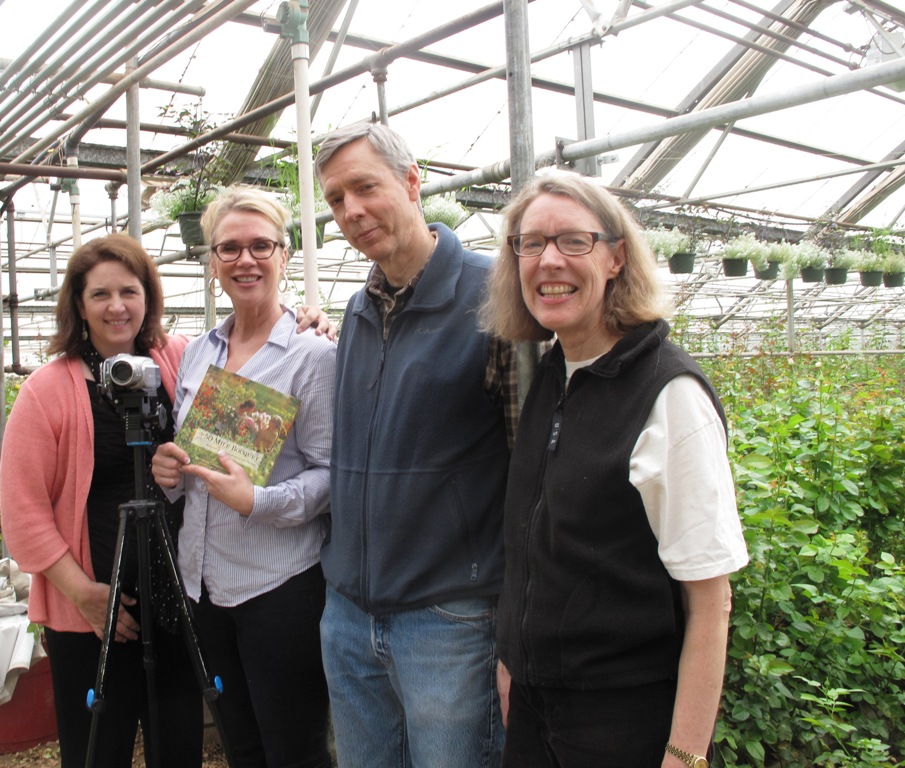
This photo is from a visit I made to Peterkort Roses in May 2012 when Portland TV personality Anne Jaeger produced a segment about sustainable and local flowers for The Oregonian. Sandra Laubenthal and her brother Norman Peterkort  pose at right: I'm on the left and Anne is second from left.

This photo is from a visit I made to Peterkort Roses in May 2012 when Portland TV personality Anne Jaeger produced a segment about sustainable and local flowers for The Oregonian. Sandra Laubenthal and her brother Norman Peterkort pose at right: I’m on the left and Anne is second from left.

Historically, the state had been home to several commercial cut rose growers, but during the past two decades those operations either shifted to other crops or folded altogether. “We are an anachronism, but it seems like the ‘City of Roses’ should have its own local rose grower,” Sandra points out. 

Here’s the video segment produced by Anne Jaeger for The Oregonian/Oregon Live: “Sustainable bouquets — buying local extends to flowers, too!”

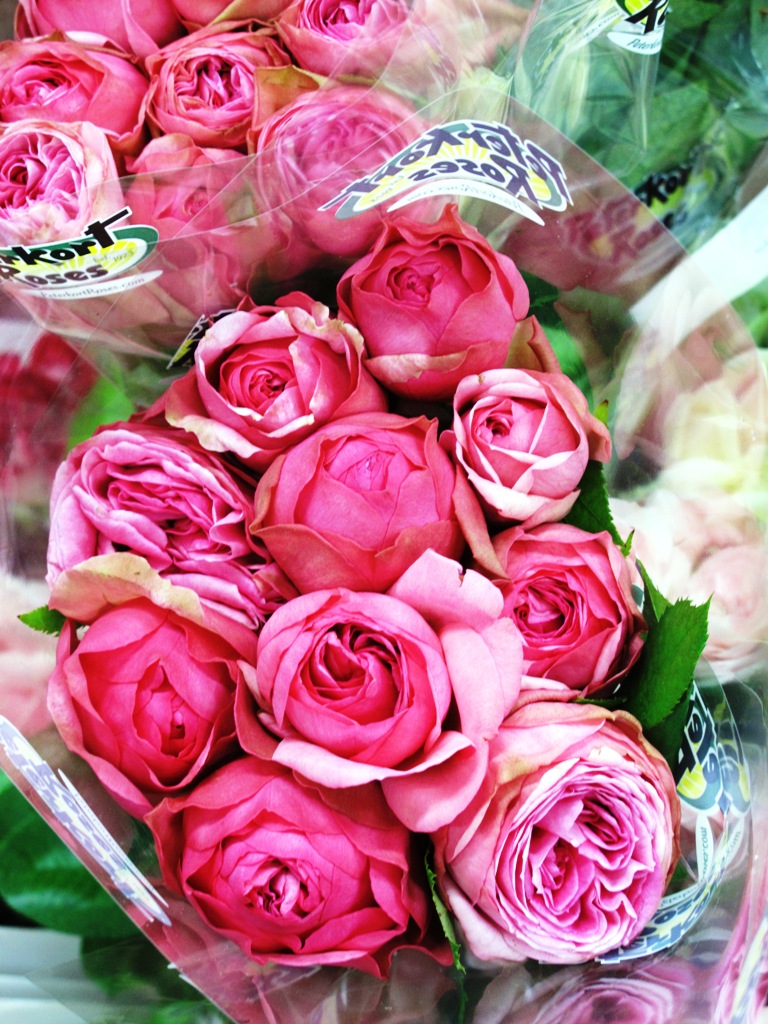
Stunning pink rose blooms - perfect for your sweetheart.

Stunning pink rose blooms – perfect for your sweetheart.

Peterkort’s elegant blooms look vastly different from those softball-sized imported ones that are offered by supermarkets, wire services and conventional flower shops every February 14th.

Instead, Peterkort’s 60-plus rose varieties are closer to what you might find gracing a mixed perennial border in the garden. Specialties include the hybrid tea rose, with upright, spiraled petals; a German-bred hybrid tea that features multi-petal characteristics of an old garden rose; and dainty spray roses with many small blooms on a single stem. Today, Peterkort’s 16 hoop houses produce thousands of rose stems, as well as gorgeous Oriental and Asiatic lilies, maiden fern, orchids and new crops like ranunculus and anemone.

More Peterkort pretties!

More Peterkort pretties!

Designers count on Peterkort as an important local source for bridal bouquets, boutonnieres, flower girl wreaths and tabletop arrangements. The versatile color palette begins with pure white roses and ends with ones covered in dark, velvety black-red petals. Unlike unscented imported roses, these have a light, pleasing fragrance. Because Peterkort harvests its flowers one day and sells them the next, their roses are super fresh and, as a result, are long-lasting in the vase.

Fresh roses on the grading table at Peterkort's greenhouses.

Fresh roses on the grading table at Peterkort’s greenhouses.

“I’ve been ordering roses from Peterkort for years,” says designer Melissa Feveyear, owner of Seattle-based Terra Bella Floral Design, who specializes in local and organic flowers. With varieties like ‘Piano Freiland’, a red, peony-shaped rose, and spray roses that last several weeks in an arrangement, Peterkort’s blooms make up in quality what they don’t have in size, she says.

“Because the stems are thinner than (those of) imported roses, they’re very easy to use in hand-tied bouquets. You can group a bunch together for really stunning impact without making the stem feel too bulky for a bride to hold.”

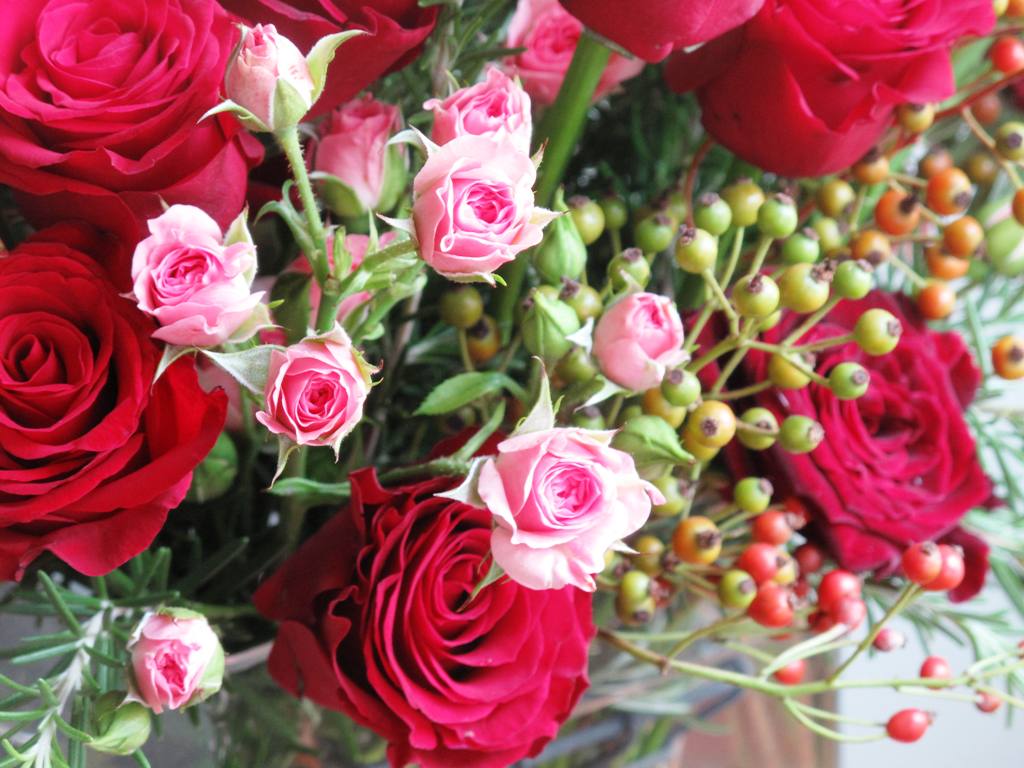
A detail from a Valentine's Day bouquet featuring Peterkort Roses.

A detail from a Valentine’s Day bouquet featuring Peterkort Roses.

Indeed Peterkort is the last Oregon rose grower, but in fact, customers around the country have begun to discover these boutique blooms. A message on the company’s web site helps to explain their popularity: “What can we say about a bunch of people who are still dedicated to growing cut flower roses in the U.S.? . . . We continue because we are obsessed.” 

Peterkort’s sustainable practices produce greener blooms:

  • During the winter months, Peterkort increases the amount of artificial greenhouse light, thereby producing more roses in less space for the same amount of energy. Energy curtains provide additional insulation as outside temperatures drop. The panels are made of Mylar and are suspended from cables across the greenhouse ceiling, containing heat within when closed.
  • Peterkort uses an Integrated Pest Management (IPM) system of biological controls to curb aphids, spider mites and other predator pests.
  • Peterkort selects disease-resistant rose varieties and suppresses the spread of fungal diseases by maintaining ideal temperature, humidity and air circulation levels inside the greenhouses and keeping the ground clear of dead leaves and debris.
  • All packaging is recycled and roses are wrapped for market in newspaper purchased from a local charity. 

Here are some of my arrangements from Slow Flowers, featuring roses and lilies grown by Peterkort Roses: 

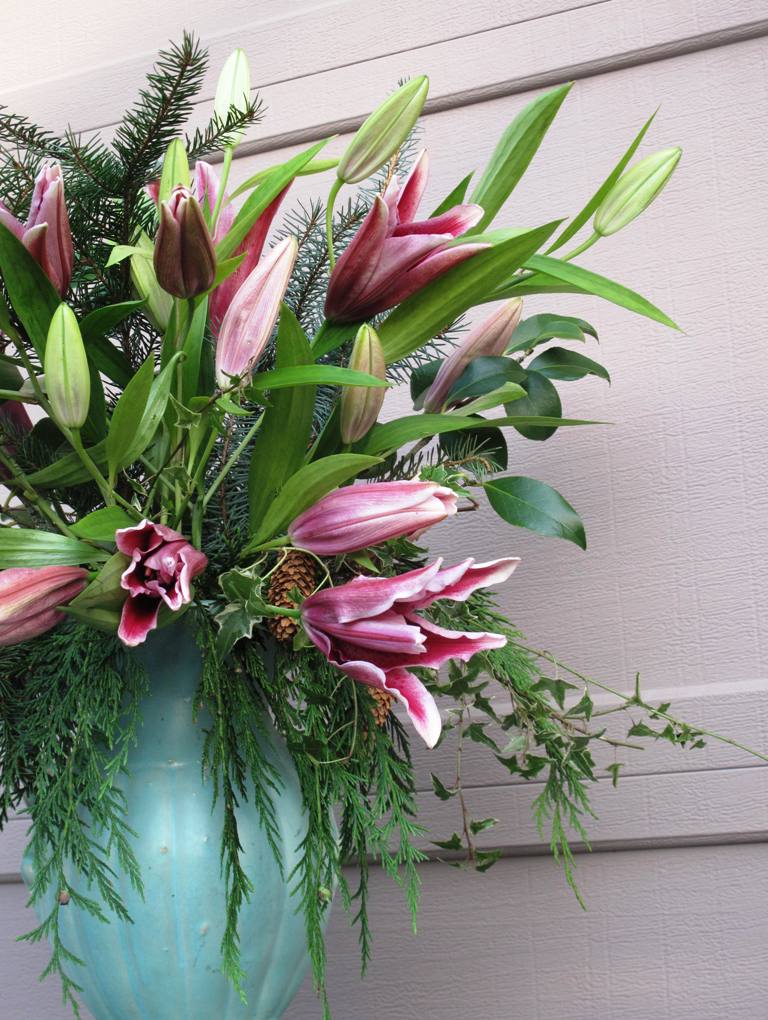
Peterkort lilies with winter greenery. The variety is Lilium 'Rio Negro', a hybrid Oriental lily.

Peterkort lilies with winter greenery. The variety is Lilium ‘Rio Negro’, a hybrid Oriental lily.


Peterkort's lovely red garden rose 'Piano Freidland', makes this autumn arrangement sparkle!

Peterkort’s lovely red garden rose ‘Piano Freidland’, makes this autumn arrangement sparkle!


"Supergreen' is a hybrid tea rose grown by Peterkort - a sublime pale green rose.

“Supergreen’ is a hybrid tea rose grown by Peterkort – a sublime pale green rose.


A springtime bouquet featuring 'Supergreen' with a  pastel combination.

A springtime bouquet featuring ‘Supergreen’ with a pastel combination. 

For many sweethearts, Valentine’s Day is filled with expectations and anticipation. Yet for followers of the Slow Flowers movement, the romantic holiday is not complete unless the flowers we give and receive come from local farmers who use sustainable practices. Peterkort is one such source. Please ask your local florist to order these domestic roses rather than the steroidal giants that must be shipped from afar, a continent or two from here.

In fact, here is my list of American rose farms. If your local florist says, “I can’t find American-grown roses,” then give him/her my recommendations and ask them to do their homework. You have to care enough to do the right thing.

It has been my pleasure to share with you today’s podcast conversation with Sandra Laubenthal. All photos are (c) Debra Prinzing.

Because of the support from you and others, listeners have downloaded episodes of the Slow Flowers Podcast more than 6,500 times! I thank you for taking the time to join to my conversations with flower farmers, florists and other notable floral experts.

If you like what you hear, please consider logging onto Itunes and posting a listener review.

Until next week please join me in putting more American grown flowers on the table, one vase at a time. 

 The Slow Flowers Podcast is engineered and edited by Hannah Holtgeerts. Learn more about her work at hhcreates.net.