The Slow Flowers Podcast is the award-winning show known as the “Voice of the Slow Flowers Movement.” Launched in 2013 as the original flower podcast, we’ve devoted more than 10 years to covering the business of flower farming, floral design, and the Slow Flowers sustainability ethos. Listen to a new episode each Wednesday, available for free download here at slowflowerspodcast.com or on iTunes, Spotify, and other podcast platforms.
July 13th, 2013
It was fun to visit the newsstand yesterday and pick up three new magazines with my articles.
When you see them in one place, it might feel like I’ve been super productive. But there is a back-story about each, and I have to be honest with you. Sometimes it takes YEARS for a story to see the light of day.
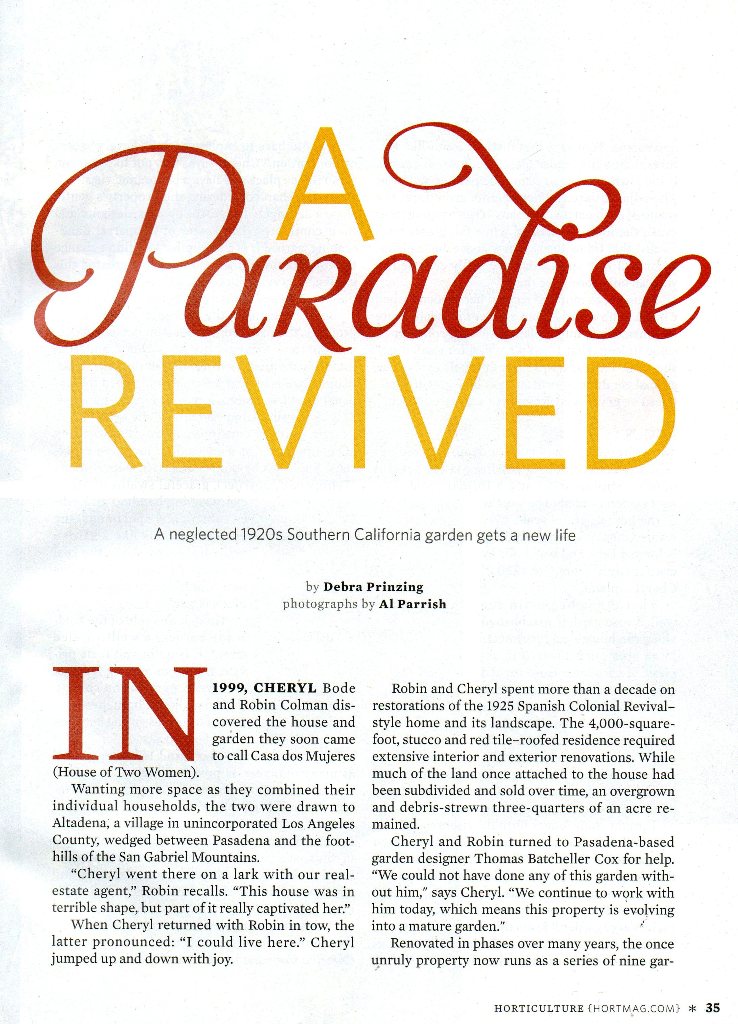
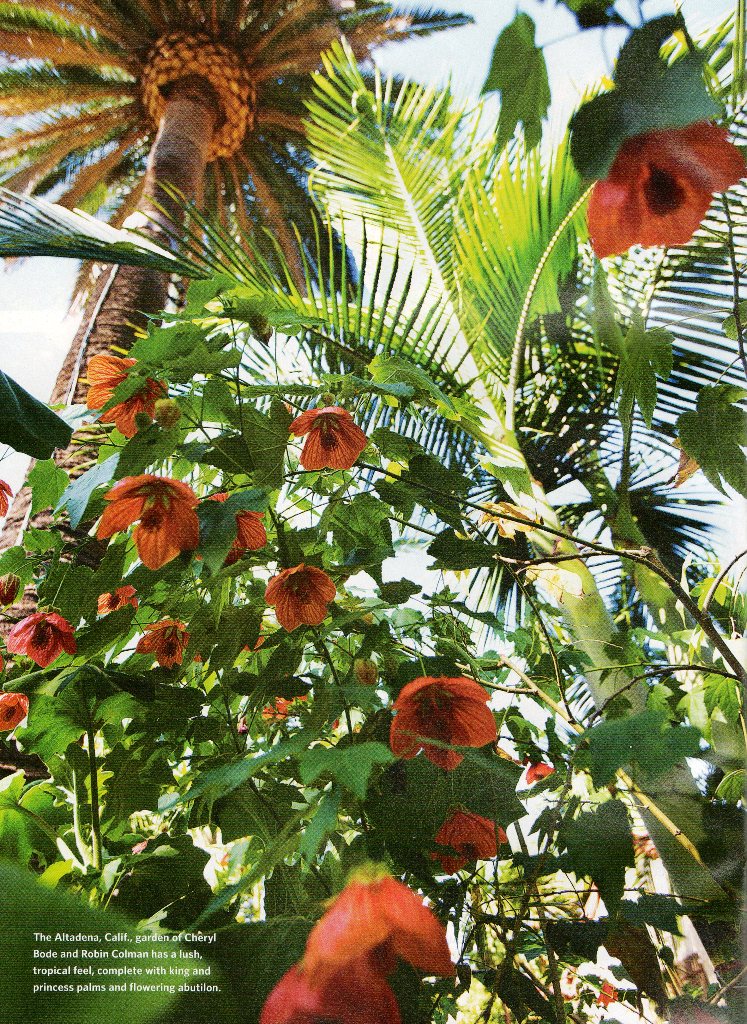
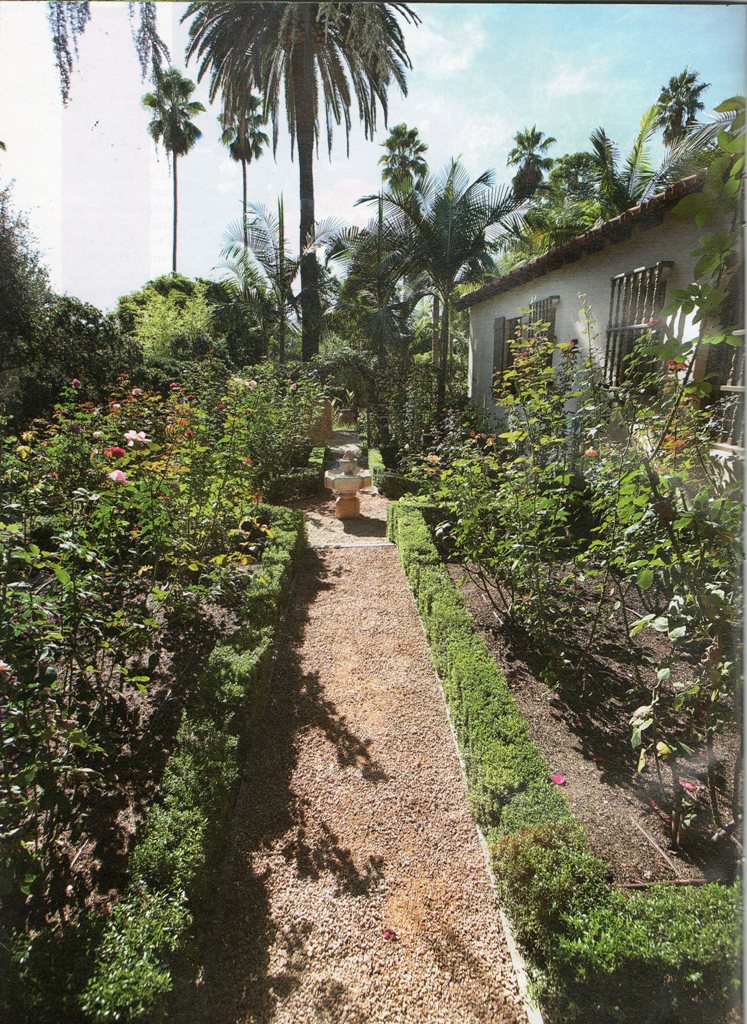
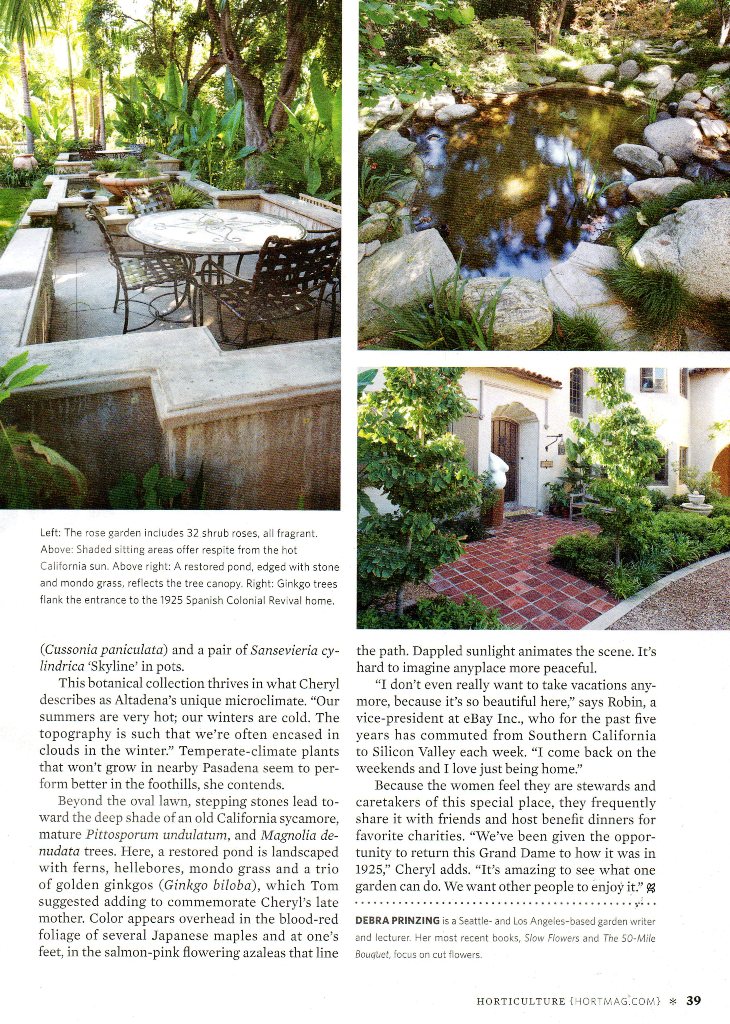
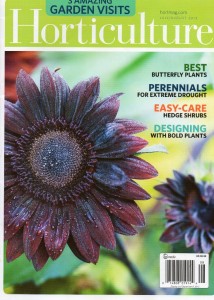
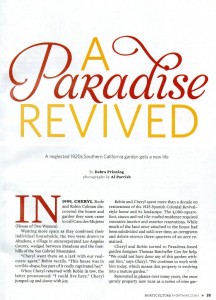
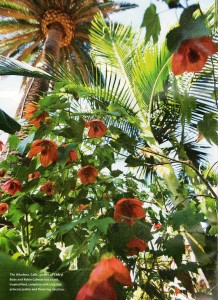
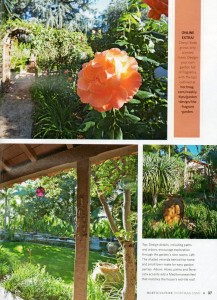
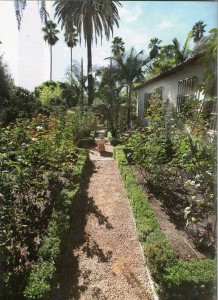
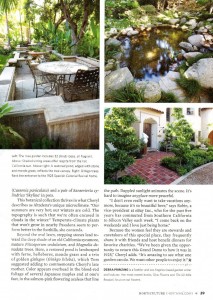
Case in point: The Southern California garden owned by Cheryl Bode and Robin Colman, featured in the July-August issue of Horticulture, was photographed in 2009. Since then, it has often seemed to Cheryl, Robin and me that the story would never appear in print. When I finally saw the issue, just out on newsstands, I understood why. The photos are incredibly disappointing. I have so many wonderful photos of their garden and the magical feeling one experiences when visiting there was simply not expressed in the Horticulture magazine. Click over to my articles page to read the story and see my photos rather than the ones printed below. Theirs is an inspiring story of two homeowners who yearned to bring an old house back to life, along with its garden. To physically walk through it is truly special.
READ MORE…
Posted in Creativity, Gardening, General, Landscape Design, Plants, Writing | 1 Comment »
July 10th, 2013
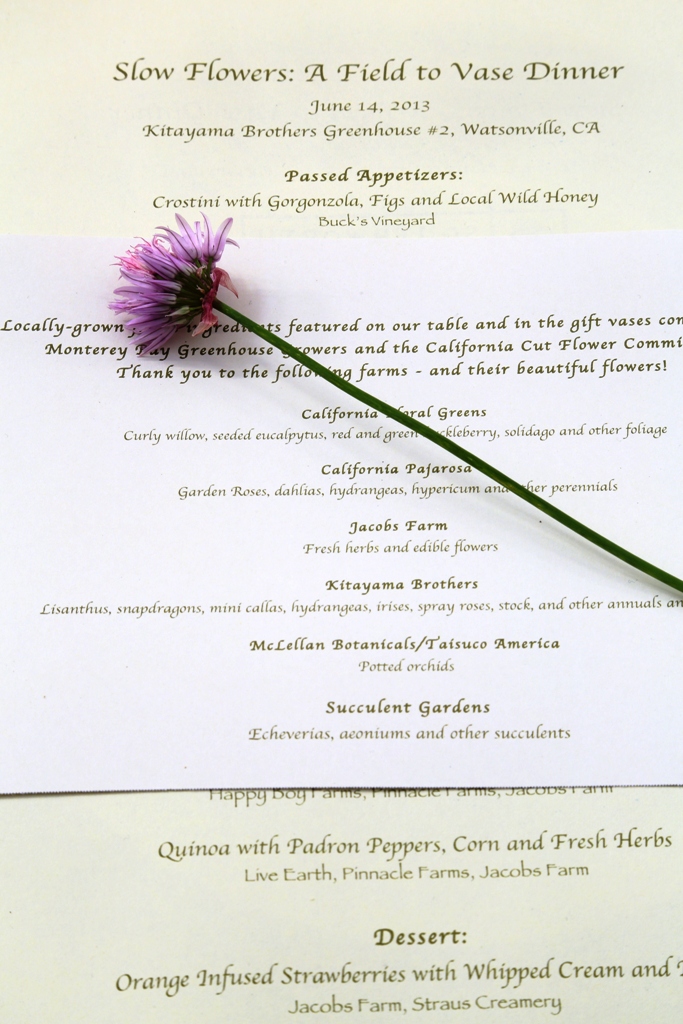
Welcome to the Slow Flowers Dinner
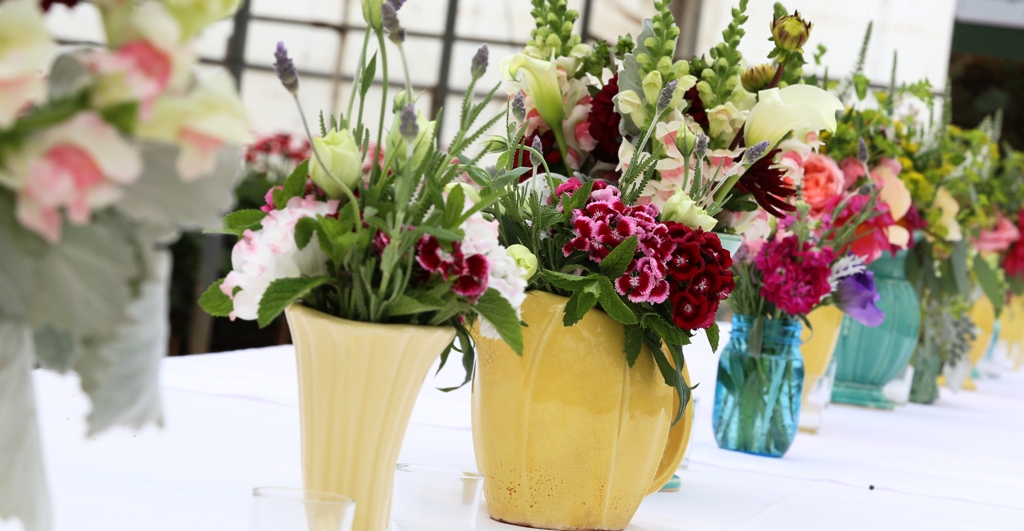
Imagine a table set for 40 . . . inside a flower-filled greenhouse. Vintage vases overflowing with just-picked blooms adorn the table and a locally-grown menu is served.
Last month I joined with the California Cut Flower Commission to host a “Slow Flowers” dinner as part of the 2013 Monterey Bay Greenhouse Growers Open House & Tour.
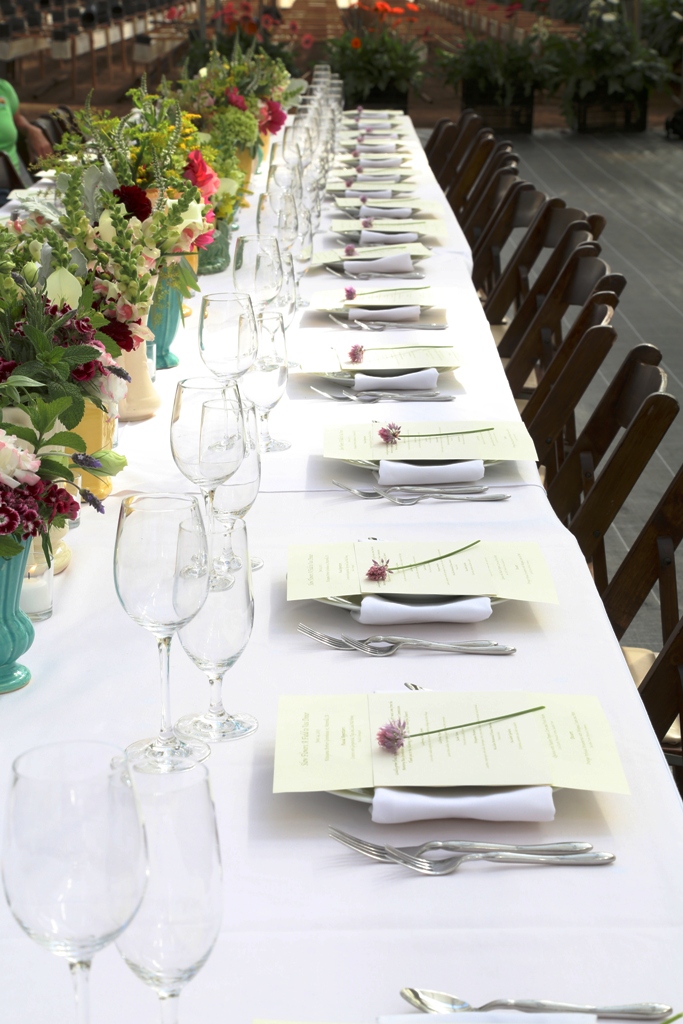
The table was set for local food and local flowers.
We called it “Farm-to-Table; Field-to-Vase” and held the dinner in the gerbera-filled greenhouse at Kitayama Bros. Farms in Watsonville, California. The event was a gathering of like-minded persons. Each of us — farmer, florist, media, community advocate — cares deeply about the role of American flowers in the greater agricultural environment. And everyone in attendance contributed an important voice around the table, a table with locally-grown food and locally-harvested flowers.
READ MORE…
Posted in American Grown, Creativity, Entertainment, floral design, General, Plants, Slow Flowers: 52 Weeks | 2 Comments »
July 9th, 2013
I’m very excited to show off the backdrop that I recently created for DIY floral video projects.
If you look closely, you’ll see some of my favorite things gathered on the garage workbench. Vintage ceramic vases and metal urns, French flower buckets, frogs of all types, Mason jars, botanical artwork, salvaged goodies and more.
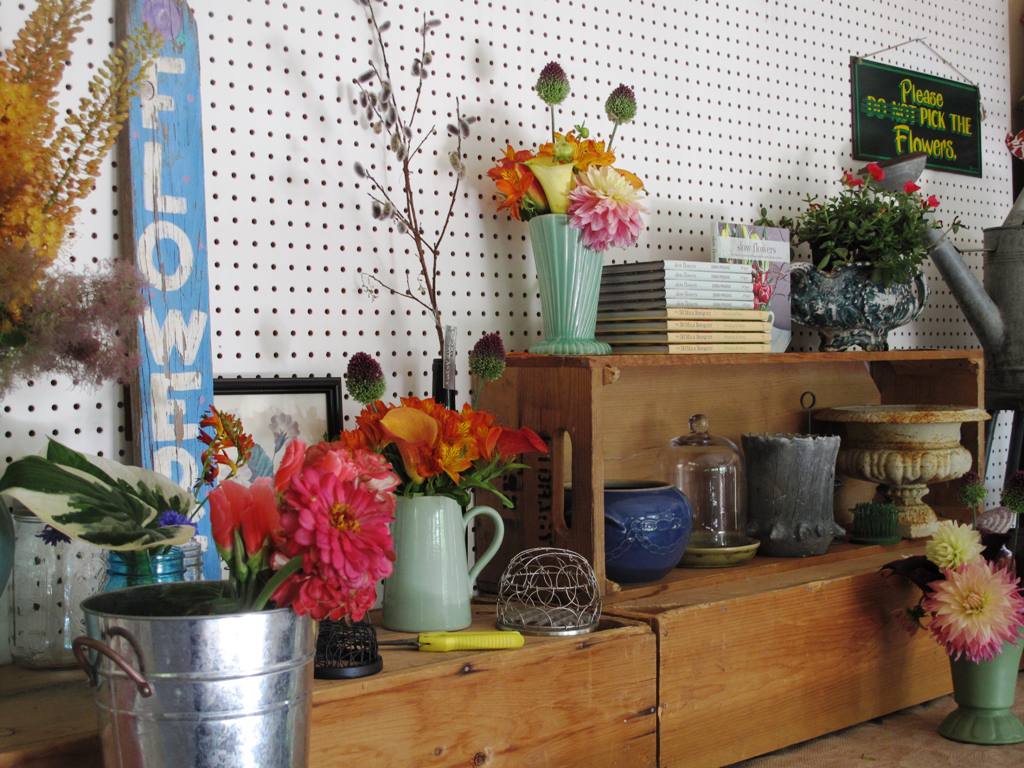
A floral designer’s work bench – and perfect video set.
Here’s another view – with the weathered picnic table in front – the ideal surface for bouquet-making.
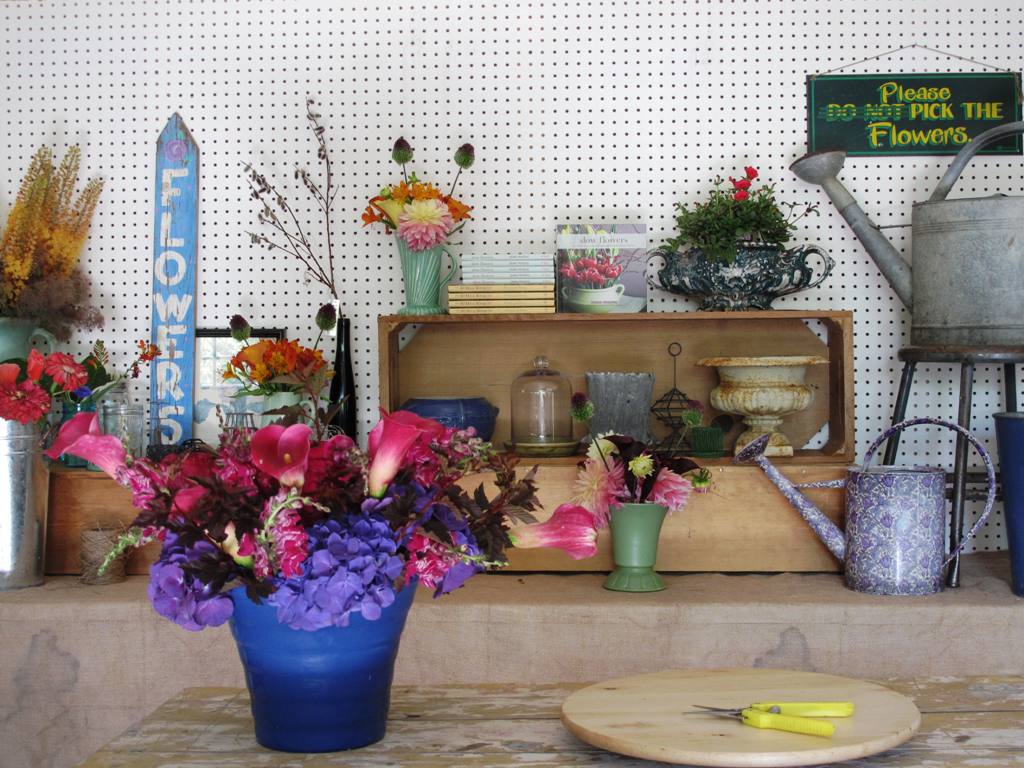
Another view, featuring the weathered picnic table in the foreground.
How on earth am I pulling this off? Making a video, I mean!
I am fortunate to have a young filmmaker here for the day. Her name is Hannah Holtgeerts and she is a college friend of my son Ben’s. Hannah jumped into this project with total enthusiasm. A talented photographer, videographer and documentary filmmaker, she really makes things look effortless. Aaah, YOUTH, CHARM AND TALENT~ Too bad that Hannah is heading back to Chicago where a post-college job awaits her this fall. But for now, I’m thanking my lucky stars. The video will be pulled together soon and I promise to share it here~
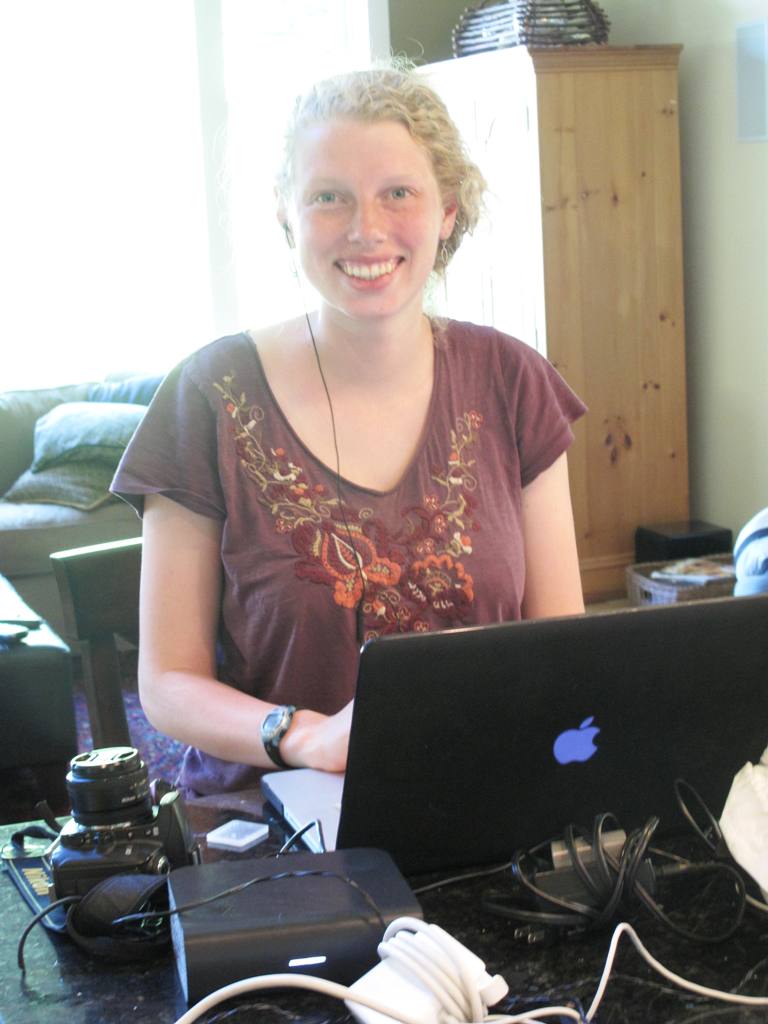
Hannah Holtgeerts – at work editing the video we shot this morning.
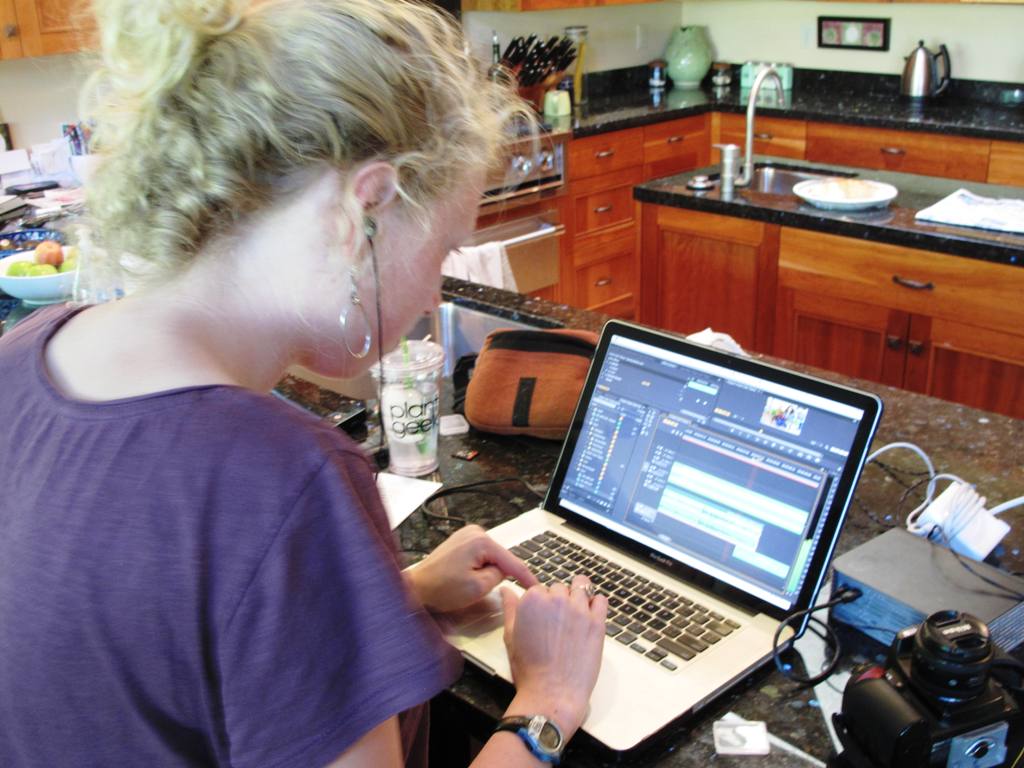
Looking over Hannah’s shoulder. What a pro!
Posted in Creativity, floral design, General, Slow Flowers: 52 Weeks | No Comments »
July 7th, 2013
AMERICAN ROSES
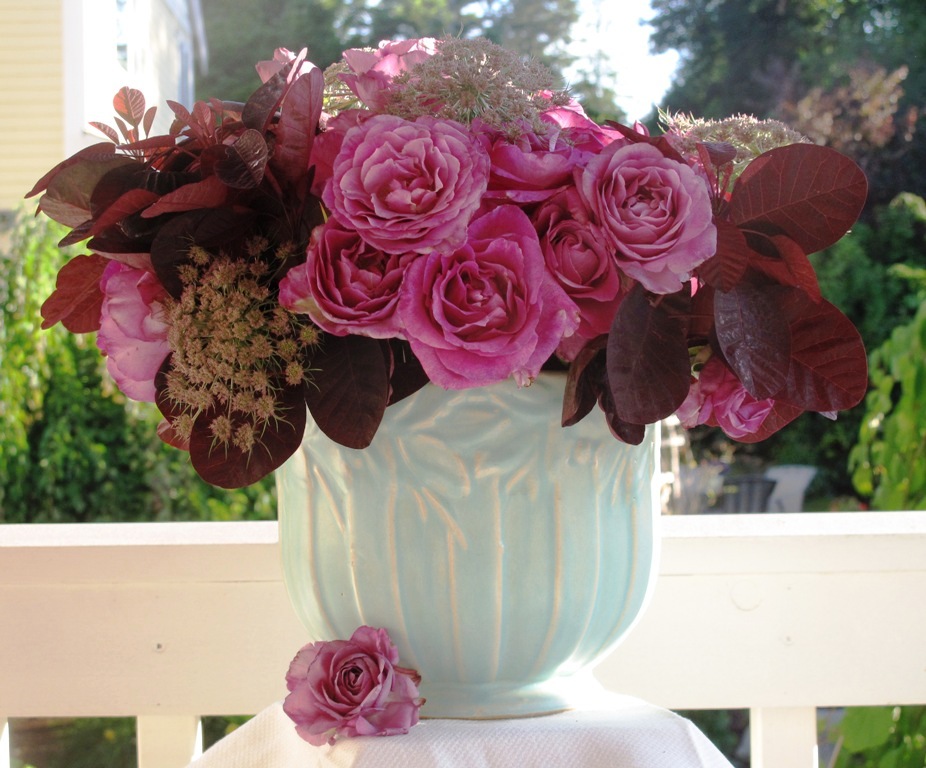
There are three sultry-smoky elements to this simple bouquet: roses, smoke bush foliage and a type of Queen Anne’s lace.
When all three colors, forms and textures are seen together – up close – it’s simply beautiful!
Ingredients:
20 stems Rosa ‘Wild Blue Yonder’ roses, grown by Westmont Park Roses
7 stems smoke tree (Cotinus coggygria ‘Royal Purple’), grown by Jello Mold Farm
10 stems Queen Anne’s lace (Daucus carota var. sativus ‘Black Knight’), grown by J. Foss Garden Flowers
Vase:
7-inch tall x 7½-inch diameter McCoy jardiniere, 1940s era, with a raised design of vertical bands and flowers
From the Farmer
When to cut for the vase: Commercial rose growers like Westmont Park Roses have special procedures for harvesting their flowers and processing them with a hydrating solution before making florist deliveries. The home gardener who grows old English roses and David Austin garden roses isn’t faced with these storage and delivery demands. Get the most out of your garden roses by cutting them when temperatures are coolest on the day you plan to arrange them. I like to pick a mix of roses at different stages to create more interest: in bud; slightly open; two-thirds open and fully open. This technique reminds grower John Martin of a single, beautiful grandiflora cluster, “with five or six roses, each at a different blooming cycle.”
Posted in American Grown, Creativity, floral design, General, Plants, Slow Flowers: 52 Weeks | 1 Comment »
July 4th, 2013
I was on the road last week, working in Oregon for six days (counting 1,000-miles of travel). My companions were James Baggett, editor-in-chief of COUNTRY GARDENS magazine and photography team Laurie Black and Mark King of Laurie Black Photography.
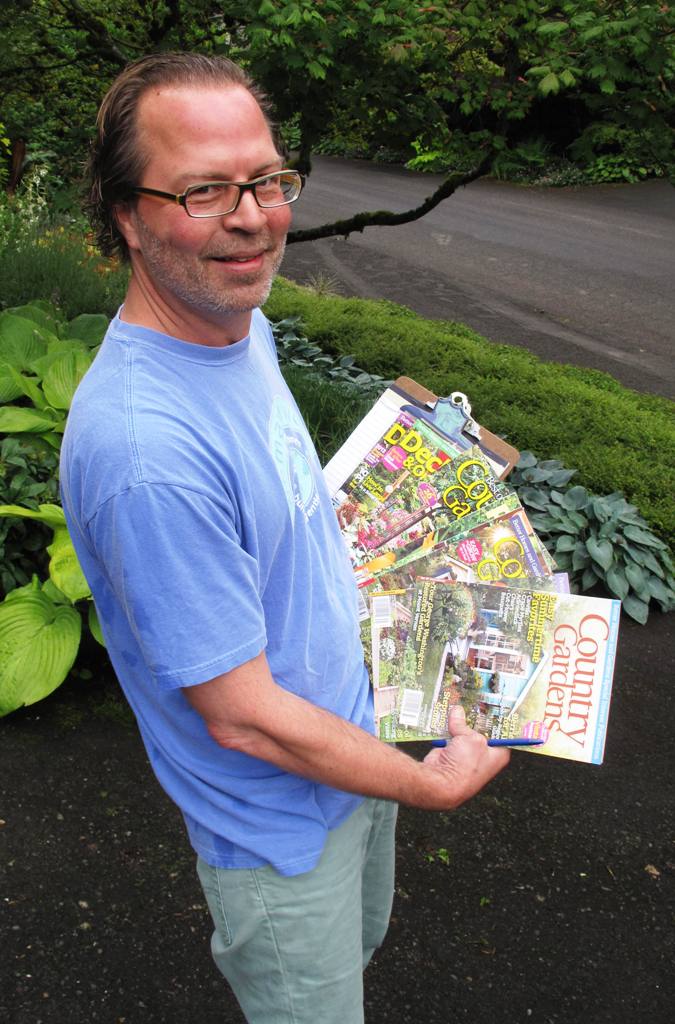
James Baggett, showing off the many titles he creates with coworker Nick Crow, his art director. It’s simply mind-boggling to grasp their huge productivity – and it’s an honor to be one of their writer-producers.
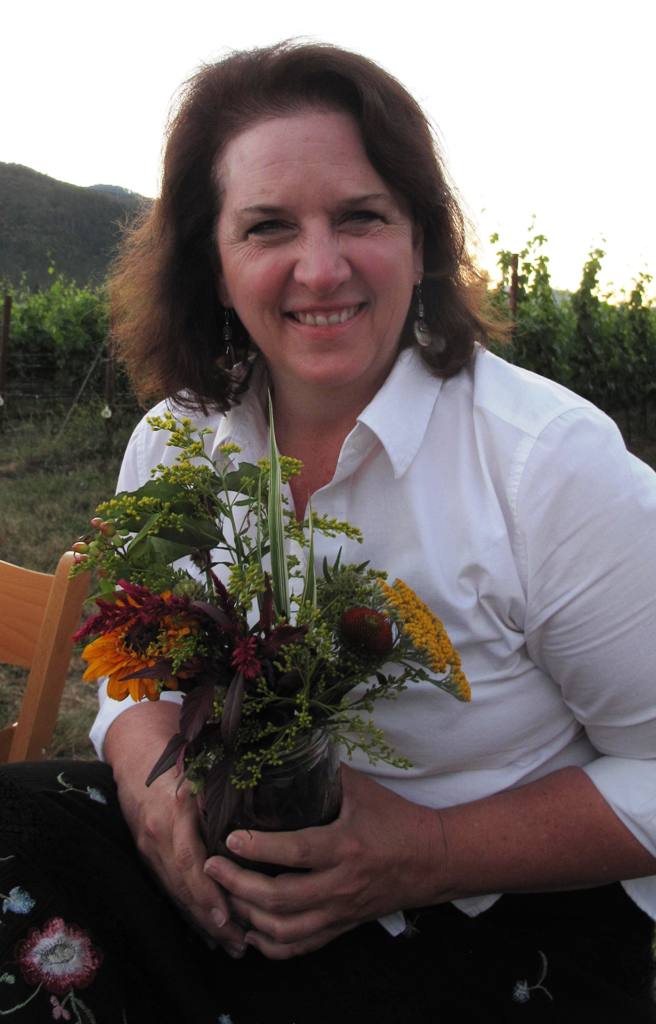
Wherever I can discover locally-grown flowers, that’s where you’ll find me!~
We spent the week photographing awesome landscapes, inspiring new plants and a fabulous farm-to-fork dinner (complete with locally grown, organic wine, food and flowers). A busy schedule, but filled with great experiences. It will be my privilege to write the stories to accompany Laurie’s photos for publication in 2014.
I’ll keep this short. I mostly have photos to share.
READ MORE…
Posted in American Grown, Creativity, Entertainment, floral design, Gardening, General, Landscape Design, Plants, Slow Flowers: 52 Weeks, Writing | 5 Comments »
June 30th, 2013
A STROLL IN THE GARDEN
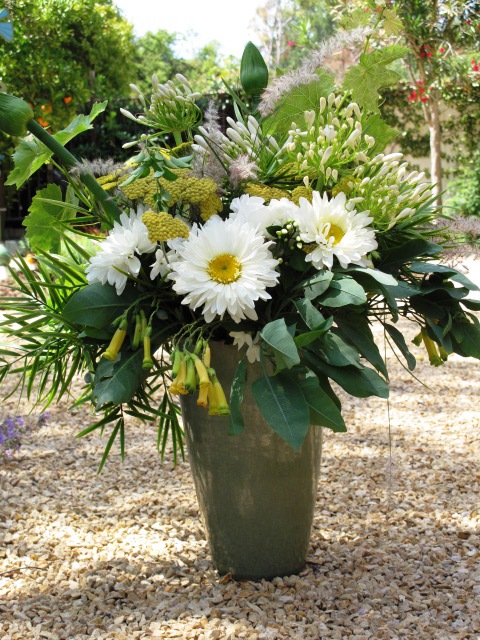
This bouquet will forever transport me to my former garden in Ventura County, California, which we left in July, 2010. I created this bouquet from all garden ingredients the month before moving away.
Ingredients:
All were harvested from my former garden in Ventura County, California
5 branches fern pine (Podocarpus gracilior)
7 stems and pods of lily-of-the-Nile (Agapanthus ‘Snowy Owl’)
1 spray ‘Iceberg’ rose (Rosa ‘Iceberg’), a popular floribunda rose
3 vines evergreen jasmine (Jasminum polyanthum)
3 stems Shasta daisy (Leucanthemum x superbum)
5 stems blue tree tobacco (Nicotiana glauca ‘Salta Blues’), a flowering tobacco with blue-green leaves and long, tubular yellow flowers. This is a cool plant for the perennial border and an equally fetching choice for my bouquet.
7 stems yarrow (Achillea ‘Moonshine’)
9 stems-seed heads fountain grass (Pennisetum orientale)
3 grapevines (Vitis vinifera)
-
-
Fountain Grass
-
-
Blue Tree Tobacco
-
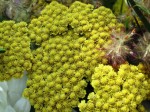
-
Moonshine Yarrow
-
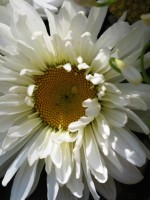
-
Shasta Daisy (Double)
-
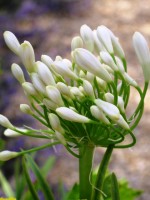
-
Agapanthus
-
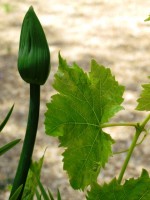
-
Agapanthus Pod & Grapevine
Vase:
10-inch tall x 7-inch diameter celadon ceramic vase
Seasonal Choices
See the possibilities everywhere: I’m convinced that even the tiniest of gardens can yield interesting and unique flowers, branches, leaves, vines and stems for a seasonal bouquet. You don’t have to be a flower farmer to grow
and harvest appealing ingredients. And you don’t have to be a pro to assemble an eye-pleasing arrangement. Just use your powers of observation to appreciate and experiment with the seasonal beauty around you.
Posted in American Grown, Book reviews, Creativity, floral design, Gardening, General, Plants, Slow Flowers: 52 Weeks | 1 Comment »
© Debra Prinzing, all written and photographic content. Website design/development by Willo Bellwood/Metric Media