The Slow Flowers Podcast is the award-winning show known as the “Voice of the Slow Flowers Movement.” Launched in 2013 as the original flower podcast, we’ve devoted more than 10 years to covering the business of flower farming, floral design, and the Slow Flowers sustainability ethos. Listen to a new episode each Wednesday, available for free download here at slowflowerspodcast.com or on iTunes, Spotify, and other podcast platforms.
September 27th, 2013
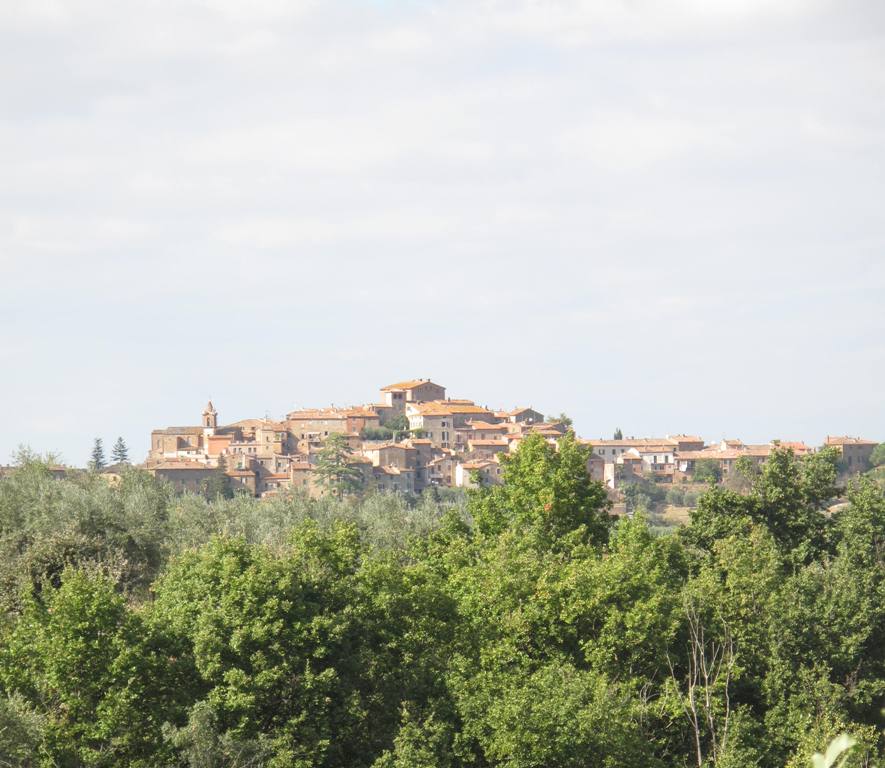
The approach to Montisi, a small Tuscan village that has been our home this week.
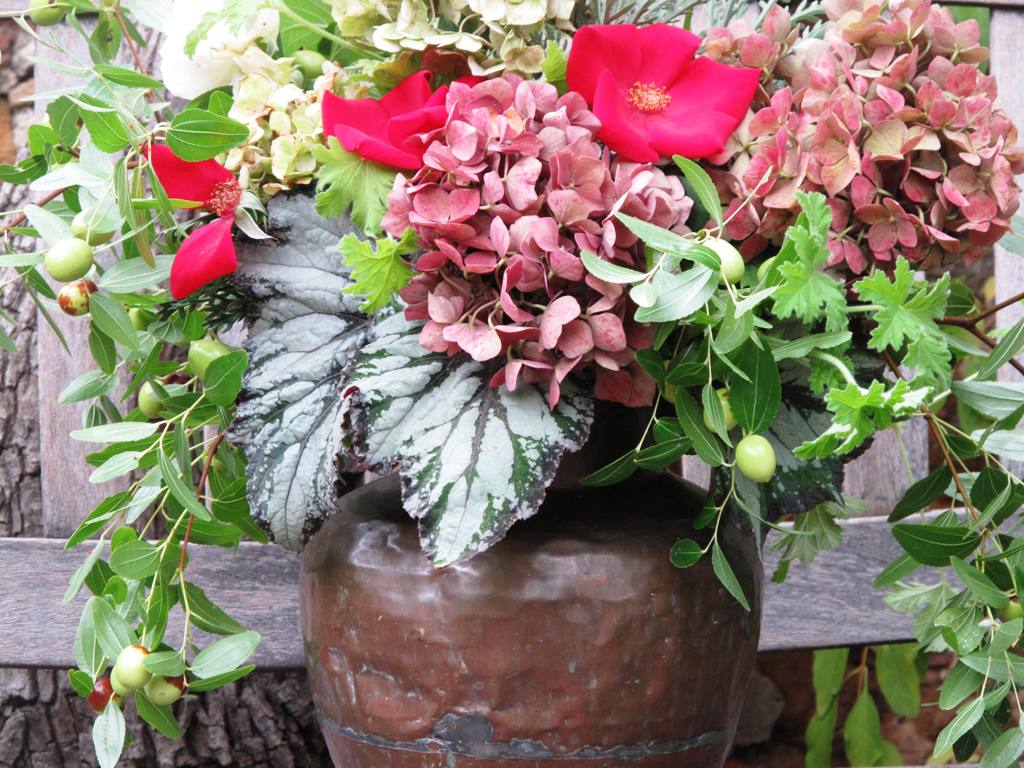
Detail: An autumn bouquet from a Tuscan garden. Olives, roses, hydrangeas, scented pelargonium leaves, Rex begonia leaves – seen here.
This morning at the villa, two friends went off for watercolor lessons with resident expat artist Liz Cochrane.
After walking down to Il Barrino for hot tea and a croissant, I came back totally determined to make a bouquet for our group’s last night together.
We have a dinner coming in from Allesandro, the local chef (Marty organized the menu, which includes Ribollita, a Tuscan soup; sliced pork with balsalmic vinegar; zucchini flan; and that popular italian desert, Apple Pie!)
The Flower Arrangers’ Guild of Tuscany commenced its first session.
This garden is in its waning moments of late summer-early autumn. But it does not disappoint. So much to work with and we judiciously snipped, without hurting or denuding a single plant.
I had spotted a copper urn, weathered and slightly dented, sitting on the floor in the Lemonaio (the garden room). It inspired my palette – faded, tarnished and of the moment.
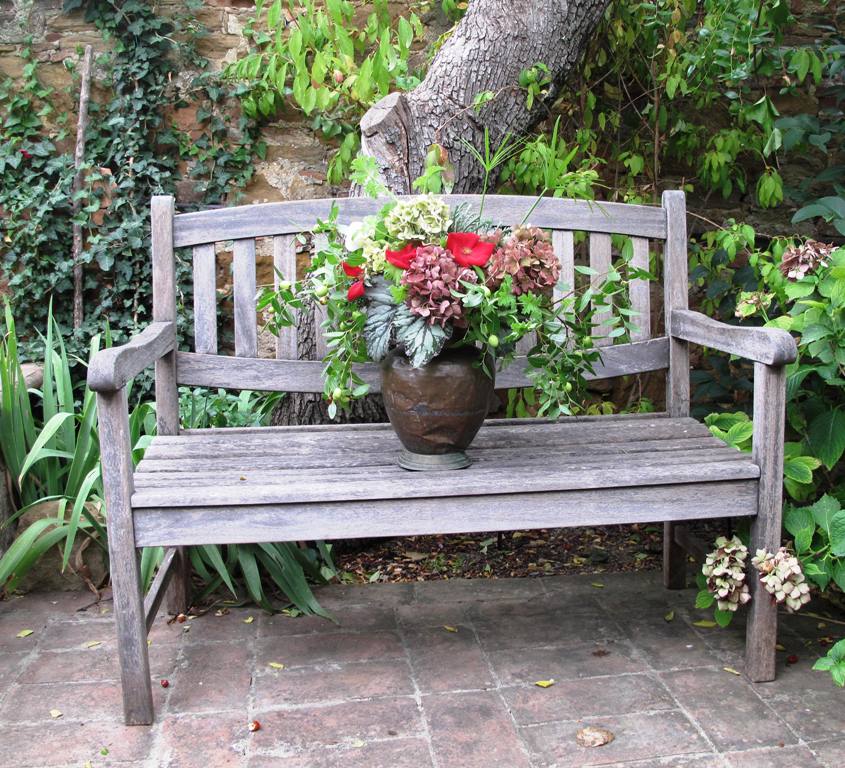
A rustic wooden garden bench, a perfect place to display and photograph my Tuscan bouquet in a timeworn copper vessel.
Here are the ingredients I began with:
1. Scented pelargonium foliage
2. Papyrus stems from the water pond
3. Hydrangeas – two types
4. Roses – two types
5. Olives branches w/fruit
6. Marguerite daisy foliage
7. Rex begonia foliage
Mary Watson joined me in the garden, eager to make something beautiful. She made two adorable bouquets:
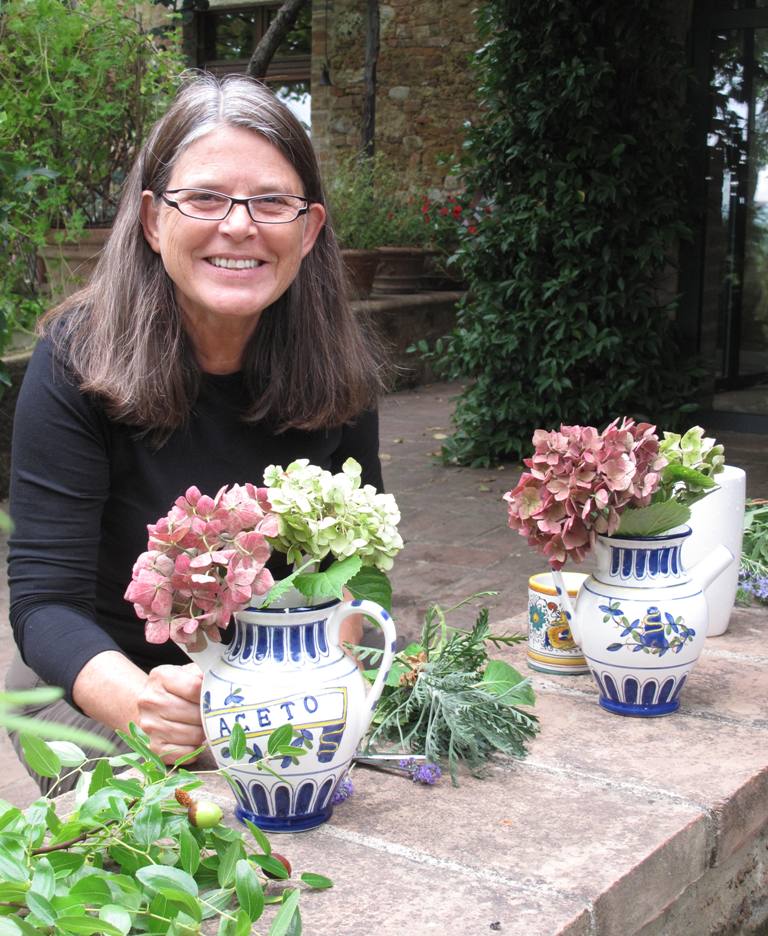
Mary Watson, a new friend who I met through Marty Wingate. She is an art educator and bon vivant! Right when I started arranging this morning, Mary jumped into the fun.
READ MORE…
Posted in Blog Posts, Creativity, Entertainment, floral design, Gardening, General, interior design, Landscape Design, Plants, Playfulness, Writing | 1 Comment »
September 25th, 2013
Podcast: Play in new window | Download
Subscribe: Apple Podcasts | Podcast Index | | More
SLOW FLOWERS Podcast: Farmgirl Flowers & Christina Stembel (Episode 108)
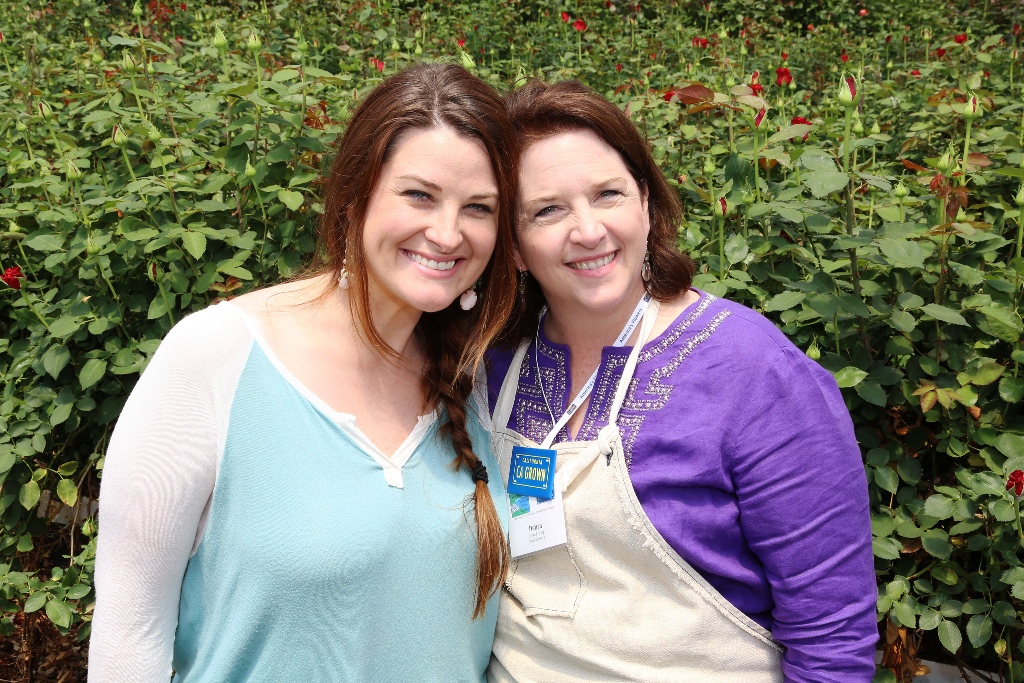
Christina Stembel and I were guests of the California Cut Flower Commission’s Monterey Bay event in June. We were photographed on a tour of Pajarosa Roses, a wonderful source for cut roses.
If the term “imitation is the highest form of flattery,” then my friend Christina Stembel has been over-flattered, multiple times.
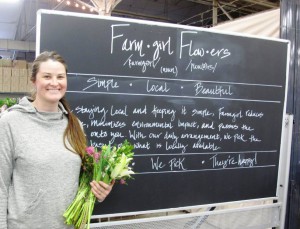
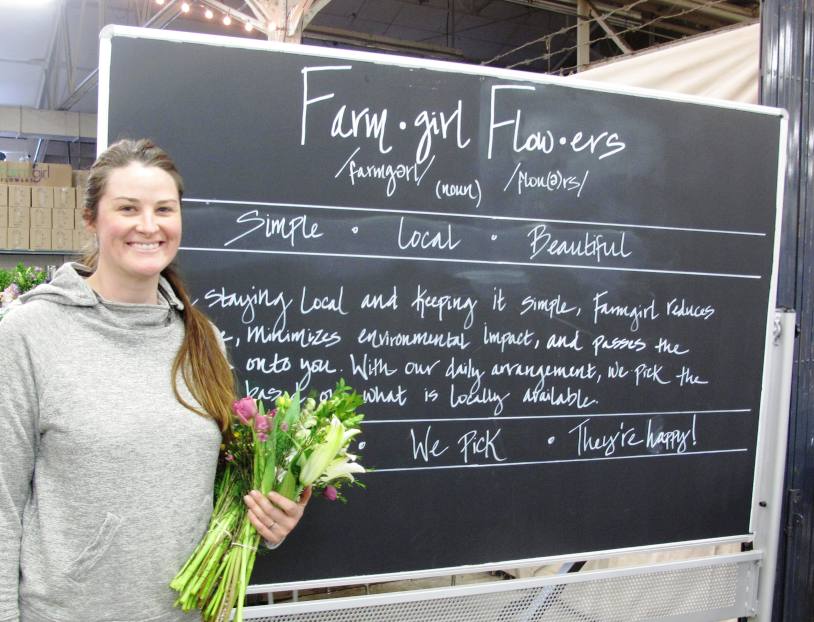
Meet Christina Stembel at her SF Flower Mart stall, which is where all the beauty happens!
The creator of Farmgirl Flowers in San Francisco, Christina has poured considerable heart, soul and personal resources into developing her innovative floral design business. Customers and the media have responded enthusiastically (see Martha Stewart Living). And her reward in part has been the explosion of copycat businesses, not just in the Bay Area but in other major cities around the country.
That’s the downside of being a successful and creative business like Farmgirl Flowers. But to me, the upside for Christina is that no one can imitate her personality or character. People can try, but they never will be the original.
Christina is an original. She shares her story in our interview, but you can read a little background here:
I’m Christina, also known as the farm girl behind Farmgirl Flowers. I grew up on a farm in Northern Indiana, and while I set my sights on leaving the farm for big dreams in New York City, I now appreciate more than ever my farm upbringing. Ten years ago, after moving around a bit, I settled in the Bay Area and, like so many others, decided to make it home.
In the past, ahem, years, I’ve had the privilege of working in many industries, mostly in hospitality and event planning. Pretty quickly, I noticed an exorbitant amount of money was spent on flowers. So, I started doing my own arrangements and realized tremendous savings along the way. Now, being the overly curious individual that I am, I wanted to know just why do flowers cost so much?
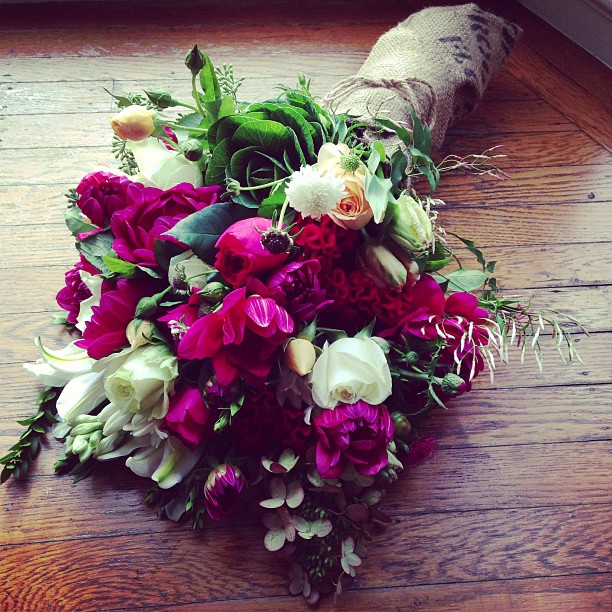
Here’s one of Farmgirl Flowers popular Trademarked Burlap Wrapped Bouquets – using all local, CA Grown Flowers. Sublime~
I started researching the reasons and came to some pretty startling conclusions. The flower industry has gone through a very tumultuous time in the past 20 years, and is pretty much in the same boat as the industries that numerous documentaries have been made about in recent years (ie: textiles, coffee, technology, etc). What used to be a big domestic business is now being whittled away due to imports. I had no idea that 75% of our flowers were being shipped in from other countries. It just didn’t make sense to me when over 75% of the domestic supply is grown right here in California. I don’t want to bore you with more stats – hopefully you see where this is headed.
The bottom line is that local farmers are going out of business left and right because they can’t compete with the prices of flowers imported from South America and other countries. And, normal people like me can’t afford to send flowers to friends and loved ones because it ends up costing an absurd amount of money. Not to mention all of the environmental damage caused by flying flowers across the globe – they have to be shipped in chemicals just to make it to your door.
And, another huge source of waste is having so many choices of flower arrangements. As a result of this approach, a huge percentage of flowers end up as waste, and are never even sold! We’re making our landfills so beautiful, but, really, isn’t there a better way?
I thought so, and devised a plan to fix the problems that have caused the inflated prices and high environmental impact, which is how Farmgirl Flowers was born!
What’s that saying about being able to take the girl out of the country, but not the country out of the girl?
There’s a charming vibe at Farmgirl Flowers, down to the logo and signage.
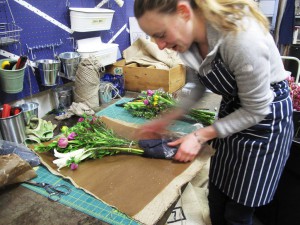
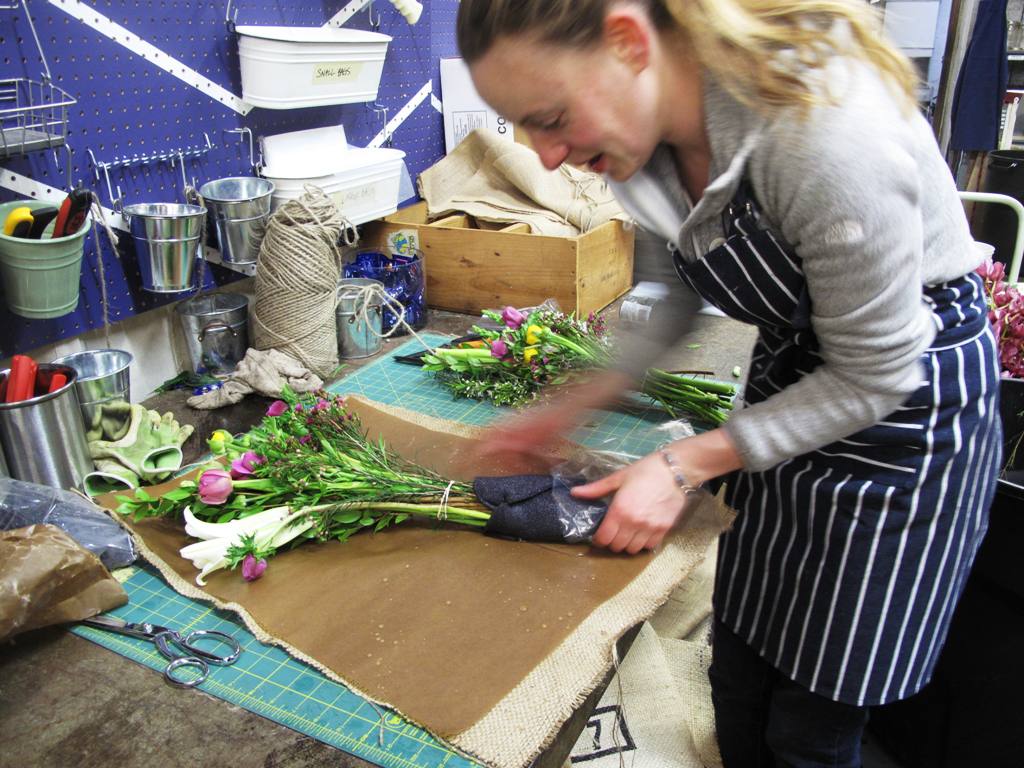
One of the designers who works for Farmgirl Flowers wraps a bouquet at the studio.
Click on the “Why we’re different” page at Farmgirl Flowers where you will see a chart comparing the LOCAL bouquets Christina and her staff design with wire services, aka “the competition.” It’s amazing when you look at these very different business models side-by-side.
Here’s a link to the Podcast Episode 101, in which Christina Stembel of Farmgirl Flowers and I joined Sunset Magazine’s Kathy Brenzel to discuss the Local Flower Movement.
The Slow Flowers Podcast with Debra Prinzing is edited and engineered by the very talented Hannah Holtgeerts of HH Creates. Check out her web site here.
Posted in American Grown, Blog Posts, Creativity, floral design, General, Playfulness, Podcast Episodes, SLOW FLOWERS Podcast, Writing | 2 Comments »
September 24th, 2013
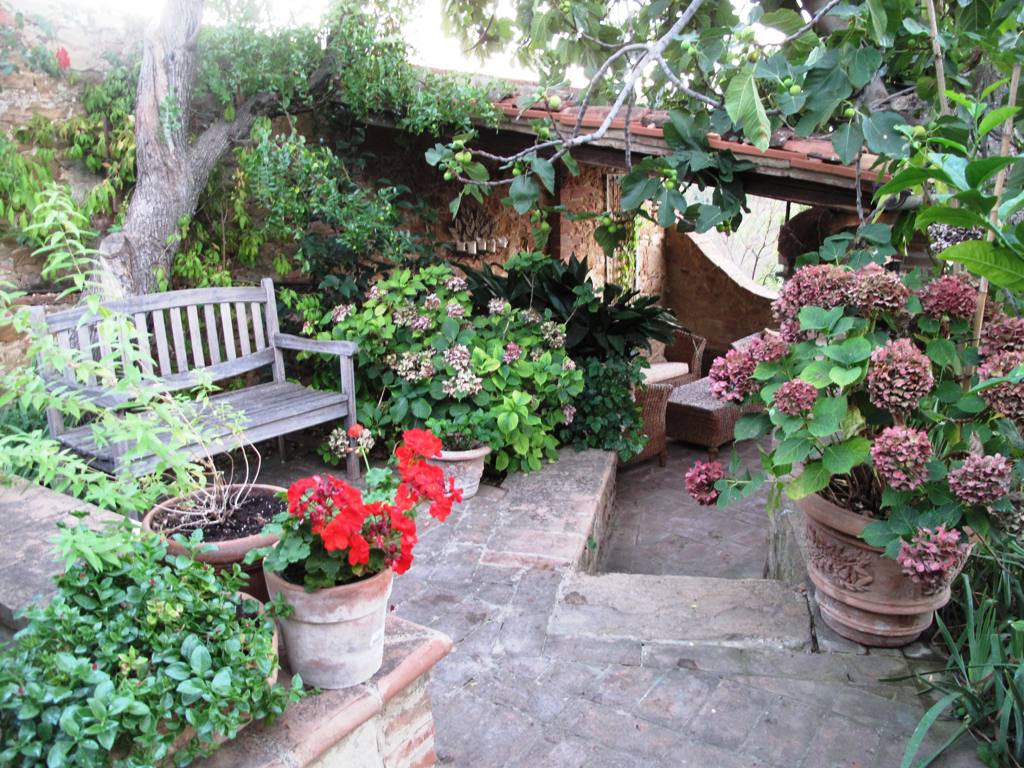
Seating draws us outdoors – the weather has been wonderful!
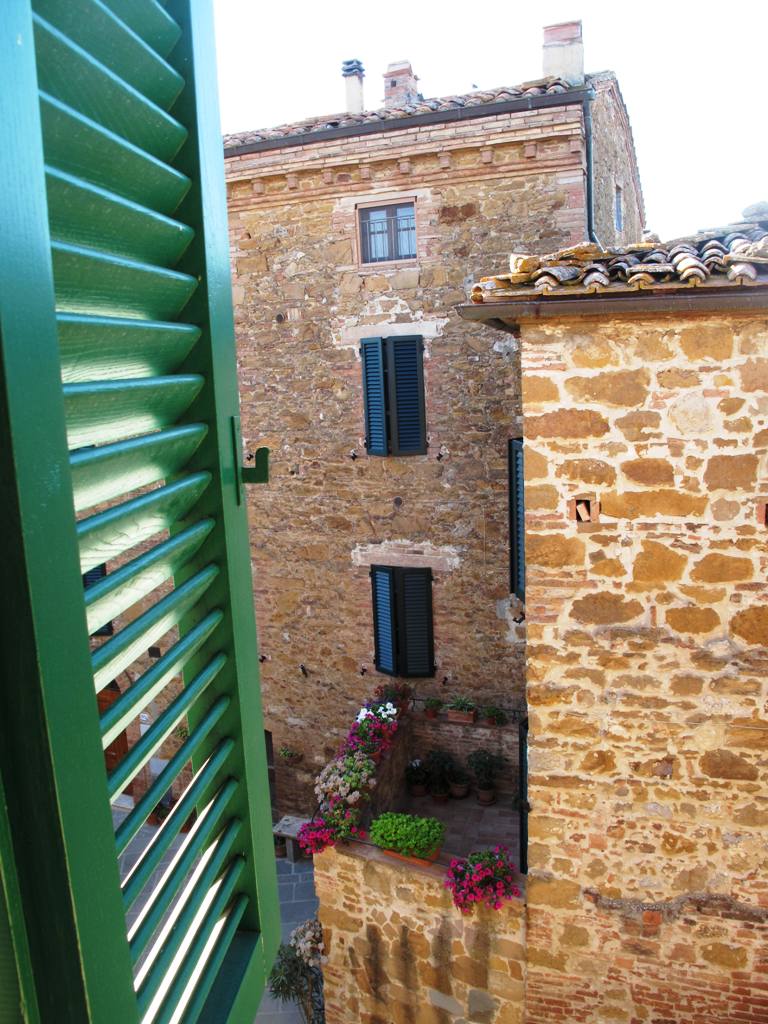
Here is the view of the Medieval village called Montisi, as seen from my bedroom.
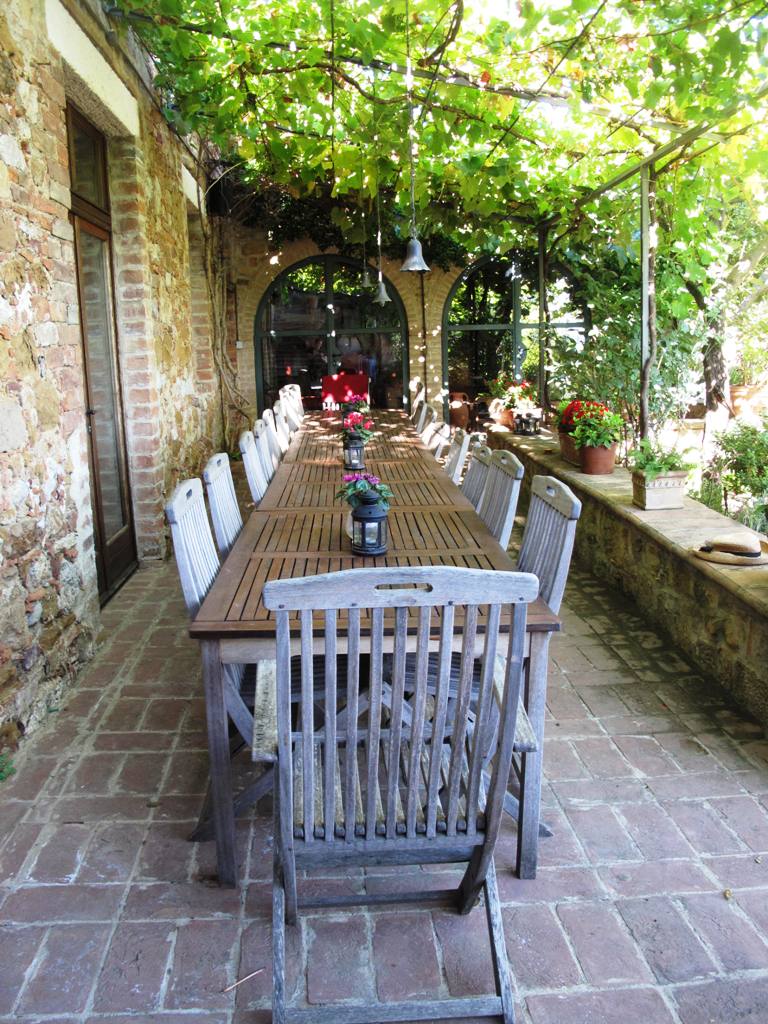
The outdoor dining space, beneath the grape arbor. Isn’t the farm table gorgeous here? This is where I’ve been sitting to write in the AM.
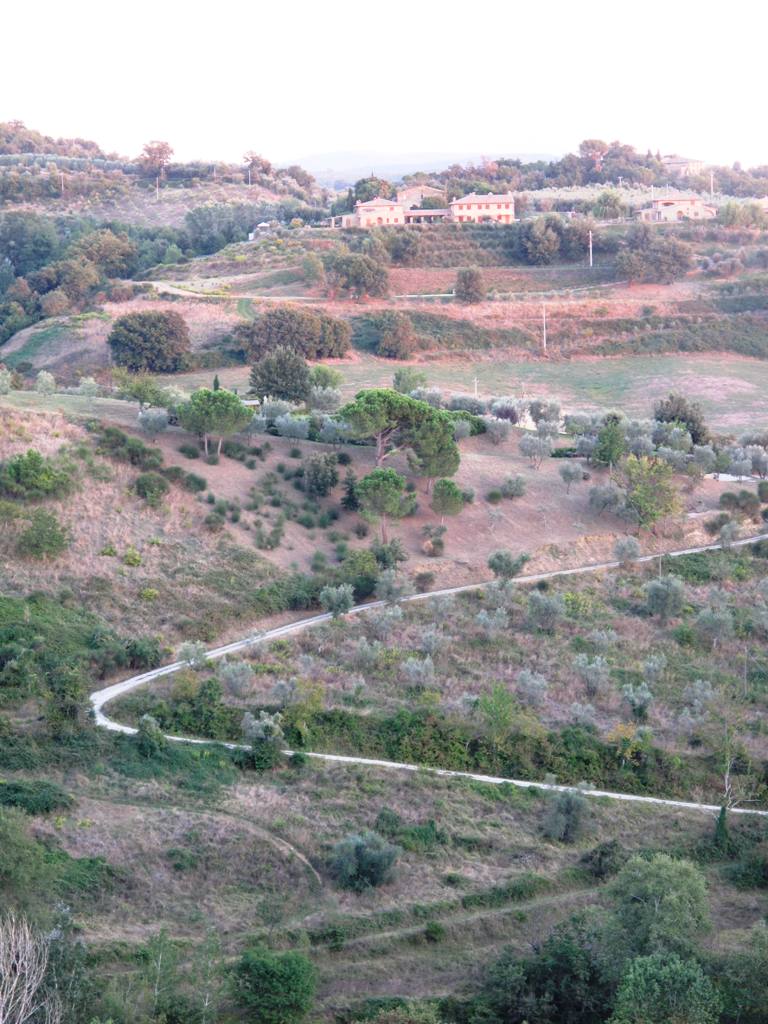
The view of Montisi, as seen from our patio. Glorious Tuscany!
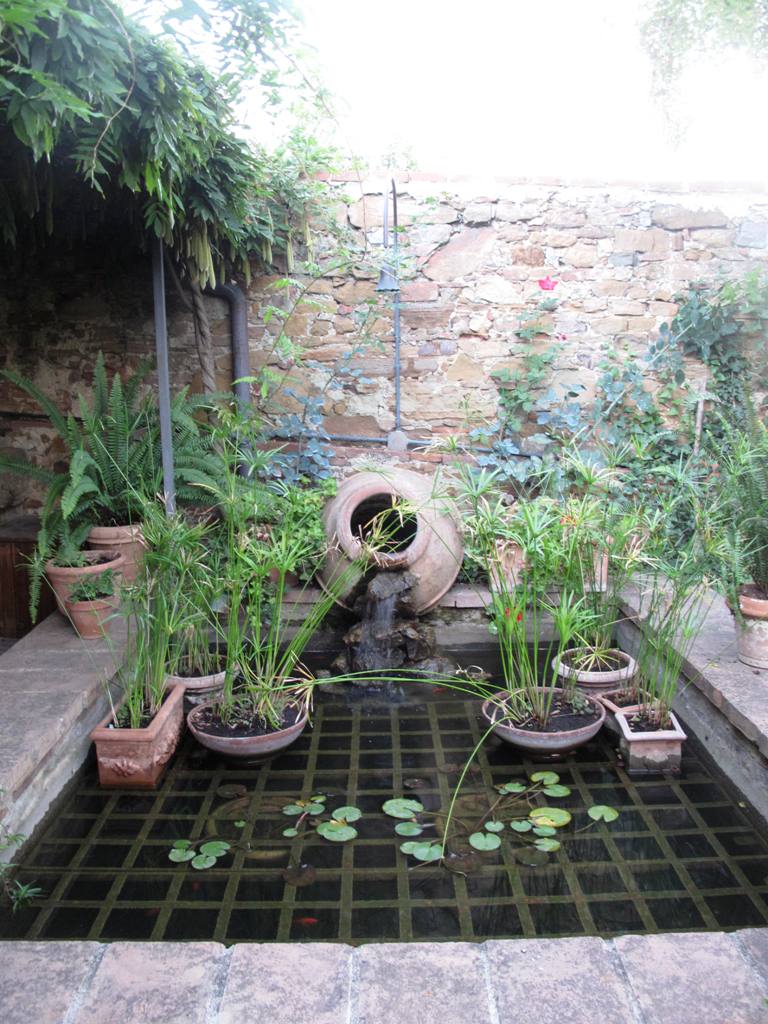
The beautiful water feature!
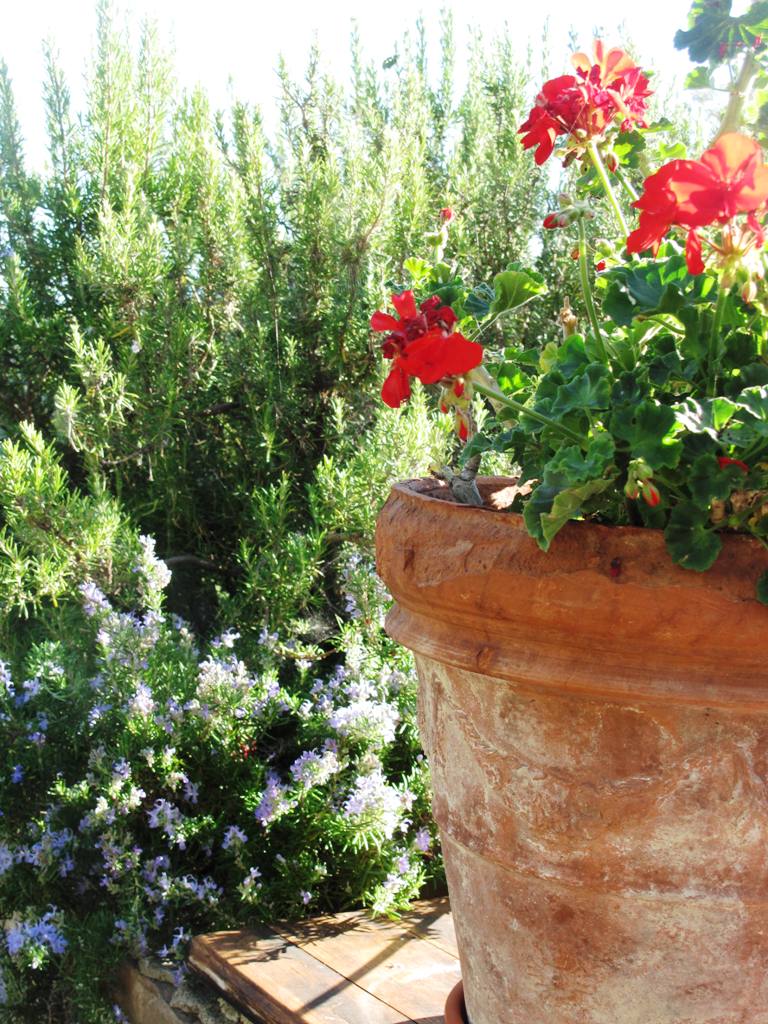
Rosemary and the classic red geranium, flourishing in a terra cotta flower pot
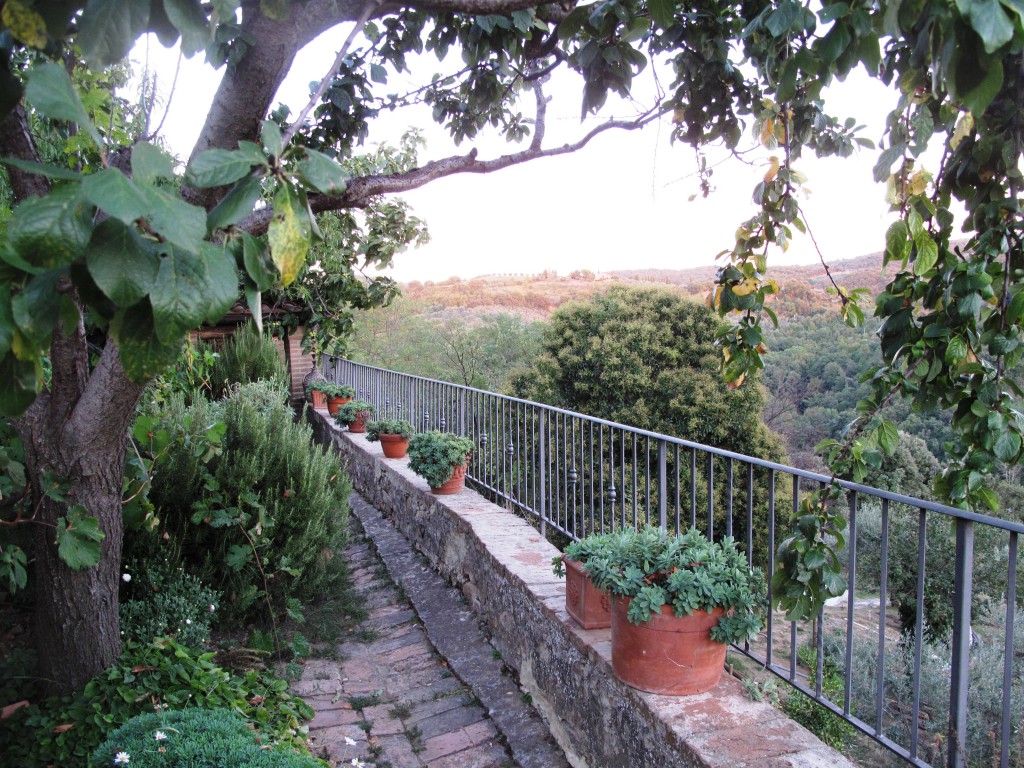
The railing is mounted on top of the stone wall at the perimeter of the patio. Love the pots!
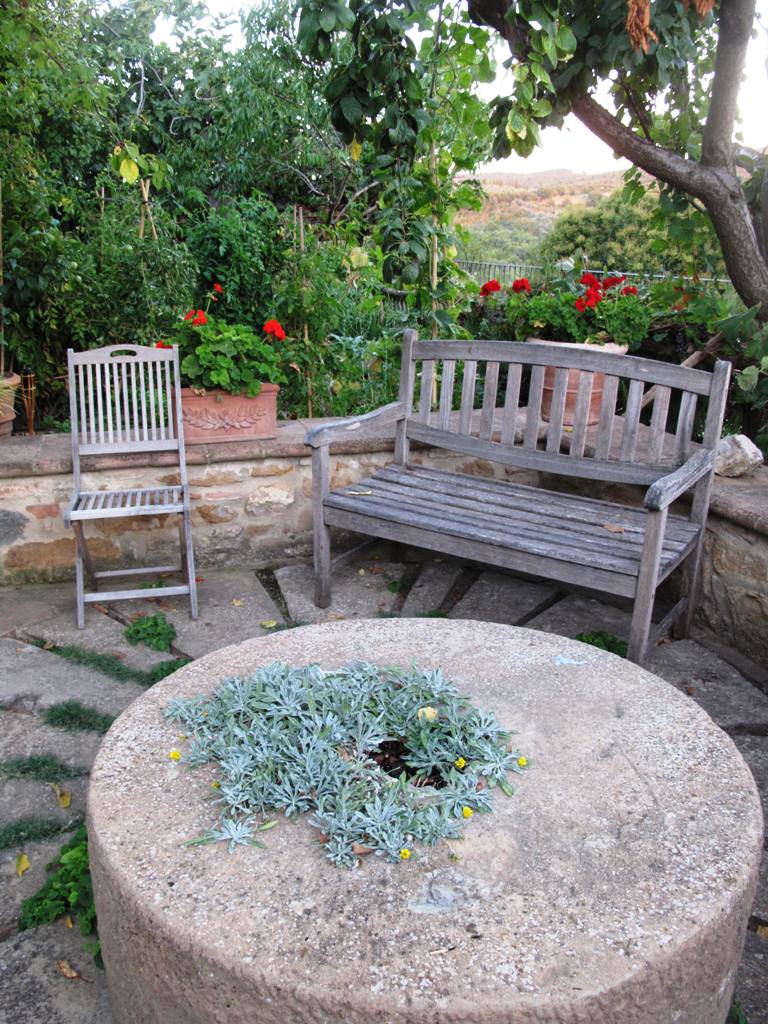
Love this millstone as coffee table!
Posted in Creativity, Gardening, General | 2 Comments »
September 22nd, 2013
RHYTHM IN GLASS
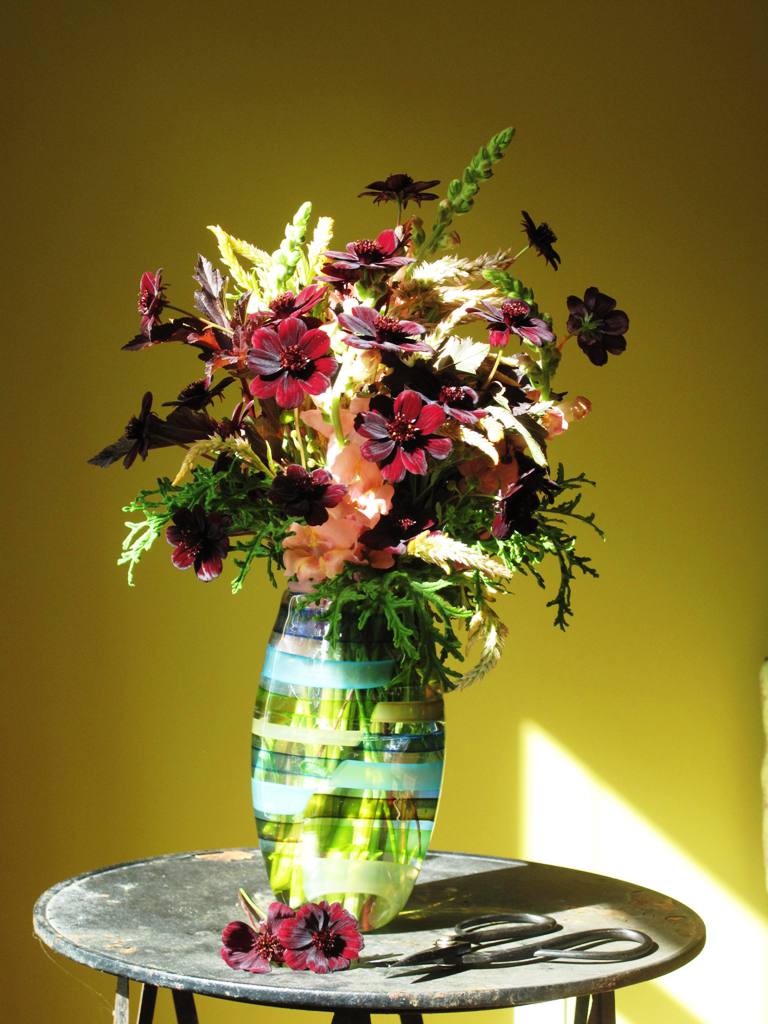
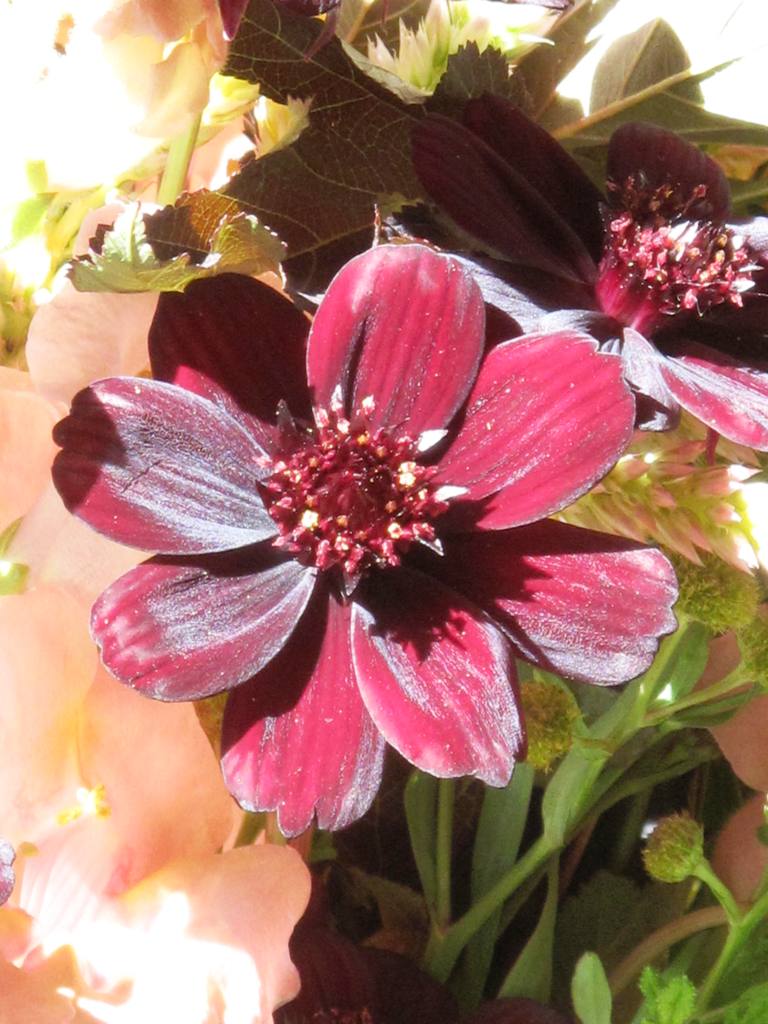
Chocolate cosmos blooms look fabulous in this art glass vase by Tracy Glover.
Ingredients:
7 stems fancy-leaf scented geranium (Pelargonium crispum), grown by Charles Little & Co.
3 stems pale apricot snapdragons (Antirrhinum majus), grown by Everyday Flowers
7 stems (tips only) light peach cockscomb (Celosia plumosa), grown by Charles Little & Co.
15 stems chocolate cosmos (Cosmos atrosanguineus), grown by Marigold and Mint
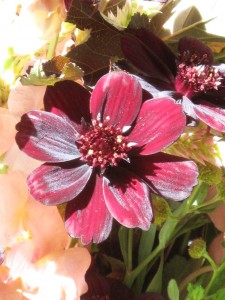
Chocolate cosmos, grown by Katherine Anderson of Margold & Mint.
Vase:
8-inch tall x 4-inch diameter hand-blown art glass vase, designed by
Tracy Glover
Design 101
Dark and light: When you place lighter or brighter flowers around darker floral elements, the viewer’s attention is drawn to the distinct details of both. Here, the chocolate cosmos looks even better because it is displayed next to lighter-hued companion flowers: pale apricot snapdragons.
Posted in American Grown, Creativity, floral design, Gardening, General, Plants, Slow Flowers: 52 Weeks, Writing | No Comments »
September 18th, 2013
Podcast: Play in new window | Download
Subscribe: Apple Podcasts | Podcast Index | | More
SLOW FLOWERS Podcast: American Grown flowers from a California Point of View (Episode 107)
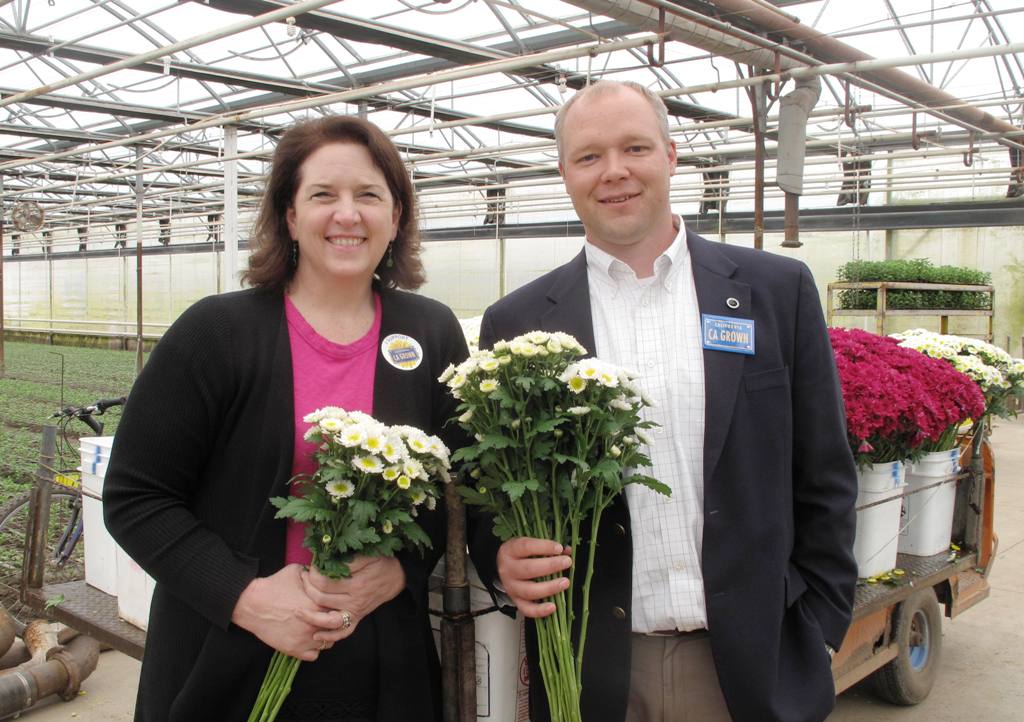
Kasey Cronquist and I toured a Carpinteria, California, greenhouse together in April 2013.
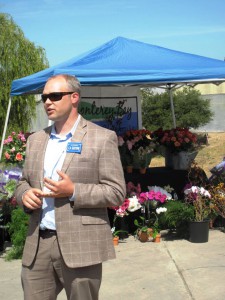
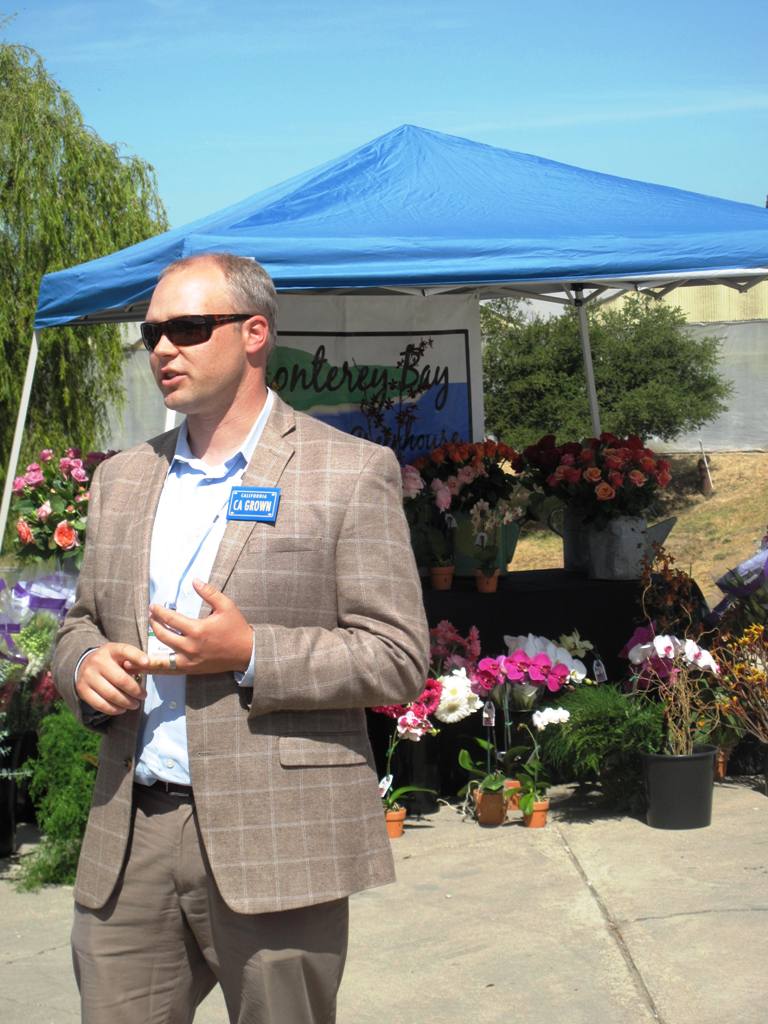
Here’s Kasey discussing the importance of supporting America’s cut flower industry – at the Monterey Bay Greenhouse Growers – Open House this past June.
I’m so pleased to introduce you to Kasey Cronquist. I truly value Kasey’s leadership, counsel and friendship. He is the CEO and Ambassador of the California Cut Flower Commission, the largest organization of its kind promoting American Flowers.
And he is a kindred spirit who is supremely passionate about saving our homegrown flower farms and preserving the agricultural way of life as a part of our country’s vibrant landscape.
Kasey and I first met by phone in 2010 when I called him for a quote to include in an article for the Los Angeles Times. I was writing about organic flowers for Valentine’s Day and Kasey sure set me straight, changing the focus from organic (and possibly imported flowers) to a locally grown priority. He pointed out: “We believe California flowers are the green alternative, whether we stick a label on them or not.”
It was the beginning of my own evolution as an American flower advocate.
Since joining the CCFC in 2007, Kasey has spearheaded an aggressive public affairs program targeting lawmakers at the state and federal level. He is a dynamic spokesman for flower farming both among his home state constituents and nationally and is a master at social media communications. Kasey understands the power of blogging, tweeting, posting and using visual social media platforms and he has brought flower farming into the modern era in that regard. More than all his talents, though, I’ve mostly been impressed with Kasey’s community-building gestures to bring together small and large flower growers across America with a united voice.
In March 2012, I wrote a post called “Meet the Ambassador of Local Flowers,” profiling Kasey for The 50 Mile Bouquet blog. You can read this extensive interview here in which Kasey shares many inspiring ideas about the American cut flower industry.
One quote of his particularly impressed me:
“We can’t move that ball, but we can create market demand for local flowers. We leaned into the CA Grown campaign and now California’s flower farmers are the single largest licensee of that agricultural program — out of all the other commodity crops in the state. The future is in educating people to buy local, to buy U.S.-grown flowers.”
Read Kasey Cronquist’s Field Position blog at Americasflowers.org
FB page: https://www.facebook.com/CaliforniaGrownFlowers
Twitter: @kaseycronquist and @cagrown
Posted in American Grown, Blog Posts, Creativity, General, Podcast Episodes, SLOW FLOWERS Podcast | 2 Comments »
September 15th, 2013
FADING HUES
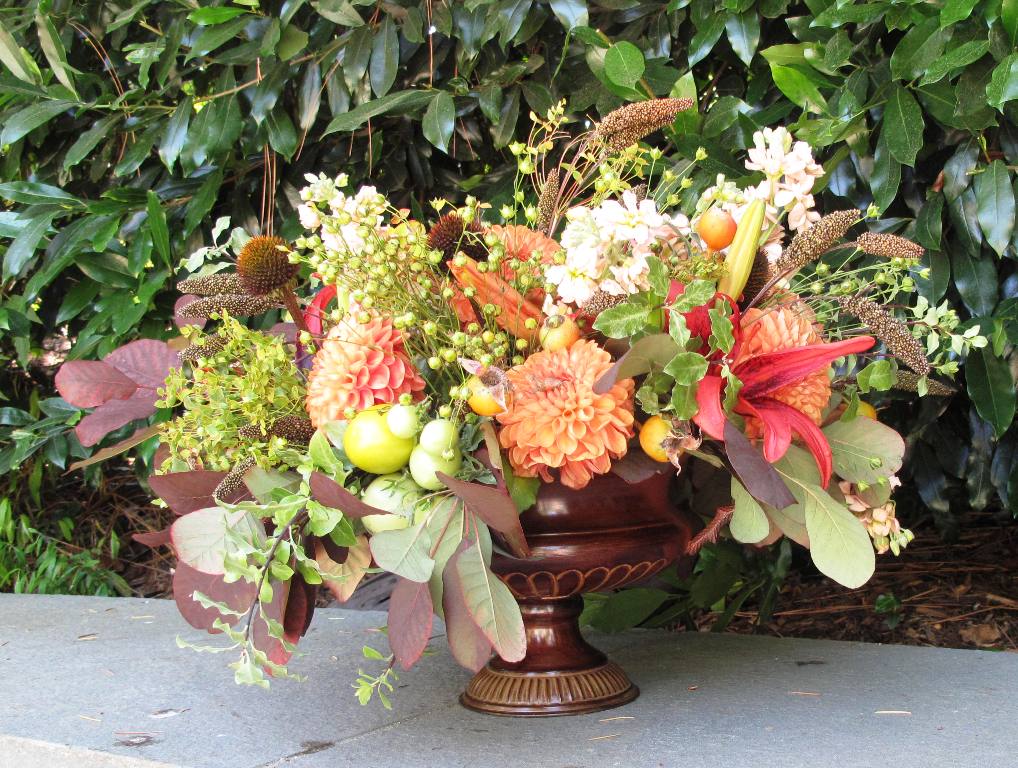
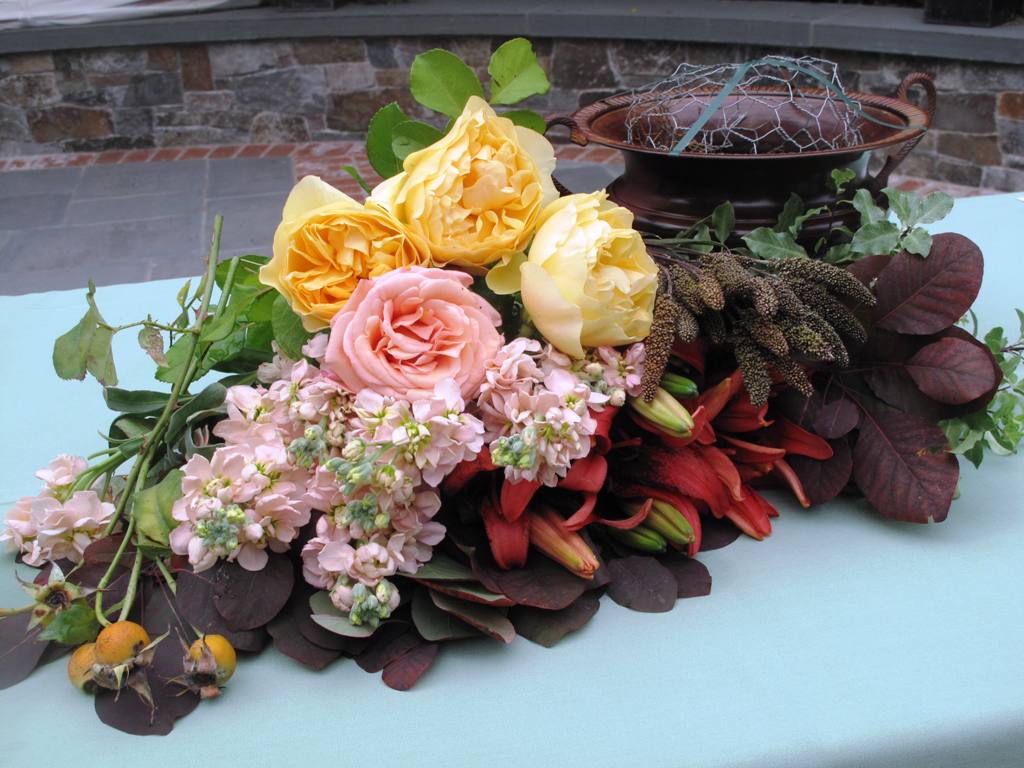
This lovely autumn palette of fading flowers, foliage and seed heads reflects the season’s beauty.
Ingredients:
7 stems smoke tree (Cotinus coggygria ‘Grace’), harvested from Lizzy Jackson’s garden
7 stems pittosporum (Pittosporum sp.), harvested from the Lila B. lot garden
5 stems Dahlia ‘Hy Suntan’, grown by Jello Mold Farm
5 stems gold and pale pink garden roses, harvested from the Lila B. lot garden
3 stems terracotta-orange lilies (Lilium ‘Olina Tango’™), grown by Peterkort Roses
5 stems pale peach stock (Matthiola incana), grown by Repetto’s Nursery
7 stems perennial flax (Linum perenne), grown by Charles Little & Co.
7 stems brown millet (Setaria viridis ‘Caramel’), grown by Charles Little & Co.
Miscellaneous seed heads, harvested from the Lila B. lot garden, including purple coneflower (Echinacea purpurea), Euphorbia sp., and rose hips
2 clusters yellow pear tomatoes, harvested from Marritje Green’s garden
Vase:
7-inch tall x 10-inch diameter antique-finish urn with 6½-inch opening
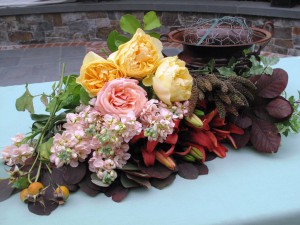
The luscious selection of California, Washington and Oregon-grown floral elements – on display
Eco-technique
A fresh drink of water: There’s a proliferation of advice for keeping a bouquet of floral ingredients fresh and lasting for many days. But one of the most important things you can do is give stems clean water. That’s not so easy with an arrangement like this one, where all the stems are knit together in a tangle of chicken wire.
My friend Lorene Edwards Forkner shared this easy water-changing trick: Place the entire arrangement in the kitchen sink. Gently lift the foliage at one edge of the vase so the faucet’s spray nozzle is directed inside. Turn on the water and let it flow for a minute or two. The existing water will begin to overflow and go down the drain, displaced by fresh water that now occupies the vase (dry off the bottom and outside of the container when finished). Do this every day or two for the life of the arrangement.
Posted in American Grown, Creativity, floral design, Gardening, General, Landscape Design, Plants, Slow Flowers: 52 Weeks, Writing | 2 Comments »
© Debra Prinzing, all written and photographic content. Website design/development by Willo Bellwood/Metric Media