Debra Prinzing

Get the Email Newsletter!

Archive for the ‘General’ Category

Here Comes the Couple: A chance to win Free Wedding Flowers

Monday, November 19th, 2012

I’m so inspired by the creative and generous souls around me. When I see their work, I am compelled to share it!
Last week, on a visit to Seattle floral designer and flower-grower Kelly Sullivan’s, I couldn’t take my eyes off of a beautiful floral still-life arranged on her end table.

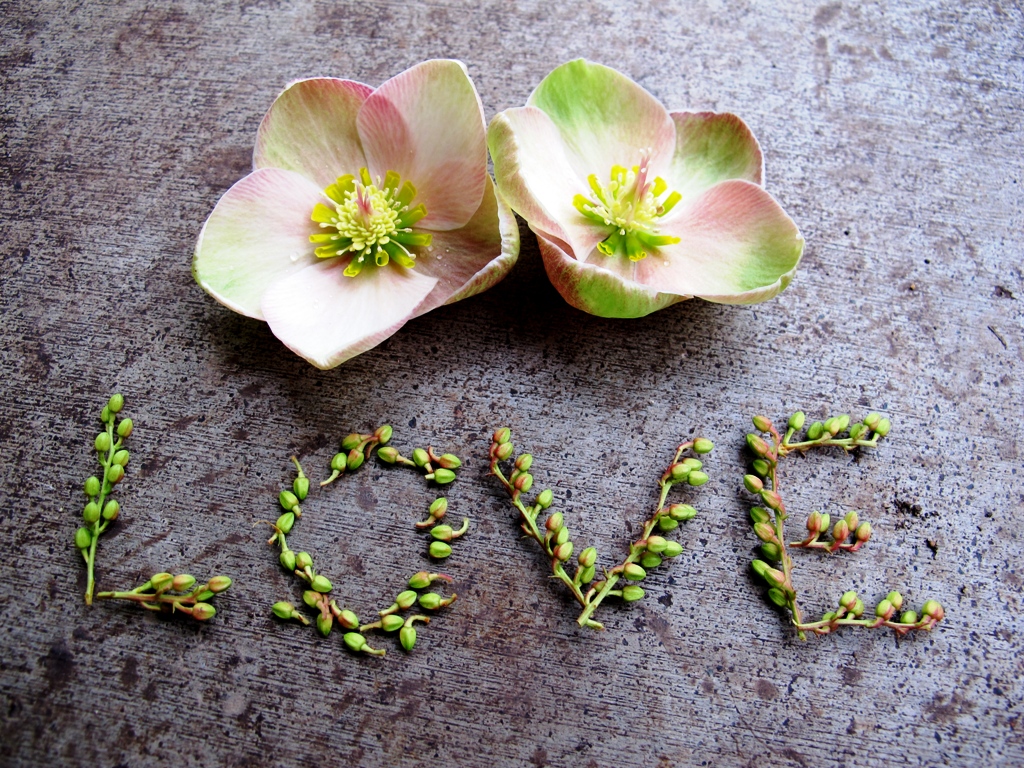
Here’s what it looked like:

For anyone obsessed with the joy of garden flowers, you’ll immediately recognize the Helleborus blooms at the top of this image and the little sprigs of Pieris japonica flowers used to spell out L-O-V-E.

“That’s gorgeous, Kelly!” I exclaimed. “What are you up to?”

“I’m giving away one-thousand dollars’ worth of wedding flowers,” she explained. “To one Washington couple getting married next year. It’s my way of honoring marriage equality.”
Kelly is the owner of Botanique Flowers, a by-appointment floral design studio in Seattle. She’s known for creating seasonally-inspired designs with a romantic, natural feeling. I previously wrote about Kelly and her subscription CSA-style bouquet program (the article was entitled “Floral Choreography,” and you can read it here). Kelly grows many of the flowers and foliage for her designs in her own cutting garden. And, she designed my cutting garden, which I’m slowly installing and hope to have finished next spring.

Kelly’s new project, the Love Is Love Sweepstakes, celebrates the passing of Referendum 74 with FREE wedding flowers for one Seattle couple who will be married in 2013. “I believe LOVE IS LOVE, period,” Kelly says. “Botanique stands behind any couple that wants to celebrate their love through marriage.”

If you’re planning on tieing the knot in the greater Seattle area anytime next year, you are eligible to win $1,000 worth of wedding floral design services from Botanique. Contestants can enter by visiting the Love is Love page on Botanique’s website and filling out the entry form.

All entries must be received by 5 p.m. (PST) on Friday, December 7th. Kelly will notify the winning couple on Monday, December 10th.

All I have to say is kudos to Kelly for dreaming up this wonderful gesture of love and support for the couples of Washington. I hope other designers are similarly inspired! The lucky couple will be doubly lucky to have Botanique Flowers as a celebratory symbol on their wedding day.

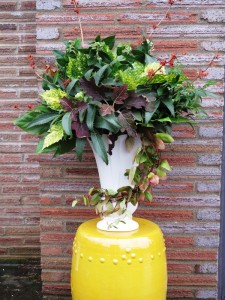
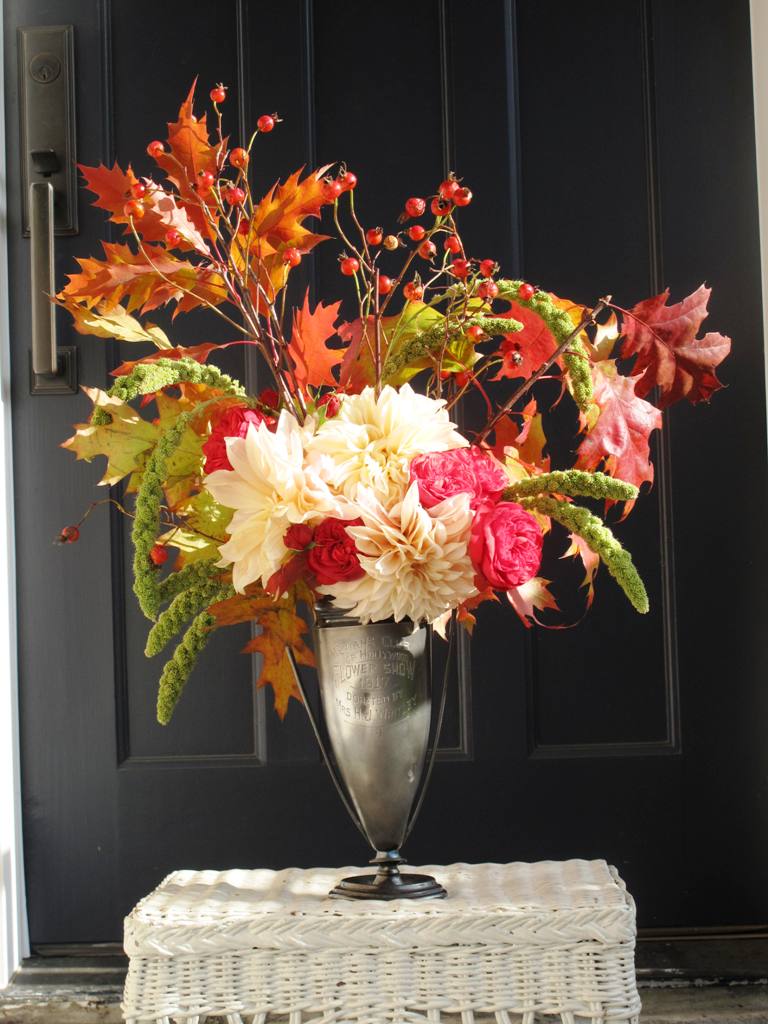
Here’s one more gorgeous floral still-life, created by Kelly:

America’s last flower frontier

Tuesday, September 11th, 2012

Seriously the most spectacular sight I've ever witnessed: Peony fields in the foreground. . . Glaciers in the distance! Taken at Shelley Rainwater's GLACIER PEONIES in Homer, Alaska

I was lured to Alaska by peonies.

You probably didn’t think it was possible to use the words Peonies and Alaska in the same sentence, but guess what? There are acres and acres of peony fields, flourishing in June and July as far north as Fairbanks (Latitude 64). A little further south, peonies bloom in Homer until August and even early September. The cool thing about this chilly state is that an intrepid group of farmers is making a cut flower industry possible. These flower lovers have seized the opportunity and created a market for their lovely crops at the exact same time when a huge percentage of weddings takes place in the Lower 48.

Irene Repper's license plate, from Echo Lake Peonies

It’s a sweet spot you rarely see these days. After learning about Alaska’s emerging peony scene in 2011, I set my sights on a first-person trip. In late July, I spent one week there, logging more than 1,500 miles on Alaska’s highways and byways (and a few dirt roads to nowhere!), visiting 15 peony farms and meeting with dozens of wonderful people behind the blooms. I came home totally enthralled with the can-do mindset of flower farmers everywhere, especially in Alaska where no one expects you to grow anything except those oversize cabbages that win blue ribbons at the state fair.

Here’s why it’s so exciting:

Peonies are one of the top bridal flowers in the country, according to The Knot and other industry sources. Yet here in the lower 48 states, peonies peak in late May and early June. If you are a bride yearning to hold a bodacious bouquet of peonies on your special day in July, August or September. . . you are simply out of luck. The next chance for peonies comes in the fall, around October, when they bloom on Australia and New Zealand flower farms – and have to be shipped to you at outrageous expense and a serious carbon foot print.

Pat Holloway, left, and me - standing underneath the Alaska Pipeline in Fairbanks. Kinda scary, but I couldn't resist the photo!

So when the folks in Alaska, inspired by the research of Pat Holloway, a professor in the department of high altitude agriculture at U of A/Fairbanks and the Georgeson Botanic Garden, discovered they could grow peonies and harvest them in July and August, well, they literally created a brand-new seasonal flower crop. The marketplace has responded with a voracious appetite for the pale pink, coral, cream, wine and hot pink blooms. Brides and their floral designers are jumping for joy – and Alaska has its first agricultural export crop. Not fish. Not oil. But PEONIES!

This micro-flower story has taken place in less than a decade, gradually at first, as a few folks planted a few hundred peonies on an acre or two. Then, armed with Pat’s research and information gleaned from her workshops on growing and harvesting, more growers joined the movement. Like many perennials, peonies take at least three years to become productive, so it has only been in the last year or two that significant quantities of blooms have been cut and shipped out of state.

The numbers are exploding, though – and an informal statewide survey suggests that about 100,000 stems were shipped this summer. There are about 150 members of the young Alaska Peony Growers Association, with about one-third of them actively growing and marketing their flowers. The rest are just getting started, ordering peony roots by the thousands and patiently tending to the plants until they explode in beauty (and quantity) over the next several seasons.

If you are wondering “what’s so special?” about these flowers, I can only tell you that there’s some kind of fairy dust in the soil, air, sunlight and altitude of Alaska that adds up to robust, healthy and vivid flowers. Some have stems like you’ve never seen before – 30-inches long or more. The foliage is healthy and true green; the petal colors are intense when you want them to be and subtly quiet when that’s preferred (in other words, better than the catalog photos!). These plants are extraordinarily responsive to the 22-hours-of-sunshine in the land of the midnight sun – and the sunlight seems to be that secret ingredient for the flowers’ success.

Elle Stapleton, a summer intern, harvests 'Red Charm' peonies at Aurora Blooms in Homer

Shelley Rainwater, harvests peonies at her farm in Homer.


There are many ways that these luscious blooms make their way from North Pole, Palmer, Soldotna or Homer to the designers and florists in New York City or Los Angeles (and many places in between). Yes, there is a carbon footprint to shipping peonies on an airplane from Anchorage to the rest of the United States.

But as Pat Holloway pointed out to me:  “For years, I had been saying, Isn’t there something we can stick in a box and ship to someone on all those (empty) planes?” You see, when combined, the international airports in Anchorage and Fairbanks are ranked as the third-largest air cargo transport stop on the globe. The combination of superior cut flowers — available nowhere else on the planet for nearly 10 weeks — and the necessary transportation infrastructure to deliver those flowers to the world adds up to floral magic of a different sort.

The growers typically harvest to order, fulfilling online requests, phone calls from anxious DIY brides, faxes from desperate floral designers — all who have joined the peony gold rush. Alaska has what they need. The flowers are harvested in the cool mornings or late in the day, stored in buckets of water and placed inside coolers large or small. The packaging is thoughtfully done. Stems of peonies “in bud” are swathed in soft quilt batting and arranged carefully in long boxes where there’s space for an ice pack or two. Then off they go, sent overnight so the recipient can enjoy his or her flowers as quickly as 24 hours after they were cut.

Peonies packed at Midnight Sun Peonies in Soldotna - ready to be shipped.

Great labeling!


Peonies are pretty remarkable flowers. They can be “dry-stored” after having been cut when in bud (some growers call this the marshmallow stage; others, the cotton ball stage).

Pat’s research has evaluated the relationship between time stored at this stage and the vase life of the blooms once they’re placed in water. You can read some of her research here. One study found that “under optimum conditions, ‘Sarah Bernhardt’ peonies lasted up to 15 days in a vase, 8-9 days from bud break to full bloom, and an additional 5-6 days in full bloom. Chilling is the most important attribute to long vase life.”

Yes, there is an acknowledged carbon footprint associated with shipping Alaska’s peonies to other states. But the energy and expense to do so is significantly lower than the alternative (such as importing from New Zealand or Holland). And to me, here’s the bottom line: It’s exciting to support a new, viable domestic flower industry that’s meeting demand, filling a need, and bringing beauty to the rest of us.

When I was visiting Fairbanks, Pat hosted a barbecue for me to meet several peony farmers in the Fairbanks area. A few local officials came, as well, intrigued to learn about the economic development story under their noses. Later, Pat shared an email one of them had sent to his constituents:

“Two things make Alaska uniquely situated to become the single seasonal source for peonies. First, nowhere else but Alaska can farmers grow crops of peonies that bloom through the summer, especially for late summer weddings. Traditionally, there have been no peonies available for sale between July and September. Second, Anchorage provides critical shipping as the world’s largest handler of international air cargo. These two aspects give Alaska 100% exclusive access to this worldwide market. . . .

“This is just the beginning for growers in Alaska. There is a demand for tens of thousands of stems worldwide and we are in (an) excellent position to develop this outstanding and diversifying product.”

Beth Van Sandt, one of my generous hosts, from Scenic Place Peonies in Homer.

How Can You Find Alaska Peonies?

Peonies, a classic beauty, from Aurora Blooms

The Alaska Peony Growers Association has a one-stop web site in which you can connect with dozens of growers. Of course, the season is pretty much over, but it’s worth contacting the peony farms to get on their mailing list and ask about pre-ordering peonies for the 2013 season. These farmers are so happy to help you – so excited to know that their flowers are bringing floral beauty to the rest of the country. I encourage designers to make those important contacts now so that next year, when wedding season rolls around, you’ll have access to superior American-grown peonies during the busiest wedding months.


It takes a village . . . to get a book promoted~

Tuesday, July 24th, 2012

Bess Wyrick of NYC-based Celadon & Celery created this gorgeous bouquet and delivered it as a gift from me to Lara Spencer of Good Morning America.

My publisher actually asked me if I could get Martha Stewart to write an endorsement “blurb” for my new book, slow flowers.

I know he thinks I’m superwoman, but really? That’s a tall order!

So then I started thinking…who can I ask for a word of endorsement?

And Lara Spencer came to mind. Lara is the gorgeous, talented and funny “lifestyle anchor” for ABC’s Good Morning America.

Even as Lara is dressed in designer gowns covering red carpet events and interviewing celebrities, she is at heart a passionate design maven, a bargain-hunting thrift-store gal.

When I met Lara in 2009, I was working for the LA Times. I visited her mid-century-era Beverly Hills home to report on the incredibly beautiful makeover she had conjured up. It was a la Hollywood regency, but the best part of our story included Lara’s secret sources. Ebay, Craig’s List, Pasadena Rose Bowl – she has the nose for the bargain to be sure!

You can read that story here:

Now Lara has left her LA gig as host of “The Insider” to join Good Morning America. Oh, and did I mention? She’s also the host of the “Good Afternoon America,” ABC’s new daily show?

In order to let Lara know about my new book project, I knew I needed to make a big splash. So here’s what I did:

1. I put together a package that included a copy of The 50 Mile Bouquet, as well as all the great press stories we’ve received from major newspapers like the New York Times, San Francisco Chronicle, Dallas Morning News, Better Homes & Gardens, Garden Design and more.

2. I shipped it to my floral designer friend Bess Wyrick, of Celadon & Celery. “Bess,” I wrote. “Can you make a LOCAL floral arrangement and deliver it to ABC Studios with my package?”

3. Bess did not disappoint. She created this yummy bouquet of locally-grown hydrangeas and delivered it to Lara Spencer a few weeks ago with my package of clips and the book. Since then, Lara and I exchanged messages on Twitter – she LOVED Bess’s flowers – and The 50 Mile Bouquet.

4. That was followed by a series of calls and emails to Lara’s talented producers -Sabrina and Kelly. These women did the legwork to make sure ABC’s legal department could “sign off” on Lara contributing a blurb to support my new book. Today, I got the YES! the Green Light!

Here’s Lara’s blurb:

“Debra Prinzing inspires us to slow down and smell the flowers, especially those grown in our own backyards or by local flower farmers.”

Lara Spencer, ABC’s Good Morning America lifestyle anchor and New York Times best-selling author of “I Brake For Yard Sales.” 

And so, I owe a HUGE thanks, not just to Lara, whose kindness and friendship is incredibly sweet, but also to Bess, floral designer extraordinaire, for all her legwork! And to Lara’s producers, Sabrina and Kelly.

See? It really does take a village of women – supportive, encouraging friends – to make things happen.

Announcing . . . SLOW FLOWERS

Tuesday, July 10th, 2012

There’s a sequel to The 50 Mile Bouquet and you will be able to hold it in your hands come February 1, 2013!

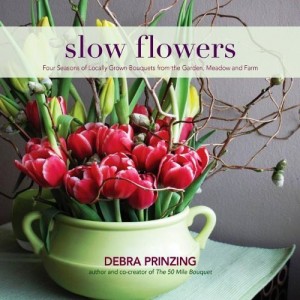
Above, you see the cover mock-up featuring my photo of a simple arrangement I created for a 2011 Northwest Flower & Garden Show demonstration. My green urn holds two types of locally grown tulips from Alm Hill Gardens in Whatcom County, as well as curly willow branches and camellia branches from my former garden. Simple and graphic. Gorgeous cover art designed by Holly Rosborough, St. Lynn Press’s art director.

Yes, the good news is that St. Lynn’s Press will publish SLOW FLOWERS: Four Seasons of Locally Grown Bouquets from the Garden, Meadow and Farm. The book features 52 weeks of seasonal floral arrangements created and photographed by Moi!

Here’s the book’s description:

The slow food movement (with its hundreds of thousands of members and supporters) has changed our relationship with the foods in our lives. Now the slow flower movement is changing the way we think about cut flowers: Yes, we’d all prefer fresh, fragrant flowers in our bouquets, not the chemical-laden “undead” blooms flown in from afar – but what to do in those seasons when not much is growing locally? Debra Prinzing challenged herself to create a beautiful, locally grown bouquet for each of 52 weeks of one year (going beyond flowers to include ornamental twigs, foliage, greenhouse plants, dried pods, and more), to demonstrate that all four seasons have their own botanical character to be celebrated. She provides extensive design tips, bouquet “recipes” and region-by-region floral ingredient lists that can be found in all climate zones through the year. Slow Flowers is written from a DIY floral designer’s point of view, to inspire anyone to go green and make a beautiful bouquet with what’s at hand, no matter the season.

More details to come, but you can help me out by pre-ordering a copy on Amazon. Yeah!!!

Sunset hails SLOW FLOWERS and the special people who grow them

Saturday, June 16th, 2012


Here's how Sunset featured the interview, in its "Next in the West" section where Tara Kolla is hailed as a trailblazer for urban farmers. The photo of Tara was taken by Shelly Strazis/Sunset.

The editors at Sunset asked me to update the story about Tara Kolla, Los Angeles-based flower farmer, urban farming advocate and owner of Silver Lake Farms. In The 50 Mile Bouquet, she is profiled on pages 47-49 in a story called “Flower Patch Politics.”

It was great to have an opportunity to reconnect with Tara and learn about what she’s been up to since we visited her last November. It was no surprise to discover that Tara is up to her ears in beautiful blooms, selling them at farmer’s markets and fulfilling custom orders for regular clients who love her organic approach.

As these things go with magazines, my interview with Tara was completely rewritten into a narrative format. You can see the published piece it above, or on page 18 of the June 2012 issue, on newsstands now.

But there is a lot to learn from this talented woman. And so here, since space is not an issue, is our original Q&A:

ONE TO WATCH

Flower Patch Politics

In 2009, when Los Angeles officials shut down Tara Kolla’s backyard flower farm, citing a 1940s truck gardening ordinance that limited off-site sales of homegrown crops to vegetables, not blooms, she joined forces with fellow urban farmers to fight back. Passionate about sweet peas and the many other flowers she grows, Tara and her supporters successfully changed the city’s policy – and now the spunky owner of Silver Lake Farms has returned to the Hollywood Farmers’ Market where you can find her every Sunday selling bountiful, organic and seasonal bouquets. Her advice for other urban flower farmers:

What has been the response of your customers to your policy fight?

Some customers think I’m new because I’ve just returned to the market. Those aware of my struggle are delighted for me. It makes them feel good that L.A.’s politicians used common sense to change an antiquated law. Flower fans are now begging me to come to Santa Monica Farmers’ Market on Wednesdays – I hope that happens soon.

How might other would-be flower growers address their own community’s rules, if they face similar restrictions?

My issue was not about growing flowers, but about being prevented from selling them off-site! If someone’s facing similar opposition, I suggest creating a support group – we called ours Urban Farming Advocates. Request a meeting with local officials and be prepared with evidence as to why urban farming is advantageous for the community and why cities should support and encourage urban farmers.

Do you think the updated truck gardening ordinance means more floral variety at local L.A. farmers’ markets?

Eventually, but it is all dependent on land, time and money. I never thought I’d get rich doing this and I continue to run other facets of my gardening business to support myself, including a CSA and designing organic vegetable gardens.

On the zoning front, what still needs to be done in L.A. to support local farmers?                                           

We need backyard beekeeping to be legalized — for ensuring that food crops have pollinators and for producing organic honey. We also need home-based farm stands, meaning you could sit outside your house at a table and chair and sell your garden’s extra oranges or avocados to passersby. Kids and their lemonade stands are legal, but a farm stand with flowers, fruits or vegetables is not.

Could you argue that L.A. hasn’t kept up with other cities in the west when it comes to nurturing urban farming?

No, I think L.A. does care, but it needs to get some codes sorted out. For example, I also grow micro greens. I can sell them to chefs who shop at the farmers’ market, but I can’t go direct to restaurants because then the health department has to get involved. This is new ground and we still have some archaic laws that don’t make sense for today. 

What flower variety do you think is going to be the next big thing at farmers’ markets?

In terms of a cut flower, I think it’s cotton. I first saw cotton in the flower markets in Paris. It’s not just white; you can find cotton in sea mist green or light tan – and they look great in mixed bouquets.

–Debra Prinzing


Behind-the-Scenes of a Country Gardens photo shoot

Monday, June 11th, 2012

Creating a magazine story involves a lot of moving parts.

Last year, I worked with a huge team of talented people to produce a feature story for Country Gardens magazine called “Art by Hand,” which appears in the current Summer 2012 issue. Editor James Baggett had the original vision for this story — and he asked me to produce and write a group of short profiles that together tell the story of craftspeople and artists whose work is inspired by the garden, wildlife and nature.

Our starting point was Dirt Couture, the online garden emporium started in 2010 by Cindy McNatt. Many of you know Cindy for her daily updates called Dirt du Jour, which is a fun, g0-to site for all the latest gossip about plants, books, people and trends in the gardening world.

Cindy suggested several of the artists whose work is featured on Dirt Couture, and since photographer Laurie Black and I are now both located in the Pacific Northwest, we decided to focus on three folks in Oregon and Washington. We photographed their portraits and work last July.

Last September we headed to Southern California for a visit to Cindy’s gorgeous garden and the world headquarters of Dirt Couture (aka, her kitchen table!). Pulling together all these separate pieces and making them into an 8-page feature for Country Gardens was way more work than just visiting a beautiful garden and spending 24 hours photographing it. But I love teaming up with Laurie and her husband Mark King, and things always seem to have a good flow when we’re on location together.

So you can read the story here — or, better yet, pick up a copy at the newsstand. Laurie’s photos are amazing (and PS, she also photographed the cover of the same Summer issue to illustrate my feature about The Herbfarm Restaurant’s Basil Banquet. That’s another fun story!).

Here are my favorite out-takes from “location.”

Bob Denman of Red Pig Garden Tools in Boring, Oregon, is one of the country’s last blacksmiths making hand-forged gardening tools and implements. You can learn more about his work here:

Bob and Rita Denman, of Red Pig Garden Tools

Love this old-timey sign!

You can see the actual forge-marks on these hand hoes. Rustic beauty!

Artist Blenda Tyvoll uses mixed media to cover her canvases with soulful trees, inspired by the Oregon farm where she and her family grow Christmas trees! Check out more of her work here.

I love this little gallery I styled with Blenda's canvases and her collection of paint-chipped stools.

from left, Blenda studies her collection of tree-inspired paintings as Laurie Black and Mark King capture the shot.

Potter and artist Marybeth Sommers of the Seattle area has adapted the traditional Raku method to create bird houses and bird feeders. They are charming! We photographed Marybeth and her work at the Dunn Garden in Seattle. Thanks to the folks there for making that happen! Marybeth’s studio is called Ring of Fire Pottery.

Here's what happens when the showers arrive in the middle of a photo shoot! That's Mark King, holding a rigged up photographer's stand with an umbrella clipped onto it. Just to keep our subject Marybeth dry while Laurie take her portrait.

A sweet vignette of Marybeth's bird feeders in the colorful Dunn Gardens.

Finally, we spent a day with Cindy McNatt, creator of Dirt Couture. Visit the site here and learn more about all of these artists, plus nearly 100 more artisans and crafters. You won’t be disappointed!

Garden Writer friend Julie Bawden Davis (left) visited Cindy McNatt (right) and me (center) during our photo session. It was fun to reunite with my SoCal girlfriends!

Laurie King, a dream of a photographer to work with!

Dirt Couture's canvas harvest trug - perfect for gathering flowers and herbs.

The end! Now we’re busy planning all the stories to be created this summer for 2013 issues~

On the road, but trying to stay local

Saturday, May 26th, 2012

The 50 Mile Bouquet shares the stage with Lila B.'s charming mini-floral arrangements.

Promoting the Slow Flower movement means one may have to travel. I realize that’s a huge contradiction, but that’s life – a series of choices, right? I rationalize my airplane journeys by trying to cram as many events into one destination as possible. Not exactly logical, but it makes me feel more efficient and keeps me away from home for a shorter period of time.

Earlier this month, I headed to San Francisco for Mother’s Day weekend. It started when Flora Grubb and Susie Nadler, two of the superstars of The 50 Mile Bouquet, invited me to be part of the Mother’s Day events at Flora Grubb Gardens. It was the perfect excuse to combine a visit to meet my own mom (and dad) in San Francisco. And then Baylor Chapman of Lila B. Flowers, another superstar of our book, invited me to be part of her activities as part of the SF Made Week. We filled those 48 hours to the brim with flowers, friends and family. A special thanks to Sophia Markoulakis, food and garden writer, for featuring The 50 Mile Bouquet and the Mother’s Day book-signings in her article for the San Francisco Chronicle, ‘Slow-flower’ movement’s power sprouts with new book.

Here are some of the photos from the trip:

Hi Mom! Having fun with my own mom, Anita Prinzing, at the SF Conservatory of Flowers.


Spending time with floral artist Baylor Chapman is always a treat. We're at the Lila B. Flowers pop-up shop at the Stable Cafe on Folsom Street.


Sigh. Baylor's famous succulent-planted shutters. So beautiful!

At Flora Grubb's on Mother's Day, including (from left) Flora and her mom, Susie's mom, Susie, and me.


A chalkboard notice welcomes me.

Susie create a scrumptious local bouquet using ingredients from her own backyard, from local flower growers and - of course - from succulents at Flora Grubb Gardens.

How many times has a vase of flowers tipped over in your car?

Monday, April 30th, 2012
Here’s a clever new way to transport a vase of flowers in the car!

I’ve tried all sorts of tricks to stabilize and transport a gift bouquet in my car. It usually means holding my breath while driving to the party.

Sometimes I place the vase inside a 5-gallon bucket or a large file box and stuff crumpled up newspaper around it. Occasionally, these ideas work out great. Then there are those times when I turn the corner and – oops – everything spills out.

I’m not saying the Vase Brace is perfect, but I sure think it’s a clever idea for transporting a vase, especially on the floor of the passenger’s side or behind the back seat.  Liz Griffin, a budding cut flower farmer from Auburn, brought along this nifty product to the workshop I taught at Seattle’s Dunn Garden on Saturday.

When the class was over, Liz simply placed the sturdy square base on the table and centered her vase on the top. Then she pulled on four bungee cords and snapped their hooks over the rim of her vase. The tension of the cords hold everything in place. No tipping allowed!

I was not the only person to ooh and aah at this clever product. In fact, I snapped a few photos of Liz’s beautiful arrangement secured for transport home in her car.

Today, she sent me the link to an online source called Arranged for you. Check it out – for just under $17, this simple product may make driving to a dinner party nearly stress-free! Thanks Liz!

I think spring might actually be here

Thursday, April 26th, 2012
Gotta love these yummy colors together!

Yes, a full month AFTER our spring equinox, the garden is popping! Here’s my happy spring bouquet, made just for me. But I wanted to share it, too:

Ingredients:

Vintage green fluted vase (flea market find)

Aromatic lilacs from Oregon Coastal Flowers (Tillamook, Oregon)

Very fragrant white sweet peas, velvety lamb’s ears and acid-green nicotiana – all from Janet Foss at J. Foss Garden Flowers.

The setting: my garden. I perched the arrangement on my wonderful weathered garden chair.

A sensory, springtime bouquet in a gentle palette of white, green and lilac.


Seasonal eye candy

Tuesday, April 17th, 2012

Eco-conscious flower farmer and floral designer Kelly Sullivan of Seattle’s Botanique Flowers arrived with this gorgeous bouquet at a lunch I hosted last week. I had to share it!

Kelly Sullivan's evocative spring bouquet

Here’s what she included in the diminutive urn:

From her own garden: purple-blue grape hyacinths (Muscari); pale pink and purple flowers from a groundcover called Pulmonaria; geranium foliage; and variegated foliage/scented pale-pink flowers from a shrub called Daphne odora.

From the garden center: It was too early to harvest these from her own backyard, so Kelly bought potted anemone plants and clipped several of their romantic black-centered flowers in indigo and dark pink to add to the bouquet.

Everything is stablized with a small piece of chicken wire inside the vase, which allowed the designer to get the full, cascading effect she wanted. I was smitten!

So, when we had a talk and book-signing at Ravenna Gardens on Sunday, I brought along her vase to add to the book display. It’s simply sublime!

Kelly's bouquet looks pretty dazzling with our book display.

THANK YOU, Kelly!!!