Debra Prinzing

Get the Email Newsletter!

Archive for the ‘Gardening’ Category

The Garden Library: book reviews

Wednesday, October 17th, 2007

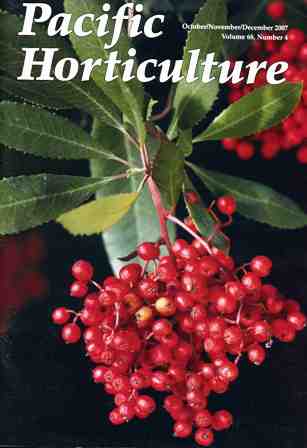
PacHortReading great garden writing is one of life’s joys. And one of my favorite pastimes is to spend time savoring the words written by friends and fellow garden writers.

Here are two books I recently reviewed for Pacific Horticulture magazine (an important resource for anyone who gardens in the West).
BBGbook

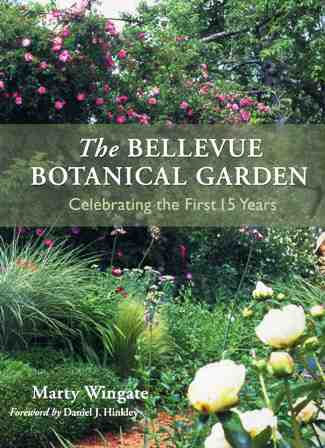
The Bellevue Botanical Garden: Celebrating the First 15 Years, by Marty Wingate (2007, The Bellevue Botanical Garden Society), 9×12 inches, 112 pages, $19.95. To order: Bellevue Botanical Garden.

“The moment you enter the garden, you will sense that the BBG is as personal as a beloved private garden,” writes Nancy Davidson Short in her back-cover tribute to this book. Indeed, in author Marty Wingate’s colorful narrative of this relatively young garden, the passion of its supporters’ “ownership” influences all aspects of the Bellevue Botanical Garden’s inception and evolution.

To celebrate the garden’s first 15 years, the BBG Society asked Wingate and book designer Virginia Hand to sift through decades of archival material dating back to the 1940s, conduct first-person interviews, and edit hundreds of images contributed by volunteer and professional horticultural photographers. The result is a timely and timeless document that captures the roots of BBG – from the gift of land by benefactors Cal and Harriet Shorts to the partnership between the BBG Society and the City of Bellevue’s Parks Department.

Revealing her talents as a garden tour guide and garden writer, Wingate escorts her readers through BBG’s multilayered narrative, stopping at important venues to recount a small historical detail, or focusing closely on noteworthy plant specimens. She enthusiastically retells the story of this “living jewel” and its influence on regional, national and international audiences who number 300,000 visitors each year.

The book’s most inspiring section covers “The Gardens” — including the Entrance Garden, Northwest Perennial Alliance Borders, Yao Japanese Garden, Shorts Ground Cover Garden, Waterwise Garden, Alpine Rock Garden, Fuchsia Garden, Native Discovery Garden and Lost Meadow/Loop Trail.

Illustrated with exquisite photographs of plant combinations and garden portraits, the history of these specialty gardens is also shared through interviews with key volunteers who helped design, install, tend to and nurture their creation.

And ultimately, that’s the heart and soul of this book: How members of the gardening community – from avid lay gardeners to professional landscape designers and horticultural educators – turned the dream of a botanical garden into a beautiful reality for the public.
CAGG

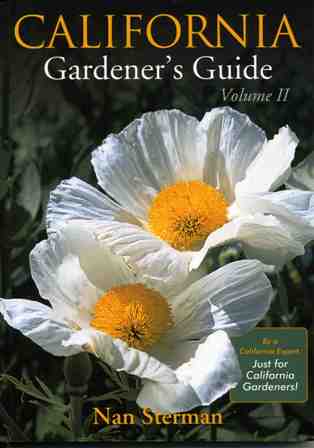
California Gardener’s Guide, Volume II, by Nan Sterman (2007, Cool Springs Press) 7×10 inches, 271 pages, $24.95. To order: Plant Soup.

In the interest of full disclosure, I admit to being more than a little familiar with the format of Nan Sterman’s excellent new book, California Gardener’s Guide, Volume II. In 2005, Mary Robson and I coauthored the Washington and Oregon Gardener’s Guide, its Northwest cousin.

I am a newcomer to California, having relocated to Ventura County in August 2006. And I’ve been waiting for this book ever since. Having given up my Seattle garden, along with plants like hostas and hellebores that loved shade and moist growing conditions, I’m faced with a new backyard, a tabula rasa for a novice to California gardening. Like many gardeners, I want to grow and nurture plants that are appropriate for my surroundings, including ornamental natives.

Sterman, a California gardening expert who embraces sustainable practices such as designing with drought-tolerant plants, serves up her top recommendations: 186 plants for California’s diverse growing areas.

This is no small task, as Sterman notes in her introduction: “From north to south and east to west, there are dramatic differences in vegetation, geology, topography and climate.”

Before revealing her recommendations for the “best of the best” — annuals/biennials, bulbs, fruits, groundcovers, herbs, ornamental grasses, perennials, shrubs, succulents, trees and vines — Sterman introduces the beginning gardener (or California newbies like me) to the state’s five primary growing regions. She includes useful charts that outline average annual rainfall, maximum and minimum temperatures for each region, including: the coast, inland valleys, the Central Valley, low deserts and high deserts.

With Mediterranean conditions accounting for much of the state’s geogrpahy, Sterman zeroes in on native plants and those from other Mediterranean regions adapted to California’s low-water conditions. She also covers “thirstier” plants, edibles and ornamentals that are noteworthy for their “return on investment” (fruit, berries or fragrance). In the one-page plant profiles, Sterman makes note of species with low water, moderate water and high water needs. Useful icons also indicate whether the plant attracts butterflies or hummingbirds, supports bees, is edible, fragrant, produces fruits, is long-blooming or appropriate as a cut flower, provides food or shelter for wildlife, has colorful foliage, is drought tolerant, a good container plant, grows well in Mediterranean conditions, adds a tropical look to the garden, tolerates coastal conditions and is a California native.

I really appreciate the “zone” graphic which shows a tiny map of California on each page (this is a clever feature that I wish Mary and I had used in our version of the state plant guide). The map is shaded to allow readers to tell at-a-glance whether a plant is hardy for the region in which they live; Sterman also includes the estimated minimum temperature for the plant.

Now I can take the California Gardener’s Guide along on plant-shopping excursions and use it to find something other than the ubiquitous agapanthus (okay, we thought that was a “rare” plant in Seattle: now I see it growing in clumps at the corner gas station!).

 

Destination: plant sale

Sunday, October 14th, 2007

ben alex

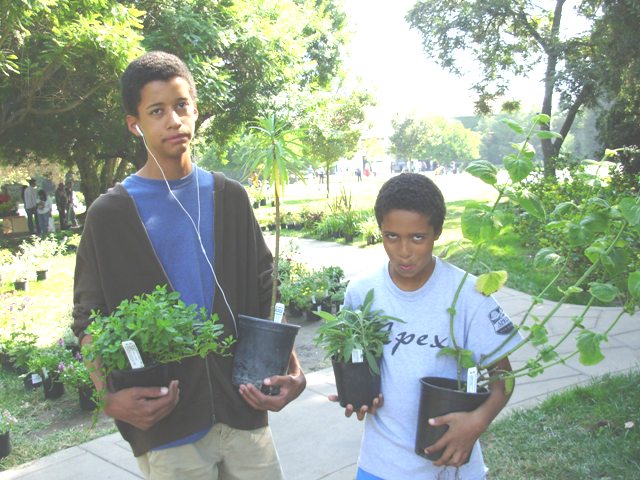
Benjamin and Alexander – my reluctant plant sale companions

It’s a sunny, 72-degree Sunday in Southern California and I needed to persuade my children to join me for a plant-shopping adventure. How to do it? My destination was the Huntington Botanical Garden’s fall plant sale in Pasadena, only 48 miles away to the east. Living here requires superhuman strategies such as figuring out which of about 200 different freeway routes one can take – and whether the route one chooses is indeed the best (what I really mean is whether the route one chooses allows me to drive more than 30 mph).
Somehow, the promise of shopping at an Apple store, the Gap, and lunch on Pasadena’s hip Colorado Blvd. was adequate enticement. Luckily, we have the essentials for surviving LA’s freeways: snacks, sunglasses, a portable DVD player, iPod, Game Boy (plus NPR and Garrison Keillor for mom).

Then….my children indulged me with 30 minutes at the end of this expedition to swing through the plant sale. I wasn’t too worried about showing up late on a Sunday. In my previous existence, in Seattle, arriving at a plant sale on a Sunday afternoon would only be for the uninitiated. By then, the very BEST plants have all been snatched up by early-bird fanatics on Saturday. I learned years ago about the wisdom of volunteering at plants sales such as Master Gardeners or Northwest Horticultural Society in order to be there in time for first-dibs.

But now, honestly, my “garden” has so far to go that I can’t indulge in panicking about whether or not I’m going to miss out on rare specimens. To put a positive spin on the situation, this garden has incredible potential. We’ve already lived here a year during which I was only able to get my patio containers planted and spend about $500 paying a great worker named Nelson to wheelbarrow away layers and layers of softball-sized red lava rock “mulch” that covered our infertile soil.

While I’m trying to pick out the remaining pieces of lava rock imbedded in the planting beds, and fantasizing about a lavish – dare I say Abundant – garden that will grow here some day (and arguing with the boys who would rather have me yield space to a much-desired trampoline), I’ll be satisfied with a few pots of this and that. Today, I bought a fabulous variegated blue sage (Salvia guaranitica ‘Omaha’), a Euphorbia lambii (Zones 9-11), a silvery spiked cactus-like creature from the Andes named Abromeitiella lorentziana, another cool crassula (‘Coralita’) that I planted in an old green enamel tea kettle previously punctured on the bottom, and two aromatic mint plants — a peppermint (Mentha x piperita ‘Swiss Ricola’) and a spearmint (Mentha spicata var. ‘Mint the Best’).

Here’s what I had in mind for the mints:

wateringcans

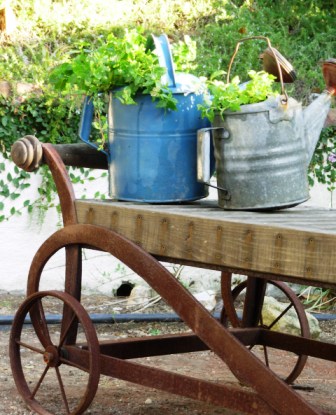
A backyard still-life with spearmint and two vintage watering cans (garden bench designed by Jean Zaputil)

The retro-era galvanized watering cans were given to me by my nongardening friend Stacey Winnick. Stacey is a vintage textiles dealer in New York. She’s the type of loyal, longtime friend willing to take me to the New York Botanic Garden to see the Chihuly exhibit a year ago, even though she’s not really into horticulture.  Stacey’s excellent eye for design saw these cool watering cans at a tag sale or an antique show and she snagged them and later gave them to me. Both cans have traveled home to the West Coast in carry-on bags (on two different trips). When I saw the July 07 issue of Martha Stewart Living magazine, featuring a fantastic just-cut arrangement of flowers spilling out of a rustic watering can, I called Stacey and told her how truly savvy she was – she knew there was something special about those castoff containers!

These cans have been on display in the backyard, but it took a chance encounter to inspire their upgrade into eye-catching containers.  A few weeks ago, I interviewed Bonnie Manion, a San Diego area gardener and antique/collectibles dealer, about her organic vegetable garden. The story will appear in the summer 08 issue of  “Nature’s Garden,” a Better Homes & Gardens publication. Whether scouring her many domestic sources or traveling to the French flea markets, Bonnie is always on the lookout for interesting salvage, antiques and collectibles for the garden. Her company is called “Mon Petit Chou” and you can find her garden bed frames, gates, baskets, vintage containers and more at Chicweed, Cedros Design District, 240 S. Cedros Ave., Solana Beach, California (858) 205-8083.

In looking through the photos that will accompany the story, I noticed bright green leaves of spearmint spilling out of an old watering can. Assuming they were cut herbs, I asked Bonnie how long the mint lasts in water. Oh, she said, that’s a leaky watering can, so I use it as a container and just plant the mint inside. Yeah. Great idea. After  finishing our phone call, I ran outdoors and filled both of Stacey’s watering cans with water. I knew they were weathered and a bit wobbly (the bottoms of each are now convex, as if they were partially filled with water when temperatures hit freezing, which turned to ice, popping out the base). Once filled, the cans both seeped water from the lower edge. Instant drainage!

Home from the plant sale, with my two new mint plants in hand, I planted up Stacey’s watering cans, inspired by Bonnie’s craftiness. I’ll have even more enjoyment from this cheerful composition knowing that I can pinch off bunches of mint for lemonade or ice tea.

Delightful memories of an incomparable garden

Saturday, October 13th, 2007

chanticleer sunflowers

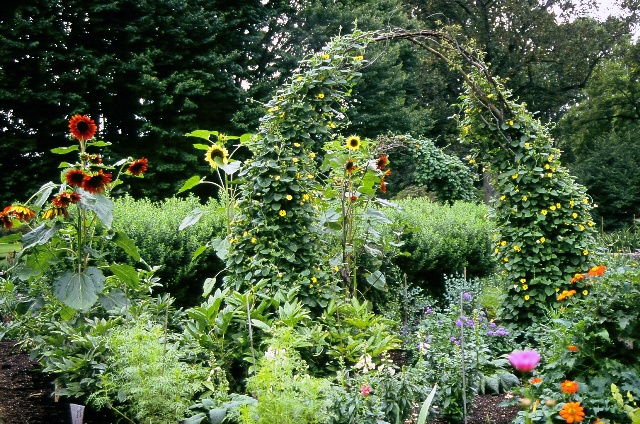
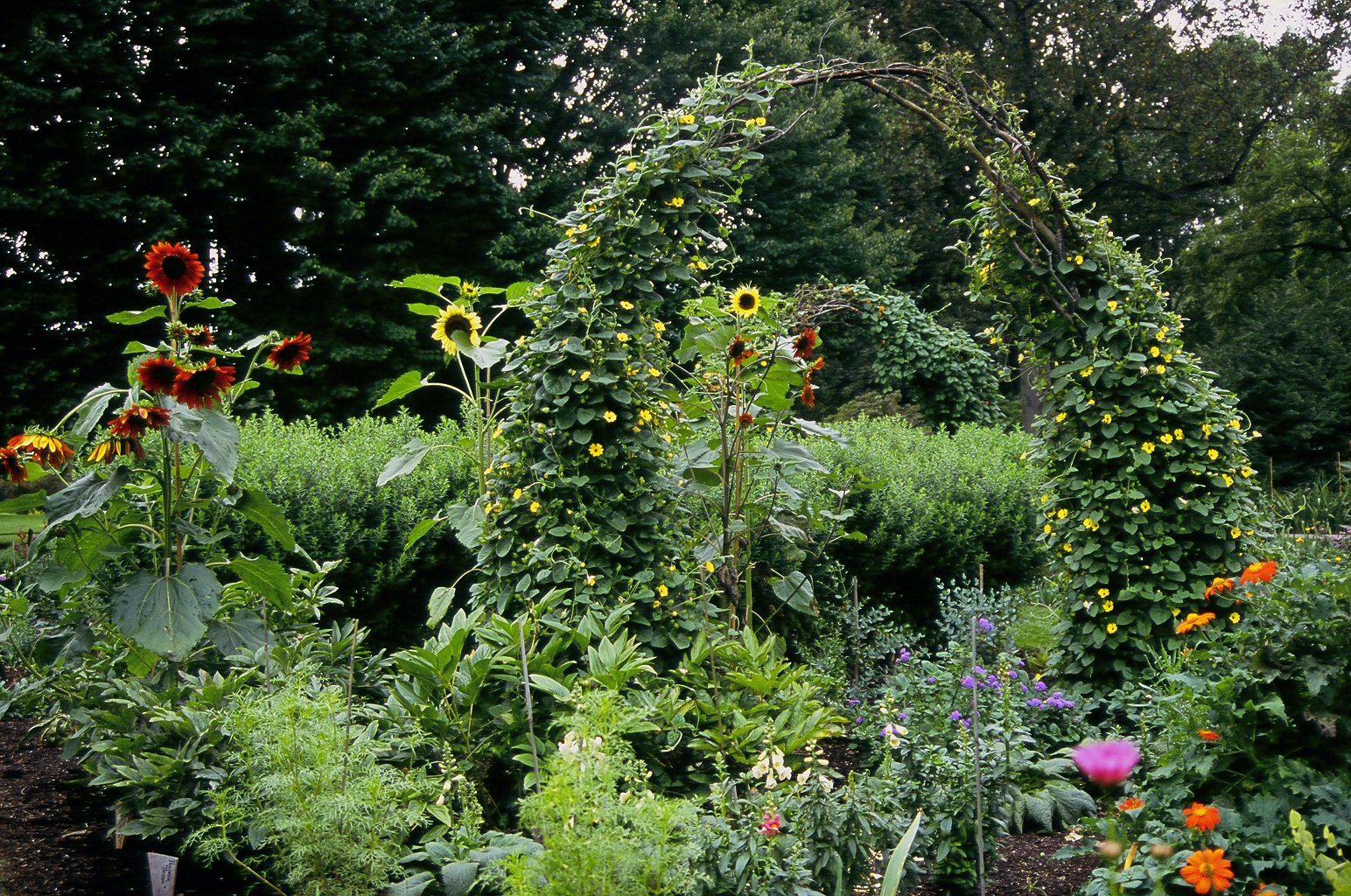
August in Chanticleer’s cutting garden

What a treat to join a small dinner group that gathered together before the Southern California Horticultural Society meeting on Thursday to spend time with the charming and talented Bill Thomas, executive director of Chanticleer, a pleasure garden, located in Wayne, Pennsylvania, a suburb of Philadelphia.

Bill and I first met in 2002, when he was on the board of Garden Writers Association and I was a newbie helping to organize the group’s national symposium in Seattle. He is a gifted leader and veteran public garden administrator. Much of Bill’s career involved several positions at the venerable Longwood Gardens in Pennsylvania. His articles appear in national gardening magazines and he is a popular speaker.

About a year later, in 2003, I learned that Bill had left Longwood to join Chanticleer, a 35-acre estate garden now open to the public, on the grounds once inhabited by the Rosengartens, a Main Line Philadelphia family whose ownership of the property dates to 1913.

If you’re intrigued by how deftly-placed elements of design add up to an exciting garden, Chanticleer is the perfect subject for study.

oxalisandeucomis

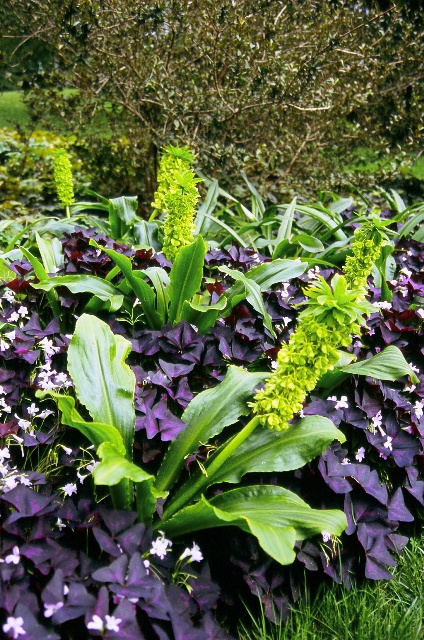
Lime-colored eucomis surrounded by deep purple oxalis

“Our goal is to be one of the most beautiful gardens in the world,” Bill told the SCHS audience at Los Angeles’s Griffith Park on October 11th. “Chanticleer is visually exciting. When you walk through our gates, your hassles are gone and you escape from the real world.”
And what a dream-like escape it is. In late August 2006, on a humid day when you could practically see the thick air molecules (which play a hazy, somewhat Impressionistic trick on the eye), I spent one joyous afternoon and evening at Chanticleer.

ruins

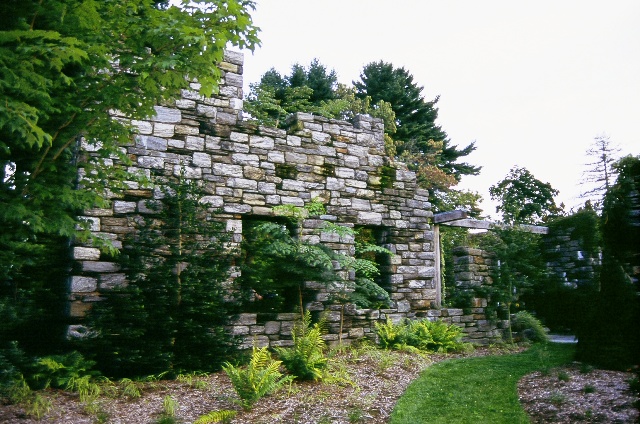
The “ruins” at Chanticleer, constructed with stone from an original estate house

In contrast to a place like Longwood, which last year celebrated its centennial, Chanticleer is a young garden. It opened to the public in 1993, after the death in 1990 of its patron Adolph Rosengarten Jr.

Even today, its beds, borders, display features and strolling gardens are evolving in the hands of a team of seven horticulturists (lucky ones!) who design, plant, tend to and continually evaluate Chanticleer’s appearance. These men and women employ theatrical tricks to overwhelm the visitor, such as planting 150,000 daffodils in two ribbons that flow through an orchard of flowering crab apples, and filling containers and enormous hanging baskets with stunning combinations (the garden is open April to October, welcoming approximately 33,000 visitors each season).

barberrygold

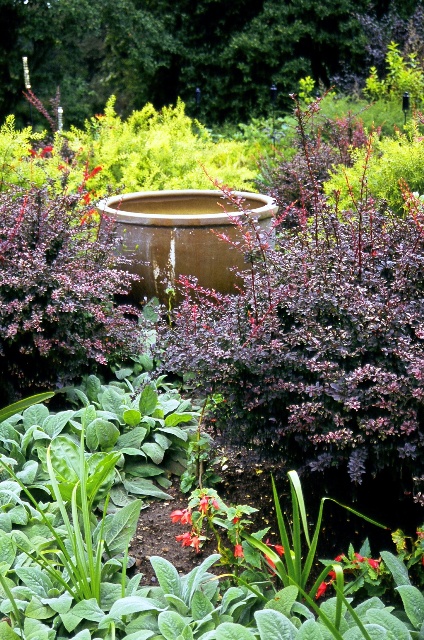
Burgundy, gold, silver — colorful foliage

An explosion of color and texture comes in large part from the foliage combinations of hardy and non-hardy exotic plants and Pennsylvania natives mixed together. “We are plant geeks and plant sluts,” Bill confides, with a knowing laugh. This is no joke: There are 5,814 plant accessions, representing 3,784 taxa growing at Chanticleer.

teacup garden

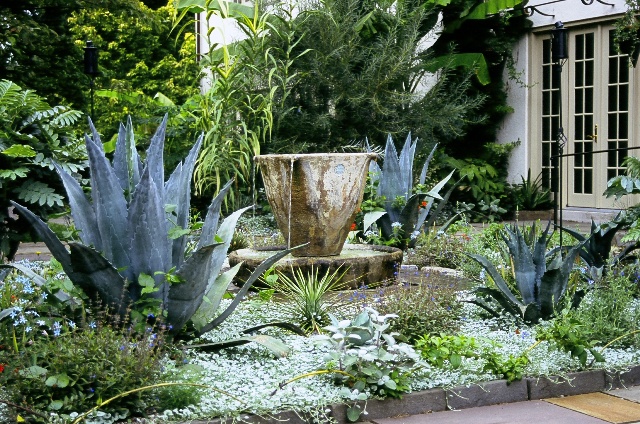
This dazzling, almost metallic, composition greets visitors to Chanticleer’s entry garden

The entry garden, also called the “tropical teacup garden” for a circa 1920s cup-and-saucer-shaped cast concrete Italian fountain at its center, is Chanticleer’s seasonal showcase for agaves, cannas, bananas, dichondra and other tender exotics often found in our Southern California landscapes. The collection includes many tropical plants that spend the cold months over-wintering in Chanticleer’s restrooms.

asparagus hedge

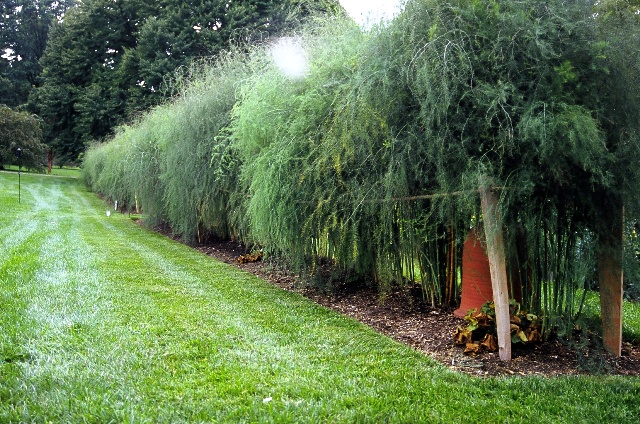
Asparagus, reinterpreted as an edible hedge

The area once devoted to the estate’s vegetable garden has been expanded as its cutting garden, vegetables and herbs included. A 210-foot-long asparagus “hedge” (!) is its stunning element, both ornamental and edible.

The horticulturists here are also artisans and craftspeople who spend the winter months at Chanticleer fashioning hand-wrought chairs, gates, railings, bridges and other decorative objects in the wood-shop and metal shop. Their handiwork appears along the pathways and over each knoll.

chairs

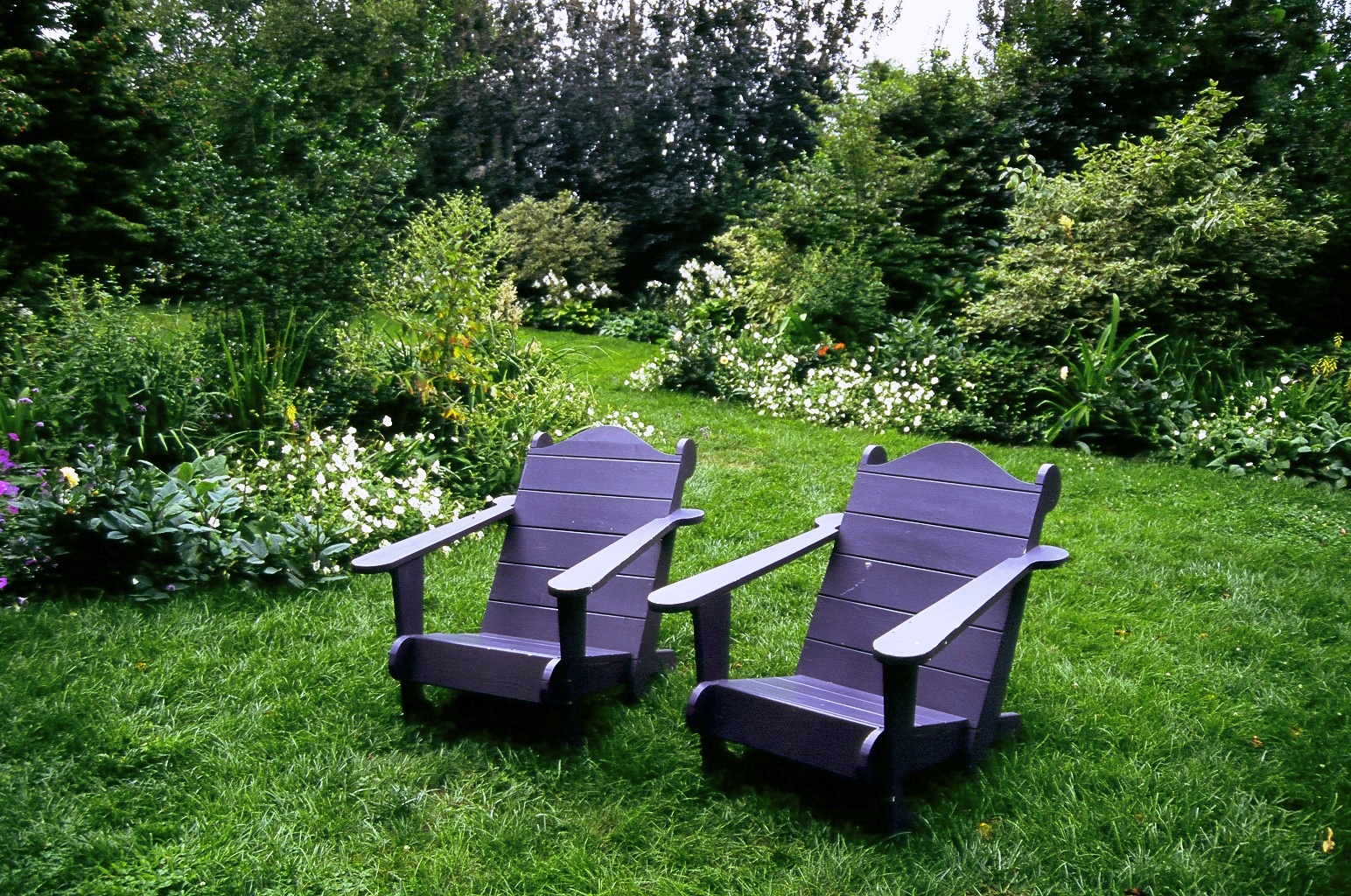
A welcoming respite in dark purple

Two Adirondack chairs, painted to match the exact powder-blue shade of nearby hydrangea blooms, are posed together in conversation; elsewhere, a pair of deep purple wood seats, the back slats cut into wavy patterns, consort quietly while awaiting human occupants. Bill says he much prefers chairs to benches: “Chairs can be moved around; they talk to one another. Or, they are grouped together as if at a party.”

Just to make those of us in the audience feel a little better about the fact that our gardens do not look like Chanticleer, Bill insisted he and his colleagues have “California envy.” He is so kind. Because anyone who is fortunate enough to escape down the rabbit’s hole to this wonderland, even for a few hours, will forever see gardens with newly informed and inspired eyes.

In a Q&A about Chanticleer, Bill Thomas puts this garden’s purpose into a few simple but powerful words: “If every garden is a pleasure garden, what a wonderful world this is.”

Then and now

Sunday, October 7th, 2007

Then and now. A study in contrasts teaches me that there are many ways to experience beauty if one is looking closely and accepting of change (especially in myself).

Then: October 2005.

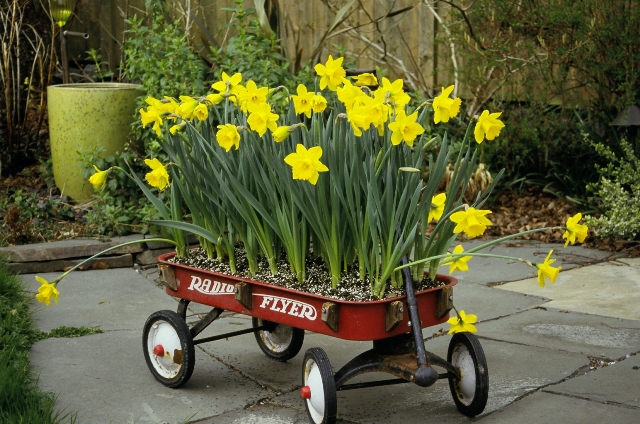
What: a mesh bag filled with King Alfred daffodil bulbs, promising to produce the biggest, gaudiest yellow trumpets I could imagine come spring. A bag of potting soil. A carton of bulb fertilizer.

daffodils in wagon

The container: a nearly-discarded “Radio Flyer” red wagon, slightly rusted with lack of use by a boy now into his teens. Mom couldn’t bring herself to abandon those sweet and bittersweet memories of taking walks around her Mount Baker and Seward Park (Seattle) neighborhoods, first with Benjamin, and then little brother Alex, resting on a throne of pillows with hands clinging to the (now rotted away) wood rails. Childhood, pure and simple.

What to do? Get out a hammer and a 6-inch-long pointed spike – not sure why I have one – maybe for mounting a trellis or some other ambitious but unfinished garden project. With hammer, I pierce the bottom of said Radio Flyer, turning the inside into giant sieve for drainage.

The wagon’s depth is about the same as the bulbs…not always recommended, but this was going to be a temporary installation, planted in October; the anticipation of its spring performance teasing me every time I look outside my kitchen window during the rainy months of November, December, January, February…..then March arrives and the primary red wagon takes on a crown of gold daffs. Erect, reaching for the sun, perfect in form and attitude. Hurrah!

Now: October 2007.

succulents in wagon 3

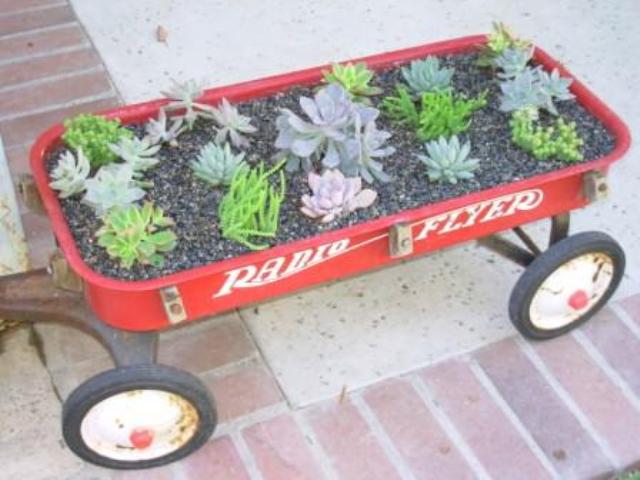
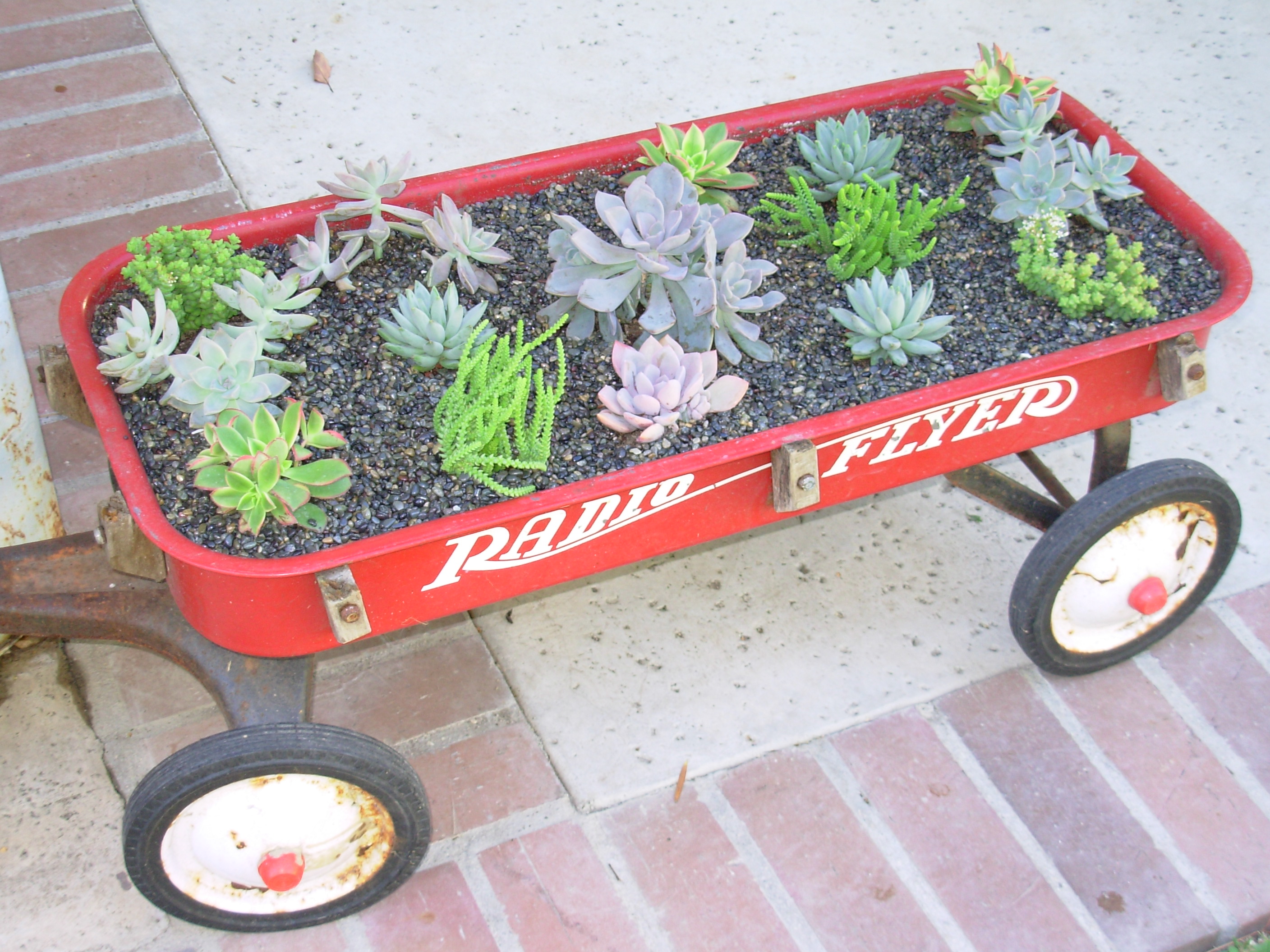
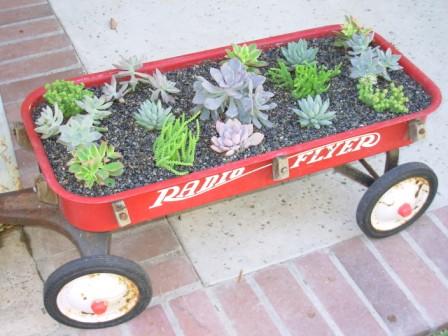
What: Same perforated, slightly rusty red wagon. Now empty, having begged transport with a family’s entire life moved two states away to California. A flat of 4-inch succulents. My new best friends. No more spring bulbs for this girl. Instead, names like Crassula ‘Tom Thumb’, Aeonium ‘Kiwi’ and Pachyveria glauca stare up at me, bone-dry in their plastic pots, but seemingly unbothered by it. In this very different fall setting, I start to plant a succulent tapestry in my Radio Flyer.

The container is the same, of course. The soil mix is different, since I’ve learned from locals to grow succulents in a combination of equal parts of organic potting soil and cactus mix. After filling the wagon with this two-way formula, I arrange my little treasures, playing around with their color and form as I recall my mother’s skill at mixing fabric swatches while quilt-making. 

Dusty blue-gray, gold-and-red-variegation, a purplish tinge makes an unnamed Echeveria sp. particularly pretty this sunny morning; spikes and whorls, medallions and rosettes.

Once these babies are planted, I know they will endure (even appreciate) my forgetfulness. I layered small bits of tumbled rock over the soil to “top-off” the design. My husband asked me why I was carefully sweeping and brushing the pebbles over the top. Is it for drainage? he asks. I don’t really know why. Perhaps I should have just told him: because it pleases me.

I am finding everyday beauty in these unfamiliar plants I once considered a rarity in my former garden.