Debra Prinzing

Get the Email Newsletter!

Archive for the ‘Gardening’ Category

SLOW FLOWERS Podcast: Cooking with Flowers, an interview with chef Miche Bacher of Mali B. Sweets (Episode 111)

Wednesday, October 16th, 2013
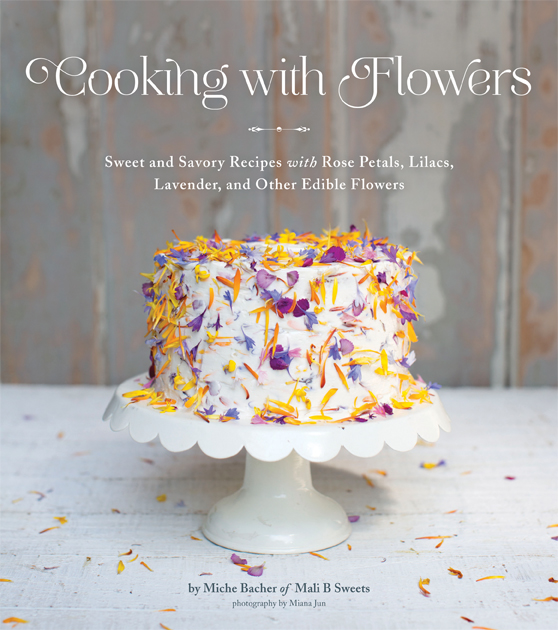
Flower Cake Cover

Featured on the cover of “Cooking with Flowers” is Miche’s “Flowerfetti” Calendula Orange Cake. Flower petals are the “original cake confetti,” she maintains. Roses, dianthus, bachelor buttons and marigold petals adorn this enticing confection.

Today we’re going to talk about eating flowers.

Yes, flowers as food.

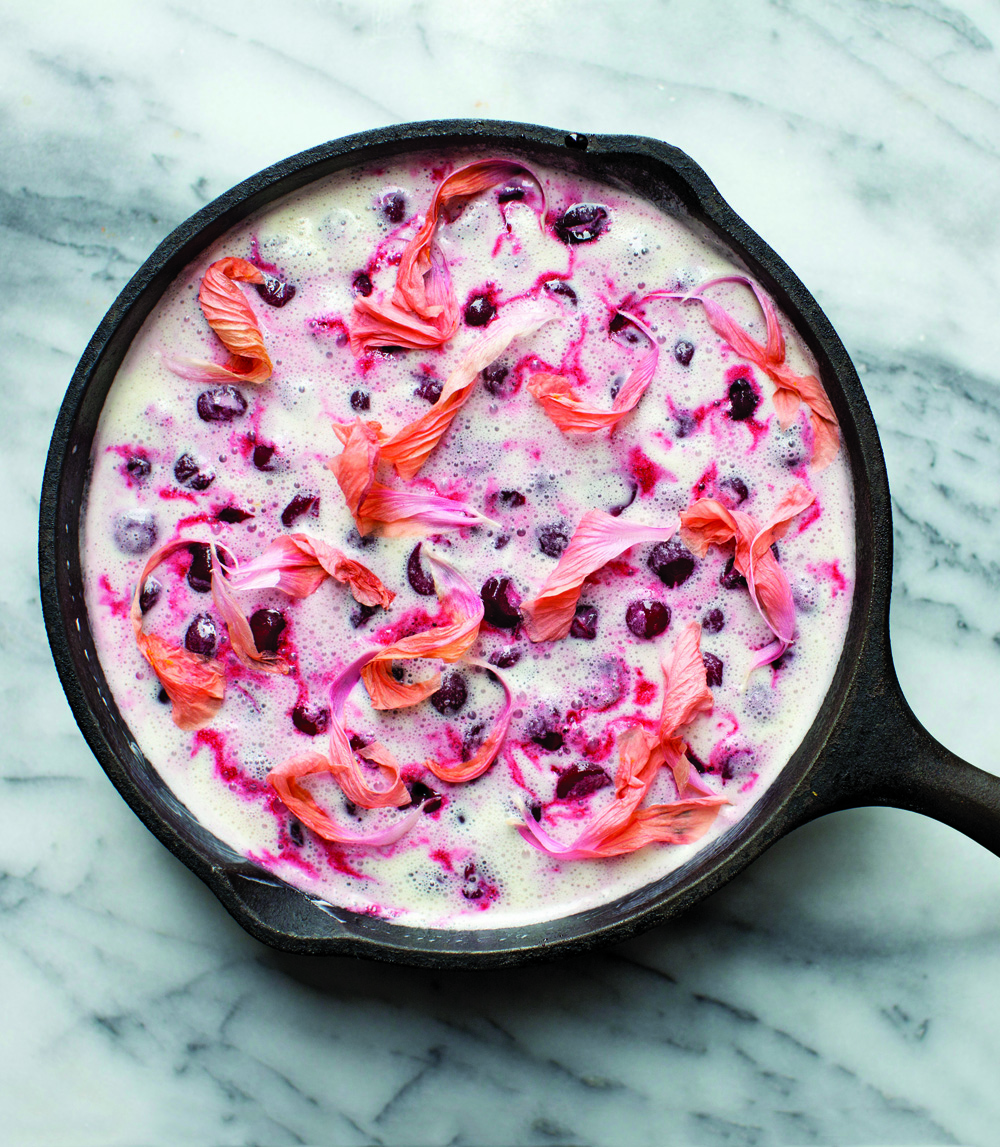
Hollyhock Clafouti

Hollyhock Clafouti, a cross between a custard, a pancake, and a puffy omelet. Uses 1 cup hollyhock petals.

I once had a big-time New York editor say to me: Why should I care about how flowers are grown, anyway? After all, we don’t eat them!

As a response to that challenge, I wish I had been able to pull out “Cooking with Flowers,” the most eye-satisfying book I’ve ever seen. It was created by Miche Bacher, an herbalist, chef, and founder of the custom confectionary studio Mali B Sweets.

To WIN a free copy of “Cooking with Flowers,” courtesy of Quirk Books, listen to to my interview with Miche and make a comment below about the best edible flower tip you learned. I will draw a winner at random on Tuesday, October 22nd at 5 p.m. Pacific.

I learned about this beautiful cookbook from Mari Malcolm, an editor at Amazon who absolutely loves “Cooking with Flowers.” Mari showed me the book’s beautiful cover on her phone screen during a lunch we had together this past spring.

I keep ordering this delectable book and then giving it away as a gift to my flower lover-friends. And now, it is my great pleasure to spend this episode of Slow Flowers in a floral-focused conversation with Miche.

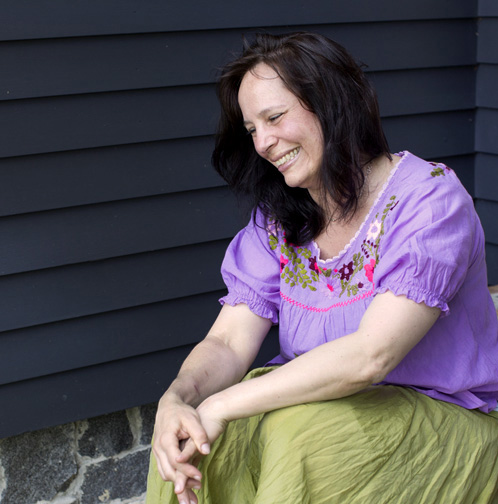
Miche Bacher

Miche Bacher, herbalist, chef, and founder of the custom confectionary studio Mali B Sweets.

In her introduction, Miche writes:

“Flowers add color, complexity, and what I like to call the magical ‘what’s in it’ factor to your food. They are full of nutrients and often offer health benefits, too. You don’t have to be a master gardener or a trained chef to cook with flowers – once you start looking, you’ll realize edible blossoms are all around you, and it really is a breeze to use them.”

She is definitely a chef whose work begins in the garden. Through “Cooking with Flowers,” I’ve gained new inspiration for another important reason to appreciate local flowers.

I know you will learn much from my conversation with Miche, as we discuss her favorite culinary ingredients, including the lowly dandelion.

Fresh and candied lilac flowers are the captivating ingredient in Miche's "Coconut Lilac Tapioca," a recipe in her book, "Cooking with Flowers" [photo: (c) Miana Jun, used with permission]

Fresh and candied lilac flowers are the captivating ingredient in Miche’s “Coconut Lilac Tapioca,” a recipe in her book, “Cooking with Flowers” [photo: (c) Miana Jun, used with permission]  


4 tablespoons of dianthus petals, coarsely chopped, infuse this delicious cake that also includes 2/3-cup rose' wine. Dianthus whipped cream and candied dianthus flowers are a perfect embellisment. [photo: (c) Miana Jun, used with permission]

4 tablespoons of dianthus petals, coarsely chopped, infuse this delicious cake that also includes 2/3-cup rose’ wine. Dianthus whipped cream and candied dianthus flowers are a perfect embellisment. [photo: (c) Miana Jun, used with permission] 


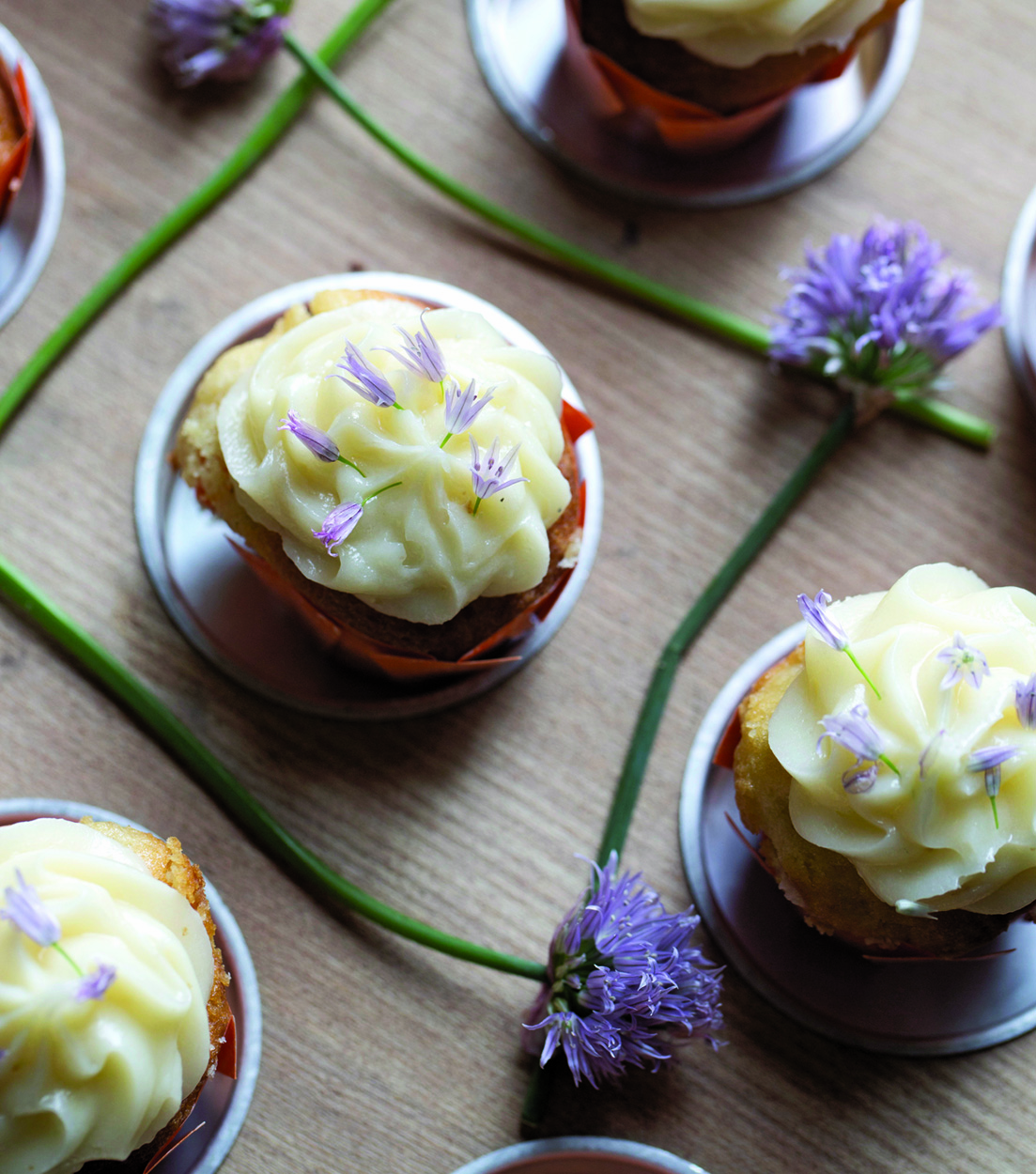
Popcorn chive cupcakes

Popcorn Chive Blossom Cupcakes, a floral play on sweet and savory.

Here are some links we discussed in the interview:

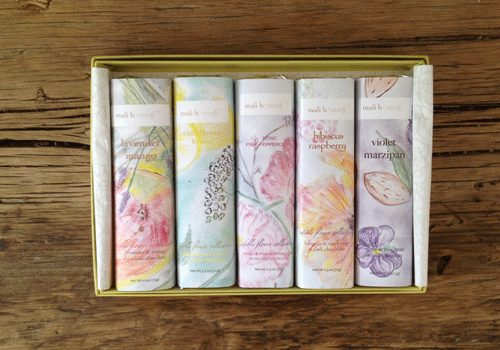
Mali B’s Edible Flower Chocolate Collection:

candy bars

Edible Flower chocolate collection from Mali B Sweets, $30 for the set.

Memorial Sloan-Kettering Cancer Center LINK to Herbs, Botanicals & Other Products: 

Click here for MORE about COOKING WITH FLOWERS, including exclusive recipes that Miche couldn’t fit into the book. You’ll also find bonus recipes for the medicinal and cosmetic use of flowers, salves, oils, and teas for healing; download recipe cards and read a Q&A with this talented woman. 


SLOW FLOWERS: Week 41

Sunday, October 13th, 2013

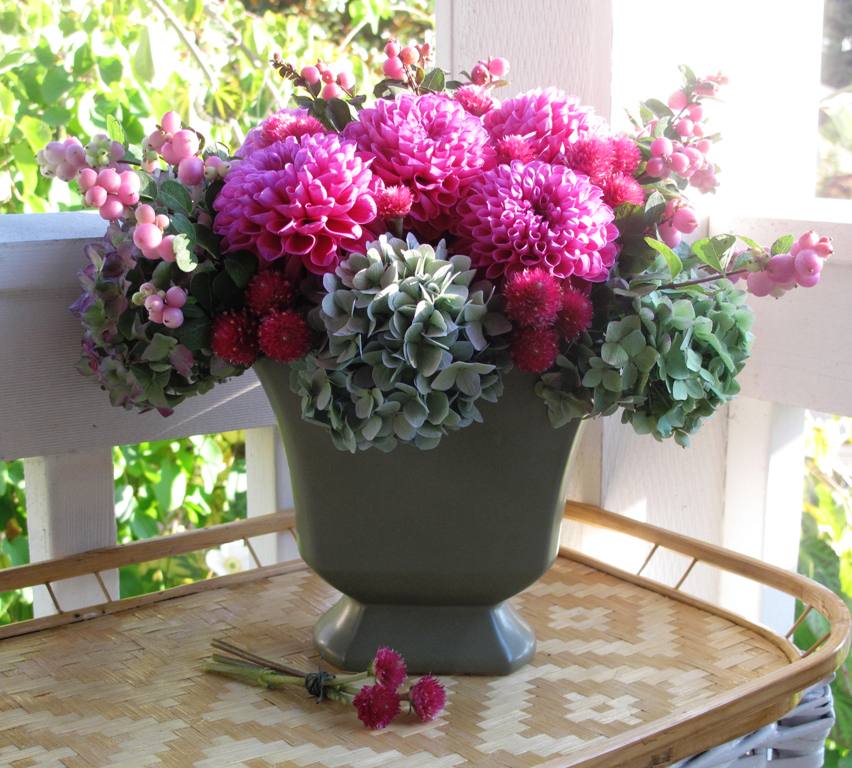
CLUSTERS OF PINK

small bouquet in pink

Autumn hydrangeas, pink snowberries, luscious dahlias harvested just before late October frost and ball-shaped gomphrena add up to something quite charming. 

Ingredients:
 
4 stems hydrangea (Hydrangea macrophylla), harvested from my garden
9 stems pink snowberry (Symphoricarpos x doorenbosii ‘Amethyst’), grown by Charles Little & Co.
5 stems Dahlia ‘Nijinsky’, grown by Everyday Flowers
15 stems globe amaranth (Gomphrena globosa), grown by Charles Little & Co.
 
Vase:
 
6-inch tall x 7-inch wide x 4-inch deep vintage Floraline florist’s vase
 
Design 101
 
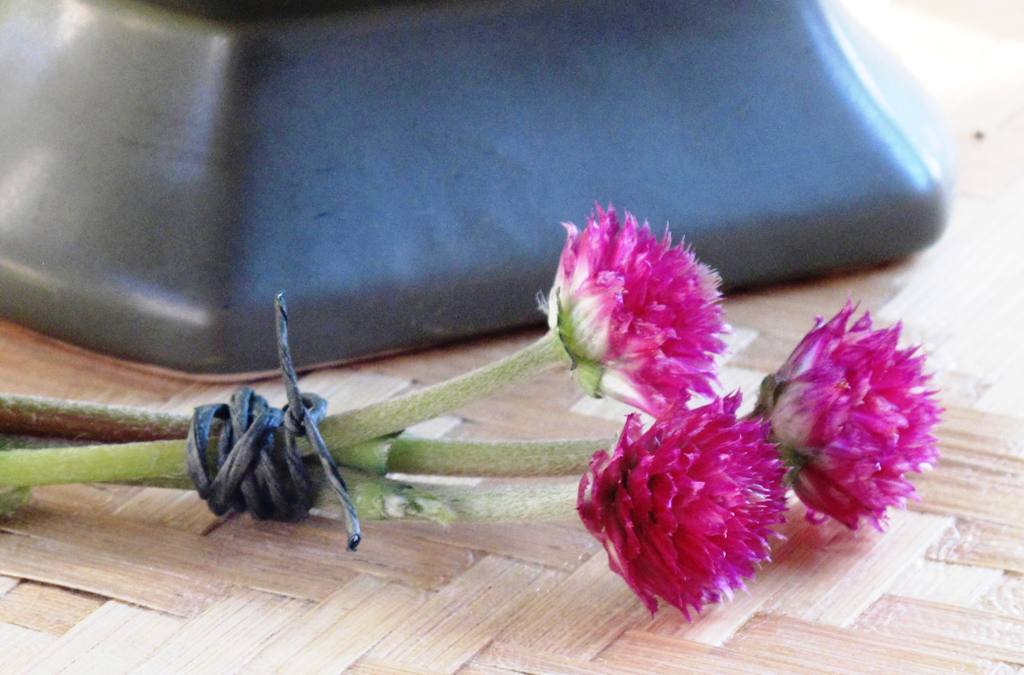
sm_three_pink_gomphrena_4895Group for impact: Tiny flowers can disappear when they are added to a bouquet with mostly larger blooms. One of the ways to give them more impact is to group three or five into a mini-bouquet, tied with bind wire or string. When added to the bouquet, the small cluster reads as a color block that’s more noticeable in the overall composition. Here, I wired together several sets of the clover-like globe amaranth flowers and inserted them between the much-larger hydrangea and dahlia blooms.


SLOW FLOWERS Podcast: Sarah Ryhanen of Saipua – a Brooklyn floral designer plants her own flower farm (Episode 110)

Wednesday, October 9th, 2013

CORRECTED AUDIO INCLUDED HERE~

Sarah Ryhanen of Saipua, is a Brooklyn floral designer who has planted her own flower farm (Episode 110)

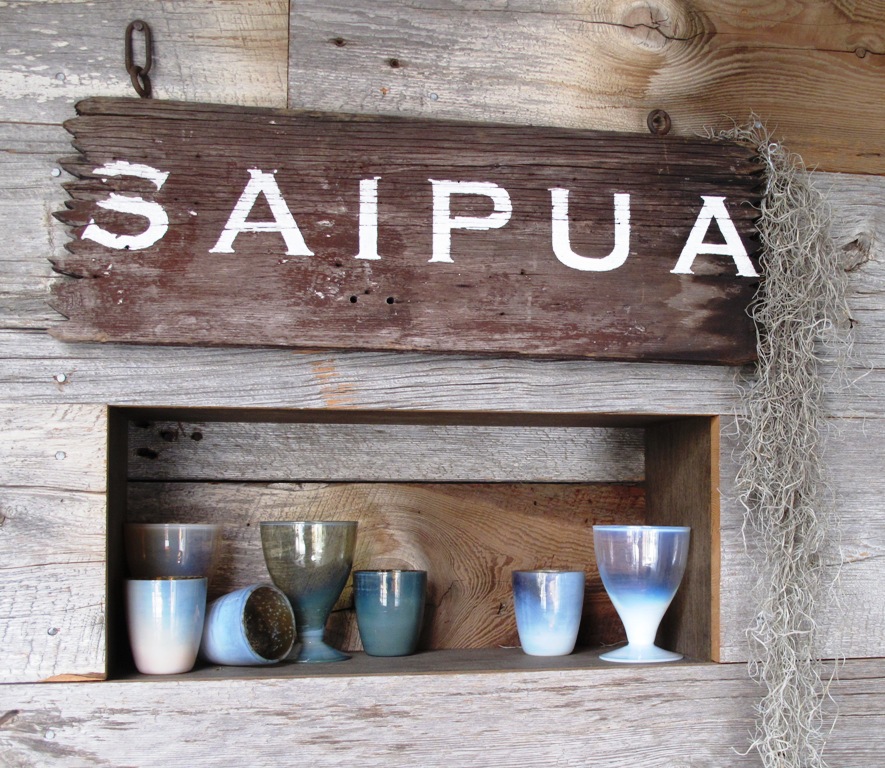
Saipua means "soap" in Finnish, reflecting Sarah's family heritage.

Saipua means “soap” in Finnish, reflecting Sarah’s family heritage.


Nicolette and Sarah

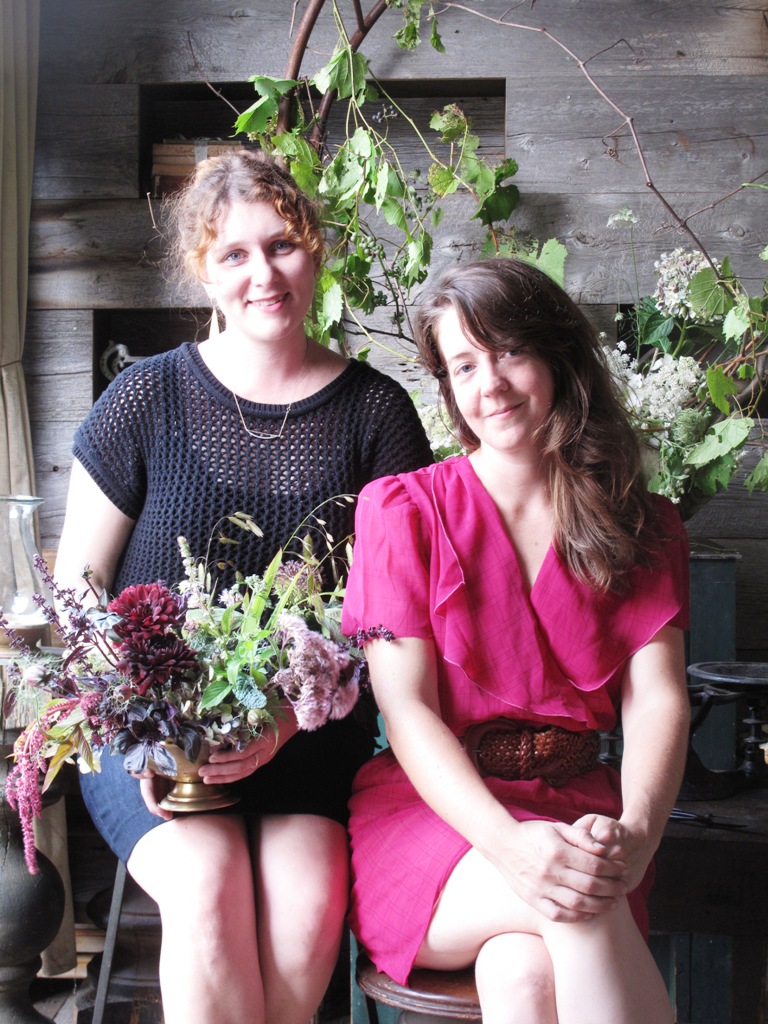
Nicolette Owen (left) and Sarah Ryhanen (right), collaborators in The Little Flower School of Brooklyn.

I first learned about Sarah Ryhanen when I read an article about The Little Flower School of Brooklyn, a venture she had created with fellow floral designer Nicolette Owen of Nicolette Camille Floral. The article was in none other than the New York Times, in which the writer proclaimed the renaissance of old-fashioned floral design for modern-era crafters. 

Reading that article was like a huge floral flag being waved in front of my eyes.

Right on! The floral world I was so fascinated with documenting for The 50 Mile Bouquet was in good hands with these young, passionate, talented, urban designers. 

bowls and shears

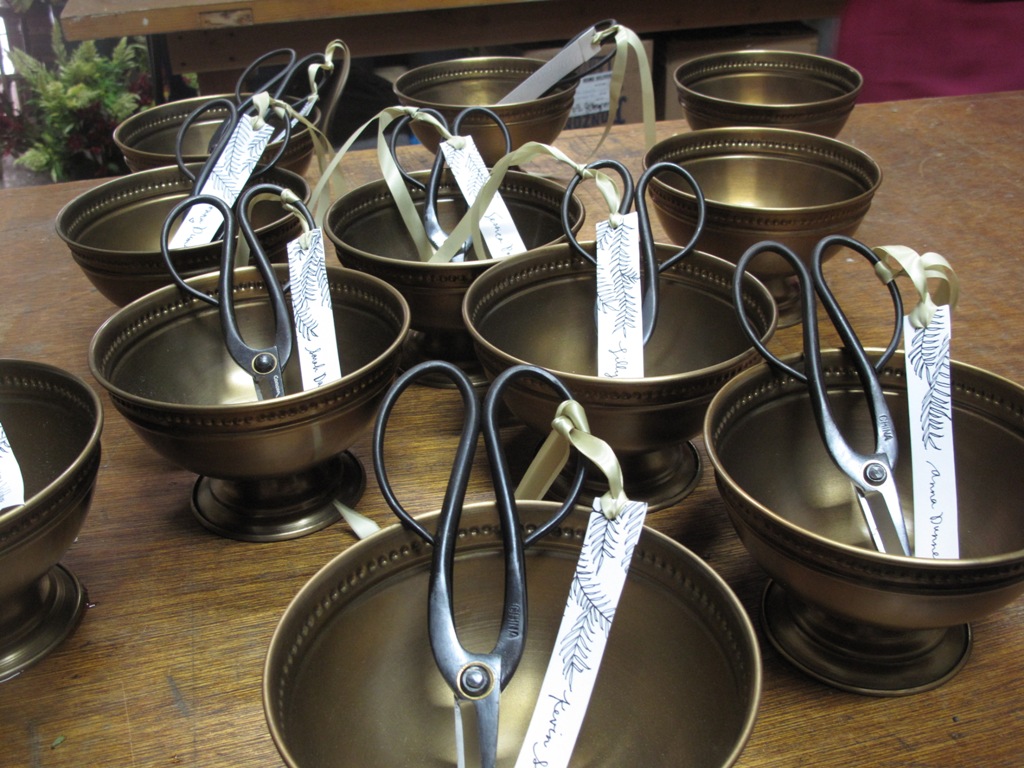
All the supplies, beautiful, simple and ready for the flower arranging students at The Little Flower School of Brooklyn.

So like probably everyone else in the country, I started stalking Sarah through her web site and blog, and following Nicolette’s work through her web site and the lovely floral arrangements she created for Bringing Nature Home (Rizzoli, 2012), a book by photographer Ngoc Minh Ngo.

Welcome to Saipua

Welcome to Saipua + Flower School.

When I spent a few days in New York City last August, I contacted them to ask whether I could sit in on one of their workshops. The class was sold-out, of course, so I was just an observer. It was amazing to me that 12 persons (11 women and 1 man) gathered on a sweltering Saturday morning to create bowls of flowers in an un-airconditioned warehouse-studio in Brooklyn. There was so much excitement in the room, with a combination of newcomers and repeat students. People soaked up every word, concept and idea Sarah and Nicolette offered – and they were unabashedly proud of their own creations. 

Every detail was attended to in advance, as you can see by the photos I took that day. Sarah and Nicolette shared about their own design processes, about the way they select floral ingredients, and how they prefer to use materials like pin frogs and chicken wire (rather than foam). 

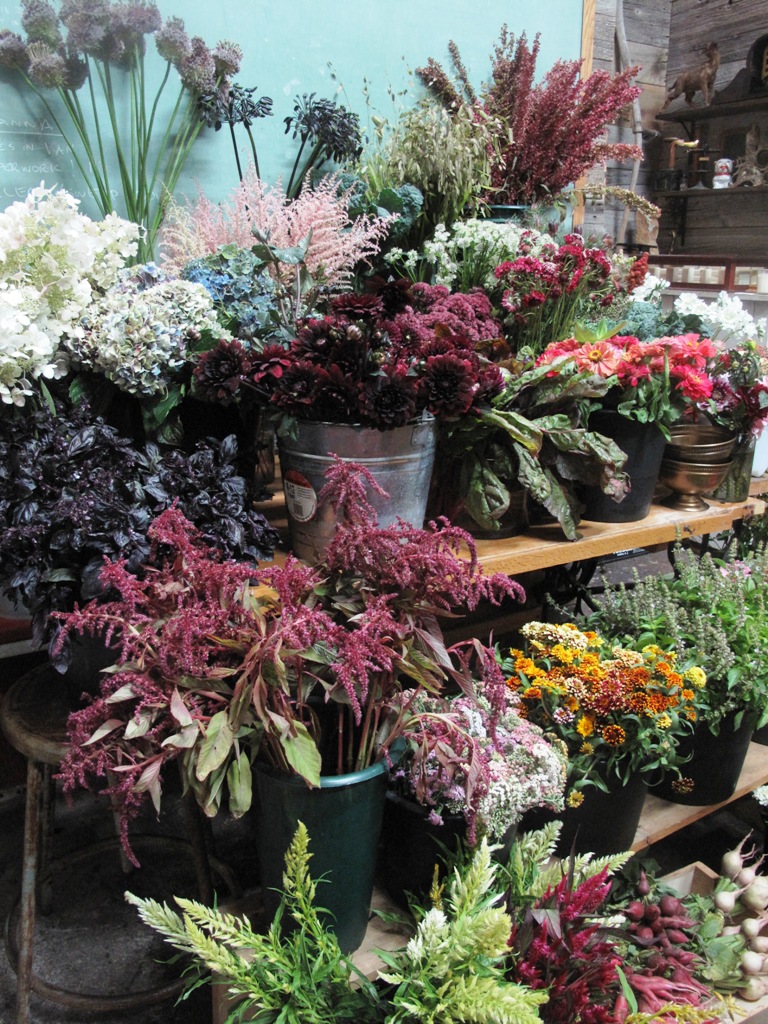
floral ingredients

Seasonal, locally-grown late summer flowers.

As the designs took shape, I had a bird’s eye view, perched in the tiny loft above the workshop. After students finished their arrangements, the women served them champagne and appetizers, like a fancy party. It’s no wonder these creative gatherings are so popular! It’s like going on an art retreat in the midst of your crazy, busy life. A moment in time that prompts anyone to feel more creative, more experimental, more artisitc.

When we met, one of the things Nicolette and Sarah and I discussed was the challenge of finding the flowers and botanicals they wanted and needed for special events, from weddings to workshops. Sarah told me that she and her partner Eric Famisan had recently purchased farmland in upstate New York, where they were in the early stages of planting a flower farm. 

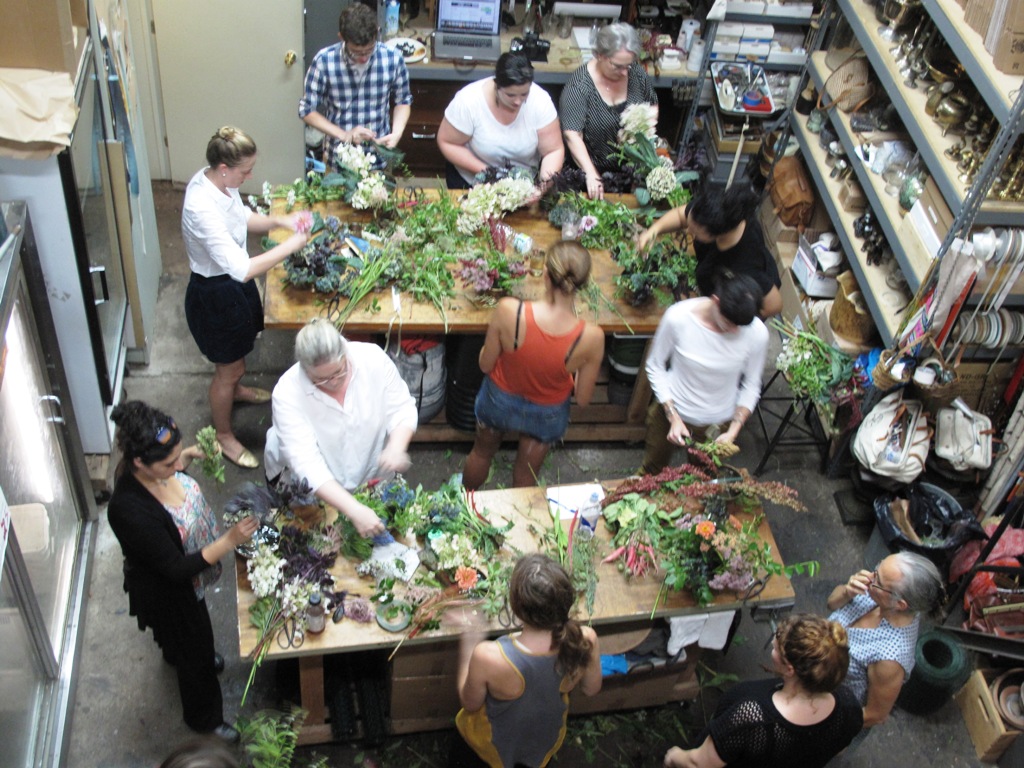
students at work

A creative explosion of floral expression – enjoy this bird’s eye view.


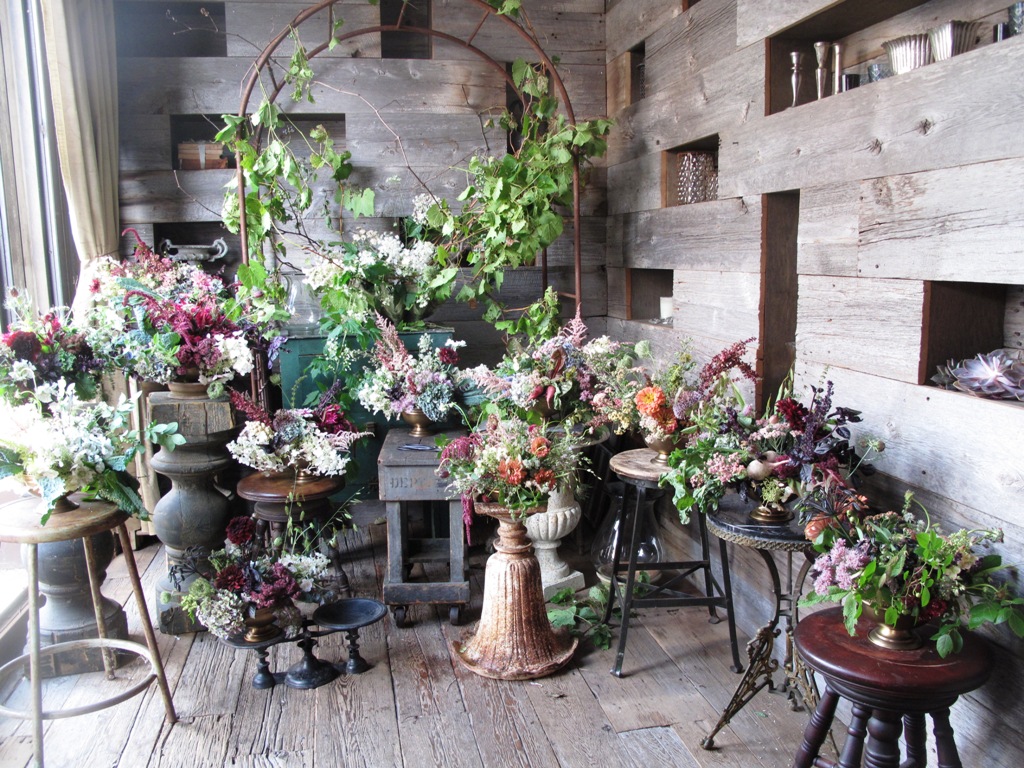
Final bouquets

A still-life of the beautiful arrangements created by students of The Little Flower School of Brooklyn, August 2012.

Since then, I’ve watched as The Farm at World’s End has evolved, through Sarah and Eric’s wonderfully-photographed blog and honest, heartfelt text. 

Under a heading called “The Idea,” here’s what Sarah writes:

When the economy took a dive in 2008 we started to see a major loss in the NYC flower market. Loss of interesting product. The unusual, weedy, wild stuff that I was so into and that made my work unique. The trouble was that wholesalers had to be safe – the floral industry is one of the first to feel the blow of a weak economy. So wholesalers on the flower block of 28th street stuck to what they knew would sell; your South American hot house roses, ranunculus, lilies, peonies. Here’s a perfect example  — pre 2008 you could buy Garden Valley Roses (fragile, exquisite but expensive heirloom roses) on the block. 

Around that time I was starting to explore other outlets for material. We found local farms to supplement our market purchases (River Garden, Lebak, Added Value), and also started ordering product direct from the west coast – the promised land of flowers. 

Still there was always something I could not locate. Auricula, campanula “pantaloons”, black hellebores, unusual bearded iris…at Saipua we now spend hours and hours searching for the highest quality, most unusual flowers. Visiting flower farms and talking to growers is the best part of my job. You meet these crazy, passionate people and let me tell you – it’s contagious. Eventually you got to try growing yourself. So here we are.

On the flower block back in the city, the guys joke – when are you going to start selling us flowers? I try to explain to them (and to everyone who has not yet been to Worlds End) that it’s a slow process. That we’re years away from producing the opulent abundance that people envision when they hear “Flower Farm”. But I’ve come to realize that it’s not about quantity. I’m not in the business of hustling anymore. None of our work at Saipua will ever require thousands of stems.  It will however require a brown iris. And by god, I’m going to grow it.

Fortunately for listeners of The Slow Flowers Podcast, I had a quick 36-hour layover in New York a few weeks ago, en route to my Italian writing retreat. It coincided with a late afternoon opportunity to sit at the kitchen table in Sarah’s Brooklyn apartment, just around the corner from Saipua’s studio. We talked about farming, flowers and collaboration. Please enjoy the conversation.

SLOW FLOWERS: Week 39

Sunday, September 29th, 2013
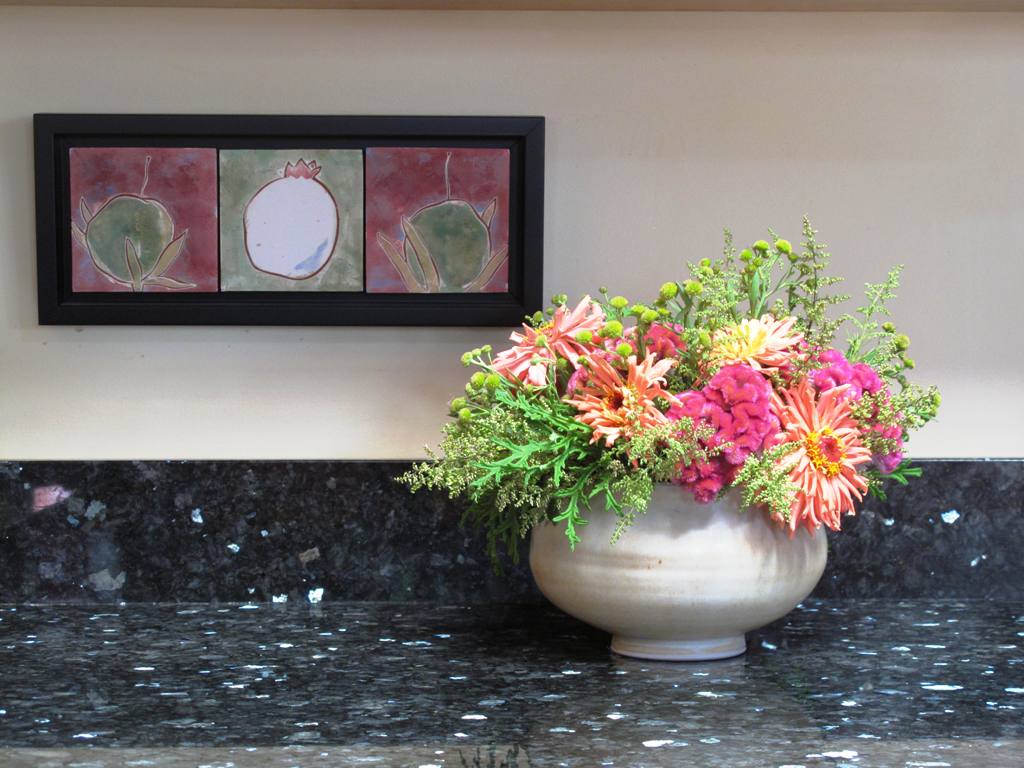
Bowl on kitchen counter

I placed my beautiful bowl of zinnias on the kitchen counter, in front of a botanically-inspired tile triptych by artist Paula Gill of Red Step Studio

Ingredients:
 
5 stems fancy-leaf scented geranium (Pelargonium crispum), grown by Charles Little & Co.
7 stems Boltonia asteroides, a small daisy-like perennial, grown by Charles Little & Co.
7 stems Artemisia capillaris, a woody perennial, grown by Charles Little & Co.
6 stems pink crested cockscomb (Celosia cristata), grown by Charles Little & Co.
9 stems apricot cactus zinnias (Zinnia elegans ‘Pinca’), grown by J. Foss Garden Flowers
 
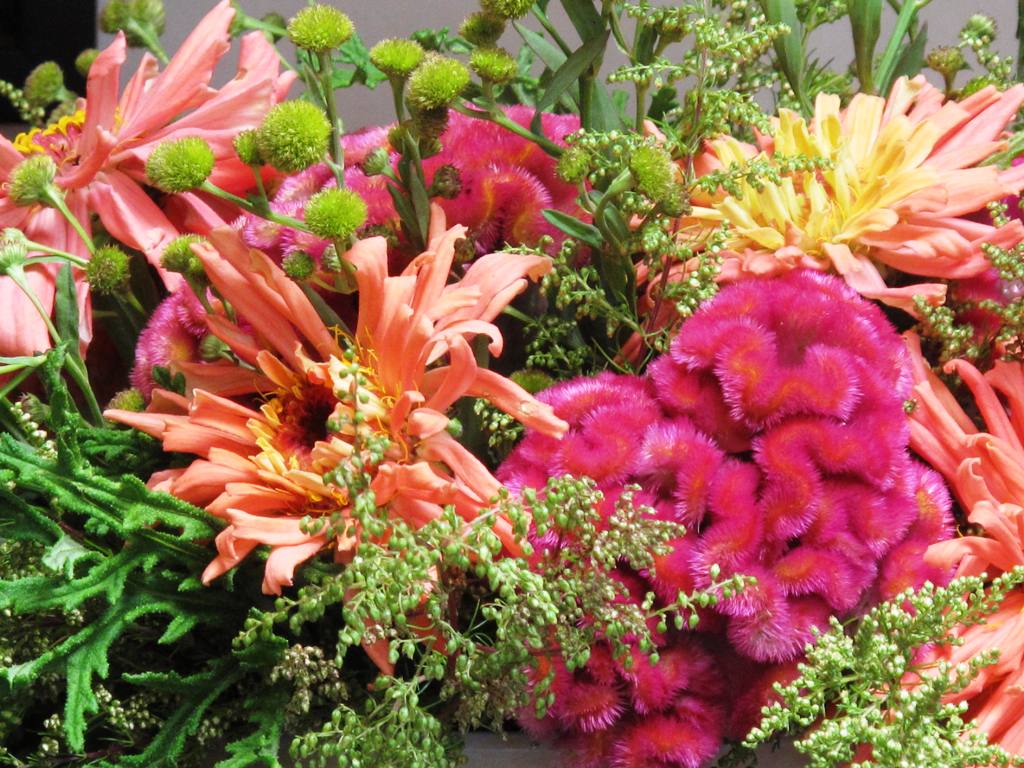
Great details add texture and interest!

Great details add texture and interest!

Vase:

4½-inch tall x 6¼-inch diameter hand-thrown clay bowl
 
Design 101
The power of green: The difference between one arrangement being just pretty and another being completely arresting is often not the flowers but the foliage. You see here that three similar-toned green elements are woven  together as a textured and verdant tapestry.
 
They are definitely the supporting actors to the zinnia and cockscomb divas, but they help this bouquet sing. Whenever you can use unexpected greenery, your design will take on a similar star quality. Often, these elements come straight from the garden – growing right under our noses.


Floral design in Tuscany

Friday, September 27th, 2013
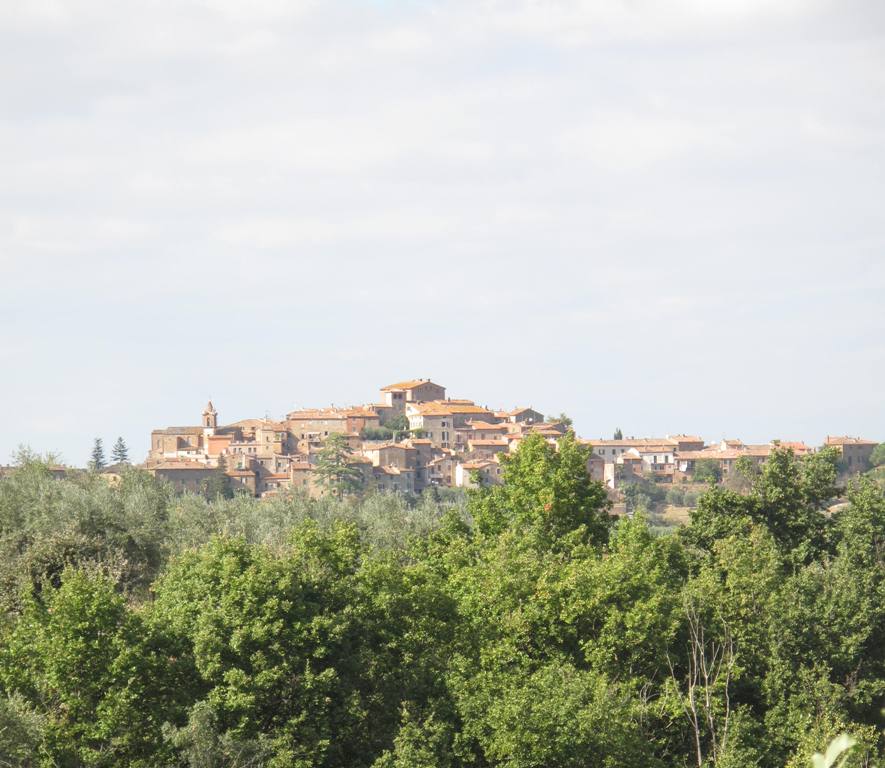
The approach to Montisi, a small Tuscan village that has been our home this week.

The approach to Montisi, a small Tuscan village that has been our home this week.


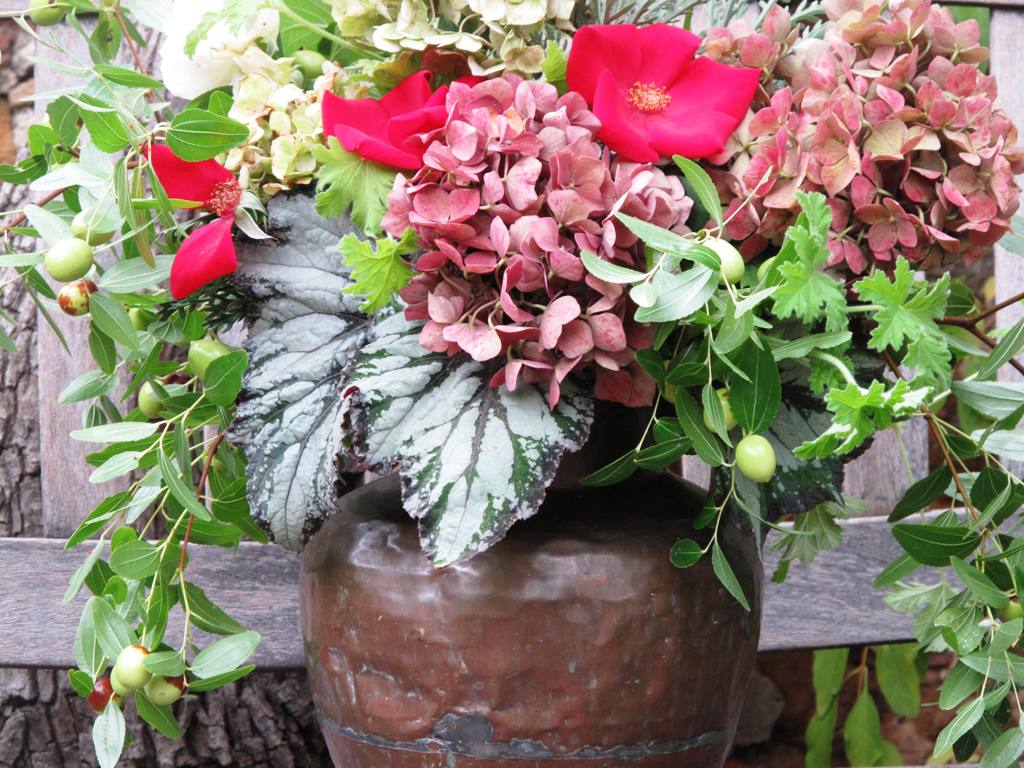
Detail: An autumn bouquet from a Tuscan garden. Olives, roses, hydrangeas, scented pelargonium leaves, Rex begonia leaves - seen here.

Detail: An autumn bouquet from a Tuscan garden. Olives, roses, hydrangeas, scented pelargonium leaves, Rex begonia leaves – seen here.

This morning at the villa, two friends went off for watercolor lessons with resident expat artist Liz Cochrane.

After walking down to Il Barrino for hot tea and a croissant, I came back totally determined to make a bouquet for our group’s last night together.

We have a dinner coming in from Allesandro, the local chef (Marty organized the menu, which includes Ribollita, a Tuscan soup; sliced pork with balsalmic vinegar; zucchini flan; and that popular italian desert, Apple Pie!)

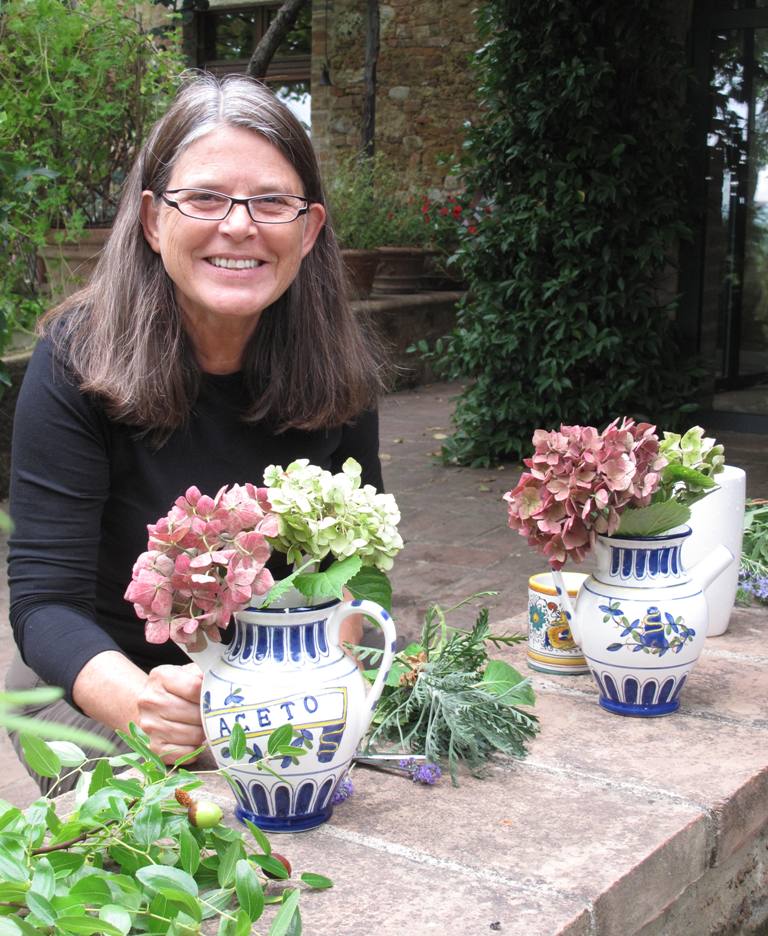
The Flower Arrangers’ Guild of Tuscany commenced its first session.

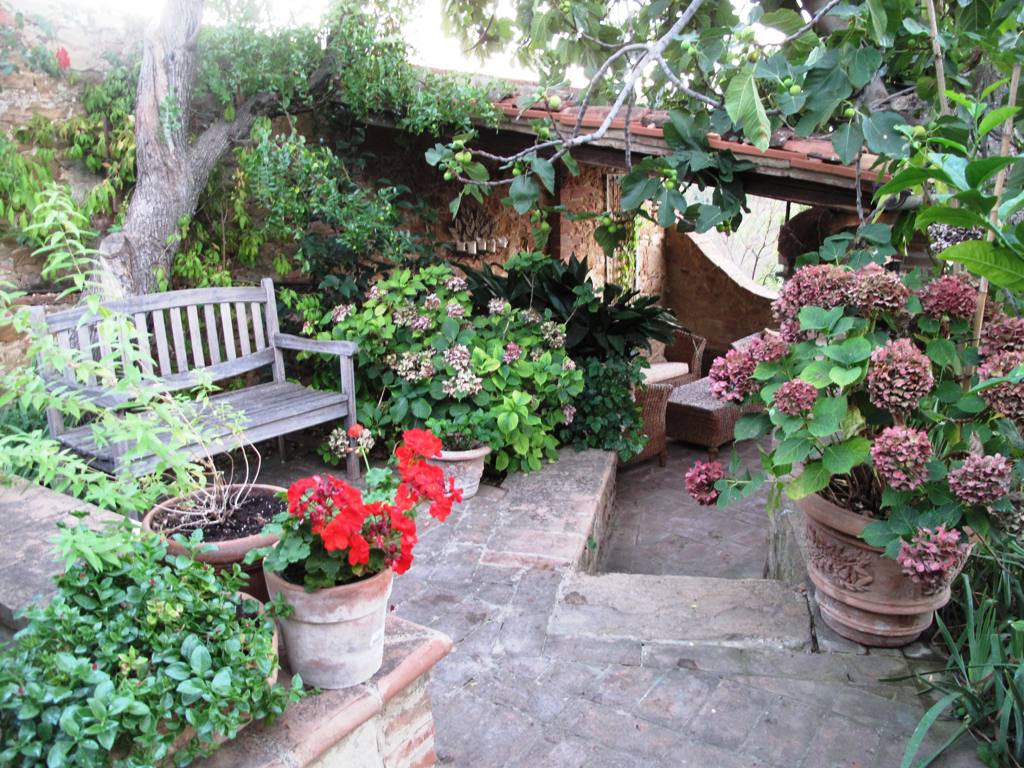
This garden is in its waning moments of late summer-early autumn. But it does not disappoint. So much to work with and we judiciously snipped, without hurting or denuding a single plant.

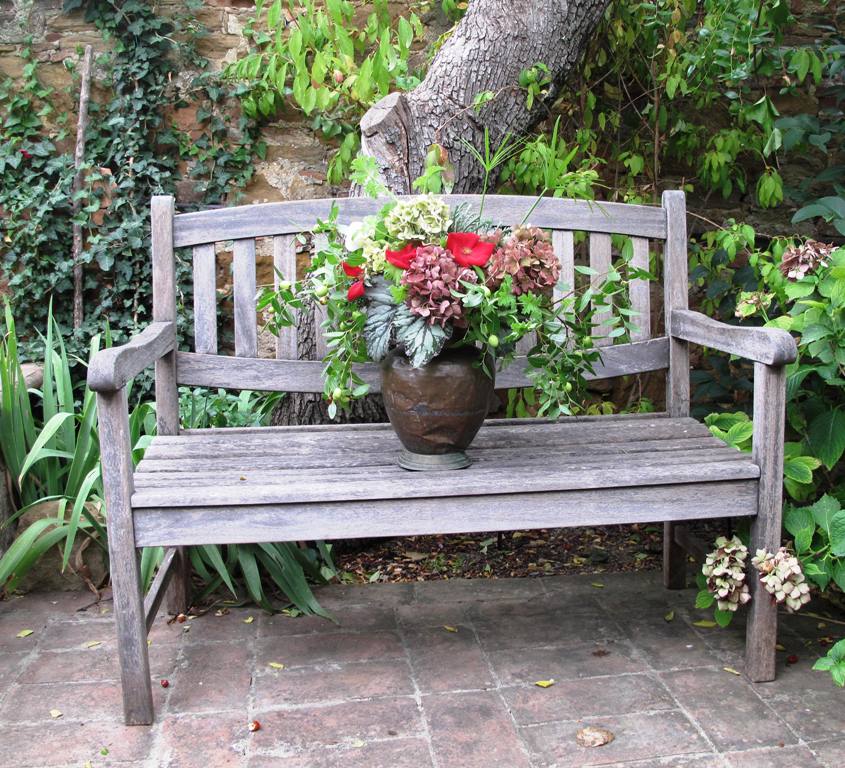
I had spotted a copper urn, weathered and slightly dented, sitting on the floor in the Lemonaio (the garden room). It inspired my palette – faded, tarnished and of the moment.

A rustic wooden garden bench, a perfect place to display and photograph my Tuscan bouquet in a timeworn copper vessel.

A rustic wooden garden bench, a perfect place to display and photograph my Tuscan bouquet in a timeworn copper vessel.

Here are the ingredients I began with:

1. Scented pelargonium foliage

2. Papyrus stems from the water pond

3. Hydrangeas – two types

4. Roses – two types

5. Olives branches w/fruit

6. Marguerite daisy foliage

7. Rex begonia foliage

Mary Watson joined me in the garden, eager to make something beautiful. She made two adorable bouquets:

Mary Watson, a new friend who I met through Marty Wingate. She is an art educator and bon vivant! Right when I started arranging this morning, Mary jumped into the fun.

Mary Watson, a new friend who I met through Marty Wingate. She is an art educator and bon vivant! Right when I started arranging this morning, Mary jumped into the fun.


READ MORE…

Scenes from a villa in Tuscany

Tuesday, September 24th, 2013
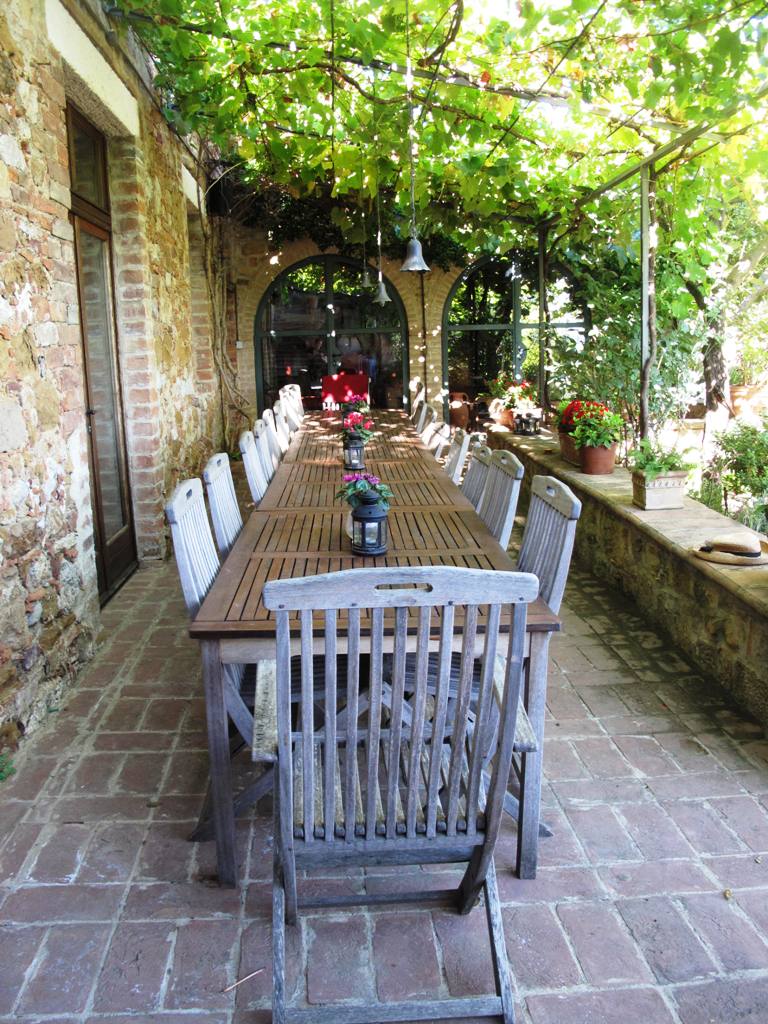
Seating draws us outdoors - the weather has been wonderful!

Seating draws us outdoors – the weather has been wonderful!


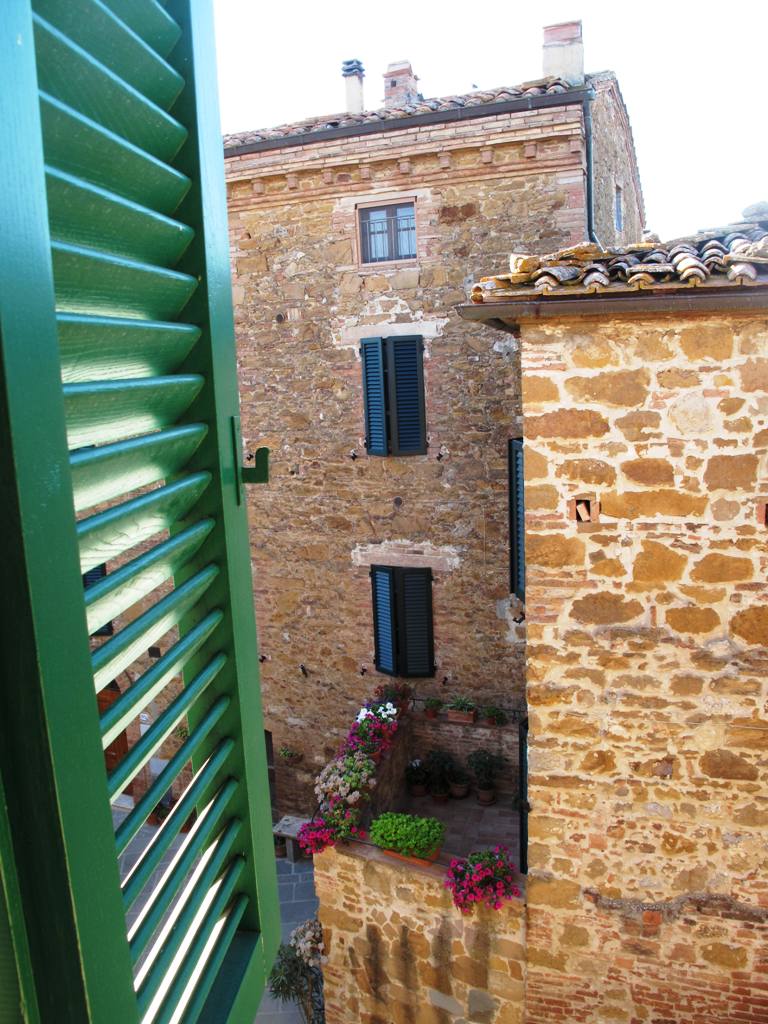
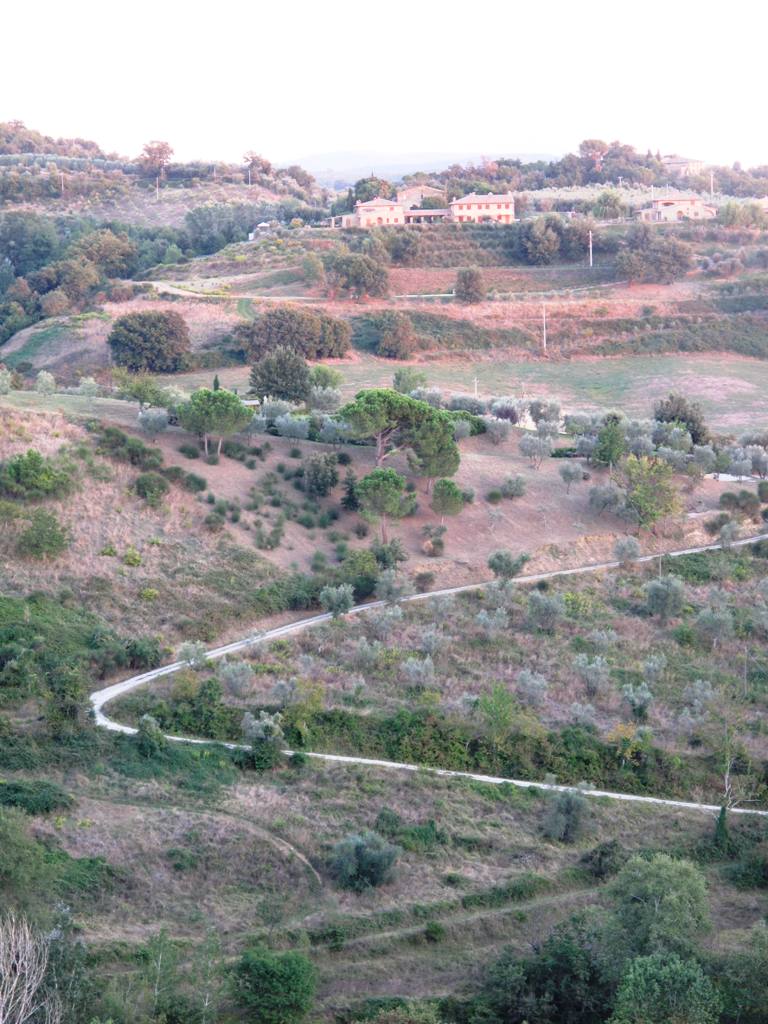
Here is the view of the Medieval village called Montisi, as seen from my bedroom.

Here is the view of the Medieval village called Montisi, as seen from my bedroom.


The outdoor dining space, beneath the grape arbor. Isn’t the farm table gorgeous here? This is where I’ve been sitting to write in the AM.


The view of Montisi, as seen from our patio. Glorious Tuscany!

The view of Montisi, as seen from our patio. Glorious Tuscany!


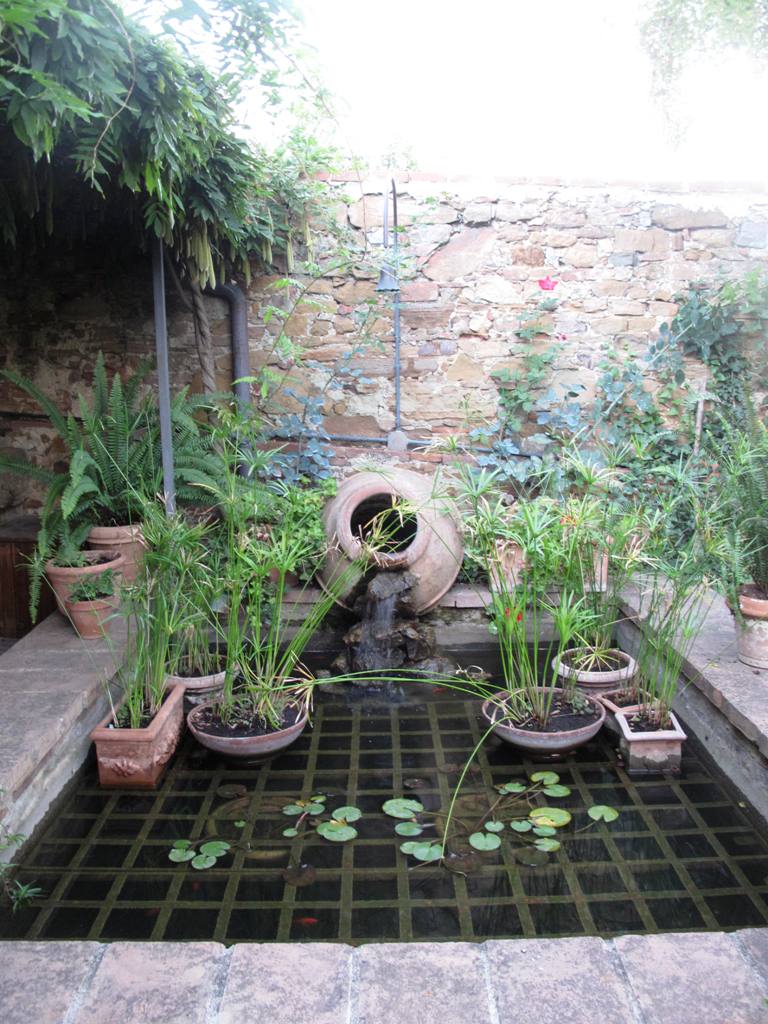
The beautiful water feature!

The beautiful water feature!


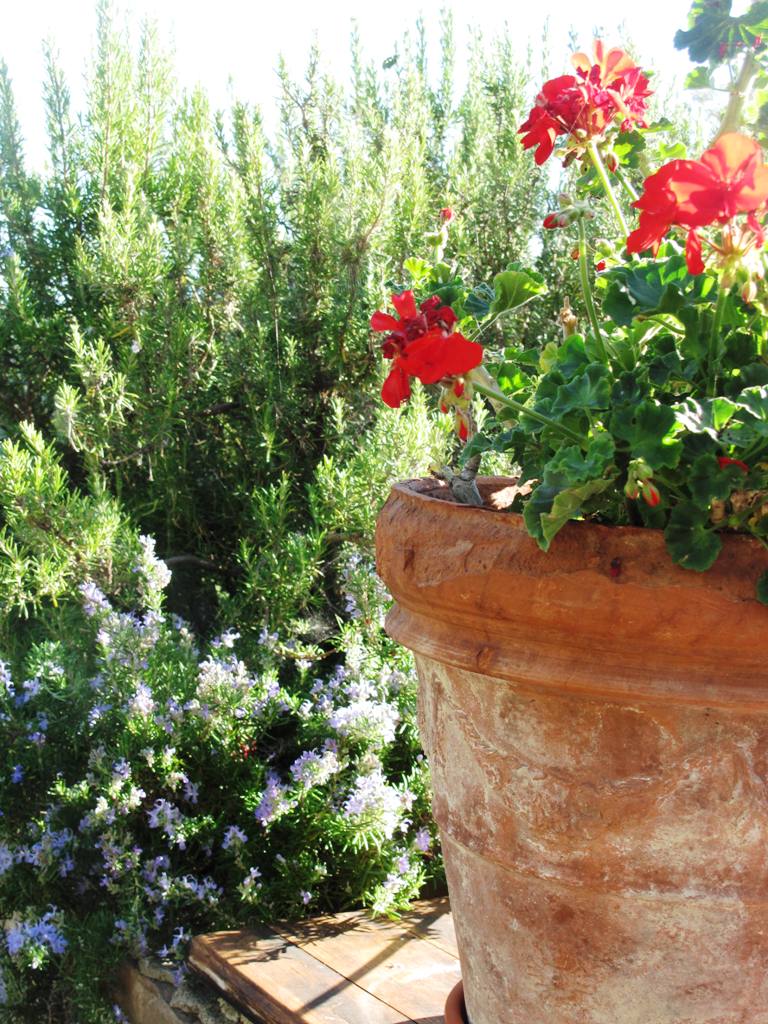
Rosemary and the classic red geranium, flourishing in a terra cotta flower pot

Rosemary and the classic red geranium, flourishing in a terra cotta flower pot


The railing is mounted on top of the stone wall at the perimeter of the patio. Love the pots!

The railing is mounted on top of the stone wall at the perimeter of the patio. Love the pots!


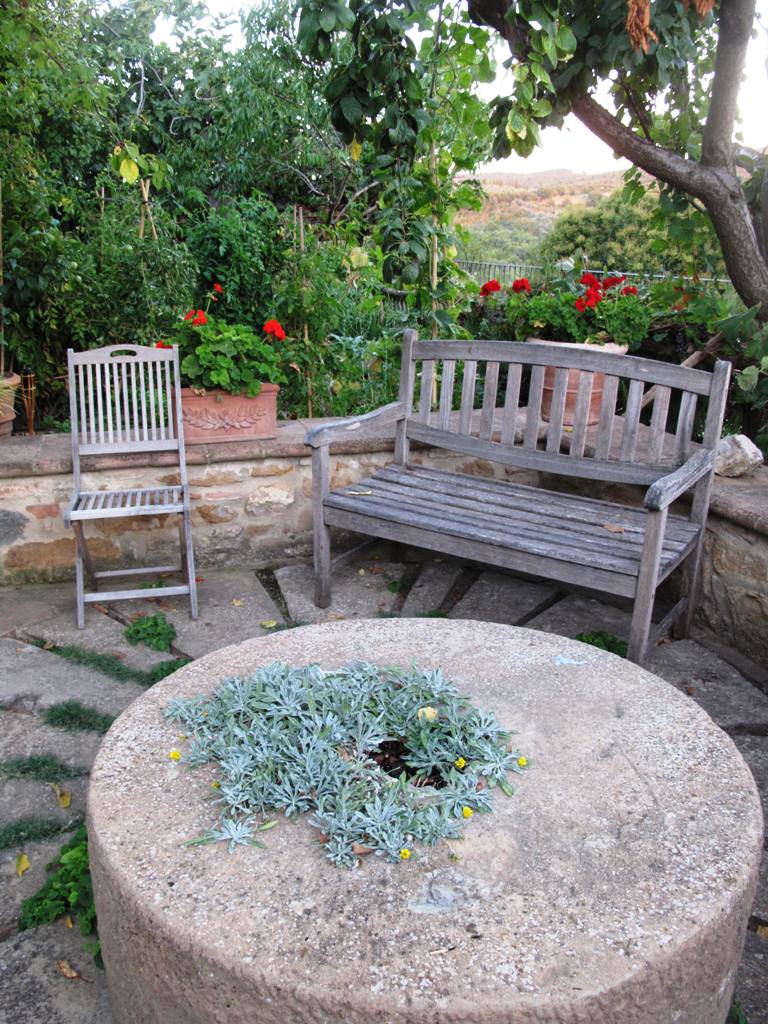
Love this millstone as coffee table!


SLOW FLOWERS: Week 38

Sunday, September 22nd, 2013

RHYTHM IN GLASS

Rhythm in Glass

Chocolate cosmos blooms look fabulous in this art glass vase by Tracy Glover.

Ingredients:

7 stems fancy-leaf scented geranium (Pelargonium crispum), grown by Charles Little & Co.
3 stems pale apricot snapdragons (Antirrhinum majus), grown by Everyday Flowers
7 stems (tips only) light peach cockscomb (Celosia plumosa), grown by Charles Little & Co.
15 stems chocolate cosmos (Cosmos atrosanguineus), grown by Marigold and Mint
 
Chocolate Cosmos

Chocolate cosmos, grown by Katherine Anderson of Margold & Mint.

Vase:

 
8-inch tall x 4-inch diameter hand-blown art glass vase, designed by Tracy Glover
 
Design 101
Dark and light: When you place lighter or brighter flowers around darker floral elements, the viewer’s attention is drawn to the distinct details of both. Here, the chocolate cosmos looks even better because it is displayed next to lighter-hued companion flowers: pale apricot snapdragons.


SLOW FLOWERS: Week 37

Sunday, September 15th, 2013

FADING HUES

Fading hues

This lovely autumn palette of fading flowers, foliage and seed heads reflects the season’s beauty.

Ingredients:

7 stems smoke tree (Cotinus coggygria ‘Grace’), harvested from Lizzy Jackson’s garden
7 stems pittosporum (Pittosporum sp.), harvested from the Lila B. lot garden
5 stems Dahlia ‘Hy Suntan’, grown by Jello Mold Farm
5 stems gold and pale pink garden roses, harvested from the Lila B. lot garden
3 stems terracotta-orange lilies (Lilium ‘Olina Tango’™), grown by Peterkort Roses
5 stems pale peach stock (Matthiola incana), grown by Repetto’s Nursery
7 stems perennial flax (Linum perenne), grown by Charles Little & Co.
7 stems brown millet (Setaria viridis ‘Caramel’), grown by Charles Little & Co.
Miscellaneous seed heads, harvested from the Lila B. lot garden, including purple coneflower (Echinacea purpurea), Euphorbia sp., and rose hips
2 clusters yellow pear tomatoes, harvested from Marritje Green’s garden
 
Vase:
 
7-inch tall x 10-inch diameter antique-finish urn with 6½-inch opening
 
Delicious array

The luscious selection of California, Washington and Oregon-grown floral elements – on display

Eco-technique

A fresh drink of water: There’s a proliferation of advice for keeping a bouquet of floral ingredients fresh and lasting for many days. But one of the most important things you can do is give stems clean water. That’s not so easy with an arrangement like this one, where all the stems are knit together in a tangle of chicken wire.
 
My friend Lorene Edwards Forkner shared this easy water-changing trick: Place the entire arrangement in the kitchen sink. Gently lift the foliage at one edge of the vase so the faucet’s spray nozzle is directed inside. Turn on the water and let it flow for a minute or two. The existing water will begin to overflow and go down the drain, displaced by fresh water that now occupies the vase (dry off the bottom and outside of the container when finished). Do this every day or two for the life of the arrangement.


#Friendlyflowers with Kathleen Williford & Debra Prinzing

Tuesday, September 10th, 2013

Maybe we’re onto something here!

vase from Kathleen to Debra

Here’s the vase I received in the mail, which Kathleen Williford found online.

It all started just before Labor Day weekend on August 30th, when my friend Kathleen Williford, special events manager for the Monterey Bay Greenhouse Growers event, texted to tell me she had fractured the bottom of her fibula. “My ankle will not stop me,” she texted. But still, for a very active person, Kathleen felt sidelined. And I could tell she was discouraged.

“We should come up with a joint project,” I texted back. “How about a $10 challenge to find the perfect vintage vase online?”

“OK, you are on!,” she typed. “So we find the vase online, flowers local, $10 max.”

September 5th:

“A beautiful vase arrived today,” Kathleen texted. “I LOVE it!” I had sent her a vintage olive-green glass pedestal vase, just like one I own (and LOVE). Kathleen admitted to not really having much experience arranging in pedestal vases, however, she also admitted to being a sucker for colored glass anything.

September 6th:

“Just arrived! So lovely!,” I texted when the vase Kathleen ordered for me arrived. The slender porcelain vessel was embellished with a gold filigree design. And it had this imprint on the base: “Made in occupied Japan,” which I think means it was manufactured during the American occupation of Japan after World War II, from 1947 to 1952.

Yesterday we both posted our respective vases on Facebook, Twitter and Instagram, letting people know about the #friendlyflowers challenge. One of my friends saw the photo of the vase Kathleen sent me and she commented: “It’s so gypsy euro retro-ish!” — love that description.

Today, September 10th, Kathleen and I posted our designs. Here is mine:

Friendly Flowers 1.0

A truly local bouquet using all foliage from my garden and my neighbor’s garden. In a very special #friendlyflowers vase

Ingredients include all the goodies I was able to glean while gardening this week:

  • Burgundy Japanese maple foliage, deeply cut. This is a weeping form tree, so you can see how nicely those fringed leaves drape
  • Goldenrod (Solidago rugosa ‘Fireworks’), from my neighbor Colleen. Actually, it’s a flower, not foliage. But I tried to get the greenest stems still in bud
  • False Hinoki cypress – one spray from a container plant (Chamaecyparis obtusa, unknown cultivar)
  • Euphorbia myrsinites (Donkey tail euphorbia)
  • Lime-green leaves from the oakleaf hydrangea (Hydrangea quercifolia), also in Colleen’s garden

Here’s the vase I sent Kathleen:

Green glass vase with beautiful square pedestal. Flowers: TO COME!~

See her finished bouquet at Kathleen’s Facebook page, Twitter (@kathinated) or Instagram (caflwrpower)

Here’s the bouquet from Kathleen, using flowers from her parents’ garden:

Kathleen used persimmons, sedum, grasses, assorted salvia, butterfly bush blossoms, and lions beard. Stunning~

Kathleen used persimmons, sedum, grasses, assorted salvia, butterfly bush blossoms, and lions beard. Stunning~

If you like this idea, we encourage you to start your own #friendlyflowers challenge. The rules are easy:

1. $10 maximum vase budget

2. Send a vase to your friend and have him/her do the same for you

3. Fill it with #americangrown #slowflowers – all local

4. Post and share to inspire other friendly flower lovers!

SLOW FLOWERS: Week 36

Sunday, September 8th, 2013

SEEDPODS AND PETALS

Hops with zinnias

Humulus lupulus, common hops, a dangly little element that adds character to any arrangement.

Ingredients:
20 stems perennial flax (Linum perenne), grown by Charles Little & Co.
5 short lengths common hop (Humulus lupulus), grown by Northern Pacific Farm
10 stems lemon-lime zinnias (Zinnia elegans ‘Queen Lime’), grown by Everyday Flowers
12 stems masterwort (Astrantia major), grown by Ojeda Farms
 
Vase:
4½-inch tall x 4½-inch wide x 8-inch long rectangular vintage McCoy vase
 
Urn with hops

The hops plays nicely with the zinnia, astrantia and perennial flax.

 
Grow This
Instant gratification: I had been waiting all summer to use hop vines and their dangling green cones in an arrangement. These stems came from Oregon. Floral designers love the dreamy, 18-foot-long hop garlands, often using them to decorate wedding arbors. Common hop is also used by home brewers. With fast-growing, twining stems, hand-sized lobed leaves and bract-like flowers, the female form of Humulus lupulus is also a “quick” screen for a fence, wall or trellis. It does, however, need to be cut back once a year (usually in late fall, after the first frost), in order to produce a new flush of vines the following season.