Debra Prinzing

Get the Email Newsletter!

Archive for the ‘floral design’ Category

Sunday in the park with Debra

Saturday, November 6th, 2010

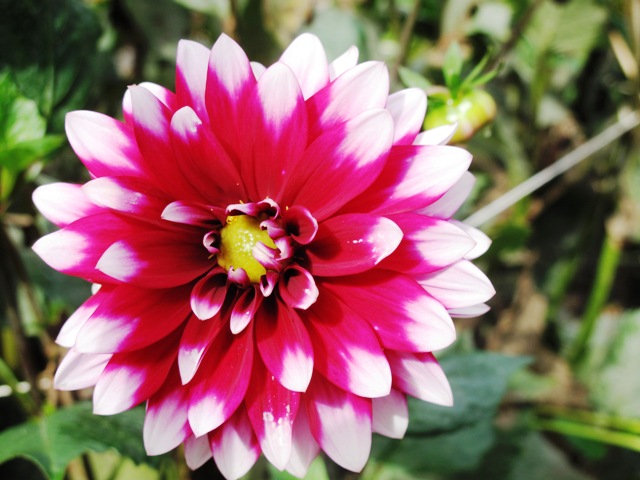
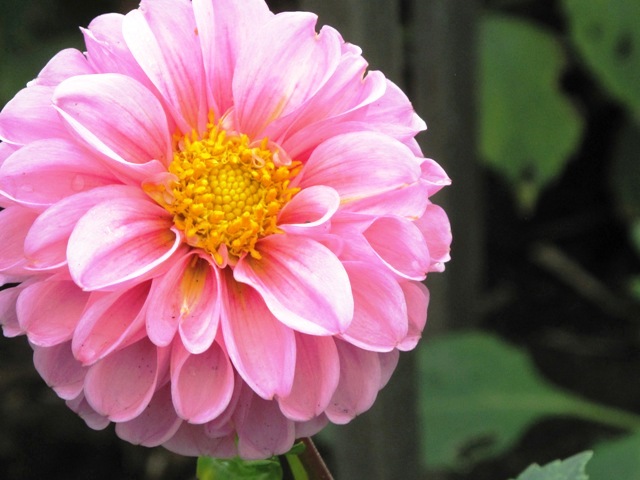
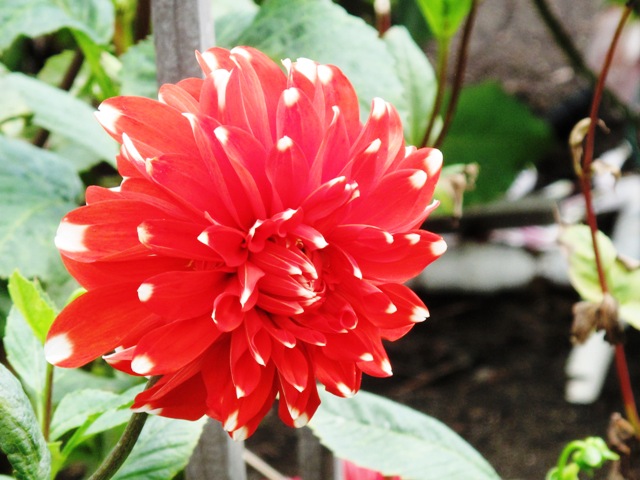
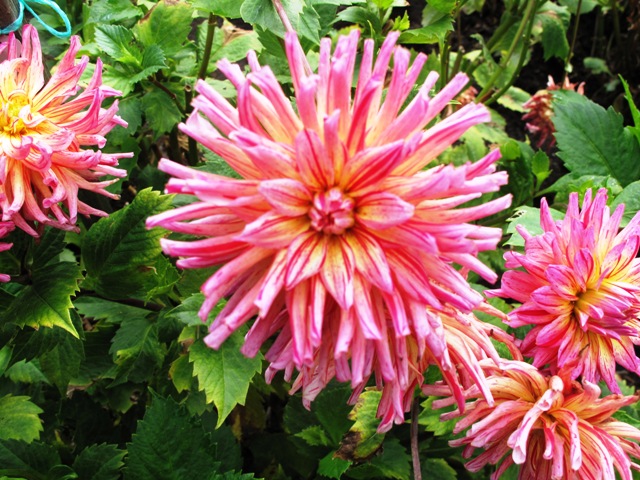
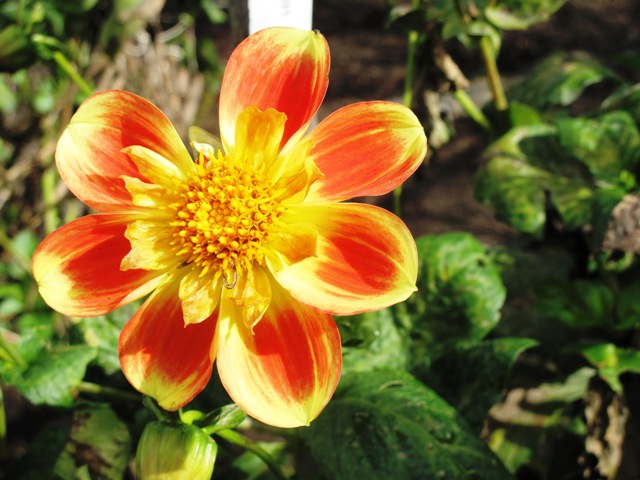
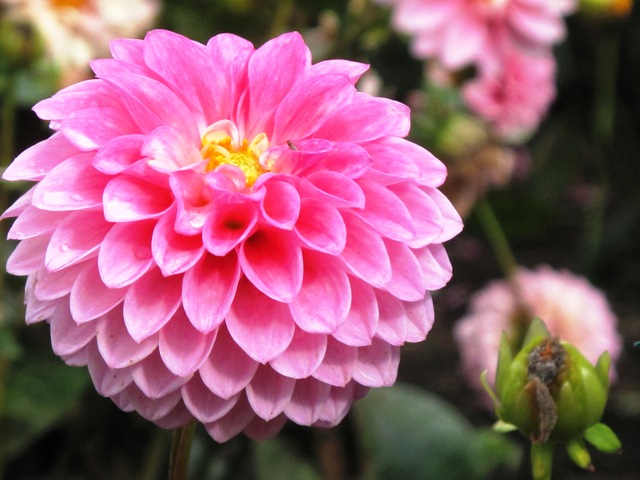
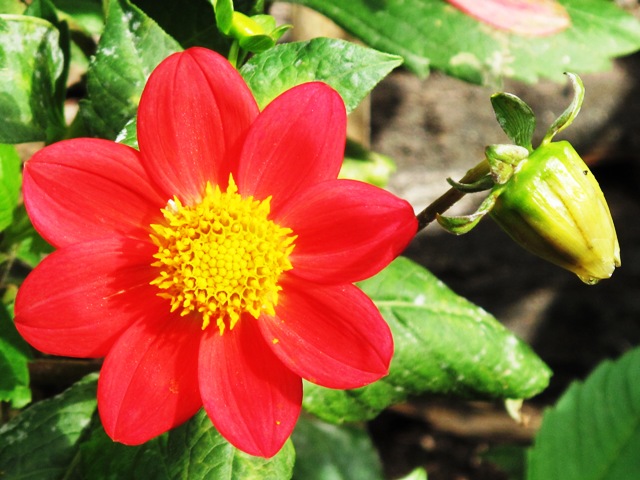
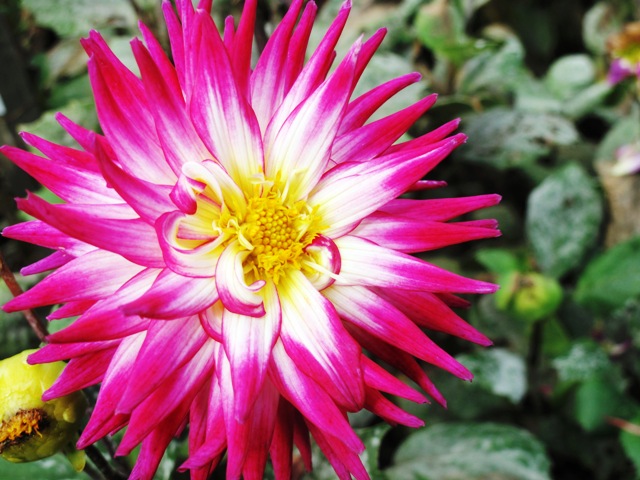
Dahlia 'Duo'

Last Sunday morning, while staying a few extra days in San Francisco after my Garden Conservancy talk, I took two Muni buses (47 & 5) to Golden Gate Park where all things artistic, botanical and cultural seem to reside.

My objective was to see the amazing living roof at the California Academy of Sciences, but once I realized I only had 90 minutes, my plans took a slight detour. Art and flowers beckoned.

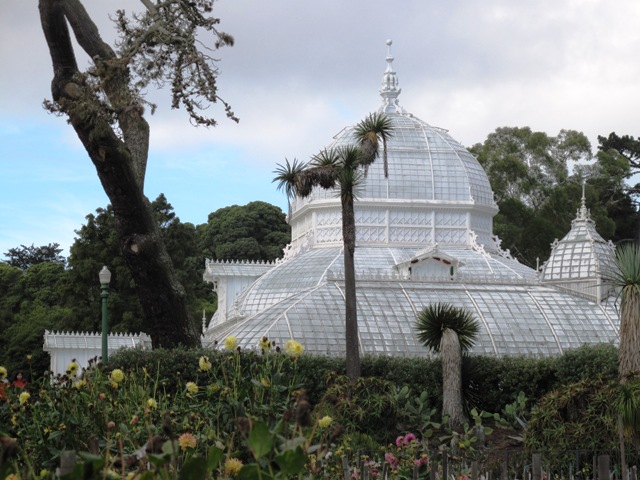
The Conservatory of Flowers, with Dahlia Dell in the foreground

First stop was the Conservatory of Flowers, circa 1879. It is one of the last remaining Victorian-era conservatories on the West coast (the other resides in Seattle’s Volunteer Park). Before I could even approach the conservatory, my attention was diverted by a late autumn display of dahlias.

Called “Dahlia Dell” and dating to 1924, two demonstration flower beds thrive here, located to the east of the conservatory. They are maintained by volunteers from the San Francisco Dahlia Society for the simple purpose of educating local gardeners and flower lovers about the diversity of dahlia color, form, size and culture. I have a feeling that Paula Jaffe, a dahlia expert and educator who I profiled in “Dazzling Dahlias,” a 2008 Perennials magazine article, is one of the passionate individuals responsible for this joy-inducing floral display.

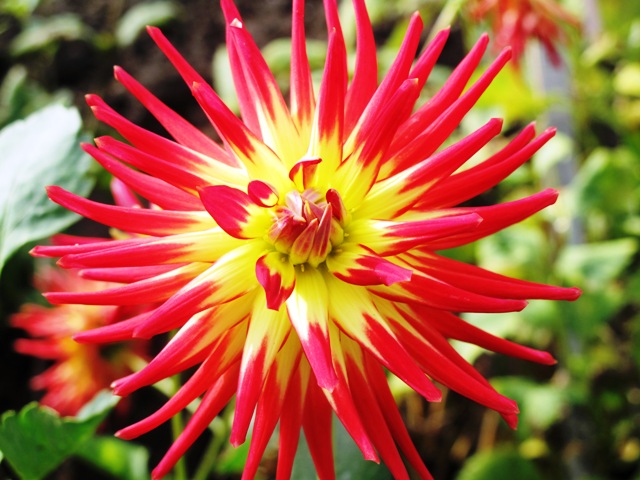
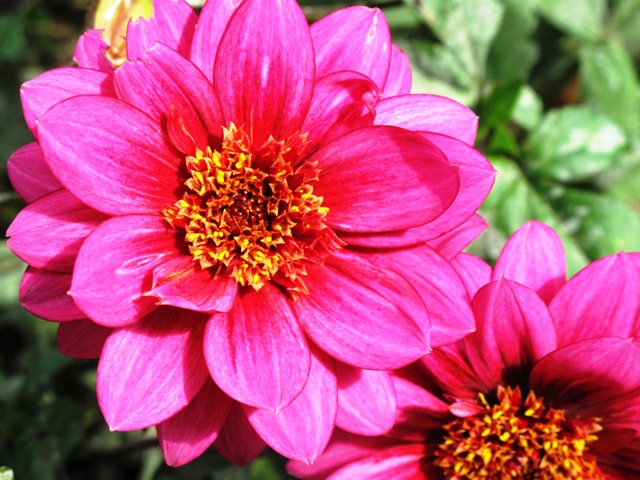
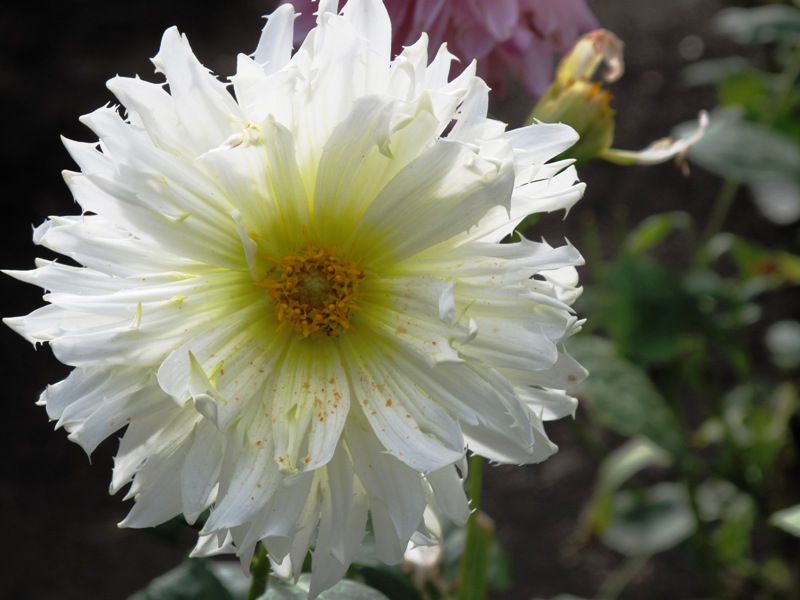
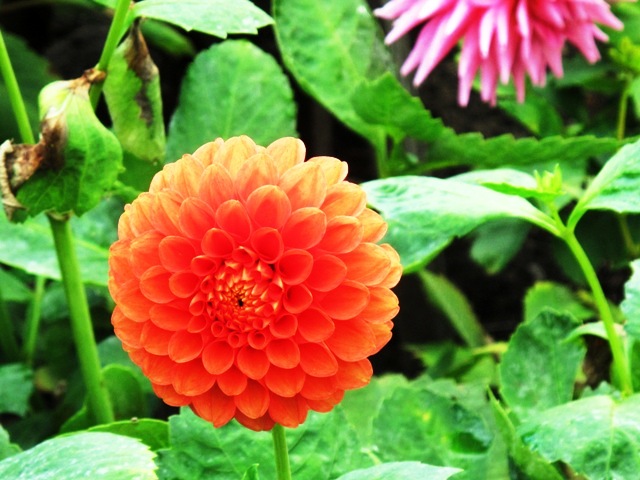
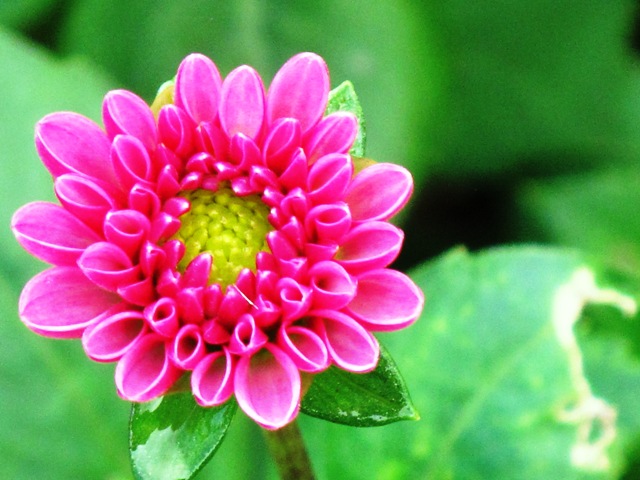
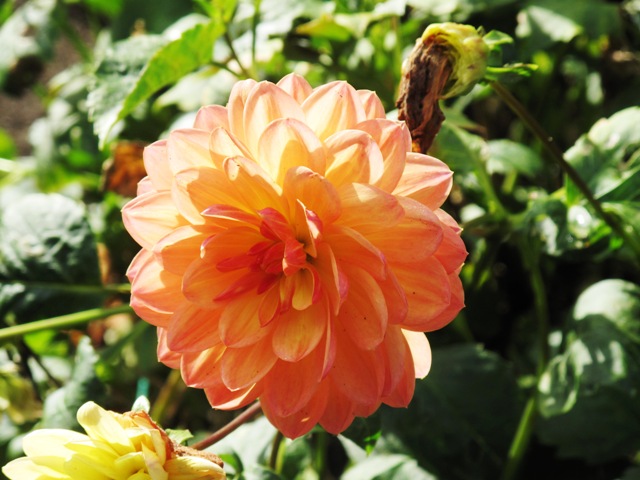
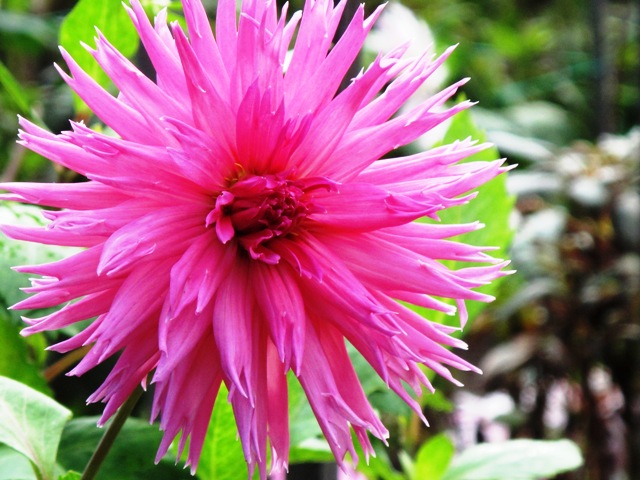
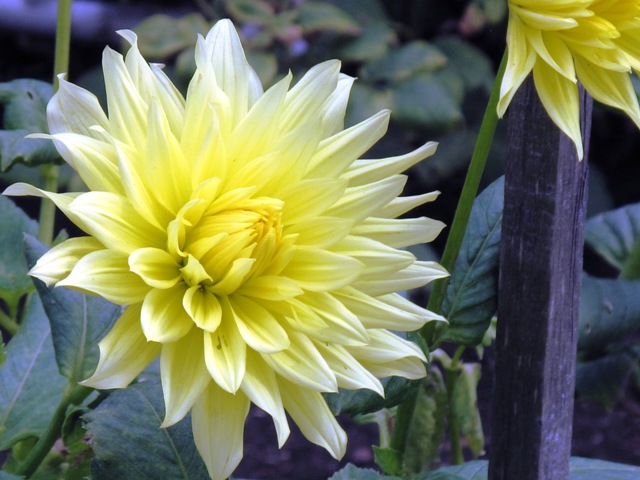
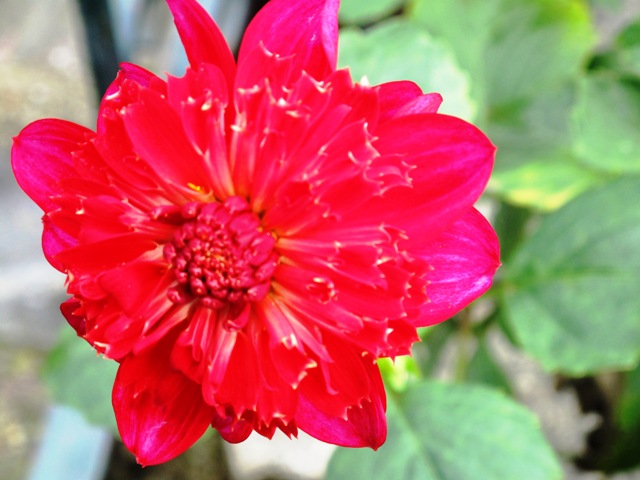
It was fun to play around with the “tulip” Macro button on the back of my Canon G10 camera and take pics of the fading beauties. These dahlias have withstood the combination of late-season rain, fog and sunshine and they’re still producing pretty blooms. I can’t wait to grow dahlias again, especially because they play well with flower vases. Really well. Enjoy this diverse display. Most (but not all) of the plants were labeled, thankfully.

Dahlia 'Western Spanish Dancer'

Dahlia 'The Phantom'

Dahlia 'Sir Richard'

Dahlia 'Shipley Spot'

Dahlia 'Shea's Rainbow'

Aptly named: Dahlia 'Pooh'

Dahlia 'Pink Paradise'

Dahlia 'Horse Feathers'

Dahlia 'Green D'Or' orange sport

Dahlia 'George C'

Dahlia 'Elvira' (a miniature)

Dahlia 'Delta Red'

Dahlia 'Creamy Beige'

Dahlia 'Bo De O'

Dahlia 'Belle Fiore'

Dahlia 'Badger Twinkle'

Dahlia 'Arulen Princess'

MORE TO SEE

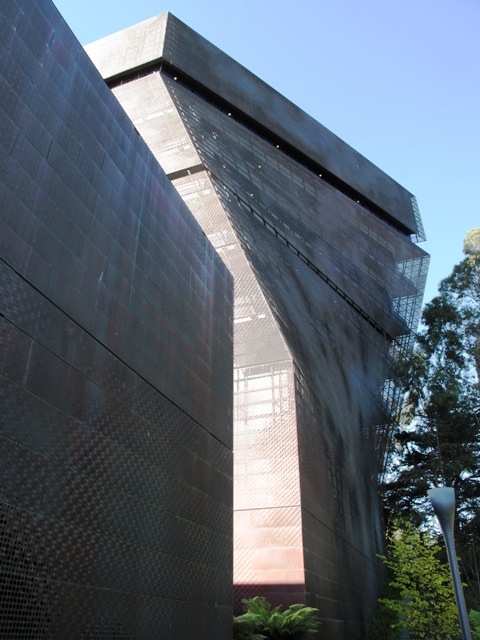
The de Young's tower - against a blue autumn sky.

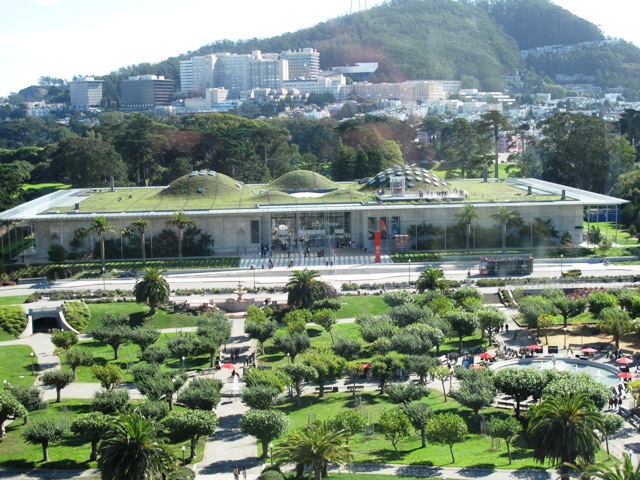
After spending an hour with the dahlias, I moseyed over to the California Academy of Sciences, but discovered that – from ground level – it is nearly impossible to see, let alone get a sense of its scale and magnificence, Renzo Piano’s green living roof.

So I compromised and spent my museum admission budget to enterthe de Young art museum where “Van Gogh, Gauguin, Cezanne and Beyond: Post-Impressionist Masterpieces from the Musee d’Orsay” was in full swing. It was exciting to see the many amazing and exciting canvasses on display. I’ve been to the Musee d’Orsay twice before when in Paris and so I enjoyed revisiting some of the paintings and drawings again. Twelve galleries of paintings were incredible to take in. You can never have too much of this artwork. The show continues through January 18, 2011.

Here's a closer look at the pointillistic-style perforated copper exterior.

After I left the galleries, I took the elevator to the viewing tower.

Actually, this was the first time I’ve been to the de Young since it was renovated and reopened in October 2005. The “new” building is clad in a perforated copper sheath, which may sound rigid but has a sensual fluidity that reacts to the light and dark.

Depending on how the sun moves through the sky, the building’s surface has dot-like patterns and a shimmery quality. The 144-foot tower is one of the most alluring aspects of the new design, by Swiss architecture firm Herzog & de Meuron and Fong & Chan Architects in San Francisco. From way up high, you can see the best of San Francisco – a 360-degree, mind-blowing perspective.

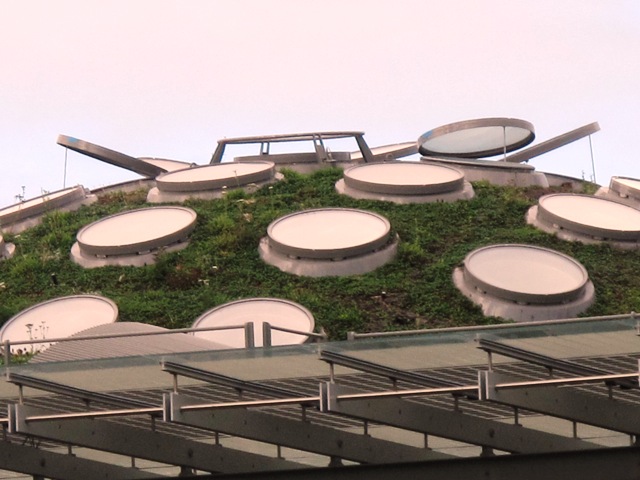
This roof is incredible - a horticultural masterpiece on top of the California Academy of Sciences in SF

A closer look of one of the roof's mounded forms

From here, I got some photographs of that green, living roof.

 I’ve already decided that on my next visit to San Francisco, I will have to see that installation up close and personal. Because while peering down on it and photographing it (through the glass-walled viewing gallery), I noticed that people were up on the roof doing just that.

Not a bad lineup for a few hours at Golden Gate Park, huh?

Autumn window boxes

Saturday, October 23rd, 2010

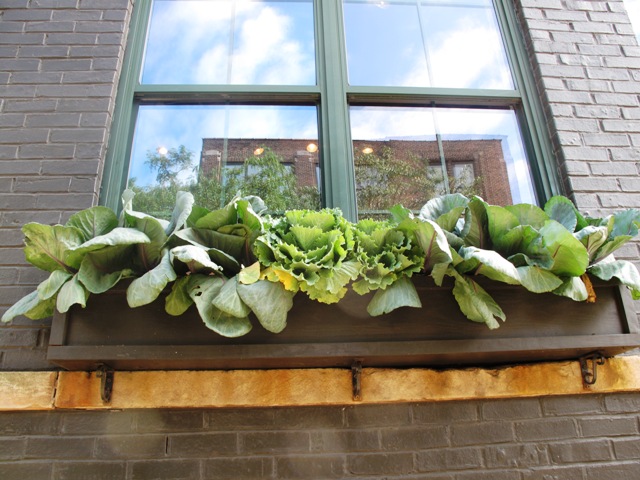
Ornamental cabbages and kales are all it takes to make some pretty cool fall window boxes.

Understanding “scale” is one of the most challenging of all design principles. So is finding just the right plant combo to fill a series of ginormous window boxes.

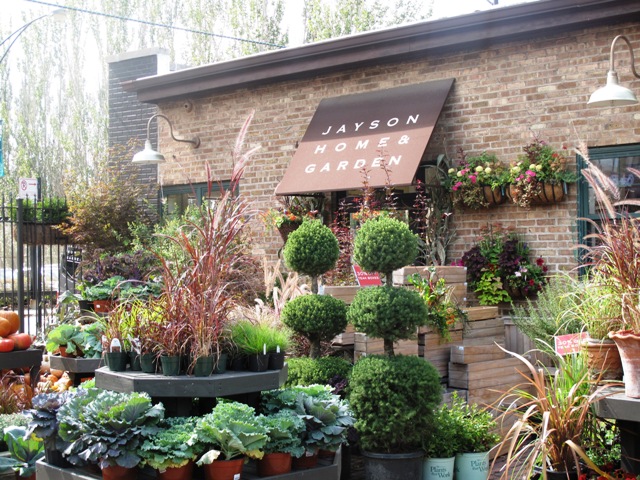
Jayson Home & Garden - a Chicago discovery for all the things I love

So imagine my delight at seeing a great example of both while visiting my college-freshman son in Chicago last month. While waiting for him to get out of class, I filled my free time touring the city’s uber-hip Lincoln Park neighborhood. That’s when I drove by Jayson Home & Garden.

A savvy retailer-friend in Seattle had told me about this must-visit shop that specializes in European-inspired home furnishings, antiques, accessories, tabletop and plants. . . so I slammed on the brakes of the rental car and took a tour – inside and out.

Jayson Home & Garden occupies a large, vintage warehouse on Clybourn Avenue. Since the building is located on a corner, there are many huge  windows that wrap both sides of it. Each window is about 4-feet wide and is adorned with an accompanying window box. You can see why any other autumn flowering favorite, such as a mum or pansy, could disappear in these deep, super-sized planter boxes.

I took this photo from across the street - see how dramatic the window boxes look with the large green-purple heads of cabbage and kale?

So here’s where the scale equation works brilliantly.

These boxes are planted with two forms of ornamental cabbage and kale. That’s it.

Packed tightly with alternating ruffled and rounded plant shapes, the design is simple and makes a big impact while filling no fewer than six of the massive boxes. I also love the way the designs anchor the tall windows and elevate something living halfway up the sides of the store’s exterior.

Check it out!

The next time you’re at the grocery store or garden center, pick up a few pots of these decorative plants.

You can experiment to see how well they add volume, scale and seasonal interest to window boxes, planters or containers.

Floral design – straight from the field

Saturday, October 2nd, 2010

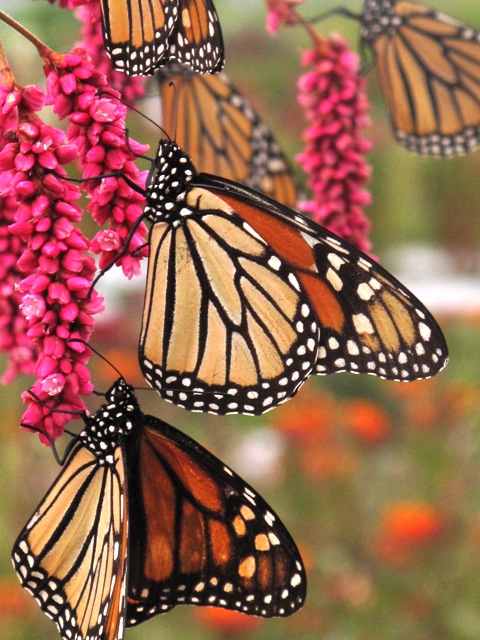
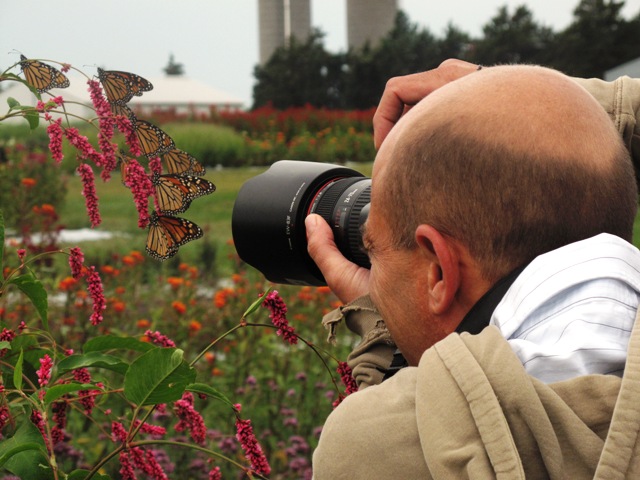
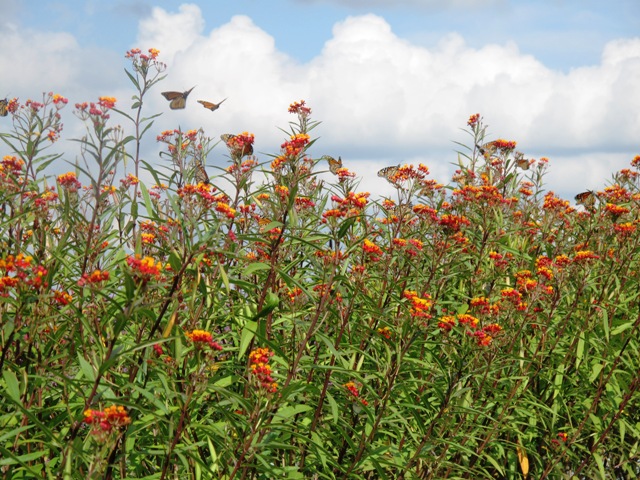
Even the Monarchs were willing to be photographed at the flower farm.

In a glorious Iowa field, I gathered flowers for my bouquets.

One knows she’s in relationship trouble when her own mother and dear friend Susan, who was her maid-of-honor in 1984, call to say, “I haven’t heard from you for a while, so I checked your blog to see what you have been up to.”

Umm. I’ve been on the road a lot lately. Way too much on the road for my liking. Being away from home and traveling for 15 of the 30 days in the month of September was ridiculous, but (I guess) necessary. Anyway, for the first time in three years, I went for a full month without posting an entry on this blog. Yikes!

There were many blog posts composed in my mind as an idea or notion would occur to me. “I should write that down,” I thought. But then, the droning lull of the airplane engine would convince me a quick “up in the air” nap was in order. Or I didn’t have access to the Internet. Or something like a deadline for a volunteer project or even – wow – a paying project . .  or someone else’s needs that were way more pressing came along.

So here we are in October – how apropos. The new leaf is turned. I don’t have to travel again until Oct. 12th and that is a single overnight jaunt for a photo shoot in Bellingham, 100 miles to the north.

Seriously, I should be able to squeeze in some news, insights, ideas, GARDENS, cool FLOWERS, and more between now and then.

The story I want to share here is from September 14-16. After six full and intense days for the annual Garden Writers Association Symposium in Dallas, I jumped on a tiny airplane and flew to Des Moines. I met up with the team I collaborate with at Better Homes & Gardens magazine. Eric Liskey (deputy garden editor), Jane McKeon (associate garden editor) and Scott Johnson (deputy art director) and I were up to our knees in flowers.

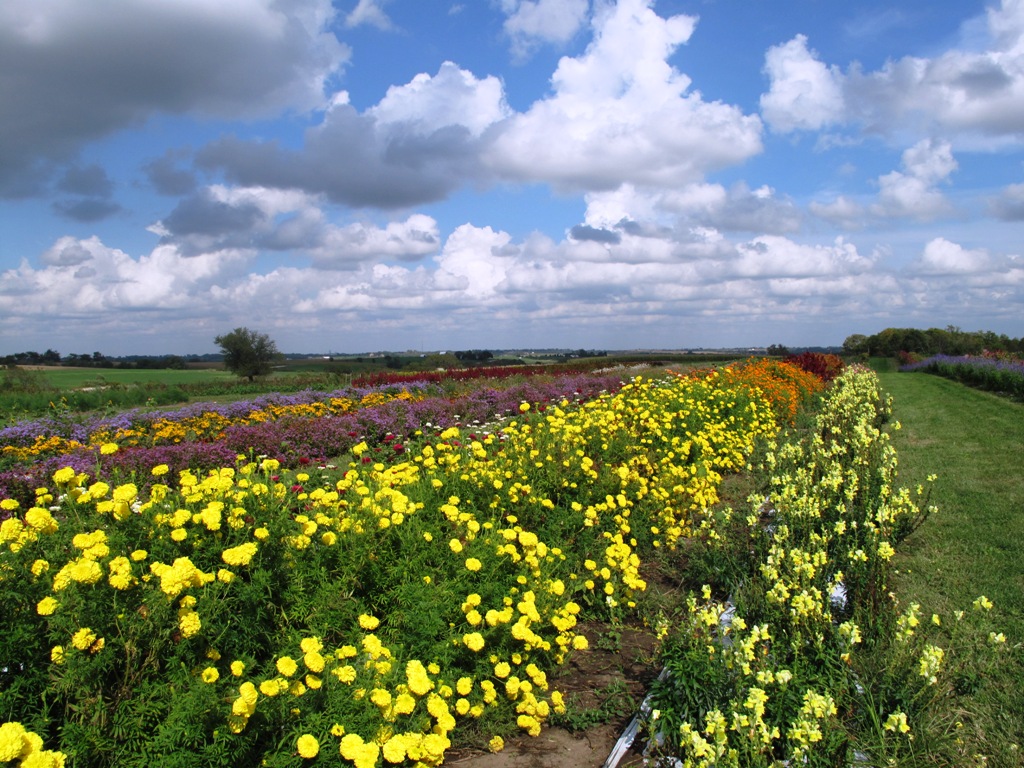
A view across the flower fields at Howell's Farm in Iowa. Isn't this just the most perfect cloud-filled sky you've ever seen?

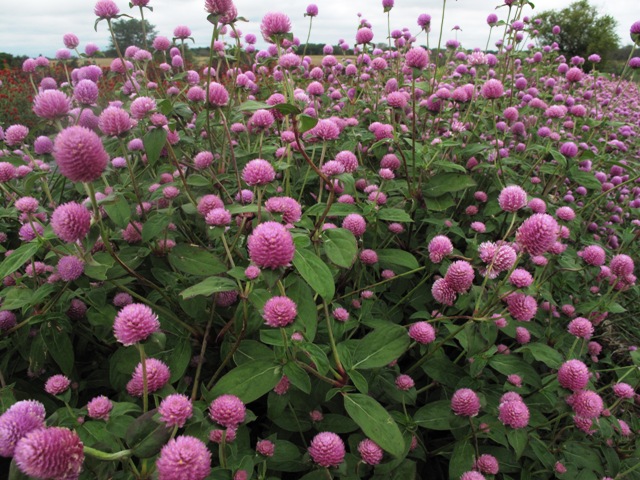
Globe amaranth (Gomphrena sp.)

The flowers – ingredients for a how-to story on creating bouquets from field-grown arrangements – were in all their glory at Howell’s Farm.

Based in Cumming, Iowa (in Madison County – yes, where the bridges are!), Howell’s is a sixth-generation family farm. After decades of raising corn and other agricultural crops, current owners Fred Howell and family began in 1985 to grow everlasting flowers.

Today, the farm is an 800-acre destination for people in search of the best varieties of decorative and seasonal crops. In the spring, summer and fall that means people come for the huge variety of annual and perennial flowers, herbs and grasses for cutting and drying. In the fall, they enjoy the amazing pumpkin patch and a cool corn maze. By the end of the year, in the winter, it’s the Christmas trees as main attraction.

After I landed in Des Moines, Eric and I drove out to Howell’s, about 25 miles outside of Des Moines, on a breezy, but gorgeous afternoon. Scott met us there and the three of us followed Erin Howell, Fred’s daughter, on a walk through the five-acre flower fields. As is my typical reaction whenever I visit a flower-growing operation, I was practically hyperventilating with excitement.

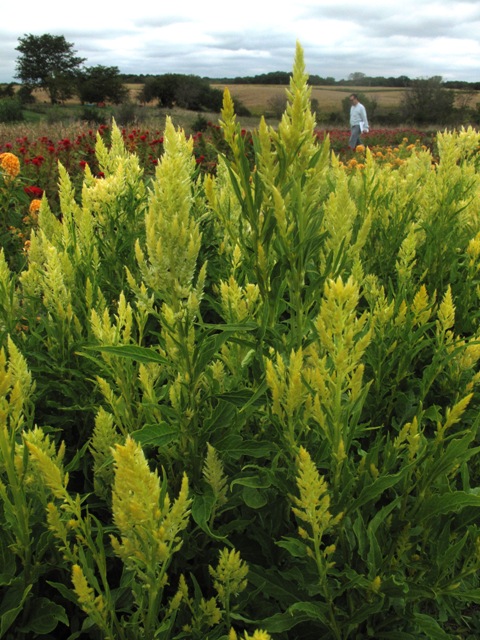
Celosia, plume type - what a great color!

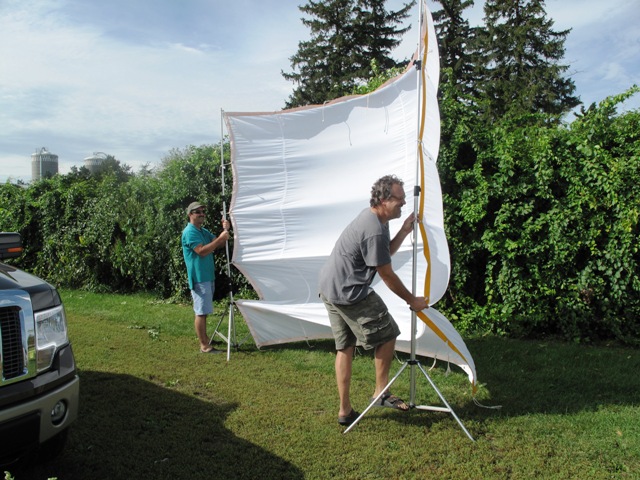
This shows how windy it was as Eric (left) and Scott (right) held the oversized "silk" to cast a shadow for one of the bouquet vignettes.

The variety of flower form, color and vigor in Howell’s crops was dazzling. The setting itself was breathtaking. We talked through our options of ingredients, including what “design lessons” we wanted to illustrate in the story, what sizes and shapes of vases we needed to use, and how to CHOOSE among all the great flowers that seemed to say “pick me, pick me!”

Back at the editorial offices, the three of us huddled with Jane to talk about the floral design projects we wanted to assemble and photograph the following day. This was no small task. Everything has to be mapped out so we could envision how things will look on the pages of Better Homes & Gardens.
The sheets on Scott’s clip-board featured his sketches of mini-magazine pages, complete with thumbnails of vases, blooms and notes to show how a four-page flower arranging story might look. We had to think about a color palette for the vases, taking into consideration the textures and hues of each flower lesson. Then Scott raced out to pick up props from all his secret sources (including tables, stands, vases, pitchers, etc.) and Eric and I took a drive over to his personal garden. We needed a few extra plant ingredients to enhance the designs we had in mind, so Eric obligingly let me cut some lambs’ ears and goldenrod from his borders. What else? Oh! a visit to the mall to pick up a denim shirt for me to wear in the photo shoot.
BH&G staff photographer Blaine Moats wanted the perfect Monarch shot. He actually got dozens of perfect shots because the butterflies were amazingly cooperative.

Yes, there it is: Francesca's House

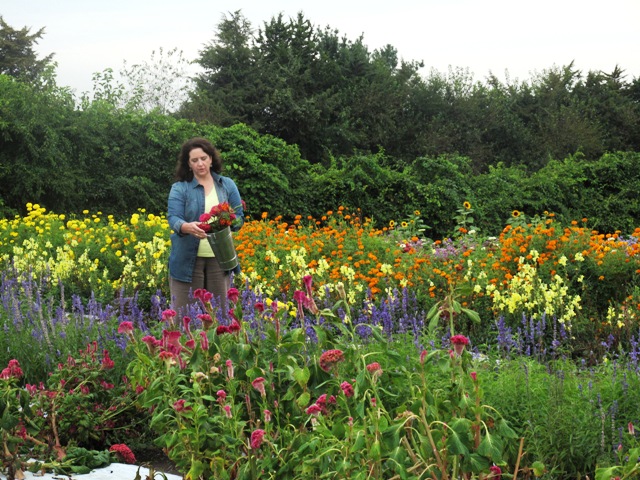
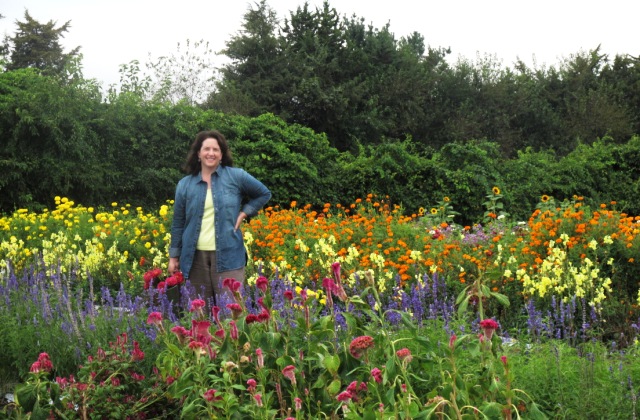
The next morning arrived bright and early and we met out at Howell’s around 7 a.m. Since Jane and I had designed the first two looks the afternoon before, we had a jump start for the photography. But then, the light seemed pretty good for a portrait, so Scott sent me out to cut flowers while our photographer Blaine Moats shot away.  As I walked between the rows of marigolds, zinnias, sunflowers and milkweed, filling my galvanized French flower buckets with stems, I thought: How lucky can a gal get? It was a joyous experience to just be there, to know that I was getting to create bouquets and arrangements that will be featured in the magazine sometime next summer, and to work with such talented, artistic colleagues.

We were soon distracted by a sight so compelling and awe-inspiring that we simply had to stop working. Well, except for Blaine, who just turned his lens on the scene and began to document it. A harmonic convergence of Monarch butterflies was waking up as the day began to warm. They seemed to want to pose for photos, since even I was able to capture some really sweet butterfly portraits as the winged creatures breakfasted on the nectar of hot pink “Kiss-me-over-the-garden-gate” flowers (aka Polygonum orientale).

Milkweed with Monarchs (Asclepias sp.)

Me again - can't stay away from those blooms!

If that wasn’t thrilling enough, by the time Jane McKeon arrived in the afternoon, I had another amazing sight.

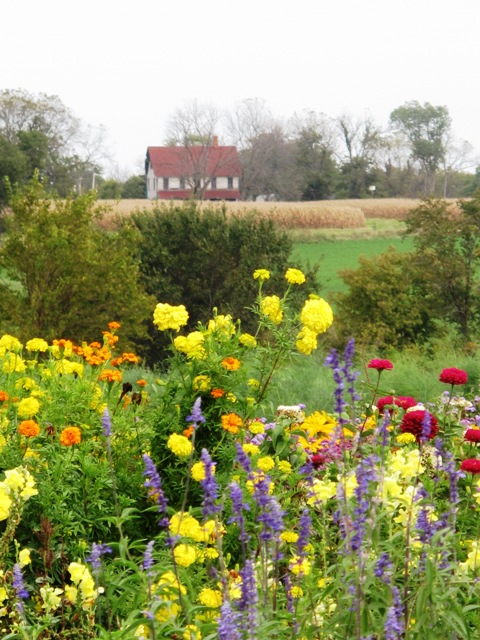
“Look over there,” Jane said, gesturing to a distant and lonely farmhouse. “Do you know that it’s Francesca’s house?” Yes, this was the actual Iowa farmhouse used by Meryl Streep’s character Francesca Johnson in the famous film “Bridges of Madison County.”

Another reason to visit Howell’s Farm is to gaze across rows of flowers and see that setting. I may have to rent the film just to see that house on the screen, and to appreciate Meryl’s Oscar-nominated performance from 1995.

There’s lots more to share but my bouquet designs are embargoed until they show up in the magazine. I can’t wait to show them off to you.

A meadow in a vase

Saturday, August 21st, 2010

The September issue of Better Homes & Gardens features my “Debra’s Garden” column encouraging readers to add ornamental grasses to their seasonal flower arrangements.  

"Meadow in a vase" is the theme of my September column for BH&G

The photo that accompanies the piece depicts a gorgeous autumn bouquet bursting with asters, fall foliage and miscanthus blades.  

Its sultry palette includes dark purple, russet-red, gold and green elements in a clear, glass vase. As a footnote, I promised to show off my favorite grasses for cutting and flower arranging here on this blog.  

As it turns out, I’ve been seeing a lot of wonderful ornamental grasses and grass-like design ingredients lately. These days, I have dreamy plumes of fountain, feather, and silver grasses on my mind.  

There’s something both completely romantic and purely modern about grasses in floral arrangements (or in the landscape, for that matter). Here’s a peek at what’s caught my eye this year, including my favorite grasses for cutting:  

FROM THE FLOWER FARM  

Owned by Diane Szukovathy and Dennis Westphall, Jello Mold Farm is one of my favorite local flower sources here in the Pacific Northwest. Diane and Dennis use sustainable practices and recently they’ve delighted floral design customers with gorgeous late-summer grasses. You can find Jello Mold Farm at the Queen Anne Farmers’ Market every Thursday – be sure to check out the incredible selection of downy and fluid grasses.  

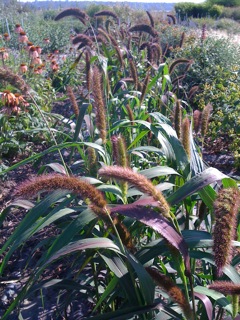
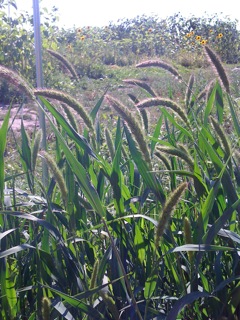
Here are a few show-stoppers included on Diane’s “fresh list” that she emails to customers every Monday. The four images you see here were taken by Diane: 

Jello Mold's RED JEWEL MILLET, with large, elegant, arching, red-toned seed-heads approximately 5 inches long

Jello Mold's GREEN MILLET, with 3-inch-long, fuzzy green seedheads and a wonderful texture

These awesome examples are ornamental millets, not edible ones. 

While actually cultivars of Pennisetum glaucum, you can almost convince yourself that they are relatives of the corn family if you squint. 

When cut for bouquets, the plants yield both the sweet, furry seed-heads, as well as the strapping, wide leaf blades. Both plant elements are useful in an arrangement as beautiful counterpoints to blooms. 

Like many good things, “more is better.” For example,  I like to gather several seed-heads together in a clump and inset them into the arrangement. 

It’s a pretty picture to have three to five seed-heads cascading out of a bountiful grouping of seasonal flowers and foliage. 

READ MORE…

A summer bouquet

Saturday, July 31st, 2010

A breathtaking display of sustainably-grown flowers - at Seattle's Ravenna Gardens. The bouquets were grown by our friends at Jello Mold Farms
 I’m back in Seattle as of about 10 days ago.

 Can’t quite believe it but being here feels pretty awesome. We’ve been sitting out on our front porch each evening, admiring the sunset, which is silhouetted behind the Olympic Mountains and Puget Sound to the west.

 I am so torn between missing my beloved friends and garden in Los Angeles and the excitement I feel at being back in Seattle. I’ve been asking this question for four years: Is it possible to be in love with two places at the same time?

 As I ponder that “big thought,” I have had to squeeze in time to unpack (ugh), move furniture around to make room for everything in our smallish rental house, and bug my friend Jennifer to find the best dry-cleaner, dog kennel, ethnic restaurants, local grocery stores and more. Thank goodness our dear friends Jennifer and David (and their son Max, our son Alex’s BFF) live only 5 blocks from here. They are a godsend!  

Also, I’m working on two lectures for the upcoming Independent Garden Center Show in Chicago – scheduled to take place in a few weeks’ time. Ironically, earlier this week I spent 3 days in Chicago – as a would-be college freshman “mom,” for my son Ben’s orientation at DePaul University. What a cool city!

I’m looking forward to returning to Chi-town in a couple weeks where I will present a lecture on “Ideas from the country’s most inspiring garden centers” and “The female gardener” (with colleague Robin Avni). 

In preparation, I’ve been sorting slides and digital images to illustrate my talks. Robin and I met for several hours yesterday to work on our joint presentation, which taps into her trademarked “Mommy to Maven” consumer research. 
A close look at the many delicious ingredients in Diane and Dennis's bouquets

Hey, for $26 - it's a great deal! This vase is packed with pretty!

Yesterday, I also stopped by one of my favorite emporiums, Ravenna Gardens.

Owner Gillian Mathews told me that each Friday her shop receives deliveries of local and sustainably-grown bouquets from Mount Vernon flower farmers Diane Szukovathy and Dennis Westphall of Jello-Mold Farms (they grow gorgeous blooms in a farming community about 90 minutes north of Seattle). 

Ravenna Gardens places each one-of-a-kind bunch of blooms in a glass Mason jar, presenting customers with some of the most charming arrangements around. I couldn’t resist bringing one home with me yesterday. It’s sitting on my desk to cheer me up each time I look at it.

I sent a note to Diane to ask about the hard-to-ignore jumbo poppy pod – the largest I’ve ever seen! Here’s her explanation: 

A couple of years ago Melissa from Terra Bella handed me a few stems of the chubby poppy (definitely a variety of Papaver somniferum) which she had purchased at the local wholesale house. They had gotten a little old so she couldn’t use them for floral work. I was able to dry them and get viable seed and those are their grandchildren. 

That plump pod is a focal point of the bouquet, which also includes Phlox paniculata ‘Natural Feelings ; Scabiosa caucasica ‘Dark Knight’; and Sedum ‘Green Expectations’, ‘Frosty Morn’ and ‘Autumn Joy’. Blue-green Baptisia australis foliage complements the design. What a mid-summer dream! 

I’m going to enjoy these flowers for days – and it makes me happy to have that vase on my desk just knowing they were grown locally using earth-friendly practices.

In Bloom Today

Monday, July 5th, 2010

This is a sign that brings joy to my heart!

Here’s the sign that welcomed me as I arrived at the regional meeting for the Association of Specialty Cut Flower Growers in Eugene last Monday. Fields and fields of beautiful blooms grow here at Charles Little & Co., a 35-acre flower farm.

Grower Charles Little led about 60 of us through the flower fields, sharing his wisdom and knowledge about specialty crops.

I flew to Eugene last week to spend a day attending the ASCFG regional meeting, where I met up with photographer David Perry. We were excited to participate for the first time as members. An association of 450-plus flower producers across the country, ASCFG brings together specialty growers who raise all sorts of floral ingredients, including annuals, perennials, flowering ornamental shrubs, vines, edibles and grasses.

Cap on head; cameras over his shoulder, Dave Perry had lots to photograph.

This was a chance for us to hear from a diverse cross-section of growers. Each small business is carving out its own niche in the marketplace, from the grower with just one acre who sells most of her blooms at a local farmer’s market to a couple whose cutting garden has become a popular place for weddings (complete with fresh-cut blooms for the bridal bouquet).

Then there is a young, hardworking farmer who delivers his Oregon calla lilies and hydrangeas by the truckload, direct to the Los Angeles Flower Market and a floral designer who has decided to diversify by growing her own floral ingredients in her parents’ small acreage. We listened and learned and soaked it all up.

It was a treat to meet so many awesome, passionate individuals who work on the land and who want to connect with each customer who buys and enjoys the flowers they grow. We got caught up in the passion and the stories – stories we will continue to document with photography, video and the written word.

We are well along on this journey, but there is so much more to document for you as we create A Fresh Bouquet: Seasonal, Local and Sustainable Flowers. As David has written, please ” . . . follow along on this unfolding ‘cut-flower’ book project . . . as we continue to build it.” 

Here are some photos of the day’s highlights:

Fancy foliage in a vase – lessons from Better Homes & Gardens

Friday, June 25th, 2010

Here is my trio of vases inspired by my "Leaf it up" story in the June issue of Better Homes & Gardens. Each tiny arrangement features at least one cut succulent paired with foliage from a similarly-colored perennial.

Sometimes all you need are a few pretty leaves to conjure up a gorgeous tabletop arrangement or centerpiece. I have my talented friend Susan Appleget-Hurst, former senior associate garden editor for Better Homes & Gardens, to thank for producing a story that illustrates this idea (with several cool designs).

Susan, who now blogs at Cake in the Garden (check it out!) designed the lovely, leafy bouquets and co-produced the story with art director Scott Johnson. Then I was lucky enough to be asked to create the accompanying text. Pick up this month’s BH&G or click here for a peek at the story.

A turquoise vase gets the cool touch from lemon-lime and chartreuse ingredients.

The idea of using leaves as cut flower ingredients is nothing new. But it’s always nice to see someone else’s twist on the technique. One of the things I love about Susan’s designs is her use of white vases in several different sizes. The white really offsets the leaves and focuses the viewer’s interest on the form, texture and scale of the various cut foliage. I also loved the monochromatic and contrasting combinations of leaves.

After writing the text, I kind of forgot about this story until I opened up the June issue and saw how beautifully it turned out. I decided to try my own version of this floral design project (I can’t get more “seasonal, local and sustainable” than my own backyard!).

Looking around my landscape, I realized how many awesome succulent plants grow here. Even when a sedum, aeonium or crassula stem breaks off of the plant or gets bumped when someone pushes a chair out from the patio table, I try to “rescue” the severed piece and put it in water. Inevitably, a few roots will emerge and I can plant that cutting. So clipping a few succulent pieces for the designs you see above didn’t kill me. Once these pieces root, in water, they will be returned to the potting soil or garden bed.

My idea: To showcase the amazing color diversity of succulents. For each of three color schemes – silver-blue, maroon, and lime green – I looked for perennial foliage to match with the companion succulent. Unlike Susan’s white vases, I tried to pair the foliage hues with my slender colored-glass bud vases. I have owned this trio in green, tangerine and turquoise glass for several years. I think they came from IKEA.

These designs look sweet displayed on my block-printed cotton table cloth (it’s nice that each picks up on the botanical pattern and palette).

Here is what I included in each:

Orange vase with silver-blue ingredients.

Deep purple-maroon ingredients look dramatic against the vibrant green vase.

The Orange Glass contrasts beautifully with three silvery-blue ingredients. The succulent element is called Senecio mandraliscae. Here in Southern California, people grow this shrubby, South African succulent as a groundcover. I actually have some in a pot and I love its slightly curved blue-gray leaves. Softer textures come from my other fave silvery garden plants. First is Artemisia ‘Powis Castle’, which has lacy foliage. I clipped the taller stems from Westringia fruticosa, also called coast rosemary. It’s from Australia, has a rosemary-like texture, and looks just gorgeous growing at the base of my fruitless olive tree.  

The Green Glass is a perfect foil for the deep purple-maroon ingredients. My succulent starting point was to add two small Aeonium rosettes. Not sure of the cultivar because I inherited this plant when we moved here in 2006.  Almost like a touch of embroidery, the dark plum version of sweet potato vine (Ipomoea batatas) spills from the neck of the slender vase.

The Turquoise Glass gets a fresh accent from lime green and chartreuse stems. I started with an un-named lemon-lime sempervivum that has pretty pointed leaves. These bold forms have a fluffy collar of chartreuse dead nettle (Lamium galeobdolon).

My challenge to you is to walk outside, clippers in hand, and create a foliage bouquet with what you have growing in your garden. Don’t overlook the unexpected ingredients. Hey – maybe that awesome artichoke leaf in the vegetable patch is worthy of a starring role in a vase. Or perhaps the conifers could stand in for my succulent ingredients. Have some fun! The best part? It means you have a lovely centerpiece for free!

Plant your summer centerpiece

Wednesday, May 26th, 2010

On location in my own backyard with BH&G senior art director Shelley Caldwell

One perk that comes with my new gig as contributing garden editor for Better Homes & Gardens was recently producing a photo shoot in my garden. Some of the shots from our March session, photographed by the very talented Jack Coyier, appear in the June 2010 issue of BH&G (on newsstands now).   

The story idea came from the Home Design department rather than the Garden Group, but I got involved because this design/entertaining story included plants.    

This is my tale of what happens with a great story idea and how it takes the journey from something pretty HUGE to something fairly modest. I’m learning that it’s all about the creative process, not just the end game.   

It all started when I was asked to come up with three planted container ideas that could look good outdoors all summer long. That sounds easy, doesn’t it? The editor asked:   

As part of a larger summer outdoor entertaining guide, we want to give some ideas for summer-long living centerpieces. Wondered if you would have some thoughts on that and be interested in designing 3 centerpieces. 

I sent her several suggestions featuring foliage plants. Here they are: 

  1. Wood window box planted with edibles: Herbs (chives, flat-leaf Italian parsley, oregano, thyme, and strawberries)
  2. Galvanized zinc or aluminum containers with bold foliage – such as Rex begonias (dark green and burgundy) with creeping jenny or helichrysum (lime foliage that drapes over the edge of the planter)
  3. Terra cotta pots with air plants (silver-blue tillandsias); This is to show a low-maintenance alternative to succulents; tillandsias do not require planting and can be arranged on gravel or pebbles that fill the containers (and misted over the summer to keep alive).
  4. Glazed pottery with grass (or grass-like) plantings; Planted with tufts of green mondo grass or seeded with wheat grass, fill the shallow, Asian-style containers for fresh, summer-long lawn on your table. The grass can be embellished with clear glass votive holders or peppered with cut flowers inserted in the grass with stakes (for single events). This is Jack Coyier’s idea and I think it’s cute!

One of the tabletop designs shot in my backyard - featured in BH&G's June issue

The feedback? Where are the flowers? This is the editor’s reply:   

Something to think about . . . how can we tweak these to be a little more decorative and festive, and a tiny bit less about foliage? Can we get one of them centering on a beautiful bloomer?   

Yikes! I forgot the flowers. Actually, I didn’t really forget them; I just selected foliage plants thinking they would be lower maintenance than flowers (which might require regular dead-heading, fertilizer, etc.) and be guaranteed to look pretty from Memorial Day to Labor Day. Turns out, BH&G readers really LOVE their blooms. There can never be too many flowers, remember?   

I refocused my brainstorming to include more, more, more blooms. The story planning went through several iterations until I was told this might be a feature spread with five different planted centerpieces. I went to town – actually sourcing plants and containers from as far north as Ventura to as far south as Hollywood, logging 200-plus miles on my Volvo’s odometer as I pulled pots, plants and accessories for the March 9th prep day and March 10th photo shoot.   

From left: Jack Coyier, Char Hatch Langos and Shelley Caldwell

The plan was to photograph all five tabletop looks. Thank goodness for the very talented Char Hatch Langos, an LA-based stylist who logged even more hours and miles in her car hunting down props than I did!   

She arrived on Tuesday with BH&G senior art director Shelley Caldwell. Between the two of them they had a condo’s worth of patio furniture, textiles, vases, dishes, flatware, napkin rings – you name it – crammed into two cars! All of this for five different looks!   

The looks related to five themes that we had worked out: Romantic; Asian; Edible/Herbs; Citrus Mix-n-Match; and Tabletop Tray of Collectibles.   

So it was a fun two days, with a lot of fine-tuning, adjusting for the sunlight bouncing off of my California Gold crushed gravel garden, unseasonably low temperatures and brisk winds.   

READ MORE…

Disney’s Glorious Garden Festival

Thursday, April 29th, 2010

I posed with the larger-than-lifesized Mickey and Minnie topiaries who stand amid Epcot's bodacious vegetable patch

Mickey-Minnie-‘n’-Me

For the past couple of years, whenever I learned that a garden-communicator-pal was invited to speak at Epcot’s International Flower & Garden Festival in Orlando, I would think: How do I get in on that great gig?

And so it seems: good things come to those who wait.

Last fall, Debbie Mola Mickler, the horticultural program planner for Epcot’s nearly three-month-long spring gardening festival, contacted me with an invitation to participate in the 2010 “Great American Gardeners” lecture series.

She and her colleagues wanted me to come and talk about Stylish Sheds and Elegant Hideaways. It was a pretty awesome invitation to speak six times over a three-day period.

And how cool that it coincided with spring break, which allowed my husband Bruce, and our youngest son, Alex (and his pal Philip) could come along and take advantage of the myriad adventures: water parks, animal kingdoms, magic kingdoms, fireworks, and lots more! We also got to see some good friends who’ve lived in Orlando for many years. And I was able to connect with most of the staff at Garden Design magazine, who are headquartered at nearby Winter Park, Florida. Lots of great reasons to come to Orlando… the fact that it was still “spring” here was a huge one. Warm and a little humid, but certainly better than summer here.

Great American Gardeners at Epcot

We stayed at Disney’s BoardWalk Resort, just across a “lake” from Epcot’s “Future World” and its iconic sphere. Our hotel’s Atlantic-City-inspired setting was gorgeous. My friend Lanny Wood, an architect, told me that famed American architect Robert A.M. Stern designed the boardwalk-style resort, with its white clapboard siding, striped awnings, and pristine lawns. There really is a fantasy world here and it’s so easy to be drawn into the playfulness, forgetting that there’s reality beyond the perimeter of Disney.

The plant displays, topiaries, and tropical landscaping are superb.  When I first met Debbie by phone, I asked her why the flower festival had never come to Disneyland here in Southern California. She explained to me that it is merely a matter of real estate. Anaheim is land-locked by freeways and over-development. There seems to be little room to grow gardens at a Southern California amusement park.

Whereas in Orlando, there’s plenty of acreage! Over the past three decades or so, the talented horticultural staff at Disneyworld has created a beautiful, arboretum-like setting as a backdrop to no fewer than six theme parks and countless resorts.

Iconic architecture - the dome and spire at Epcot

Here was my typical schedule – at least for the three days when I was on duty as a festival speaker.

Wake up and walk to the breakfast bar or bakery. One morning, we enjoyed a huge spread at Iron Chef celeb Kat Cora’s signature restaurant Kauzzina.

Next: The boys figured out which theme park to visit that day. Thankfully, Disney’s intricate shuttle bus system took them anywhere they wanted to go.

Then: Time for me to get ready for my first talk, at Noon. On my first day, I felt so special because John, one of the Resort’s longtime landscaping managers, greeted me as my personal escort. He picked me up at the hotel and drove me to the Epcot festival site, called “Garden Town.”

Garden Town at Epcot

Inside the lecture hall, several demonstration stages were set up to accommodate a rotating schedule of speakers. During the day, in addition to the main stage talks, Disney’s gardening experts shared tips and involved participants in hands-on planting projects; University of Florida gardening experts presented local horticultural information, and Florida Master Gardener volunteers answered gardening questions.

After my noon lecture, I went to the garden gift shop to sign books and meet members of the audience. Then, I was free for lunch, when I took time to walk around the grounds and drink in various sights. I loved the butterfly house, the fairy garden displays, and – of course – the topiary Disney characters.

Speaking about creating the "shed of your dreams"

On Thursday evening, my friend Lindy came to meet me for dinner – what a treat to spend time with a very special friend from many moons ago. We always pick up right where we left off. I hadn’t seen Lindy since I was in Orlando in 2005 for the Garden Writers Association winter board meeting. But it felt like that was only a few months ago. I adore her. What a smart, savvy, strong woman. She always inspires me and makes me feel ready to take on the world.  

On Friday evening, the team from Garden Design magazine came to meet me for cocktails at the resort. We had a blast just socializing, while Donna’s daughter Kate jumped and splashed in the pool (my own son and his friend, both 13, were off on their own adventure, but we met up with them later. Going to Disney as a 13-year-old is a lot like going camping. Somehow the grownups worry less and you suddenly have quite a bit of autonomy and freedom).

Garden Design's team: Donna Reiss, art director; Chelsea Stickel, photo editor; Debra Prinzing, contributing editor; Megan Padilla, senior editor (with the adorable Aileigh)

On Saturday night, Bruce, my husband, had finally arrived from Pittsburgh. He was a trooper because he took Alex and Philip to Universal Studios for the day. But we reunited that evening and enjoyed a very unique dinner at Disney’s Animal Kingdom Lodge. If I ever go back to spend a vacation in Orlando, this is where I’m going to stay. You can only imagine how Disney interprets Kenya.

Bruce and I thought about our visit in 1990 to Amboseli National Park in Kenya when we went on a photo safari. Let’s just say that the real thing is a lot more rugged than the Disney version. But we had a blast and it was our last night with the boys before they flew home on Sunday morning, all by themselves to LA.

Bruce had to leave on Sunday evening and I stayed one more night in Orlando before flying to Dallas the following day. The rest of the week was a bit of a blur, since I had to teach a container design class in Dallas Tuesday night; fly home to Burbank on Wednesday; and then drive to Orange County to teach another class on Thursday. But I won’t let fatigue lessen the fun. Disney was unforgettable. And I’m so grateful for the experience.

Here are some of the horticultural sights that wowed me:

 A few other pics and people to share:

Garden Design's Jenny Andrews, Leigh Ann Ledford and Shelley Easter

Fellow Garden Writer Association member, Kim Taylor from the University of Florida horticulture program (aka "The Sassy Crafter") met me on Sunday. She was at the festival to volunteer in the "Ask an Expert" booth

My book-signings after each talk gave me a chance to meet other stylish shed enthusiasts

Gardens under glass

Wednesday, January 6th, 2010

In a setting of snow on the last day of 2009, the Phipps Conservatory makes a grand statement

In a setting of snow on the last day of 2009, the Phipps Conservatory makes a grand statement

An amazing garden under glass, The Phipps Conservatory is a delightful destination in the heart of urban Pittsburgh.

I visited last week when the outdoor daytime weather averaged 20-degrees Fahrenheit.

But once we walked indoors, of course, the “season” changed. Blooms more likely to be seen in my Los Angeles backyard were thriving in the conservatory’s dozen-plus “rooms,” including the tropical-like Palm Court, Fern Room, Orchid room and Sunken Garden.

The Desert Room looked oh-so-familiar to me, with agaves, aoeniums, aloes and opuntias poking through the sand-colored gravel floor.

This was a new combination to me: Ti plants (Cordyline sp.) with Poinsettia

This was a new combination to me: Ti plants (Cordyline sp.) with Poinsettia

I visited on New Year’s Eve day and was delighted to learn that the Phipps actually remains open until 10 p.m. on New Year’s Eve, welcoming those more interested in a serene, candlelit celebration than louder festivities.

Right now, many of the plant displays here are dotted with glass sculptures by an artist named Hans Godo Frabel, who is know for his “realistic and otherworldly glass figures.”

Chihuly's brilliant chandelier in mimosa yellow hangs from the ceiling of the new entry

Chihuly's brilliant chandelier in mimosa yellow hangs from the ceiling of the new entry

Glass of a different sort was presented here in the past – the Dale Chihuly sort – and a few of his pieces remain in the permanent collection, which my photos show here.

My son Alex, who is 12, was very intrigued by Frabel’s alienlike glass creatures, as well as by his realistic glass flowers and salamanders. We took lots of “alien” photos.

One of the eery glass aliens by Hans Godo Frabel

One of the eery glass aliens by Hans Godo Frabel

Fortunately, these disparate works of art were grouped together to present little stories in distinct wings of the conservatory. Otherwise I would have been completely confused.

In the 2000 book Crystal Palaces: Garden Conservatories of the United States, Anne S. Cunningham profiled the remaining major glass gardens. She wrote:

“Phipps Conservatory is a reminder of Pittsburg’s greatness in the time when Andrew Carnegie and Henry Phipps helped transform the American landscape with steel, steam engines, and civic philanthropy. Among his many contributions, Phipps (1839-1930) gave the city a conservatory “for public instruction and pleasure” in the newly developed Schenley Park.

When it was built, the Phipps Conservatory was the largest of its kind in the country. The shimmering Romanesque-style edifice made of steel, cypress, stone and glass reached 64 ft. tall and covered more than 43,000 square feet. It was originally filled with plants chosen at the World’s Colombian Exposition in Chicago. Writes Cunningham: “. . . the entire tropical plant display was shipped by train across the Midwest in time for the debut of the conservatory.”

From the height of fame to unfortunate neglect, this place barely survived subsequent decades. Sadly, the glorious conservatory fell into disrepair during the Depression. According to Cunningham: “by the 1930s, rats and weeds competed for space; a savage storm in 1937 damaged the big glasshouse and destroyed the greenhouses in back. By 1940, WPA crews had reconstructed the production houses, but the conservatory continued to suffer from natural deterioration and inconsistent community support.”

The Phipps’s renaissance  came in 1993 when a private foundation purchased it and began to restore and revive the grand garden under glass. The Phipps seems to have come full circle with the 2009 highlight of hosting President and Mrs. Obama and the G-20 summit last September. The conservatory was the site of the opening dinner and reception for the world’s leaders. How wonderful that a garden was the backdrop for this powerful gathering.

The rebirth of this grand conservatory is indeed cause for celebration. Here are some impressions from our visit last Thursday: