Debra Prinzing

Get the Email Newsletter!

Archive for the ‘Entertainment’ Category

Peace by Design: My TV show

Friday, March 27th, 2009
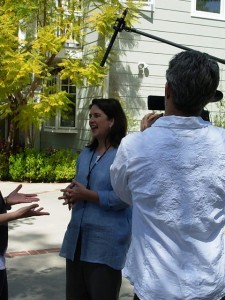
Filming the pilot episode of "Peace by Design"

Filming the pilot episode of "Peace by Design"

My friends know I am a PRINT person – I love magazines, newspapers and books. I’m kind of okay with the Internet, because blog posts and web sites still involve using letters to compose words and words to create sentences . . . all of which are ultimately read as the printed word.

So this week has been one of those out-of-the-comfort-zone experiences as I “played” at being a television host. Robert Schauf, my amazing and intuitive producer, keeps telling me that talking to the camera is just like talking to a friend (a conversation!). . . and I’m starting to believe him. I just have to imagine all my friends hiding behind the HUGE black lens held by the cute camera guy, John. And then, just talk. Naturally.

Okay, I need to back up. I met Robert Schauf in 2006. It was one of those Kismet moments. It will sound so cliche, but we met on an airplane flying on business class from Burbank to Newark (a Jet Blue flight). I’m pretty unfamiliar with business class, but somehow I was bumped up to that rarefied section because it was the last seat on an overbooked flight. I was on my way to speak to a garden club in New Jersey and absolutely had to make that flight or I would miss the lecture entirely.

Robert, who hops comfortably back and forth between NYC and LA, was returning from a business trip. How do I describe him? He’s tall and slender, he wears the kind of clothing that my teenage son might wear (hip jeans, long-sleeved t-shirts, lace-up Keds) and his shocking white-platinum hair kind of sticks out all over his head. Robert has that Rocker-dude look and frankly I didn’t know what to think of him at first. But we talked nonstop for something like 5-1/2 hours. I was so fascinated with his stories of producing television specials and working on the Grammys. I told him about my new project – about garden sheds! – and described my plans to scout sheds in the Hamptons and NYC after I finished my New Jersey lecture. We exchanged business cards and subsequently swapped a few emails. That was it.

READ MORE…

A Malibu garden party worth writing about

Thursday, February 26th, 2009

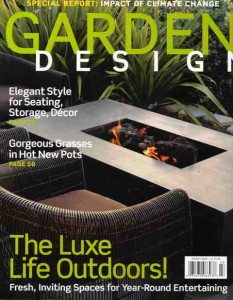
gardendesign0309001Designers Scott Shrader and Julie Millgan are friends who teamed up to produce a fantastic garden party for GARDEN DESIGN Magazine’s March 2009 issue (on newsstands now). I am the fortunate scribe who was asked to tell the story of their “Sunset Soiree” (which is what I titled the 10-page article). A great shot of Scott Shrader’s custom fire table appears on the cover of the magazine.

Here’s the background: Scott designed the outdoor living spaces of a modified A-frame midcentury beach house owned by Rea Laccone and Paul Perla, a style-savvy couple who run the casual fashion line called Vince USA.

When the project was completed, Rea and Paul suggested that Scott invite a few friends and clients to “show off” the project and celebrate. He took them up on it and recruited Julie Milligan, herself a fave Garden Design landscape designer, to produce and co-host the party.

Garden Design sent along Jack Coyier, a great photographer (this is my third article illustrated by Jack’s photographs – his images also accompany a piece Metropolitan Home’s March issue and last September’s Garden Design cover story about Ron Radziner’s garden in Venice). Through his lens, Coyier captures the playful, carefree nature of the space, the event, the people and the food — with gorgeous shots.

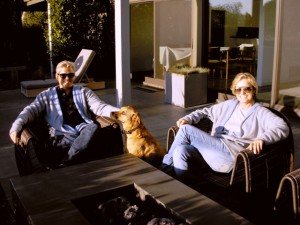
Scott Shrader and Julie Milligan - on location in Malibu

Scott Shrader and Julie Milligan - on location in Malibu

Even though this is an outdoor entertaining piece, the story naturally centers around its designed environment and the oceanside setting. Buy the magazine in order to really feast your eyes on the photos. Or read it here, on my web site: Sunset Soiree.

For the student of landscape design, this project offers several important take-aways. This is not a plant-centric space, so some hort-heads may scoff that Garden Design actually describes it as a “garden.”

But by designing with stone, textiles, elements like fire and water – and plants – Scott has created a magnetic reason for his clients to spend time outdoors.

And isn’t that the point, the mission of everyone in the garden-making world? To advocate for the role of exterior design and put it on par (or even elevate it!) with architecture and interior design? Scott has hit a home run with this project.

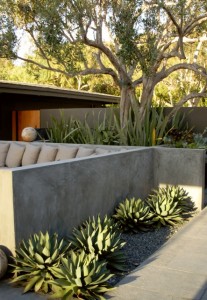
A stucco half-wall encloses the U-shaped banquette that Scott Shrader designed for his Malibu clients

A stucco half-wall encloses the U-shaped banquette that Scott Shrader designed for his Malibu clients

Even though you’d think it would be awesome to live by the beach (who wouldn’t?), there are some pretty harsh conditions here to challenge a homeowner and designer alike. The extremes range from intense sunlight and heat to intense wind and chilly temperatures. So the design thoughtfully accommodates the elements and helps protects those who spend time in the outdoor spaces.

To begin with, the home’s entry area (the non-ocean side) was really just a jumble of grass and an aging deck. Scott reconfigured these “negative” volumes to form a spacious outdoor living room. It doubles as the entry courtyard, enclosed on four sides. Two sides are created by the “L” of the home; new walls form the other two sides (one wall has a rustic wood entry gate; the other is the backdrop to a linear pool of water level with the “floor” of the space). The courtyard is by no means dark because sunlight flows through the beach house. Glass walls on the home’s west and east sides give the home a see-through quality.

On the western side of Rea and Paul’s house is a serene sunset-viewing terrace. When the winds die down, the couple adjourns to this partially-covered outdoor room. Sinking into comfy armchairs, they can prop their feet up on the versatile basalt table-bench-firepit and watch the orange-red orb disappear beyond the Pacific’s horizon. A lone palm tree – part of the borrowed scenery – adds a bit of perspective to the scene.

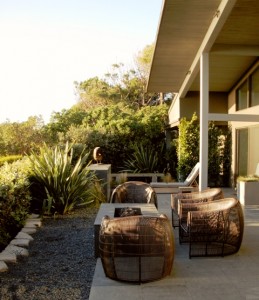
The new basalt patio faces the ocean; new furnishings from Janus et Cie are placed around a cool basalt fire feature.

The new basalt patio faces the ocean; new furnishings from Janus et Cie are placed around a cool basalt fire feature.

Here are some of Scott’s the smart design ideas:

  • Palette: Inspired by the fashion colors in the Vince clothing line, Scott worked with a range of gray hues (this means a monochromatic use of pewter-colored basalt, aluminum planter boxes and smoke-gray cushion/pillow fabric choices). Shrader translated Vince’s spectrum of warm-toned neutrals – ranging from dove-gray to dark gunmetal – into a tranquil and unified garden environment.  “If you look at the Vince clothing line, you see warm grays. I wanted to use that palette and keep things minimal and clean to reflect Rea and Paul’s  life,” he says.
  • Function: This is not just a pretty space to observe from an indoor vantage point. The courtyard has multiple functions, with a U-shaped chaise providing incredibly generous seating (what do I mean by the term “generous”? I can easily imagine several intimate clusters of two or three friends in intense conversation OR 20 hipsters for pre-dinner drinks). But what I like most, as I said in the article, is that Scott created a cozy, curl-up-your-feet kind of space. When there are gusts of wind at the shore, this space is protected; blocked mostly by the home’s architecture.
  • More Function comes by way of the 6-by-6 foot coffee-table cum buffet-counter. It is the most utilitarian element of this setting. Hidden castor wheels enable its movement, rolling in-and-out of the “U” seating area. Custom designed by Scott Shrader and fabricated of weathered teak (very beachy), the chunk of wood is earthy and durable. Piled with beverages and hors d’oeuvres during the photo shoot, it earned its weight in gold.
  • Even More Function is revealed in the basalt-wrapped fire feature, pictured on Garden Design’s cover. The heat source doubles as a cocktail table and bench. Its flames are mesmerizing; you can get even closer to the warmth by perching on the ledge. “This part of the garden is fairly limited in size, so I wanted to give it a warm element and make it a generous gathering space,” Scott says.

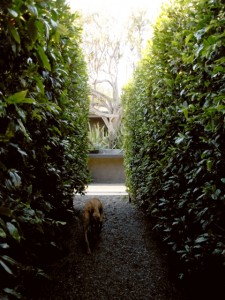
Cliipped Carolina laurel cherry hedges form a transitional corridor between the two gardens

Clipped Carolina laurel cherry hedges form a transitional corridor between the two gardens

Where plants are used in this landscape, they serve as architectural and sculptural purposes. The opening shot of the magazine spread depicts one of Scott’s guests as she walks through a hallway of green (which creates a maze-like journey from entry courtyard to oceanside terrace). The hedge-walls are formed by clipped Carolina laurel cherry (Prunus caroliniana). Simple and dramatic. So much more exciting than a few stepping stones that could serve a similar, but ordinary purpose.

Just inside the front gate is another beautiful and functional feature – a basalt counter that acts as a foyer table. On it, Scott placed a potted bonsai of boxwood. It has just as much presence as if he put a small ornament or sculpted object instead. Phormiums and agaves also lend sculptural form; they are mulched with Japanese black river rock, which looks sleek, modern, and works with the overall slate-gray palette.

Finally, there are two private miniature gardens outside the guest bedrooms. Scott treated these spaces as still-lifes; he called them “planted beach” scenes. Grasses and phormiums emerge from a salt-and-pepper mixed gravel carpet. A stone bench, planted with a moss “seat” is quiet and meditative in feeling. I can understand the sense of calm that settles over Rea and Paul when they escape here after an intense week in the city. This is another world altogether.

I ended the article with this paragraph:

To Rea and Paul, the Malibu getaway is one of the only places they can relax and unwind. Rea loves the “boundary-less environment” that encourages her to easily move from indoor spaces to the open-air ones. “Sometimes we quietly sneak out here by ourselves,” Rea says. Yet she’s happy to welcome friends, even during sweater weather. “How lucky am I? “Paul and I are both from New England, so we couldn’t be more excited to live near the ocean and where we need our sweaters.”

So, you can tell that I loved this garden and I certainly loved writing about it!

Recycled column debuts in LA Times

Saturday, January 3rd, 2009

You spy a weathered castoff, a tarnished this or a timeworn that. What is the first thing that comes to mind? “Don’t throw that away! I can find a good use for it.”

The designer’s mind will recycle, reinvent or re-imagine the piece of “junk,” giving it a new purpose as an object of style. Read on for the first installment of a new column that features local designers and resources for transforming otherwise unusable objects into home décor.

Today’s HOME section of the Los Angeles Times introduces a new feature about recycling old objects for home and garden decor. It’s the brainchild of editor Craig Nakano and we hope this is just the beginning of the “hunt” for cool ideas that give new life to elderly castoffs.

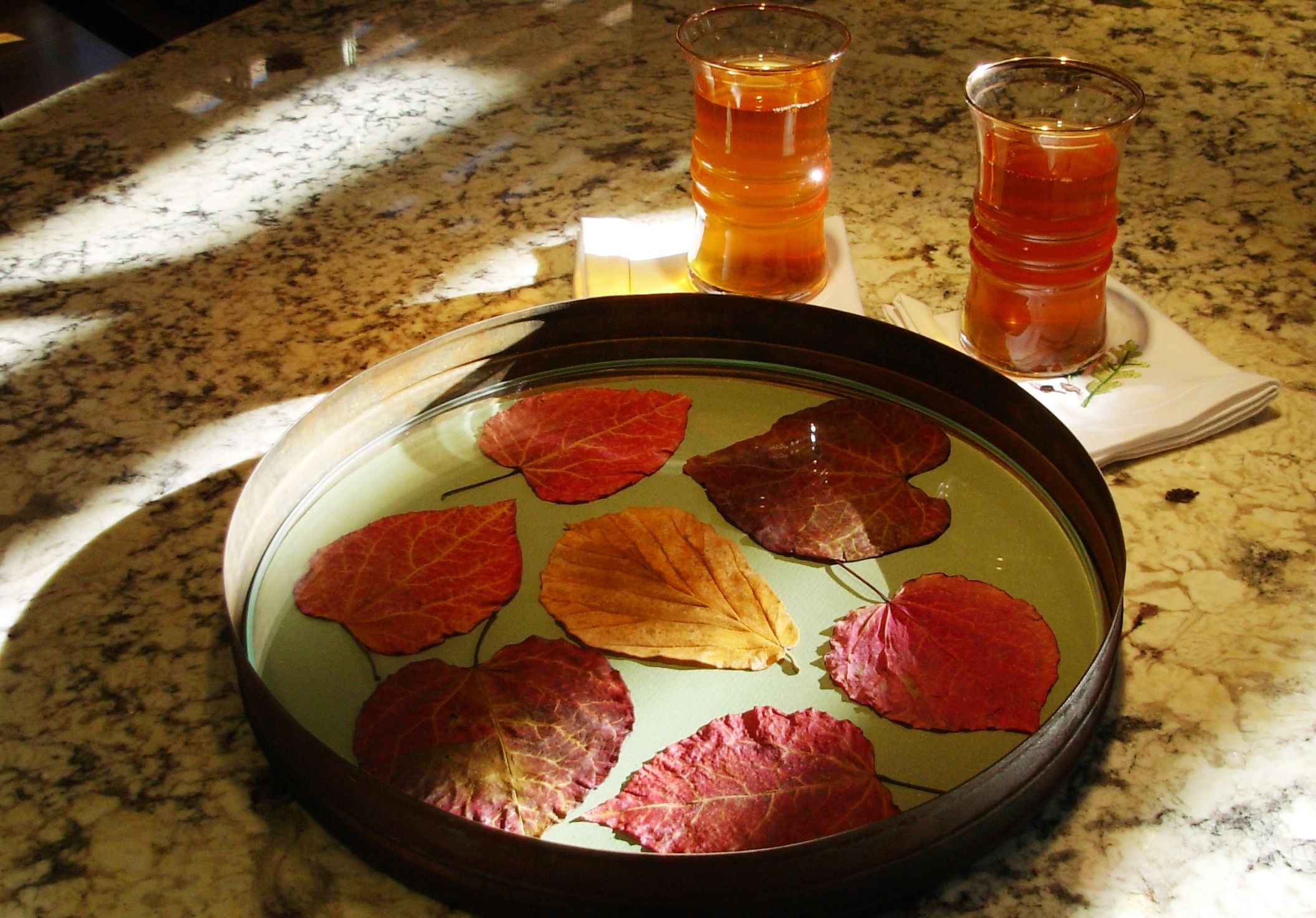
To get things going, I created the first product – a cocktail tray made from a vintage feature-film canister. I found the 14-inch diameter tins at Pasadena Architectural Salvage, a store filled with carefully salvaged columns, doors, windows, corbels, gates, hardware and more. Most everything there is pricey (we’re not talking junk-shop rates) but worth it if you want to factor in the “value added” of someone else seeking, securing, and transporting rare or hard-to-find objects.

When I visited Pasadena Architectural Salvage, I got lucky. The tins (bottom and lid as a set) were $5 each. I found similar ones for $15 to $25 each on eBay, so I know I got a steal.  My Recycled story, “A second serving,” gives readers the background of these vintage 35 mm film tins and step-by-step instructions for making their own. My finished photo appears above, with two heirloom ridged and gold-rimmed juice glasses that were my grandmother Helen Winslow Ford’s (thanks, mom!).

P.S., I used “a lust for rust” in my lede sentence. Credit must be given here to my friends Beth, Lisa and Amy of the Salvage Studio. It’s one of their favorites and I’m sure they coined the phrase!

a word about tiny Christmas trees

Wednesday, December 17th, 2008

Those of us who attended the September 2008 Garden Writers Association annual symposium in Portland were in for a big treat when we boarded the coach buses (seven or eight in all) and took a ride to Boring, Oregon, home of Iseli Nursery.

We were introduced to a world of ornamental conifers, in every shape and size. Even though Washington is called the “Evergreen State,” in the nursery trade, it seems, the folks in Oregon claim the title. 

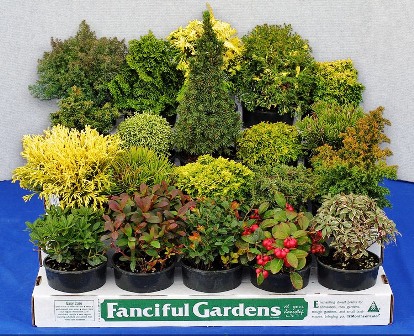
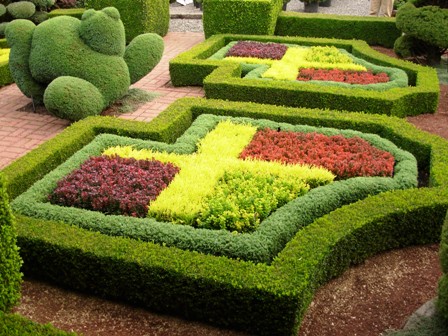
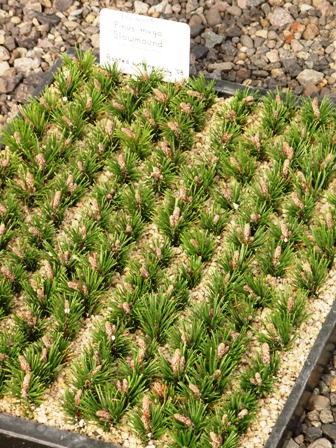
Iseli Nursery grows all sorts of amazing woody plant specimens – trees, shrubs and more. They sent us home with a gift bag packed with five delightful little conifer specimens – perfect for a container planting, rock garden or tablescape. You can see the incredible variety in Iseli’s “Fanciful Gardens” collection depicted above (including some dwarf broadleaf evergreens in the front row). My photos, from left: A colorful “knot garden” of mostly dwarf conifers mixed with barberry, Iseli entrance; tiny, just-propagated woody cuttings of mugo pine.

The next day, I found myself sitting on yet another the bus ride/garden tour with with Sandy Dittmar, a horticulturist at Iseli. We talked about how many gardeners are only now discovering conifers, and how dwarf conifers are so versatile for smaller landscapes. She planted a seed of insight and got me thinking.

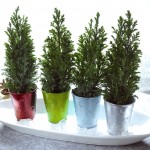
So when I saw my local Trader Joe’s stocked with miniature Leyland cypress and Lawson cypress (we’re talking 4-inch pots for $4.29 or so), I called Sandy and said: Remember when we talked about dwarf conifers? Are those Trader Joe’s mini-trees yours?

It turns out, the tiny live trees in shiny pots are supplied by BloomRite Nursery, a wholesale grower in Half Moon Bay, California. But Iseli’s tiny Alberta spruces, mugo pines, and blue-star junipers, and countless other dwarf conifers are showing up in specialty nurseries and retail florists around the country. Cute, they are. Versatile, too. And perfect for a scaled-back Christmas!

In this cost-conscious holiday season, it was a fitting “tiny tree story” for the Los Angeles Times’  Home section, page F2 (December 13th).

Here is the piece I wrote under the “Seen” heading, in its entirety:

A pint-sized forest at home

Looking for evergreen decor – something that can last long past Christmas? Turn tiny potted conifers into a miniature forest across a fireplace mantle, or create a tabletop landscape with dwarf pines. Tiny trees are “a cheap luxury,” says Lisa Tsui, a product manager at BloomRite, a wholesale grower in Half Moon Bay, Calif., that supplies potted pines and Leyland cypress to Trader Joe’s. “In this economic environment, people are using them to supplement decorations they already have,” she says.

Iseli Nursery in Boring, Ore., ships tens of thousands of dwarf conifers to garden centers during the holidays. Even though some customers treat the evergreens as throwaway décor, they can be transplanted in the garden or an outdoor container, Iseli sales manager Jock Demme says. The challenge is to keep the plants alive indoors. “The home setting has drier and warmer air than these plants require,” he says. “I suggest submerging the pot in a larger container of water and soaking the roots every day.” The trees at Trader Joe’s sell for $4.29 to $5.99 each; you’ll find variations for $9.95 at the Empty Vase in West Hollywood, (310) 278-1988, www.emptyvase.com. Also try Red Envelope, (877) 733-3683, www.redenvelope.com.

Here’s a little gallery of dwarf and miniature tree photographs, shared by Iseli and Nurserymen’s Exchange (which is the company behind BloomRite).

An elegant boathouse where I would like to hide away

Sunday, December 14th, 2008

Last Friday, I enjoyed a wonderful “field trip” to Church Estates Vineyard in Malibu, owned by Robert Church Haggstrom. This was one of those magical behind-the-gates visits that reminds me how very fortunate I am to be a writer in this town.

I was invited by publicist Dienna D’Olimpio, with whom I’ve been corresponding for a few months. She originally contacted me to share photographs and background info about Church Estates Vineyard, its chateau and garden settings. I haven’t even tasted the wine yet (the winery’s first Chardonnay will be bottled soon and its Pinot will be ready this fall), but the beauty of the setting appealed to me immediately.

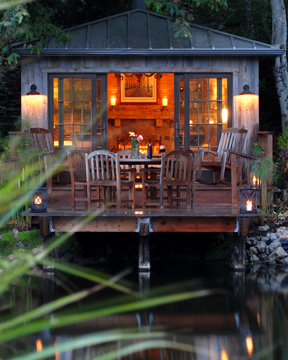
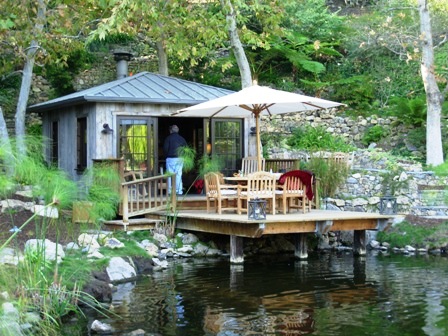
A tiny building, situated at the edge of a pond, captured my imagination. I later learned that Bob calls it his “boathouse,” and to me, it is the most beautiful, romantic boathouse I’d ever seen. Truly an elegant hideaway. (see interior, right).

Once I saw photographs of the gardens (not to mention the boathouse), all of which share the nine acres with 3,000 grapevines, I knew I wanted to visit and develop a story.

The estate is available for weddings, corporate events, and other private parties. Robert Church Haggstrom’s personable daughter, Maja, is the go-to gal for brides, corporate event planners, and anyone else who wants to rent the lovely haven for an unforgettable day.

As impressive as are the vineyards and well-appointed chateau, I couldn’t take my eyes off of Bob’s little getaway by a pond. The boathouse photos – seen above – are courtesy of Church Estate Vineyards.

Dienna arranged for me to visit and I managed to persuade my husband, Bruce, to come along for the tour. He’s not really into gardens, but he is into real estate. We drove to Malibu, about 30 minutes from home, and arrived at Church Estates in time to meet Maja just inside the entrance. Thank goodness she was driving a golf cart because the elevation change from the parking area (near a sunken clay tennis court and horse stables) to the upper gardens and chateau would have required sturdy shoes and perhaps a walking stick to navigate on foot.

We hopped onto her golf cart and made our way up the winding drive, through the garden, to the grand French-style chateau. Out of the corner of my eye, I spied the pond and boathouse. The table on the dock was set for lunch! Oh, goodie, we were going to end up there at the water’s edge for our meal.

Maja narrated our tour: She grew up in Malibu and knows the ins and outs of every square inch of Church Estate Vineyards. To listen to Maja describe the gardens here, you can tell she still has that childlike wonder and curiosity about nature’s beauty. It is infectious.

The story of Church Estate Vineyards is one that I will tell in a future article, after I spend a proper amount of time with “Malibu Bob,” as Mr. Haggstrom is affectionately called around here.

But in the meantime, I will touch on highlights of his boathouse.

  • It was the first thing he built here after purchasing the property five years ago
  • Bob wisely situated the structure at the bottom of the hill, nestled under a stand of mature sycamore trees – facing the man-made pond, which he has since landscaped and stocked with swans.
  • The boathouse measures about 20-by-20 feet in size; the exterior is finished in weathered wood and the standing-seam metal roof is aging nicely.
  • The interior features a lovely fireplace and comfy furniture (but not a bed, darn it! Bob said he figured if there was a bed, all of his guests would argue over who would get to sleep here)
  • The floor is made from antique boards, and when one of Bob’s friends accidentally knocked over a container of oil (after a fondue party), Bob decided to have the entire floor rubbed with oil – which adds a soft, aged patina to the space. 

Thank you Bob, Maja, Marie and Dienna – we had a wonderful visit, enjoyable conversation, delicious food — and were thoroughly enchanted with the magical setting you’ve created at Church Estate Vineyards. I can’t wait to return!

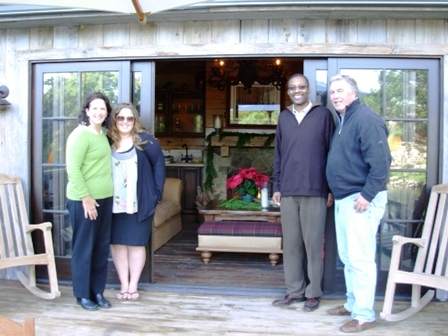
[photo above, from left: me, Maja, my husband Bruce Brooks, and Robert Church Haggstrom].

December has arrived!

Monday, December 1st, 2008

It was 74 degrees and sunny here today in Southern California, but I have wintry visions dancing in my head.

To get into the holiday spirit (even though the leftover turkey and stuffing is still packed in the fridge), I picked up the December issue of Better Homes & Gardens magazine, out on newsstands now. That’s where my pal Susan Appleget Hurst serves as the talented senior associate editor for gardens and outdoor living. She blogs as The Everyday Gardener (with colleague Eric Liskey).

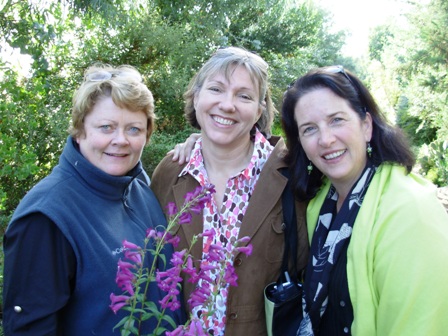
When we were last together in September, Susan mentioned that she had worked on a wintry design for iced botanical containers to hold votive candles. (Photo at right: Mary Ann Newcomer aka Idahogardener.com; Susan, and me, taken while gallivanting around Portland in September).

The idea Susan described sounded gorgeous and sparkly, a creative new way to use favorite ingredients from the garden — leaves, berries, colorful branches and conifer sprays — for holiday decorations. Her twist on the traditional luminaria even found a new use for poinsettias, which are rarely successful as cut flowers.

I spoke with Susan today and congratulated her on the alluring designs, which are splashed across five pages of the magazine. She sent me a web link to a BH&G video demonstration, which makes the project easy-to-understand and replicate.

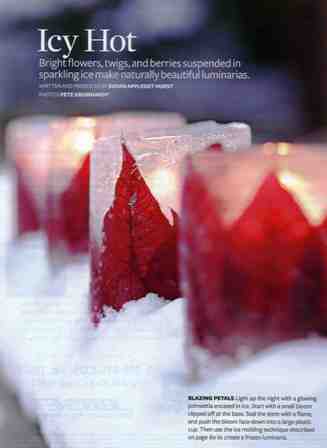
All you need are a few ingredients and space in the freezer to transform a watery concoction into frozen floral luminarias. Susan’s article begins on page 58 of BH&G. It’s titled “Icy Hot: Bright flowers, twigs, and berries suspended in sparkling ice make naturally beautiful luminarias.”

Susan has a culinary and herb-gardening background, so it didn’t come as a surprise to learn that she has used a similar technique to freeze blooms and herbs into ice rings to float in punch bowls. That handy trick, combined with the editorial challenge of showing readers new ideas for using their garden during the depths of winter, added up to the holiday-on-ice project. The frozen floral ring, best employed for a summery brunch, also taught her that distilled (rather than tap) water is preferred because it freezes clear rather than cloudy.

Susan first captured ruby red poinsettia bracts in a flexible plastic container, arranging each leaf so it’s evenly spaced (see finished project, above). Pour in a little bit of water, say 1/2-way to the top. Then insert a smaller plastic cup, sinking it with a few stones. Pop the entire vessel into the freezer until it’s frozen solid. There are tips in Susan’s article for choosing the right containers and for slightly thawing your creation in order to remove the finished product from the plastic molds.

The poinsettia votive holder was so successful that Susan experimented with colorful cut branches, arranged to stick out around the top of a luminaria like a beautiful nest for an exotic winged creature.

“How on earth did you fit that into the freezer?” I asked.

She laughed and pointed out that the water-and-branch-filled mold (actually a big plastic cake carrier) froze in the outdoor environment of her Des Moines, Iowa, backyard.

“I just needed sustained, freezing temperatures,” she added (assuring me that these conditions do not occur every winter in Des Moines, but they did last year when Susan played around with this project).

Um, okay. Well, since we don’t have an open-air freezer here in my SoCal yard, perhaps I’ll stick to Susan’s smaller projects. Like the ones that use 1-litre and 2-litre pop bottles with the tops cut off.

The Icy Hot story illustrates Susan’s gifted floral design skills. She’s got more tricks up her sleeve and you can find them in future editions of Better Homes & Gardens. Here’s what I managed to get out of her: The February 2009 issue will feature Susan’s inspired new way to design with forced branches and fresh flowers. In April 2009, look for her egg story. I don’t want to give away the details, but suffice it to say she is NOT cooking an omelet or quiche with her eggs!

Happy December. I hope it’s filled with joy and peace for everyone.

Watch Stylish Sheds on TV

Thursday, October 30th, 2008

Our friend Linda Lehmusvirta, producer of the very popular Central Texas Gardener, has begun to post her segments on You Tube. Bill Wright and I appeared on the show a few months ago with host Tom Spencer and we had a lively conversation about our favorite subject: Stylish Sheds and Elegant Hideaways.

Here is the segment:

httpv://www.youtube.com/watch?v=cMpbg8Cg2dg

Ornamental pumpkins, squashes and gourds:

Friday, October 3rd, 2008

Here it is, already October 3rd and Halloween is upon us. Thanksgiving will soon follow.

I’m the type of mom who has always been grateful (relieved?) when the college-aged nanny offered to take my boys costume-shopping. That’s because I subscribe to the “use what’s available; look for stuff in the garage, sewing room, or attic,” school of Halloween costume-making. None of this molded rubber mask or fire-hazard printed-on-acetate superman kind of stuff. But my boys, on the other hand think a brand-new costume is de rigeur.

The organic, agricultural Halloween appeals to me. You know, the old-fashioned fall celebration that gets its thrills from a full moon rather than a mountain of Mars bars. Oh, for those cellophane-wrapped caramel apples of our youth (remember the ones we were warned might have razor blades in them, back in the 1970s?). Yup, those very ones.

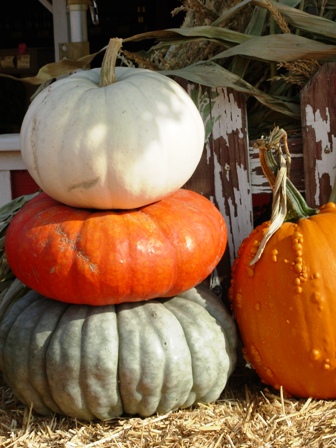
In search of awesome produce for the fall holidays, I drove over the hill this afternoon into Simi Valley to visit Underwood Family Farms. An organic, U-pick farm, Underwood is a refreshing haven just a mile beyond fast-food row (What can I say? We do live in the suburbs).

I wanted to scout out cool, fashionable vegetables, worthy of centerpieces and front porches, for an upcoming November story called “Thanksgiving, A to Z.”

READ MORE…

Stylish Sheds on the road

Tuesday, September 23rd, 2008

Photographer extraordinaire Bill Wright and I just met up in Portland over the weekend to attend and lecture at the annual Garden Writers Association symposium.

In addition to schmoozing with fellow creative types, editors, art directors, bloggers, twitterers and long-time friends, we gave a talk on Sunday morning called “Anatomy of a Book: How Two Friends Collaborated Without Killing One Another.”

Bill illustrated the 45-minute lecture with a cool powerpoint slide show revealing the good, the bad and the ugly of our year-plus-long odyssey to produce Stylish Sheds and Elegant Hideaways. His opening slide tells it all:


A year on the road with Debra and Bill

34 airline flights

Hundreds of emails

30,000 words

6,300 camera frames

300 finished photos

Getting up at 4:00 AM, either to shoot or to go to the airport, way too many times

We hope to post the audio online in the future, but thanks to Maryellen (aka Yogacowgirls), one of our fellow GWA members who blogs and twitters like mad, two video clips of the talk are already posted on YouTube.

The first one is called “Debra Prinzing, William Wright discuss Stylish Sheds.”

“Debra Prinzing, William Wright discuss Stylish Sheds.”

It”s followed immediately by “Pictures from Shed Style by Debra Prinzing and William Wright.”

“Debra Prinzing, William Wright discuss Stylish Sheds.

“Sustainable Spaces. Beautiful Places”

Friday, September 5th, 2008

 I’m standing with Richard Turner, editor-in-chief of Pacific Horticulture magazine. We’re volunteering at the 2008 NWFGS in Seattle, visiting with Dawn Chaplin, formerly a fellow board member of Northwest Horticultural Society and a great garden-touring pal (she’s now a Whatcom Co. Hort. Society board member).

The press release just arrived in my in-box, and it announced the 2009 Northwest Flower & Garden Show’s theme. It’s only six months away – and I’m already excited! The theme: SUSTAINABLE SPACES. BEAUTIFUL PLACES. I like it! A lot!

The Northwest Flower & Garden Show, created by my pal, the talented and visionary Duane Kelly, today announced its 2009 theme:

“. . . (the) show will place a major focus on gardening materials and techniques that are good for the environment,” said Duane Kelly, chairman and founder of the annual event, now in its twenty-first year. “Show goers can expect to come away with a number of great ideas that conserve resources such as water and soil while, at the same time, making their gardens more self-sustaining and easier to care for.

“During the past year, organic gardening and vegetable gardening have grown in popularity thanks to the public’s keen interest in doing what’s best for the environment.  The movement has also gained traction with consumers seeking homegrown fruits and vegetables that not only taste better but reduce ever increasing grocery bills.”

READ MORE…