Debra Prinzing

Get the Email Newsletter!

Author Archive

Stucco Studio in a celebrated garden

Sunday, August 31st, 2008

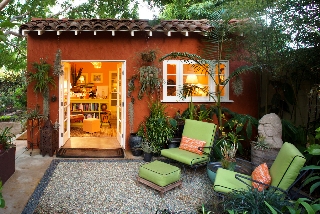
Tired of crowding his landscape architecture practice into a tiny spare bedroom of his bungalow, Joseph Marek renovated a 400-square-foot garage. He quadrupled his work space and created an attractive destination in the garden [William Wright photograph]

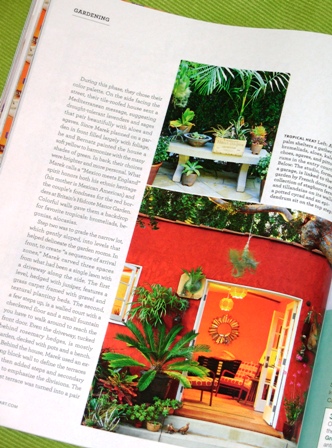
Not that I’m competitive or anything, but I did feel a tad victorious when I opened the current (Sept. 08) issue of Martha Stewart Living magazine, seen at right, to discover a feature story about two of my favorite shedistas, Joseph Marek and John Bernatz. Pretty cool to “scoop” MSL on a design story (it isn’t the first time gardens I’ve written about in books have later appeared in this magazine; no, it’s the third time!).

Congratulations to Joseph and John for the much-deserved recognition. And kudos to their friend, writer Susan Heeger, for her story. To be fair, I can’t take any credit for “discovering” Joseph and John. Their garden and several of Joseph’s residential designs for lucky clients have been featured in House Beautiful, Metropolitan Home, Horticulture, the Los Angeles Times, LA Magazine, Pacific Horticulture and Cottage Living, as well.

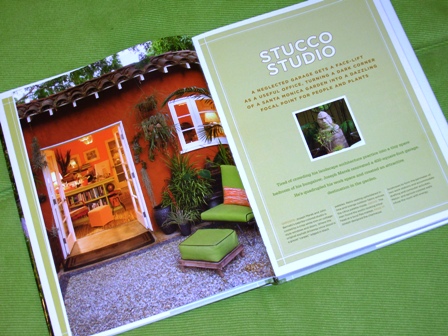
I’m tickled that the dynamic duo’s “Stucco Studio,” a converted 400-square-foot 1930s-era garage in their Santa Monica backyard, is featured as the “opening chapter” of Stylish Sheds and Elegant Hideaways (see the first two pages of their chapter, above left).

Exquisitely photographed for our book by Bill Wright, the studio — a paprika-colored structure once designed to hold a single automobile — has been transformed into a creative and joyous environment for Joseph Marek Landscape Architecture, Joseph’s landscape architecture practice.  The highly functional interiors do double-duty (by day, this is the headquarters for Joseph’s design practice and John’s at-home office for his travel agency; come weekends and evenings, it is often converted into an impromptu party house, where friends and clients may gather for informal cocktails). It is also a vibrant architectural foil for the small but intensely-planted garden.

READ MORE…
Stamps for the gardener

Thursday, August 21st, 2008

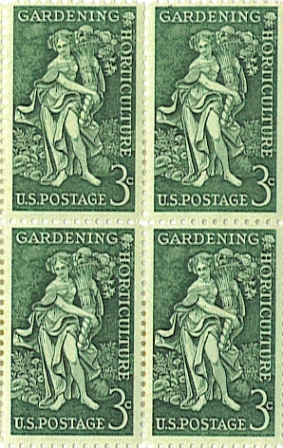
Commemorative “Gardening-Horticulture” stamp, 3-cents, issued in 1958 (from my father’s stamp collection – mint condition)

I know we’re all dependent on the Internet for swift correspondence, but I, for one, am still a huge fan of the hand-written letter. It’s not just the pen- or pencil-inscribed words one writes that matter. Think about other non-verbal cues we convey. Beyond the thoughts communicated by careful penmanship, there is also the selection of paper, note card, or greeting card that implies volumes of meaning. Even the color and type of ink sends a full range of sentiments.

I cherish hand-written notes. I have collected shoeboxes-full of them, saved by year, since the 1970s when my dearest and best childhood friend, Lori, and I started writing to one another after my family moved from New England to Portland, Oregon. I have the cherished love letters, the newsy updates from my mother, the thoughtfully-written narratives from another Lori in my life, who lives in Europe (she is known for excellent choice of paper, as well!). And then there’s Paula, who still jots notes with an old-fashioned ink pen (I just received one as a gift, so perhaps I’ll try to do the same). These “snail mail” versions of human communication trump the Internet on any occasion.

READ MORE…

Gotta love the “Massage Garage”

Tuesday, August 19th, 2008

Kristi Templeton’s “Massage Garage” – a one-car garage transformed into her Seattle massage studio

(all photos, courtesy of Kristi)

I love learning about the many creative ways people are transforming their utilitarian sheds into spaces that have a higher and more noble purpose. Every time I hear from a “shedista” or learn about one of these innovative shelters, I think: Too bad we didn’t get it into the book.

But one can always hope for Stylish Sheds and Elegant Hideaways, Volume II.  No plans yet, but I’ll keep adding these discoveries to my list.

Here’s a little story about Kristi Templeton, Seattle massage therapist, mom, wife, gardener and world traveler. My family and I had to journey all the way from Seattle to Giverny (Yes, Monet’s garden!) in 2002 to meet Kristi and her daughter Katie, then 10, at the time, the same age as our son, Benjamin. It was a chilly, barely-spring day in April and our family of four kept crossing paths with this mother-and-daughter duo, while touring the garden of our dreams. Ahh, Giverny. The inspiring landscape of a Masterful Impressionist. We’d read about it, seen it depicted on canvasses hung in the world’s greatest museums, peered at photographs in the guidebooks. . . .

And here were two fellow travelers from Seattle, visiting Paris on their spring break like us. We managed to caravan by taxi together, back to the return train to Paris. But we missed our connection and ended up at a tavern near the station. Bruce, Kristi and I enjoyed refreshments; the three kids had a plate piled high with pomme frittes and drank sodas. A connection was made and thoroughly enjoyed. Turns out, I, and everyone else in the Pacific Northwest gardening world, knew of Kristi’s husband Timothy Colman, owner of Good Nature Publishing. Tim is famous for his horticultural, botanical art and natural history posters (I have about seven of them hanging in my office and kitchen!).

This was a “petit monde,” n’est ce pas?

READ MORE…

Elegant, Stylish . . . and Prefabricated

Friday, August 15th, 2008

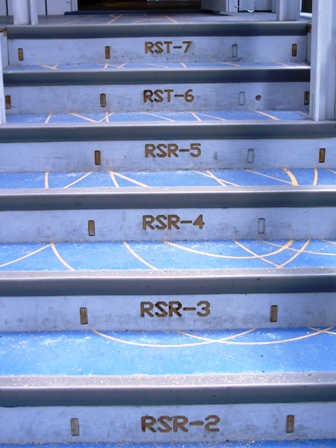
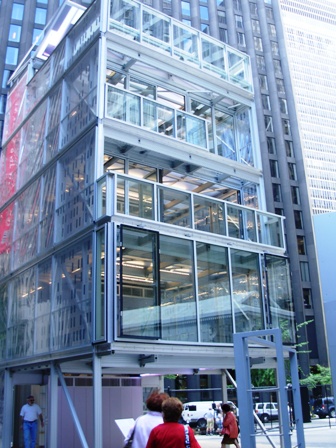
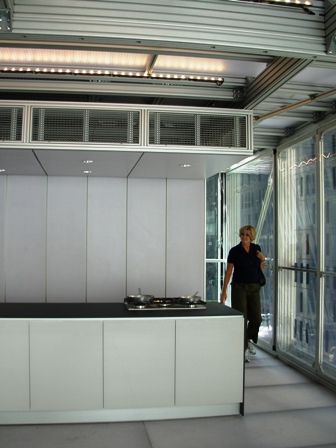
“System 3,” designed by Oskar Leo Kaufmann and Albert Ruf, on display as part of MoMA’s Home Delivery show of prefabricated home design.

The Prefab architecture movement has not been lost on those of us who think we’re hip to design trends. Yet the 21st century prefab building-boom has a centuries-old foundation. Would it surprise you to know that such illustrious inventors, architects and designers as Thomas Alva Edison, R. Buckminster Fuller, Charles and Ray Eames, Jean Prouve and Frank Lloyd Wright dabbled in prefab?

It’s good to look to the context of the past as we study the present and predict for the future. Several years ago, I wrote a newspaper article about the “manufactured home” industry. The house my photographer and I toured and documented was Victorian-style; it was literally factory-built in Canada and shipped, in flat-paneled sections, to Washington state for on-site assembly. There was nothing in its exterior detailing, charming turret and wraparound porch, nor in its gracious interior parlour, dining and living rooms that smacked of a stereotypical “double-wide.” My assumptions about design were turned upside down – and to my and my editor’s surprise, our story was picked up by newspapers around the country. The interest in manufactured homes was due in large part to the affordable and sustainable solutions to costlier custom-built versions.

In recent years, I’ve been exposed to a clever collection of prefab sheds, smaller versions of the manufactured home of the last decade. My shed-seeking journeys have led me to discover innovative shelters with four walls, a floor, a roof and a variety of window-and-door amenities – created by today’s designers. You can read one such review from my visit to the Dwell on Design LA exhibit this past June.

The pages of Stylish Sheds and Elegant Hideaways feature a chapter called “Rec Room,” in which one of Ryan Gray Smith’s sleek Modern Sheds grace a small LA landscape. I really love the way Ryan’s groovy, uncomplicated design solves a space problem for the person who wants to add a studio, atelier, guest room, office, party suite, etc., without building a full-blown addition to the house. And that’s just one architect’s interpretation.

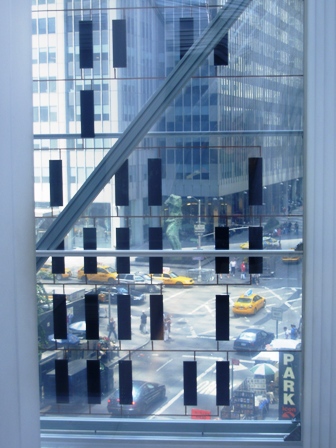
Prefabricated architecture is the subject of “Home Delivery: Fabricating the Modern Dwelling,” a new exhibit at the Museum of Modern Art in Manhattan (on exhibit now through October 26th). If you find yourself in Manhattan, plan to visit it. Lucky for me, I had a last-minute trip to NYC last weekend and was able to spend a few hours at MoMA Saturday morning.

READ MORE…

Zen of the Circle

Wednesday, August 6th, 2008

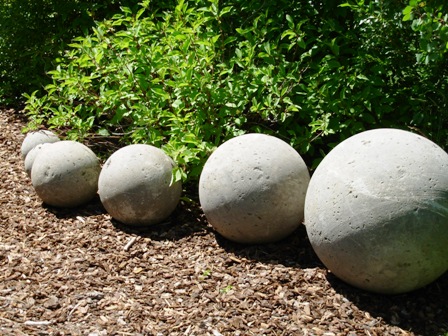
Graduated in size from tiny to large, a row of ornamental concrete orbs caught my eye at the edge of a path. We toured this lovely landscape on the Sawtooth Botanical Garden tour in July.

“Treat nature in terms of the cylinder, the sphere, the cone, all in perspective,” Paul Cezanne (1925)

“Everything an Indian does is in a circle, and that is because the power of the world always works in circles, and everything tries to be round. . . . “ Black Elk, an Oglala Sioux (Hehaka Sapa, 1961)

Cobblestones are embedded in a circular pattern to create a beautiful, uncomplicated lawn terrace in the Yakima, Washington garden of Kim Brewer and Rick Main

The image of a circle pleases the eye. In the garden, shapes that are rounded, organic, and sensual resonate as “good design.” They are visually satisfying, emotionally seductive, artistically whole.

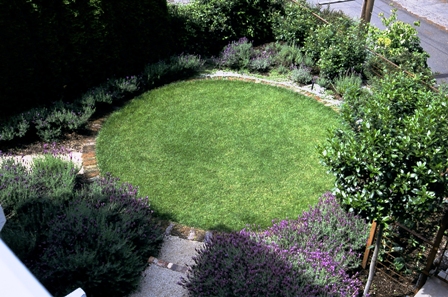
A perfectly round lawn, measuring about 14 feet in diameter, provides plenty of space for children to play in a well-designed urban garden (Langstraat-Wood design)

Circles also appear tidy, if that sort of thing matters to you. They can be formal, but circular shapes are also very contemporary-looking. For a fresh statement in the landscape, think about how you can apply or incorporate a rounded feature. With all the squarish blocks of architecture that occupy one’s life, the circle is a nice, soft antidote.

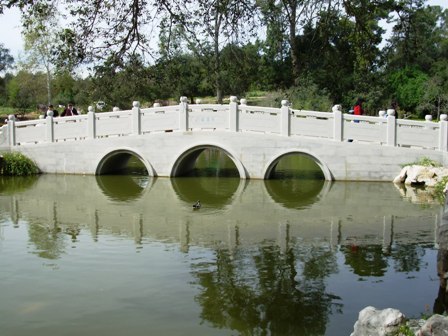
The reflection of arched openings in a stone bridge creates the suggestion of repeated circles. This is the “Jade Ribbon Bridge” at The Huntington’s new Chinese Garden

READ MORE…

Garden-in-a-pot

Monday, August 4th, 2008

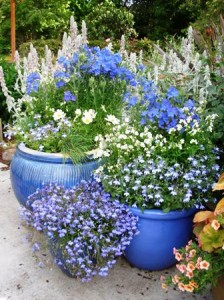
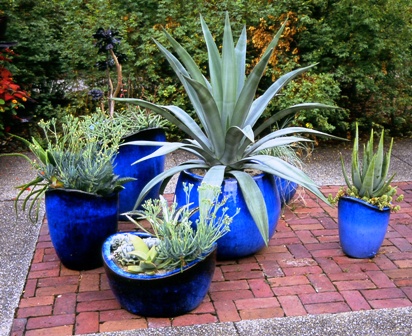
A true-blue grouping (left) in Sunset Magazine’s test gardens; Silvery succulents (right) thrive in ice-blue containers for a satisfying grouping at Longwood Gardens, 2006

Ever since I relocated from Seattle to Los Angeles, nearly 2 years ago now, I have relied more than ever on container gardening. With a confounding, on-again, off-again irrigation system that will cost the equivalent of a year’s grad-school tuition to completely repair, and with rock-hard soil that endured years smothered by the previous owner’s idea of weed control (black plastic sheeting covered with red lava rock “mulch”), I’m desperate to grow plants in spite of unwelcome conditions.

But where? And how to keep them alive when it’s too hot and dry for anything but succulents to look good?

The answer is a container garden. Gardening in a container is like one-stop shopping. Maybe we should call it “one-stop gardening.” Here are some of the best reasons for gardening in pots:

Why grow a container garden?         

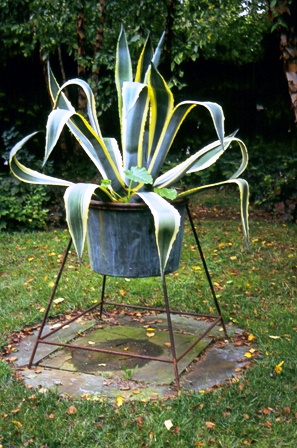
  •  Move plants and architectural interest above the ground’s surface:  You’ll enjoy beauty closer to eye level, as in this cool vintage vessel that caught my eye at Chanticleer Gardens in Pennsylvania (2006).


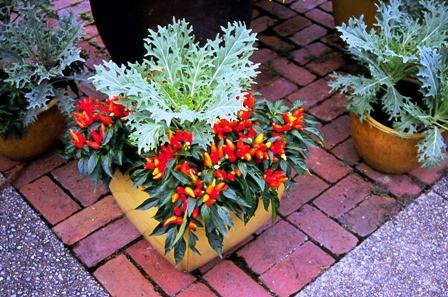
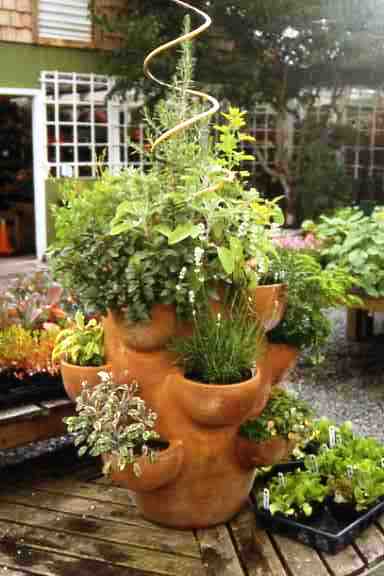
Edible and Accessible: Lettuces and herbs thrive in pots, like this over-sized terracotta “strawberry” pot at right – measuring 48 inches tall, created several years ago by the designers at Emery’s Garden in Lynnwood, Wash.! At left, ornamental peppers and kale in a pot at Longwood Gardens are food for the eyes.


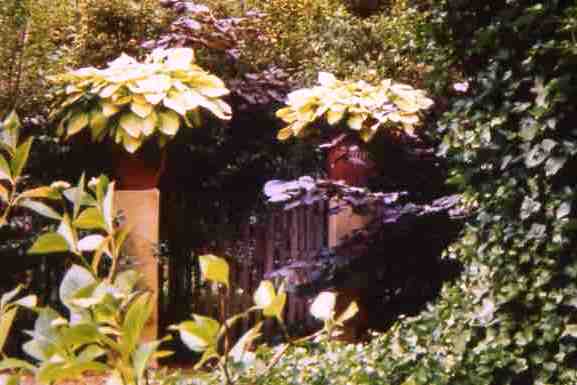
Define a focal point: Signal the entrance to the garden, such as with these two glossy Asian pots that contain lush golden hostas. Mounted on pillars, they announce: “Come this way,” a way that’s made more enjoyable because this portal leads to the gardens of David Lewis and George Little, Bainbridge Island artists.


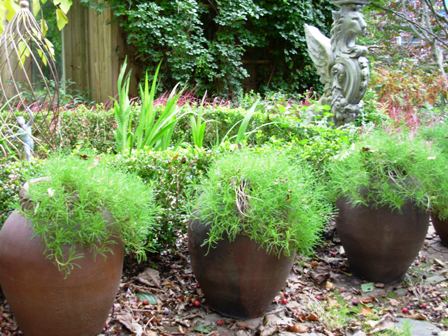
Provide a natural perimeter: Anywhere in the garden, such as at the edge of a deck or patio, pots can act as a verdant “wall” to contain, deter, protect or enclose. I particularly enjoy seeing three identical pots, lined up as a formal barrier – it’s plant-filled architectural interest. Here, at the edge of Peter Norris Home & Garden’s parking lot, these giant iron urns hold gold-streaked phormiums (left). A trio of fern-filled pots defines the edge of a formal planting scheme at Robert Dash’s Madoo Garden (right).


READ MORE…
Dogs and their sheds

Friday, August 1st, 2008

‘Elvis’ and ‘Nico’ are the Pleasure family’s Belgian Tervurens. They’re enjoying the warmth from the overhead heater, as they lounge in their blue pavilion in a San Francisco backyard

Driving behind a Volvo on the Ventura Highway the other morning, a bumper sticker caught my eye: “I love dogs and I vote.”

Not exactly sure what that means, but it started me thinking about the character of a dog owner. And about a funny comment my friend Lin Su made at our Stylish Sheds and Elegant Hideaways book launch party here in Los Angeles.

“I think you had a requirement that everyone included in the book must have a dog in their life!” she maintained. Wow, what a thought. Bill and I didn’t exactly write a canine clause into the scouting notes, but perhaps subconsciously, we were drawn to animal lovers.

There is a sympathetic relationship between people who raise and care for their plants and people who raise and care for their pets. Beloved and cherished, our dogs are often the most patient and forgiving family member in our lives. Our “Zanny” (pictured, left) is certainly the cream of the crop – a rescue Lab, blond and cheerful – found wandering the streets of Yakima, Wash., at six-months of age….brought to an animal shelter in Snoqualmie. My husband Bruce discovered her photo on petfinder.com in 2002 – and she has lived with our family ever since. What a sweet companion and thoroughly accepting of any love she receives, often giving more than we ask of her.

READ MORE…
Sublime and serene Idaho hideaways

Wednesday, July 30th, 2008

Rosemarie B.’s glorious river view

Garden touring is *work*, people. That”s what I keep telling my husband, at least.

Last weekend, Ms. Idaho Gardener (aka Mary Ann Newcomer or the Diva of Dirt) hosted me for a strenuous garden-touring workout. I think we visited 14 gardens, plus or minus, in 24 hours – on our Sun Valley-Ketchum, Idaho tour.

Now what good thing did I do to deserve this kind of spectacular treatment? Hmmm. I told my husband that the 3-day trip from LA to Idaho was a self-indulgent “getaway” that I planned in anticipation of his 12-day (yes twelve days) getaway in August to go to the Beijing Olympics. That was kind of a snarky thing to say. But it certainly got me a ticket to the airport!

Mary Ann (seen here on the right, walking and talking with talented Sun Valley-Los Angeles gardener Kathleen Phelan) has been raving about Sun Valley’s Sawtooth Botanical Garden summer tour for a couple of years, enticing me with the descriptions of residential landscapes in such a beautiful place. Surrounded by awe-inspiring mountains, under intense sunshine, and just far enough away from the rat race for creativity to flourish. . . the gifted and adventurous gardeners here blew me away. We had a tres bien time. Our local hostess, Julie Caldwell, made it all the more enjoyable by adding laughter, taking us to great eateries, and navigating our side trips. Of course, I was on the lookout for Stylish Sheds, or reasonable facsimiles of such. And I was not disappointed. Here are a few of the creative shelters that we found:

READ MORE…

“Cottage Ornee” for Solitude and Sociability

Thursday, July 24th, 2008

On July 3rd, my friends at Garden Rant invited me to be their guest-blogger. This kind and generous opportunity gave me a platform to share a little essay about my shed odyssey, the fascination I hold for tiny backyard architecture, and the experiences Bill Wright and I had creating “Stylish Sheds and Elegant Hideaways.” I was tickled to see that Amy Stewart titled the piece “In Praise of Sheds.”

I asked Garden Rant readers to share their thoughts, ideas and inspiration in response to the question: What is your dream shed and how will you use it?  More than 30 clever readers sent in their answers, vying to win a copy of our book, and a set of note cards with our wellies-under-glass photograph (seen at left), taken by Bill while we were on location at Brenda Lyle’s outside Atlanta.

I was touched by reading so many awesome posts – you can go to Garden Rant to read them for yourself. It was a tough call, but I chose as the winner of this small contest a wonderful gardener and writer in rural Massachusetts.

Pat Leuchtman has a blog called Commonweeder. She and her husband created their “Cottage Ornee” (pronounced Cott-aaagh Or-Nay, preferably in a heavy French accent, Pat says), a stylish shed imagined first in their minds and then built by their hands. This little gem of a building resides at their “End of the Road Farm,” in Heath, Massachusetts. I was struck by Pat’s written description of its design and charmed by the narrative of how she and her husband use it. Here is Pat’s post about winning our little contest: “Cottage Ornee is a Winner”

Cottage Ornee  [Pat Leuchtman photos, here and below]

Here are some photographs, provided by Pat. I was so curious about the cottage’s creation and sent Pat several questions. Her comments appear below. I hope you find this little hut as alluring and enticing as I do. I am already scheming about how to get myself up to visit Pat one of these days. In the meantime, I am enjoying reading her delicious words, so make sure to visit Commonweeder.

READ MORE…
Pretty in purple

Sunday, July 13th, 2008

July in Southern California dishes up a haze of purple in every hue. I recently snapped a few photos to capture the floral bounty around us.

It’s the weekend; time to be lazy and enjoy a little eye candy. So here we go:

Lavender-blue agapanthus cascades down the hillside in my neighborhood

This time of year, AGAPANTHUS takes over our “East Hills” neighborhood. Seattle gardening friends, eat your eyes and hearts out! When I first visited this neck of the woods, in spring 2006, I was blown away by the appearance — shall I say ‘explosions’? — of lavender-blue agapanthus blooms on every corner of town.

“Okay, I guess I can live here after all,” I thought. I mentioned loving this plethora of agapanthus to my friend Nan Sterman, a California native and author of California Gardener’s Guide, Vol. 2.

“Oh, Debra, they’re gas station plants!” she exclaimed.

As I’ve said before. . . one woman’s gas station plant is another woman’s rare collector plant. Imagine describing it as a commonplace “filler” for the corner convenience store! I know of a few passionate souls in Seattle who willingly forked over $15 for a 2-inch Agapanthus ‘Blue Heaven’ cultivar from Heronswood (or, elsewhere spent $20 to $40 for larger pots of this pretty purple South African native). And then. And then. Well, if my efforts were at all representative, there was the breath-holding that occurred through the wet, chilly winter months, as we pretty much realized the true-blue agapanthus wasn’t going to emerge in great shape the following spring. Like many tender perennials, well, they were pricey annuals. Or, they were in need of massive amounts of pampering, such as potting up the fleshy rhizomes and moving them indoors for the winter.

READ MORE…