Longtime Slow Flowers members and supporters Farmgirl Flowers just marked its 16th anniversary. In the past few years, the company relocated to Gig Harbor, Washington from the Bay Area, so we’re now practically neighbors. With this move to a woodland campus nestled in a clearing surrounded by conifers, deciduous trees, and native wild vegetation, the company is taking advantage of acreage where founder and CEO Christina Stembel and her team are planting thousands of peonies, garden roses, spring bulbs, woody ornamental shrubs, vines, and a small forest of eucalyptus. When she first moved in, Christina began using the charming modern farmhouse as the setting for photo shoots and videos. Now, after three years, she no longer lives there, because it’s the corporate “farm-quarters.” There is a beautiful new barn with offices and a photography/video studio, a greenhouse, and a cutting garden, not to mention endless plans to grow more flower crops and learn from the land. I recently visited to catch up with Christina and to film a little tour for you. Welcome to Gunnii Hill, named after her favorite eucalyptus variety. It’s exciting to see what has happened now that Farmgirl has returned to the farm.
P.S. Part Two of today’s show includes a bonus interview with Amelia Ihlo of Rooted Farmers, so check it out, too.
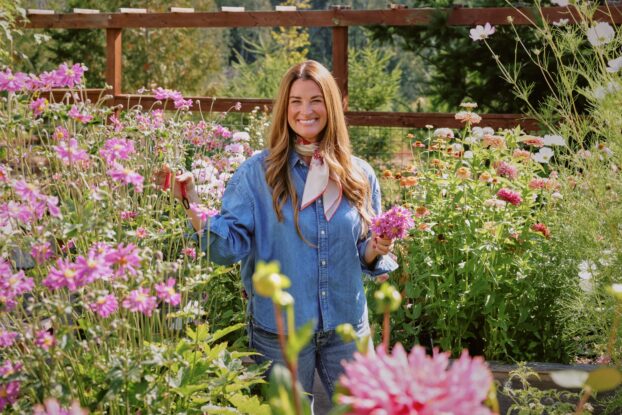
Christina Stembel, founder and CEO of Farmgirl Flowers, in her cutting garden
Earlier this summer, Christina Stembel posted a personal update on the Farmgirl Flowers blog,
The headline reads: “From Startup to Something More Real.”
If you’ve been around here for a while, you’ve probably felt a bit of a shift. It’s not something loud or flashy, but it’s been happening slowly and very intentionally behind the scenes. We moved to Washington. We bought some land in Gig Harbor. And we’re starting a small flower farm. I’m really excited to start sharing more of that with you. This isn’t just a side project or a “fun little thing on the side.” It’s part of a bigger shift in how I think about Farmgirl Flowers and what we’re actually building.
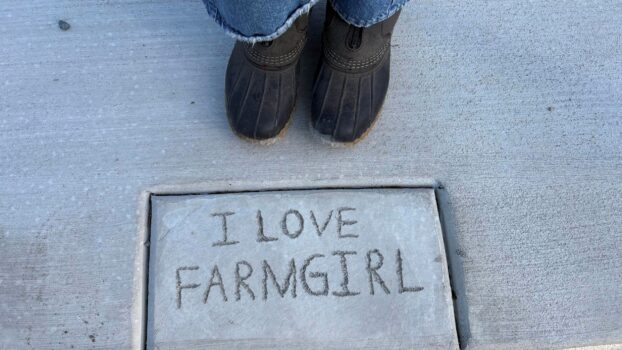
Sidewalk art at Farm-quarters, aka “Gunnii Hill Farm”
For a long time, Farmgirl sat in that “startup” category. Silicon Valley-adjacent, even though we were never really playing that game the same way. There’s a lot of pressure in that world to grow as fast as possible, to chase scale, to optimize for what looks impressive on paper (and in pitch decks that may or may not reflect reality). And somewhere along the way, I realized that’s not actually what I want to build. I want to build a real company.
One that lasts. One that actually makes money so its value isn’t an arbitrary “valuation.” One that does things the right way, even when that way is slower, harder, and not nearly as sexy. We’re not chasing growth at all costs—we’re building something that can actually stand on its own and still be here years from now.
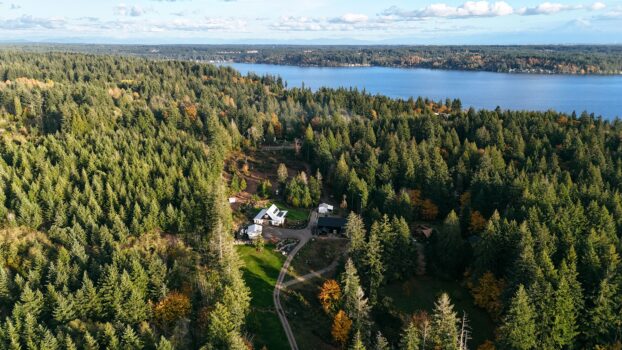
The PNW woodland is a backdrop to Gunnii Hill Farm
Recently, one of our competitors referred to us as a “family company,” and it really irritated me, probably more than it should have (because really, does it even matter?). Not because I have anything against family—I actually just got married and now have two step sons that I love a ton—but because of what they meant by it. It wasn’t about values or closeness. It was meant to imply that this was something inherited, something handed down, or not earned the hard way like somehow their very funded company has.
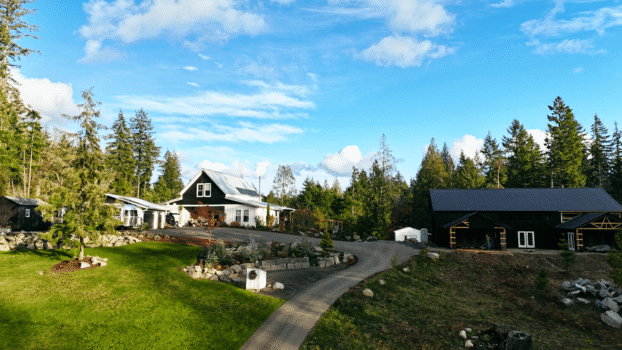
Aerial view of Gunnii Hill Farm
And that’s just not our story.
I started Farmgirl Flowers with $49,000. No roadmap, no safety net, no pedigree (or even college degree), no generational anything waiting in the wings. Just a lot of grit, a lot of mistakes, and a refusal to quit when it would have been SO much easier to quit. We’ve built a profitable flower company from that, and I’m really proud of it. It took longer. It was WAY harder. There were a lot of moments it could have gone the other way (and a few where it probably should have, if I’m being honest).
So when that gets minimized, yeah—it’s frustrating. But it also feels like one of those things that says a lot more about them than it does about us.
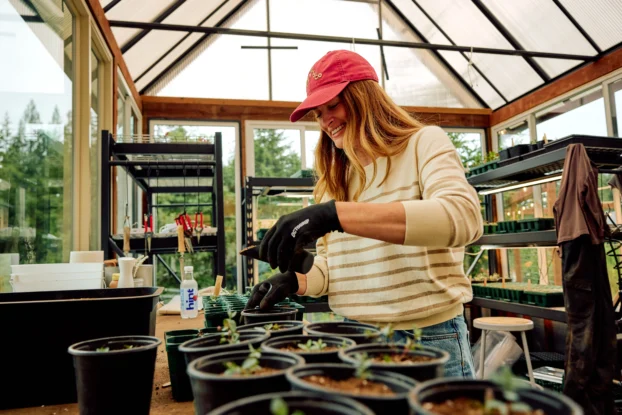
Christina Stembel at the seeding counter inside her greenhouse
The farm is part of this next chapter, but probably not in the way people assume. The goal isn’t to make money from it (and if you know anything about farming, you definitely understand that!). I’ve always wanted a physical manifestation of who we are—something real that you can walk through, touch, and get dirt under your nails from instead of just seeing it on a website.
There’s also a huge amount to learn from actually growing the flowers we sell. Even if it will only ever be a small percentage of our overall production, it creates a level of respect for the entire supply chain that you just can’t get any other way. It’s hard, unpredictable, always humbling in a “you thought you had control here?” kind of way, and it forces you to understand the work at a completely different level. I believe it makes me a better leader and makes Farmgirl a better company.
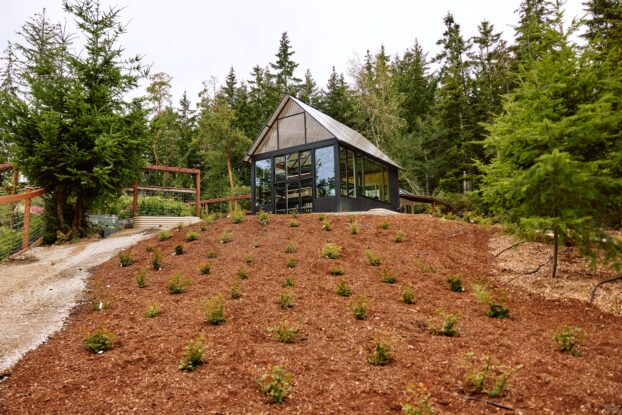
Greenhouse at Gunnii Hill Farm
Something else that’s shifted for me over the last few years is how I think about not raising venture capital. If you’ve been with us a while, you probably know that I used to have a pretty big chip on my shoulder about it. (Okay, not subtle. I talked about it a lot.) But now I see it as one of the biggest gifts we’ve been given.
If we had taken funding, our job would be simple: grow as fast as possible and return as much money as possible as quickly as possible. That becomes the whole focus, whether people say it out loud or not. And almost every founder I know who’s gone that route eventually says the same thing—usually a little quieter than they used to—that they hope they can build their next company bootstrapped.
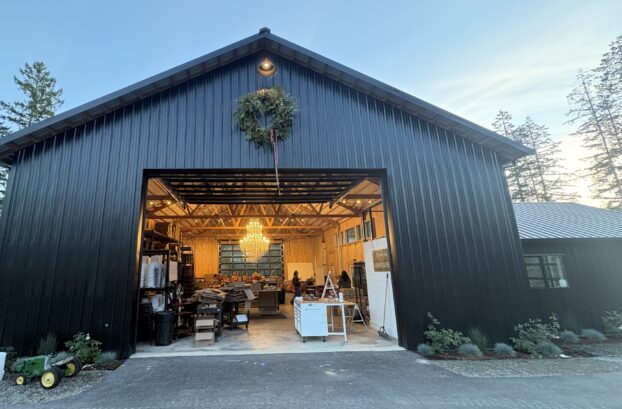
The new design barn at Farm-quarters, aka “Gunnii Hill Farm”
It took me a while to really hear that, but I get it now.
We wouldn’t have bought this farm if we were funded. We wouldn’t be growing flowers and so much eucalyptus here (Gunnii Hill, named after the variety we’re planting). We wouldn’t have planted almost 40,000 peonies in Oregon and be patiently waiting the three years it takes to get our first real harvest (which, as someone who likes things to happen quickly, has been a real exercise in personal growth).
We wouldn’t have the freedom to make decisions that are better for the long haul instead of the next earnings report presented at the next board meeting.
So this is where we are now. Still working really hard. Still figuring things out as we go. Still choosing the harder, longer path more often than not. But building something real, something rooted, and something that actually reflects who we are—not who we’re supposed to be.
Let’s jump right into the interview, which I filmed on a visit in October. You’ll see/hear a cameo appearance by my husband Bruce Brooks, who arrived partway through the tour to join the party. I decided to include his appearance because it’s part of the story – enjoy!
Thanks so much for joining us today! I encourage you to watch the replay video of my conversation with Christina. This podcast is committed to shining a light and amplifying the voices of our members, celebrating the many stories of this community, stories as diverse as each of you.
What follows is a bonus interview I recorded last week with Amelia Ihlo, founder of Rooted Farmers. Full disclosure, Rooted Farmers sponsors this podcast, and I’ve been wanting to share their update with our community. As you know, Rooted Farmers is a software platform that provides a suite of services to farms and hubs. They began serving flower farms like Amelia’s own farm in 2019 and recently expanded to support food growers, too. In our conversation, Amelia shares three new Rooted Farmers funding opportunities to encourage farms and hubs in their efforts to strengthen local agricultural systems. One of these grants and scholarships might just have your name on it, so have a listen. The application deadline is coming up on December 15th
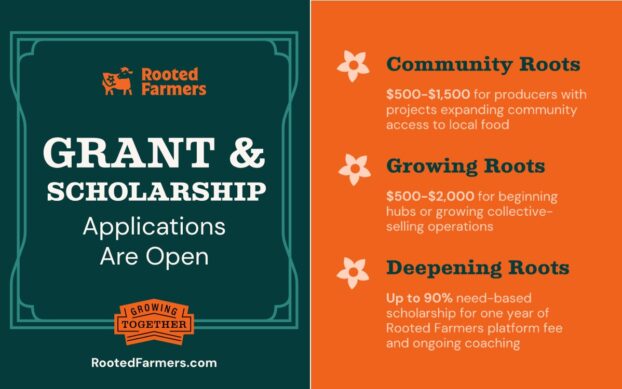
Looking for funding or support for your farming community or hub? 🌱 Rooted Farmers is launching three grant and scholarship programs:
• Community Roots: $500–$1,500 for producers with a project that expands community access to local food • Growing Roots: $500–$2,000 for hubs starting or growing collective selling operations • Deepening Roots: Up to 90% need-based scholarship for one year toward Rooted Farmers platform fee forgiveness for established hubs navigating financial or operational challenges
Community Roots and Growing Roots applications are due December 15, 2026. Deepening Roots applications are accepted on a rolling basis.
➡️ Learn more and see if your farm or hub is eligible:
This show is brought to you by slowflowers.com, the free, online directory to florists, shops, and studios who design with local, seasonal and sustainable flowers and to the farms that grow those blooms. It’s the conscious choice for buying and sending flowers.
And thank you to our lead sponsor, My Patio Tree: Expertly Grown Plants, Perfectly Designed to Elevate Your Garden. Their second-generation family tree farm has curated the best-performing, cutting-edge, multi-zone varieties to enhance your garden, patio or special event. Every tree purchased supports Plant With Purpose, a nonprofit organization that restores hope by reversing global poverty and environmental damage. Learn more at mypatiotree.com.
Thank you to Longfield Gardens, which provides home gardeners with high quality flower bulbs and perennials. Their online store offers plants for every region and every season, from tulips and daffodils to dahlias, caladiums and amaryllis. Check out the full catalog at Longfield Gardens at longfield-gardens.com.
And thank you to Johnny’s Selected Seeds, an employee-owned company that provides our industry the best flower, herb and vegetable seeds — supplied to farms large and small and even backyard cutting gardens like mine. Find the full catalog of flower seeds and bulbs at johnnyseeds.com.
Thanks so much for joining us today. The Slow Flowers Podcast is a member-supported endeavor, downloaded more than 1.6 million times by listeners like you. Thank you for listening, commenting and sharing – it means so much. As our movement gains more supporters and more passionate participants who believe in the importance of our domestic cut flower industry, the momentum is contagious. I know you feel it, too. If you’re new to our weekly Show and our long-running Podcast, check out all of our resources at SlowFlowersSociety.com.
Thank you for listening! Sending love, from my cutting garden to you! (c) Missy Palacol Photography
I’m Debra Prinzing, host and producer of the Slow Flowers Show & Podcast. The Slow Flowers Podcast is engineered and edited by Andrew Brenlan. The content and opinions expressed here are either mine alone or those of my guests alone, independent of any podcast sponsor or other person, company or organization. Next week, you’re invited to join me in putting more Slow Flowers on the table, one stem, one vase at a time. Thanks so much for joining us today and I’ll see you next week!