Debra Prinzing

Get the Email Newsletter!

Episode 722: Ondrea Kidd of Post Falls, Idaho-based Sowing Joy Farm named Top 10 Florists to Watch in 2025 by MSN

Wednesday, June 25th, 2025

Ondrea Kidd has been recognized by MSN as one of the “Top 10 Florists to Watch in 2025”, bolstering the farm’s status as a leader in eco-friendly, heirloom floral design. The report highlighted innovators shaping the future of luxury floral design and it came as a complete surprise to this farmer-florist based in Post Falls, Idaho. Through the use of uncommon botanicals and sustainable design practices, as well as Sowing Joy’s many floral-based hospitality projects, the added national attention reflects Ondrea’s desire to creatively express art and experiences with the flowers she grows.

Sunflowers at Sowing Joy Farm

Founded in 2020 by Ondrea and Chad Kidd in Post Falls, Idaho, Sowing Joy Farm began as a family passion project focused on growing heirloom, organic flowers to bring joy to their community. Since then, it has blossomed into a dynamic operation that offers u-pick flower experiences, wreath-making workshops, floral arranging classes, and overnight lodging at The Shepherd’s Hut. The Kidd family, including their six children and a granddaughter, plays an active role in the farm’s daily life, reflecting a deep-rooted dedication to both family and community values.

Floral design by Ondrea Kidd

Ondrea is the heart of Sowing Joy Farm, a passionate farmer-florist with a love for cultivating and designing with healthy, sustainably grown blooms. Her journey into floral design started with a deep connection to gardening and the joy that flowers bring to the lives of her customers and clients.

Hand-tied bouquet
Hand-tied bouquet

The farm is nestled in the scenic landscapes of Northern Idaho, where Ondrea and her husband Chad live, along with their six amazing children, one beloved granddaughter, and a few farm animals who add to the charm of our farm. From lodging at The Sheperd’s Hut, their farm stay Tiny House, on-farm workshops, and u-pick events to wedding florals or everyday hand-tied bouquets, Ondrea spreads joy through flowers.

Recently, this longtime Slow Flowers Member was featured as a top 10 Florist to Watch in an article featured by MSN.com – and we congratulate Ondrea for this recognition.

I invited Ondrea to share her story today – in addition to our interview, please check out the beautiful, 3-minute video tour of Sowing Joy Farm, produced with the folks at Idaho Preferred, a program of the Idaho State Department of Agriculture.

Through Sowing Joy Farm, Ondrea donates flowers to local and national organizations, as well as to individuals in need, as part of the farm’s Petals of Joy program. She says: “I believe flowers carry a special power to bring us closer together, to celebrate love and connection, and to remind us of the deep bonds we share with each other and our creator.” Follow the links in our show notes to learn more about how you can nominate a deserving recipient of a Petals of Joy bouquet.

Find and follow Sowing Joy Farm at these social places: Instagram and Facebook
More about The Shepherd’s Hut lodging

Read More:
MSN Story here
Press Release here


Thank you to our Sponsors

This show is brought to you by slowflowers.com, the free, online directory to more than 700 florists, shops, and studios who design with local, seasonal and sustainable flowers and to the farms that grow those blooms. It’s the conscious choice for buying and sending flowers.

Royal Anthos Lily Bulbs

Thank you to our lead sponsor, Flowerbulb.eu and their U.S. lily bulb vendors. One of the most recognizable flowers in the world, the lily is a top-selling cut flower, offering long-lasting blooms, year-round availability, and a dazzling petal palette. Flowerbulb.eu has partnered with Slow Flowers to provide beautiful lily inspiration and farming resources to help growers and florists connect their customers with more lilies. Learn more at Flowerbulb.eu.

Thank you to Rooted Farmers. Rooted Farmers works exclusively with local growers to put the highest-quality specialty cut flowers in floral customers’ hands. When you partner with Rooted Farmers, you are investing in your community, and you can expect a commitment to excellence in return. Learn more at RootedFarmers.com.

Thank you to Johnny’s Selected Seeds, an employee-owned company that provides our industry the best flower, herb and vegetable seeds — supplied to farms large and small and even backyard cutting gardens like mine. Find the full catalog of flower seeds and bulbs at johnnysseeds.com.


Slow Flowers Podcast Logo with flowers, recorder and mic

Thank you for joining me today! The Slow Flowers Podcast is a member-supported endeavor, downloaded more than one million times by listeners like you. Thank you for listening, commenting and sharing – it means so much. As our movement gains more supporters and more passionate participants who believe in the importance of our domestic cut flower industry, the momentum is contagious. I know you feel it, too. If you’re new to our weekly Show and our long-running Podcast, check out all of our resources at SlowFlowersSociety.com.
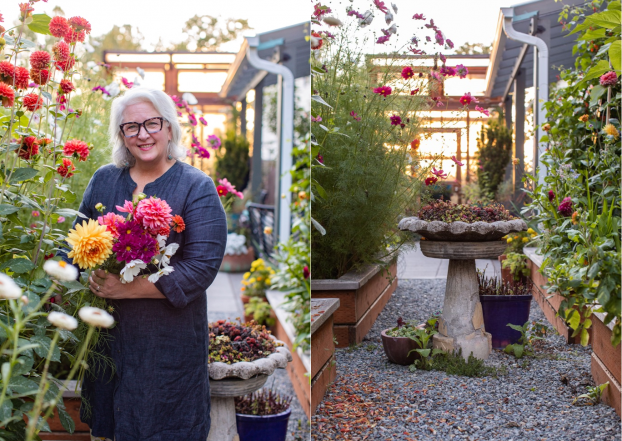

Debra in the Slow Flowers Cutting Garden
Thank you for listening! Sending love, from my cutting garden to you! (c) Missy Palacol Photography

I’m Debra Prinzing, host and producer of the Slow Flowers Show & Podcast. The Slow Flowers Podcast is engineered and edited by Andrew Brenlan. The content and opinions expressed here are either mine alone or those of my guests alone, independent of any podcast sponsor or other person, company or organization. Next week, you’re invited to join me in putting more Slow Flowers on the table, one stem, one vase at a time. Thanks so much for joining us today and I’ll see you next week!


Drone Pine; Gaena; Tall Harvey
by Blue Dot Sessions
http://www.sessions.blue

Lovely
by Tryad
http://tryad.bandcamp.com/album/instrumentals
http://creativecommons.org/licenses/by-sa/3.0/

In The Field
audionautix.com

Episode 278: Slow Flowers’ 2017 Floral Insights & Industry Forecast

Wednesday, January 4th, 2017

slide1
Happy New Year and Welcome to the third annual Slow Flowers’ Floral Insights and Industry Forecast.

Unlike most TREND reports, this compilation tracks changing shifts, emerging ideas and new concepts that are taking hold in the American floral world.  Think of it as your Next, New and Now Report. These topics are gleaned from my conversations and interviews that took place with many of you during 2016– Slow Flowers members, including farmers, florists and creatives.  I know some of you have already experienced these emerging developments and your influence has inspired this list.

If you would like a copy of this report, please click here: 2017-floral-insights [PDF download]

I look forward to your reaction, thoughts, and input on the Slow Flowers’ Floral Insights and Industry Forecast, including the ideas and themes I may have overlooked! I invite you to share yours in the comment section below.

Let’s get started:

slide2
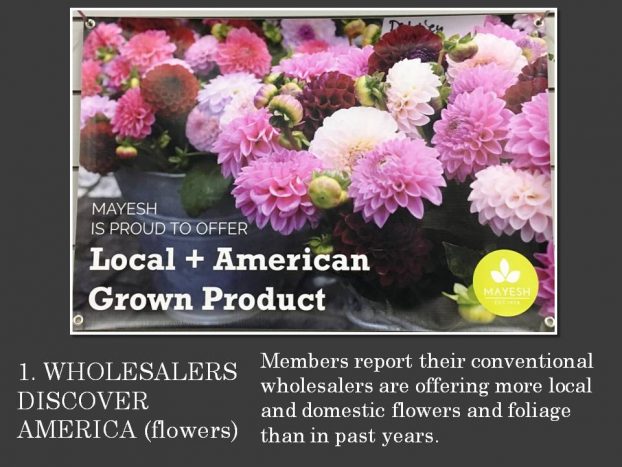
#1 WHOLESALERS ARE DISCOVERING AMERICA
. In the midst of global floriculture, with trade in cut flowers estimated at more than $100 billion per year, $13 billion of which takes place in the U.S., we’ve been seduced by the notion that the world is our oyster (or flower field).

Mellano & Co. is a Certified American Grown flower farm.

Mellano & Co. is a Certified American Grown flower farm.

In many markets around the country, the wholesale florist is the only commercial cut flowers and foliage source for floral designers, flower shops and studios to purchase product.Yet after branding themselves as the only way to access a world of floral options, some wholesale florists are returning to their roots, at least in part. They are proactively sourcing from American flower farms large and small to stock their coolers and shelves. And beyond this step, many are also using signage and labeling to inform buyers of the origin of that product.

I believe the explosion of farmer-florists and the growth of small-scale floral agriculture in markets across North America has occurred in part because of frustration with the lack of or limited local sourcing by conventional wholesalers. Let me say that again: Farmer-Florists and small-scale floral agriculture have stepped into the gaping void created when wholesalers turned their backs on local flower farmers. And now they’re waking up to the missed opportunity.

The success of the Seattle Wholesale Growers Market, well-documented by me and on this podcast over the past several years, as well as the continued growth of the farmer-owned Oregon Flower Growers Association market in Portland underscore that demand for local flowers is already in place.

Now we are witnessing a shift among some conventional wholesalers to align their brand with American Grown and Locally-grown flowers. Mayesh Wholesale Florist is the most active in this arena, with active support for Slowflowers.com, American Flowers Week, Lisa Waud’s Flower House Detroit, and other sponsorships.

When Mayesh opened its renovated Portland, Oregon, branch in early November, the company asked me to make a design presentation. The team there was very supportive of my request for all locally-grown product — hat’s off to Mayesh and I certainly expect that their success at the cash register will motivate other conventional wholesale florists to get onboard.

slide5
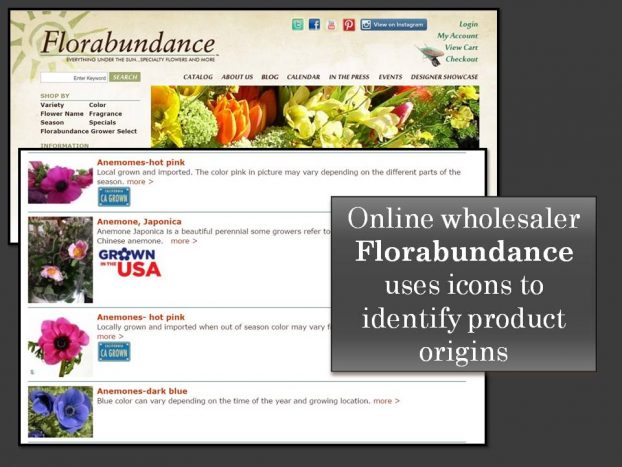
I’ve previously singled out Santa Barbara-based Florabundance, led by Joost Bongaerts, for making the effort to label all California-grown floral and foliage offerings on his online wholesale site. It is an effective tool — one I hope others will emulate. It is certainly a step that demonstrates excellent customer service and an awareness that Florabundance shoppers want to know the origin of the flowers they purchase.

This past fall, I surveyed Slowflowers.com members for their take on a number of topics and trends. When I asked, “If you shop with Conventional Florists, are you finding more American grown and locally-grown product than in the past?” 70 percent of respondents said yes.

Here are a few of the specific comments to elaborate:

  • I request American grown from my Rep, and I think there are more boutique, seasonal items that are coming from smaller farmers
  • I have been asking my conventional wholesalers to bring in more American grown product and I think it is helping. The “American Grown” branding really helps us to know that is happening.
  • It’s definitely taking place and some people at the conventional wholesalers are proud to share that their products are American grown.

This last comment reflects that the industry still has far to go. One member noted:

  • It’s a toss up. They say they want to add more but I’m not sure if they are working really hard at. And they don’t do a very good job at advertising what is local and what is not. My Rep knows that I want American grown but still have to ask every time

slide6
#2 MORE FARMS SELLING DIRECT
. This insight is closely connected with item number one.

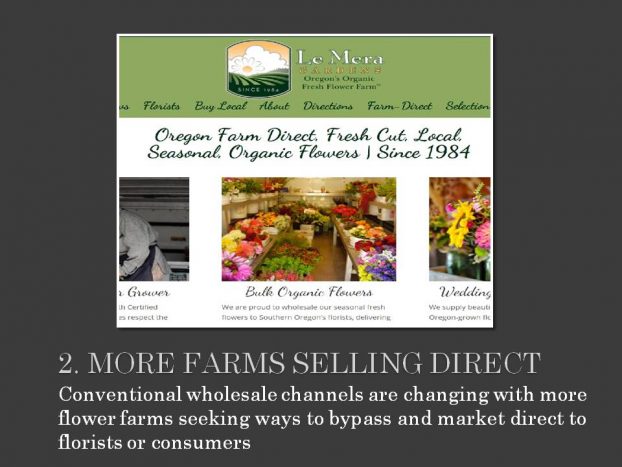
In general, the conventional wholesale model is changing, as traditional channels of floral distribution are disrupted. I predict that more flower farms will seek and establish new ways to bypass the conventional wholesale pipeline and market direct to florists and consumers. This is a hot topic and certainly one that’s hard to find anyone willing to go on record to discuss.
Our Slow Flowers survey revealed numerous sales channels among flower farmers. Granted, the majority of Slow Flowers farm-members are small-scale producers, but I believe they are the ones modeling how diversification and direct-to-florist commerce can succeed. When asked about their distribution channels, our respondents cited the following top three outlets:

  • Seventy percent are growing flowers for their own weddings and event clients;
  • This is followed closely by farms selling direct to other florists and wedding designers, at around 67 percent
  • With 53 percent of flower farms reporting they sell to local flower shops
    After this top tier, the percentages drop down to one third of respondents who sell flowers via farmers’ markets and CSA subscribers (basically consumer-direct) and about one-quarter who sell to local wholesalers and grocery/supermarket buyers.There is another farm-direct model, and here’s where I think the disruption is most revealing. A number of large farms are experimenting with direct-to-florist and direct-to-consumer models.

slide9
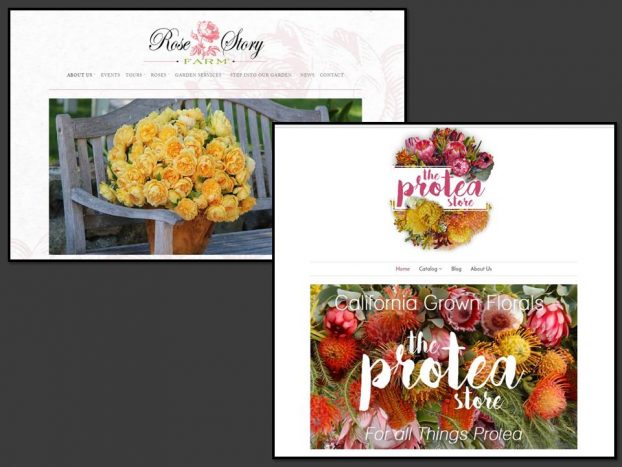
There is another farm-direct model and here’s where I think the disruption is most revealing. A number of large farms are experimenting with direct-to-florist and direct-to-consumer models. A few successful single-crop models have been in place, such as Danielle Hahn’s Rose Story Farm, which in the past few years has shifted almost completely away from selling through wholesalers to florist-direct fulfillment, and many of the Alaska peony growers who sell direct to florists and consumers.

Now, diversified, large-scale growers are beginning to spin off consumer-focused web shops, such as Sun Valley’s Stargazer Barn or Resendiz Brothers’ Protea Store. In the scheme of things, these new ventures are moving only a small fraction of their parent farms’ floral inventory.

But I predict that as large farms bend to demand for farm-direct sourcing of flowers (by consumers and florists alike), the path from field to bouquet will speed up and perhaps take fewer detours through brokers and wholesalers. That means fresher, more seasonal and better value for all floral customers.

READ MORE…