October 3rd, 2009
Garden Writers Association Annual Symposium, Part III:
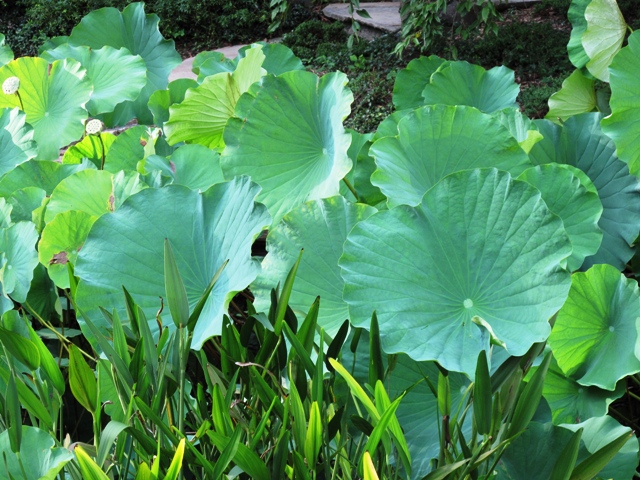
Lotuses thrive in the sultry Southern heat at the Sarah P. Duke Gardens in Raleigh
Thursday morning kicked off with our keynote speaker Dr. Lowell Catlett, a fascinating economic futurist who really put things into perspective in his talk, “The Greening of America.” Dr. Catlett tailored his remarks to our profession and totally blew the audience away. We were inspired and challenged (in a good way) to rethink our definition of “green” and “sustainable” lifestyle choices.
You can find several clips of Dr. Catlett’s lectures on YouTube, so check him out. He ended the lecture with this charge: “Do not sell people products and services. Sell them dreams.” It resonated, because we know that seeking and creating beauty in our surroundings is a basic human desire. If you didn’t make it to the symposium, Dr. Catlett’s lecture is one CD to purchase and listen to.
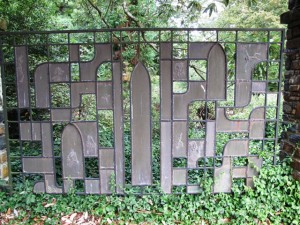
Love the gothic gates at the entry to Duke Gardens; made of metal but inspired by stained glass
After the morning workshop sessions and a working lunch at the trade show, we hopped on buses for the first of three days of garden touring.
Thursday was the hottest, most humid day during the conference, so I have mixed memories from our late afternoon tour of the Sarah P. Duke Gardens.
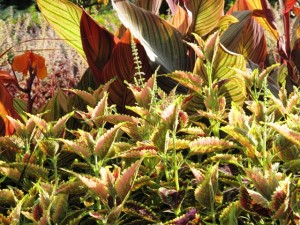
Canna tropicana and a cluster of coleus, backlit in the afternoon sun
The 55-acre public garden graces the campus of Duke University and features several special areas, including a formal Italianate-style terrace garden planted with an explosion of colorful tropicals, annuals and woody plants. I spent a lot of time here and was drawn to the twin historic stone structures. Not quite sheds, but shed-like for sure.
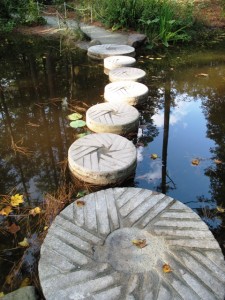
I love the placement of these round millstones providing transit across the pond
I then escaped to the shade with a few friends walking through the understory of the H.L. Blomquist Garden of Native Plants. Filled with more than 900 varieties of regional natives, it was a beautiful and serene enclave. It was especially fun to hang out here with Nan Sterman, aka PlantSoup, my symposium roommate and Duke University alum. She spent a lot of time studying plants as a biology undergrad, so I had a personal narrative to connect to this amazing place.
We experienced that languishing, Southern state of mind, what with the heat, the humidity, the sun and the sleep deprivation from staying awake late the night before and getting up early in the morning.
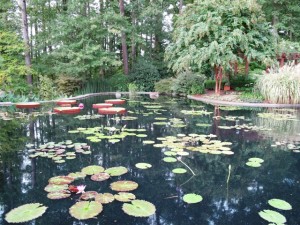
Dreamy, visually restful: the Virtue Peace Pond
A buffet dinner led to some fabulous conversations with new friends, despite the climatic challenges (it was all I could do NOT to throw myself into the “Virtue Peace Pond” to cool off – seriously). Those water lilies, lotuses and other water-loving plants looked so much happier than the humans seated around the pond’s perimeter.
Most memorable that evening were two conversations my good friend (and collaborator) David Perry of A Photographer’s Garden Blog and I had with Susan Reimer, garden and op-ed (!) columnist and “Garden Variety” blogger for the Baltimore Sun, and later with Rizaniño “Riz” Reyes , an up-and-coming plantsman, horticulturist and designer from Seattle. I recall sharing a table (and prior conversation) with Riz at a Northwest Perennial Association event several years ago. Inspiring to know him – and new friend, to be sure.
READ MORE…
Posted in Creativity, Entertainment, General, Landscape Design, Plants, Sheds & Havens | 2 Comments »
October 1st, 2009
Garden Writers Association annual symposium, Part II:
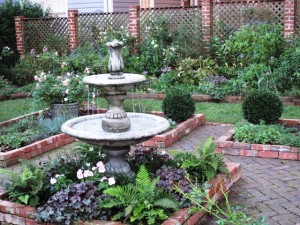
A charming Southern garden, Raleigh's Rose Cottage
Tuesday/Wednesday:
Raleigh here I come.
Greensboro gardener Lynda Waldrep drove me to Raleigh on Tuesday morning where I checked into the Garden Writers Association conference hotel, dropped off my gear and joined the GWA board meeting.
Nice to get Tuesday afternoon’s and Wednesday morning’s business out of the way so I could enjoy the rest of the conference once it began on Wednesday afternoon after lunch.
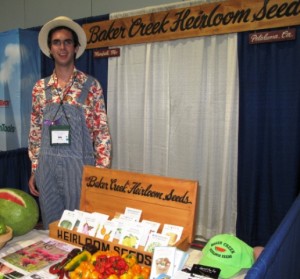
Wow, I got to meet heirloom seed wunderkind Jere Gettle of Baker Creek Heirloom Seeds
After some regional meetings and receptions for first-time attendees, the Garden Products Information Exhibit opened – four hours of checking out the new trends in plants, products and programs for the horticultural industry. The exhibit continued on Wednesday for another four hours.
Next, I joined 50 or more very new (and a few old) friends at a private garden cocktail party for garden Twitter participants. Sharon and Jim Bright, our gracious garden hosts, opened the gates to Rose Cottage, their charming place in a historic downtown neighborhood.
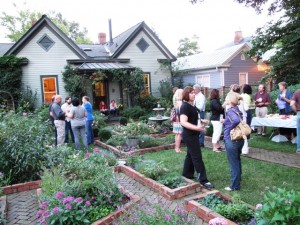
The GWA Tweet-up is in full swing
Raleigh hometown gal Helen Yoest of Gardening With Confidence and Elizabeth Licata of Gardening While Intoxicated/Garden Rant, planned the evening with several other volunteer Twitter friends. Proven Winners (thanks Danielle!) was our sponsor, so we had lots to nibble and sip while admiring the garden’s exuberant cottage plantings, semi-formal vegetable beds (outlined in brick) and more.
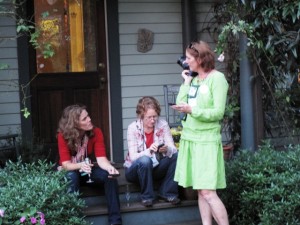
Laura Schaub, Amy Stewart and Helen Yoest, real-time Twittering
All those women and men with whom I “tweet” came together for an evening where putting a face to a name was part of the fun. Our nametags had our real names and our Twitter names (I’m “@dkprinzing”).
What amused me more than anything was watching people post comments on Twitter during the party. I call it real-time garden tour commentary at its best.
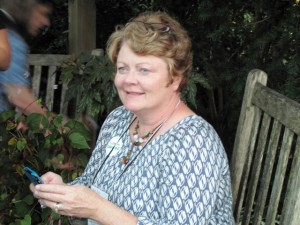
My gal pal Mary Ann, busy with thumbs and I-phone
Later that night, I walked all the way across town with a friend to an authentic Carolina ribs BBQ dinner hosted by the Garden Media Group. A chance to catch up with some editor and writer friends, meet several of GMG’s clients, shake the hand of famed BBQ chef Ed Mitchell and eat some of his great Southern food.
Long day, but good conversations all around!
This annual gathering of gardeners is something I look forward to from year to year. Raleigh was my 8th Garden Writer Association event and I’m hooked.
Posted in Creativity, Entertainment, Gardening, General, Landscape Design, Plants, Playfulness, Writing | 2 Comments »
September 28th, 2009
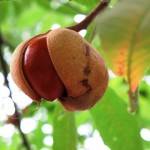
"A buckeye in your pocket for good luck"
The 61st annual Garden Writers Association annual symposium took place this past week, hosted by a fabulous group of Raleigh garden communicators who put together a great lineup of uncommon gardens, mouthwatering menus and Southern hospitality. The occasion drew 655 registrants, the second-largest gathering ever in GWA’s history after Philadelphia/Brandywine Valley in 2006.
More than our profession’s top event for education, inspiration and networking, the symposium is an affirmation that what we do every day is connect people with the natural world and the environment of plants, water, soil, sun, and animals through stories and photographs. Garden writers communicate information and share inspiration, so that’s why I love and value how I spend my life.
This week on Shedstyle, I will feature a day-by-day recap of my week in North Carolina. I’ll start with Monday & Tuesday:
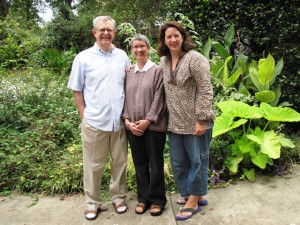
with my new garden friends, Charlie and Lois Brummitt
I flew to Greensboro, NC, to be welcomed as a guest speaker for the Guilford County Horticultural Society. Because my lecture was scheduled for Monday evening, I arrived very late Sunday and was met by Lois and Charlie Brummitt, two gracious garden hosts.
They gave me a cozy, quiet place to stay, let me sleep in on Monday, made sure I had a mug of English breakfast tea and a scone (along with Internet service to do a little writing in the AM). Lois and her friend Nanny took me out to lunch at Undercurrent, a lovely restaurant (spinach salad for me; oysters and quail salad, respectively, for them – Southern specialties!).
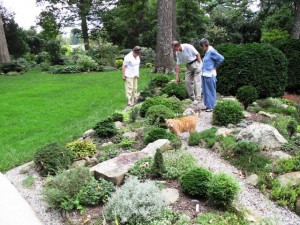
Graham Ray (center), showing Lois Brummit (right) and friend Mary Halyburton his dwarf conifer collection
We then toured some of Greensboro’s great private, residential gardens, including the gracious Southern gardens of landscape designer and historian Chuck Callaway and the expansive backyard spread created by Diane Flint. Then we headed for Graham Ray’s woodland landscape.
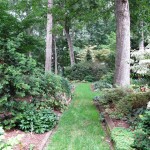
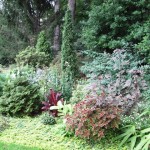
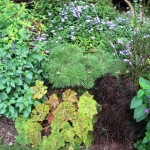
Graham has devoted 40 years to cultivating his property using a plantsman’s keen intuition to design harmonious compositions of excellent plants in just the right setting. Some of these photos will just have to speak for themselves.
The “buckeye” shown at the top of this page is Aesculus pavia or Red Buckeye, native to the Eastern U.S. and a relative of the Common Horse Chestnut often seen in Seattle (Aesculus hippocastanum). It grows in Graham’s garden and he gave me a pocketful of several to carry home with me. I hope they bring me good fortune!
-
-
An alluring path through the pines, oaks, and chestnuts
-
-
This border knocked me out – I love how Graham mixes conifers and evergreens with tropicals and annuals
-
-
One of countless wonderful plant combinations conjured by Graham Ray
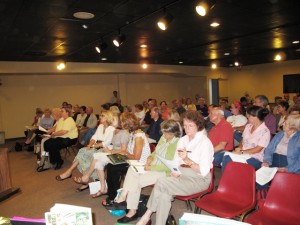
The Greensboro audience gets ready for my slide show - a great turnout
We arrived at the local Natural Science Center in time for me to set up my slides and meet Lynda Waldrep, who made it all possible as the society’s program coordinator. A special thanks to Lee and Larry Newlin of Garden Discovery Tours for suggesting me and my talk on The Abundant Garden (“Lush and Layered”).
My audience was superb and generous. We had fun conversing about design, plants, and ornamentation in the landscape. And surprisingly, there’s much that North Carolina and Western Washington gardens have in common, including the predominant green palette.
PS, a late dinner of Italian red wine and gourmet pizza, back at Charlie and Lois’s house, was a perfect capper to my 24 hours in Greensboro. We went out to see their garden at night and Charlie pointed out Venus in the sky – magical.
Before I left the next morning, I battled a few mosquitoes to stroll through and snap a few photos of their landscape. It’s a place I hope to return to in the future, to be with new friends and kindred spirits.
-
-
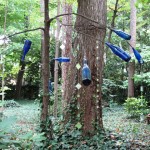
I love bottle trees of all kinds, and I really love the one Lois created!
-
-
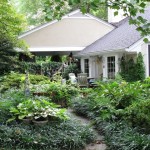
Lois and Charlie’s hosta-filled backyard is a shade-garden extraordinaire
-
-
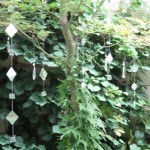
Hanging throughout the garden from tree branches, strings of crystals and mirrors
Thank you, everyone in Greensboro!
Next . . . Garden Writers Invade Raleigh. What’s better, the food or the plants?!
Posted in Gardening, General, Landscape Design, Plants | 4 Comments »
September 13th, 2009
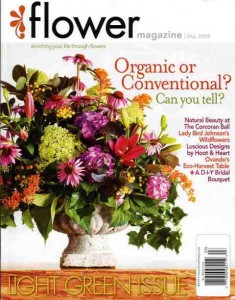 A big thanks to Amy Stewart for referring me to flower magazine, a publication I was unfamiliar with until now, for a book-review gig.
A quarterly publication, flower magazine is edited by founder Margot Shaw and managing editor Melissa Brown, who produce a gorgeous, informative, 4-color glossy for flower enthusiasts, floral designs and gardeners. They are based in Birmingham, Alabama.
The fall 2009 issue is just out and because I thoroughly enjoyed the four books I reviewed, I thought I’d share them here. I like the opening text, which helps describe my credentials:
“As a much-published chronicler of home and garden design and a Master Gardener to boot, Debra Prinzing dove into these informative selections on a variety of “green” themes:
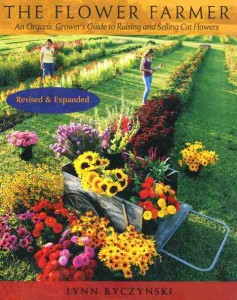 The Flower Farmer: An Organic Grower’s Guide to Raising and Selling Cut Flowers (Revised & Expanded) by Lynn Byczynski (Chelsea Green Publishing, 2008), $35.
Lynn Byczynski is the godmother of the organic flower movement. Little more than a decade after she wrote The Flower Farmer, the rest of the flower world is finally catching up with her visionary ideas and practices. This updated version brims with photographs, planting plans and profiles of innovative cut flower growers, making it the definitive resource for anyone who raises and markets flowers as a commercial venture.
If you’re like me and you want to grow simply for your own enjoyment, this book is equally important. Professional floral designers will find Byczynski’s ideas illuminating, as they advocate establishing relationships with organic farmers and growers to expand a florist’s repertoire.
Writing from Wild Onion Farm, her Lawrence, Kansas-based homestead, Byczynski says she discovered flower farming serendipitously (she planted zinnias among her tomatoes and soon discovered how well they sold at the local farmer’s market). This eco-entrepreneur outlines a gentle manifesto for sustainable practices, asking “Why Organic Flowers?” The answers are revealed in every useful chapter of her 266-page guide. Even if you aren’t persuaded that organic growing practices improve soil fertility and ensure the health of farm workers and their customers alike, the argument for organic is won by the sheer bounty and beauty of the flowers themselves.
Byczynski outlines the most reliable varieties and specific cultivation and handling advice for more than 100 kinds of specialty cut flowers (from Achillea to Zinnia). These blooms are called “specialty,” she explains, “Because they transcend the standard floral fare of roses, carnations, and chrysanthemums. They are considered good cut flowers because they have long stems and a vase life of at least five days.” Once you’ve grown a collection of fresh, seasonal and local varieties, try Byczynski’s easy-to-follow design ideas.
“If you really do love flowers, and you find joy in growing and selling them, you will succeed,” she promises. Change the word “sharing” to “selling” and her words are equally appropriate for anyone who plants a row of zinnias.
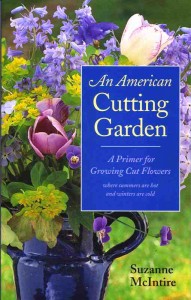 An American Cutting Garden: A Primer for Growing Cut Flowers, by Suzanne McIntire (University of Virginia Press, 2002), $16.95.
The extended subtitle of Suzanne McIntire’s highly personal volume of flower-growing advice is “. . . where summers are hot and winters are cold.”
Though I live in Los Angeles, McIntire’s guide is still informative and useful, since many of the 200 flowers she profiles will grow in my garden, as well as in her northern Virginia one.
After addressing important infrastructure decisions, the author gets down to the toughest choice you’ll face – choosing which flowers to grow. “. . . it’s not long before you realize there are many more plants out there than you can grow in a lifetime,” she acknowledges.
McIntire’s writing hints at years getting soil under her nails and dirt on her knees. I like the useful advice, such as: “The gardener who has no yellow is missing something important” or “Red is the surprise that a bouquet often needs.”
Her planting, harvesting, and arranging advice is geared toward the gardener-floral designer. It’s okay to space plants in a cutting garden closer together than you would in a display garden to increase their yields, she says.
She is anything but a perfectionist, a breath of fresh air to those tired of floral designs that seem unrelated to nature. “I prefer to spend only a few minutes to help flowers look their best, and often it comes down to selecting the right vase, choosing good vase companions for a given flower, and adjusting stem lengths by shortening where necessary,” McIntire confides.
If you need inspiration for how to start a cutting garden, the book offers four design concepts, including ones for beginners, small spaces, shady sites and autumn interest. Each of McIntire’s detailed flower narratives is worth losing yourself in. I only wish there were more than the rather limited 28 color images as illustrations. You’ll need a photo-rich plant encyclopedia on hand for her lesser-known suggestions, such as Anchusa azurea (Italian bugloss, a forget-me-not relative) or Kalimeris pinnatifida (Japanese aster). But that’s just a small complaint. Without McIntire’s book, I wouldn’t have found them in the first place.
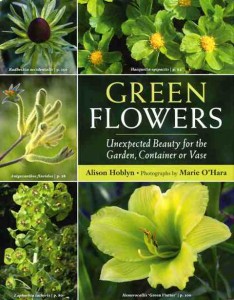 Green Flowers: Unexpected Beauty for the Garden, Container or Vase, by Alison Hoblyn with photographs by Marie O’Hara (Timber Press, 2009), $24.95.
The full spectrum of green is the backbone of any garden scheme. Green is also the essential ingredient in any floral arrangement. But often these verdant elements are taken for granted, or, worse, not thoughtfully incorporated. Think about the prosaic green shrub practically ignored in a landscape. Or, consider the generic “filler” foliage that might be shiny or fluffy in a bouquet, but quickly forgotten in contrast to a Stargazer lily or the classic red rose emerging from all that green.
Green Flowers offers a lovely alternative and a reminder that green is, indeed, a color! Both writer Alison Hoblyn and photographer Marie O’Hara live in England, but many of the flowers they profile are available in North America (although none are commonplace).
I like that Hoblyn – who has worked as a designer, illustrator and painter – offers an artistic explanation for green’s usefulness. Not only does green have neutral and restful qualities, but it also unifies any palette. “On the colour wheel, it occupies that middle land between the hot hues of red and the colder climes of blue,” she explains.
Gardeners and florists usually cast green as supporting player in their designs, as foliage. But there are plenty of extraordinary plants with green flowers or flower-like bracts and modified leaves. Each plant profiled in the book is paired with an attractive, full-page photograph (although sometimes the images are so tightly focused on the bloom it is impossible to envision the size or form of a mature plant). I appreciate the inclusion of other recommended cultivars, as well as sidebars including little-known traits about each plant.
For example, the seeds of Amaranthus caudatus ‘Viridis’ (love-lies-bleeding), an exotic, tassel-like flower that looks beautiful in a container garden or as a cut flower, are a good source of iron, magnesium and fiber. Moluccella laevis (Bells of Ireland), has been cultivated since the 16th century, is in the mint family, and has its origins in Turkey, not Ireland.
After falling in love with Green Flowers, you’ll want to grow and design with Mother Nature’s favorite color as revealed in her blooms, blades, and leaves. Whether the star of your bouquet (or border) or a harmonizing design element, green will never again seem ordinary.
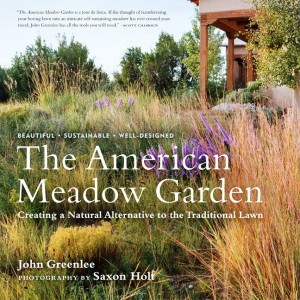 The American Meadow Garden: Creating a Natural Alternative to the Traditional Lawn, by John Greenlee with photography by Saxon Holt (Timber Press, 2009), $39.95.
“Meadows are far more satisfying than either a lawn or traditional border, combining the best attributes of both: like a lawn, a calming place for the eye to rest, yet with the richness and complexity of a border.” John Greenlee’s opening lines are so compelling to read, because they open up the imagination to the practical and eye-pleasing alternatives to a monochromatic (and water-hogging) sea of turf.
“Unlike lawns, meadows are better for the environment, a safe habitat for beneficial insects and pollinators, a place where native ecology can thrive,” he continues. Yet meadows aren’t like a roll of sod that can be unfurled across a patch of soil. They need to be properly designed, installed and maintained, which is reason enough to read and emulate the ideas in Greenlee’s book, available in November.
Owner of Greenlee Nursery, the oldest grass nursery in California, the author has created grass ecologies in gardens since 1984. Greenlee (the “Grass Guru”) pioneered the use of native grasses in ornamental landscapes and advocates for a redefinition of American yards. The American Meadow Garden offers homeowners a new model – a mini ecosystem friendly to children, pets and wildlife. That it requires minimal resources and zero mowing is yet another argument in favor of this anti-lawn.
Saxon Holt’s evocative photography is equally persuasive, for when you see the way sunlight plays off the seed heads and wildflowers that compose Greenlee’s meadows, “dream-like” is the only word that comes to mind.
“A meadow can be quiet and green, or filled with riotous displays of flowers and color,” Greenlee expounds. Non-green grass varieties are listed, such as those with silver, blue, yellow, gold and white hues. Flowers, too, play a large role in the meadow tapestry. The diversity of flowering bulbs, daisies, penstemons, salvias, poppies and ferns that Greenlee likes to sprinkle through his meadows will amaze you.
I love the detailed lists of grasses for fragrance, groundcovers, great flower heads, seasonal effects, background and “fillers.” Then there’s “grasses for billowy or cloudlike flowers,” which plays right into my dreamlike notion of growing a meadow of my very own.
Posted in Book reviews, Creativity, floral design, Gardening, Plants, Writing | 4 Comments »



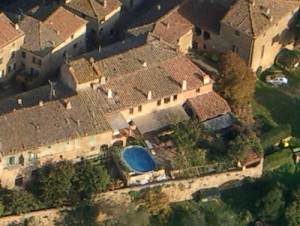
![The garden terrace at Villa Maddalena [BillWright photo]](https://www.slowflowerspodcast.com/wp-content/uploads/2009/10/table-300x200.jpg "table") Two years in the planning, I’m leaving tonight to fly to Rome (via Munich) for a two-week Italy getaway. Ten of my dearest friends are joining me in a little village called Montisi, which is (happily) in the middle of nowhere. We are ostensibly celebrating my belated 50th birthday, but I also think we’re just celebrating life. Each other’s and the beautiful friends who, sadly, couldn’t be with us this time around.
Two years in the planning, I’m leaving tonight to fly to Rome (via Munich) for a two-week Italy getaway. Ten of my dearest friends are joining me in a little village called Montisi, which is (happily) in the middle of nowhere. We are ostensibly celebrating my belated 50th birthday, but I also think we’re just celebrating life. Each other’s and the beautiful friends who, sadly, couldn’t be with us this time around.