The Slow Flowers Podcast is the award-winning show known as the “Voice of the Slow Flowers Movement.” Launched in 2013 as the original flower podcast, we’ve devoted more than 10 years to covering the business of flower farming, floral design, and the Slow Flowers sustainability ethos. Listen to a new episode each Wednesday, available for free download here at slowflowerspodcast.com or on iTunes, Spotify, and other podcast platforms.
May 29th, 2010
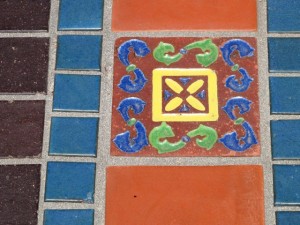
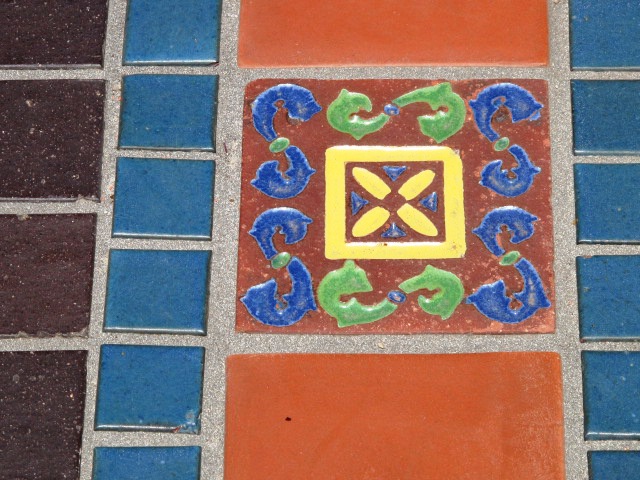
An embossed tile in the courtyard floor at Adamson House in Malibu
Southern California’s architectural and landscape history is patterned with gorgeous, vibrant, intricately designed tiles.
You see them in murals and floors of municipal buildings like schools, libraries and city halls built in the first half of the 20th century. Private homes of the era, designed in the Mediterranean and Spanish Colonial Revival style, boast fireplaces, back-splashes, bathrooms, kitchens and courtyards embellished with gorgeous tiles.
The designs I’m talking about do not come from Spain or Mexico, however. Even though many of the tile motifs borrow from Moorish, Andalusian and Persian traditions, the ceramics themselves were made by Southern California artistans and craftspersons in the 1920s, 30s and 40s.
I’ve seen some of the very best examples from The Malibu Potteries, a factory that thrived from 1926 until 1932 when it succumbed to a fire and subsequently was not rebuilt due to the Depression. In the ensuing years, there are countless stories of brave and assertive individuals who prevented old homes and public buildings from being demolished, just to save these tiles so that others can see and learn about them. And other stories abound of determined preservationists who salvaged and restored old tiles from homes that were razed.

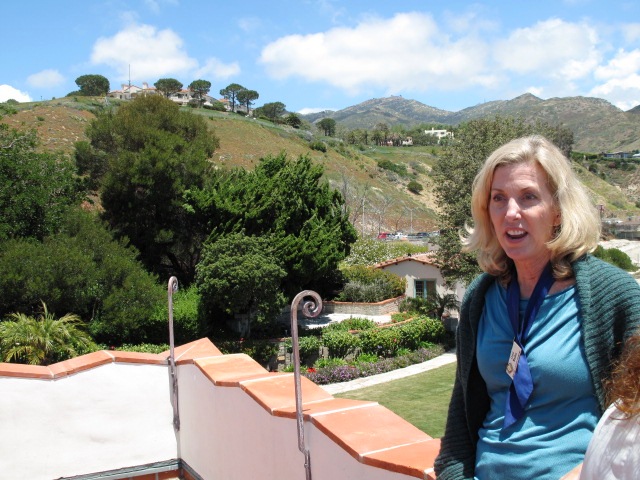
Cristi tells our group the fascinating history of Adamson House and Malibu Potteries
My friend Cristi Walden is one such individual. She is an avid pottery enthusiast, collector and expert of tiles from this era. You might call her a Tile Maven.
Cristi has an uncanny ability to ferret out like-minded folks who live in old houses with intact bathrooms or kitchens, original fireplace surrounds, and tile floors that have never been altered since they were built.
I have been very fortunate to tag along with Cristi on some of her outings with her “Merry Band of Archivists” to tour these rare Los Angeles gems. You will learn more about Cristi and her plans to begin leading tours for the public in the future.
For now, I will share about Wednesday’s adventure. Cristi is a docent and interpreter at the Adamson House in Malibu. She gave a private tour to a small group of friends and wowed us with her knowledge and insights. We were not allowed to photograph anything inside the home, but outdoor photography was permitted, which you see here.
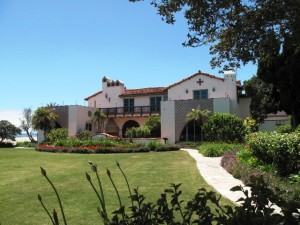
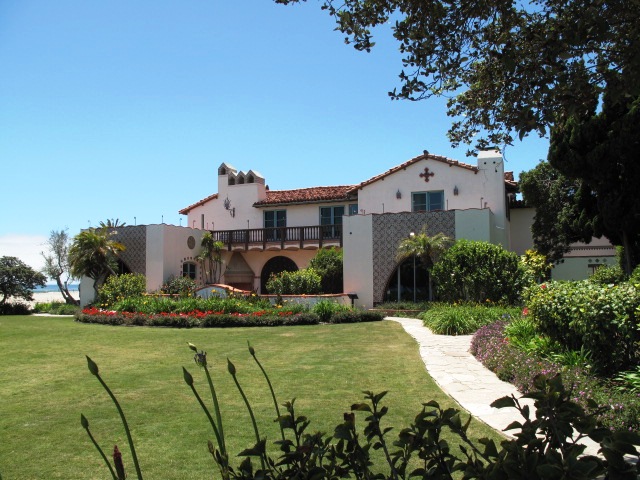
Yes, this was once considered a beach cottage!
Cristi explained that the very best example of Malibu Tile resides here in the Adamson House. Now owned by the State of California, the Adamson estate was built in 1929-30 as a beach cottage for Rhoda Agatha Ringe and her husband Merritt Huntley Adamson. Rhoda was the daughter of May K. Ringe and Frederick Ringe. The Ringes were the last family to own Spanish land grant property.
Today that land is known as Malibu, some of the most exquisite property in all of California – in the country, for that matter. According to Ceramic Art of the Malibu Potteries, a 1988 book written by May and Rhoda’s descendant Ronald L. Ringe, the original Rancho Malibu land – all 13,000 acres of it – was purchased in 1892 for $10.00 per acre. Yup, Malibu prices have climbed exponentially since then!
In 1926, May (Rhoda’s mother) was a young, wealthy widow who owned thousands of acres of Malibu oceanfront land. She discovered that her property did not have oil (as was the case elsewhere in parts of Los Angeles), but it did have huge clay deposits. May founded Malibu Potteries and hired Rufus B. Keeler, a genius in ceramics engineering, chemistry and production, to run her operation (more about Rufus later).
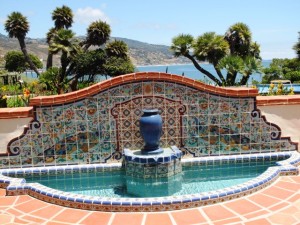
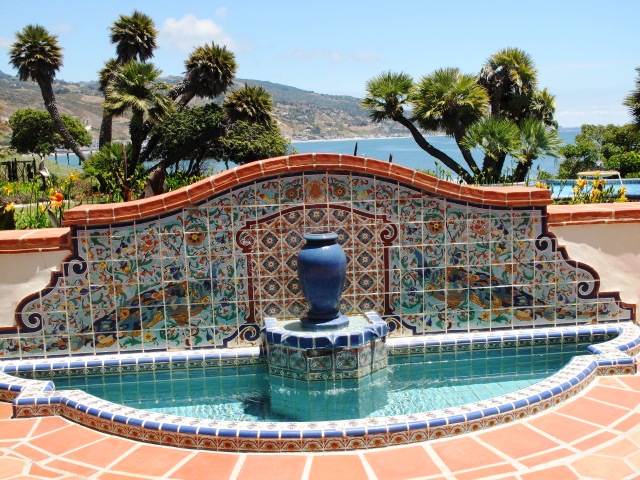
The Adamson House's custom-designed peacock fountain uses Malibu Potteries' cuerda seca technique. The fountain features hummingbirds and lavish peacocks.
The beach house was May’s gift to Rhoda and Merritt (a rancher and lawyer who supervised the family’s vast land holdings). And its creation gave architect Stiles O. Clements and decorator John B. Holtzclaw a chance to showcase throughout the home all of the unique tile being created by Malibu Potteries.
Exquisitely handcrafted details – dramatic and graceful wrought-iron ornamentation, painted murals and intricate surface decoration, vaulted cilings – with the warm buff-colored walls for a background provided an ideal setting for the rich ceramic architectural accents custom designed by Malibu Potteries. There was lavish use of ceramic tile outside the home in fountains, a star-shaped fish and lily pond, murals, the bath house . . . . Some of the more elaborate installations were framed from inside the house by sensitively placed, elegantly detailed windows. (from Ceramic Art of the Malibu Potteries).
I guess what inspires me about the decorative art of tile is its exuberance. To see even a utilitarian surface embellished with tile – tile that depicts a real rug or a beautiful ocean scene or a colorful bird – can’t help but get you thinking about your own dreary walls, floors, ceilings and furniture. These artists couldn’t help themselves. When they were presented with a blank canvas – the architecture and interiors of a home – they wanted to give it something of beauty. Pure artistry. The good news is that today, there are several tile makers who are reinterpreting some of these classic Malibu designs for those of us just now discovering the tile and its alluring character.
Here are some other awesome photos from Malibu Potteries:
-

-
An outdoor fireplace tucked into the corner of the first floor courtyard.
-

-

-
Many of the thresholds and portals are marked by a small band of broken pottery
-
-
Elaborate ironwork gates (one of a pair) connect the loggia to the outdoor patio
-
-
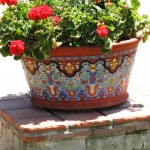
The vivid oranges, blues and yellows haven’t faded since this jardiniere was made in the late 1920s.
-
-
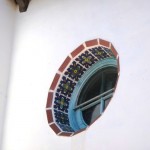
A porthole-style window high in the ceiling of the Adamson family’s sun room.
-
-

-
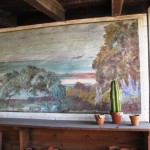
A scene from the Adamson House’s second floor balcolny, with built-in tile bench.
-

-
A 32-tile peacock Saracen panel, made with the cuerda seca technique, in a courtyard at the Adamson House
Posted in General | 3 Comments »
May 26th, 2010
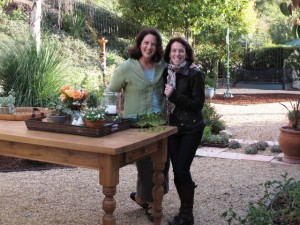
On location in my own backyard with BH&G senior art director Shelley Caldwell
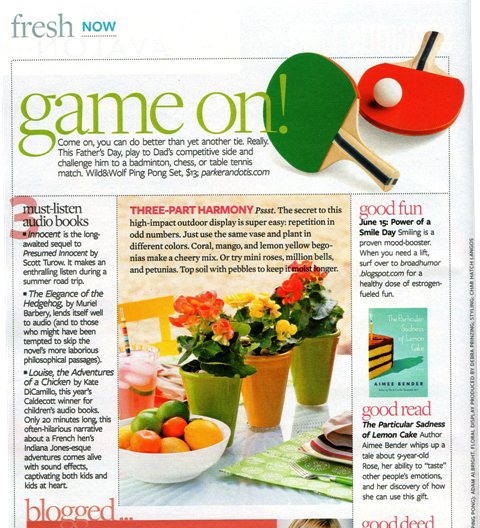
One perk that comes with my new gig as contributing garden editor for Better Homes & Gardens was recently producing a photo shoot in my garden. Some of the shots from our March session, photographed by the very talented Jack Coyier, appear in the June 2010 issue of BH&G (on newsstands now).
The story idea came from the Home Design department rather than the Garden Group, but I got involved because this design/entertaining story included plants.
This is my tale of what happens with a great story idea and how it takes the journey from something pretty HUGE to something fairly modest. I’m learning that it’s all about the creative process, not just the end game.
It all started when I was asked to come up with three planted container ideas that could look good outdoors all summer long. That sounds easy, doesn’t it? The editor asked:
As part of a larger summer outdoor entertaining guide, we want to give some ideas for summer-long living centerpieces. Wondered if you would have some thoughts on that and be interested in designing 3 centerpieces.
I sent her several suggestions featuring foliage plants. Here they are:
- Wood window box planted with edibles: Herbs (chives, flat-leaf Italian parsley, oregano, thyme, and strawberries)
- Galvanized zinc or aluminum containers with bold foliage – such as Rex begonias (dark green and burgundy) with creeping jenny or helichrysum (lime foliage that drapes over the edge of the planter)
- Terra cotta pots with air plants (silver-blue tillandsias); This is to show a low-maintenance alternative to succulents; tillandsias do not require planting and can be arranged on gravel or pebbles that fill the containers (and misted over the summer to keep alive).
- Glazed pottery with grass (or grass-like) plantings; Planted with tufts of green mondo grass or seeded with wheat grass, fill the shallow, Asian-style containers for fresh, summer-long lawn on your table. The grass can be embellished with clear glass votive holders or peppered with cut flowers inserted in the grass with stakes (for single events). This is Jack Coyier’s idea and I think it’s cute!

One of the tabletop designs shot in my backyard - featured in BH&G's June issue
The feedback? Where are the flowers? This is the editor’s reply:
Something to think about . . . how can we tweak these to be a little more decorative and festive, and a tiny bit less about foliage? Can we get one of them centering on a beautiful bloomer?
Yikes! I forgot the flowers. Actually, I didn’t really forget them; I just selected foliage plants thinking they would be lower maintenance than flowers (which might require regular dead-heading, fertilizer, etc.) and be guaranteed to look pretty from Memorial Day to Labor Day. Turns out, BH&G readers really LOVE their blooms. There can never be too many flowers, remember?
I refocused my brainstorming to include more, more, more blooms. The story planning went through several iterations until I was told this might be a feature spread with five different planted centerpieces. I went to town – actually sourcing plants and containers from as far north as Ventura to as far south as Hollywood, logging 200-plus miles on my Volvo’s odometer as I pulled pots, plants and accessories for the March 9th prep day and March 10th photo shoot.
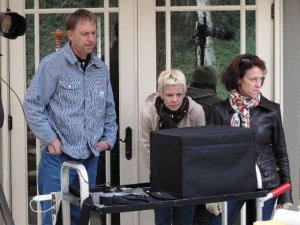
From left: Jack Coyier, Char Hatch Langos and Shelley Caldwell
The plan was to photograph all five tabletop looks. Thank goodness for the very talented Char Hatch Langos, an LA-based stylist who logged even more hours and miles in her car hunting down props than I did!
She arrived on Tuesday with BH&G senior art director Shelley Caldwell. Between the two of them they had a condo’s worth of patio furniture, textiles, vases, dishes, flatware, napkin rings – you name it – crammed into two cars! All of this for five different looks!
The looks related to five themes that we had worked out: Romantic; Asian; Edible/Herbs; Citrus Mix-n-Match; and Tabletop Tray of Collectibles.
So it was a fun two days, with a lot of fine-tuning, adjusting for the sunlight bouncing off of my California Gold crushed gravel garden, unseasonably low temperatures and brisk winds.
READ MORE…
Posted in Creativity, Entertainment, floral design, Gardening, General, Plants, Playfulness, Writing | 1 Comment »
May 23rd, 2010
Take a seat. A succulent seat, that is.
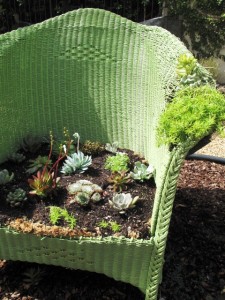
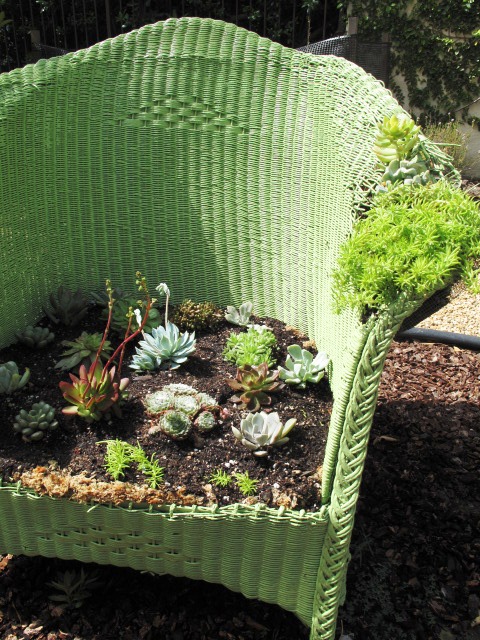
Voila! My sedum-planted wicker chair as garden art
If you’ve ever admired the charm and whimsy of a planted chair, you’re not alone. I’ve always liked plants combined as a design element with furniture. When my mom passed along Grandma’s 1940s wicker porch set, I knew that the slightly unraveled rocking chair was destined for a new role in my garden. So two weekends ago, on Mother’s Day, I started creating a sedum seat for the cherished rocker.
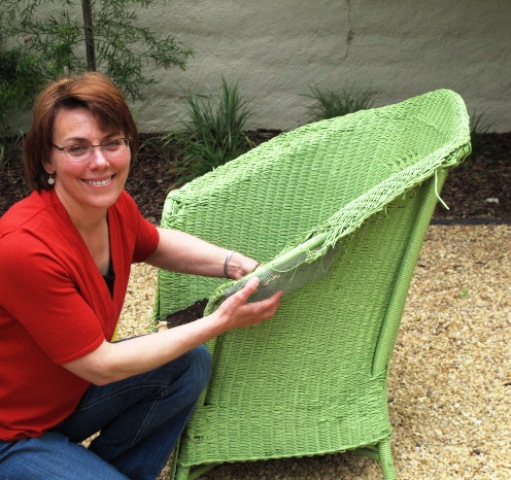
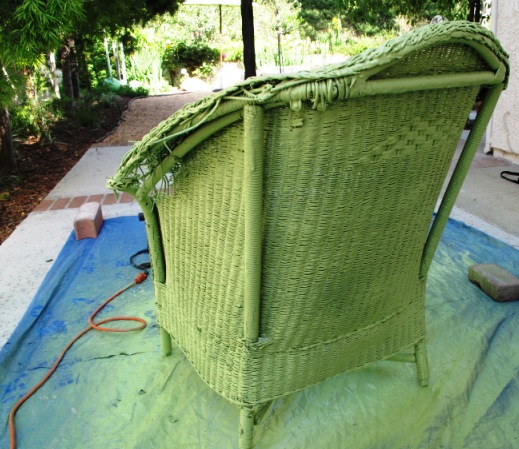
After giving Grandma’s wicker chair a fresh coat of herbal green paint, I was ready to turn the family hand-me-down into an ornamental garden feature. Here’s Part Two of my Mother’s Day gardening project, which illustrates how to prepare and plant the chair.
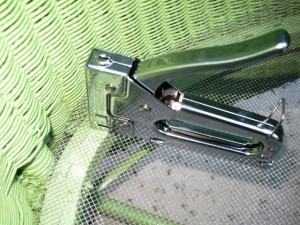
Step One
Step One: Using a sheet of 1/4-inch wire mesh and a pair of wire clippers, I cut out a seat-sized section to fit into the chair’s base. A staple gun came in handy to secure the mesh to the piece of wood bracing.
Step Two: I layered sections of dry Angel Moss over the mesh. A highly-absorbent variety of sphagnum moss, Angel moss is a nifty product that I discovered last month while teaching four container and hanging basket design classes for Gardening How-To magazine. The moss hails from the bogs of New Zealand and, because of the way it is farmed and harvested, is considered a renewable resource. You can purchase pre-formed liners to fit into wire hanging baskets or flat sheets to use for projects such as mine.
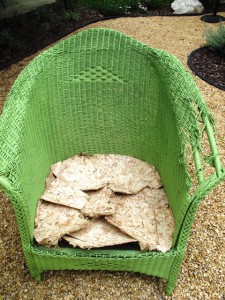
Step Two
As dry as a piece of brittle cardboard, Angel moss changes its character dramatically when exposed to water. It’s a fabulous medium for baskets, window boxes and the mesh seat of my wicker chair because the moss proves itself to be an excellent material for holding soil and plants. It doesn’t dry out as quickly as the kind of coco-fibre or woodland moss we’re used to here in North America.
Step Three: On top of the Angel moss I spread approximately 3 inches of my planting medium. I’ve learned that the best environment for growing succulents (especially in containers) is to mix equal parts organic potting soil with cactus mix. Erin Taylor, owner of Botanik, a great garden emporium in Summerland (near Santa Barbara) taught me this recipe soon after I moved to Southern California. One look at her shop’s awesome succulent containers and I knew she was speaking from experience.
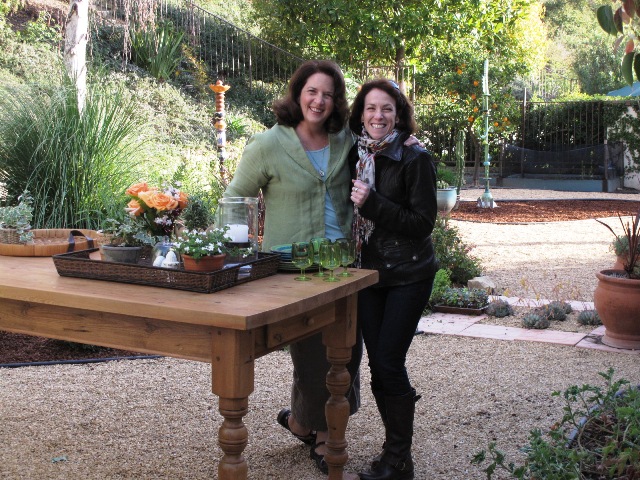
Step Four: My friend Jean Zaputil, who I call my garden muse for the 25 years of design, horticulture and landscaping knowledge she’s shared with me, was visiting from Seattle last weekend (along with our mutual friend Jan Hendrickson).
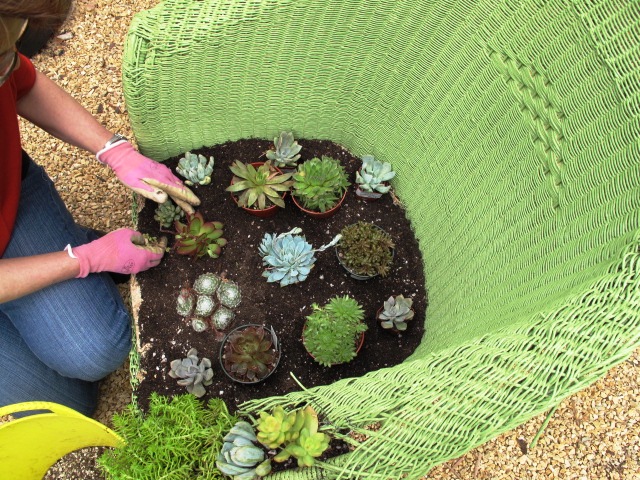
We had a little free time on Sunday morning so Jean offered to do the planting layout for my chair. She worked with about 14-16 small succulent plants of varying colors (ranging from silvery-white to lime green to red-burgundy).
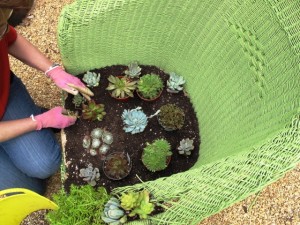
Step Four
Before planting the “seat,” we tackled the tricky gap in one of the chair’s rolled arms.
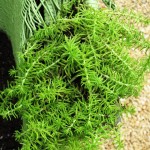
Plants in the "arm"
A total negative from my mother’s point of view (the shredded wicker arm reminded her that a childhood dog had gnawed on the arm and practically ruined it for comfortable use), I decided to use the gaping void as a spot for more succulents.
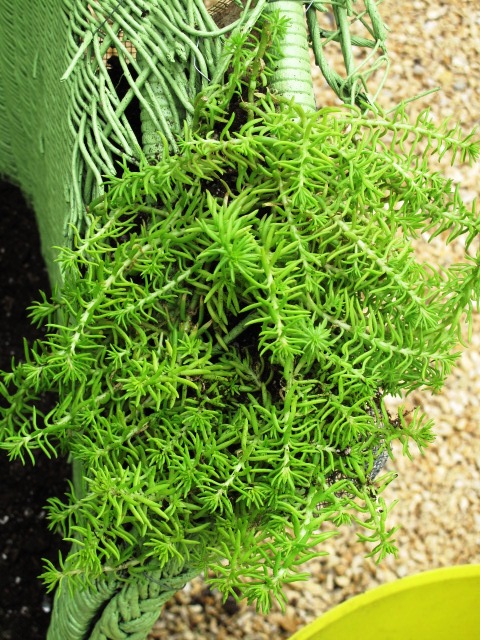
Jean fashioned a shallow tray with the 1/4-inch wire mesh sheeting. We fit it under the arm and wired it into place. Just as with the seat, we inserted some pieces of Angel moss and poured in some soil. The chewed-away openings now hold three succulents, including the very pretty Sedum rupestre ‘Angelina’. Its chartreuse-color and fluffy form will drape over the arm and soon obscure the mesh tray.
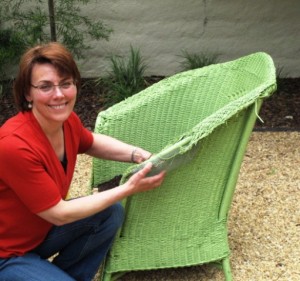
Jean Zaputil, as always, my garden muse
Jean arranged the sedums, sempervivums and other succulents to create the planted seat.
Even though the root space appears shallow, these plants will do just fine. They are ideally suited for my project – able to withstand extended periods of drought. A quick “shower” every week or so will give the plants enough moisture to take root in the soil/Angel moss and begin to spread, eventually filling in the seat.
And pretty soon, I’ll have a lush, succulent “cushion” for my grandmother’s wicker chair.
Now I’m looking at a modern wicker chair – a Pier One version with leg bent from too many teenagers leaning back in it while playing X-box games – and thinking about giving that chaise a new life in the garden. It’s currently natural colored, but maybe a coat of paint and a new planting theme will give it the necessary style to move outside.
Wonder what plants belong in that chair? Maybe I’ll paint it peacock blue and do an all-white flowering scheme! Stay tuned.
Posted in Creativity, Furniture design, Gardening, General, Plants, Playfulness | 7 Comments »
May 9th, 2010
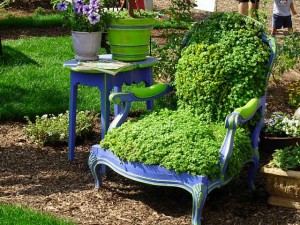
A sedum armchair. Lush and fluffy. Makes you want to sink right in. I love that the lime green arms have been painted to pick up the bright foliage.
Ever since I can remember, I was in love with a 3-piece set of wicker furniture that stood inside the enclosed porch of my grandmother Helen Winslow Ford’s home in Hammond, Indiana.
After I wrote the above paragraph, I started asking myself “what was it about the wicker porch furniture that tugged at my heart?” Vintage wicker somehow symbolizes all the feelings of comfort, care and love that I always felt at Grandma’s house. Those emotions continued with my own mother and the home she created and kept for her family. And now, maybe I can emulate those traits here in my grownup life, for the husband and sons I care for.
That timeworn wicker – a love seat, arm chair and rocking chair – made its way from Grandma’s home on Florence Street to my mother Anita Ford Prinzing. I first remember seeing the pieces in our Portland, Ore., house (perhaps Mom inherited the furniture after Grandma passed away – I’ll have to ask her).
Mom updated the 1940s seafoam green wicker with a coat of 1970s chocolate brown paint. She replaced the aging seat covers with cushions of a quilted rust-orange-sunflower yellow patchwork print.
Soon after Bruce and I married in 1984, Mom gave me the rocking chair. I took off the curved “rocker” sections and converted the piece into an armchair. I painted the woven wicker a soft blue-gray. The new cushion was covered in a tiny blue-and-raspberry polished cotton print. I also gathered and piped a cover to hide one of the chewed up arms.
The shredded weft and warp of the wicker was the fault of mom and her brother’s childhood dog. Consequentially, the chair was always considered a bit junky because you couldn’t sit in it without your sweater sleeve snagging on the bits of wire sticking in every direction.
Later, my parents shipped me the wicker love seat. I am not sure how I got so lucky because I know my brother Scott and his wife Kris used it for a while. But somehow my teenage “request” to inherit the piece lodged in my mom’s memory and she sent me the brownish wicker love seat in 1997, after she had owned it for more than two decades.
That was the year we lived in a 2-bedroom apartment with a newborn (Alex) and a 5-yr-old (Benjamin) in Seattle’s Madison Park while building our dream house in nearby Seward Park. I remember the enormous box arriving from UPS or some other shipping service. I had to open it in the courtyard outside, because there simply was no space in our apartment to do so.
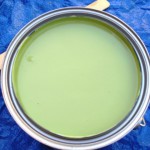
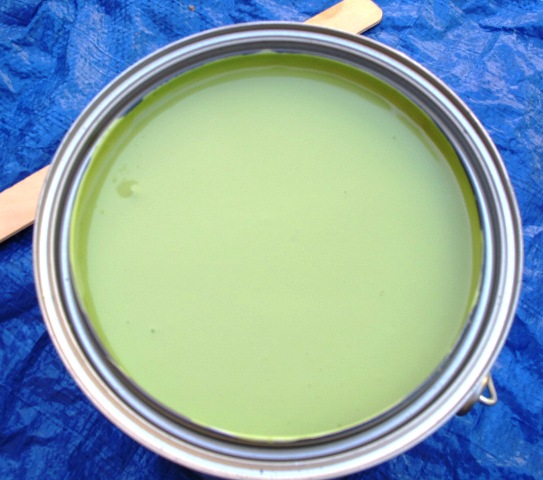
My yummy green paint choice - a perfect garden color!
Recently, after downsizing, my parents arrived to see us in Southern California while en route to their place in Mesa. The “good” wicker armchair (the one the dog didn’t eat!) was wedged into the back seat of their car. Personally delivered by my folks, the chair has joined its love seat companion on our back patio. Both pieces now need a face lift but they are in good shape considering they are at least 70 years old. I’m thinking of painting them glossy black and adding lime green cushions with black piping. Won’t that look modern?!
Mom told me, “I’m going to give you the nice chair but only if you promise to get rid of the one that’s unraveling.”
I said, “Okay, I’ll stop using it to entertain garden guests. But is it okay if I find a spot for it as a piece of art in the garden?”
She couldn’t say no!
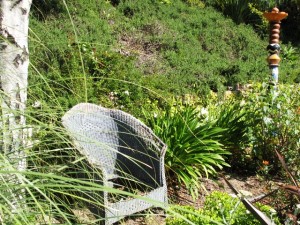
- Today I started the makeover of my Grandmother’s wicker chair
Last fall, I removed the disintegrating cushion and seat, and placed the bottomless chair out in the garden. Yup, it’s in the right place. For months, I’ve wanted to paint it lime green and “plant” the seat and torn-up arm section with sedums and other succulents.
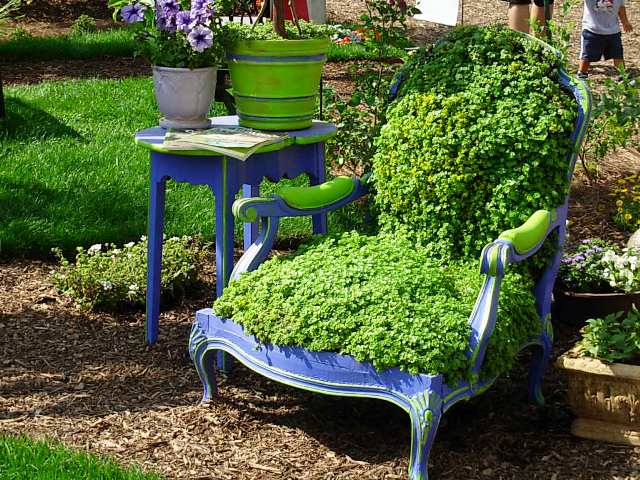
I have admired planted chairs before. Last summer I saw a peacock blue chair in a garden display at the Ventura Co. Fair. Its seat and back were planted with succulents. Luscious! [see my photo – above]
So today, my Mother’s Day gift to myself was to dig out the electric paint sprayer, clean off the chair’s wicker framework, and head to the hardware store for paint. I came home with an outdoor-ready semigloss in a color I can only think to call guacamole green.
The painting is finished. Doesn’t it look great? Perhaps it needs a second coat after this one dries. I’ll do that tomorrow, before the demands and deadlines of the coming week take over my calendar.
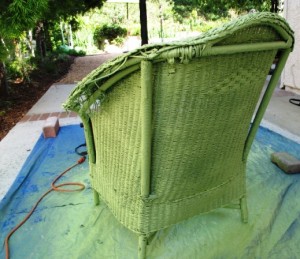
- The new-leaf green, aka “guacamole green” will transform the old wicker
Next: I want to fill the empty seat area with a panel of 1/4-inch mesh sheeting. I have a piece lying around from a planting project a few summers ago. I used it to anchor some succulents into a path and stop some critters (rabbits? possums?) from digging up the plants each night.
The mesh will create a supporting base for moss, which will be covered with a shallow layer of potting soil-cactus mix as my planting medium. Into that, I’ll plant a new “cushion” of all sorts of sedums. Voila! My long-awaited planted chair.
I’ll post photos as I go along. I’m also thinking of using the mesh to contain soil behind the gaps created by Mom’s hungry dog so I can plant a few more succulents there.
I don’t remember much about her family pet other than that the dog’s name was Sue-Sue. According to Mom, my grandfather used to open the front door and call out to the dog: “Oh, Susanna!”
That’s a silly story, but I remember it made me laugh as a girl.
Posted in Creativity, Furniture design, Gardening, General, Plants, Playfulness | 15 Comments »
May 8th, 2010

Agave attenuata - the most sculptural and simply perfect form in the Southern California garden
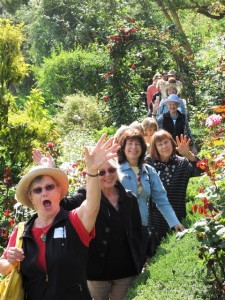
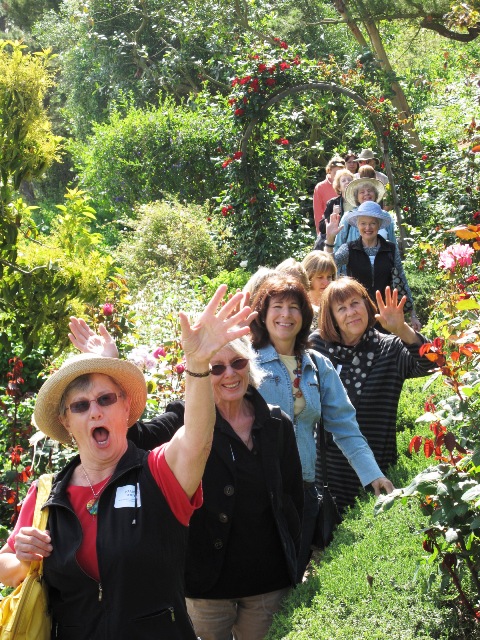
- Joanne White leads the way along the rose-laden path in Marylyn Ginsberg and Chuck Klaus’s garden
I have spent many moments this past week reliving the wonderful experience of leading the Northwest Horticultural Society’s “LA Garden Tour” last weekend.
It was a lot of work for the group’s tour co-chairs Gillian Mathews and Renee Montgelas and me, but we agree that the four-day excursion was a huge success (well, we won’t discuss the bus fiasco on Saturday night – no fault of our own!).
I said “yes” to planning and leading the tour after several years during which Gillian and I fantasized about putting together a weekend trip.
Gillian and I have known each other since 2000 or 2001 when I was still reporting on retail trends for Puget Sound/Eastside Business Journals in Seattle and she had just launched her garden emporium, Ravenna Gardens. From there, we not only helped each other with our respective auction projects, but we became friends. Gillian, in fact, is responsible for me assuming the editorial duties for the horticultural society’s Garden Notes, a quarterly newsletter that I edited for a few years on two occasions.
We first worked on a tour together in 2005 when I led an autumn weekend to Eastern Washington/Yakima area. And only three weeks after I first arrived in Southern California in late August 2006, it was serendipitous that Gillian and Renee brought an NHS group to Santa Barbara and Pasadena. I joined them for much of that tour and honestly feel that it was my happy introduction to Southern California horticulture and landscape design. When I visited some of Santa Barbara’s great public and private gardens and nurseries with the group, I thought to myself: “I am going to be okay down here.”
Gillian may not realize how directly and indirectly she has influenced and encouraged the course of my career to leave business writing and embark on garden and design writing – but she has!
Fast forward 3-1/2 years and it was my turn to show off LA to many old and several new NHS friends. Here’s a recap and some photos to introduce the awesome design style of LA’s gardens:
READ MORE…
Posted in Creativity, Entertainment, Gardening, General, Landscape Design, Plants | 3 Comments »
May 6th, 2010

Gregg Fleishman's "Puzzle Prefab Shelter" and Laura Morton's dog shelter with a planted roof were two features of the New California Garden, designed by members of the Association of Professional Landscape Designers/Greater LA Chapter
 During the weekend of April 30-May 2, the 127-acre Los Angeles Arboretum & Botanical Garden presented “Living Green: Essentials for the Home Gardener,” an outdoor flower and garden show that was an essential place to welcome the spring growing season.
The LA Garden Show seems to expand in size and style each year, adding exciting and informative speakers on topics ranging from sustainable design (“Green Architecture: Volume and Shape in the Mediterranean Garden,” by Gary Jones) to edible gardening (“Ten Trees in One: Grafting Citrus and Avocados,” with Darren Butler).
There are al fresco-style gardens, planted in or on top of real soil, just like Chelsea and other outdoor garden shows, which I think is a vast improvement over those dark, fluorescent-lit caverns that house indoor displays.
And of course, while the somewhat aggressive male peacocks are strolling and squawking, the two-legged garden show-goers are chatting with designers, snapping pics, waiting in line for lunch (I loved my chicken tacos, served with fresh cilantro), and, of course, doing some plant- and art-related retail therapy!
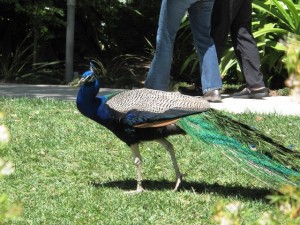
One of the Arboretum's resident peacocks strolling the greens
I mention shopping because as far as I’ve been able to discern, the marketplace at the LA Garden Show is one of the very best stops for plants, garden art, accessories and other must-have items for the horticulturally-inclined.
I only wish it lasted longer than 3 days because I didn’t get around to all the plant-sellers, horticultural societies, garden accessory purveyors and other vendors. I learned that efforts by the Arboretum’s volunteer marketplace managers resulted in nearly twice the number of exhibitors this year over last. It was a well-curated lineup of offerings (thankfully, no schlocky stuff).
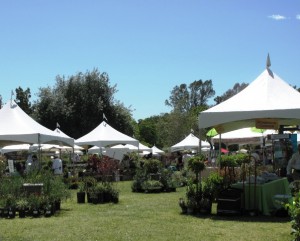
The festive and enticing Garden Markeplace - where we all engaged in a little horticultural retail therapy
I checked in with a few of my favorite folks including Pacific Horticulture Magazine, Southern California Horticultural Society, Leslie Codina Ceramics and TerraSculpture.
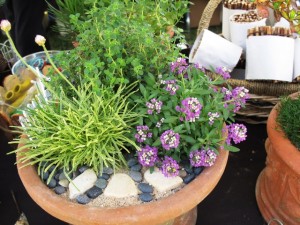
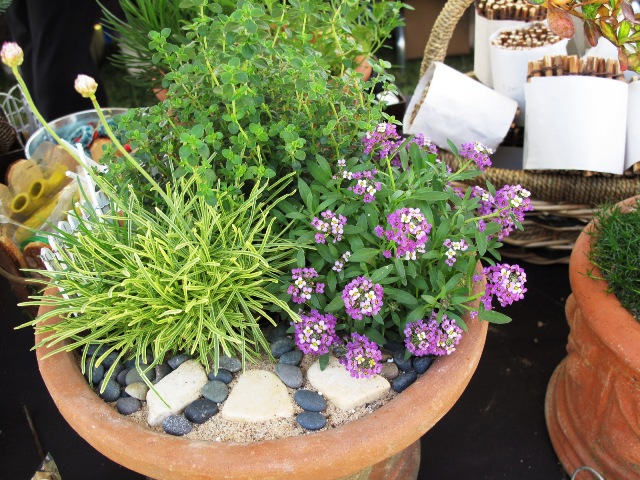
A tiny tabletop landscape by Smallweeds
A new discovery: Smallweeds, which designs miniature tablescapes and also sells miniature accessories for making your own tabletop and fairy gardens.
I did a lot of browsing and gabbing with old and new friends, a little shopping, and a lot of note-taking while spotting new products, themes and trends. One of my very favorite picks of the weekend is the powder-coated obelisk series, created by Annette Gutierrez and Mary Gray. The women own Pot-ted, an eclectic, must-visit garden shop on Los Feliz in Los Angeles.

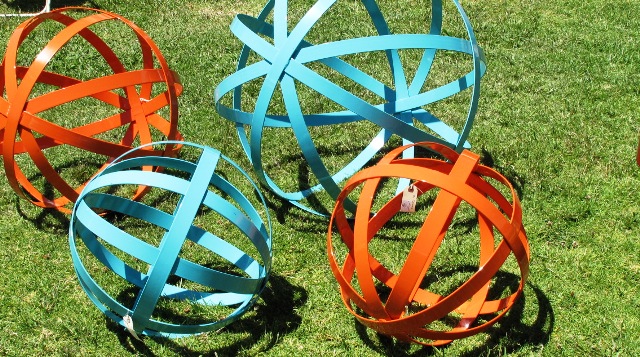
Yowzer! Shiny and bold, the powdercoated metal orbs are the hot, new "objet" for your garden.
As experienced and artistic film industry veterans, the women sure know how to create high style on a shoestring. They also know that it’s often easier to design something themselves rather than wait around for the marketplace to catch up with a need or opportunity.
Thus, the colorful objets for the garden, seen at left. Can’t you just imagine how elegant and artful these spherical shapes would look, grouped one, two, or three on a lawn, a gravel patio, or even tucked into a perennial border with stems and petals weaving in and out of the openings?
Annette and Mary aren’t claiming to have invented the ringed orbs (some of the earliest ones were made from leftover steel straps used to hold wine caskets together). But they do love the way the steel shapes take to easily to the powdercoated color. And since aqua and orange are the Pot-ted purveyors’ two favorite garden colors, they started with this palette. You can visit the shop or call to inquire about shipping. There are three sizes and boy do they look awesome: 30-inch ($169); 24-inch ($139) and 18-inch ($98).
READ MORE…
Posted in Creativity, Furniture design, Gardening, General, Landscape Design, Plants, Playfulness, Sheds & Havens | 4 Comments »
© Debra Prinzing, all written and photographic content. Website design/development by Willo Bellwood/Metric Media