The Slow Flowers Podcast is the award-winning show known as the “Voice of the Slow Flowers Movement.” Launched in 2013 as the original flower podcast, we’ve devoted more than 10 years to covering the business of flower farming, floral design, and the Slow Flowers sustainability ethos. Listen to a new episode each Wednesday, available for free download here at slowflowerspodcast.com or on iTunes, Spotify, and other podcast platforms.
August 3rd, 2010
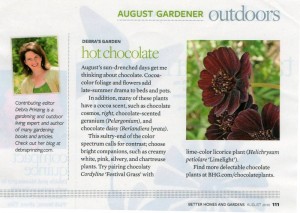
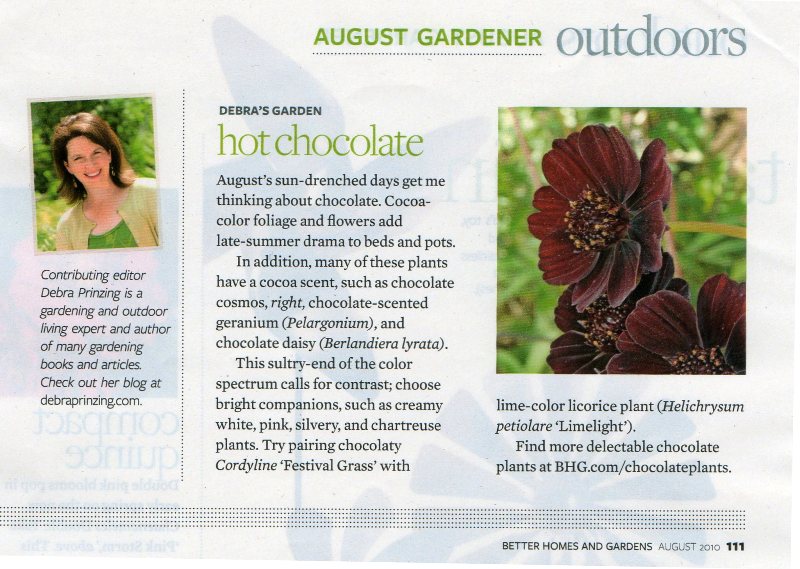
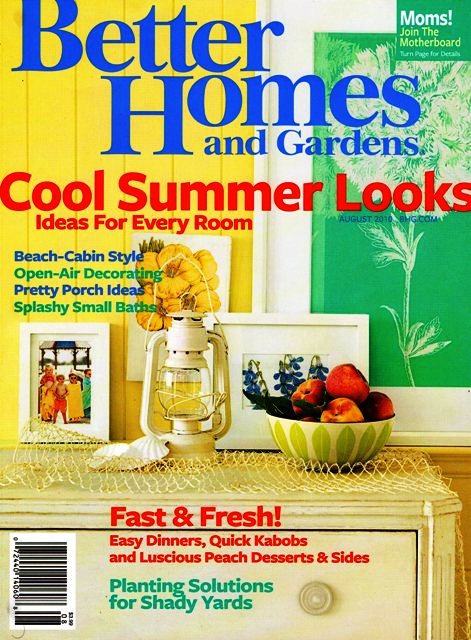
BH&G's August issue features my "Debra's Garden" column about "hot chocolate" plants
 Chocolate flower and plant update:
Better Homes & Gardens readers who see this month’s “Debra’s Garden” piece on cocoa-colored and chocolate-scented plants might be interested in reading my post from last July. You can find it below.
Just last summer, I visited the famed Chocolate Flower Farm in Langley, Wash., on Whidbey Island – and wrote about my tour of the charming and inspiring nursery with owner Marie Lincoln.
Several readers have already contacted me to mention Chocolate Flower Farm as a great source for dark-colored and sweet-fragranced plants, including the chocolate cosmos, featured above right.
In fact, if you turn to the Resource section in the August issue, you’ll discover that we did indeed feature this great resource for all things chocolatey. The web site is:
www.chocolateflowerfarm.com.
As with the edible kind of chocolate, one can never have too many yummy, delicious chocolate plants. Enjoy – and please let me know how you are using this sultry color in your own garden.
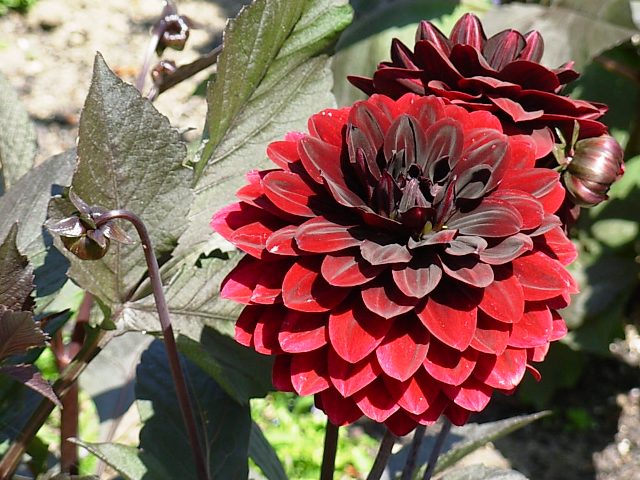
Dark chocolate brushes the tips of this multi-petaled dahlia called 'Karma Choc'
 The flowers that Marie Lincoln and Bill Schlicht cultivate at their Whidbey Island nursery specialty nursery are good enough to eat. That’s because Chocolate Flower Farm’s mocha, bittersweet chocolate, cinnamon, cocoa and espresso-hued blooms and foliage plants are as satisfying to the senses as a Fran’s caramel-filled chocolate sprinkled with grey sea salt (well, almost).
My friend Stacie Crooks, of Seattle-based Crooks Garden Design, was my escort to Whidbey last Tuesday. We’d only slightly recovered from our late night festivities in her superb, often-photographed drought-tolerant garden, where a gaggle of garden gals gathered (isn’t that alliterative?) for a lovely sunset soiree. I spent the night at Stacie’s and we set off the next morning for the ferry from Mukilteo to Clinton on Whidbey Island.
The ferry crossing was short – 20 minutes – but beautiful in its grey-blueness with sunlight pushing through the morning haze. I breathed Seattle’s maritime air and that made me happy.
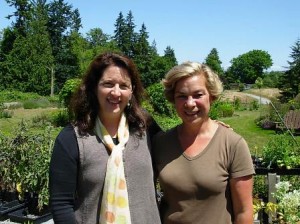
I had a lovely visit to Marie Lincoln of Chocolate Flower Farm on Whidbey Island outside Seattle
After visiting one of Stacie’s inspiring and impressive design projects, the subject of which I hope will soon appear in one or two of my articles, we drove to Chocolate Flower Farm to meet Marie. I first met this dark-plant purveyor by telephone when I called her last December to request an interview. I wanted to include her “sweet” plant passion in my February “In the Garden” column for 805 Living.
Like most of my writing efforts, there’s a back story on the piece, entitled “Brown is Beautiful: Sweet Tips for Growing a Chocolate Garden.” Last fall, my editor Lynne Andujar made an off-the-cuff comment to me: “Oh, our February issue is going to be the CHOCOLATE issue, but I’m not really sure if there’s a fit for the gardening column,” she said.
“You bet there’s an angle,” I replied. “We’re going to feature chocolate-scented and chocolate colored plants!”
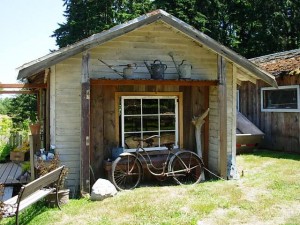
A little shed houses the nursery sales area
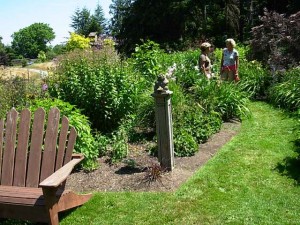
Marie Lincoln shows off her plants to garden designer Stacie Crooks
Marie and Bill started the Chocolate Flower Farm in 2005 to grow and promote dark-colored plants.
The display beds and nursery area have expanded around their 1923 farmhouse and outbuildings (sheds!) to the former horse pasture.
As the “hot chocolate” trend grew, the couple searched for even more plants on the dark end of the spectrum, selecting unusual sports to propagate and sell as exclusive named cultivars. Marie jokes that her nursery reflects “a collision of two passions,” as it introduces new and veteran gardeners to the beauty of chocolatey colors in the landscape (not to mention a few very special chocolate-scented plants that invoke memories of grandmother’s Nestle Toll House cookies coming out of the oven).
READ MORE…
Posted in Creativity, Gardening, General, Landscape Design, Plants, Playfulness, Shed Glossary, Writing | 5 Comments »
July 31st, 2010
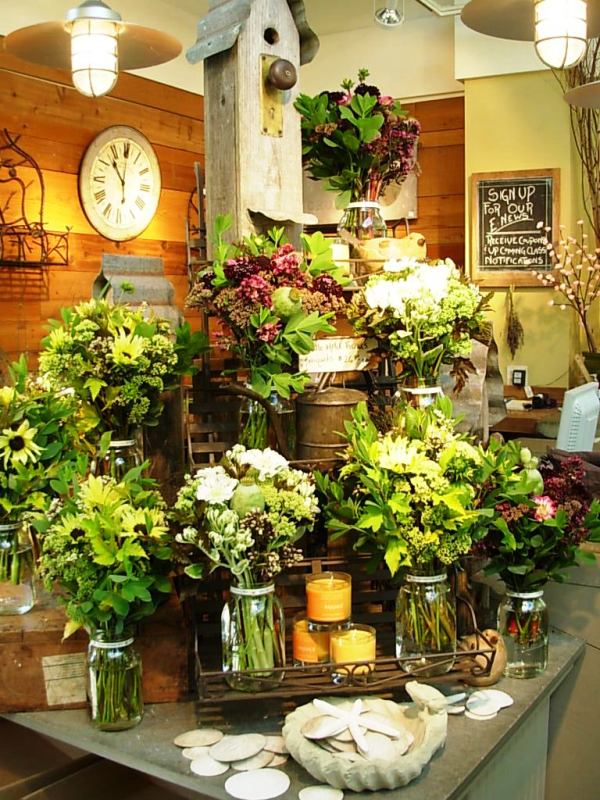
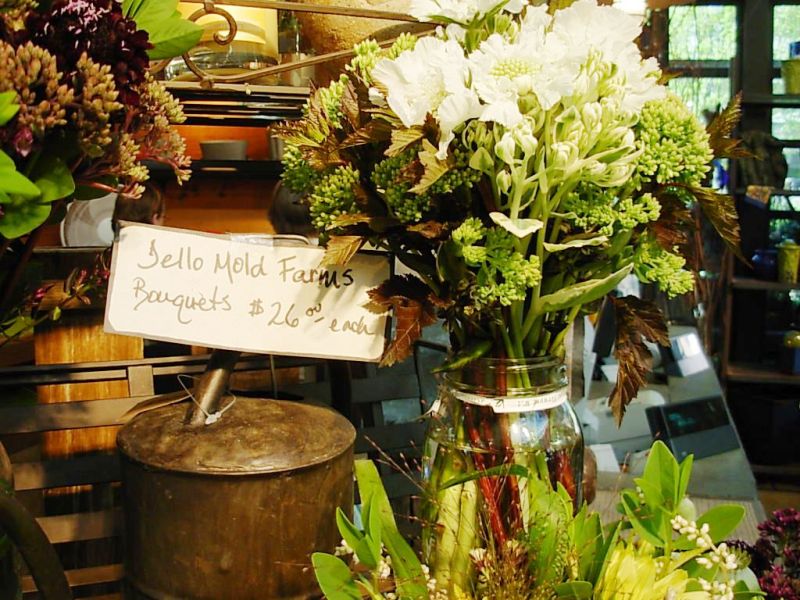
A breathtaking display of sustainably-grown flowers - at Seattle's Ravenna Gardens. The bouquets were grown by our friends at Jello Mold Farms
I’m back in Seattle as of about 10 days ago.
Can’t quite believe it but being here feels pretty awesome. We’ve been sitting out on our front porch each evening, admiring the sunset, which is silhouetted behind the Olympic Mountains and Puget Sound to the west.
I am so torn between missing my beloved friends and garden in Los Angeles and the excitement I feel at being back in Seattle. I’ve been asking this question for four years: Is it possible to be in love with two places at the same time?
As I ponder that “big thought,” I have had to squeeze in time to unpack (ugh), move furniture around to make room for everything in our smallish rental house, and bug my friend Jennifer to find the best dry-cleaner, dog kennel, ethnic restaurants, local grocery stores and more. Thank goodness our dear friends Jennifer and David (and their son Max, our son Alex’s BFF) live only 5 blocks from here. They are a godsend!
Also, I’m working on two lectures for the upcoming Independent Garden Center Show in Chicago – scheduled to take place in a few weeks’ time. Ironically, earlier this week I spent 3 days in Chicago – as a would-be college freshman “mom,” for my son Ben’s orientation at DePaul University. What a cool city!
I’m looking forward to returning to Chi-town in a couple weeks where I will present a lecture on “Ideas from the country’s most inspiring garden centers” and “The female gardener” (with colleague Robin Avni).
In preparation, I’ve been sorting slides and digital images to illustrate my talks. Robin and I met for several hours yesterday to work on our joint presentation, which taps into her trademarked “Mommy to Maven” consumer research.
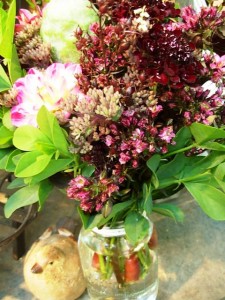
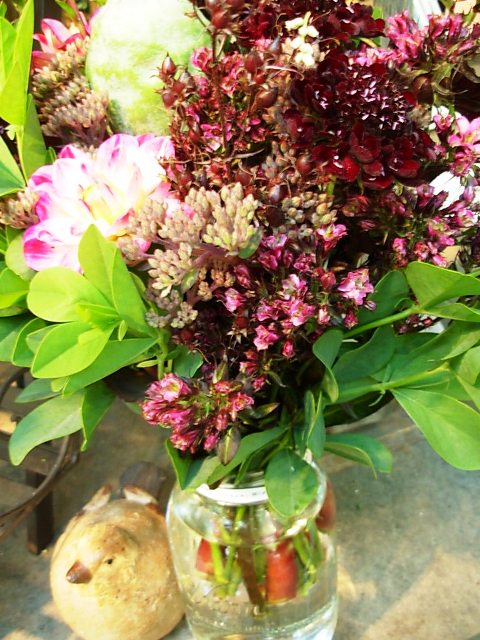
A close look at the many delicious ingredients in Diane and Dennis's bouquets
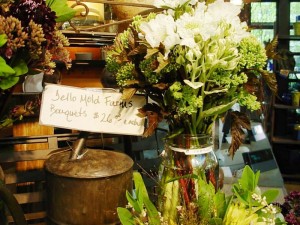
Hey, for $26 - it's a great deal! This vase is packed with pretty!
Yesterday, I also stopped by one of my favorite emporiums, Ravenna Gardens.
Owner Gillian Mathews told me that each Friday her shop receives deliveries of local and sustainably-grown bouquets from Mount Vernon flower farmers Diane Szukovathy and Dennis Westphall of Jello-Mold Farms (they grow gorgeous blooms in a farming community about 90 minutes north of Seattle).
Ravenna Gardens places each one-of-a-kind bunch of blooms in a glass Mason jar, presenting customers with some of the most charming arrangements around. I couldn’t resist bringing one home with me yesterday. It’s sitting on my desk to cheer me up each time I look at it.
I sent a note to Diane to ask about the hard-to-ignore jumbo poppy pod – the largest I’ve ever seen! Here’s her explanation:
A couple of years ago Melissa from Terra Bella handed me a few stems of the chubby poppy (definitely a variety of Papaver somniferum) which she had purchased at the local wholesale house. They had gotten a little old so she couldn’t use them for floral work. I was able to dry them and get viable seed and those are their grandchildren.
That plump pod is a focal point of the bouquet, which also includes Phlox paniculata ‘Natural Feelings ; Scabiosa caucasica ‘Dark Knight’; and Sedum ‘Green Expectations’, ‘Frosty Morn’ and ‘Autumn Joy’. Blue-green Baptisia australis foliage complements the design. What a mid-summer dream!
I’m going to enjoy these flowers for days – and it makes me happy to have that vase on my desk just knowing they were grown locally using earth-friendly practices.
Posted in Creativity, floral design, General | 2 Comments »
July 7th, 2010
The move from Southern California to Seattle is underway.
We are up to our ears in boxes, cleaning supplies, disassembled X-box game systems, piles of things to take to the Goodwill, and four years of memories.
Today, for a moment, I decided to hit the pause button and enjoy my backyard. I discovered that watching pollinators move from nectar source to nectar source is the very best therapy for an overly-tired body and soul.
Here is a little show, from me to you:
httpv://www.youtube.com/watch?v=DR7vytPzWBU
Posted in Gardening, General, Landscape Design, Plants, Spiritual Practices, Writing | 11 Comments »
July 5th, 2010
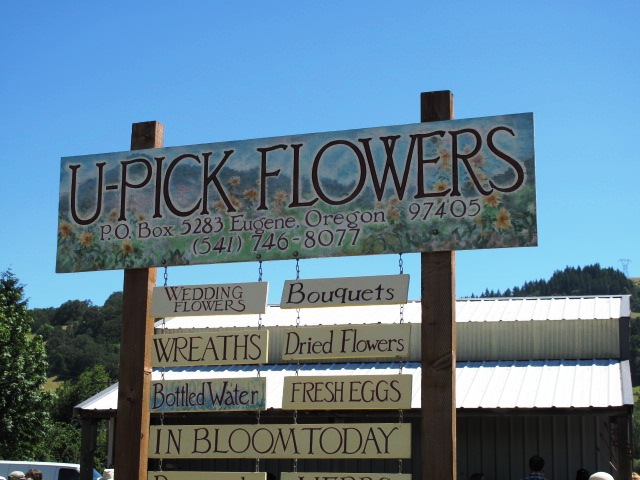
This is a sign that brings joy to my heart!
Here’s the sign that welcomed me as I arrived at the regional meeting for the Association of Specialty Cut Flower Growers in Eugene last Monday. Fields and fields of beautiful blooms grow here at Charles Little & Co., a 35-acre flower farm.
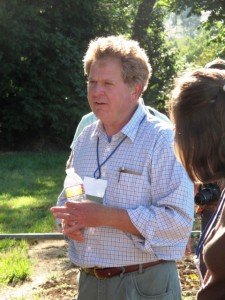
Grower Charles Little led about 60 of us through the flower fields, sharing his wisdom and knowledge about specialty crops.
I flew to Eugene last week to spend a day attending the ASCFG regional meeting, where I met up with photographer David Perry. We were excited to participate for the first time as members. An association of 450-plus flower producers across the country, ASCFG brings together specialty growers who raise all sorts of floral ingredients, including annuals, perennials, flowering ornamental shrubs, vines, edibles and grasses.
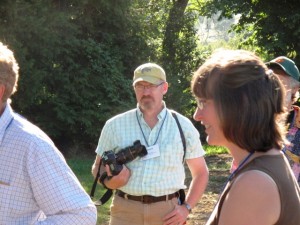
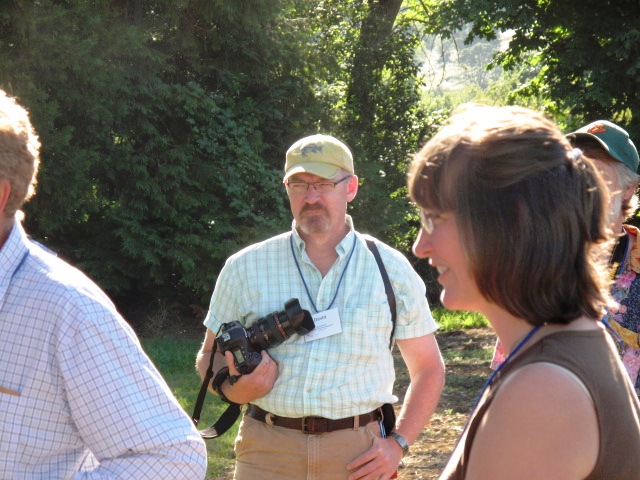
Cap on head; cameras over his shoulder, Dave Perry had lots to photograph.
This was a chance for us to hear from a diverse cross-section of growers. Each small business is carving out its own niche in the marketplace, from the grower with just one acre who sells most of her blooms at a local farmer’s market to a couple whose cutting garden has become a popular place for weddings (complete with fresh-cut blooms for the bridal bouquet).
Then there is a young, hardworking farmer who delivers his Oregon calla lilies and hydrangeas by the truckload, direct to the Los Angeles Flower Market and a floral designer who has decided to diversify by growing her own floral ingredients in her parents’ small acreage. We listened and learned and soaked it all up.
It was a treat to meet so many awesome, passionate individuals who work on the land and who want to connect with each customer who buys and enjoys the flowers they grow. We got caught up in the passion and the stories – stories we will continue to document with photography, video and the written word.
We are well along on this journey, but there is so much more to document for you as we create A Fresh Bouquet: Seasonal, Local and Sustainable Flowers. As David has written, please ” . . . follow along on this unfolding ‘cut-flower’ book project . . . as we continue to build it.”
Here are some photos of the day’s highlights:
-
-
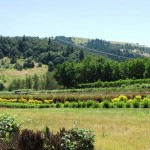
Eugene’s Mount Pisgah in the distance
-
-
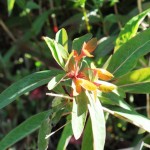
Euphorbia griffithii ‘Fireglow’ is great for foliage and coppery bracts.
-
-
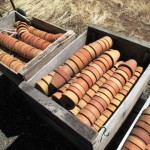
Ready for planting.
-
-
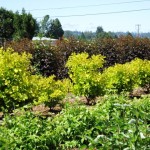
The gold form of Cotinus coggygria (Smoke tree) contrasts beautifully with deep wine-colored Physocarpus opulifolius (Ninebark).
-
-
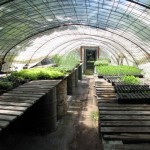
One of the production hoop-houses where seedlings begin life.
-
-
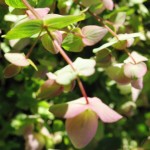
Oreganum rotundifolium ‘Kent Beauty’
-
-
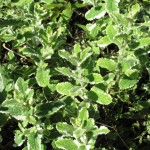
A fuzzy-leafed, variegated mint – wonderful foliage
-
-
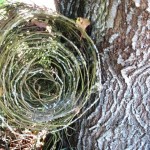
I have a thing for rust: this is a bundle of rolled-up fencing
-
-
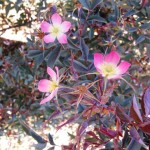
Rosa glauca, up close
-
-
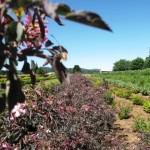
Rosa glauca in the field
-

-
Sanguisorba foliage – isn’t it pretty?
-
-
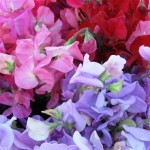
Sweet-scented sweet peas
-
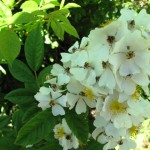
-
A spray of Rosa multiflora – a great producer of “hips”
-
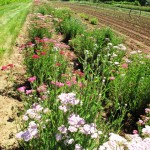
-
Yarrow in shades of pink
-
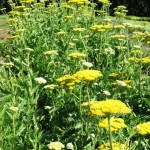
-
Achillea filipendulina ‘Gold Plate’
Posted in Creativity, floral design, Gardening, Plants, Writing | 2 Comments »
June 30th, 2010
My fellow Shed Aficionado across the Atlantic, Uncle Wilco, has presided over a fantastic “Shed of the Year” competition for each of the past three years. The British press has followed his competition with avid enthusiasm, including a recent story in the The Sun, a national tabloid. I have the honor of serving as the “international” judge, joining an illustrious team of judges for Shed of the Year.
Uncle Wilco will announce the winner on July 5th – the start of National Shed Week in the U.K.
He has given me permission to share photos and details about the 13 finalists. Each has captured the fancy of visitors to We [Heart] Sheds, his blog that invites “sheddies” from around the globe to share photographs and details about their own private, backyard getaways.
I recently checked in with Wilco to get a few more details about this year’s contest.
Debra: How many entries did you receive?
Wilco: “We had about 1,200 in total, including 60 international sheds this year.”
Debra: I noticed that there are no finalists from North America!
Wilco: “I think that the public who voted for the ‘short list’ went for the quirky UK sheds.”
I agree, Wilco. The quirky UK sheds are highly personal and very creative. I promised that I wouldn’t reveal how I voted until the July 5th announcement . . . but in the meantime, here is a preview of the finalists, along with my commentary:

Just a guy who wanted to have his own pub, 3 steps from the house

The innocuous pub exterior
PUB SHED Category: The 3 Steps (left)
WOW, I didn’t want to like this Man Cave at first, but I’m actually blown away by the smart design, amazing efficiency and cozy feeling of Garry’s shed.
I think I would like him as my neighbor!
Everyone is talking about being alone and alienated in the suburbs, but Garry has taken care of that problem by building community at The 3 Steps Pub
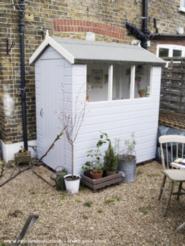
A tiny place for crafting and artwork.
WORKSHOP Category: Junkaholic’s Weaving and Sewing Shed (left)
Sweet and fresh, simple yet stylish. Artemis has turned something utilitarian into an inviting escape where I could be happy day after day. Love it!

Ahoy Matey! A pirate's lair
UNIQUE Category: The Lady Sarah Out of Worthington Shed (right)
Reg is living the good life here on his ship.
Viewing the photos and movies felt like a journey into Ye Olde Curiosity Shoppe – something wonderful and strange with every glimpse.
He has really created a backyard destination unlike anything I’ve ever seen – and certainly beyond the imagination of most shed owners.

A garden shed with a sweet color palette
WOODEN Category:Frankenshed, Penny Two Allotment (right)
What a creative way to dress up and decorate a basic tool shed. Frankenshed’s allotment potting shed is charming and has lots of personality. I love the lettering painted on the boards in contrasting lavender and green.

Inside: A cool office studio
STUDIO Category: In the Shed (left)
Nicola knows how to turn a box into a beautiful working space. Interiors are very creative, much more so than the rather plain exterior.

Time machine for your own backyard
TARDIS Category: Tim’s Tardis (right)
Clever and resourceful as a storage unit and garden accent.[Note: TARDIS is the name of a space-travel machine from “Dr. Who,” a popular British sci-fi novel]
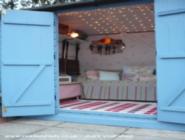
The lap of luxury inside a utilitarian shed.
NORMAL SHED Category: Mini Jeff Dave Jones (left)
This is exactly what I look for in a stylish shed – a “chill-out” place in the garden that’s both useful for storage and pleasant for R&R.
Nicely placed in the garden and I love all the attention to detail in the finishing. Not fussy at all, but a true Stylish Shed.
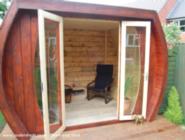
A sustainable retreat
ECO SHED Category: Ecopod (right)
The Eco Pod is inspiring and has a really appealing “mod” silhouette. Love that it was designed with sustainability in mind. I wish it was a little more organic as a garden element, though. Needs some oxygen-producing vegetation to downplay all that wood and really make the sustainable message relevant. It’s almost there, and I’d love to get my garden designer friends on the job to soften it up.
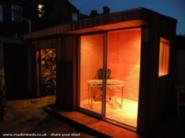
A 2-part shed that's pretty cool for working and also stashing stuff
GARDEN OFFICE Category: One Grand Designs (left)
Great design, great use of materials, wonderful attention to detail (wrap-around deck; skylight). Probably the best design of the batch for the mass marketplace. I see this design turning into DIY kits all over the globe.
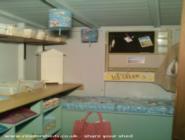
Inside the hut it's quiet and cozy
HUT Category: Beach Shed (right)
Tiny and terrific. Love the way this diminutive hut draws a crowd and even offers a cozy hideaway inside.
OTHER Category: Uisge Betha (no photo)
Less is more – great ideas for turning one space into three distinct ones. Love the way the outdoors garden is “borrowed” into the overall design scheme
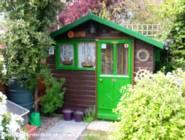
Outside: architectural focal point; Inside: collector's gallery
CABIN Category: Naval Museum (left)
Fantastic! Stephen is an absolute success at what he set out to do. The exterior fits really nicely into the garden and its interior demonstrates how to fit all your desired amenities into a tiny box – yes, you can have it all, even in the backyard shed.
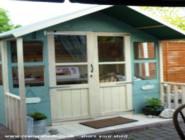
A wee cottage space that's easy, breezy and inviting
SUMMERHOUSE Category: Pebble Hideaway (right)
Lovely, light-filled design. I’m impressed with the use of glass doors and windows; the color blue is wonderful and it looks like a little cottage. A sweet spot.
Stay tuned for the announcement next week. I’ll let you know the final judging, as well as my own personal selection (including a Q&A with the shed creator).
Posted in Architecture, Creativity, interior design, Sheds & Havens | 5 Comments »
June 25th, 2010
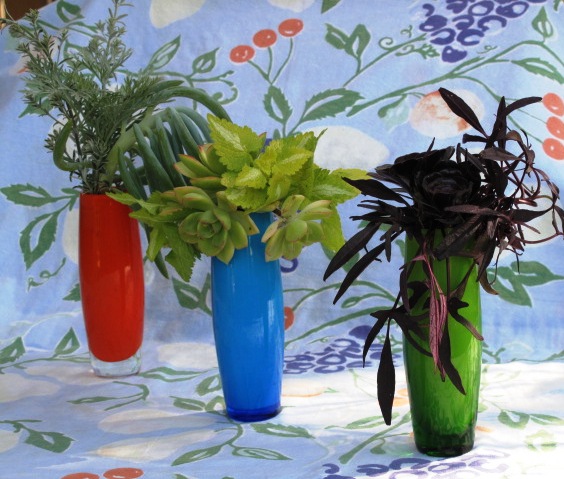
Here is my trio of vases inspired by my "Leaf it up" story in the June issue of Better Homes & Gardens. Each tiny arrangement features at least one cut succulent paired with foliage from a similarly-colored perennial.
Sometimes all you need are a few pretty leaves to conjure up a gorgeous tabletop arrangement or centerpiece. I have my talented friend Susan Appleget-Hurst, former senior associate garden editor for Better Homes & Gardens, to thank for producing a story that illustrates this idea (with several cool designs).
Susan, who now blogs at Cake in the Garden (check it out!) designed the lovely, leafy bouquets and co-produced the story with art director Scott Johnson. Then I was lucky enough to be asked to create the accompanying text. Pick up this month’s BH&G or click here for a peek at the story.
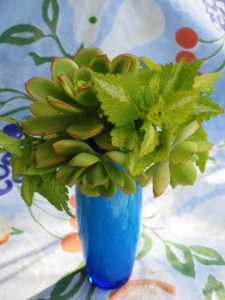
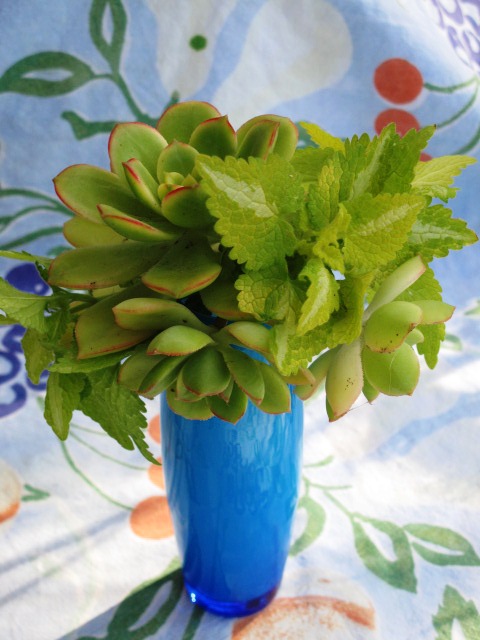
A turquoise vase gets the cool touch from lemon-lime and chartreuse ingredients.
The idea of using leaves as cut flower ingredients is nothing new. But it’s always nice to see someone else’s twist on the technique. One of the things I love about Susan’s designs is her use of white vases in several different sizes. The white really offsets the leaves and focuses the viewer’s interest on the form, texture and scale of the various cut foliage. I also loved the monochromatic and contrasting combinations of leaves.
After writing the text, I kind of forgot about this story until I opened up the June issue and saw how beautifully it turned out. I decided to try my own version of this floral design project (I can’t get more “seasonal, local and sustainable” than my own backyard!).
Looking around my landscape, I realized how many awesome succulent plants grow here. Even when a sedum, aeonium or crassula stem breaks off of the plant or gets bumped when someone pushes a chair out from the patio table, I try to “rescue” the severed piece and put it in water. Inevitably, a few roots will emerge and I can plant that cutting. So clipping a few succulent pieces for the designs you see above didn’t kill me. Once these pieces root, in water, they will be returned to the potting soil or garden bed.
My idea: To showcase the amazing color diversity of succulents. For each of three color schemes – silver-blue, maroon, and lime green – I looked for perennial foliage to match with the companion succulent. Unlike Susan’s white vases, I tried to pair the foliage hues with my slender colored-glass bud vases. I have owned this trio in green, tangerine and turquoise glass for several years. I think they came from IKEA.
These designs look sweet displayed on my block-printed cotton table cloth (it’s nice that each picks up on the botanical pattern and palette).
Here is what I included in each:
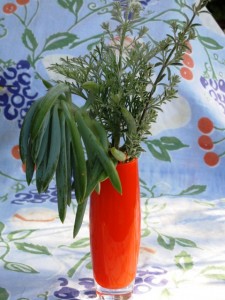
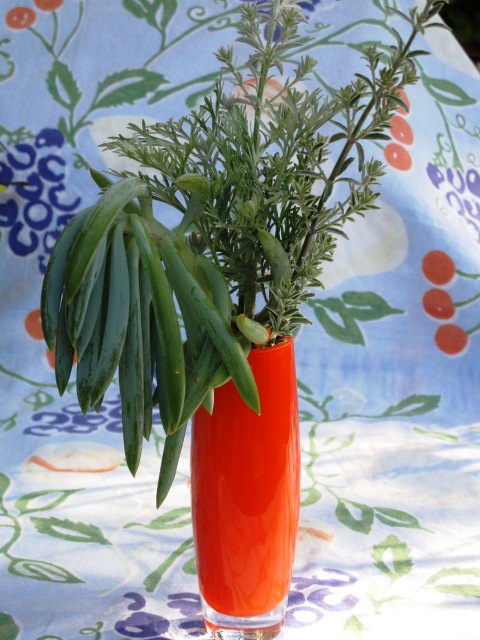
Orange vase with silver-blue ingredients.
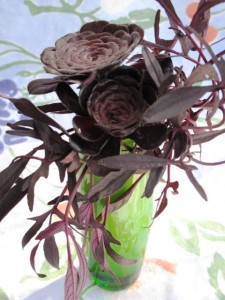
Deep purple-maroon ingredients look dramatic against the vibrant green vase.
The Orange Glass contrasts beautifully with three silvery-blue ingredients. The succulent element is called Senecio mandraliscae. Here in Southern California, people grow this shrubby, South African succulent as a groundcover. I actually have some in a pot and I love its slightly curved blue-gray leaves. Softer textures come from my other fave silvery garden plants. First is Artemisia ‘Powis Castle’, which has lacy foliage. I clipped the taller stems from Westringia fruticosa, also called coast rosemary. It’s from Australia, has a rosemary-like texture, and looks just gorgeous growing at the base of my fruitless olive tree.
The Green Glass is a perfect foil for the deep purple-maroon ingredients. My succulent starting point was to add two small Aeonium rosettes. Not sure of the cultivar because I inherited this plant when we moved here in 2006. Almost like a touch of embroidery, the dark plum version of sweet potato vine (Ipomoea batatas) spills from the neck of the slender vase.
The Turquoise Glass gets a fresh accent from lime green and chartreuse stems. I started with an un-named lemon-lime sempervivum that has pretty pointed leaves. These bold forms have a fluffy collar of chartreuse dead nettle (Lamium galeobdolon).
My challenge to you is to walk outside, clippers in hand, and create a foliage bouquet with what you have growing in your garden. Don’t overlook the unexpected ingredients. Hey – maybe that awesome artichoke leaf in the vegetable patch is worthy of a starring role in a vase. Or perhaps the conifers could stand in for my succulent ingredients. Have some fun! The best part? It means you have a lovely centerpiece for free!
Posted in Creativity, floral design, Gardening, Plants, Writing | 3 Comments »
© Debra Prinzing, all written and photographic content. Website design/development by Willo Bellwood/Metric Media



 Chocolate flower and plant update: