The Slow Flowers Podcast is the award-winning show known as the “Voice of the Slow Flowers Movement.” Launched in 2013 as the original flower podcast, we’ve devoted more than 10 years to covering the business of flower farming, floral design, and the Slow Flowers sustainability ethos. Listen to a new episode each Wednesday, available for free download here at slowflowerspodcast.com or on iTunes, Spotify, and other podcast platforms.
October 7th, 2011
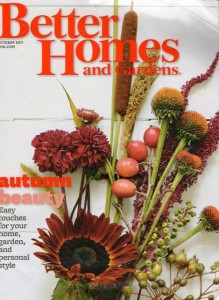
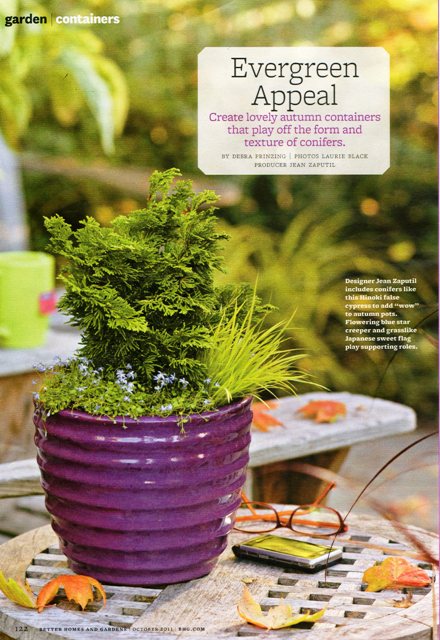
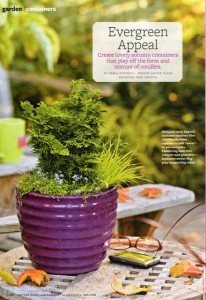
Check out pages 122-128 for my "Evergreen Appeal" story featuring Jean Zaputil's container designs
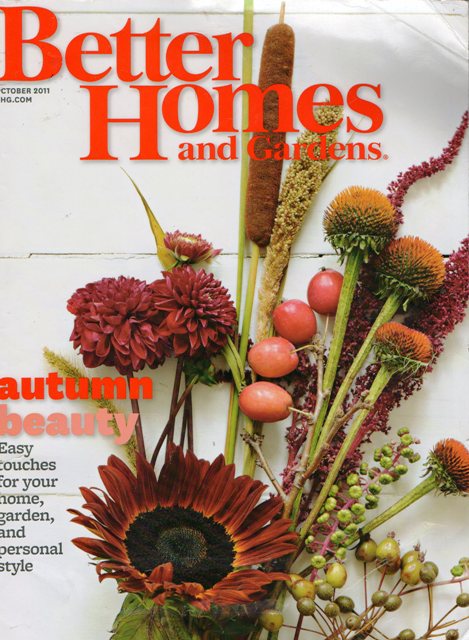
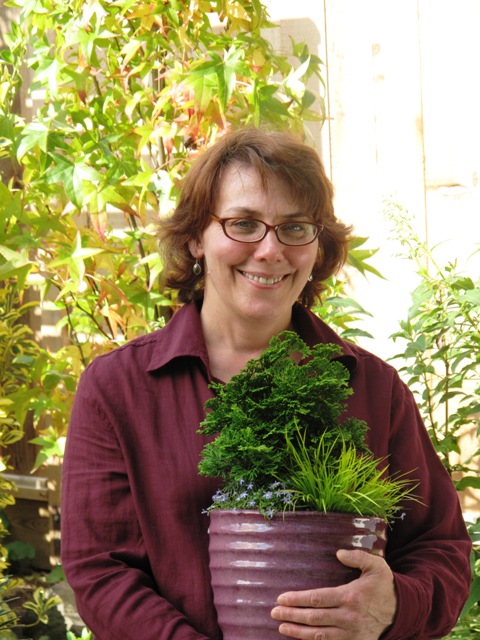
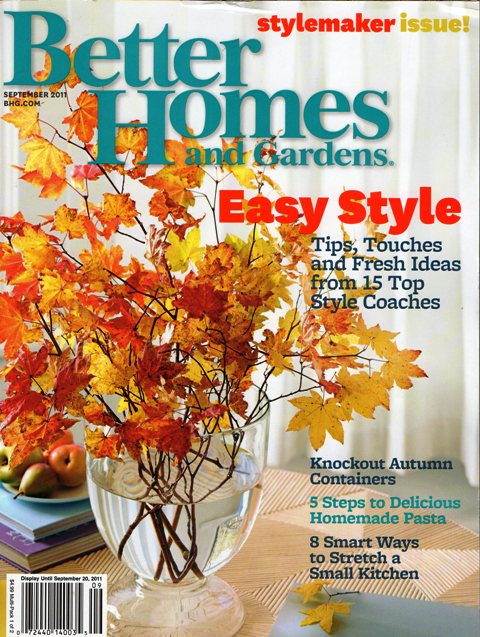
The October issue of Better Homes & Gardens features a container design story that I created with my talented BFF Jean Zaputil of Seattle-based Jean Zaputil Garden Design.
This story began when I pitched the idea of a feature about using ornamental and dwarf conifers as the focal point of a fall container . . . that will then transition nicely through the winter months. My editor in the garden department, Eric Liskey, and his art director Scott Johnson liked the idea. But then they asked me to find a good location for photographing the fall story.
I immediately thought of Jean’s intimate Seattle garden, which is planted for all-season interest and has beautiful seating areas both in the front yard and back garden.
Once Scott and Eric signed off on the location, our challenge continued. Scott thought that a purple palette was both uncommon and a great foil for the evergreen needled foliage. So, needless to say, much of my energy producing this story was spent scouring the greater Seattle marketplace for plum, lavender, aubergine and purple containers. We ended up with a grand total of three pot styles – a small lavender ridged pot; an egg-shaped pot (in 2 sizes) and a classic olive jar shape (also in 2 sizes).
Thank goodness for some wonderful importers here in Western Washington who came to the rescue, including Washington Pottery and Aw Pottery! Our friend Gillian Mathews of Ravenna Gardens was extremely helpful in making those connections for me.
The tiniest pot, measuring only 7 inches, looks quite sweet in Jean's entry garden.
Jean used many of her favorite wholesale and retail nursery sources to come up with the conifer “stars” for each pot, as well as their companion plants.
The idea was to use only two or three accent plants in the container so as to show off the Hinoki false cypress, juniper and other conifers in their full glory.
We hope that this piece inspires readers who never before viewed a conifer as a container plant to do something fun and different this fall. I quoted Jean in the story saying:
“Use the golden glow or silver shimmer of an
ornamental conifer to catch the fall light.”
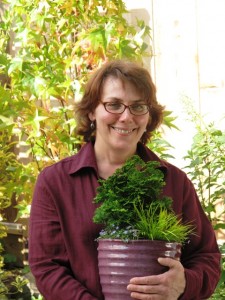
And Jean color-coordinated with her pots!
Here are some of the tips we outlined:
1. Use a large pot, if possible.
A 12-inch diameter pot is a good minimum size.
2. Start with a small juniper, cypress, or other conifer.
Then combine it with two or three complementary or contrasting cool-season annuals and perennials.
3. Flowering plants might fade after the first frost.
You can replace them with foliage perennials that will last through fall, even well into winter.
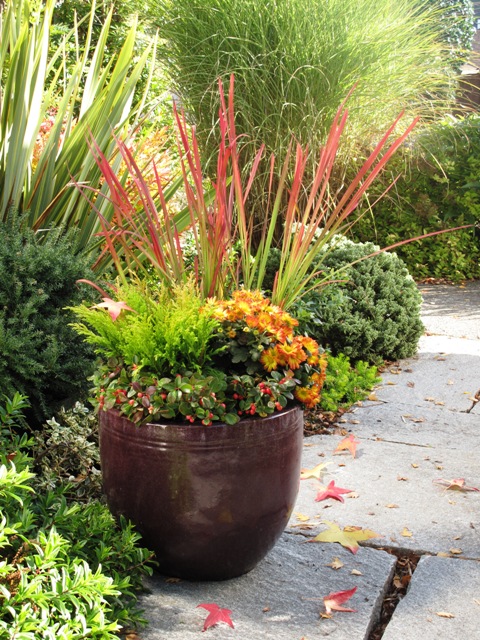
Here is the best of the best – from our photo shoot a year ago this month! Kudos to the very talented Laurie Black, who took the magazine photos, such as the one above. The photo of Jean and Pots 1, 2, 3 & 4 are my photos.
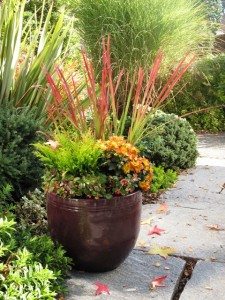
Pot 1
POT 1: Sadly, this gorgeous purple egg-shaped pot was left on the cutting room floor! But here is the recipe:
- Juniperus horizontalis ‘Limeglow’
- Japanese blood grass (Imperata cylindrical ‘Red Baron’)
- Wintergreen (Gaultheria procumbens)
- Chrysanthemum ‘Dazzling Stacy Orange’
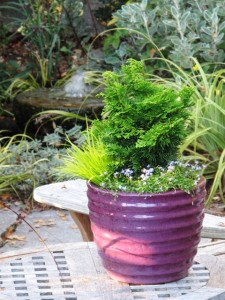
Pot 2
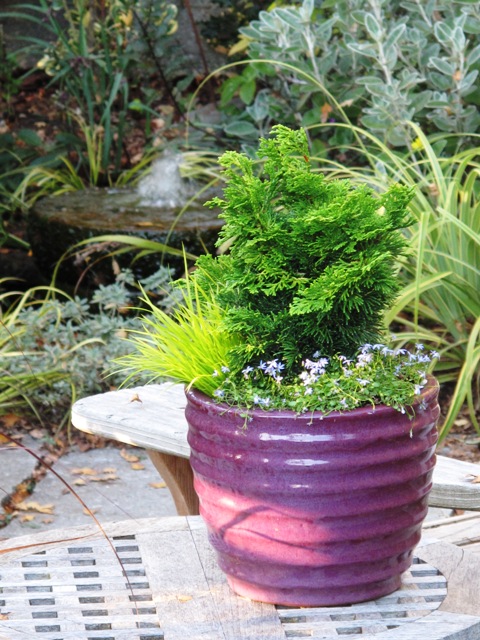
POT 2: A miniature garden in a pot – perfect for a side table or the front porch:
- Hinoki false cypress (Chamaecyparis obtuse ‘Verdoni’)
- Japanese sweet flag (Acorus gramineus ‘Minimus Aureus’)
- Bluestar creeper (Pratia pendunculata ‘Little Star’)
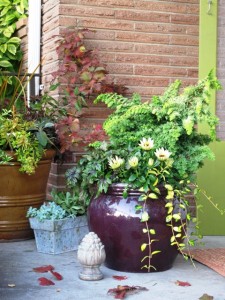
Pot 3
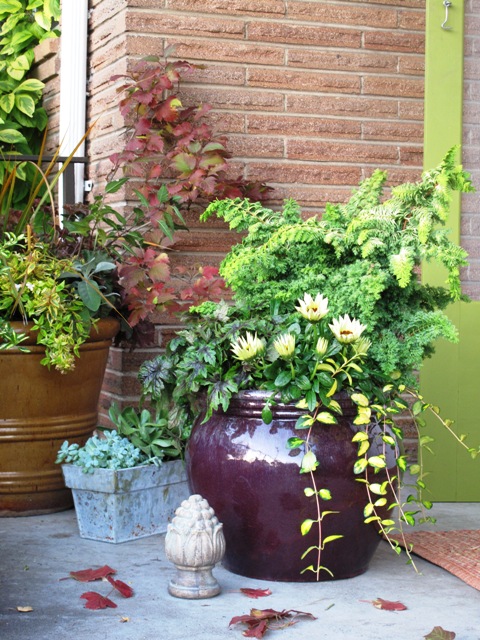
POT 3: This might be my favorite! We photographed it on Jean’s front porch, against her beautiful green screen door:
- Hinoki false cypress (Chamaecyparis obtuse ‘Gold Fern’)
- Tiarella ‘Sugar and Spice’
- Vinca minor ‘Illumination’
- Gazania Gazoo Mix
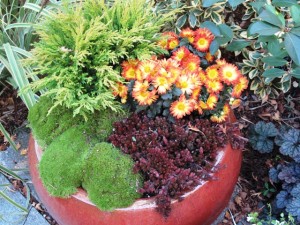
Pot 4
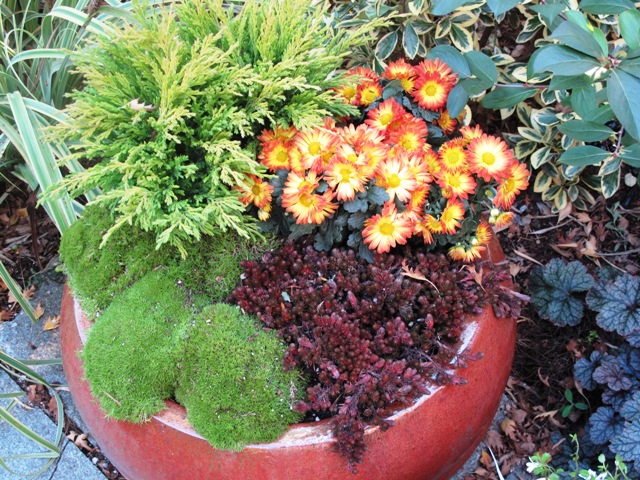
POT 4: This copper red “turnip” pot is one of two Jean already owned and we thought the color and shape looked autumnal, while also complementing the purple pot tones:
- Juniperus horizontalis “Limeglow’
- Moss (Schleranthus biflorus)
- Sedum hakonense ‘Chocolate Ball’
- Chrysanthemum ‘Dazzling Stacy Orange’
A few more tips, from the story:
When, and whether, you leave containers out all winter depends on where you live. In Zones 8-10, most conifers and cool-season annuals will survive outdoors in pots. In Zones 7 and lower, few annuals will overwinter in pots, and some evergreens won’t either, depending on hardiness. So before the ground freezes, transplant them to the garden or move the pot into a shed or unheated garage. Water pots as needed to keep soil moist throughout the winter. For outdoor winter use, pots should be glazed, hard-fired clay. Terra-cotta and soft-fired clay do not withstand freezing.
Posted in Creativity, Gardening, General, Plants, Writing | 6 Comments »
October 4th, 2011
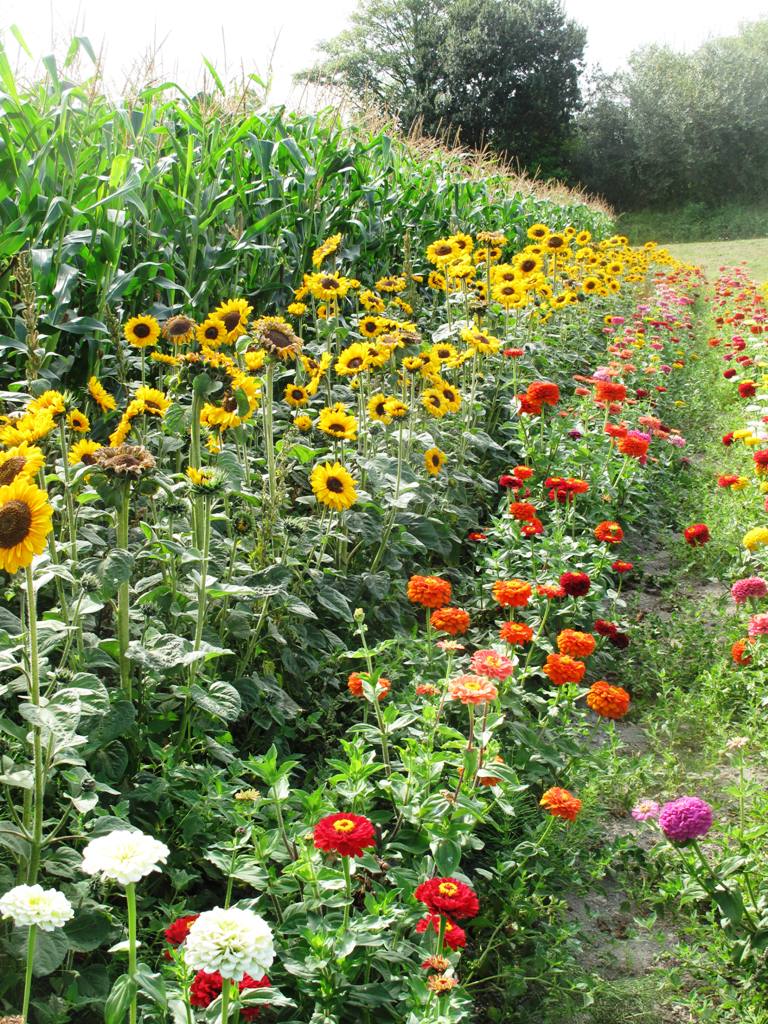
Isn't this border pretty? Corn, sunflowers, zinnias - all in a row!
A few weeks ago, at the invitation of the Whatcom Horticultural Society, I spent a relaxing 24 hours surrounded by gardens, flowers and nature – as well the company of like-minded plant-lovers.
“Why don’t you come up to my house on Wednesday morning and we’ll go see some gardens before you give your lecture?” my friend Dawn Chaplin suggested. With established Bellingham landscape designer Susann Schwiesow, Dawn organizes the monthly lectures for WHS. This is the third time over the years that the society has invited me to speak. It’s always enjoyable, especially since the drive to Whatcom County and the enticing gardens and kindred spirits make my trip north so pleasurable.
After meeting up with Dawn, who lives on a beautiful bluff outside Stanwood with her husband David, we hopped in the car and traveled to Fir Island, a small, bucolic place that’s reached by a bridge, so you barely realize you’re crossing over Skagit River to a real island. We toured the timeless garden created by Lavone Newell-Reim and her husband Dick. I’m hoping to publish as a magazine story in the future, but I can’t help but treat you to a few of the luscious images from this very special, lived-in and loved-in landscape:
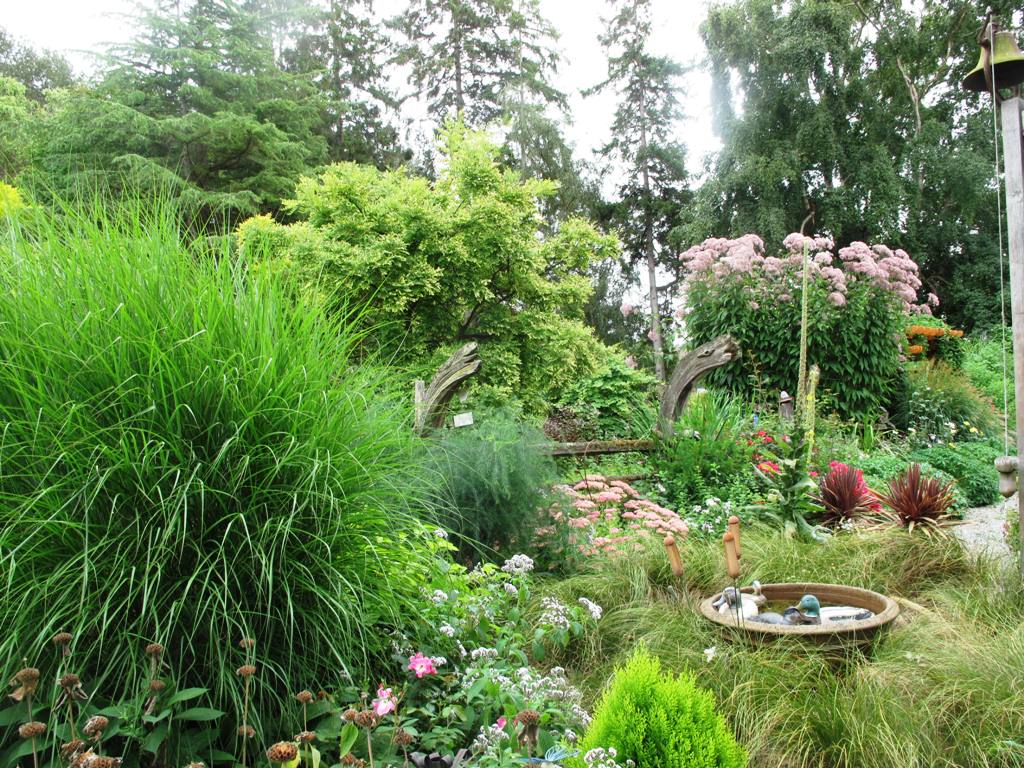
To me, this is a perfect vignette, camera-ready for a magazine. Lavone and Dick have a natural gift for placing plants in community with ornamentation and salvaged materials.
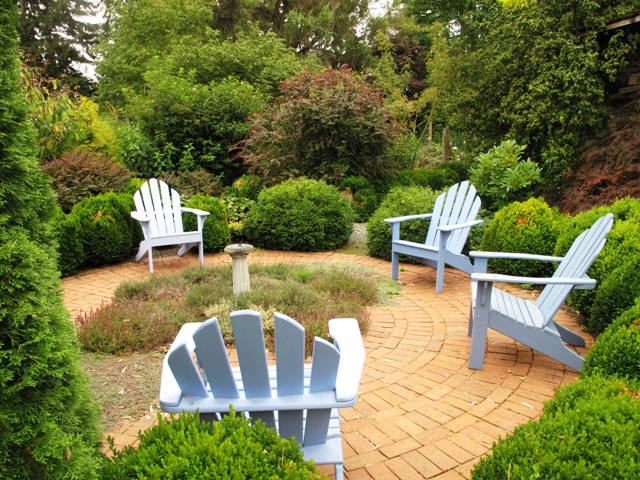
A circular patio with a thyme garden at its center. Inviting!
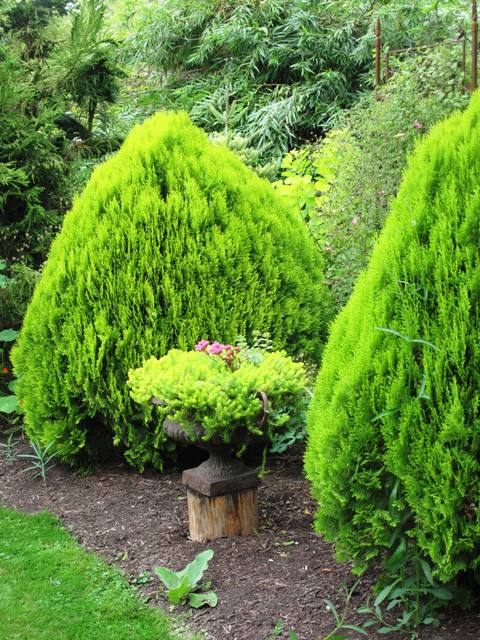
Chartreuse at its finest - in twin conifers and a potted succulent.
READ MORE…
Posted in Creativity, floral design, Gardening, General, Landscape Design, Plants, Spiritual Practices, Writing | 2 Comments »
September 25th, 2011
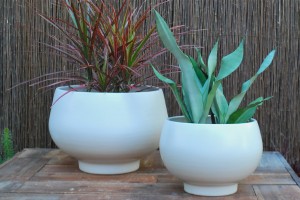
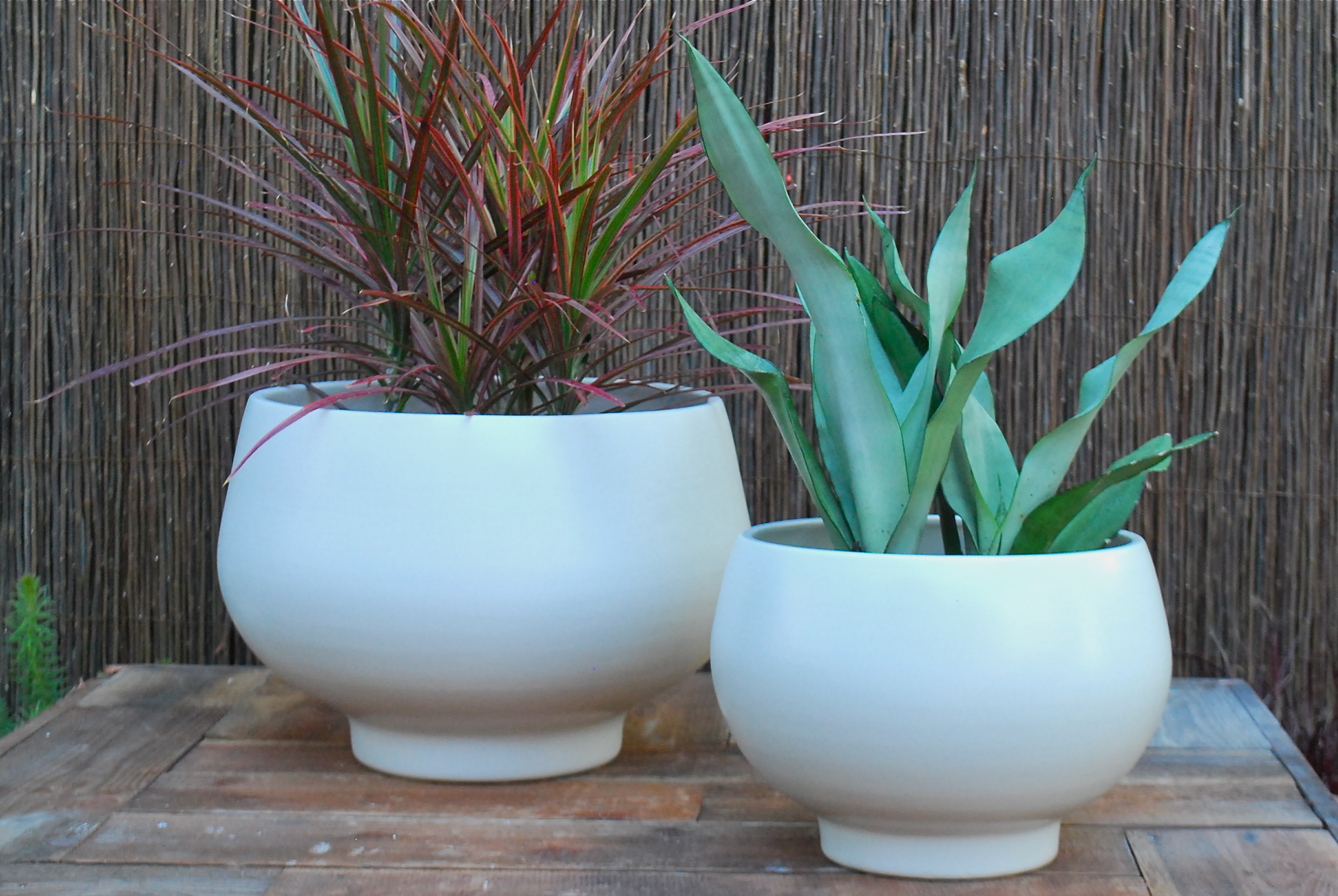
Pot-ted's JULIUS Pot
The Julius pot is back — and with it a tale about just how hard it’s becoming for California designers to manufacture their latest looks locally.
In 2009 Annette Gutierrez and Mary Gray, owners of Potted in Atwater Village, introduced the Julius — “a modern, sexy pot with a curve and a little pedestal,” Gutierrez said, and a tribute to the late architectural photographer Julius Shulman. Back then, Potted worked with a small, local ceramics factory to produce the planter. “We did a couple runs, and then he went out of business,” Gutierrez said.
In its short life, the retro planter was popular with landscape designers who liked how it graced the poolside and the patio. The Julius was used at the Geffen Playhouse and in the model residences at the W in Hollywood.
“It was our best seller, but suddenly we couldn’t find anyone locally to make it,” Gutierrez said.
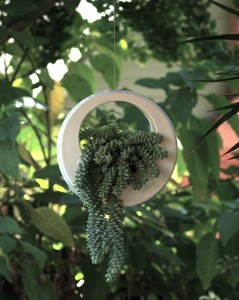
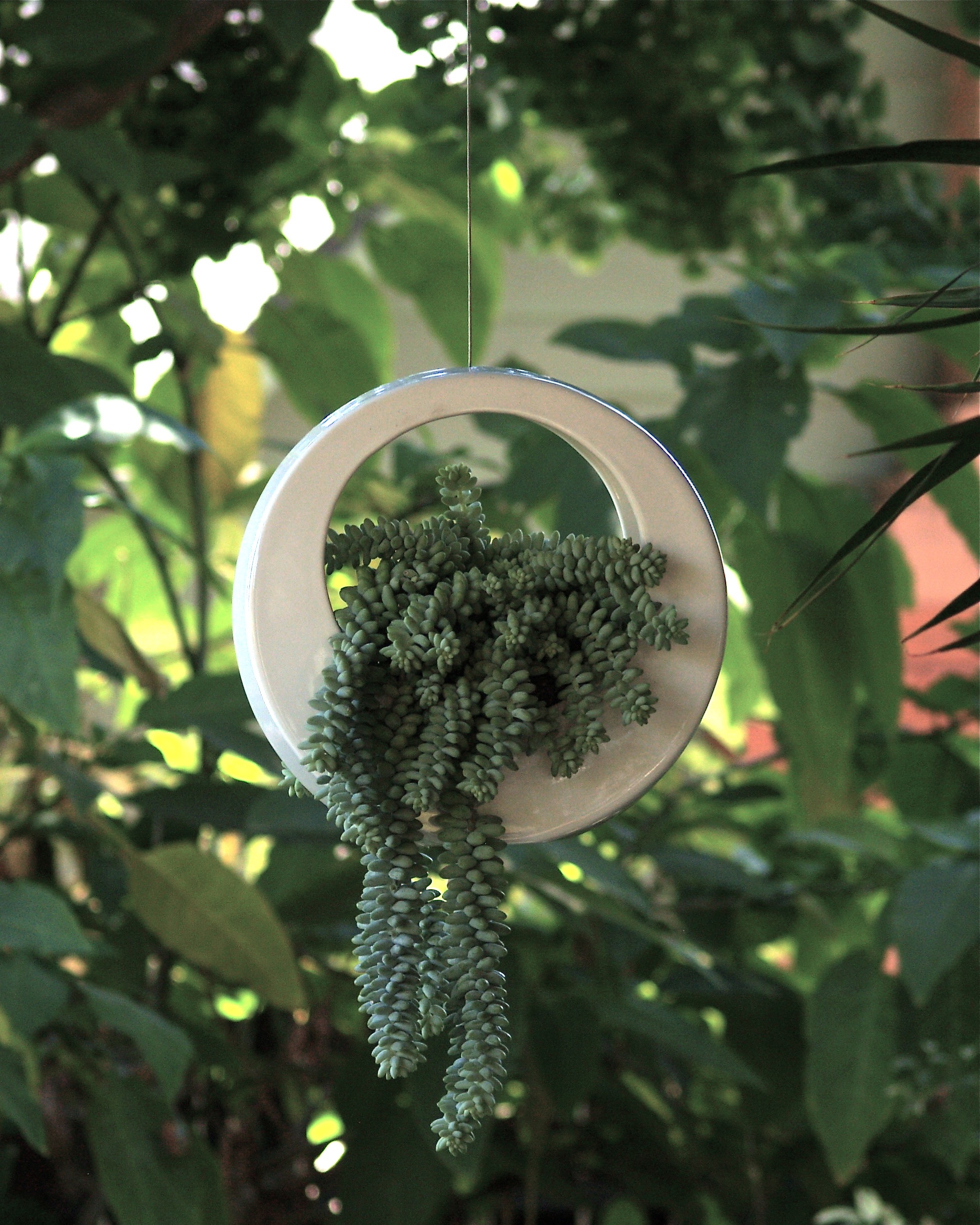
Pot-ted's Circle Pot, inspired by a mid-century hanging ashtray!
So the Julius was shelved as Gutierrez and Gray looked for another local manufacturer who could turn out consistent colors and forms in small quantities. “Every year, the number of Los Angeles ceramics factories has dwindled,” Gutierrez said. “And because of its size, the larger Julius design doesn’t even fit into most local kilns, so that made it even more difficult.”
Potted recently teamed up with Steve Gainey to reintroduce the Julius in aqua, avocado and matte or glossy white ($149 for a 16-inch-diameter pot, $89 for a 12-inch). Gainey is a third-generation California ceramics maker and president of LaVerne-based Gainey Ceramics, a 60-year-old venture that is one of the last ceramics factories in Southern California. He said he recently changed his business strategy after losing a large percentage of his commercial customers.
“My established banking, real estate and shopping mall market has gone away, but we’re a versatile facility that’s able to change,” Gainey said. “I decided we needed to focus on consumer products and reach out to artists in the ceramics community who have no ability to produce their designs otherwise.”
The Potted partnership is one of several similar arrangements with local artists who appreciate that Gainey is high-quality and homegrown. Gainey said he also has started producing his own designs, including a vase called X-Factor, which the American Museum of Ceramic Art in Pomona recently added to its permanent collection.
Gainey’s embrace of the consumer market follows the national success of Janek Boniecki, who in 1998 acquired the original Bauer Pottery facility in Highland, reissuing classic Bauer pieces for the tabletop and garden, as well as the work of other artists.
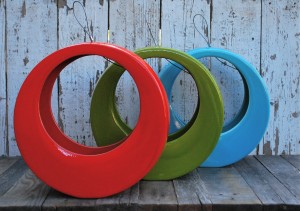
A rainbow of retro colors for the Circle Pot.
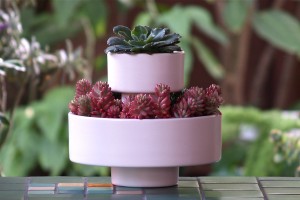
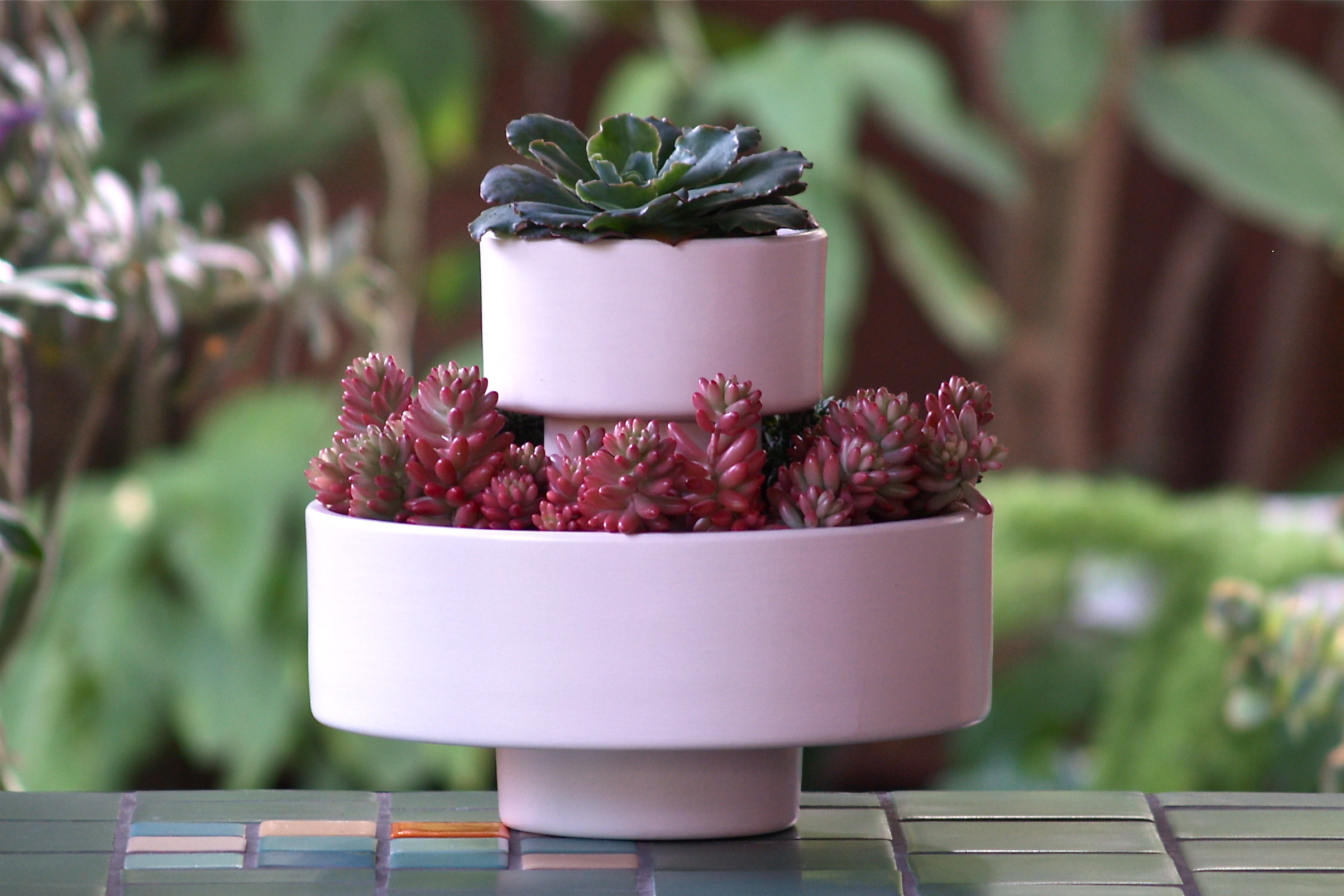
I am seriously in love with the Wedding Cake Planter!
Gainey Ceramics also produces Potted’s 12-inch Circle pot ($89), right, inspired by a 1960s hanging ashtray that Gray found at a flea market. Suspended from an 18-inch stainless-steel cable, “it’s perfect for displaying succulents like burrow tails, string-of-pearls or an echeveria,” Gutierrez says.
Earlier this year, Potted and Gainey introduced a matte-white Wedding Cake planter, a three-piece, stacking flowerpot, below. The bottom piece serves as a saucer, while the top and middle “layers” are deep enough to hold plants. The set ($125) measures 11 inches in diameter and is 9.25 inches tall.
“This is our take on the cake platter as a tabletop planter,” Gutierrez says. “Whenever you can lift something up slightly with a pedestal, it looks lighter and fresher.”
Potted plans to develop more products that will be produced by Gainey Ceramics. But Gutierrez is circumspect about the challenge of remaining local while facing the inevitable competition of less expensive knockoffs. “We can’t compete with China on price,” she said. “We can only compete with our originality.”
Potted, 3158 Los Feliz Blvd., Los Angeles; (323) 665-3801.
Gainey Ceramics retail operations, 1200 Arrow Highway, La Verne; (909) 593-3533 or (800) 451-8155.
Link to LA Times @Home story
— Debra Prinzing
Posted in Creativity, floral design, Gardening, General, interior design, Plants | 1 Comment »
September 2nd, 2011
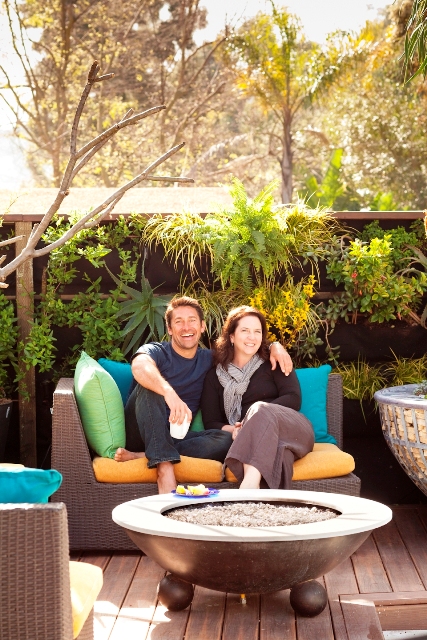
On location in Los Angeles with Jamie Durie - photographed by Edmund Barr
On his popular HGTV show The Outdoor Room with Jamie Durie, stylemaker Jamie Durie uses interior and architectural design tricks to amp up dreary backyards.
By the end of a whirlwind 30-minute episode, you’re energized and inspired. Of course, nimble edits have compressed a couple of days of dirt, sweat and (possibly) tears into a dreamy landscape for the small screen. But still, there’s always a takeaway, a “lesson” that catches the viewer’s imagination. “I could try that,” you say to yourself. “Oh, what a simple way to disguise that ugly wall,” or “That’s brilliant!”
Some of the projects conjured by Jamie and his design team are complicated and require professional assistance to execute. But many others fall into the DIY mode: affordable and requiring only a discerning eye to add polish, such as using color, texture or materials to unify otherwise disparate objects.
That’s one reason why I really wanted to see Jamie’s garden firsthand. When I visited his Los Angeles outdoor design laboratory (aka his humble backyard) last spring I loved what I saw.
 My assignment was to interview Jamie and help produce the Better Homes & Gardens “Stylemaker” story that appears in the September issue – out on newsstands right now.
Art director Scott Johnson and I both flew into Los Angeles to work on the story. We were very fortunate to team up with LA photographer Edmund Barr and LA videographer Adam Grossman for the shoot. You can see my article and Edmund’s photos in the September issue; you can watch a fabulous how-to video with Jamie shot by Adam on BH&G’s digital edition. And a special thanks to Edmund for snapping this cozy portrait of Jamie and me, lounging in his outdoor living room. Fun, huh?
Many of Jamie’s best design concepts are ones he previously tried out for clients of Durie Design, his studio in Sydney, Australia, and Los Angeles. Some have been executed on previous episodes of The Outdoor Room, or in the pages of his new book by the same name.
We zeroed in on the ideas that move plants away from the obvious “ground plane” and onto other surfaces, such as living walls, green roofs and in the unexpected niches of garden structures. Jamie’s passion for plants is contagious – and you can see it spill over onto BH&G’s pages. Here’s an excerpt:
Outer Sanctum: HGTV star Jamie Durie uses unexpected designs to turn the barest backyards into green oases.
“Once you create an outdoor room, you’ll fall in love with your backyard again,” says Jamie Durie, the star of HGTV’s The Outdoor Room.
A popular designer and TV personality in his native Australia as well as North America, Jamie encourages everyone who has a small patch of earth — or even just a patio or deck– to re-imagine their exterior environment as a functional, eco-friendly living space.
Jamie combines a passion for plants, sustainability, and the outdoors into a zeal for landscaping. He grounds his designs in green practices, using local materials, plants that tolerate the region’s climate, and clever techniques to put plants in almost every imaginable nook and cranny. Hanging planters cover his fences and walls, and pergolas support green roofs. Surrounding yourself with nature this way “can improve your health and inspire positive thinking,” says Jamie, who meditates every morning on the patio outside his bedroom.

Check out Jamie's new book for more tips and ideas.
Recently settled in Los Angeles, Jamie used the same advice he offers clients: Increase living space by creating more rooms outdoors rather than indoors. Instead of enlarging his modest 1950s house, he coaxed his once-ordinary backyard to live larger, with outdoor spaces variously designed for cooking, dining, lounging, and chatting. “Your spaces should accommodate your life,” he says. “Not the other way around.”
“I have a new outlook when I open the doors,” Jamie says. “This house feels bigger than it is, since the lush garden is part of my home.”
The popular HGTV host and landscape designer shares his ideas, techniques and recent projects in Jamie Durie’s The Outdoor Room (Harper Collins, $25.99), a guidebook to creating beautiful exterior spaces.
Posted in Architecture, Book reviews, Creativity, Furniture design, Gardening, General, interior design, Landscape Design, Plants, Playfulness, Writing | 8 Comments »
August 18th, 2011
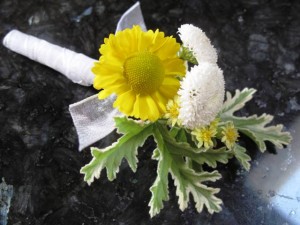
The boutonniere sample for Rashad.
My niece Marquis is marrying her sweetheart Rashad next month and Aunt Debby volunteered to design the flowers. Marquis’s color palette is soft yellow and white, which at first I thought would be a little too simple or possibly limiting in the floral options.
However, after we visited our favorite local flower farmers and saw all the wonderful options, I have a new-found love of the color combination.
As partners in a vase or bouquet, yellow and white flowers are simply romantic! Marquis asked that I use more yellow ingredients in her bouquet so it will be more visible against her white dress; the bridesmaids will have more white ingredients in their bouquets – which will show off against their pale yellow dresses. Great idea!
With amazing fresh, seasonal and locally-grown ingredients from Jello Mold Farm, J. Foss Garden Flowers and Oregon Coastal Flowers, I made the samples this week so Marquis could see how the designs would look . . . and to help me figure quantities of stems. Here is a sneak peek – I think they are absolutely summery and joyous, just what you want for a wedding:
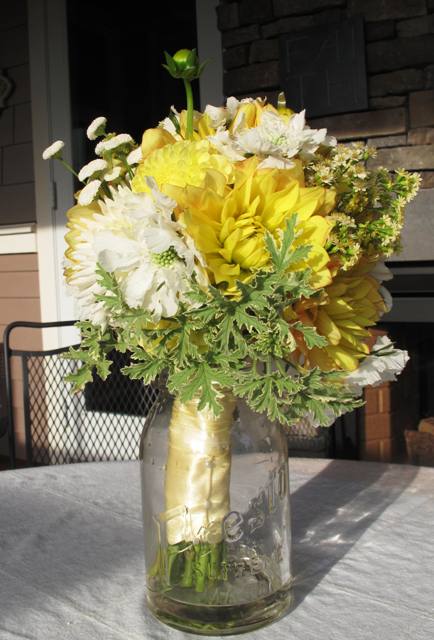
Bridal bouquet for my niece Marquis
Ingredients include: White scabiosa with pale green centers (pincushion flower), two types of white dahlias – ‘Bride-to-Be’ and ‘Little Lamb’; two types of yellow dahlias – ‘Nettie’ and ‘Candlelight’; feverfew (the little white buttons, actually Chrysanthemum parthenium); yellow sprays of solidaster for a soft touch; and variegated scented geranium foliage from my garden. The solidaster is a hybridized cross of a goldenrod (solidago) and aster. So if it’s not still growing next month, we’ll substitute regular goldenrod, which will create the same dreamy affect.
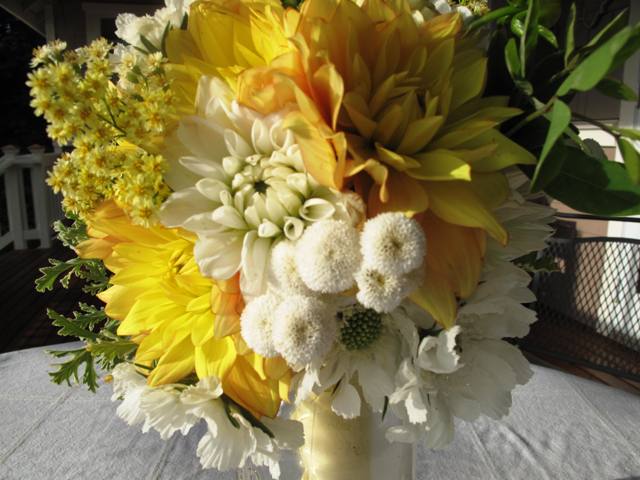
A little detail of the bridal bouquet.
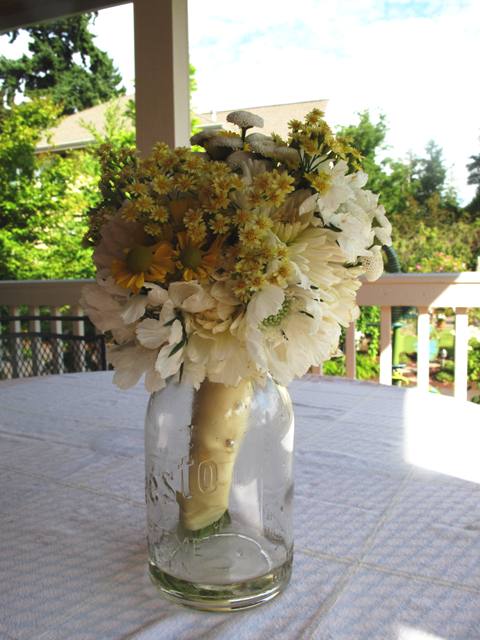
Here's how the mostly-white bridesmaid bouquet looks - it's also about one-third smaller than the bride's bouquet.
Finally, the centerpieces. We are going to use the same shallow glass Ikea bowls that created the centerpieces for Marquis’s sister’s wedding receiption last spring. But this time, instead of floating orchids and candles, I thought about creating a “nest” out of curly willow around the inside rim. The center will have a stunning floating dahlia, like ‘Snowbound’, the dinner-plate-sized one shown here. And I’ll weave smaller yellow flowers into the willow. Today, I played around with helenium, just to see how it looks.
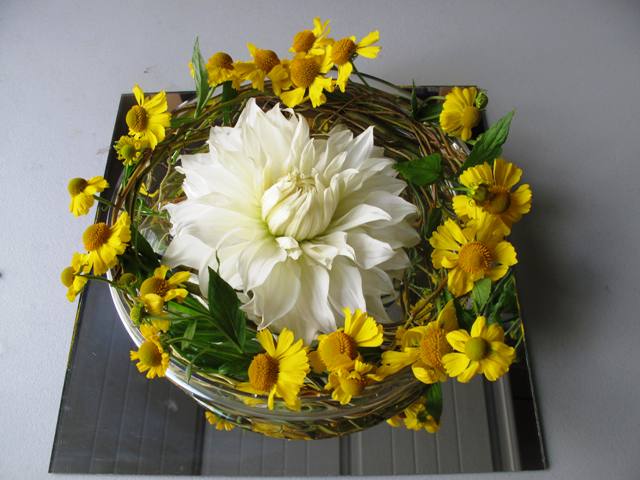
The low glass bowl is filled with curly willow, yellow heleniums and one dinnerplate dahlia - in white.
You know, this floral design focus of mine has been really rewarding, both as a storyteller and garden writer. But there’s one really wonderful surprise that has come out of the four years I’ve spent working with photographer David Perry to document the local, seasonal and sustainable flower movement (see our blog, A Fresh Bouquet, for lots more details).
It has begun to dawn on me that I am a creative individual and I love to design and arrange with cut flowers. And while I am totally self-taught, I am actually good at it. I contend that gardeners are the ideal people to be floral designers. We know the habit, form and life-cycle of the ingredients we use, which is more than one can say for some in the conventional florist world. And so I am ever grateful for the opportunities I am given, like my niece’s upcoming wedding, to move my hands off of this keyboard, pick up a pair of snips – and begin to create.
Posted in floral design, General | 8 Comments »
August 10th, 2011
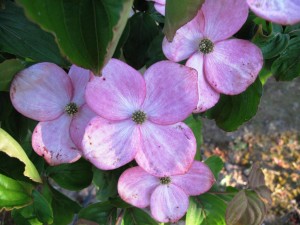
One of Treephoria's lovely flowering dogwoods, aka 'Heart Throb'.
Dear friends and readers, I’m sure you’ve just about given up on ever seeing an fresh, new blog post, since I nearly allowed the month of July to come and go without writing anything.
July was definitely enriching – my over-filled calendar says so! And yet, I am also exhausted (see my prior post, referencing moving to a new home, garden, and pond). Possessing countless experiences in need of personal review and reflection, I had planned to share the more colorful events here in a single post – a diary of sorts from the past month. Yet, since my just-crashed computer is in hospital, complete with most of my stored photos (my external hard-drive has to be replaced, too!), I don’t have much to show you.
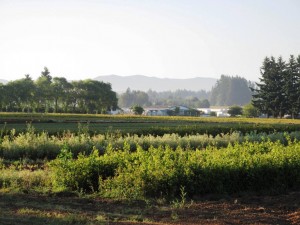
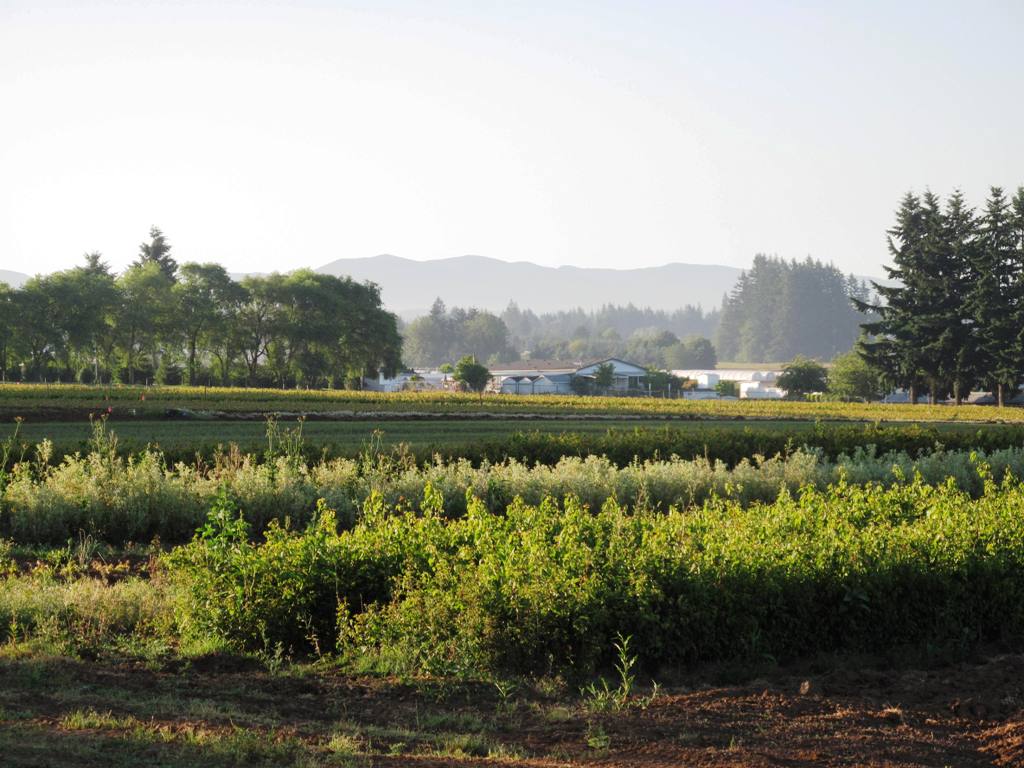
The beautiful landscape of tree farms, across the field from Nancy Buley's Treephoria.
So the July recap will occur in stages. Phase One covers July 5th-6th when I visited a few rural towns outside of Portland, Oregon.
I rode the train from Seattle to Portland on July 4th of all things, and my 4-hour journey was lovely, relaxing, and quiet. What a nice way to skip out on the potential holiday craziness on the freeway. Upon arrival, I rented a car and drove to the hamlet of Boring, Oregon.
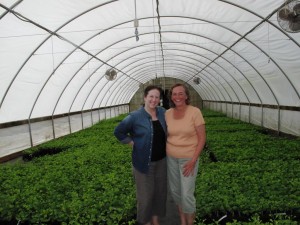
Here I am with Nancy Buley (right), on a tour of J. Frank Schmidt & Son's expansive tree farm in Boring, Oregon.
My friend Nancy Buley lives there and she let me stay under the eaves of her farmhouse, in a room she calls the “garret,” the window of which overlooks Treephoria, her boutique tree farm.
Nancy is a tree ambassador who works closely with landscape architects and designers to educate and excite them about awesome ornamental varieties grown by J. Frank Schmidt & Son.
As director of communications, she frequently writes and speaks about new tree introductions, landscape design and tree selection/care. I first met Nancy years ago through Garden Writers Association, but our friendship was actually forged during a fun evening in Oklahoma City in 2007, when Sally Ferguson included us both in her small dinner party. That’s often how things go: We may only see one another a few times a year, but the kinship is cemented and immediately recalled whenever we meet.
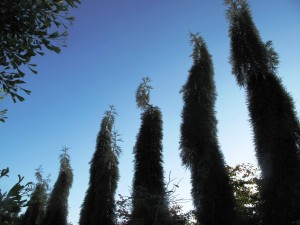
Weeping giant sequoias, stately-looking against the Oregon sky.
Nancy treated me to a fabulous visit, including a walk at dusk around her grounds. At Treephoria, she and her son Neil Buley grow specialty trees in small batches. Nancy possesses a keen eye for the uncommon, but she also evaluates trees for their performance in the residential landscape. She defines Treephoria as, “the rapturous feeling or state of being experienced when surrounded by remarkable trees.”
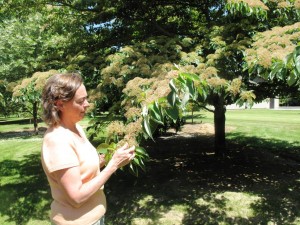
Nancy, showing off a gorgeous 'June Snow' dogwood tree at J. Frank Schmidt & Son's display garden in Boring, Oregon.
That is indeed how I felt. I didn’t want to leave! In fact, when given the choice of going out to a restaurant for dinner of staying in the garden surrounded by trees with a picnic of leftovers you can guess what I chose to do!
A highlight of our tour-at-dusk was Nancy’s flashlight-led visit to the stone barn behind the rows of trees. This two-story structure was once the headquarters for Compton’s Dahlias, a commercial dahlia bulb farm owned by Nancy’s aunt and uncle. Wooden trays, retro-style packing boxes and other vestiges of the flower farm made me almost wish she could trade trees for dahlias.
The next morning, I set out to meet photographer Laurie Black and her husband Mark King to shoot profiles of two garden artisans for a feature that will run in Country Gardens magazine next year. I’ll give you a peek about those locations in my next July recap post.
Posted in Creativity, Gardening, General, Landscape Design, Plants | 9 Comments »
© Debra Prinzing, all written and photographic content. Website design/development by Willo Bellwood/Metric Media