Debra Prinzing

Get the Email Newsletter!

Author Archive

On Location with Central Texas Gardener

Thursday, May 1st, 2008

Tom Spencer, Debra Prinzing & Bill Wright

Tom Spencer, Debra Prinzing & Bill Wright – on location

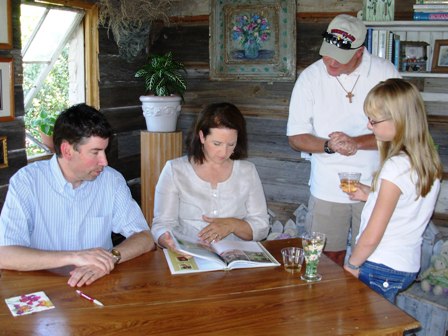
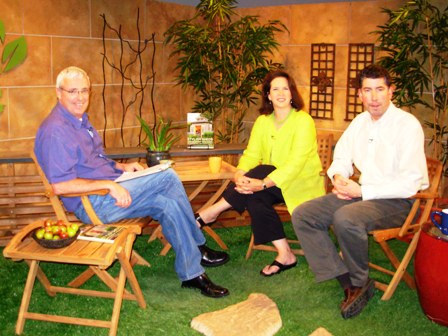
Bill and I had a wonderful experience today, taping an 11-minute segment on Stylish Sheds with Tom Spencer, host of “Central Texas Gardener,” a popular show on the Austin PBS affiliate, KLRU.

The show will air on June 26th – stay tuned for a link to the segment.

Tom was a delightful host, a kindred spirit in the conversation about gardening as sanctuary, sheds as shelter, places for meditation and destinations for creative expression.

Debra and Linda LehmusvirtaOur thanks to producer Linda Lehmusvirta, who not only “gets it,” but who helped me find many of our Austin shed locations when I was scouting here in January 2007.

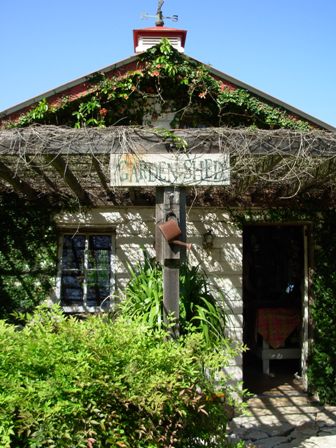
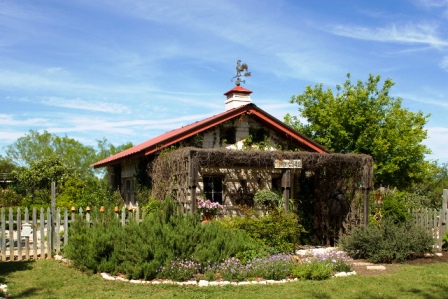
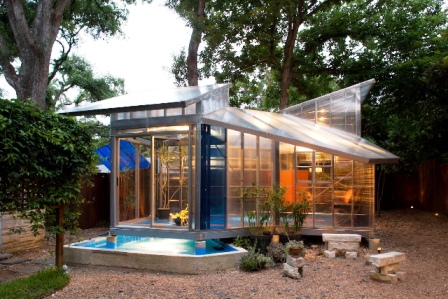
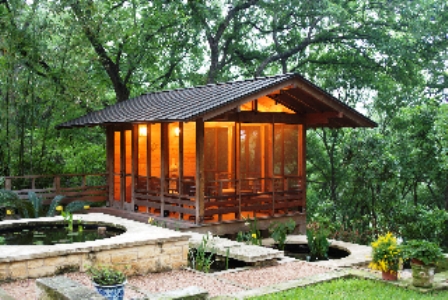
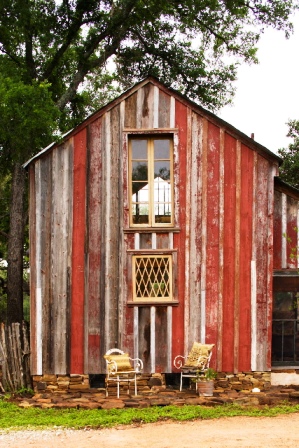
Here is a peek of the Austin/Hill Country structures we found and photographed last year. We’re lucky to feature four terrific Texas sheds inside the pages of Stylish Sheds and Elegant Hideaways:

Williams Garden Shed

Sylvia and Steven Williams’ “Hill Country Haven”

Loretta and Terrill Garden Shed

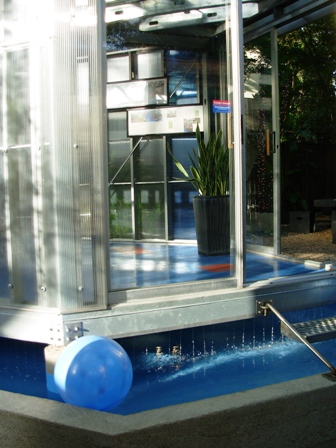
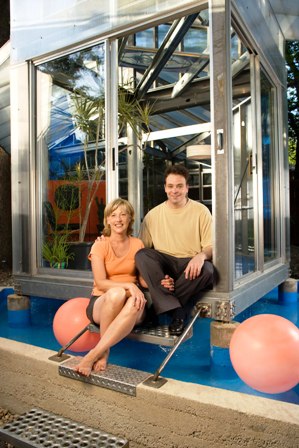
Loretta and Terrill Fischer’s “Mod Pod”

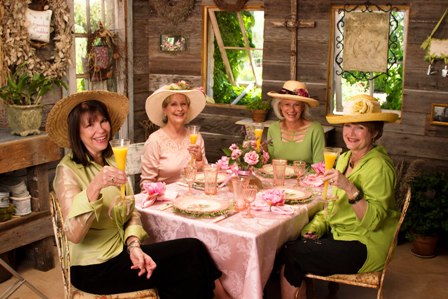
Sutton Garden Shed

Beverly and Eldon Sutton’s “Texas Teahouse”

Bolton garden shed

Carol Hicks Bolton and Tim Bolton’s “Heart’s Content”

Our first review

Thursday, May 1st, 2008

Melanie Munk, features editor of The Herald, a daily newspaper in Everett, Washington, is one of the very best editors for whom I ever had the privilege to work. She was also the first person to “go for it” when I pitched an article idea on beautiful backyard sheds.

I wrote about her role in shaping the concept for this book in the opening lines of our Acknowledgements:

“The roots of Stylish Sheds and Elegant Hideaways date to 2000, when Melanie Munk, features editor at The Herald in Everett, Washington, liked my article idea about sophisticated garden sheds and published it as ‘Shed Chic’ in the newspaper’s Home & Garden section.”

So it is very fitting, and makes me so pleased, to see the first review of Stylish Sheds appear in today’s Herald Home & Garden section.

Here’s an excerpt:

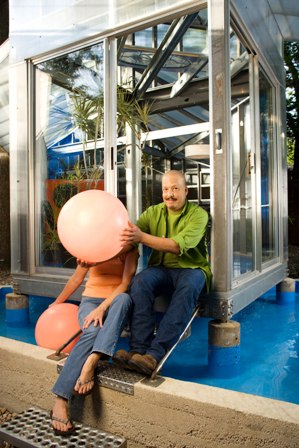
Don’t be fooled by the word shed: There are some rustic reclaimed huts filled with antiques, sentimental possessions and comfy old chairs. But there are some spectacular examples of modern design, roofless outdoor rooms and glass extravaganzas built over special pools.

Tackling the hideaways one at a time, Prinzing describes them in mouth-watering detail and sketches out the missions, must-haves, inspiration, challenges and solutions for each. The inspiration comes from the scope and the variety, the reassurance from the controlled size of most. You can picture yourself taking on and completing such a project.

Thanks to you, Melanie, for always encouraging and supporting my ideas. Or most of them, at least. I was so lucky to work for you as you launched and created a wonderful, must-read, home and garden section!

My collaborator, Bill Wright, and I are in Austin, Texas preparing to tape a segment for “Central Texas Gardener,” with host Tom Spencer, on PBS affiliate KLRU-TV. Then we have a couple of Texas-sized book parties, and a signing at Big Red Sun, a hot gardening emporium (pun intended). Stay tuned!


Toasting and celebrating

Monday, April 28th, 2008

debra and bill

Debra and Bill – all that hard work has finally paid off!

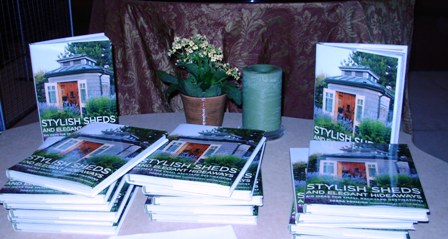
Bill Wright and I are blessed with friends and family who rallied together to celebrate the publication of Stylish Sheds and Elegant Hideaways!

bhparty042708.JPG

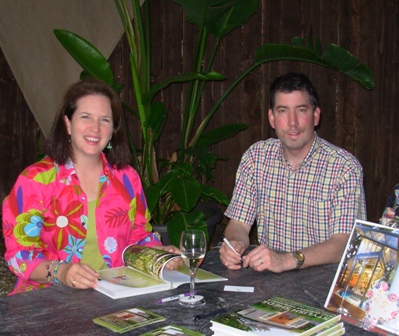
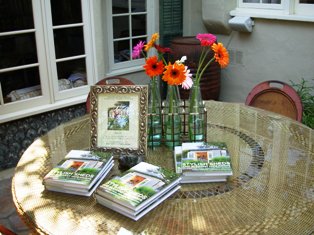
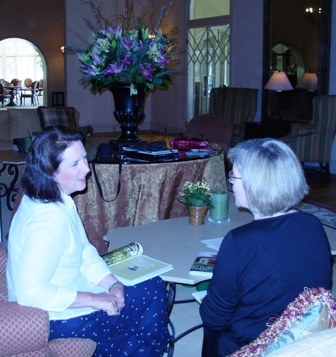
Sandy set up a comfy wicker table for our book-signing

Whereas tomorrow, Tuesday, April 29th, is the book’s “official” publication date, we jumped the gun and decided to pop the cork yesterday, April 27th.

sandysparty042708.jpg

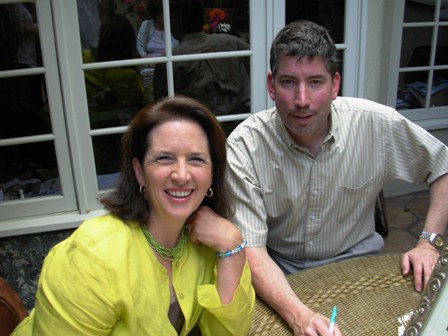
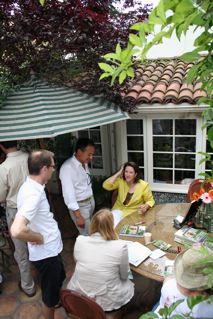
Gathering in Sandy Koepke’s Beverly Hills courtyard with friends; Debra catches up with “shedistas” Joseph Marek and John Bernatz, whose Santa Monica backyard studio is pictured in Stylish Sheds.

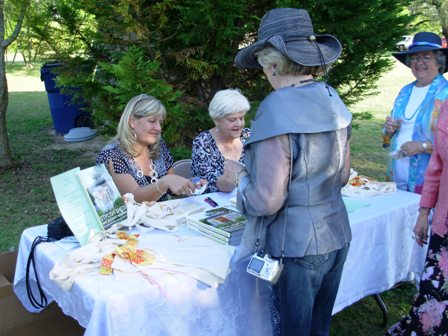
booksigning

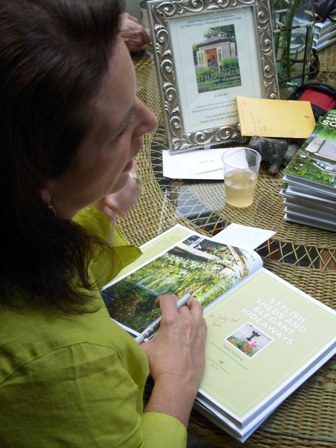
We signed lots of copies!

The setting: Sandy Koepke’s awesome, romantic, Beverly Hills farmhouse and courtyard. This talented designer’s much-published and welcoming home and garden lured no fewer than 80 guests to the Stylish Sheds book launch.

debandsandydebandpaulacristi walden and jack stevenson, her dad

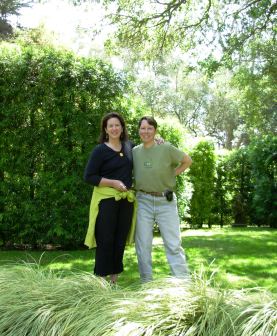
The hostesses: Sandy (left, with Debra), Paula Panich (right, with Debra) and Cristi Walden (seen above with her dad, plantsman Jack Stevenson).

shed cookies

The menu: Tea party fare, including delicious sandwiches, scones, and breads made by my three dear and generous friends. Plus: Shed-shaped cookies (shown above), decorated by my mom, Anita Prinzing.

The temperature: nearly 100-degrees at 4 p.m.! Yes, in April!!!

The guest of honor: Bill Wright, photographer and collaborator extraordinaire, who flew down from Seattle for the occasion. His fellow photographer-friend Winston Hughes was a great addition to the party.

My special guests: Husband Bruce and sons Alex and Benjamin Brooks, my family; plus, my college roommate, Karen Page, who flew down from Seattle for the party.  

 .deb and karen

Deb and Karen – visiting Lotusland on Friday

Thank you to all who attended and purchased a copy of Stylish Sheds. Proceeds from the book sales benefit the new patio at Phoenix House, a project that will be completed during Big Sunday, next weekend. Sandy Koepke has redesigned a livable and nurturing space for Phoenix House residents in Venice Beach.

We’re off to Austin in 2 days to continue the party!

Escape to your own backyard

Friday, April 25th, 2008

Stylish Sheds on display

This posting is intended to THANK the wonderful members of Piedmont and Orinda Garden Clubs for hosting me on Thursday morning. These two groups in SF’s East Bay invited me to fly up to Oakland and visit their beautiful communities. The opportunity to talk about Stylish Sheds and Elegant Hideaways was particularly “sweet,” because even though the event was scheduled five days before the April 29th publication of our book, I was able to show a slide preview of our book and sign advanced copies, shipped especially for this event.

deb at book signing

One of the things I noticed immediately was the sense of connection between gardeners and the idea of seeking out a separate, private getaway in the landscape. After the lecture many people in the audience mentioned their own desire for a backyard “shed” or “shelter,” including ideas sparked by seeing Bill’s photographs of some of the best shed designs around.

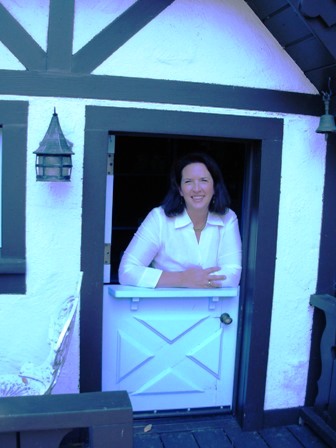
gingerbread playhouse

Joyce Nelson, past president of the Orinda Garden Club, invited us to stop by her place after lunch to see her Hansel-and-Gretel-inspired playhouse. Her grandchildren are growing up and Joyce confided to me that during my talk she looked at Bill Wright’s wonderful photographs and thought of all the new ways she could use and enjoy the gingerbread-style structure. I am waiting to see if Joyce adds an adult-sized door, tosses away the toys and replaces them with a wicker armchair and footstool. Here, she can enjoy quiet afternoons reading mystery novels or perusing seed catalogs!

I flew home last night to Burbank feeling gratified that my “launch” was warmly welcomed by wonderful new friends, including Lani Schulte, my hostess for the 24-hour visit. Thank you, Lani! I know we’ll see one another again.

Bill and I have a big week ahead. Our first big book publication event is scheduled for this Sunday, April 27th, in Sandy Koepke’s Beverly Hills garden. Sandy, Cristi Walden and Paula Panich are hosting the debut of Stylish Sheds. These talented women are baking up a storm – tea party sandwiches and more! But my contribution to the party is a batch of shed-shaped cookies. Yes, the idea took hold and I couldn’t ignore it! I found cookie-cutter choices in the shapes of a cottage, dog house, gingerbread house and barn. I baked dozens of cookies and my mom, Anita, helped decorate them last weekend.

On Wednesday, we fly to Austin for 2 “Shedista” parties, a TV show and a special book-signing at Big Red Sun, a hot Austin garden center. This is going to be a blast….

Catching up: a mother’s mantra

Friday, April 18th, 2008

Where has the time disappeared to? What have I done to fill my days since last posting on March 20th?

Ignoring the chance to write here is like ignoring my running schedule because of “work” demands. Oh, the work will always be here, but the creativity (and exercise), now that’s something I shouldn’t neglect. Even though the promotion and travel schedule for Stylish Sheds is looming, I have been telling myself not to let another day go by without posting here.

Yet, I find I’m always “catching up” and apologizing for it. Replying to emails of friends’ and professional colleagues with the opening line: “I’m sorry I’ve been out of touch; I’m playing catch-up on 100 unanswered emails,” or “I’m catching up on housework, or the bills, or the gardening, because I just finished a killer deadline.” It’s sort of the everyday currency of my life. I borrow from time and then I have to pay it back. Choices, choices. I choose to accept assignments that interest, intrigue or challenge my curiosity. Then I choose to neglect everything else that’s non-essential in order to report and write the article. Then I choose to set keyboard and telephone aside so I can “catch up” on grocery shopping, garden-tending and family-time.

Catching up, I think: What have I been up to? Here’s a brief recap, for as far back as my memory serves (about one month, these days):

alex, deb, ben, death valley march 08

Day One, Death Valley

In late March, we spent several days in Death Valley for spring break. Let’s just say Mom had more fun than her two sons, who tired of all the driving, hiking, heat, intense sun, and more. Yet, being with dear friends Sara and Malcolm (a gifted tour guide) made it all the more worthwhile. As I tell my boys, “We need to meet our surroundings, up close and personal. As we learn more about California’s geography, geology and history, we feel more like Californians.” Yikes! That’s why we went to Death Valley.

 Artist’s Palette

God’s creation overpowers the frail human efforts of emulating the colorful rock formations at Artist’s Palette, Death Valley

sunrise

Sunrise over Zabriskie Point. Worth getting out of bed early to experience. Truly breathtaking and awe-inspiring

While en route, however, we couldn’t resist stopping for photo-ops in a little blink-of-a-town called “Pearsonville.” It is known as the hubcap capital of the world. Seriously. Here are the photos to prove it.

pearsonvillehubcap detailhubcap fence

These roadside attractions gave us a glimpse of California’s quirky nature. And hey, now you know how to turn a wayward hubcap or two into a gleaming expression of kitschy garden art! 

Justin HancockIn early April, on April 1st to be exact, I spent no fewer than 14 hours and 205 miles behind the wheel of my ol’ Subaru, ushering Justin Hancock around LA to see local gardens. Justin is the “Garden Doctor” for Better Homes & Gardens’ web site, bhg.com. You can read him here. He is truly one of those “next generation gardeners” that everyone in the green industry is striving to attract. Yet, Justin is miles ahead of most of us, a true plantsman who takes seriously his craft as an editor, educator and communicator. We actually filled our time, our hours on the freeway between stops, gabbing away about plants, gardening and all sorts of ideas about new media. Look for big things coming from this guy.

justin and shirley

BH&G’s Justin Hancock, touring Shirley Bovshow’s lovely garden

justin with marilee

Justin and Marilee Kuhlmann, touring her project in Santa Monica. They are seen here, intently discussing a plant combination

Other than these outings, I’ve been spending lots of time interviewing great gardeners, designers, architects and artists, and thinking of ways to promote the heck out of Stylish Sheds and Elegant Hideaways. The book will FINALLY be published on April 29th. To hear my recent radio interview with Fran Halpern, host of “Beyond Words” on KCLU (Ventura/Santa Barbara county’s NPR station), follow this link.

Breathing Room: Welcome to spring

Thursday, March 20th, 2008

March 20th is a magical day for me – the Spring Equinox and the day of my son Alexander’s birth. Today he turns eleven! Like me, he is a Pices, arriving at the last possible moment of this sign.

alex-in-a-flowerpot

My friend Scott Eklund, now a photographer for the Seattle Post-Intelligencer, took this “flower baby” portrait of Alex in the fall of 1997 when we were shooting a holiday brochure at Emery’s Garden

I take pleasure in the fact that my first child was born on the Summer Soltice and my second child was born on the day when spring arrives (today!). It feels symbolic and life-affirming in so many ways, especially for a mother whose creative expression occurs in and around the garden. My sons, so special and yet very different from one another, are growing up. Oh, for a time-lapsed movie of their young journey to date. In my memory, my mind’s eye, I can actually see them growing: their legs and arms lengthening; their shoulders broadening. In the stories my husband and I retell one another, we roll back the tape and hit the pause button to watch it over and over again. Remember when….?

************************************************

A little piece I wrote for the Los Angeles Times appears today under the banner: Breathing Room.

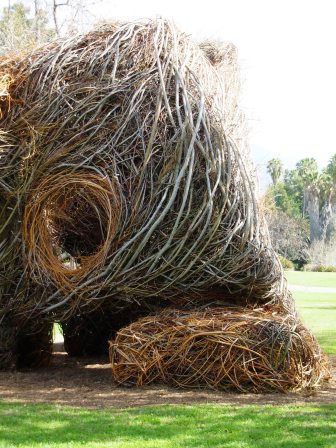
If you read my “willow” post in January, you’ll know why I so enjoyed composing a short essay about environmental artist Patrick Doughterty’s new Los Angeles County Arboretum & Botanical Garden installation. Called “Catawampus,” the willow sculpture opened on February 24th.

Here is my essay in its entirety. The Times had to cut it for space, which is fine. I like it both ways. Read the published version by clicking here: Branching In.

Catawampus

Willow wisdom

Standing in a distant field, looking like child’s building blocks tossed here by giant hands, the assemblage of woven-willow cubes and rectangles conveys kinetic energy.

Aptly named ‘Catawampus’ by creator Patrick Dougherty, it is slightly askew, beckoning me to draw near.

Taller than a house, the installation is situated away from the main path at the Los Angeles County Arboretum & Botanic Garden. I approach, noticing how sunlight slips between open spaces formed by the warp and weft of twigs. The tactile quality of each thread-like branch appeals to me: the in-and-out, the over-and-under. I run my hand along the twisted surface, marveling at the density of four-inch-thick walls. My fingers stroke pussy willow-like tips, velvet against the rough twig bark. The structure looks spontaneously woven, as if beavers gathered the arboretum’s fallen branches after a windstorm and built themselves a fanciful dam.

Like a sophisticated student of art, I try to mentally deconstruct the organic sculpture. Is it a modernist bird’s nest? Is it a commentary on the fragile balance between nature and architecture? Or is pure folly, meant only to delight the eye?

magnolia seen through willow-framed window The tilted branch-blocks rest on ottoman-like cushions of willow. I enter and move from one interconnected space to the next. Peering out of the window openings, I glimpse a maple tree, its new green leaves about to unfurl. Through another portal in the gray-and-brown twig wall I see an early-blooming magnolia. A “skylight” at the top brightens the dark interior with spring’s pure blue sky.

It’s easy to be lured into Dougherty’s rooms, made from saplings grown by the Willow Farm in Pescadaro. Even though the primitive chambers are penetrated by air, light and sound, they feel safe and separate. Time stands still, at least for a few moments.

Solid-looking, yet impermanent. In the end, it is simply a series of large forms, fashioned from ordinary willow otherwise destined for the compost heap. But it gives me quiet comfort.

Catawampus by Patrick Dougherty runs through 2009 at the Los Angeles County Arboretum, 301 North Baldwin Ave., Arcadia, (626) 821-3222 or www.arboretum.org.

Flower show report, chapter 1

Wednesday, March 19th, 2008

I traveled last month to Seattle’s fabulous Northwest Flower & Garden Show, spending a week in my beloved former city absorbing the magical effect of rare February sunshine filtered through a dewy atmosphere. Here is a field report of some of my favorite gardens at the show:

garden getaway

Stained chocolate brown, a sleek, 10-by-15 foot “slat house” provides a sense of shelter while allowing views into and out of the room-like space.

blue urn

The cool-blue palette appears in large-scale urns.

glazed blue pot

Silver and blue-grey foliage defines a monochromatic design by Tami Ott-Ostberg

I enjoyed serving as a judge for Seattle Homes & Lifestyles’ “First in Home and Design 2008” award, an honor given to the best example of residential garden design. I evaluated more than 25 display gardens with publisher Jill Mogen, editor Giselle Smith, art director Shawn Williams, and assistant editor Lindsey Rowe. Unanimously, we selected “Garden Getaway,” created by Tami Ott-Ostberg of Garden Dreams Design, and Ian Wilson of Outdoor Living Environments. With a fashion-forward aqua-and-brown palette, the two interpreted an interior design aesthetic for the landscape.

sommarstugasommarstuga2sommarstuga3

My shed obsession was satisfied when I viewed “Sommarstuga: Summer Living, Simply and Sustainably,” a fantastic take on a Swedish summer cottage (see above), designed by Janine Anderson and Terry LeLievre for the Washington State Nursery & Landscape Association. How fitting that Sunset magazine selected this garden for its award. Here’s what the designers had to say: “Similar to the Northwest, Sweden has short summers and long summer days. Swedes often spend their summers in simple, airy cottages . . . . Though such a retreat might sit on an island in the Stockholm archipelago, it could just as easily straddle rocks on a Northwest promontory. . . .wherever it sits, a Sommarstuga is an icon of summer living.”

rooftop veggies

rooftop veggies 2

corn and sunflowers rooted in the roof of an arbor

chicken coop

edibles planted in the roof of the chicken coop

I was thrilled to learn that judges for Pacific Horticulture, the awesome journal for Western gardeners, gave the nod to “A Backyard Farm: Urban Agriculture in the Northwest.” Designed by Colin McCrate and Brad Halm of Seattle Urban Farm Co., the garden featured a vegetable patch, mini orchard and chicken coop, an illustration of how a Seattle resident might bring the concept of urban agriculture to their own backyard. The open kitchen situated next to the garden emphasizes the connection of the landscape to the dinner table. The inclusion of traditionally rural elements (chickens, corn stalks, sunflowers and more) in an urban setting shows how a small but functional garden space can also be beautiful. 

Garden 2 Table

edible parterre

Robyn Cannon’s edible parterre, created with Lucca Statuary

 NW style by Ravenna Gardens

Ravenna Gardens’ Northwest-style courtyard

wendy welch

Wendy Welch’s urban terrace

Kudos to Northwest Horticultural Society and its members, volunteers and president Nita-Jo Rountree for pulling off an inspiring educational display called “Eat Your Vegetables: Garden 2 Table.” Each of three designers showed how edibles can be beautiful elements of residential garden design. I loved it!

A greener view of the world

Monday, March 17th, 2008

While volunteering in my son’s fifth-grade class last Friday, I overheard the teacher remind students to WEAR GREEN on Monday! “But what if we don’t have any green clothing?” worried one boy.

WHAT??! No green in his closet? Yikes. That is unthinkable.

In celebration of St. Patrick’s Day, since I am one-quarter Irish thanks to Daniel Joseph Ford, Jr., my maternal grandfather, I promise to wear green. Thought I’d share this photo of downtown Chicago where they dye the river green on St. Paddy’s day. I was there in 2005 to speak at the Chicago Flower & Garden Show and thought this was quite outrageous!

green river

Gardeners celebrate March 17th in many ways. In Seattle, it is the day when we planted peas, the edible and ornamental varieties. My sweet peas are already blooming, so here in LA, I’ll sow more of the countless seeds amassed for the cut flower garden. I planted some a week ago and yesterday I discovered the first sunflower and amaranthus seed-leaves sprouting. Yeah!

Living large in 50 words or less

Friday, March 14th, 2008

I thought my big foray into the glossy, over-sized, luxury magazine market here in LA would be exciting. Instead, it kind of left me underwhelmed.

The assignment, by way of a referral from an editor friend whose work I really admire and who handed me off to write for his design deputy, was to report and write three 150-word pieces for Angeleno magazine’s “Living Large” section in its March 08 issue. Measuring 10-by-12 inches, the 300-page issue arrived in my mailbox today. Wow, Ryan Philippe is on the cover looking broodingly handsome.

Angeleno magazine

Quickly, I flipped through the first two hundred or so pages, past full-page ads featuring the beautiful people wearing clothing by Armani, Banana Republic, Dolce & Gabbana and Chanel. Where was my big story?

FINALLY. I found the six-page article, chock-full of mini-stories (and I mean mini – you really could call them “sentence stories”) about everything big in architecture, furnishings, interiors, oh, and even plants. Yes, my dazzling prose was boiled down to a caption-length block of text. Only two of the three items I wrote made the “cut,” so to speak. They really don’t resemble anything I composed.

Living Large, the story

if you look veeeerry closely, you can see my byline, circled above

But the good news is that I can publish my original pieces here, thanks to the freedom of blogging. I think you’ll like reading them. One is about super-sized cactuses and succulents; the next one is about how to grow an instant-gratification hedge; and the final one – my favorite – is about Berylwood Tree Farm, a magical nursery owned by Rolla Wilhite, a man who has been growing trees for 40 years. This is the one short story that Angeleno cut. And you know, I’m actually relieved, because Mr. Wilhite is a visionary – and he deserves a HUGE story of his own in a publication that will give him his due. And I intend to write it myself.

Read on for a revealing comparison between how the stories began and how they ended up in print:

STORY ONE (the original):

Looking Sharp: Emulate Lotusland’s exotic century plants and tree-sized aloes or recreate Huntington Botanical Garden’s otherworldly desert displays for your own enjoyment. Stunning as a piece of living sculpture, a prickly tower calls for special care in transporting and planting, says cactus-grower Molly Thongthiraj of California Cactus Center in Pasadena.

“It usually involves some kind of big equipment like a forklift or a crane,” she deadpans. “We sold a saguaro cactus that had to be delivered by helicopter.”

The scale and size of estate gardens call for big impact, which you can achieve with a pair of 4-by-4-foot variegated century plants (Agave americana ‘Variegata’) displayed in large urns. With cream-and-blue-green streaked blades forming a perfectly symmetrical (but wicked-to-the-touch) rosette, you can expect to spend $300 to $600 per plant.

Wish for something even rarer? Thongthiraj suggests a South African giant tree aloe (Aloe bainesii), with a price tag of $30,000 (12-foot) to $60,000 (20-foot). Location: 216 South Rosemead Blvd., Pasadena, CA; 626-795-2788 or www.cactuscenter.com.

How STORY ONE looks in print:

tiny story on big cactuses

STORY TWO (the original):

Fortress mentality: When Suzanne Rheinstein, interior designer and owner of Hollyhock, the West Hollywood design and antique store, wanted to double the size of her Hancock Park backyard for her daughter’s wedding, she removed a wood fence and ripped out an old eugenia hedge in order to “borrow” her neighbor’s yard for the event (that’s a nice neighbor!).

“When (the wedding) was over, we knew we had to put a hedge back, but I didn’t want to use eugenia again,” Rheinstein explains. “Instead, I found espaliered podocarpus trees that were eight feet high and wide, with wonderful dark green foliage.”

If you plant it in a straight line, just about anything – from tree ferns and ficus to holly and bamboo – can be considered a hedge. People want hedges for privacy, enclosure, and to screen objectionable views. Euphemistically called a “living fence,” there’s something kinder about erecting a green hedge rather than a solid wall between you and the neighbors.

“A green hedge benefits the environment more than a block wall,” notes Los Alamitos-based landscape architect Graham Stanley. (It’s also more economical: hedging costs about $20-per-linear-foot versus $100-per-linear-foot for a constructed wall, Stanley estimates.)

Evergreen shrubs with dark-green leaves make for the best hedges. “They set off the garden as a backdrop to the lime and bronze foliage of other plants,” Stanley says. Good choices: Waxleaf privet (Ligustrum japonica ‘Texanum’, 8-10 ft.); myrtle (Myrtus communis ‘Compacta’, 8 ft.); and fern pine (Podocarpus gracilior, 20-40 ft.). Stanley’s current favorite is Japanese blueberry tree (Elaeocarpus decipiens, to 10-15 ft.), “a nice hedging plant with dark green leaves.”

Source: Valley Crest Tree Co., 818-223-8500 or www.vctree.com (to the trade).

How STORY TWO looks in print:

hedging “story”

STORY THREE (the original piece which was dropped from Angeleno’s roundup of all things big):

Trees are the answer:There’s nothing like a 20-foot-tall (or larger) shade tree to give the impression of largess. Use one as a focal point or group several trees to form a bosque or grove – and your landscape will feel instantly established. For mega-specimens, landscape architects and designers here and beyond call Rolla Wilhite, tree purveyor extraordinaire and owner of Somis-based Berylwood Tree Farm.

Rolla Wilhite

A UCLA-trained landscape architect and horticultural pioneer who 40 years ago began planting saplings at his 25-acre nursery, Wilhite supplied trees for the Bellagio, Getty Center, Getty Villa and the Smithsonian. While he won’t reveal his most-famous clients, Wilhite slyly hints at the marquee names who have shopped among his verdant rows of stately redwoods, graceful magnolias and tufted blue atlas cedars trained into espaliered forms (Hint: just last month he helped a certain pregnant Oscar-winner choose mature live oaks for “one of her houses.”)

Known as the Rodeo Drive of trees, Berylwood is open only to architects and contractors. Wholesale trees have three- to five-figure price tags. You can’t access an online list of his 8,000 trees (Wilhite keeps that inventory in his head), but staff will email photos of specific varieties upon request.

Then there’s the waiting: After you select a mature, field-grown tree, it may take six months to two years for it to be pruned, dug and boxed for delivery so as to avoid transplant shock. “These trees are my children,” Wilhite confides.

Berylwood Tree FarmSource: Berylwood Tree Farm, 805-485-7601 or btfnurs@aol.com (to the trade).

It’s back to the world of full-length stories for me. I think my Hollywood journalism days are over.

Musings on “home”

Saturday, March 1st, 2008

“To be happy at home is the ultimate result of all ambition, the end to which all enterprise and labour tends.”

Samuel Johnson, 1750

homeI’ve been meditating on the notion of home this week, trying to figure out if it’s possible to possess more than one.

And I don’t mean having a second home in the mountains or at a lake (that vacation cabin of our fantasies), but what this question really gets to is whether my heart can be at peace when it lives in two places even though I’m only physically in one of them.

It’s funny how frequently the word “home” appears in our lives. And how many different synonyms we use to describe it (nest, shelter, cocoon, cave, abode, roost, maison, house, castle, my place…..).

Last night, my son’s high school choir staged an ambitious “Singing Waiter Dinner,” during which some very talented teenagers sang — and served dinner to — parents and friends, while also raising funds to pay for their spring performance trip to Boston. The theme of “home” appeared in at least a half-dozen of the numbers: ballads, show tunes, hot songs that teenagers are listening to right now, and even an original song written and performed by one of my son’s fellow choir members. Home is on our minds, whatever our age.

So while in Seattle for the Northwest Flower & Garden Show last week, the notion of home occupied my thoughts. My heart is invested in that city, the city of my college years, our early (pre-children) married life, my many professional iterations, my multiple newspaper, magazine and book projects, the home Bruce and I made for ourselves, with our fabulous architect and builder friends, and the garden I planted and cared for, and loved. This, I thought, was “home.” The place I left 18 months ago for S. California, which was decidedly “not home.”

I remember my first return trip in February 2007, when I flew to Seattle for the flower show and spent five days pretty much on the verge of tears. I stood up on the podium to lecture and was so overwhelmed at the sight of friends and their dear faces in the audience – people who I considered my community – that my eyes welled up and I had to pull myself together in order to give that talk. It was a tough trip because I’d only been away for six months and I felt as if I had been exiled to an alien land.

This time, the story was different. I guess that extra 12 months of familiarizing myself with a new landscape – literally and figuratively – started changing my idea of “home.” During a completely self-indulgent week in Seattle when I left my family behind in order to have long, uninterrupted adult conversation, hug and laugh with friends, inhale the fragrances of wet earth and feast my eyes on plants I can no longer grow, I finally realized that I was kind of just a visitor. Life continues, but it changes. And you know, that’s okay. And for the most part, even though we miss one another, my friends would rather know that we’re happy, adjusting, getting connected and making a good life here in LA. They don’t really want to hear that we’re miserable, lonely, and lost in this land.

And the good news is that we’re not lost. I’m surprised every day about the experience of living here. I never could have imagined feeling “at home” in a new city and state. But it’s happening, thanks to kindred spirits who have adopted me and taken me on plant-and-garden lovers’ field trips, and shared their passion for this place with me. Sandy, a talented designer who I met through a mutual Seattle friend, laughed at me recently, saying: “You’re like a tourist – you get excited about everything new!” I guess I can thank my insatiable curiosity for helping deepen my affection for my new surroundings.

After returning on an early morning Seattle-to-Burbank flight last Saturday, I wrote this email note to a friend: “Being in Seattle last week was the first time I realized that it is no longer my home, but a beloved place that I cherish in my heart. Home is now in Southern California, and after a week of playing in Seattle, I was ready to get back here.”

pocketful of beach glassYesterday, after playing catch with my dog at the ocean and filling my pockets with bits and pieces of seashells, smooth glass and pottery that dotted the sand, after touring a favorite display garden where the hot orange South African aloes were in bloom, and enjoying brilliant conversation over lunch with Paula, another writer exiled in L.A. (from Boston), I realized what a gift it is to be given a “new home,” even one that I didn’t realize I wanted.

aloes in bloom