The Slow Flowers Podcast is the award-winning show known as the “Voice of the Slow Flowers Movement.” Launched in 2013 as the original flower podcast, we’ve devoted more than 10 years to covering the business of flower farming, floral design, and the Slow Flowers sustainability ethos. Listen to a new episode each Wednesday, available for free download here at slowflowerspodcast.com or on iTunes, Spotify, and other podcast platforms.
November 23rd, 2010
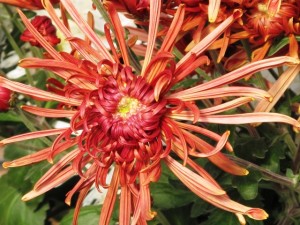
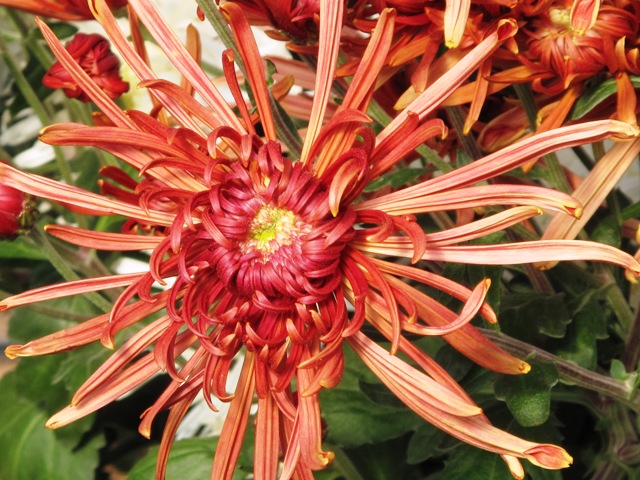
Seatons Toffee, a 'quill' form with deep bronze petals.
I have great memories of the giant yellow chrysanthemum corsage my dad bought me for a college homecoming when I was a little girl. That curly ball of petals was so unwieldy it was hard to keep from crushing it with my chin. To me, that mum didn’t even feel real – it was like something from a fantasy world of my dreams.
My relationship with mums hasn’t really changed much since then. I’ve always kept them at arm’s length, both in garden design and in floral arranging.
The only time mums registered on my radar in the past decade was the celebrated arrival of ‘Kermit’, a lime green mum with a button-like flower that gained a huge following for its zesty color and knack for looking good in a vase for up to two weeks. But what about other mums?
Lots to learn
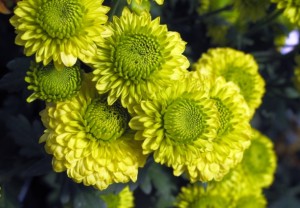
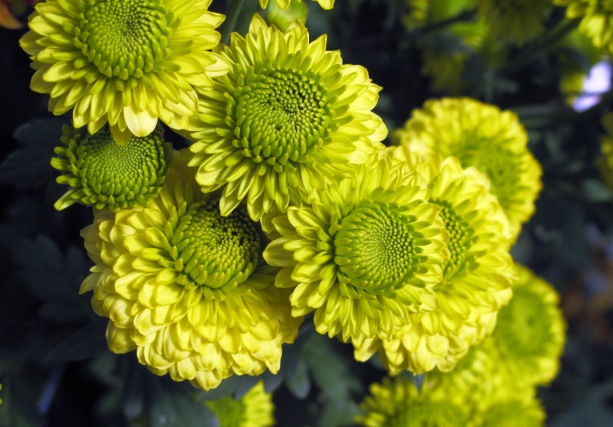
'Yoko Ono' is a top pompom-style mum with that awesome green hue.
Any ambivalence I’ve had about mums changed for the positive after I met two leading mum experts at the Association of Specialty Cut Flower Growers annual symposium in Tulsa, Oklahoma earlier this month.
On one of the long bus rides, I sat with Ray Gray of King’s Mums, an Oregon City, Ore.-based grower of “exhibition, specialty and vintage chrysanthemum rooted cuttings.”
Ray shared a bit of the story behind how he and his wife Kim purchased King’s Mums in 2008. The Grays are longtime wholesale nursery owners who were looking for ways to diversify their crops. They learned from Janet Foss, another grower, that King’s Mums was for sale.
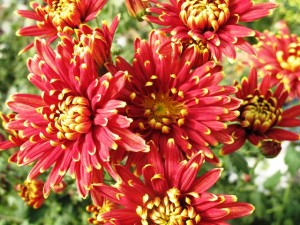
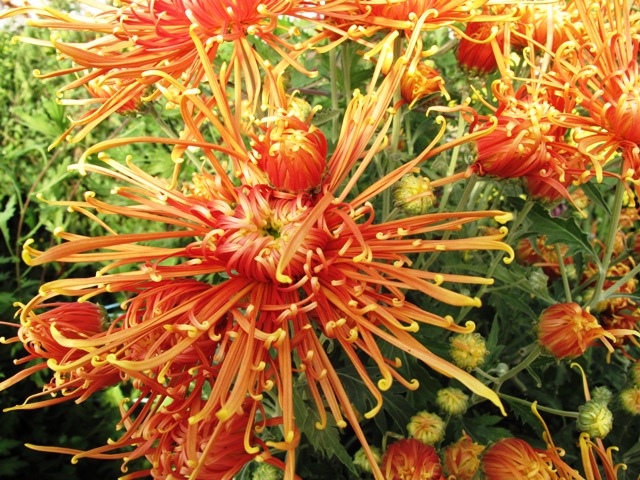
'Yodogimi' is a semi-double mum with dark red petals tipped in gold.
For more than 40 years, the King family operated a huge Chrysanthemum-growing operation in Central California. The business served the amateur gardener and professional grower with more than 200 cultivars of exhibition and spray mums, one of the largest sources in the U.S.
After buying the business, Ray and Kim in January 2009 moved this amazing collection to their small family farm in Oregon City. They are carrying on the tradition begun by the Kings while also implementing new technologies and growing methods.
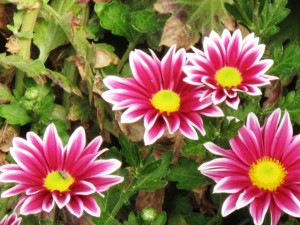
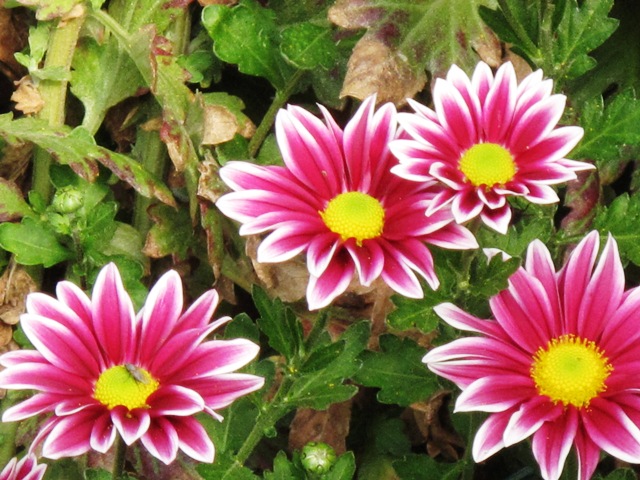
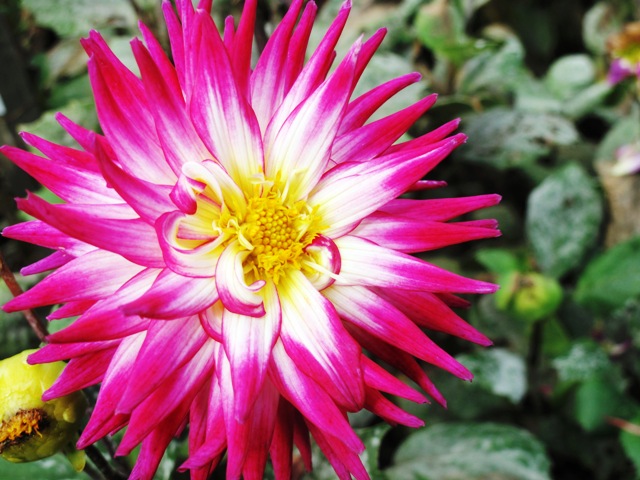
'Two Tone Pink' has petite pink-purple petals with white tips.
Ray gave me a copy of the King’s Mum catalog and right away I started drooling over the cultivars between the covers. As a cut flower choice, the mum is superb. The palette leans toward the warm end of the color spectrum, which is very en voguewith today’s floral designers: bronze, gold, terra cotta, salmon, champagne, orange, crimson, pink-red, lime green, apricot, burgundy, and all sorts of luscious bi-colored petal combinations. And of course, there are also pastel, cream and white flowers.
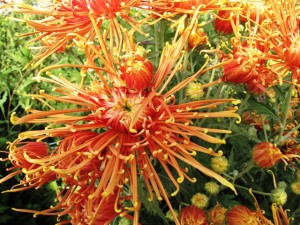
'Senkyo Kenshin' is a dark bronze 'spider' form - magical!
I know this is probably all old news to people in the National Chrysanthemum Society, and to specialty cut flower growers and their floral design clients. But I found it thrilling to meet Ray and learn how he and Kim are keeping alive this important cut flower category. Yes, I started to fantasize about growing some of these blooms in my own garden.
Note to self: King’s Mums is open to the public each October. Located about 20 minutes south of Portland (Oregon City is the end of the historic Oregon Trail), you can visit during business hours and see these yummy flowers up close and personal.
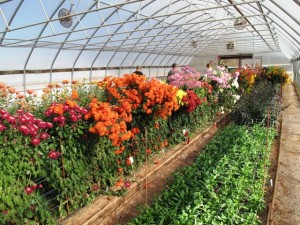
A beautiful punch of color comes from mums filling the hoop house at Bear Creek Farm.
There is another reason why mums stayed on my mind at the ASCFG conference. After meeting Ray and flipping through the beautiful flowers in his catalog, I was stunned to walk into one of Vicki Stamback’s hoop houses at Bear Creek Farms to discover rows of these very mums I’d just seen in that catalog.
I have to confess, I was a bit antisocial while skipping out of the demonstration of releasing beneficial insects in the greenhouse. But I wasn’t the only one climbing between the shoulder-high rows of mums, taking photos of these really superb blooms and making sure to jot down the name of each. These flowers were impossible to ignore as you can see here.
The following day, I sat in on “The Comeback of the Mum,” a presentation by Chehalis, Wash., grower Janet Foss. I learned enough to become a confirmed mum fanatic. You can read a summary of her presentation at A Fresh Bouquet.
I’ve got to share the rest of these incredible specimens:
-

-
an unlabeled mum, quite charming
-

-
‘Doreen Statham’
-

-
‘Honeyglow’
-

-
‘John Lowry’
-

-
‘Joyce Fountain’
-

-
‘Kelvin Mandarin’
-

-
‘Paint Box’
-

-
“Pretty Polly”
-

-
‘Pretty Polly’
Posted in floral design, Gardening, General, Plants | 4 Comments »
November 22nd, 2010
 Okay, I know that there is still one more week left in the month of November, but we had a big Seattle snowstorm today and so visions of sugarplums are dancing in my head.
One other reason I’m dreaming about my holiday decor is the just-arrived December issue of Better Homes & Gardens. It hit newsstands with a really gorgeous wreath on the cover and all sorts of design, entertaining and gift-giving ideas filling 275 beautiful pages.
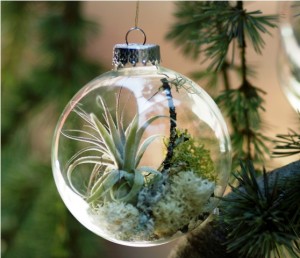
A medium-sized glass "world" to gaze upon in wonder.
I was asked to pick my favorite garden gift for the holidays and you can read about it on page 153. Or you can see it here: An alluring “Forest Floor” ornament created by San Francisco designer Flora Grubb. It is a winner! Thanks to Flora for suggesting we feature one of her custom ornaments and for sharing the photograph you see here.
Living Ornaments:
It’s fun to use living elements and wild-gathered souvenirs from nature in your holiday decorating. I love this “Forest Floor” glass ornament created by San Francisco designer Flora Grubb. Lichens, moss, feathers and seeds cushion a living Tillandsia air plant inside a tiny glass ball – an enchanting, diminutive naturescape to hang from branch or bough.
An occasional spritz of water is all this tiny terrarium needs to continue looking beautiful – even after you take down the tree. Available from www.floragrubb.com; 3-inch, $19.95; 4-inch, $24.95; set of three 2-inch balls, $19.95.

Cool, huh?
Some good news for the print world:
For those of you who subscribe to the New York Times, you can’t have missed a full-page advertisement on the back of today’s Business section. It’s so huge that I couldn’t scan the entire contents of the colorful spread on my tiny printer. But here’s the gist of it:
Better Homes & Gardens, along with Meredith Corp. sister title Family Circle, are the magazine world’s #1 and #2 top books for women consumers, in terms of total advertising pages sold.
Under the leadership of editor-in-chief Gayle Goodson Butler and SVP, Group Publisher James T. Carr, Better Homes & Gardens has earned the support of 1,739 advertising pages this year.
Just when everyone thinks magazines are a dying breed, here’s a report that “these magazines have held the top two positions in the women’s lifestyle category for 2010 and 2009.”
Just sayin’.
Posted in Creativity, Gardening, Plants, Writing | 3 Comments »
November 20th, 2010
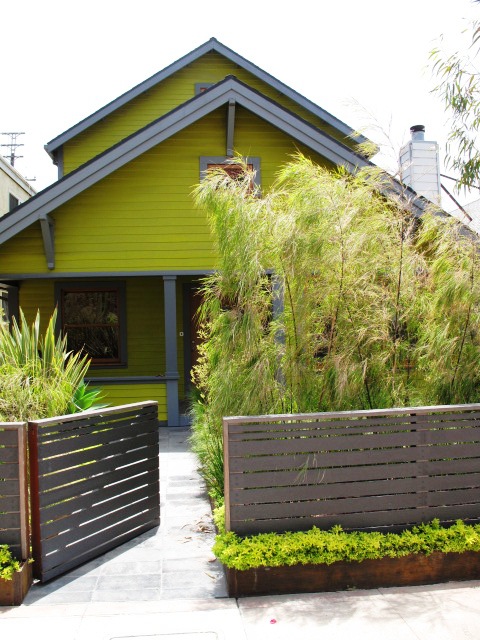
You can't miss the Chartreuse House, seen through the similarly-colored plant palette.
Today’s Los Angeles Times’ HOME section features my architecture/interiors story about Lisa Little and Phil Brennan’s makeover of a pair of tiny cottages in Venice, Calif.
The Venice-based architect and her special effects wizard husband painted the exterior an acid-chartreuse color and trimmed the house in charcoal gray.
Click on over to the story and you’ll see a fabulous web gallery of images shot by photographer Katie Falkenberg.
I also included a sidebar on Stephanie Bartron’s amazing work in the postage stamp-sized front yard, which faces a Venice walk street, which appears in LA at Home, the Home section’s daily design blog.
But you really can’t see much of the garden in the Times’ web gallery.
I promise you – it’s something to behold, featuring a dazzling palette of plants that enliven the small entry garden and play beautifully with the rugged materials Stephanie selected.
So I will share those photos here, along with the sidebar text:
A Chartreuse garden
As a color-packed accent to the renovated 1905 Craftsman bungalow, the Chartreuse House’s front yard is a example of how much great design can occur in a tiny patch of soil.
Yet before choosing a zesty palette of drought- and salt-tolerant plantings, designer Stephanie Bartron, of SB Garden Design, had to address some of the less visible challenges of the property’s postage stamp-sized entry. Prior owners had piled layers of topsoil over the sandy native soil, which created a drainage mess.
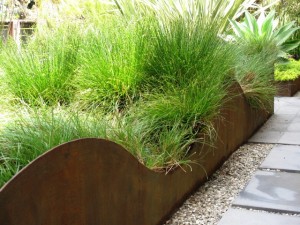
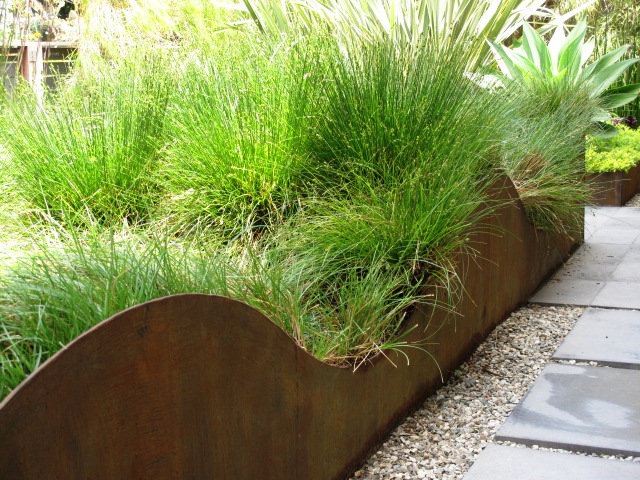
A wave-like pattern gives lots more interest to the raised bed.
“I needed to lower the grade of the front yard in order to move water away from the house,” Bartron says. “We calculated the volume of soil to excavate and used that amount to fill two raised planters. That way we didn’t have to haul away any material.”
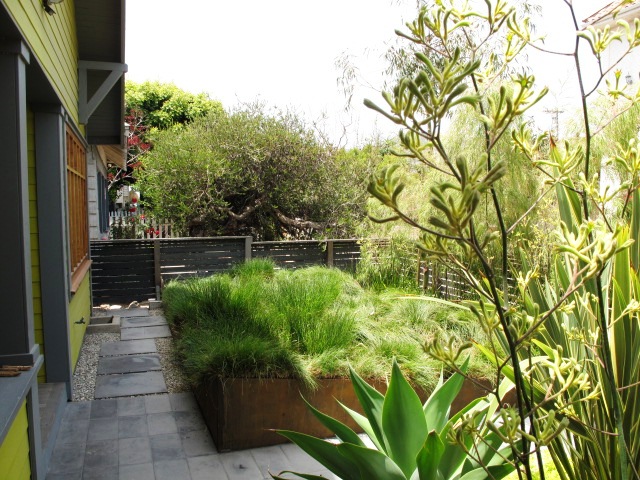
Divided by a permeable walkway of concrete tile, the raised planters are formed by boxes of thick steel plate that have been roughly finished to encourage rusting. Now weathered, the boxed-beds replicate the Cor-Ten steel used to make the vertical planter in Little and Brennan’s courtyard.
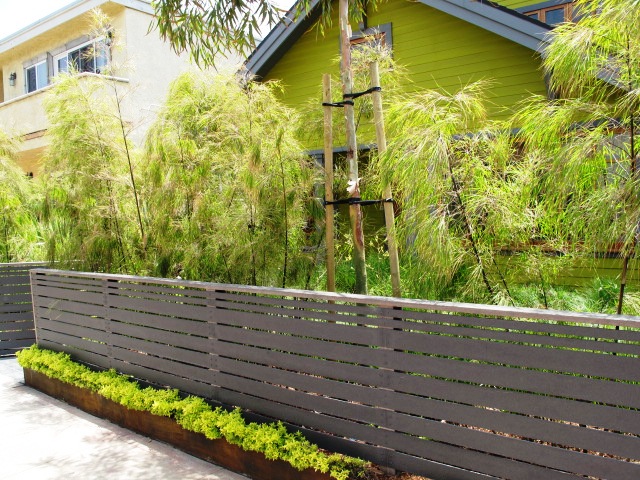
The same weathered steel forms a slender raised planter at the base of the charcoal fence facing the walk-street. It is filled with a ribbon of golden oregano and Sedum rupestre ‘Angelina’ — which dazzle against the darker fencing.
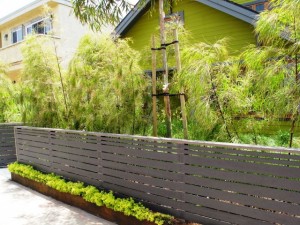
The chartreuse scheme continues outside the gray composite fence.
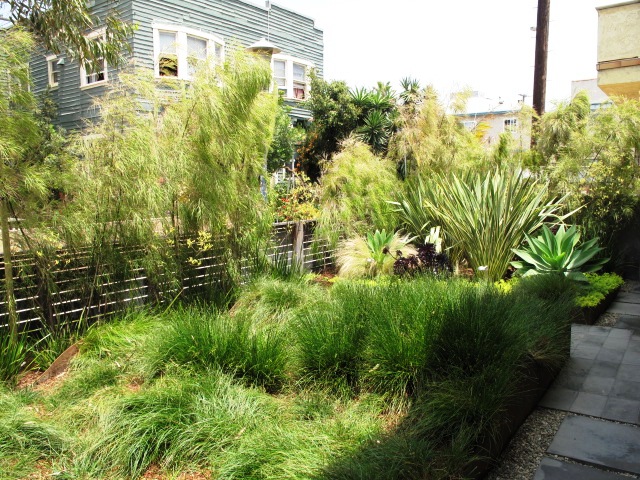
Bartron asked the metal fabricator cut a “wave” detail along the top of the larger planting box and in it she installed a sedge meadow, a nod to the nearby beach. Privacy screening comes from a “hedge” of weeping Mexican bamboo and alternating chartreuse and yellow-flowering kangaroo paws.
“The plants create a punch of color in such a small space,” Bartron says. The lacy bamboo fronds, the tall kangaroo paw stalks and the undulating drifts of sedge are constantly moving, thanks to the ocean breezes. Little added a eucalyptus tree to the front area, situated so that it will eventually grow high enough to screen the house’s topmost windows.
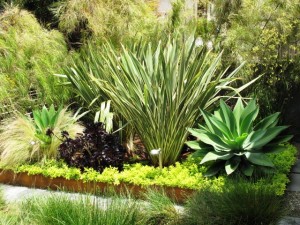
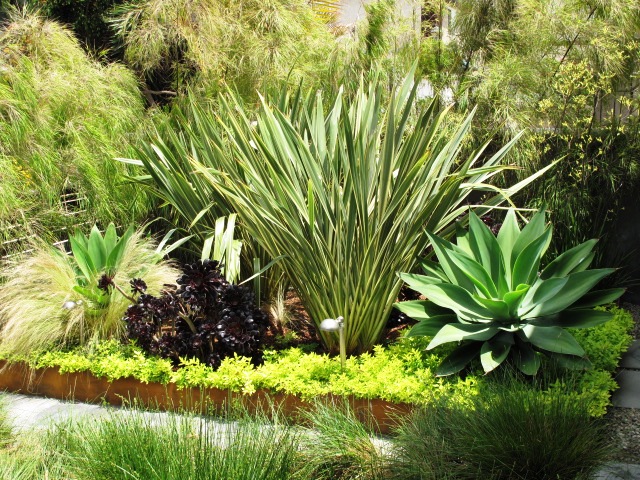
Such a simple yet sophisticated combination of plants in the smaller of two raised beds.
For the smaller of the two planter boxes, Barton paired dramatic clumps of smooth agave (Agave attenuata), known for growing well near the ocean, with Mexican feather grasses, dark purple Aeonium arboreum ‘Zwartkop’ and yellow-and-green variegated New Zealand flaxes. The entire bed is under-planted with the chartreuse Sedum rupestre ‘Angelina’. Filled with detail, it is a diminutive landscape that causes visitors to slow down and experience while approaching the front door.
The garden has many sustainable features, including low-maintenance plantings and permeable surfaces. Yet, says Bartron, its main design motivation is a response to the architecture. “This is such an artsy, whimsical place and I see the garden as a colorful jewel box for Lisa and Paul to enjoy.”
–Debra Prinzing
I’ll close with just a few more photos:
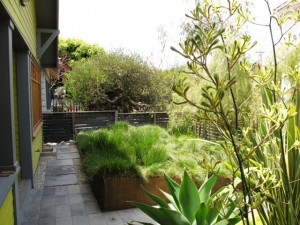
The larger of the two raised beds is planted mostly with Carex, to emulate the waves of the nearby Pacific Ocean.
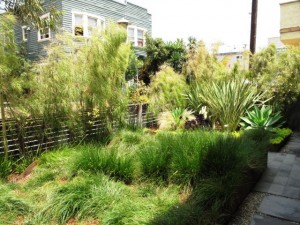
This view shows how the Mexican bamboo and the kangaroo paws provide ample screening from the walk street traffic.
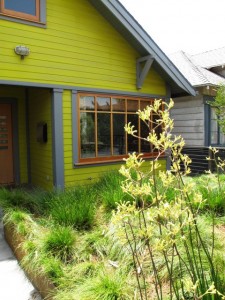
Playful and suitable for the setting, the lemon yellow kangaroo paw sways in the breezes.
Posted in Architecture, Creativity, Gardening, interior design, Landscape Design, Plants, Writing | 5 Comments »
November 18th, 2010
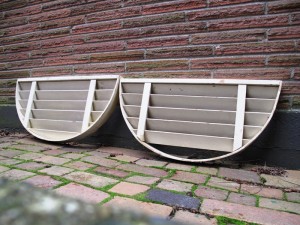
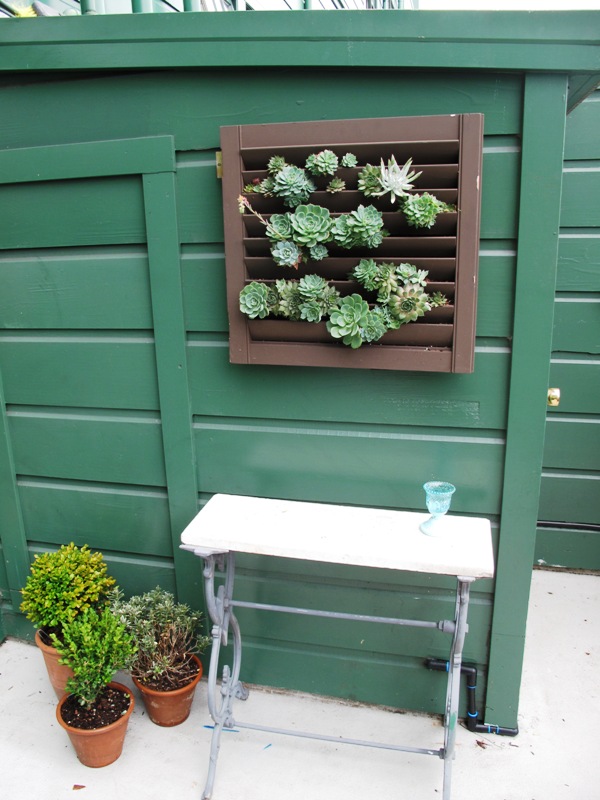
Read on to learn what I'm going to do with these amazing shutters!
I recently spent the morning at a cool local flea market in Seattle. I was up early and out the door by 7:15 a.m., ready to get my creative juices going.
My mission: to discover as many castoffs from others that could make their way home with me.
The destination: 2nd Saturdayz, a popular flea market where vendors, dealers and designers come together to do business with salvage-savvy shoppers.
The apt motto: A Saturday Market of Fine Tastes and Curious Treasures.
Once inside the doors of a huge hangar (yes, the flea market is held at a decommissioned Naval base), I met up with Jean and Gillian. But not too much socializing is encouraged at these events. That is, IF you want to get the best deals. First-come, first-serve is the motto. Or: Every woman for herself.
I shouldn’t limit this endeavor to the female salvager because there were many men in attendance at 2nd Saturdayz. But still, you know what I mean. It’s a gal’s paradise.
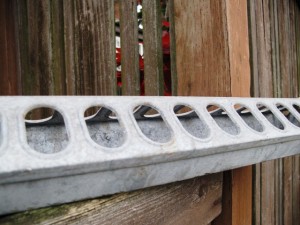
Galvanized chicken feeder. 30 sizeable oval openings. A succulent planter or a flower holder? Or both?
Lately, I’ve been collecting vintage flower frogs, which makes sense since I’m living and breathing floral design. But this time, instead of finding glass and metal frogs, cages and stem-holders to displace the dreaded florist’s Oasis, I picked up a galvanized metal chicken feeder.
Think of a loooong ice-cube tray with oval cutouts. In metal. Very cool. Now that I’m looking at it again, I may just use this nifty piece as a planter for hardy succulents. It’s probably leaky so that’s going to give the drainage I’ll need.

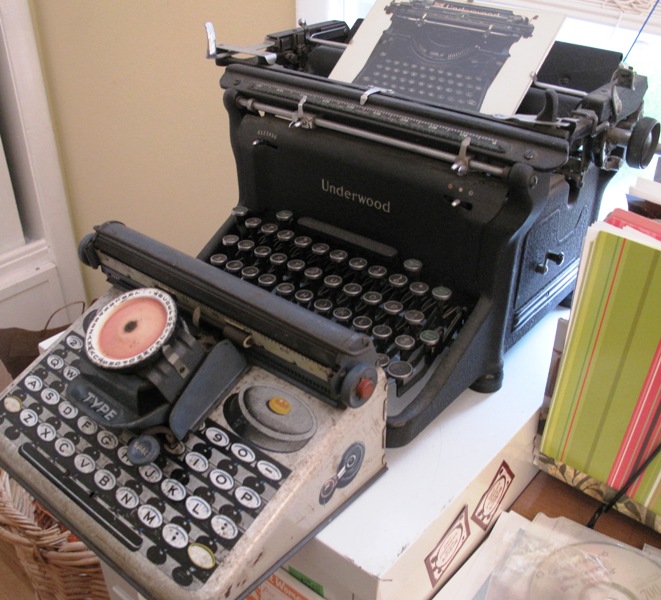
A nearly-pristine child's typewriter complements my grown-up Underwood.
I also picked up a vintage child’s typewriter. It can play nicely with my retro black Underwood typewriter that we bought back in 1985 at the Rotary Club Auction on Bainbridge Island. I think I paid $5 back in the day.
Those old typewriters, truly relics, are now priced at $50 on up. And to think so many of them have been dismantled to make jewelry from the letter keys. I’m guilty of buying one of those alphabet bracelets, too.
When I walked into one small “booth” with my friend Jean, an awesome Seattle landscape designer, I found myself absent-mindedly stroking the frame and spindles of a cast iron baby crib. The vendor had taken off one of the crib’s side-rails and piled pillows and cushions on the springs and against the three remaining railings.
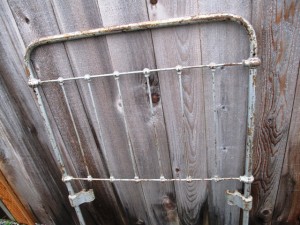
Here's the end of the baby crib. Next time you see this, I'll be lounging against some cushy pillows, perhaps under a shade tree. This crib will become my garden bench.
What did it recall? Yes, a very fashionable garden daybed or bench. And for $100, I totally lucked out. My friend Gillian, who is a pro at this sort of buying-and-selling of antiques and vintage items at Ravenna Gardens, pulled me aside to share the secret that she’s seen other dealers selling cast iron baby cribs for $600. I don’t have a “garden” in which to place this bench right now, since I’m in a rental house and I’m not yet ready to invest energy on land I don’t own. But . . . I did decide to bring this crib home and store the pieces in the garage until the next garden comes along. Luck-ee me!!!
I couldn’t ignore the central element inside the warehouse – a little hamlet of potting sheds. Their perky corrugated metal roofs, topped with finials created from shiny bits and pieces, stood high above the flea market’s landscape.
While gazing at the rustic but stylish potting sheds, I met designer/builder Bob Bowling. Owner of Bob Bowling Rustics of Whidbey Island, this engaging shed artist greeted me and generously shared his story.
Turns out, like some of the talented folks we featured in Stylish Sheds and Elegant Hideaways, Bob makes unique structures using reclaimed and recycled materials. Whimsical and playful, and finished off with salvaged windows, doors and other artifacts, the Rustics sheds are each a delight to see.
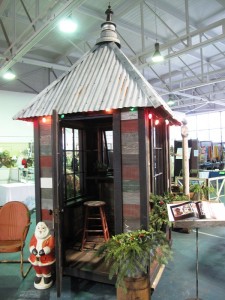
Bob's cool garden shed was hard to miss.
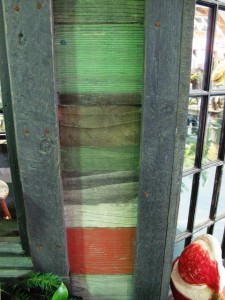
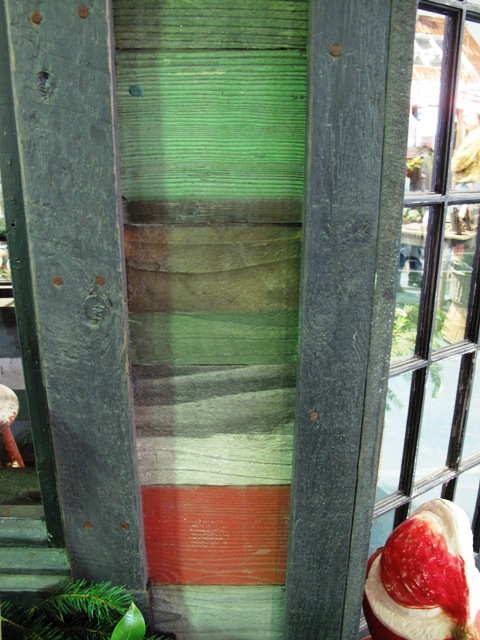
The "stripes" come from variously-stained boards.
The prices are reasonable, too. I should know. For $3200, you can get this “Rasta” shed. It measures about 7-by-7 feet in diameter (plus or minus) and features cool details, like the exterior of alternating stripes of differently-stained boards and the window boxes, door hardware and towering finial.
You could easily spend this much for a pre-fab storage or tool shed on the lot of your local big-box store. Which would add more art and style to your life, while also being quite functional?
All this thrifty flea-market shopping had energized me and made me feel quite artistic.
And then I met that shutter duo that called my name. Loudly. They appear to be half-circle crowns or eyebrow tops from a set of plantation shutters.
Wooden, with 2-inch deep slats, these pieces were displayed separately. Once I noticed both of them, I was not going to leave with just one! I don’t think I got a huge bargain, since I paid $28 apiece (but the seller insisted she had just cut the price in half). Whatever. When you spy something so uncommon, you have to act.
Other than changing the depressing buff-colored paint job to something more lively, what on earth do you suppose I will do with these crescent-shaped pieces?
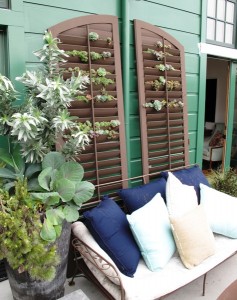
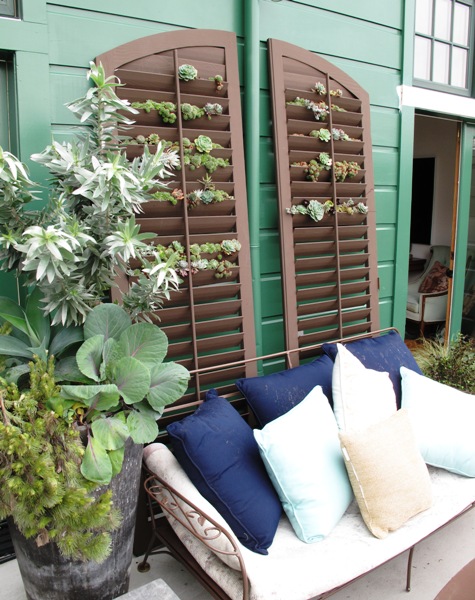
Hello! You two are pretty darned cute. That Baylor Chapman is uber-talented!
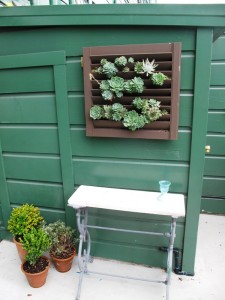
Here's another small shutter-turned-wall garden, compliments of Baylor Chapman.
For inspiration, I hearkened swiftly to my visit to Baylor Chapman, a talented San Francisco floral and garden designer I recently profiled for A Fresh Bouquet. After my friends Susan and Rebecca took me to meet Baylor at her floral studio, the three of us accompanied her to her loft apartment in SF’s Mission District.
And there on the outside roof deck, were some pretty amazing succulent gardens – PLANTED IN SHUTTERS!!!
Naturally, I am going to draw from this incredibly clever idea and put those twin shutters to very good use with a vertical planting of hardy succulents. It may take until next spring, but stay tuned. And if you have any suggestions on what color I should use to upgrade the crappy paint color, please chime in.
The trick, according to Baylor, is to secure a layer of landscaping cloth like a little pocket or envelope behind each shutter opening. Then you can add potting soil and plant your sedums, succulents or whatever else seems fitting. You know, I really do love that chocolate brown finish on the shutters. Doesn’t it nicely offset the silver, gray, blue and green foliage of the succulents?
Well, all in day’s work. More to come as I execute these big plans.
Posted in Creativity, floral design, Furniture design, Gardening, General, interior design, Landscape Design, Playfulness, Sheds & Havens, Writing | 10 Comments »
November 11th, 2010

Shedista Kathy Fries, wearing her amazing necklace.
When we wrote about and photographed the multiple sheds at Kathy and Ed Fries’s garden outside Seattle, we titled the chapter “Suburban Follies.” I mean “follies” in a good way because their landscape is dotted with a colony of amazing, fanciful structures.
Just when I think Kathy has exhausted all of her creative brainstorms, she surprises me. Last evening I saw a work of art around her neck that blew my mind. Actually, it is a collection of five works of art, suspended from an elegant gold chain.
These canvases are tiny. Miniature. Diminutive.
A little fairy must have painted the garden and shed still-lifes that range from a pinkie fingernail to a nickel in size.
Kathy is one of the most inspiring, big-idea persons I know, especially when it comes to garden-making and shed design. She recently commissioned this breathtakingly-beautiful piece of jewelry that celebrates all that she loves about her garden.
I couldn’t take my eyes off of her dazzling necklace at our dinner last evening. Thankfully, she allowed me to take photos and write about the art and the artist:
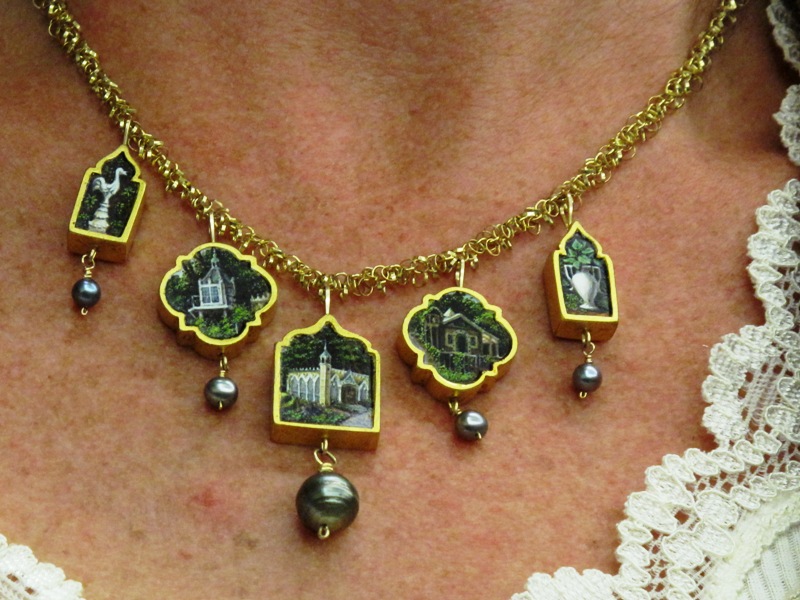
Kathy's one-of-a-kind necklace by artist and painter Christina Goodman
The allure of this art is that Christina Goodman didn’t just shrink down photos of Kathy’s architectural follies and other garden ornamentation to fit inside the Old-World-style gold-leaf cases. No. She painted each of these tiny canvases using a minuscule brush.
According to her web site, this California artist uses “very fine brushes, good lighting and a magnifier . . . and acrylic paint as it dries quickly and allows me to work on a small scale” to create her miniatures.
As for the lovely Renaissance-inspired frames, Christina says she designs and builds them “with wood using miniature moldings and a centuries old water gilding technique. The result is well worth the labor-intensive process. In the end, I hope to capture the luminosity of Renaissance painting in miniature.”
 Kathy met Christina last year when the artist exhibited at the Bellevue Arts Festival. Kathy loved her miniature pendants, pins and earrings that featured trees, birds and other scenes from nature.
And she started thinking about the possibilities of having a one-of-a-kind necklace to celebrate her garden and its “sheds.”
One of the pendants was inspired by a vintage cast-iron chicken that is mounted on the Dutch door to the boys’ playhouse (see photo, above left). Kathy requested that Christina render it in miniature for her necklace.
The huge urn (in miniature) that dangles from the right side of her necklace is in reality about 4 feet tall and made of cast iron. I believe it was one of Ed’s “finds” that became a garden gift for Kathy. She jokes that its provenance was as a hotel ash tray. The last time I saw the piece, it was planted with a huge hosta and standing in the shade garden.
The three central gems on Kathy’s necklace include her Viewing Tower, her Doges Palace and Palais de Poulets, her chicken coop. Each was handcrafted by John Akers, a Seattle builder and salvager of architectural artifacts who collaborates with Kathy on many of her garden projects. Just in case you haven’t actually seen these structures before, here is how they look as real-life pieces of architecture. Bill Wright photographed them for our book Stylish Sheds and Elegant Hideaways:
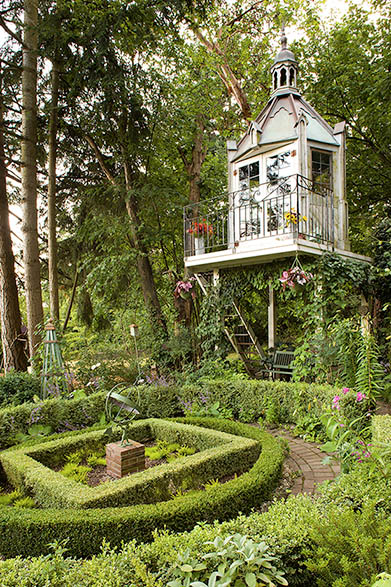
Kathy's tower overlooks her Medieval-inspired knot garden. The octagonal structure rests on a 12-foot-tall platform with steps and an iron railing.
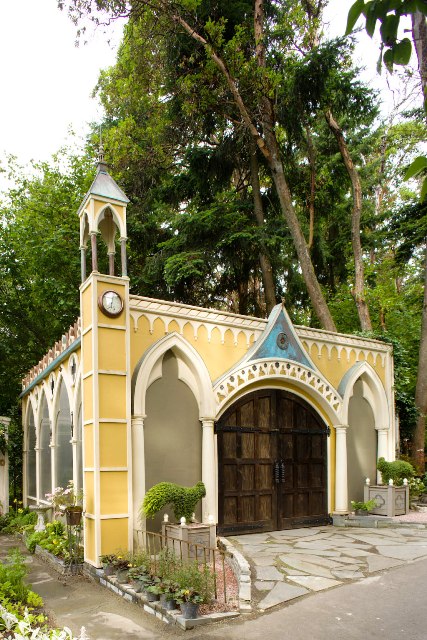
The Doges Palace was once an unsightly 20-by-20 foot aluminum shed. Now a fanciful garden house, it is embellished with verdigris copper sheeting and a clock tower.
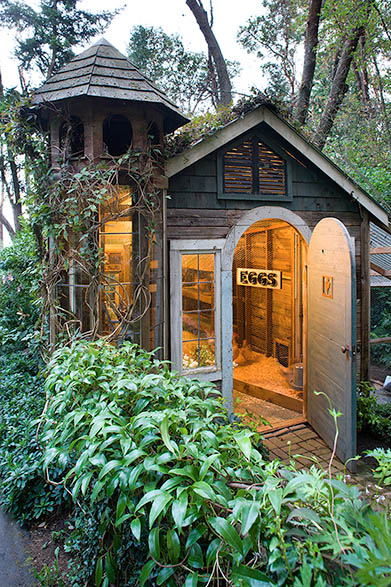
The Palais de Poulets, also known as "Clucking Hen Palace," was transformed from a decrepit shed into a functional and decorative coop inhabited by a flock of heirloom chickens.
Can you imagine what I’m fantasizing about? What special piece of art or architecture do I now dream to own in miniature by Christina Goodman? I’ll be on the lookout for just the right precious object.
Posted in Architecture, Creativity, General | 18 Comments »
November 6th, 2010
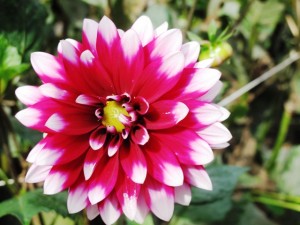
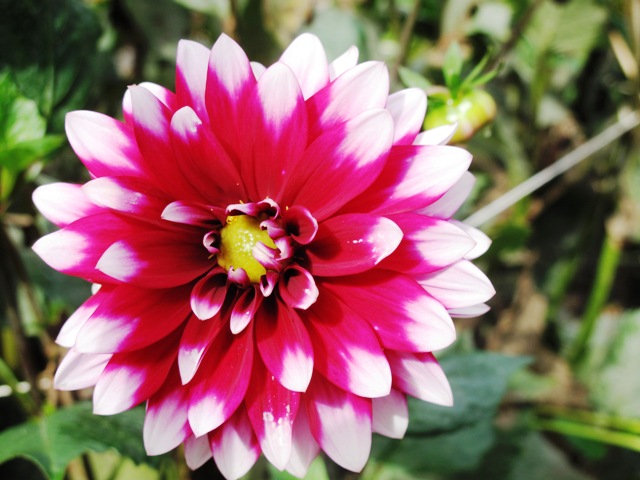
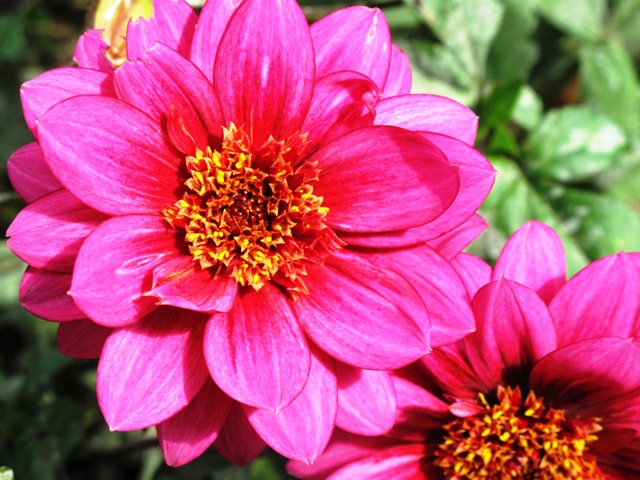
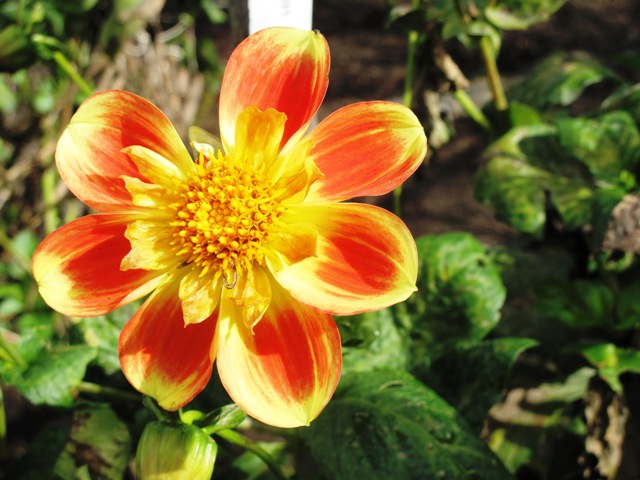
Dahlia 'Duo'
Last Sunday morning, while staying a few extra days in San Francisco after my Garden Conservancy talk, I took two Muni buses (47 & 5) to Golden Gate Park where all things artistic, botanical and cultural seem to reside.
My objective was to see the amazing living roof at the California Academy of Sciences, but once I realized I only had 90 minutes, my plans took a slight detour. Art and flowers beckoned.

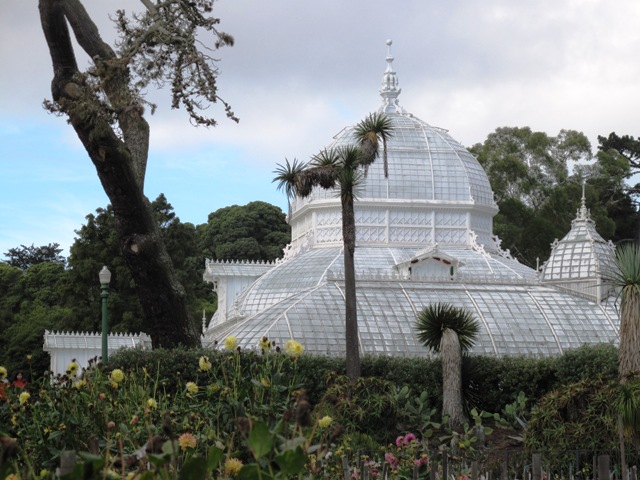
The Conservatory of Flowers, with Dahlia Dell in the foreground
First stop was the Conservatory of Flowers, circa 1879. It is one of the last remaining Victorian-era conservatories on the West coast (the other resides in Seattle’s Volunteer Park). Before I could even approach the conservatory, my attention was diverted by a late autumn display of dahlias.
Called “Dahlia Dell” and dating to 1924, two demonstration flower beds thrive here, located to the east of the conservatory. They are maintained by volunteers from the San Francisco Dahlia Society for the simple purpose of educating local gardeners and flower lovers about the diversity of dahlia color, form, size and culture. I have a feeling that Paula Jaffe, a dahlia expert and educator who I profiled in “Dazzling Dahlias,” a 2008 Perennials magazine article, is one of the passionate individuals responsible for this joy-inducing floral display.
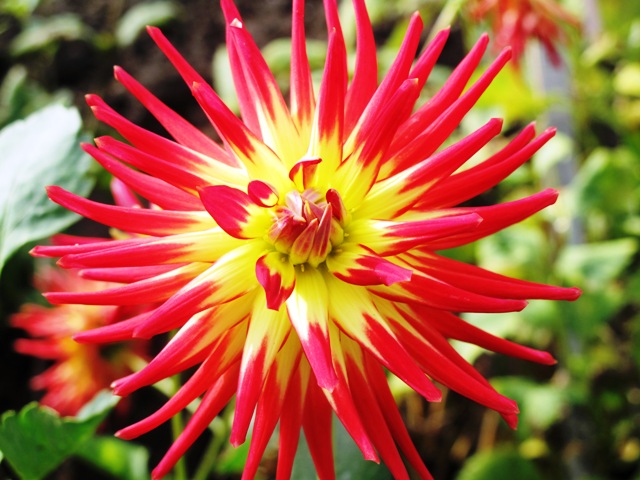
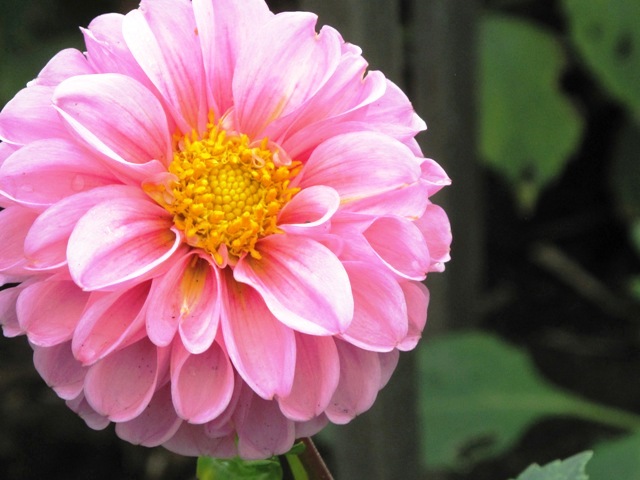
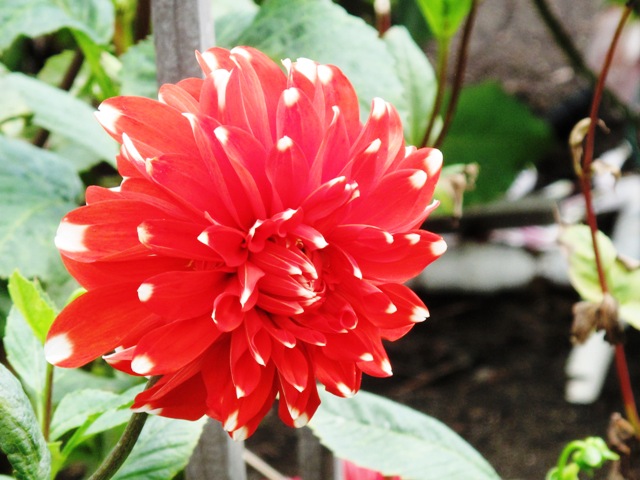
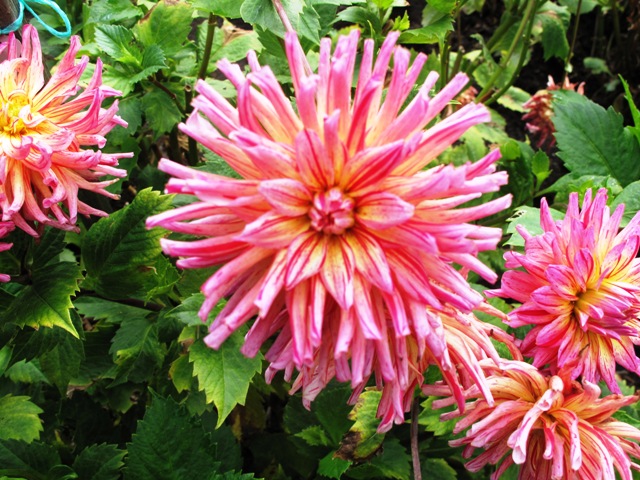
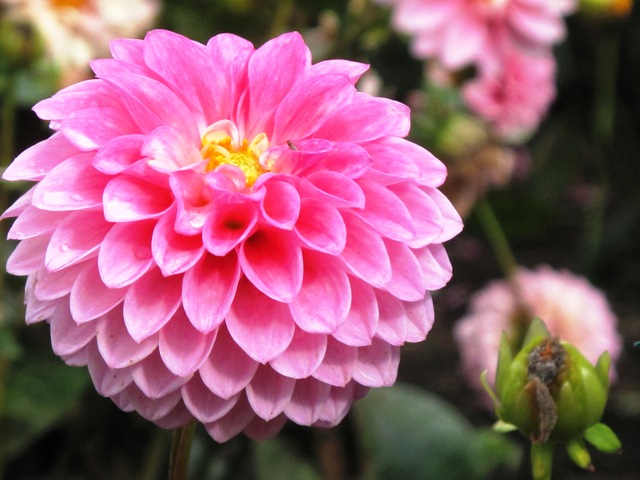
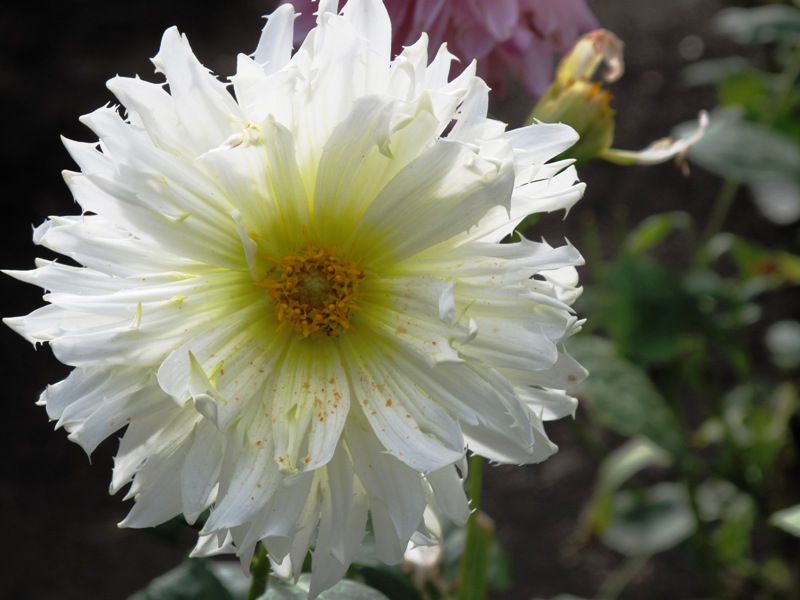
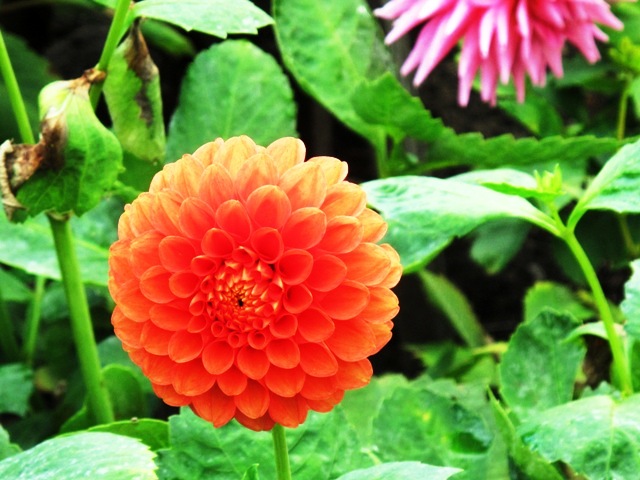
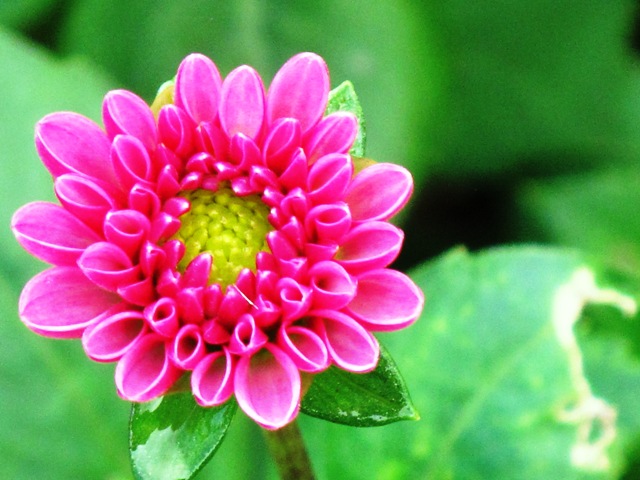
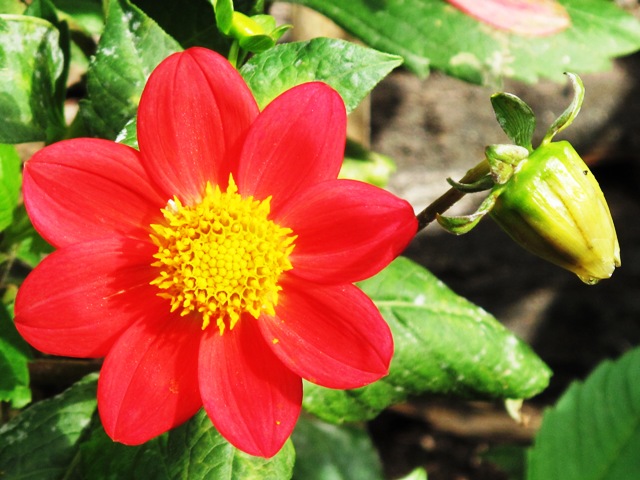
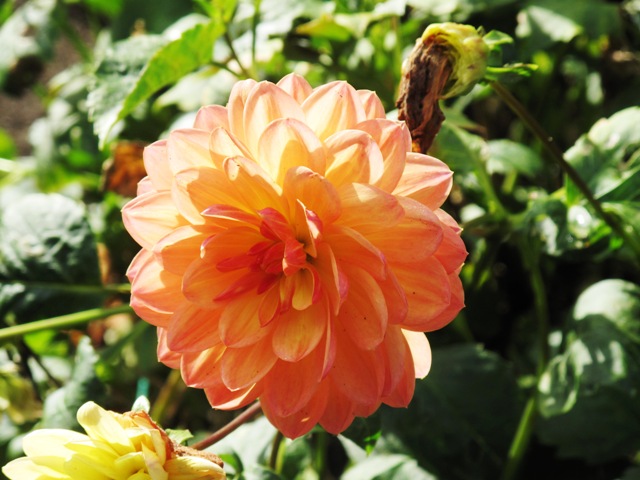
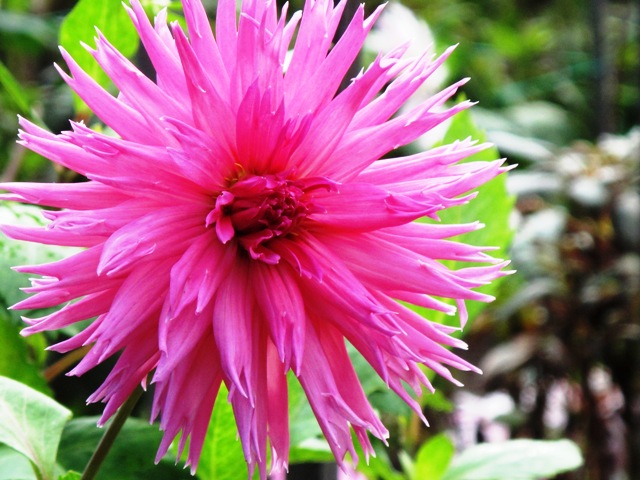
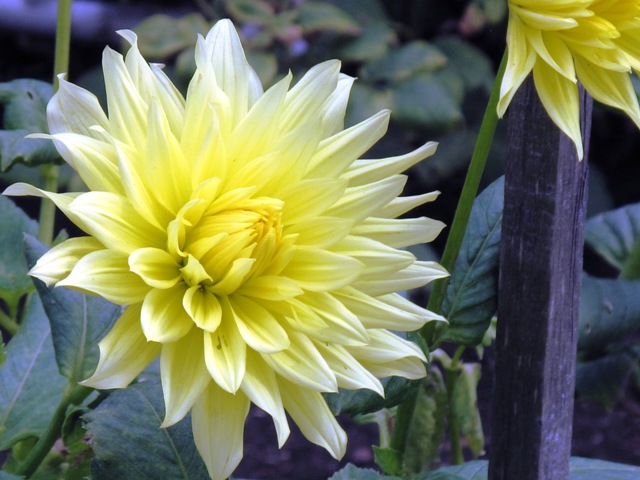
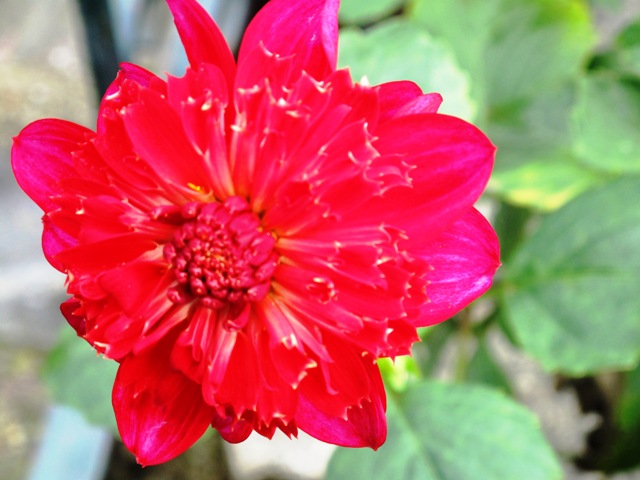
It was fun to play around with the “tulip” Macro button on the back of my Canon G10 camera and take pics of the fading beauties. These dahlias have withstood the combination of late-season rain, fog and sunshine and they’re still producing pretty blooms. I can’t wait to grow dahlias again, especially because they play well with flower vases. Really well. Enjoy this diverse display. Most (but not all) of the plants were labeled, thankfully.
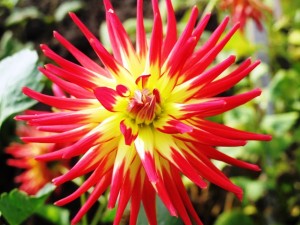
Dahlia 'Western Spanish Dancer'
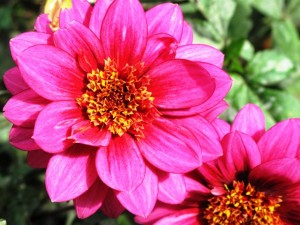
Dahlia 'The Phantom'
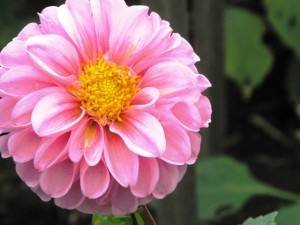
Dahlia 'Sir Richard'
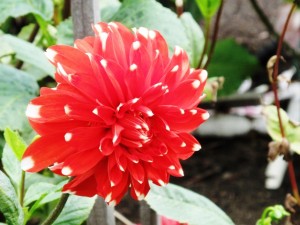
Dahlia 'Shipley Spot'
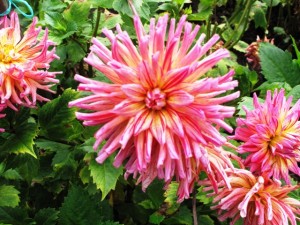
Dahlia 'Shea's Rainbow'
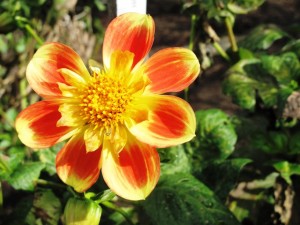
Aptly named: Dahlia 'Pooh'
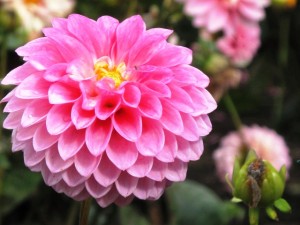
Dahlia 'Pink Paradise'
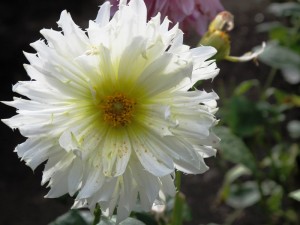
Dahlia 'Horse Feathers'
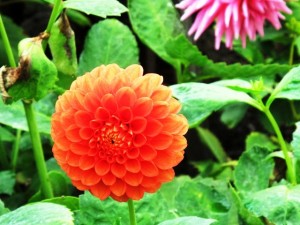
Dahlia 'Green D'Or' orange sport
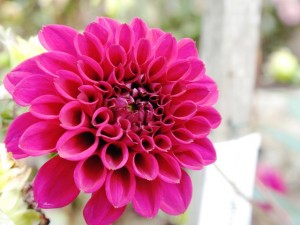
Dahlia 'George C'
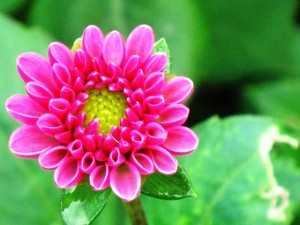
Dahlia 'Elvira' (a miniature)
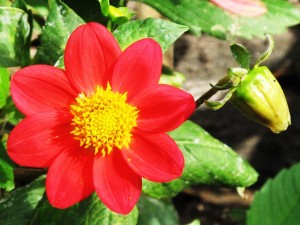
Dahlia 'Delta Red'
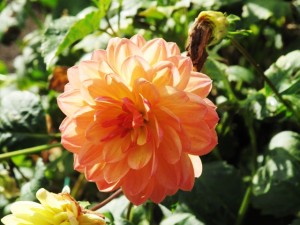
Dahlia 'Creamy Beige'
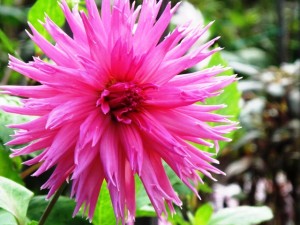
Dahlia 'Bo De O'
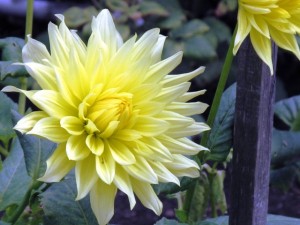
Dahlia 'Belle Fiore'
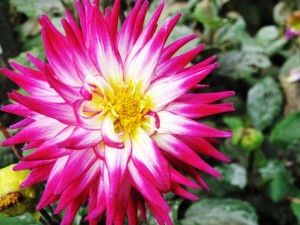
Dahlia 'Badger Twinkle'
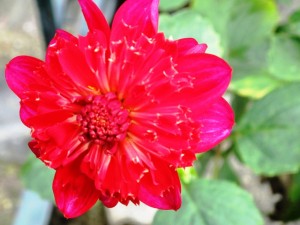
Dahlia 'Arulen Princess'
MORE TO SEE
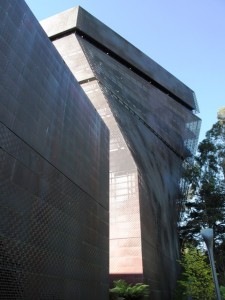
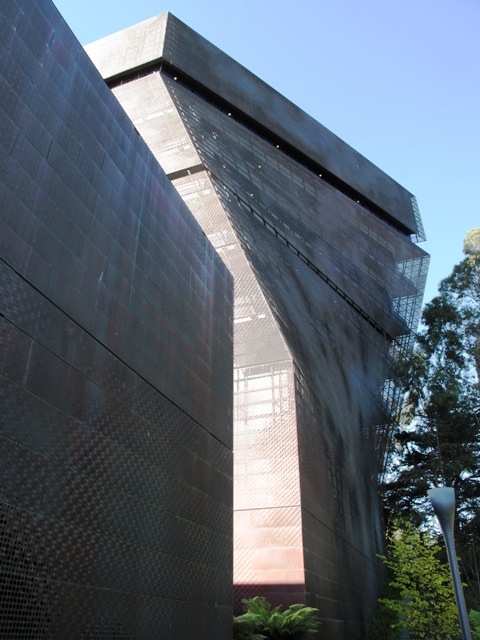
The de Young's tower - against a blue autumn sky.
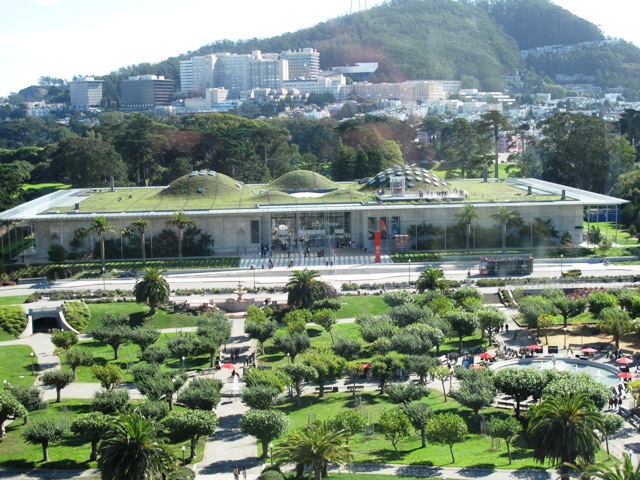
After spending an hour with the dahlias, I moseyed over to the California Academy of Sciences, but discovered that – from ground level – it is nearly impossible to see, let alone get a sense of its scale and magnificence, Renzo Piano’s green living roof.
So I compromised and spent my museum admission budget to enterthe de Young art museum where “Van Gogh, Gauguin, Cezanne and Beyond: Post-Impressionist Masterpieces from the Musee d’Orsay” was in full swing. It was exciting to see the many amazing and exciting canvasses on display. I’ve been to the Musee d’Orsay twice before when in Paris and so I enjoyed revisiting some of the paintings and drawings again. Twelve galleries of paintings were incredible to take in. You can never have too much of this artwork. The show continues through January 18, 2011.
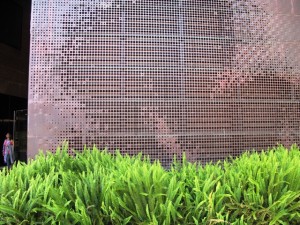
Here's a closer look at the pointillistic-style perforated copper exterior.
After I left the galleries, I took the elevator to the viewing tower.
Actually, this was the first time I’ve been to the de Young since it was renovated and reopened in October 2005. The “new” building is clad in a perforated copper sheath, which may sound rigid but has a sensual fluidity that reacts to the light and dark.
Depending on how the sun moves through the sky, the building’s surface has dot-like patterns and a shimmery quality. The 144-foot tower is one of the most alluring aspects of the new design, by Swiss architecture firm Herzog & de Meuron and Fong & Chan Architects in San Francisco. From way up high, you can see the best of San Francisco – a 360-degree, mind-blowing perspective.
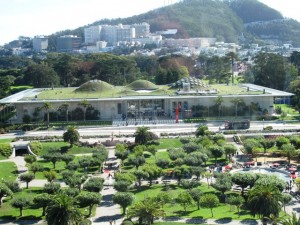
This roof is incredible - a horticultural masterpiece on top of the California Academy of Sciences in SF
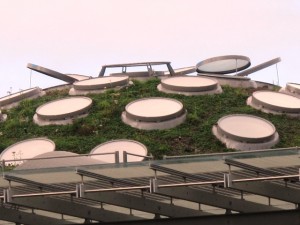
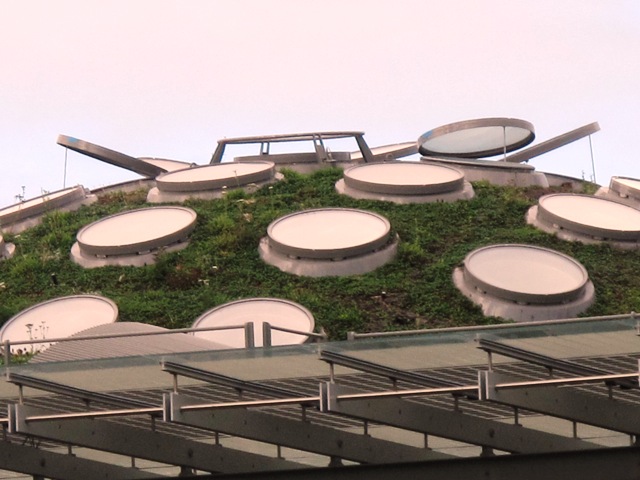
A closer look of one of the roof's mounded forms
From here, I got some photographs of that green, living roof.
I’ve already decided that on my next visit to San Francisco, I will have to see that installation up close and personal. Because while peering down on it and photographing it (through the glass-walled viewing gallery), I noticed that people were up on the roof doing just that.
Not a bad lineup for a few hours at Golden Gate Park, huh?
Posted in floral design, Gardening, General, Plants | 3 Comments »
© Debra Prinzing, all written and photographic content. Website design/development by Willo Bellwood/Metric Media