


 While it may seem as if über-hostess Martha Stewart produces a new cookbook every few months, the October release of Dinner at Home: 52 Quick Meals to Cook for Family & Friends felt especially timely.
The 272-page cookbook follows one of her favorite formats: Meals you can prepare in one hour or less including a salad, entrée, side dish and dessert.
A few weeks ago, I had the chance to do a phone interview with Martha for the Los Angeles Times, just before she came to Southern California for two book-signing appearances.
How does one prepare for such a momentous event? I called my longtime Seattle writer-friend Tracy Schneider, a regular contributor to Amazon’s Al Dente foodie blog, to ask her advice. A few years ago, after I left Seattle and a design-writing gig at the (now departed) Seattle Post-Intelligencer, Tracy started writing for the newspaper’s home section with a clever shopping column called “Hot Finds, Cool Prices.” She, too, was given a chance to interview Martha by phone, which totally impressed me.
Tracy’s tip? Buy a tape recorder to make sure you capture a perfectly accurate, verbatim interview. Well, I couldn’t pull that off with such a short lead time. Luckily, years of newsroom experience and very fast typing skills prepared me to just take notes. Wearing my headset, fingers poised on the keyboard, and my questions already inserted into a Word document, I did just that.
America’s domestic goddess couldn’t have been nicer. Brisk and businesslike during a 14-minute interview, she answered my questions and shared her advice on entertaining at home during a recession. An edited version of this Q&A appeared in the October 17th edition of the Los Angeles Times Home section and on our LA At Home blog.
Q: Is home entertaining more important than ever?
A: Many people are entertaining at home and cooking delicious food. But they are looking for simple, time-saving recipes they can actually do themselves that are as tasty as restaurant food. I just love the whole idea of using a few ingredients that taste so extraordinary.
Q. What’s an easy way to throw a party at home?
A. I often do breakfasts and lunches. It gets it out of the way so I can do other things later in the day. Last Sunday I had nine people over for brunch for a delicious, homemade meal. It wasn’t expensive food: cheese popovers, beautiful poached eggs with country smoked bacon, two platters of smoked fish, homemade biscuits and fresh-squeezed grapefruit juice.
Q. What is the ideal number of guests for a dinner party?
A. I would suggest inviting what you can handle. I’m an experienced caterer so I can have 12 or 14; my dining room comfortably fits 16.
Q. What do you do when your guests outnumber your set of dishes?
A. I suggest you serve a buffet and use stacks of plates from different sets.
Q. How do you feel about potluck meals?
A. When friends get together, it should be a little more orchestrated so you know there is a salad, a vegetable, a main course, and a dessert. The host can provide the main course. You could use my duck breast with fig sauce menu from “Dinner at Home.” One person can bring the braised red cabbage and someone else can prepare the potato pancake or the hazelnut brittle for the ice cream.
Q. If you could only splurge on a few key pantry ingredients, what would you buy?
A. You should have coarse salt, fine salt, peppercorns and a grinder, vanilla beans, saffron threads, unbleached flour, natural sugar and an assortment of pasta. I’m always looking for the imported, rough Italian pasta. (Note: Martha actually used “really good” in describing each one of these ingredients).
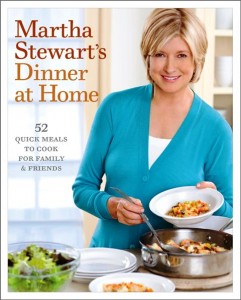 BOOK DETAILS:
Dinner at Home: 52 Quick Meals to Cook for Family & Friends
By Martha Stewart
$35, hardcover
Here is the recipe Martha mentions. It really sounds delish! I’m going to try it soon and will report back.
DUCK BREAST WITH FIG SAUCE (serves 4)
Duck breasts area available at butcher shops and specialty food shops, as well as many supermarkets. They render quite a lot of fat as they cook. If you like, strain the fat and refrigerate up to a month. Use it for roasting or frying potatoes or making duck confit.
Ingredients:
2 duck breasts (1 lb. ea)
Coarse salt and freshly ground pepper
1 T olive oil
1 large shallot, thinly sliced
1/3 cup dry sherry
1/3 cup fig jam
1/2 cup chicken stock, home made or low-sodium store-bought
2 t. unsalted butter
1 t. fresh lemon juice
Preheat oven to 400-degrees F
Using the tip of a sharp knife, score the duck breast at 1/4-inch intervals in a crosshatch pattern, cutting deeply into the fat but not the meat. Season duck all over with 1 tsp. salt and a generous pinch of pepper. Let stand at room temperature 20-30 min.
Heat oil in a 10-inch cast iron skillet oer medium low until hot but not smoking. Add duck breasts, skin sides down; cook until browned and crisp, about 5 minutes. Turn breasts, and transfer to oven; roast until an instant-read thermometer inserted in the thickest part (avoiding bone) registers 130-degrees F for medium-rare, 10-12 minutes. Remove pan from oven, and transfer duck to a cutting board; let rest.
Meanwhile, pour off rendered duck fat into a heatproof container. Return 2 T duck fat to the pan (reserve the rest for another use, or discard). Add shallot; cook over medium heat until beginning to brown, stirring occasionally, about 2 minutes. Carefully add the sherry (it will splatter), and cook 1 minute, then stir in fig jam and cook 1 minute more. Pour in stock; cook, stirring, until sauce is thick and emulsified. Add butter; cook, stirring, until combined, 1 minute. Remove from heat; stir in lemon juice.
To serve, thinly slice duck diagonally against the grain; divide among four plates. Spoon fig sauce over duck.
Yum.
 A big thanks to
 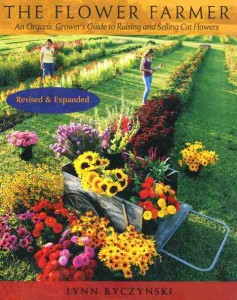 The Flower Farmer: An Organic Grower’s Guide to Raising and Selling Cut Flowers (Revised & Expanded) by Lynn Byczynski (Chelsea Green Publishing, 2008), $35.
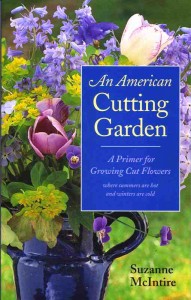 An American Cutting Garden: A Primer for Growing Cut Flowers, by Suzanne McIntire (University of Virginia Press, 2002), $16.95.
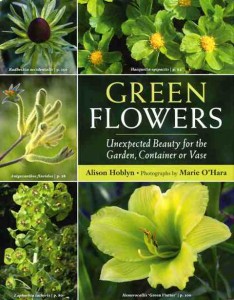 Green Flowers: Unexpected Beauty for the Garden, Container or Vase, by Alison Hoblyn with photographs by Marie O’Hara (Timber Press, 2009), $24.95.
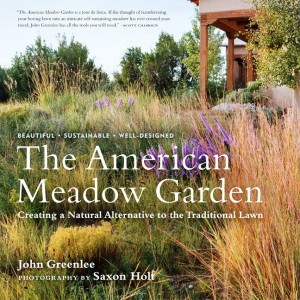 The American Meadow Garden: Creating a Natural Alternative to the Traditional Lawn, by John Greenlee with photography by Saxon Holt (Timber Press, 2009), $39.95.



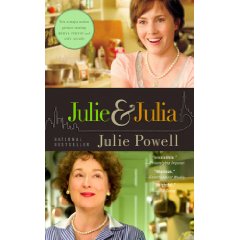 Two years ago, I read Julie Powell’s wonderful debut memoir, “Julie & Julia.” Her story of spending 365 days cooking every recipe in Julia Child’s “Mastering the Art of French Cooking” was electrifying and compelling.
 Wow – a nice, little review popped up in the July issue of Landscape Architecture magazine’s “noteworthy” column.
 My Stylish Shed partner, the very talented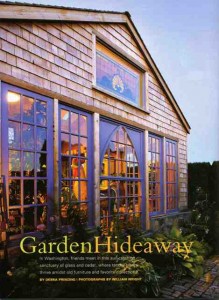
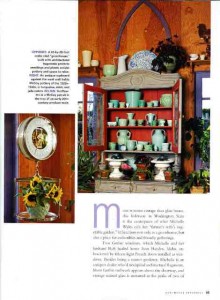 Her design process was anything but logical, Michelle admits. “You can be unrealistic and impractical when you’re making a garden building,” she says.
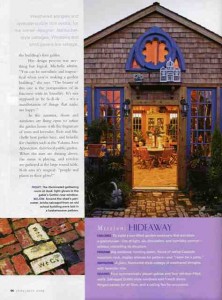 Challenge: To build a sun-filled garden sanctuary that emulates a greenhouse – lots of light, air, circulation, and humidity control – without mimicking its structure.
![Autumn Monkshood - beautiful and poisonous [photo from Valleybrook Gardens Ltd.]](https://www.slowflowerspodcast.com/wp-content/uploads/2009/05/aconitum-150x150.jpg "aconitum") And immediately, I recalled my own brush with a “Wicked Plant.” Before sharing my Q&A with Amy, I will indulge in the tale of Autumn Monkshood, aka Aconitum carmichaelii ‘Arendsii’.
And immediately, I recalled my own brush with a “Wicked Plant.” Before sharing my Q&A with Amy, I will indulge in the tale of Autumn Monkshood, aka Aconitum carmichaelii ‘Arendsii’.
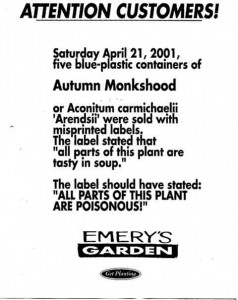 Needless to say, a check in Sunset Western Garden Book revealed the exact opposite to be true. Under “Aconitum,” Sunset warns: “All parts are poisonous if ingested.”
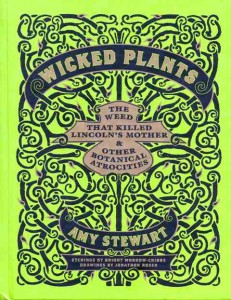 Now, however, with the advent of Wicked Plants, the evils of ingesting the flowers, stems or leaves of Aconitum are coming back to haunt me. The perennial is, in fact, the very first entry of Amy Stewart’s charming and horrifying new effort, published earlier this month. Amy writes:
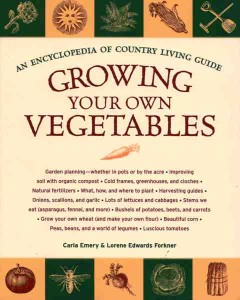 It’s a good thing that Lorene was a back-to-the-earth gal long before modern-day foodies who are just discovering the joys and benefits of tending to their own edible plants.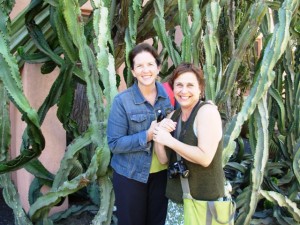
 My “In the Garden” column for
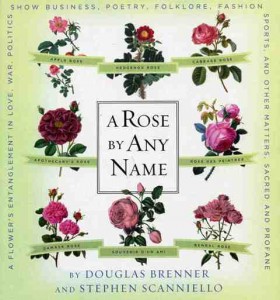 I met
I met 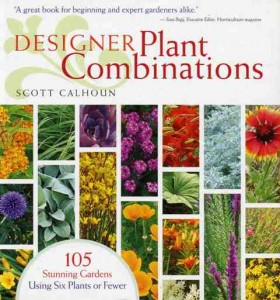 I’m a sucker for artful color combos,and I can often be found playing with paint-chip samples at the hardware store or mixing and matching blooming plants at the nursery. But here’s a guide that color-dreams for me. Designer Plant Combinations features inspiring techniques the pros use to pair color, texture, scale and form in the garden.
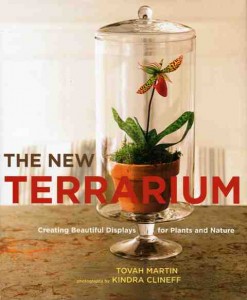 Devoted subscribers of the original Victoria magazine know the work of garden writer
  Julie Moir Messervy
  My aforementioned agent, Sarah Jane, has a saying about what makes a good cookbook. “It must transcend the recipes,” she posits. In other words, we can now find recipes anywhere – in magazines, on the web, in grandmother’s dog-eared “Joy of Cooking.” But what makes a great cookbook resonate is the way it touches our universal relationship with food.