Debra Prinzing

Get the Email Newsletter!

Archive for the ‘General’ Category

What to do with salvaged shutters

Thursday, November 18th, 2010

Read on to learn what I'm going to do with these amazing shutters!

I recently spent the morning at a cool local flea market in Seattle. I was up early and out the door by 7:15 a.m., ready to get my creative juices going.

My mission: to discover as many castoffs from others that could make their way home with me.

The destination: 2nd Saturdayz, a popular flea market where vendors, dealers and designers come together to do business with salvage-savvy shoppers.

The apt motto: A Saturday Market of Fine Tastes and Curious Treasures.

Once inside the doors of a huge hangar (yes, the flea market is held at a decommissioned Naval base), I met up with Jean and Gillian. But not too much socializing is encouraged at these events. That is, IF you want to get the best deals. First-come, first-serve is the motto. Or: Every woman for herself.

I shouldn’t limit this endeavor to the female salvager because there were many men in attendance at 2nd Saturdayz. But still, you know what I mean. It’s a gal’s paradise.

Galvanized chicken feeder. 30 sizeable oval openings. A succulent planter or a flower holder? Or both?

Lately, I’ve been collecting vintage flower frogs, which makes sense since I’m living and breathing floral design. But this time, instead of finding glass and metal frogs, cages and stem-holders to displace the dreaded florist’s Oasis, I picked up a galvanized metal chicken feeder.

Think of a loooong ice-cube tray with oval cutouts. In metal. Very cool. Now that I’m looking at it again, I may just use this nifty piece as a planter for hardy succulents. It’s probably leaky so that’s going to give the drainage I’ll need.

A nearly-pristine child's typewriter complements my grown-up Underwood.

I also picked up a vintage child’s typewriter. It can play nicely with my retro black Underwood typewriter that we bought back in 1985 at the Rotary Club Auction on Bainbridge Island. I think I paid $5 back in the day.

Those old typewriters, truly relics, are now priced at $50 on up. And to think so many of them have been dismantled to make jewelry from the letter keys. I’m guilty of buying one of those alphabet bracelets, too.

When I walked into one small “booth” with my friend Jean, an awesome Seattle landscape designer, I found myself absent-mindedly stroking the frame and spindles of a cast iron baby crib. The vendor had taken off one of the crib’s side-rails and piled pillows and cushions on the springs and against the three remaining railings.

Here's the end of the baby crib. Next time you see this, I'll be lounging against some cushy pillows, perhaps under a shade tree. This crib will become my garden bench.

What did it recall? Yes, a very fashionable garden daybed or bench. And for $100, I totally lucked out. My friend Gillian, who is a pro at this sort of buying-and-selling of antiques and vintage items at Ravenna Gardens, pulled me aside to share the secret that she’s seen other dealers selling cast iron baby cribs for $600. I don’t have a “garden” in which to place this bench right now, since I’m in a rental house and I’m not yet ready to invest energy on land I don’t own. But . . . I did decide to bring this crib home and store the pieces in the garage until the next garden comes along. Luck-ee me!!!

I couldn’t ignore the central element inside the warehouse – a little hamlet of potting sheds. Their perky corrugated metal roofs, topped with finials created from shiny bits and pieces, stood high above the flea market’s landscape.

While gazing at the rustic but stylish potting sheds, I met designer/builder Bob Bowling. Owner of Bob Bowling Rustics of Whidbey Island, this engaging shed artist greeted me and generously shared his story.

Turns out, like some of the talented folks we featured in Stylish Sheds and Elegant Hideaways, Bob makes unique structures using reclaimed and recycled materials. Whimsical and playful, and finished off with salvaged windows, doors and other artifacts, the Rustics sheds are each a delight to see.

Bob's cool garden shed was hard to miss.

The "stripes" come from variously-stained boards.

The prices are reasonable, too. I should know. For $3200, you can get this “Rasta” shed. It measures about 7-by-7 feet in diameter (plus or minus) and features cool details, like the exterior of alternating stripes of differently-stained boards and the window boxes, door hardware and towering finial.

You could easily spend this much for a pre-fab storage or tool shed on the lot of your local big-box store. Which would add more art and style to your life, while also being quite functional?

All this thrifty flea-market shopping had energized me and made me feel quite artistic.

And then I met that shutter duo that called my name. Loudly. They appear to be half-circle crowns or eyebrow tops from a set of plantation shutters.

Wooden, with 2-inch deep slats, these pieces were displayed separately. Once I noticed both of them, I was not going to leave with just one! I don’t think I got a huge bargain, since I paid $28 apiece (but the seller insisted she had just cut the price in half). Whatever. When you spy something so uncommon, you have to act.

Other than changing the depressing buff-colored paint job to something more lively, what on earth do you suppose I will do with these crescent-shaped pieces?

Hello! You two are pretty darned cute. That Baylor Chapman is uber-talented!

Here's another small shutter-turned-wall garden, compliments of Baylor Chapman.

For inspiration, I hearkened swiftly to my visit to Baylor Chapman, a talented San Francisco floral and garden designer I recently profiled for A Fresh Bouquet. After my friends Susan and Rebecca took me to meet Baylor at her floral studio, the three of us accompanied her to her loft apartment in SF’s Mission District.
And there on the outside roof deck, were some pretty amazing succulent gardens – PLANTED IN SHUTTERS!!!

Naturally, I am going to draw from this incredibly clever idea and put those twin shutters to very good use with a vertical planting of hardy succulents. It may take until next spring, but stay tuned. And if you have any suggestions on what color I should use to upgrade the crappy paint color, please chime in.
The trick, according to Baylor, is to secure a layer of landscaping cloth like a little pocket or envelope behind each shutter opening. Then you can add potting soil and plant your sedums, succulents or whatever else seems fitting. You know, I really do love that chocolate brown finish on the shutters. Doesn’t it nicely offset the silver, gray, blue and green foliage of the succulents?

Well, all in day’s work. More to come as I execute these big plans.

Sheds in miniature

Thursday, November 11th, 2010

Shedista Kathy Fries, wearing her amazing necklace.

When we wrote about and photographed the multiple sheds at Kathy and Ed Fries’s garden outside Seattle, we titled the chapter “Suburban Follies.” I mean “follies” in a good way because their landscape is dotted with a colony of amazing, fanciful structures.

Just when I think Kathy has exhausted all of her creative brainstorms, she surprises me. Last evening I saw a work of art around her neck that blew my mind. Actually, it is a collection of five works of art, suspended from an elegant gold chain.

These canvases are tiny. Miniature. Diminutive.

A little fairy must have painted the garden and shed still-lifes that range from a pinkie fingernail to a nickel in size.

Kathy is one of the most inspiring, big-idea persons I know, especially when it comes to garden-making and shed design. She recently commissioned this breathtakingly-beautiful piece of jewelry that celebrates all that she loves about her garden.

I couldn’t take my eyes off of her dazzling necklace at our dinner last evening. Thankfully, she allowed me to take photos and write about the art and the artist:

Kathy's one-of-a-kind necklace by artist and painter Christina Goodman

The allure of this art is that Christina Goodman didn’t just shrink down photos of Kathy’s architectural follies and other garden ornamentation to fit inside the Old-World-style gold-leaf cases. No. She painted each of these tiny canvases using a minuscule brush.

According to her web site, this California artist uses “very fine brushes, good lighting and a magnifier . . . and acrylic paint as it dries quickly and allows me to work on a small scale” to create her miniatures.

As for the lovely Renaissance-inspired frames, Christina says she designs and builds them “with wood using miniature moldings and a centuries old water gilding technique. The result is well worth the labor-intensive process. In the end, I hope to capture the luminosity of Renaissance painting in miniature.”

Kathy met Christina last year when the artist exhibited at the Bellevue Arts Festival. Kathy loved her miniature pendants, pins and earrings that featured trees, birds and other scenes from nature.

And she started thinking about the possibilities of having a one-of-a-kind necklace to celebrate her garden and its “sheds.”

One of the pendants was inspired by a vintage cast-iron chicken that is mounted on the Dutch door to the boys’ playhouse (see photo, above left). Kathy requested that Christina render it in miniature for her necklace.

The huge urn (in miniature) that dangles from the right side of her necklace is in reality about 4 feet tall and made of cast iron. I believe it was one of Ed’s “finds” that became a garden gift for Kathy. She jokes that its provenance was as a hotel ash tray. The last time I saw the piece, it was planted with a huge hosta and standing in the shade garden.

The three central gems on Kathy’s necklace include her Viewing Tower, her Doges Palace and Palais de Poulets, her chicken coop. Each was handcrafted by John Akers, a Seattle builder and salvager of architectural artifacts who collaborates with Kathy on many of her garden projects. Just in case you haven’t actually seen these structures before, here is how they look as real-life pieces of architecture. Bill Wright photographed them for our book Stylish Sheds and Elegant Hideaways:

Kathy's tower overlooks her Medieval-inspired knot garden. The octagonal structure rests on a 12-foot-tall platform with steps and an iron railing.

The Doges Palace was once an unsightly 20-by-20 foot aluminum shed. Now a fanciful garden house, it is embellished with verdigris copper sheeting and a clock tower.

The Palais de Poulets, also known as "Clucking Hen Palace," was transformed from a decrepit shed into a functional and decorative coop inhabited by a flock of heirloom chickens.

Can you imagine what I’m fantasizing about? What special piece of art or architecture do I now dream to own in miniature by Christina Goodman? I’ll be on the lookout for just the right precious object.

Sunday in the park with Debra

Saturday, November 6th, 2010

Dahlia 'Duo'

Last Sunday morning, while staying a few extra days in San Francisco after my Garden Conservancy talk, I took two Muni buses (47 & 5) to Golden Gate Park where all things artistic, botanical and cultural seem to reside.

My objective was to see the amazing living roof at the California Academy of Sciences, but once I realized I only had 90 minutes, my plans took a slight detour. Art and flowers beckoned.

The Conservatory of Flowers, with Dahlia Dell in the foreground

First stop was the Conservatory of Flowers, circa 1879. It is one of the last remaining Victorian-era conservatories on the West coast (the other resides in Seattle’s Volunteer Park). Before I could even approach the conservatory, my attention was diverted by a late autumn display of dahlias.

Called “Dahlia Dell” and dating to 1924, two demonstration flower beds thrive here, located to the east of the conservatory. They are maintained by volunteers from the San Francisco Dahlia Society for the simple purpose of educating local gardeners and flower lovers about the diversity of dahlia color, form, size and culture. I have a feeling that Paula Jaffe, a dahlia expert and educator who I profiled in “Dazzling Dahlias,” a 2008 Perennials magazine article, is one of the passionate individuals responsible for this joy-inducing floral display.

It was fun to play around with the “tulip” Macro button on the back of my Canon G10 camera and take pics of the fading beauties. These dahlias have withstood the combination of late-season rain, fog and sunshine and they’re still producing pretty blooms. I can’t wait to grow dahlias again, especially because they play well with flower vases. Really well. Enjoy this diverse display. Most (but not all) of the plants were labeled, thankfully.

Dahlia 'Western Spanish Dancer'

Dahlia 'The Phantom'

Dahlia 'Sir Richard'

Dahlia 'Shipley Spot'

Dahlia 'Shea's Rainbow'

Aptly named: Dahlia 'Pooh'

Dahlia 'Pink Paradise'

Dahlia 'Horse Feathers'

Dahlia 'Green D'Or' orange sport

Dahlia 'George C'

Dahlia 'Elvira' (a miniature)

Dahlia 'Delta Red'

Dahlia 'Creamy Beige'

Dahlia 'Bo De O'

Dahlia 'Belle Fiore'

Dahlia 'Badger Twinkle'

Dahlia 'Arulen Princess'

MORE TO SEE

The de Young's tower - against a blue autumn sky.

After spending an hour with the dahlias, I moseyed over to the California Academy of Sciences, but discovered that – from ground level – it is nearly impossible to see, let alone get a sense of its scale and magnificence, Renzo Piano’s green living roof.

So I compromised and spent my museum admission budget to enterthe de Young art museum where “Van Gogh, Gauguin, Cezanne and Beyond: Post-Impressionist Masterpieces from the Musee d’Orsay” was in full swing. It was exciting to see the many amazing and exciting canvasses on display. I’ve been to the Musee d’Orsay twice before when in Paris and so I enjoyed revisiting some of the paintings and drawings again. Twelve galleries of paintings were incredible to take in. You can never have too much of this artwork. The show continues through January 18, 2011.

Here's a closer look at the pointillistic-style perforated copper exterior.

After I left the galleries, I took the elevator to the viewing tower.

Actually, this was the first time I’ve been to the de Young since it was renovated and reopened in October 2005. The “new” building is clad in a perforated copper sheath, which may sound rigid but has a sensual fluidity that reacts to the light and dark.

Depending on how the sun moves through the sky, the building’s surface has dot-like patterns and a shimmery quality. The 144-foot tower is one of the most alluring aspects of the new design, by Swiss architecture firm Herzog & de Meuron and Fong & Chan Architects in San Francisco. From way up high, you can see the best of San Francisco – a 360-degree, mind-blowing perspective.

This roof is incredible - a horticultural masterpiece on top of the California Academy of Sciences in SF

A closer look of one of the roof's mounded forms

From here, I got some photographs of that green, living roof.

 I’ve already decided that on my next visit to San Francisco, I will have to see that installation up close and personal. Because while peering down on it and photographing it (through the glass-walled viewing gallery), I noticed that people were up on the roof doing just that.

Not a bad lineup for a few hours at Golden Gate Park, huh?

Fall design inspiration: foliage, flowers, fruit and architecture

Monday, November 1st, 2010

“It would be worthwhile having a cultivated garden

if only to see what Autumn does to it.”

–Alfred Austin, The Garden that I Love (1894)

Acer japonicum 'Aconitifolium'

Whether emulating what you see in nature or combining plants to masterful heights, gardens that excel in the fall are ones that showcase the best of the season. 

There are certain trees, shrubs, perennials, ground-covers and vines that you may not notice during the rest of the year. But somehow, once the temperatures cool and the sun’s arc lowers in the sky (lighting foliage and plant forms from the side, rather than from overhead), a fall glow illuminates – and we see the garden in a new way.  

Last Friday I gave a presentation entitled “Gardens that excel in the fall: Something for everyone” at the Garden Conservancy’s one-day seminar in the San Francisco Bay Area. Called Fourth Quarter Gardens: An August to December Romance, the symposium featured several really inspiring speakers on design, horticulture and the unique gardening culture of the west. 

I was thrilled to be part of this cohort, which included Bob Perry, Katherine Greenberg, Nicholas Staddon, Elizabeth Murray, Chris Jacobson and Brian Kemble. The highlight for me was a tour of Katherine Greenberg’s all-native garden in Lafayette (an East Bay community). It was the three-dimensional, living embodiment of her lecture “Greens, Grays and Golds in a Native Garden.” 

My talk was a visual meditation of what inspires me this time of year: foliage, flowers, fruit and architecture in the landscape. 

I started by sharing the excitement I feel about the season as I design for texture in a new way; find unexpected plant pairings (not just those Halloween hues, either); tend to the harvest and see the bones, lines and structure emerge as leaves fall and flowers fade. My attention is drawn to the aging beauty of what some may call “decay.” Yet those yellowing hosta leaves and nearly-bare branches are a sign to me that the garden in every phase of growth is to be celebrated. 

This lovely melange shows the amazing diversity of fall leaf color.

I also shared a lay-person’s explanation of why leaves change color in the fall. I quoted from Brian Capon’s book Plant Survival

“. . . the cool night temperatures and shorter days of September and October are sure to start the season’s normal color changes in leaves and . . . trigger their falling from the trees. 

“Leaves change color when the green pigment, chlorophyll, decomposes in leaf cells to reveal orange and yellow pigments, present all summer but hidden from sight by the more abundant chlorophyll. 

“In some trees, the unmasking of the yellow-orange pigments is accompanied by production of brilliant red ones, made from sugars and other substances in the leaves. The purpose of this last-minute display of added color is not known.  

“In the green leaf, both green chlorophyll and yellow-orange carotenoid pigments are contained in tiny chloroplasts. Because there is more chlorophyll than carotenoid, the leaves appear green. In fall, after the chlorophyll decomposes, only carotenoides remain to give the leaf its glowing, golden color. In some plants, the leaf cells produce red pigments, anthocyanins, that are stored in the vacuoles. As the anthocyanins collect and mask the carotenoids, the leaf turns red.” 

A lot has been written about fall gardening and much of it focuses on the importance that gardeners in the west do fall planting! 

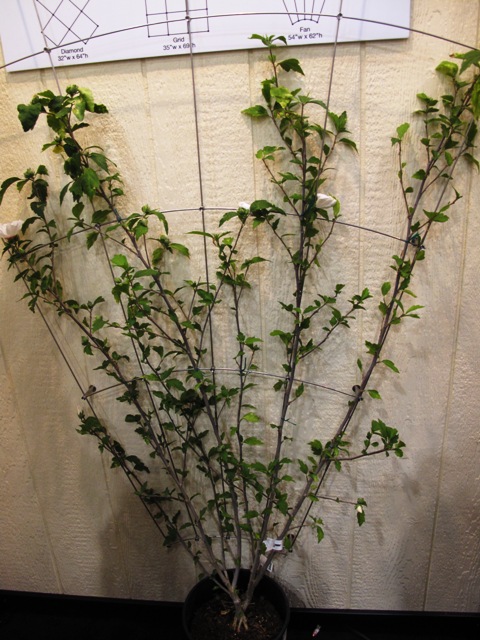
Witch hazel is espaliered along a lattice arbor at the Center for Urban Horticulture in Seattle.

I embrace and endorse this strategy, since it accomplishes so much that one may not have energy to tackle six months hence. It gets us out into nurseries and weekend plant sales, heightening our sensory response to a plant’s autumn form and texture and its promise of spring to come. The season forces us down on our knees to plan, prepare and place those treasures, brought home with the admonition (at least in the Pacific Northwest) to “plant before frost.” California gardeners want to plant in the fall for an entirely different reason — to capture any winter precipitation for good root establishment. 

If only to think about springtime, I will plant peony crowns in the fall. But then, I pause and remember what occurs after the blowsy bloom of Mother’s Day; and the sultry autumn glory of peony foliage comes to mind. Appreciating both the youth of spring and the maturity of fall is one of those wonderful surprises that comes from having plant lust. 

If you, too, are a fall-planting advocate, then what may be second-most on your mind is the design of an autumn landscape. 

I love the architectural form of "spent" crocosmia blooms. These seed-heads are as beautiful as the flowers themselves.

Seasonal changes, at least at the beginning of the fourth quarter, work their magic here in the west. The light changes, the moisture content heightens, and the foliage reddens. The garden’s edges soften in some places (perennials go to seed; grass plumes explode; greens turn tan) and become more acute in other places (the architecture of deciduous plants is more pronounced; evergreen plants move to the foreground; anything that blooms is undoubtedly noticed as well). 

It’s almost as if the feminine personality of spring and summer steps aside for the more masculine personality of fall. Yet when I posed this theory to my friend Betsy Flack, she argued that “I’ve always thought (fall) was my own season—sort of the ample-bosomed (billowy) matron . . . after Spring’s sprite.” 

Our differing opinions reveal that the autumn garden is one we can all embrace. 

To me, there are four aspects to the 4th quarter garden that I consider when planning, touring and evaluating the well-designed landscape: 

This is some kind of wild-looking oak, isn't it?

Foliage: 

Cooling temperatures and shortening days bring out the fall glow we so admire. Yet it’s not just color (golds, coppers, wine reds and dark purples) that I’m in search of. I also consider broadleaf evergreen plants with graphic foliage, as well as conifers that change with the season, taking on their own non-green hues. 

Laura Morton, a Hollywood designer, uses echinacea and asters in this yummy fall combo

Flowering plants: 

If you find a fall-blooming perennial that you like, plant it not once but thrice. 

Some of my favorites include Japanese anemone, heaths and heathers (Calluna vulgaris cultivars are especially gorgeous when the temperatures drop) and asters (A. novi-belgii; A. novae-angliae; A. lateriflorus). 

Fruit: Edibles and ornamentals unify in the autumn garden, lending a sense of “harvest” and hearkening 

This cotoneaster will delight birds and humans alike.

back to the ritual and sustenance of gleaning fruit from the earth. Nuts, berries, pods, seeds, fruit – for eating or just eye-feasting – are essential elements of the autumn garden. Because I am a floral designer, I take particular interest in gathering rose hips, crabapple fruit, seed heads and even spent grapevines (with tendrils and curls) from the garden for use in my vases. 

The yellowing gingko against a pumpkin-colored garage is a perfect fall scene.

Architecture: It goes without saying that structure is the backbone of 4th quarter gardens. Deciduous trees and shrubs, dormant perennials, disappearing annuals . . .they can do their thing and yet the arbors, gates, patios and pathways remain – thankfully. I take special note of the shadow-play created by light as it moves through a garden, catching shapes made by architectural elements and throwing those alluring patterns against walls and fences. 

Here are a few more seasonally-appropriate quotes to enjoy: 

” . . . asters: purple asterisks for autumn.” Conrad Aiken, Preludes for Memnon (1930) 

“Hurrah!  . . . it is a frost! — the dahlias are dead.” R.S. Surtees, Handley Cross (1843) 

A mosaic of autumn impressions: 

More from the 2010 Independent Garden Center Show

Wednesday, October 27th, 2010

Speaking at IGC was a great experience - with 2 talks in 2 days

Dateline CHICAGO: Another “first” this year was participating in the Independent Garden Center Show, which took place in Chicago, August 17-19th.

The fourth annual trade show for independent nursery owners and their staff gathers thousands under one roof for seminars, tours, a mega trade show, and serious networking.

The who’s who of the garden world comes to the IGC Show. I’ve wanted to check it out for a couple years, so when I was invited to make a presentation on the “Most Inspiring Garden Centers and Specialty Retailers,” I jumped at the chance to participate.

You can see some hightlights of that talk here. I had a wonderful audience of engaged and energized nursery owners. And I am encouraged by the response from these retailers interested in sharing my ideas and themes with their employees and staff.

I participated in a second presentation with Robin Avni, a friend and colleague who has invited me to be an associate in her Lifestyle Insights consultancy. I’m one of a group of like-minded “real women” experts who have come together to use our talents and knowledge to help corporate clients serving the female consumer.

For the IGC Show audience, Robin and I presented “The Female Gardener: Mommy to Maven.” Our presentation shared some of the research and insights collected by Lifestyle Insights in the past 12 months. We want garden center owners and garden-related companies to think about the female consumer not just by obvious demographics of age, ethnicity or economics but by her life stages. We’ll be sharing more about our research in the coming months, but suffice it to say, Robin and I both felt that the presentation was a good way to have a conversation with the gardening industry about who “she” is (and “she” is a powerful consumer to serve).

Magnetic and inspiring - Jamie Durie

There were other fun aspects to attending the IGC Show, including hearing from keynote speaker Jamie Durie of HGTV’s Outdoor Rooms. Jamie’s electrifying talk was not long enough – in fact, it’s a bummer that he was sort of cut short due to timing, since he had so many inspiring things to share with American nursery owners and outdoor living retailers.

Here are a few of his comments that resonated with me:

Luxe-scaping is one of Jamie’s design terms. He likes to start a landscape with Shapes First, Plants Second. Once you decide on the shape (“Embrace the plant’s architecture,” he explains), you can choose site-adaptable and regionally-appropriate plants to reflect the shape.

Jamie talked about “planting into the hard-scape,” an idea that helps to soften the architectural elements of a design. He showed images of one of the garden staircases designed by his firm Patio that caught my eye and nicely illustrated this concept. The wide stone-tread staircase has shallow risers that are planted to give a soft, green contrast to the hard-edged stone. This made me think of a succulent staircase at Ed and Susie Bealls’garden in Rancho Palos Verdes we saw recently (photo, below).

Here is a Southern California interpretation of "planting the steps" - from Ed and Susie Beall's garden.

It’s easy to get swept up in Jamie’s passion for enjoying the garden all year long. “Control your environment with built structures” and use new, technological and design features to do so (especially if you live in cooler climates). For example, Jamie uses overhead heaters as well as under-deck and under-patio warming systems. Outdoor fireplaces and fire pits are de rigeur for all-season garden living.

Jamie shared some of the ways he has developed and expanded DurieDesign, his overall brand. His advice could apply to anyone interested in staking out a position in the horticultural industry. I certainly found it useful. This isn’t comprehensive since I wasn’t writing notes as quickly as Jamie was speaking, but are some highlights:

Be able to state clearly your business Description, Expression, Attributes, Promise and Theme.

Study your brand personality and strategy. For Durie Design, the theme of “well-being” represents lifestyle and balance. There is a spectrum that goes from the tangible (what you do) to the intangible (why you do it). In between are the How and Who of your brand personality.

DurieDesign’s brand attributes includebeing Inspiring, a Design Authority, Accessible and having a Positive Energy. Know and communicate your brand promise. For DurieDesign, that means “connecting design and innovation wi the mind, body and spirit.” His brand theme: Let’s Go Outside. “People are intrinsically connected to plants.” Yes, that’s so true!

In the coming weeks, garden and design writers and their publications will be obsessing about “what’s hot” for the 2011 gardening season. I venture a guess that many of those must-have products, plants and ideas were introduced at IGC. I’m going to share my favorite new products — my “picks” — very soon.

Autumn window boxes

Saturday, October 23rd, 2010

Ornamental cabbages and kales are all it takes to make some pretty cool fall window boxes.

Understanding “scale” is one of the most challenging of all design principles. So is finding just the right plant combo to fill a series of ginormous window boxes.

Jayson Home & Garden - a Chicago discovery for all the things I love

So imagine my delight at seeing a great example of both while visiting my college-freshman son in Chicago last month. While waiting for him to get out of class, I filled my free time touring the city’s uber-hip Lincoln Park neighborhood. That’s when I drove by Jayson Home & Garden.

A savvy retailer-friend in Seattle had told me about this must-visit shop that specializes in European-inspired home furnishings, antiques, accessories, tabletop and plants. . . so I slammed on the brakes of the rental car and took a tour – inside and out.

Jayson Home & Garden occupies a large, vintage warehouse on Clybourn Avenue. Since the building is located on a corner, there are many huge  windows that wrap both sides of it. Each window is about 4-feet wide and is adorned with an accompanying window box. You can see why any other autumn flowering favorite, such as a mum or pansy, could disappear in these deep, super-sized planter boxes.

I took this photo from across the street - see how dramatic the window boxes look with the large green-purple heads of cabbage and kale?

So here’s where the scale equation works brilliantly.

These boxes are planted with two forms of ornamental cabbage and kale. That’s it.

Packed tightly with alternating ruffled and rounded plant shapes, the design is simple and makes a big impact while filling no fewer than six of the massive boxes. I also love the way the designs anchor the tall windows and elevate something living halfway up the sides of the store’s exterior.

Check it out!

The next time you’re at the grocery store or garden center, pick up a few pots of these decorative plants.

You can experiment to see how well they add volume, scale and seasonal interest to window boxes, planters or containers.

Clever candles for outdoors (and inside, too!)

Sunday, October 10th, 2010

October is well underway, and here is my little “Know-How” piece from the October 2010 issue of Better Homes & Gardens.

It was inspired, in part, by my past visits to my friend Kathy’s garden. She uses outdoor candles incredibly well.

I have always loved the look of luminarias, the traditional candle-lit lanterns that illuminate walkways and paths for Southwest-style holiday celebrations. Modern re-interpretations use paper bags or Mason jars weighted down with a layer of sand in the base holding votive candles inside.

For a fresh twist that takes the luminaria idea and improves upon it, look for 7-Day Candles, also called altar candles. I first saw the brilliant display of these Mexican chapel candles in Kathy’s Southern California garden. Of course, it’s easy to dine and entertain out-of-doors here all year long. But even if you reside in cooler parts of the country, you can still borrow her idea!

White, red, blue or green wax is poured into an 8-inch-tall cylindrical glass container. “You can burn them 15 hours a day for a week,” Kathy says. “Imagine, 110 hours of candlelight for about one dollar!”

You can often find them at Mexican grocery stores or 99-cent/Dollar Stores. I found several styles on the shelf of my local Safeway grocery store – in the Mexican food aisle. And yes, they cost 99-cents!

A cluster of 7-Day candles looks brilliant inside a traditional hurricaine lantern.

Here are some of the tall, slender, long-burning candles nestled in a base of dried lentil beans. Perfect for autumn decor!

Kathy began decorating with these clean-and-simple altar candles after too many dinner parties where one-inch votives burned out before the evening was over. She lined her outdoor fireplace mantle with a row of the 7-Day candles, which glowed and sparkled during her al fresco dinners.

Kathy also groups three or four candles inside a large, glass vase for impact. A few inches of dry black beans or orange lentils in the base serve as a stabilizer. Try a variation of your own and you’ll enjoy hours of romantic flickering candlelight.

As for displaying 7-Day candles outdoors, such as on a porch, patio or front walkway, don’t worry that they’ll blow out.

Kathy calls the glass cylinders “little hurricane lamps.”

Here are some additional “illuminating” ideas for your after-dark garden enjoyment:

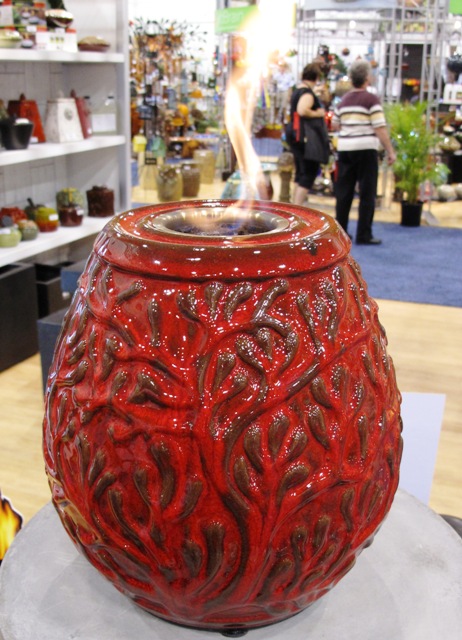
  • Burn a flame:  also adds warmth after dusk. At the Independent Garden Center Show in August, I was amazed at the number of vendors who are introducing these ceramic bowls, lanterns or pots that contain a small metal insert that burns a “gel fuel.” In one catalog, from Napa Home & Garden (see lantern here), the liquid fuel is described as being manufactured from recycled, post-consumer waste – a recycled and sustainable product. The decorative ceramic container burns a long-lasting flame. In the garden, you can illuminate the edges of a pathway or group several lanterns together on a tabletop for after-dark enjoyment.
  • String up lights: Create a twinkling overhead canopy with strings of carnival lighting, holiday strands or small lantern lights. When suspended from an arbor or tree branches, the tiny lights lend a flickering, romantic accent – and just enough light for sitting outdoors with a hot drink.

ILLUMINATION UPDATE: My friend Kathy Purdy, at Cold Climate Gardening, just suggested that I check out solar fireflies: “Personally, I can’t see using these if you have the real McCoy, but I’ve learned that not all areas of the country do,” she writes. Kathy, you’re right. West coast gardeners are not as fortunate as you East coast gardeners. I haven’t seen a real firefly since July 2000, when my family visited friends in Washington, D.C. and we lay on our backs (on their front lawn) late at night – watching the magic!

What I did on my summer vacation . . .

Friday, October 8th, 2010

Welcome to the Iowa State Fair!

IOWA AND ITS FAMOUS FAIR 

This post was somehow lost between computers. I actually started writing it at the end of August. So . . . a little delayed, but no less informative (says I). The trip to Des Moines and Chicago was filled with “firsts” and I thought I’d share some of them, in a series of posts. 

Part One: On August 15th, I flew into Des Moines, Iowa, in the early afternoon. Susan Appleget Hurst met me and whisked me off to the famous Iowa State Fair for an extravagant and authentic Midwestern County experience. 

I’ve heard so much about this quintessential state fair so it was a thrill to take in the experience for an afternoon. Susan tells me that there’s an entire movement of fair fans who arrive with campers and RVs and pay to park their wheeled homes on-site in order to hang out at the fair for the full 10-day experience. 

I only saw the highlights, but they were unforgettable. If you only have four hours to take in this fair, here’s what NOT to miss! 

Lunch!

The sign says it all.

First things first: Eat lunch. 

Susan recommended a Pork Chop on a Stick. This is a savory chop cooked on open grills. The rib is butterfly-cut to form the “Handle” for easy, fork-and-knife-free dining. A napkin will do, but be sure to add some barbecue sauce. 

I asked the crew behind the counter about the pork chop’s popularity. “We sell 6,000 to 8,000 a day during the fair,” boasted one guy. Wow. This is a big Iowa Tradition and I sure enjoyed my chop. Given all the deep-fried offerings on the fairway, I think the chop was one of the healthiest sources of protein! 

What a charming way to illustrate the Dairy industry!

We left the Iowa Pork Farmers and strolled through several of the Agricultural Buildings. Susan wanted to make sure I checked out the “butter cow,” a popular annual feature. This life-sized bovine is – yes – carved from pure butter. No wonder you have to photograph Bessie through a glass window. She is temperature-controlled due to the humid and hot Iowa summers. 

Look but don't touch!

We also checked out the produce displays and took a gander at a 1,323-lb prizewinning pumpkin. 

Other Plus-Sized highlights at the Fair included a gentle-looking steer and lots of livestock raised for everything from wool to milk to dressage. Horses large and miniature, goats wearing sweaters, baby calves, and the fair’s largest hog….what a fun tour of Iowa’s farming heritage. 

We stopped for dessert and got ourselves a cup of the famous Iowa ice-cream from an old-fashioned pharmacy. Susan recommended the homemade fresh peach ice cream, but since I couldn’t decide, I also ordered a scoop of homemade strawberry ice cream to split. 

The garden gals in the wine tent, Deb and Susan

We thought we might leave by then, but Susan’s husband Jerry and his friend were in the Iowa Winery tent. So we obliged and joined them to taste some of the really excellent offerings from local wineries. 

All in all, this was a very special visit. I loved the fair and would love to return next year. What a treat!

AT WORK IN YOUR SHED

Wednesday, October 6th, 2010

Recently, I’ve been entranced with a book called Tony Duquette, which is a 2-inch-thick coffee table photo-biography about the design life of the iconic Hollywood interior, costume and set designer by the same name.

Known for his innovative use of materials that others may not value (cast-offs from old movie sets, flea market finds, repurposed and salvaged goods), Tony Duquette embraced the potential and possibility in everything around him. He seemed to see the higher and better use of even the most prosaic object. Case in point was the description of a garage he and his wife Beedle Duquette, a painter, appropriated for entertaining. According to the book’s authors Wendy Goodman and Hutton Wilkinson,

” . . . Tony believed garages to be a useless waste of space and always converted his into sitting rooms.” He was quoted as saying: “When the party is over, just roll up the rug and drive the car in. It’s really the only thing to do in a house as small as this one.”

I’ve long admired this level of practicality combined with architectural artistry. While paging through Alex Johnson’s awesome new book Shedworking, I realized that Duquette’s inventiveness has a modern-day companion – the self-employed individual setting up shop in a garage-as-workspace. It’s an idea as compelling as the 1960s hipster and his garage-turned-party room.

Here's Alex's home-office where it all started

Alex Johnson, a Shedworking evangelist

In Shedworking: The Alternative Workplace Revolution (Frances Lincoln, 160 pages; 150 color photos, $29.95), Alex finds and documents an entire community of people for whom the useful shed is a way of life.

Ever since we first “met” online in 2006, while I was writing and creating my U.S. take on this trend in Stylish Sheds and Elegant Hideaways, I’ve been waiting for this book’s arrival – to add to my Shed Inspiration bookshelf.

Like his popular blog, also called “Shedworking,” Alex’s Shedworking is a compilation of the many ways that people can make a living in a nontraditional environment. Alex coined the term “Shedworking” in 2005 and he has been reporting on this not-so-quiet revolution ever since, including with the publication of an online magazine called “The Shed” that addresses the needs of at-home workers.

I love, of course, the structures called “Garden Offices,” which seem to so naturally occupy arboretum-like or city-vegetable patch environments. There are also some amazing cutting-edge architectural examples and mini-profiles of famous “shed owners,” such as Henry Moore. History gets into the pages of Shedworking, with a visit to Walden Pond and a replica of the famous cabin (okay, let’s call it a “shed”) from which Henry David Thoreau issued his own manifesto about living, creating and cohabiting with nature.

“Over the last decade we have seen an evolution of the office workplace,” Alex writes in his introduction. “A small shed which once only housed lawnmowers and pots can now be insulated from the cold, fitted with its own electrics, and can link you to anywhere in the world.”

You can tell that Alex and I are kindred spirits, since I endorse much the same approach to reimagining the garden shed in my own book. While I focus on the design, repurposing and artfulness of the structures (inside and out), Alex puts a big emphasis on the functionality of the sheds he profiles. Yet the designs in his “Best Sheds” chapter totally wow me. There are some cool American-made pre-fabricated structures, including the Kithouse, Modern Cabana and Modern Shed, three structures I reviewed last year for Dwell magazine, and the Nomad Yurt, which I reviewed here when it was first exhibited in Los Angeles in 2008.

But there are countless surprises in style and sustainability. Take a look at TSI (Transportable Space One), a mirrored structure that reflects the garden surroundings, designed by an Australian firm. Or the “Orb,” which is soon to come into production. It is a lightweight oval with four adjustable legs, a modern-day caravan-like structure. Another dazzling “pod” for the contemporary home-worker: The Loftcube, designed by a team in Berlin, is a glass-and-wood combo that can be “helicoptered onto your roof” to create a skyscraping rooftop office.

The contents of Alex’s “Best Sheds” chapter are pretty breathtaking. You can come down to earth a little bit by reading his “Build Your Own” chapter. This section is for DIYs (do-it-yourselfers) or those who have an idea and hire a specialist to help execute it. Alex’s sidebar: “How I set up my own garden office,” is engaging and personal – fun way to get to know this talented writer and fellow shed aficionado. “9 Essential Questions to Ask Yourself before You Start Building Your Own Shed” is another very useful checklist. It was written by John Coupe, civil engineer and owner of www.secrets-of-shed-building.com.

Naomi and James once lived in this structure for six months while constructing their new home.

I’m also pleased to see that Alex published and profiled Naomi Sachs’s office shed in Beacon, New York. Naomi, an expert in therapeutic landscape design, and I corresponded back in 2007 when I was working on my Shed book – and I’m still disappointed that I never got to visit her studio/shed while my collaborator Bill Wright and I were working on the East Coast. It’s nice to see the soulful structure Naomi and her partner James Westwater created show up here. (I’ve added Naomi to my ever-growing list entitled: “The ones that got away” – cool shed environments we wish could have been included in Stylish Sheds). Oh well!

A subsequent chapter covers “At Work in the Shed,” with snapshots of the vocational uses for a shed (including a filmmaker, designer, architect, journalist, web developer, painter, letterpress artist, academic, massage therapist, writer, cheese maker, sculptor, jewelry maker, management consultant and novelist).

“But does shedworking actually work?” Alex asks his readers. “Is it more than an attractive ideal? Can you run a successful business from your back garden? The pleasing answer is yes. . . . many people who are alternative workplace revolutionaries not only enjoy the micro commute to work and the chance to fill up the bird feeder on the way, they also make money.”

“The Green Shedworker” features sustainable building and design ideas, green roofs, tree house sheds, and a sidebar on “Five ways to incorporate your garden office into your garden.” Naturally, I agree with the wonderful tips shared here, including this one: “aim for the studio style to be in keeping with the garden, so for example a modern studio for a modern garden.”

Alex turns his attention to future shed trends as he wraps up Shedworking. These chapters reveal his progressive outlook on the changing work environment. A true visionary, Alex thinks big; he sees the potential where others see the hard-to-achieve. He pushes the envelope when it comes to workplace design and is a shed missionary in the most inspiring sense of the word.

“Beyond the Garden Office” is a chapter that looks at futuristic ideas for the workplace, the virtual office and the mobile lifestyle. From retro Air Stream trailers to working environments on canals, by the seaside or in a London Tube train, Alex’s examples dissolve assumptions and say to the reader:

“The truth is that neither size nor location matter when it comes to setting up as a shedworker. . . the future is shedshaped, psychologically, even if not physically.”

A final chapter is even more forward thinking, as it explores the landscape normally occupied by policymakers. The small structure (aka Shed) used for emergency housing, low-carbon-footprint environments and other residential off-grid experiments are ones that fascinates Alex Johnston.

His benediction of sorts is to urge those trapped in an office cubicle to view the Shed-Office as Nirvana:

“. . . for many office workers who can’t remember the last time they had lunch away from their desk or who never see natural light during the day, (the shed) is a beacon of hope.”

My home design interview with actor Jonathan Togo of “CSI: Miami”

Sunday, October 3rd, 2010

 BEHIND THE SCENES WITH JON TOGO

Actor Jon Togo (center), with designer Lory Johansson and me

If you’re a fan of the “CSI” television franchise, you probably know this handsome young actor I’m standing with in the photo at left. He’s Jonathan Togo, aka investigator Ryan Wolfe of “CSI: Miami.” 

The show enters its 9th season with tonight’s premiere (10 p.m. on CBS). In anticipation of the show, I’ve posted my recent interview with Jon and his interior designer Lory Johansson.

Lory, an inventive and gifted designer whose firm is called Just Joh, introduced me to Jon’s 1958 Midcentury modern “guy pad” in the Hollywood Hills earlier this year. I love that Jon describes her as “the best design Sherpa” because it’s true. She has a gift for helping each client express his or her unique personality through furniture, art, and the home.

The Los Angeles Times photographed the interiors in July, the day of this photo, which Lory’s husband Mats Johansson took with my camera. My interview with Jon and Lory (and featuring a fun commentary by Jon’s mother, Sheila Togo) appeared in the Sept. 18 issue of the HOME section. You can read the story and see a gallery of photos here.