A Softer Side of Green

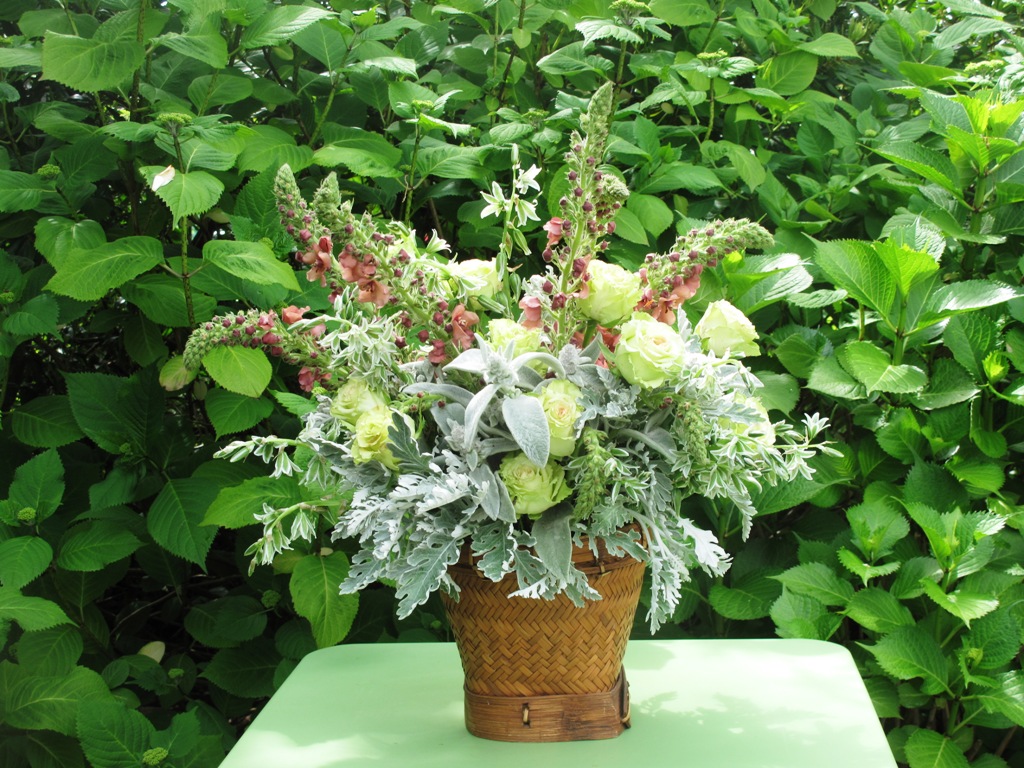
An unexpected combination, inspired by the pale ‘Supergreen’ hybrid tea roses given to me by the grower
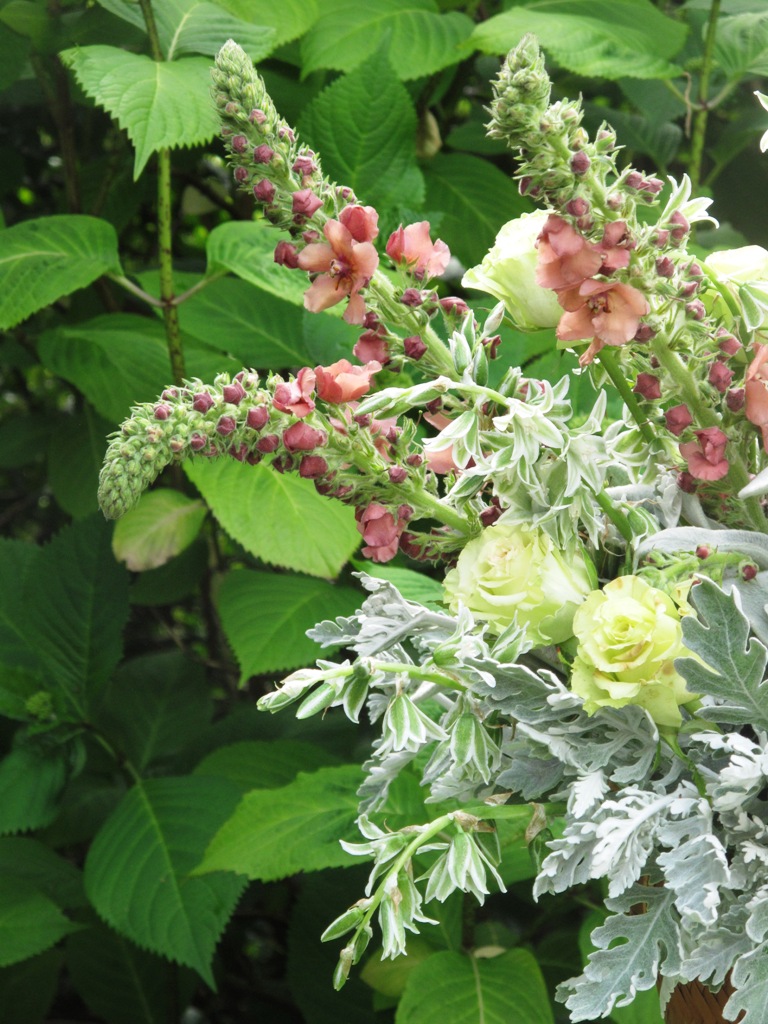
This sweet detail shows the delicate features of the apricot verbascum and the varietgated Star of Bethlehem
Ingredients:


An unexpected combination, inspired by the pale ‘Supergreen’ hybrid tea roses given to me by the grower

This sweet detail shows the delicate features of the apricot verbascum and the varietgated Star of Bethlehem
Ingredients:

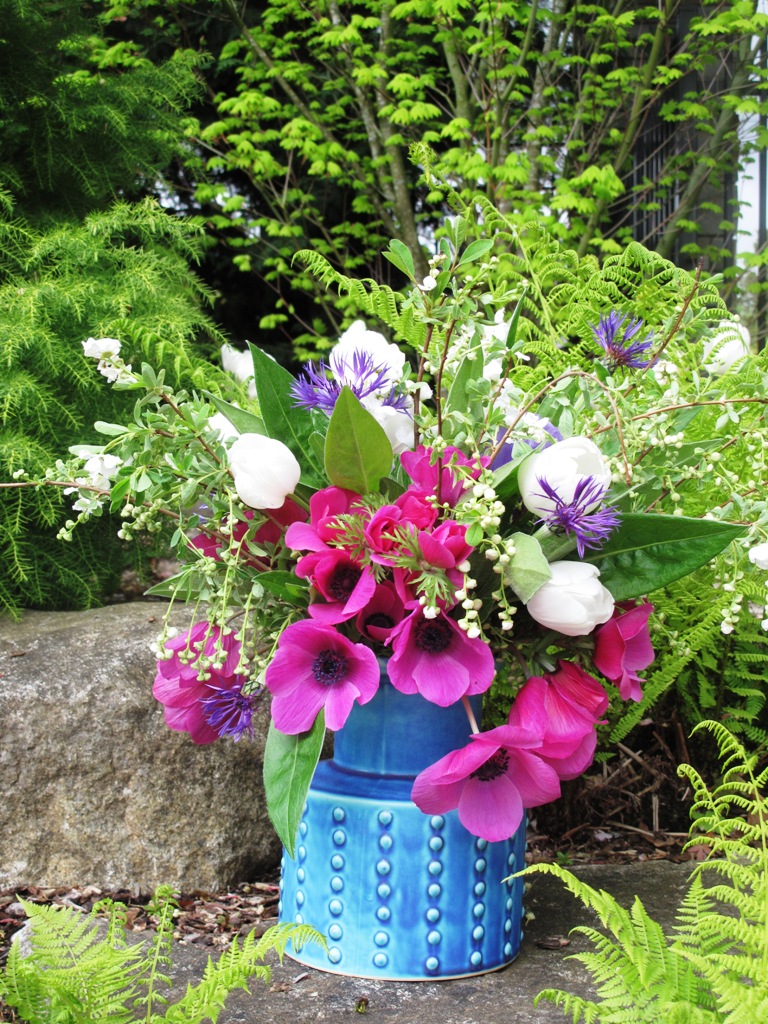
This indigo-blue vase is a favorite of mine. Love it with fucshia anemones, bachelor’s buttons and white tulips.
Ingredients:
12 stems fuchsia anemones (Anemone coronaria ‘Galilee Pink), grown by Everyday Flowers
8 stems pearl bush (Exochorda x macrantha), grown by J. Foss Garden Flowers
6 stems bachelor’s buttons (Centaurea cyanus), harvested from my garden
7 stems white tulips, grown by Alm Hill Gardens
Vase:
8-inch tall x 6-inch diameter round vase with 5-inch opening
Design 101
Color wheel lesson: The flowers and vase combination illustrate an analogous color palette. Analogous colors are adjacent to one another on the color wheel. Fuchsia, purple and indigo are pleasing when viewed together because they each share varying quantities of the primary color blue. White floral accents offset the black centers of the anemones, adding a graphic punch to this composition.
Been busy here . . . in the midst of Flower & Garden Show season, so I missed last week’s bouquet. Let’s play catch up and here, I’ll feature Week 8 and Week 9:

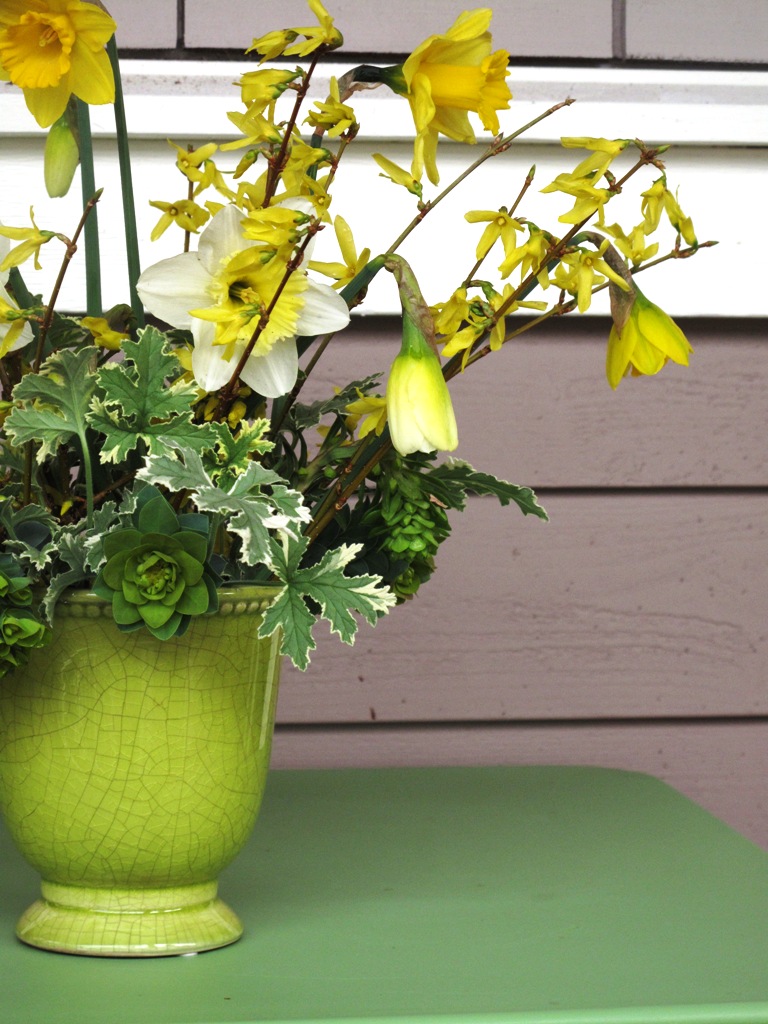
Oh how I love this combination of everyday garden blooms, including daffodils, forsythia and euphorbia – with a few sprigs of variegated geranium for contrast.
Ingredients:
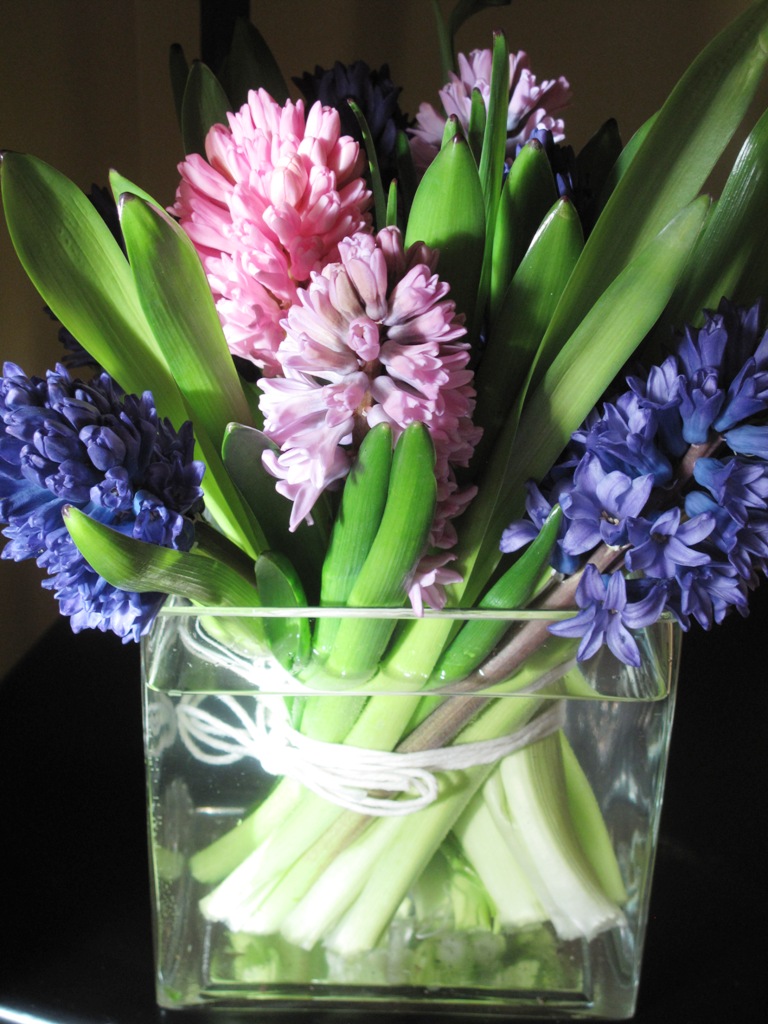
8 stems hyacinths (Hyacinthus orientalis), grown by Alm Hill Gardens
Seasonal Choices
About those long stems: The typical garden hyacinth blooms on a relatively short stem – maybe 4-5 inches at the most. This limits the way hyacinths can be used in floral arrangements. According to Gretchen Hoyt, the way to stretch those stems is to trick them into wanting more light. “The longer you can deny them light, the more they stretch,” she explains. At the commercial flower farm, this process begins in dark coolers where bulbs are pre-chilled. When they are transferred to the greenhouse, the hyacinth crates are placed (in the shadows) beneath tables where tulips grow. If Gretchen wants to elongate those stems even further, “I’ll throw newspaper over them,” she says. Leaving bulbs on the stems is optional, but some designers do so to give the arrangement a rustic appearance.
© Debra Prinzing, all written and photographic content. Website design/development by Willo Bellwood/Metric Media