The Slow Flowers Podcast is the award-winning show known as the “Voice of the Slow Flowers Movement.” Launched in 2013 as the original flower podcast, we’ve devoted more than 10 years to covering the business of flower farming, floral design, and the Slow Flowers sustainability ethos. Listen to a new episode each Wednesday, available for free download here at slowflowerspodcast.com or on iTunes, Spotify, and other podcast platforms.
November 30th, 2007
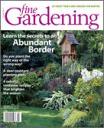 It finally arrived in my mailbox today: the January-February 2008 issue of Fine Gardening (issue No. 119) with the cover line, “Learn the secrets to an Abundant Border.”
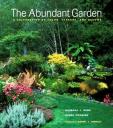 The genesis of this article, which is an adaptation of a chapter from The Abundant Garden, a book I created with photographer Barbara J. Denk in 2005 (Cool Springs Press), dates to a lunch I had with Steve Aitken. In July 2005, I was in New York City on a mission to find an agent to represent my next book project. I had rented a car and after one meeting with a potential agent, I drove to Newtown, Connecticut – in the POURING RAIN – where the Taunton Press-Fine Gardening Headquarters is based in a charming little hamlet.
 I had planned on lunching with an editor-friend there, but when I arrived, I learned she had recently left Fine Gardening before having a chance to give me a head’s up. My “substitute” lunch date was to be then assistant editor Steve Aitken. I had never before met Steve, but after escorting me through the Taunton cafeteria where we sought refuge from the summer downpour, we sat down to lunch and a really wonderful conversation.
Every author likes to think that people actually READ their words and do not just look at the pictures (I love my photographer-collaborators, but honestly, I do have a bit of an inferiority complex when comparing a block of my prosaic-looking text — 12 pt. black words in Helvetica or some other font on white paper — with full-bleed, four-color, vibrant or subtle images captured through a lens by a gifted visual-artist.)
So Steve made my day. Over lunch, he summarized the entire point of The Abundant Garden, highlighting key design ideas that I had hoped to achieve in the text. He blew me away. I have never had that experience before, knowing that someone read…really READ…the words that I wrote; the words that helped shape the idea of a book; the words that supported and explained Barbara’s glorious images.
From then on, I was a huge Steve Aitken fan. During our lunch meeting, he suggested I adapt some of my ideas in the book into an article for Fine Gardening. At the time, I had written several smaller, one- or two-page articles for the magazine, but never a full feature article, let alone the cover story. It was an idea that pleased me. And I fully intended to follow up on the opportunity he was offering.
Subsequent to our meeting, two cool things happened. First, Fine Gardening included The Abundant Garden on its list of the 10 best garden books for 2005. Second, Steve was promoted to managing editor of the magazine. Oh, I guess there is a third event that took place. In April 2006, we learned that my husband Bruce would accept a position in Southern California. My life turned upside down and I was barely able to follow up on my existing assignments and deadlines, let alone “chase” anything new.
Steve and I didn’t reconnect on the story idea right away. I like to chalk that up to the fact that our respective “plates” were full. But the timing was right when, only a few months after leaving Seattle for SoCal, I received a call from Daryl Beyers, a new FG assistant editor. Daryl told me that Steve + Co. were ready for me to start working on the article. The story focus: Creating an Abundant Border.
 We had several back-and-forth discussions about the shape the article would take, ending up with the exciting theme of “breaking rules in the border.” Just out today, the article features several of Barbara Denk’s photos from The Abundant Garden, as well as images from some of my other favorite photographers, including Allan Mandell and Saxon Holt. Other photographs were contributed by Stephanie Fagan, FG’s art director, and Daryl Beyers (who personally shepherded this piece from outline to publication).
Anyone who finds magazine or newspaper publishing a very s-l-o-w and tedious process will read this entry and be perhaps discouraged. How on earth should it take more than 2 years to turn an initial idea into a final article? (Don’t even get me started about the even lengthier book-birthing process!) Well, life gets in the way, timing is everything, and sometimes you just have to wait for all the pieces to fall into place as meant to be. Forcing, pushing, jockeying, chasing….it never really works. It’s a lesson I need to learn again and again. And this experience reminded me of the adage that “things work out for a reason.” Yes, they do.
Finally, please indulge me. Because of limited space (and for perhaps other reasons, such as it was purely a bit of self-indulgent writing in the first place!), the editors cut a final section of my original manuscript from the published article. Its genesis came from my father, Fred Prinzing, so I would like to include it here. You might have to read the published article for this to make sense, but here goes:
Everything Old is New Again
 Like most gardeners who have tackled a landscaping challenge, I often think my “solution” to a design problem is original or straight out of my imagination. So when I recently opened “The Book of Perennials,” a gift from my book-hound father, I had to admit that my “new” ideas about layered borders were anything but new! This little red-bound volume, first published in 1923, was written by Alfred C. Hottes, a magazine editor of the day.
 Here’s how he describes a garden border:
“A border may be formal or informal; the plants may be set in definite ribbon-like bands or placed in natural clumps. Generally, the latter method is to be preferred unless we are planning a prim garden of geometric form on a large scale.”
Hmm. Sounds awfully familiar. I was surprised and somewhat humbled to read further. Mr. Hottes had his own opinions about layered borders, not too different from my own:
“Obviously, the tall plants should be at the back of the border, the dwarf edging plants in front and those of medium height tucked in between the two extremes. Nevertheless, this rule should not be followed too strictly; otherwise the result will give a border which will be too monotonous. Allow bold groups of tall plants to come to the front of the border. For the best effects in the Springtime some of the earliest dwarf plants may be planted toward the center to give a mass of color throughout the width of the border.”
Well, I guess we should listen to an expert. Don’t take my word for it. In the 1920s, long before I tried breaking rules in the border, Mr. Hottes encouraged his readers to do just that.
Posted in Gardening, General, Writing | 8 Comments »
November 28th, 2007
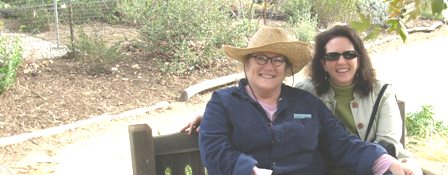
I joined Lili Singer on a tour through Theodore Payne Foundation’s native plant nursery
Thank goodness for friends who will host me when I have an urge to take a plant excursion. On Tuesday, I visited Lili Singer, gardening personality extraordinaire who is a beloved radio and newspaper personality and longtime advisor to Southern California plant-lovers.
Lili has taken on special projects at The Theodore Payne Foundation for Wild Flowers and Native Plants in Sun Valley, Calif., a short drive off of Hwy I-5 , near Burbank Airport. Her pieces appear frequently in the Los Angeles Times Home section, she has a loyal following of students most Thursdays at the LA County Arboretum, and she is a board member of Southern California Horticultural Society. We met in August 05 when I came to LA to give a lecture for SCHS … then, a month later at the Garden Writers annual meeting, I really got to see what type of plant maven she was during the day we cavorted around the private landscapes of Vancouver, BC with a few other intrepid souls.
When I knew I was going to trade my Seattle zip code for a SoCal one, I also realized I would soon live in a state where I had several GWA friends and acquaintances, including Lili.
At the Theodore Payne Foundation, I tried to set aside any thought of my beloved NW garden and all the plants I can no longer grow because I now live in SoCal. Instead, I am looking closely at the amazing native plants available to me. Not really a botanical garden; Theodore Payne is a nonprofit nursery, seed store and bookstore for California native plants. Open to the public, Theodore Payne provides extensive plant information and advice in its nursery sales yard and through classes and public programs. Founded in 1960, the organization sponsors the free “Wildflower Hotline,” which alerts callers to the locations of seasonal wildflowers such as golden poppies and lesser-known but equally dazzling displays that embroider the hills and canyons of California (818-768-3533, March-May).
Outreach and volunteer coordinator Lisa Novick, Lili’s colleague, asserted that California has 6,000 native species to offer me. Wow. That’s something like three times what most states have!
While I lamented all the plants I couldn’t grow anymore, Lisa gently redirected the conversation, telling me that Seattle (and its plants) was like my “first love” to which all subsequent garden Zones will be compared. She observed that I’m still pining for that romance as I evaluate every subsequent suitor (plant, garden) to my original passionate relationship. “They’re never going to be the same; they’re different, and you need to enjoy the beauty of the difference,” she pointed out.
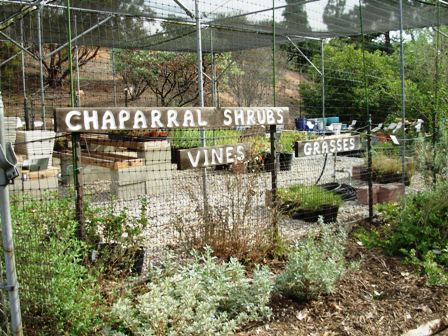
Nursery areas are enclosed in deerproof fencing and netting
I’m trying, okay? It’s hard to get my former lush, green, exuberant environs out of my system. Lili walked me through the Theodore Payne Nursery, a meandering series of paths that are nestled right up into the edges of LaTuna Canyon (this is a 22-acre parcel, complete with Flowerhill, a trail winding through chaparral and seasonal wild flowers). Plant sales areas are divided by category, just like any good nursery (groundcovers, perennials – oh, and “chaparral shrubs,” now that’s a category that Swanson’s Nursery doesn’t carry!).
This is a busy, busy nursery for wild and native plants of California. If you log onto Theodore Payne’s website, you’ll see its extensive plant, bulb and seed list, updated weekly. Many of the plants are propagated on site; others are supplied by reputable growers of California natives.
 I zeroed in on a stunning evergreen specimen called Woolly Blue Curls (Trichostema lanatum), which looks like a long-needled rosemary but with the velvety purple-blue flower spikes of a Mexican sage. It’s a hummingbird and bumblebee favorite, according to California Native Plants for the Garden, the lovely reference that my Seattle book group gave me as a going-away gift when I moved. Ah, a new crush! Can’t wait to see how this relationship evolves once I get my very own ‘blue curls’ planted at home.
Bulbs have been very hard to give up with my move south; I’m kind of lost without my fall ritual of scrambling to plant as many tulip, allium, narcissus and grape hyacinth bulbs as time allows – usually in the pouring rain on Thanksgiving, while the turkey is roasting.
A new version of that November bulb ritual might look like this: Deb in t-shirt, capri pants and flip-flops, a small envelope of native bulbs in hand, planting clusters of three pearl-onion-sized bulbs in pots. With names like Firecracker Flower (Dichelostemma ida-maia), Ithuriel’s Spear ‘Queen Fabiola’ selection (Triteleia laxa), and Yellow Mariposa Lily ‘Golden Orb’ (Calochortus), I’m eager to see what delicate beauties arrive next spring.
One caveat with these native bulbs: They do NOT like any water in Summer or Fall. That’s of course when California’s wild areas are dry anyway; but move into the typical suburban backyard where occasional summer water is needed, hmmm. Guess there won’t be room for these bulbs at the front of my perennial beds.
Lili suggests I grow these in pots, at least this first year….that way I can enjoy them next spring when they bloom (photos are promised, here) and when the flowers fade, I can move the pots to the side of the house and let the bulbs stay warm, dry and content.
Warm, dry and content. That’s a noble thought for my own life, too!
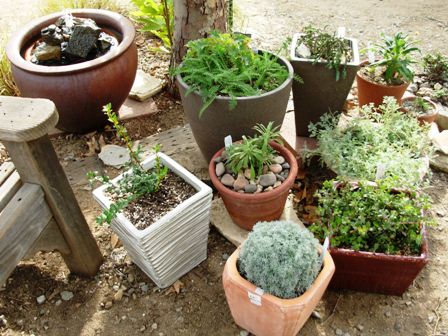
A selection of native California plants, happily growing in a potted garden display
Posted in Gardening, Shed Glossary | 8 Comments »
November 26th, 2007
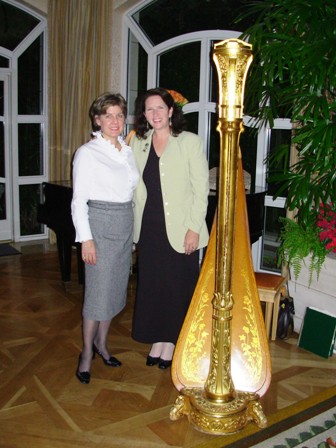
I joined Mary Martin for high tea and harp music at the Beverly Hills Peninsula Hotel
Every now and then we gardening gals have to get gussied up and leave the jeans and rubber clogs behind for the glimmer of the big city. Today was that day for me. Yup, I even wore heels and makeup!
My big trip to Beverly Hills brought me to the swanky Peninsula Hotel to meet my Atlanta friend Mary Martin for “high tea.”
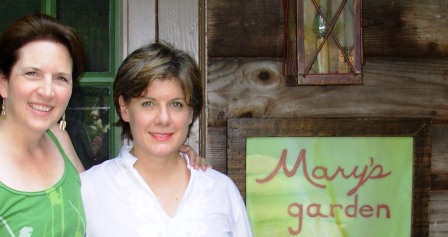
Mary and her shed-studio will be featured in the pages of Stylish Sheds and Elegant Hideaways in a chapter called “Personal Space.” She is an incredible artist, writer, musician, and entrepreneur. Bill Wright and I visited Mary in early July to photograph the 1930s-era “log cabin” shed that she’s transformed into an art studio and screened-in entertaining room.
Bill Wright photograph
Debra and Mary in front of her Atlanta “shed” on July 5th
The 12-by-20 foot building, which Mary suspects was originally a children’s playhouse or potting shed, was standing, neglected, on the property when she moved there in 1986. She fell in love with the rustic structure and eventually renovated it, adding the 16-by-17 foot screened porch.
Inside the older cabin-like section, work tables hold prototypes for her latest project, Mary’s Garden Champagne Savers. And it was this project that brought her today to Beverly Hills and the Neiman Marcus store.
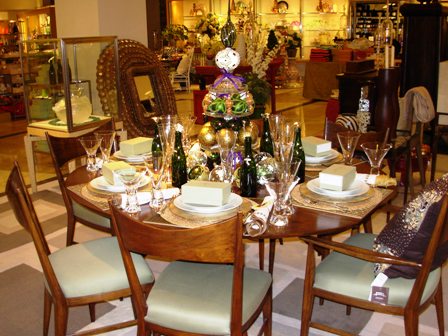
An elegant tabletop at Neiman Marcus features Mary’s Garden Champagne Savers

Bill Wright photograph
Camellia japonica ‘Taylor’s Perfection’ – captured in sterling and displayed in the just-opened bottle of Veuve Clicquot
Here is some background:
For years, Mary envisioned using a piece of sterling shaped like a leaf or a twig to preserve champagne once a bottle was opened. She kept looking for something like it to appear in the marketplace. Then in 2002, she was tending to her perennial flower bed while planning a dinner party. “I kept getting this recurring idea: to have an elegant object for saving open bottles of champagne. I even knew what it should look like,” Mary says. “Finally, I decided to create it myself.”
Five years of experimentation and testing later, she launched Mary’s Garden Champagne Savers. The sterling silver sculptures are a genuine first, and include nine botanical designs, created from favorite plants and flowers in Mary’s own backyard. “They are an accent for the home and for entertaining,” she says of the life-sized sculptures of camellia, dogwood, bearded iris, edgeworthia, trillium, violet, and daylily.
Made in the USA and packaged like fine jewelry, the champagne savers are sold by select Neiman Marcus stores and at Bergdorf Goodman. She considers them gifts for the collector, hostess, bride, or groom. “With these pieces, I have translated my love of nature into an art form with a true purpose,” Mary says. “The idea of having something used for celebration and pleasure that also contributes beauty is essential in today’s world.”
She is reminded of a favorite quote from her grandfather Rudolf Anderson, a nurseryman and southern landscape designer who bred camellias, rhododendrons, and azaleas. She has in fact embraced his words, using them as a theme for Mary’s Garden Champagne Savers.
“I’ve always felt that anybody looking at beauty in nature cannot help but have more noble thoughts.” –Rudolf Anderson, 1967.
Product details:
Mary’s Garden Champagne Savers are cast in sterling silver and finished by hand. Offered in nine botanical designs ranging from 3-3/4 inches to 6-1/8 inches, the pieces are made in the USA and sold individually. Retail prices are approximately $195-$450 each.
Presented in a custom keepsake soft green gift box, each champagne saver is secured on a suede-textured chocolate brown pillow with criss-crossed elastic bands.
Posted in Creativity, Entertainment | 4 Comments »
November 25th, 2007

A pebble pathway at Lotusland creates a pleasing rhythm
Here is the piece I referenced in my last post. I wrote it in early 2002 for Bud Merrill’s Landscape Design II (LHO125) class at South Seattle Community College.
RHYTHM: Creating a Pattern for the Landscape
Webster’s dictionary defines rhythm as “the patterned, recurring alterations of contrasting elements.”
In design, the term relates to time and movement. According to Marjorie Elliot Bevlin, author of Design through Discovery: The Elements of Design (my college design text), rhythm is a principle that works in concert with two other important principles: Balance and Emphasis.
In design, the dynamic of rhythm creates a visual flow. As a beat is to music, as choreography is to a dance, rhythm adds vitality to a garden. In landscape design, rhythm creates physical sensation. It may cause people to move quickly, slow down or even pause before continuing on again. By repetition of like forms or evenly-spaced points of emphasis, a rhythmic design is naturally expressed.
 One of the most successful ways to incorporate an instant feeling of rhythm or movement into the garden is with a dry creek-bed. The cascading path of smooth river-rocks mimics the flowing sensation of water, adding energy to the setting. [Photo illustrates a water-pattern created by a narrow rill that disects a stone staircase.]
Using key design elements in various patterns, the garden designer can lead visitors through the landscape, giving the viewer visual cues. As Booth and Hiss (in Residential Landscape Architecture) write: “We tend to view various portions of a composition in sequence, often mentally collecting them to form patterns.”
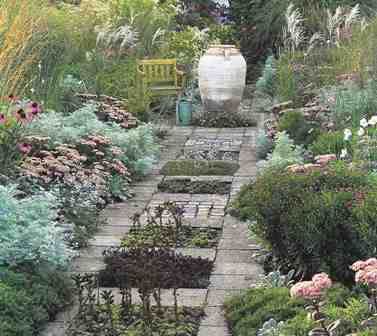
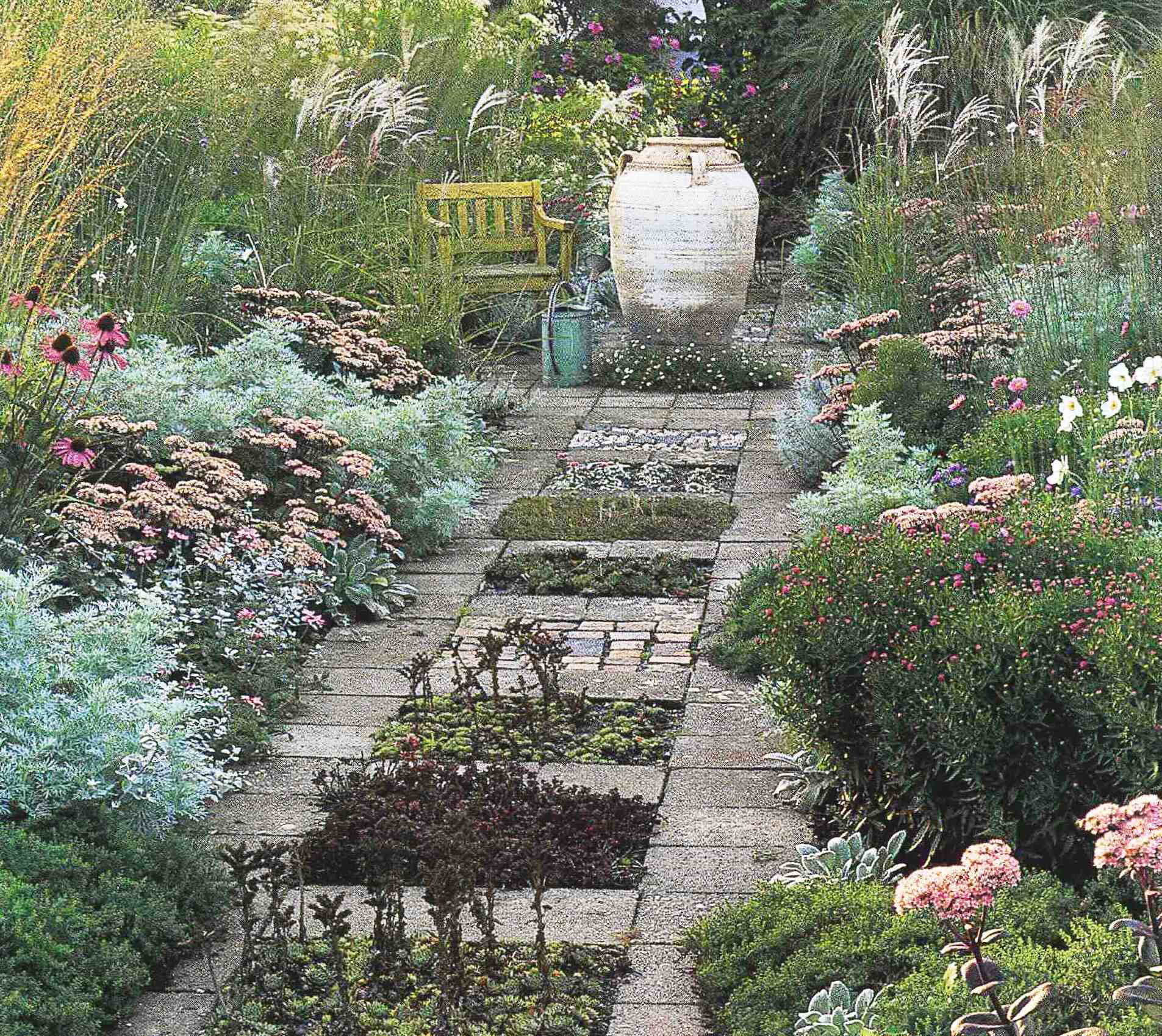
At Ahrends Nursery in Dusseldorf, landscape architect Anja Maubach alternates ordinary paving stones with square plantings of hardy succulents – the resulting pattern is rhythmic and alluring (photo from Country Gardens 2000 by Nicola Browne)
I began looking at the pattern-rhythm concept to see how various designers drew on this principle. Repetition, alteration, inversion and gradation all lend visual rhythm to the landscape. Anja Maubach, a German landscape designer, uses repeating squares of densely-planted sedums interspersed with concrete pavers to jazz up an otherwise generic path. Anja cites Pattern Language, a classic architect’s text, as her influence.
In this 1977 book, the authors Christopher Alexander, Sara Ishikawa, Murray Silverstein (with Max Jacobson, Ingrid Fiksdahl-King and Shlomo Angel) describe more than 250 “patterns” as solutions to design problems. The patterns follow design principles, but are also deeply rooted in nature and human history, which makes them resonate with us. (Perhaps that’s what the term ‘good design’ is all about.)
Pattern No. 247 – Paving with Cracks Between the Stones – talks about the need to “walk from stone to stone and feel the earth directly underfoot.” The authors continue, “As time goes by, the very age and history of all the moments on that path are almost recorded in its slight unevenness.”
Essentially, the spaces make a static path come alive – and have a certain rhythm.
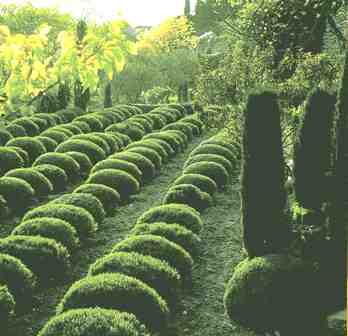
Lines of lavender play on graphic qualities found in commercial herb farms (from Natural Landscapes, 1998)
English garden designer John Brookes incorporated rhythm into a client’s French garden with the use of just one plant: lavender. He drew inspiration from the neatly clipped rows of lavender in nearby farms. “Lines of lavender play on the graphic qualities found in commercial cultivation of the herb,” Brookes explains in his book Natural Landscapes.” And the garden deliberately emphasizes the shapes and textures of this tough region.”
Rhythm is essential as a design principle. It’s the organic motion, the fluid character that every garden needs to come to life for those who enjoy it.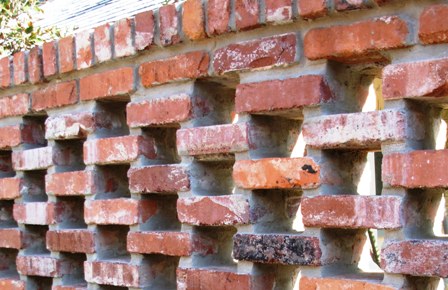
Posted in Architecture, Creativity, Gardening | 7 Comments »
November 20th, 2007
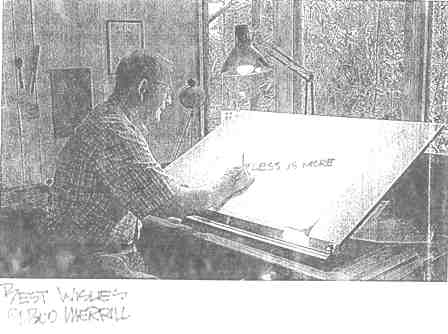
Bud at his drafting table. He added the words “less is more.”
Last night, while searching my files for notes from my landscape design coursework, I came across a favorite project from 2002. The project was to write and illustrate a report on a principle or element of design. I chose rhythm. I figured it would be a fun piece to share here on ShedStyle.com, but after looking through my folders, spiral-bound sketchbooks and flimsy tissues filled with drawings and concepts, I found myself reflecting on the individual who made my year studying landscape design such a powerful experience.
He was the late and legendary G. Bud Merrill, my design instructor at South Seattle Community College. Bud greatly influenced my aesthetic attitudes toward residential design. He was an un-arrogant design talent, generous with his craft and nurturing of anyone who was willing to work hard and be open to his guidance. He had a great wit and a passion that made him a fabulous teacher.
 During the 2001-2002 school year, I had the privilege of spending three quarters with Bud and his wonderful “assistant,” daughter Ann Merrill Lantz, also a talented garden designer. Every Friday, all day, we would gather in the design lab. Each student had her/his own stool and drafting table. As we sat surrounded by the tools of the trade – a rainbow of Prismacolor markers, templates with tree and shrub shapes for plan drawings, oversized pieces of tissue and that trusty eraser, Bud’s words and wisdom filled our minds. He would lecture for an hour or so, and that was when the raw material of his design philosophy began to seep into our collective and individual psyches.
One of Bud’s mandates, well before most of the design world latched onto the buzzword “sustainable,” was to practice Environmentally Responsive Design. He shared many other “Budisms” with us during that year and luckily Ann collected them for us. I have listed many of them below.
After Bud’s morning lecture we worked on any number of drawing, drafting, rendering and design projects. Bud spent one quarter teaching us the rich and varied history of landscape design – a wonderful experience that has helped frame so much of my understanding of those talented and often unsung men and women of the 18th, 19th and 20th centuries.
There was something pretty wonderful about our Fridays with Bud. He seemed to relish the chance to share tales, plans and plant lists of specific projects he’d designed. (No question was too ridiculous to address, no plant unworthy of examination.) He told stories about the early days of Seattle’s landscape architecture scene, when he and others (the who’s who of landscape architecture) would drive up to the Cascades and collect — rootball and all — native conifers, broadleaf evergreen shrubs and swordferns to help populate Seattle’s emerging suburban landscapes. Clearly, that practice was eventually discouraged, but the idea – of drawing from the wild for a natural-looking garden setting – was carried through all of Bud’s work.
At the end of the 2001-2002 school year, Bud retired. He wasn’t really ready to, I don’t think. But I’m sure the administration thought he was ancient. What a mistake. Bud was a true design influence – a visionary voice – and those of us who studied with him were enriched for having done so. At the end of the third quarter, Bud gave us a letter summarizing his thoughts about our progress. I’m so thankful that I saved the letter. Here are a few sentences that I really love:
“Unless we accept the responsibility and discipline that good design requires, we will fall short of our goals and those goals are to design landscapes that enrich the qualities of people’s lives with a respect to environmentally sensitive work.
“Remember to walk with nature. Design that which is practical and aesthetically pleasing. Simplicity with interest; stay away from overcomplication. Less is more! And by all means enjoy what you are doing.”
Clearly, I am not a professional garden designer. I find my satisfaction writing about and reporting on great design. But many of my fellow classmates from what was Bud’s last year of teaching Landscape Design I, II and III, have gone on to create beautiful residential gardens and enjoy success as professional landscape designers. They have done so by honoring Bud’s plea for environmentally and architecturally responsive designs. I hope to add some of their comments about studying with Bud in future days.
Bud died in September 2003, and I’ve just learned from his daughter Ann that work is nearing completion on a community garden in Indianola, Wash., that will be called the “Bud Merrill Pavilion,” in his honor. She writes: “He had originally designed it but in time the structure needed new posts and beams, surfacing enlarged and plantings replenished. The community has stepped forward in amazing ways and the North Kitsap Herald has been documenting the heartwarming progress (“Pavilion Project Nears Completion“). I can’t tell you what an absolute treasure this has been. It has been so fun remembering all that Dad stood for (Budisms) and incorporating that into the park.”
To wrap things up, here is a partial list of “Budisms.”
>Complex things are easy to do. Simplicity is the real challenge.
>One of the many paradoxes in designing the small garden is that one must think BOLDLY.
>A thing that is pleasing to look at is easy to use.
>The crux of what total design is all about is the realization that everything that surrounds us is interrelated.
Posted in Creativity | 4 Comments »
November 18th, 2007
 In September, I was a lucky participant in a two-part writing class with Paula Panich. The focus of her class, “Ever Changing/Never Less Than Whole: Writing the Getty Garden,” was perception. She wanted us to consider how, as writers, we truly perceive the world around us.
Paula spent about six months between March and August visiting the Getty Center’s famed Central Garden several days each week. She took photographs and made notes, but didn’t start writing, even after she’d practically memorized each plant in the garden. Similarly, Paula wanted us, her writing students, to “see with intelligence and sharpness; to notice; to be open to surprise and delight – to smell with your eyes, hear with your nose, touch with your ears, taste with your hands.” In other words, she urged each of us to respond on the page with our whole bodies, hearts, minds, spirits.
Most writing courses are very task-oriented. You get an introduction and do some nifty exercises; then you have an assignment, a very tangible assignment (like conduct an interview and write a profile or write a description of a garden and then analyze the adjectives).
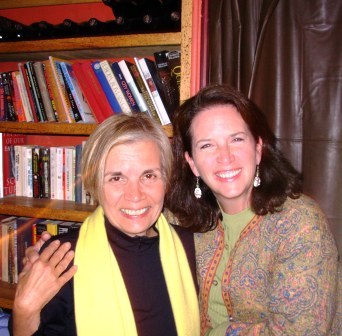
Celebrating Paula’s birthday in early November
But Paula is a thinking writer’s writer. Enough of that linear, journalistic stuff that’s safe and straightforward. She jolted me out of my comfort zone with a gentle plea (and then a downright challenge) that I change the way I see the world. “If we could only turn off our brains and use our eyes alone,” she said quoting Picasso.
The idea of using our senses to write appeals to me. In writing about well-designed landscapes, I often try to highlight the sensory elements such as fragrance, the music of water, the visual allure of tall grasses dancing in the wind, the strokable lamb’s ears, the tart taste of blueberry on one’s tongue. So following Paula’s coaching, I tried very hard not to THINK but to look, smell, listen, touch, taste and observe. “Things that seep through your feet have a voice and intelligence,” she said, quoting the artist Ann Hamilton.
After a one-hour break during which we wandered the Robert Irwin-designed garden, took notes, absorbed the environment (I sat on the lawn and rested my back against the warm limestone block walls of the museum while studying the copse of sycamores), we regrouped and discussed the practice of writing. Something Paula asked really shocked me to consciousness: “Do you approach your work with reverence, or do you give it the back of your hand?”
Hmm. What a compelling thought. So often I approach my work as a must-do, rather than as a sacred privilege. I’m glad she made me face that question and invited an honest response.
Paula gave her students a writing assignment for the second session, which was scheduled two weeks later. She asked participants to write a piece in response to the garden, a poem, article, critique or essay. To another student and me she said: I’m throwing down the gauntlet to you two. An article comes easy (we were both published features writers) so your challenge is to write a piece of fiction!
Yikes. Fiction? Huh? Not for me, I’m not a “creative” writer, I keep telling myself, repeating what I’ve said since my college newspaper years. That fiction stuff is strictly uncharted and uncomfortable territory. But for Paula, I would do anything. She knew just what kind of challenge I needed to nudge me off of that comfortable perch.
A week later, I found time to return to the Getty Gardens. I got some lunch at the cafe (the perfect procrastination move) and observed an interesting guy eating his lunch. I started writing about him. Not sure where this little paragraph will end up, but here’s what I wrote:
“He was having a bottle of AltaDena milk with his lunch. This seemed a bit in contrast to his graying ponytail, worn denim shirt and wire-rimmed glasses.”
Okay, that wasn’t so bad. But then my soup bowl was empty and it was time to get moving. I had an hour before having to race home to (what else?) meet the school bus.
So I found a comfy spot on the lawn and again leaned back against the warm stone, and just started writing about the garden….and wow- just like those famous novelists say in interviews about the “craft” of fiction-writing – the character Flora presented herself to me. Oh, but first before I introduce her, I have to mention the brilliant writing-coach trick Paula played on me. When she gave me the “fiction challenge,” she mentioned having overheard a Getty docent who was leading around a group of school children. “I heard her tell the children that there is one person who gets to work in the garden AT NIGHT when no one else is here,” Paula said, almost secretively. “And that person has to clap very loudly to scare away the deer that would otherwise come into the garden and eat the plants.”
Paula was so enchanted by this notion that she even tried to track down its veracity. To this day, she doesn’t know if it was true or pure nonsense, but she likes the imagery of a person alone in the garden at night. So she suggested this tale as a possible starting point for my story. Well, I kind of took it and ran with it….but of course, so far, I haven’t figured out how to work in the hand-clapping or the appearance of deer in the garden. But here is what I did write. It’s a start. It wasn’t as painful as I feared; in fact, I have a warm affection for my protagonist. Maybe I’ll finish this tale some day. But as it stands, as a short piece, I like it.
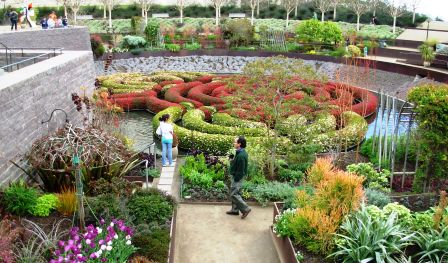
The Moonlight Gardener
Follow the maze from the center through the garden. That was her idea at least. Flora knew she couldn’t really walk the Robert Irwin azalea labyrinth, but mentally, she would take its journey.
She was alternately mesmerized by its beautiful pattern and frustrated with its abrupt dead-ends. It appeared symmetrical when it really wasn’t. In a garden designed as perfection, Flora knew its beauty was in the imperfection. Otherwise, why was she here?
The petite gardener, who worked with mostly burly guys, stuffed a ponytail under her baseball cap and shoved her Felcos into the back pocket of her jeans. This ritual so familiar and mindlessly repeated had formed a pruner ‘outline’ on the faded denim. Like an etching that you would want to touch.
Working mostly alone, Flora felt she knew many of the garden’s trees, flowers and leaves on a personal level. She conducted silent conversations in her head, talking to each plant, saying: “Oh, you have been busy with the pollinators,” or: “Your orange blooms look exotic against the purple foliage of your companion.” She wondered whether if by listening closely enough she could hear – really hear – a plant’s response. In reality, her plant-conversations were mostly nonverbal exchanges.
Flora believed this artist-designed garden was never finished because of Nature’s nonhuman hand. Perhaps this is why, after 10 years, when the garden’s sycamore trees had grown to thirty feet tall, Flora’s supervisor created the Moonlight Crew.
Once a week she and two others clocked in at closing, prepared to work through the night. Now, Flora’s journey is ceremonial. She arrives for work early, thirty minutes before the last guests leave. As the crowds walk down the limestone steps, she ascends, hugging the hand rail and feeling almost invisible to the museum goers. Yes, it is a job. But it is also an honor to be the Getty’s plant steward, she reminds herself.
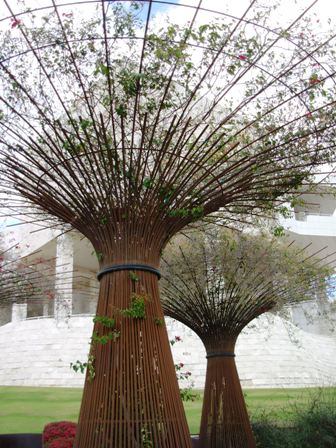
Bougainvillea, just beginning to leaf out in early springtime, to create magenta canopies on sculptural umbrella-like forms
Flora checks into the shed where the landscaping crew’s tools are stored. Hauling loppers and ladder, under moonlight or cloud cover, she comes to the magical garden. The gardeners work on hard-to-tackle jobs, the ones the administration doesn’t want the public to see: “editing” the sycamore leaves to create a dappling effect, or standing on a tall ladder to clip the bougainvillea “umbrellas.” Silent and almost prayerful, they tend, groom and haul away the remnants of too-vigorous California plant growth.
It was during her overnight shift that Flora first really noticed the power of Irwin’s complicated maze. Before, under the intense noonday sun, it had just been a group of curved hedges, tedious to clip. But when viewed at night, the vegetation almost vibrated with energy. There is a rhythm to the repetition of shapes, especially at nighttime when the silhouettes of arcs and crescents appear long before you notice the color or texture.
 For Flora, the series of circles-within-circles is a living reminder of the paradox of a gardener. No clear path; organic, repetitive, incomplete. We bring life, but can’t prevent death; we tend, but can’t control; we admire, but it is a fleeting admiration. Beauty ends and then we wait for it to begin again.
Posted in Creativity, Shed Glossary | 6 Comments »
© Debra Prinzing, all written and photographic content. Website design/development by Willo Bellwood/Metric Media