Debra Prinzing

Get the Email Newsletter!

Archive for the ‘General’ Category

Rockin’ in Oklahoma

Monday, October 29th, 2007

About a month ago, I gathered with 500 or so of my closest friends to attend the annual Garden Writers Association symposium in Oklahoma City. We were treated to some amazing experiences, including a Country Western jam session under the stars, tours of private and public gardens, great speakers and workshops, lots of new plants, design inspiration and story ideas. And good friends, many of whom I see only once a year. For me, that’s the best part.

There were lots of goodies in our complimentary backpack, a multi-zippered number that sports the logo of Garden Writers Association and Total Environment, an Oklahoma City landscaping firm that sponsored many of our events.
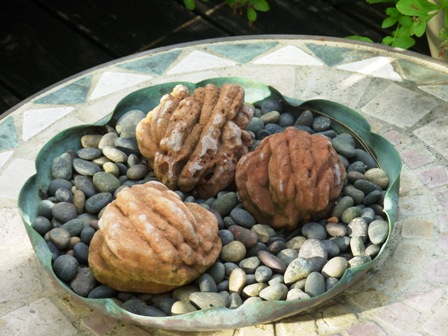
rose rocks

Oklahoma rose rocks, resting on a gravel-lined tray. Nature, elevated to a higher art form.

Tucked inside was the very coolest gift of all. A rock. Yup, an earthy chunk of Oklahoma’s geological history. Round, reddish-brown, and measuring about 2 inches across, the rock was naturally formed and resembles a rose with a swirl of petals around the edges. I am fascinated by this little chip of stone.

“Rose rocks,” we soon learned, are an Oklahoma specialty. I’m so impressed that Oklahoma members of GWA’s host committee hand-collected hundreds of rose rocks to share with us, their visitors. I will cherish this special piece of their world and I can’t resist holding it in my hand and looking at this beautiful natural phenomenon. I just mentioned my fascination with the souvenir rock to a fellow GWA member who clearly wasn’t as excited about it as me. She said, “Oh, when I saw that, I wondered if it was an animal, vegetable or mineral. I thought it was edible.”

Well, my dear, uninitiated, rose rock-ambivalent friend, let me I quote here from the Oklahoma Geological Society brochure that came with our 2-inch specimen:
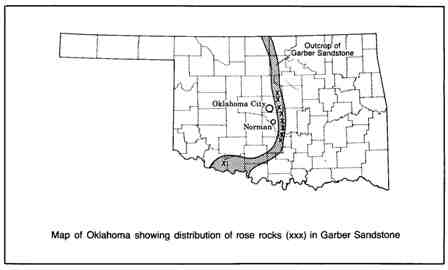
oklahoma map

“Rose rocks, the reddish-brown sandy crystals of barite that resemble a rose in full bloom, are more abundant in Oklahoma than anywhere else in the world. They have been reported in small quantities in California, Kansas, and Egypt, but are in greatest concentration in the Permian Garber Sandstone in a narrow belt that extends 80 miles through the central part of Oklahoma between Pauls Valley and Guthrie.

“The rose-like appearance of the rock’s petal-shaped clusters is due to the intergrowth of crystals of barite (a mineral compound of barium sulphate, BaSO4) as a cluster of divergent blades. Barite was precipitated in interconnected voids in the rock, probably from barium-rich marine waters that covered the Permian Garber Sandstone during or shortly after its deposition about 250 million years ago.”

So, in other words: a quirk of nature, 250-million years ago, started this geological oddity that surprises us today. Awesome to think about.

Here are some other nifty rose-rock facts:

Most rose rocks are 1/2 to 4 inches in diameter and consist of 5 to 20 radiating plates.

The largest known single rosette is 17 inches across and 10 inches high and weighs 125 pounds.

Clusters of rosettes 38 inches tall and weighing more than 1,000 pounds have been discovered.

Gov. Dewey F. Bartlett declared the rose rock the official Oklahoma state rock in 1968.

We saw some larger rose rocks specimens on display in a few gardens, arranged on trays or in a curio cabinet like a Natural History Museum exhibit. Wow, these are cool. What’s a rock-lovin’ girl to do once she’s back home in LA? Hmmm. You bet. I checked eBay and typed in a search request: “Oklahoma Rose Rocks.” Lucky me, I found someone selling five batches of 2 rocks each and I was able to snap them up (and no, MA, you cannot have them. get your own rocks).
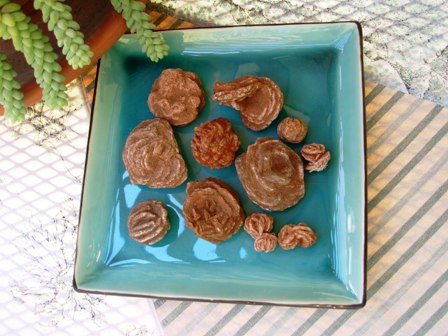
my tray of rose rocks

My little gathering of rose rocks, which for some reason make me very happy. Note the tiny, joined rosette pairs in the lower right

While awaiting my box of of rose rocks to arrive from Susan, the Oklahoma gal who sold them to me over the Internet, we swapped a few emails. I told her how fascinated I was with these perfectly-formed geological specimens. And she shared this funny recollection:

“…by the way, in my younger days, my grandfather used to curse these rose rocks, because they came up all over the place, especially in his rose beds! now people want them! i even have one that is 2 feet around and weighs 28 pounds! in my rose bed!!! thanks so much & God bless you!”
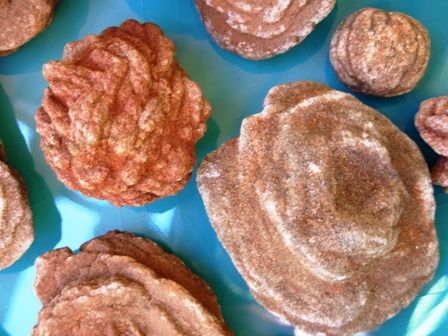
closeup of rose rock

Upon closer inspection, they really do look like roses!

I’m eager to learn lots more about gardening in Oklahoma, especially after spending five days there in late September and early October. Luckily, I have a new guide in Dee Nash, a fellow GWA who shares her experiences living in a log house, gardening in Oklahoma and writing about it at www.reddirtramblings.com.
Sending prayers to San Diego

Monday, October 22nd, 2007

I spent Saturday and Sunday visiting some incredible gardens in San Diego County, while attending the October board meeting of Pacific Horticulture Foundation.

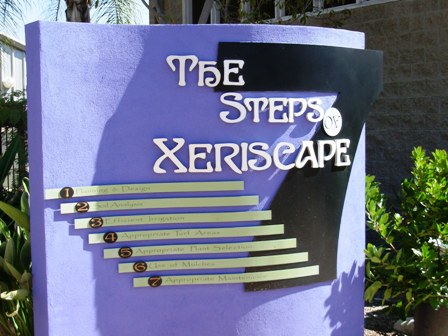
7xeriscape

The Water Conservation Garden’s engaging signage both educates and inspires homeowners to consider low-water landscape design

With my friends and fellow board members, I enjoyed touring innovative public gardens and inspiring private gardens, including the Water Conservation Garden at Cuyamaca College in El Cajon and the private gardens of Judy Bradley & David Mitchell (in Del Mar) and Lani & Larry Freymiller (in Rancho Santa Fe).

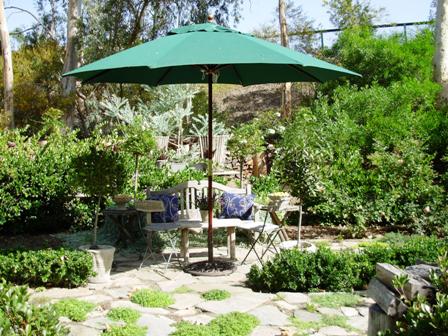
freymillerumbrellapatio.JPG

A charming seating area at Lani and Larry Freymiller’s

lafleurshed

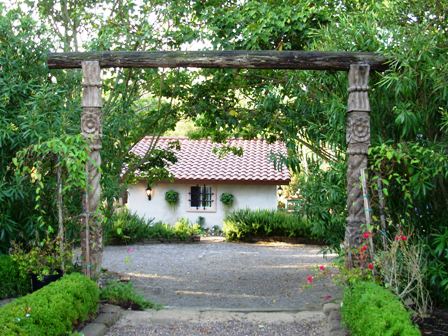
A view of Kathy Lafleur’s new art studio – through the arbor

Lorene Edwards Forkner and I had the added bonus of staying for two nights at the guest house of avid gardener Kathy Lafleur and her husband Tom, who have turned an aging garden and neglected parcel of land in Rancho Santa Fe into a highly personal, artistic, soulful oasis.

Now, twenty-four hours after we left San Diego to drive north (dropping Lorene at Burbank Airport around 3:30 p.m. on Sunday), we have learned the horrifying news that the wildfires have forced our friends to evacuate their properties.

tomlafleur

Tom wrote: Remember what it looked like at 9am Sunday when you were here?? this is 9am Monday…winds are >40mph, we are on a mandatory evacuation all the way to hy 5…  250,000 people are asked to move out of their homes, 125,000 ac of fires burning!!

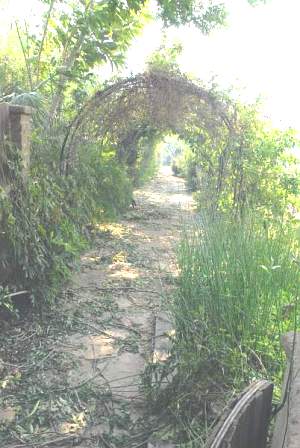
This morning, Tom Lafleur sent me a few photos of their garden (including the rose pergola, above), illustrating the devastation of the Santa Ana winds sweeping through the county, toppling trees, sending branches falling, and knocking over garden furniture. I worry that the fires will do even further damage – as Rancho Santa Fe is in the path of fast-moving flames.

Please keep these gardeners – and everyone in San Diego County whose homes are in the line of spreading wildfires – in your prayers. I heard from San Diego garden writer Nan Sterman tonight, a huge relief after no word since she sent out a very brief “I’m about to be evacuated” email this morning. She and her family (and dog) are safe, staying with friends in north San Diego County.

As for my family and home in Thousand Oaks, the good news is that so far, we’re only worried about the smoke and poor air quality. Fires are still raging to the north, west and south – about 10 to 15 miles in each direction. This is our introduction to yet another one of the vagaries of living in Southern California!

The Garden Library: book reviews

Wednesday, October 17th, 2007

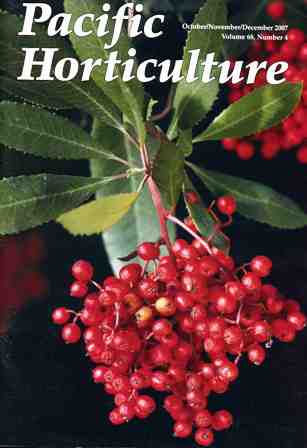
PacHortReading great garden writing is one of life’s joys. And one of my favorite pastimes is to spend time savoring the words written by friends and fellow garden writers.

Here are two books I recently reviewed for Pacific Horticulture magazine (an important resource for anyone who gardens in the West).

BBGbook

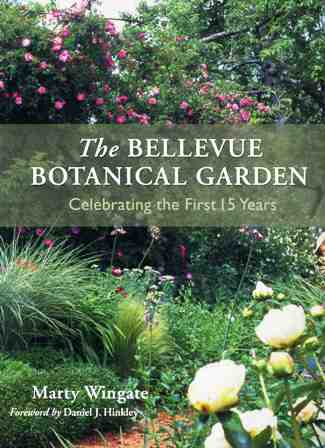
The Bellevue Botanical Garden: Celebrating the First 15 Years, by Marty Wingate (2007, The Bellevue Botanical Garden Society), 9×12 inches, 112 pages, $19.95. To order: Bellevue Botanical Garden.

“The moment you enter the garden, you will sense that the BBG is as personal as a beloved private garden,” writes Nancy Davidson Short in her back-cover tribute to this book. Indeed, in author Marty Wingate’s colorful narrative of this relatively young garden, the passion of its supporters’ “ownership” influences all aspects of the Bellevue Botanical Garden’s inception and evolution.

To celebrate the garden’s first 15 years, the BBG Society asked Wingate and book designer Virginia Hand to sift through decades of archival material dating back to the 1940s, conduct first-person interviews, and edit hundreds of images contributed by volunteer and professional horticultural photographers. The result is a timely and timeless document that captures the roots of BBG – from the gift of land by benefactors Cal and Harriet Shorts to the partnership between the BBG Society and the City of Bellevue’s Parks Department.

Revealing her talents as a garden tour guide and garden writer, Wingate escorts her readers through BBG’s multilayered narrative, stopping at important venues to recount a small historical detail, or focusing closely on noteworthy plant specimens. She enthusiastically retells the story of this “living jewel” and its influence on regional, national and international audiences who number 300,000 visitors each year.

The book’s most inspiring section covers “The Gardens” — including the Entrance Garden, Northwest Perennial Alliance Borders, Yao Japanese Garden, Shorts Ground Cover Garden, Waterwise Garden, Alpine Rock Garden, Fuchsia Garden, Native Discovery Garden and Lost Meadow/Loop Trail.

Illustrated with exquisite photographs of plant combinations and garden portraits, the history of these specialty gardens is also shared through interviews with key volunteers who helped design, install, tend to and nurture their creation.

And ultimately, that’s the heart and soul of this book: How members of the gardening community – from avid lay gardeners to professional landscape designers and horticultural educators – turned the dream of a botanical garden into a beautiful reality for the public.

CAGG

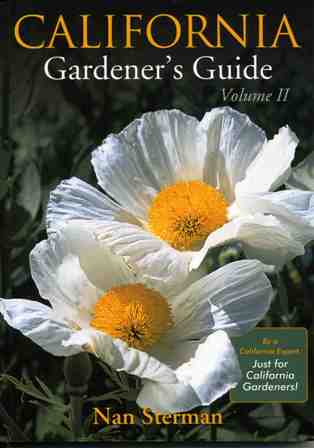
California Gardener’s Guide, Volume II, by Nan Sterman (2007, Cool Springs Press) 7×10 inches, 271 pages, $24.95. To order: Plant Soup.

In the interest of full disclosure, I admit to being more than a little familiar with the format of Nan Sterman’s excellent new book, California Gardener’s Guide, Volume II. In 2005, Mary Robson and I coauthored the Washington and Oregon Gardener’s Guide, its Northwest cousin.

I am a newcomer to California, having relocated to Ventura County in August 2006. And I’ve been waiting for this book ever since. Having given up my Seattle garden, along with plants like hostas and hellebores that loved shade and moist growing conditions, I’m faced with a new backyard, a tabula rasa for a novice to California gardening. Like many gardeners, I want to grow and nurture plants that are appropriate for my surroundings, including ornamental natives.

Sterman, a California gardening expert who embraces sustainable practices such as designing with drought-tolerant plants, serves up her top recommendations: 186 plants for California’s diverse growing areas.

This is no small task, as Sterman notes in her introduction: “From north to south and east to west, there are dramatic differences in vegetation, geology, topography and climate.”

Before revealing her recommendations for the “best of the best” — annuals/biennials, bulbs, fruits, groundcovers, herbs, ornamental grasses, perennials, shrubs, succulents, trees and vines — Sterman introduces the beginning gardener (or California newbies like me) to the state’s five primary growing regions. She includes useful charts that outline average annual rainfall, maximum and minimum temperatures for each region, including: the coast, inland valleys, the Central Valley, low deserts and high deserts.

With Mediterranean conditions accounting for much of the state’s geogrpahy, Sterman zeroes in on native plants and those from other Mediterranean regions adapted to California’s low-water conditions. She also covers “thirstier” plants, edibles and ornamentals that are noteworthy for their “return on investment” (fruit, berries or fragrance). In the one-page plant profiles, Sterman makes note of species with low water, moderate water and high water needs. Useful icons also indicate whether the plant attracts butterflies or hummingbirds, supports bees, is edible, fragrant, produces fruits, is long-blooming or appropriate as a cut flower, provides food or shelter for wildlife, has colorful foliage, is drought tolerant, a good container plant, grows well in Mediterranean conditions, adds a tropical look to the garden, tolerates coastal conditions and is a California native.

I really appreciate the “zone” graphic which shows a tiny map of California on each page (this is a clever feature that I wish Mary and I had used in our version of the state plant guide). The map is shaded to allow readers to tell at-a-glance whether a plant is hardy for the region in which they live; Sterman also includes the estimated minimum temperature for the plant.

Now I can take the California Gardener’s Guide along on plant-shopping excursions and use it to find something other than the ubiquitous agapanthus (okay, we thought that was a “rare” plant in Seattle: now I see it growing in clumps at the corner gas station!).


My Backyard: Home & Garden Field Trips

Wednesday, October 10th, 2007

This has been a week of small, delicious indulgences as I’ve explored the architectural legacy and horticultural richness of my “new” world.

For most of the past 13 months I feel as if I’ve either been up to my ears in unpacking boxes OR traveling for photo-shoots OR chained to my keyboard to write Stylish Sheds. But a “break” in the schedule has allowed me to explore a bit . . .

Autumn in Southern California is indeed the most glorious of seasons, with cool, sweater-worthy evenings and dewy morns that welcome the ocean air; between them, these two moments sandwich pleasant mid-day temperatures of 70-degrees. While my East Coast friends are suffering 80-degree-plus temps (global warming?) I am finally enjoying Ventura County’s climate.

DAY TRIP ONE:
On Monday, I drove north, up the Pacific Coast on Hwy. 101 toward Montecito, the elite community outside Santa Barbara that has a rich architectural history long preceding the arrival of famous types like Oprah who have driven up real estate prices into the stratosphere.

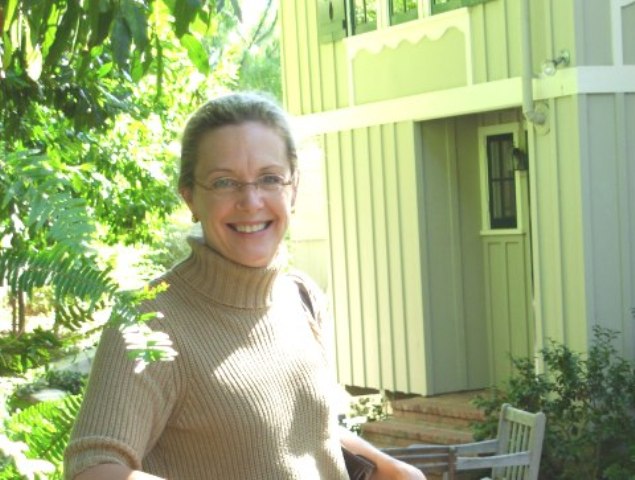
marcia

Marcia Gamble-Hadley

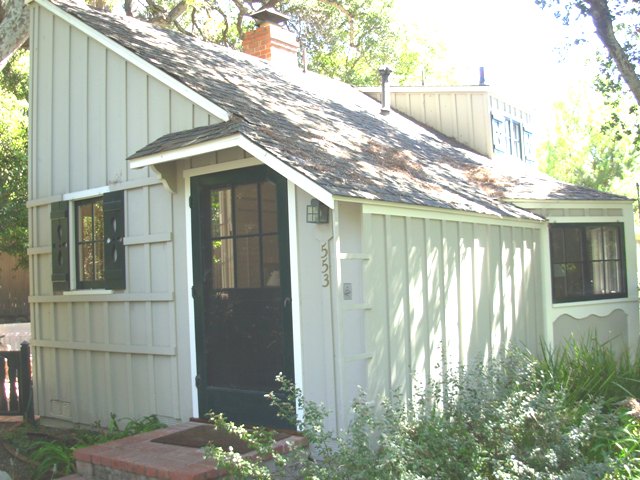
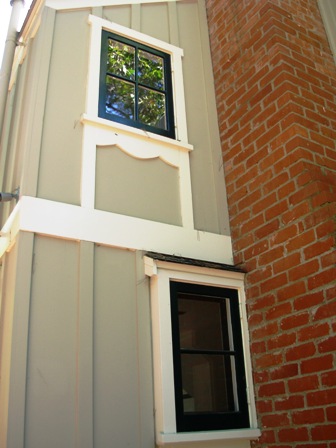
Marcia Gamble-Hadley, a Seattle architect and friend introduced to me by photographer Bill Wright, was here on her second research trip for her book about the historical Moody Cottages. Marcia is a great-niece of the four Moody sisters (I can only think of them as a bolder, more independent, early 20th century version of Little Women). Starting in the 1930s, Marcia’s great-aunts Harriet, Brenda, Mildred and Wilma designed around 35 storybook cottages in Montecito and Santa Barbara. Quirky, wondrous, inventive and resourceful, the women’s designs live on today – in tiny little houses – dare I say BIG SHEDS? – that are prized by 21st century owners.

halfcottage

A half-cottage on a tiny lot brings delight to its occupants

Having designed some pretty innovative Seattle cottages herself, Marcia has a big mission – to document the work of her great aunts (never before collected into a book) and draw lessons from their designs for today’s residential designers.

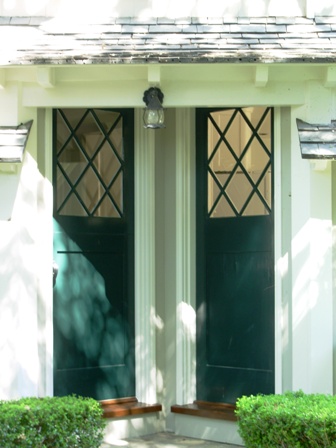
moody doors

Look closely: the door at the right is a “false” door (the kitchen sink is mounted just inside the window!)

“The Moody cottages are so delightful,” Marcia explained while taking me on a whirlwind tour of six structures (some of which involved window-peeking, while others were open to us). “You don’t feel deprived because you’re not living in 2,200-square-feet.” The one-bedroom cottages suggest clean, simple lines, comfortable proportions, nurturing and enclosure . . . less is so much more.

Long before Sarah Susanka conjured up The Not So Big House, Marcia’s great-aunts were creating their own magic with small cottages. According to Marcia, there are six “hallmarks” of a Moody-Sisters’ cottage – design elements that any architect or builder would be smart to emulate:

yellow cottage w/window

Tall windows invite light inside a perfect yellow cottage

  • 1. Daylighting: tall, wide windows; sills that are flush with countertops; double-doors;
  • 2. Strong connection to the landscape

irregular windows

The Moody sisters were never about to line up windows and doors!

  • 3. Whimsey and irregularity (nothing symmetrical about these fantastical cottages!)
  • 4. Efficiency (built-in cupboards appear under eaves; bookcases under staircases; storage is maximized everywhere)
  • 5. Tradition ( a nod to the English cottage )

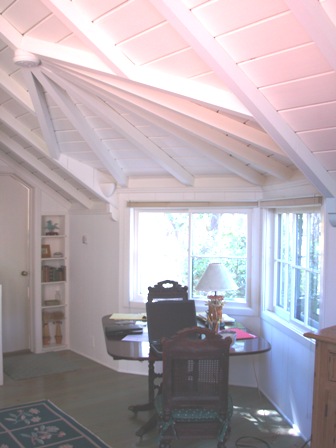
 ceiling

A “fan” style bump-out creates a pleasing human-scaled niche, just large enough for a table at the window

  • 6. Human scale (cozy is an overiding emotion)

I can’t wait to see how Marcia captures the story of her own architectural legacy in a book about her great-aunts (who, she points out, “had these amazing careers as single women long before they had the right to vote.”). You can learn more about her research at www.moodycottages.com.

DAY TRIP TWO:

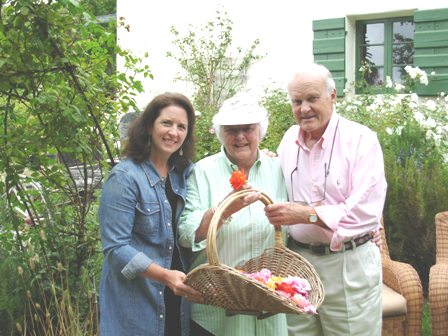
debra maryann and charles

My day at Rose Story Farm with Maryann and Charles Pember was a rose-induced dream

On Wednesday, I met up with longtime Seattle friends Maryann and Charles Pember, who had just taken in the Southern California historical and garden destinations (The Huntington Botanical Garden, the gardens at the Getty Villa, the Gamble House, and Lotusland, among other visits) while on vacation. Maryann and I have known each other long before we were fellow Northwest Horticultural Society board members in Seattle.

It was a treat to be invited to join them for a day of good-ol’ garden gossip about people and plants in Zone 8 while visually drinking in Zone 10’s botanical temptations.

After meeting in Ojai (I finally ventured off Hwy. 101 onto Hwy 33, then Hwy 150 to the foothills where I got my first peek at Ojai – need to go back soon to visit this artist community famous for its day-spas!), we drove along Casitas Pass toward the oceanside town of Carpinteria. Our destination: Rose Story Farm.

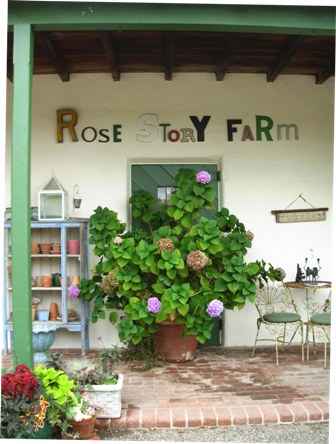
rose story farm sign

Rose Story Farm hearkens back to to an earlier, low-tech world

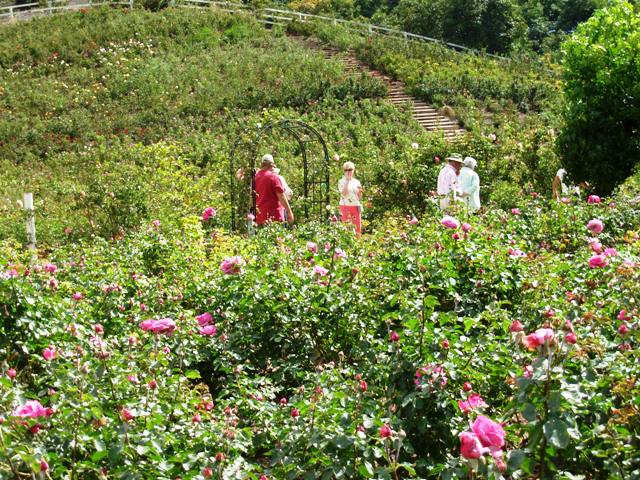
Located on a former avocado and lemon farm in Carpinteria Valley, this breathtaking rose farm is a lesson to me in how old-fashioned farming practices (the kind that were natural to our great-grandparents) are viable in today’s modern agri-business world. An organic farm where hundreds of varieties of old garden and English roses are grown. No fussy hybrid teas here. There are some hybrids grown here, but these are ones bred with ancient parentage for cherished traits like their long-lasting perfume. 

rose fields

Even on a mid-October day, the rose farm displays a perfect palette of creamy whites, sublime pinks, and alluring oranges.

Row upon beautiful row of floribundas and climbers, chosen for bloom color, petal arrangement, and most of all – FRAGRANCE (scents like anise, clove, spice, honey, babypowder, a juicy peach, citrus…filled our nostrils), planted up a gently sloping hillside, like a technicolor vineyard. Organic mulch from a nearby mushroom farm cushions and nourishes the soil at their feet.

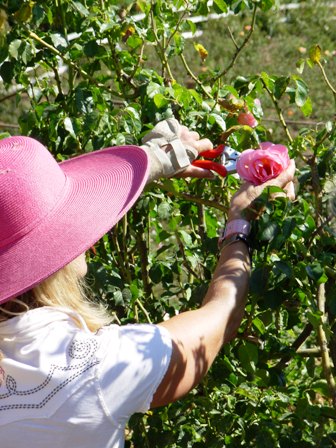
kiki what

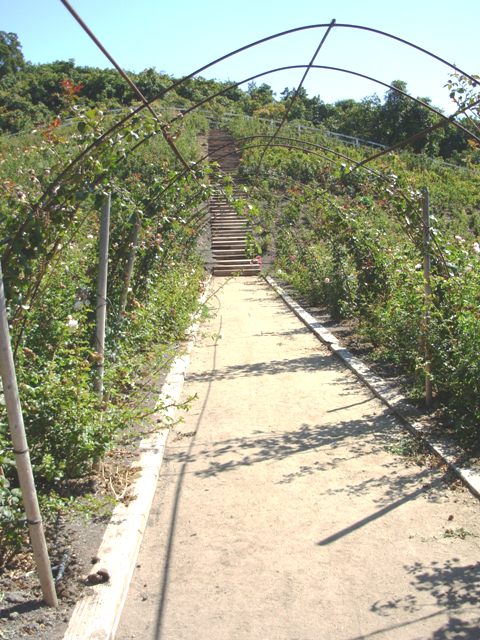
Kiki clips a ‘Shot Silk’ climbing rose, dozens of which are planted along the central path at Rose Story Farm, as a glorious hedge

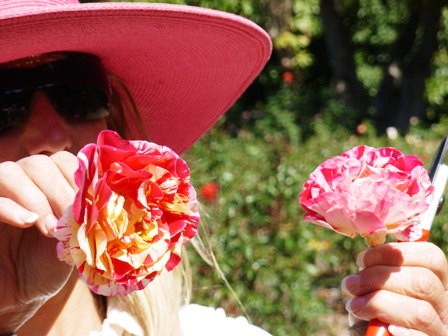
Tens of thousands of luscious roses are lovingly cared for by a small crew of farmers who know exactly when to harvest them. Can you imagine an east coast bride who simply MUST have a romantic, voluptuous rose bouquet of say ‘Fair Bianca’? It’s possible for her floral designer to order armloads of this vintage rose from Rose Story Farm. Say her wedding is on a Saturday. On Thursday, the roses are picked, hydrated and conditioned, de-thorned and carefully packed in bundles of 10 stems. According to our rose-obsessed tour guide Kiki (shown above in the hot pink straw hat), the cut end of the stems are packed in wet moss to keep the roses hydrated; the flower ends are gently nestled in tissue paper; each bunch is packed in an ice-filled box and shipped overnight (Fed-Ex, next morning delivery) to wedding and event florists around the country. Around the country, on Friday mornings, the boxes of these Carpinteria-grown roses show up at floral studios: an enduring gift of romance, nostalgia, sensory delight.

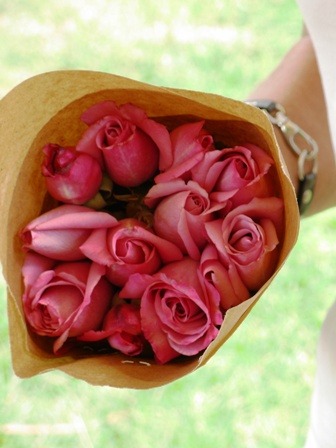
rose bouquet

Packed bouquet of 10 just-harvested roses

Kiki says the farm gives very specific instructions to their customers, telling them to quickly unpack, hydrate and refresh the cut flowers before using them in a bouquet or arrangement. It’s a 48-hour marathon as each rose travels from its plant to the bride’s hands. A ritual that brings happiness and joy to anyone who sees (and smells) these roses.

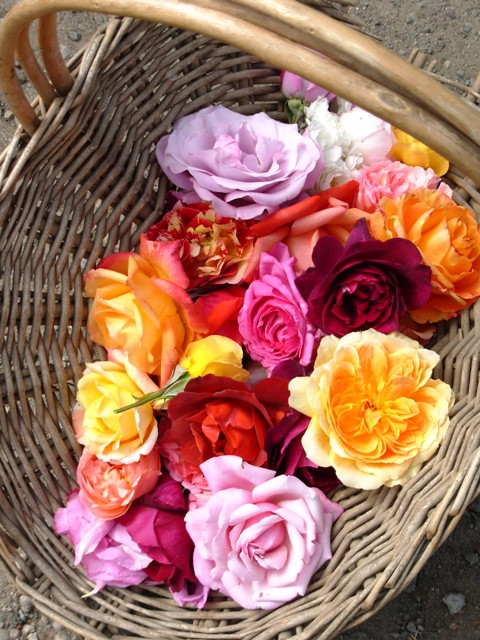
roses in basket

The joy of each rose is heightened when gathered together in Kiki’s basket. My new favorite: Jean Giono, is the vibrant tangerine rose at the center right

After our delightful walking tour of the rose fields, I came home with a lot of newfound confidence about growing roses in my Southern California backyard. I met a new rose I couldn’t resist, and I brought him home with me – Jean Giono. I will happily replace one of the ubiquitous ‘Iceberg’ roses that I inherited with this property with this alluring dark-gold, multipetaled rose that smells like heaven.

rose cake

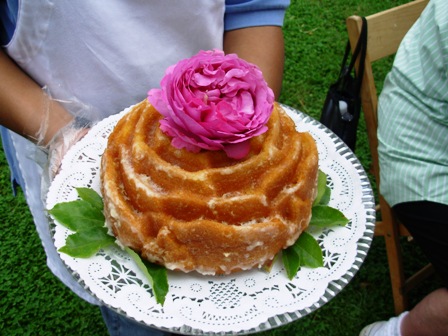
Rose Story Farm’s famous lemon cake, made in a rose-shaped bundt pan and topped with a bloom that looks pretty enough to eat!

Schedule your visit to Rose Story Farm on a Wednesday or Saturday and spend $38 for the small group tour, which is followed by a delicious garden luncheon. A gift shop filled with rose-themed and garden-inspired ware from Europe and beyond (including a few antiques) is worth a visit. Here’s where I found, to satisfy my current made-in-the-USA obsession, a cast-aluminum, rose-bloom-shaped bundt pan so I can try making my own Rose Story Farm lemon cake.

rose allee

The rose allee through planting fields

george allen

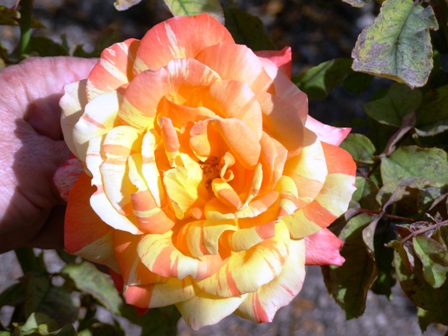
‘George Allen’, a surprisingly beautiful variegated yellow-and-red rose – very masculine

tropical sunset

‘Tropical Sunset’ – you can tell I have a thing for variegation!

yves piaget

‘Yves Piaget’ – as large as a cabbage

a mixed bouquet

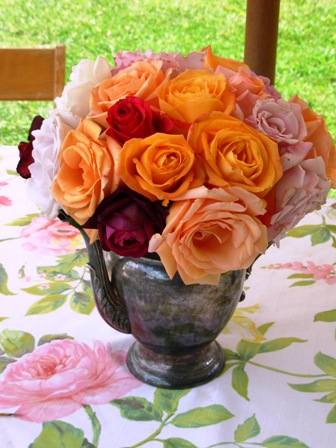
Our pretty centerpiece, pave-style roses in every color – and scented beyond description.

What a book cover reveals

Friday, September 7th, 2007

Stylish Sheds and Elegant Hideaways 

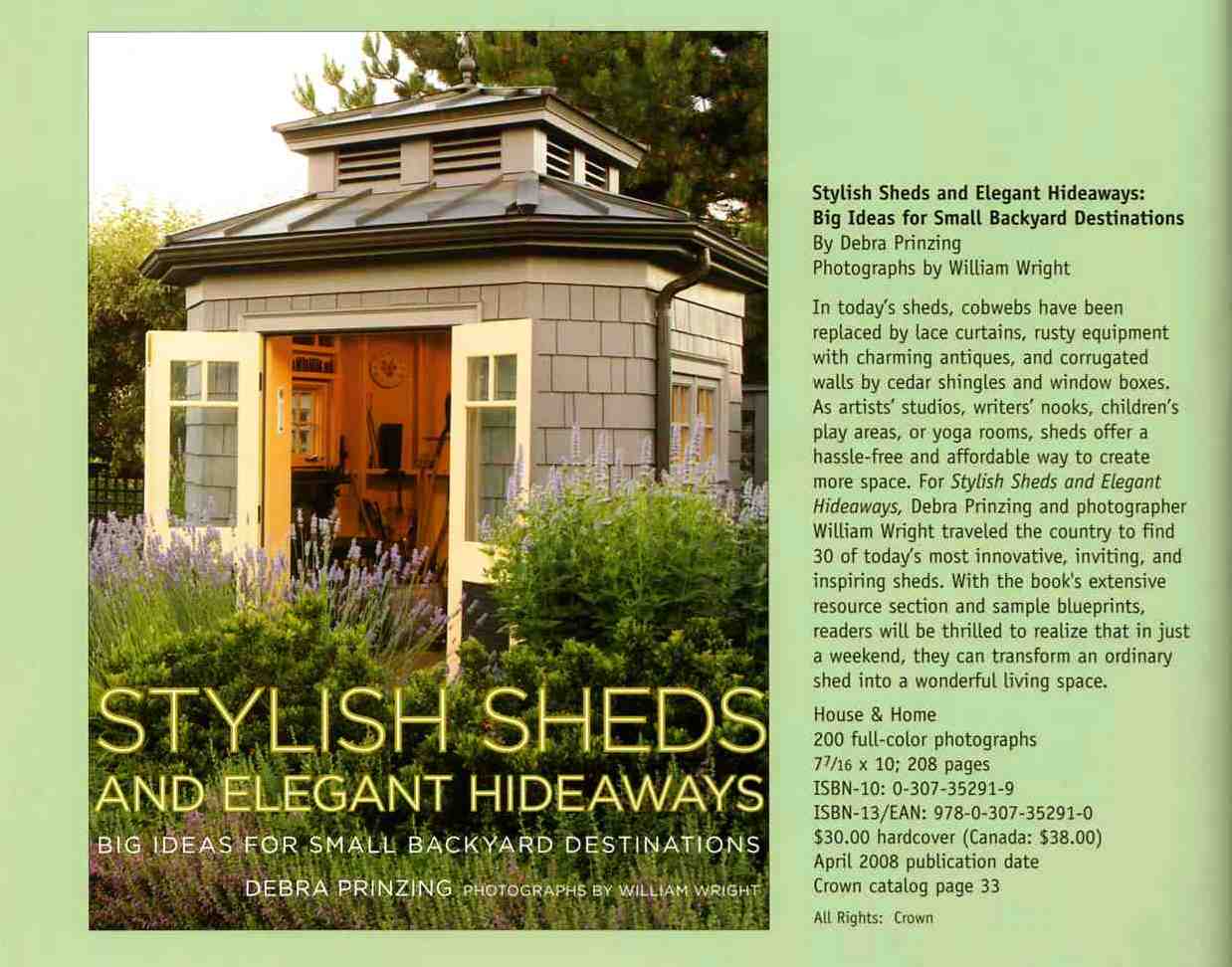
Good news: I just received the Clarkson Potter Spring 08 catalog and we’ve been given two full color pages to promote “Stylish Sheds and Elegant Hideaways.”

This puts us smack in the middle of very good company. Stylish Sheds is featured between “Chocolate Epiphany,” by famed pastry chef Francois Payard, and “Living like Ed,” by Ed Begley Jr. (Hollywood’s eco-guru).

A preliminary cover design (see above) features a fantastic cedar potting shed in the Seattle garden of our friend Joan Enticknap. I have a feeling this isn’t the final cover, because when art director Marysarah Quinn needed to create a cover for this catalog in early April, she had photography from only 10 of the book’s locations to choose from. But the inviting spirit of Joan’s gem of a shed appeals to me – and I wanted to share it here.

“Shed” by Alexander Brooks (10); “Shedistas” by Benjamin Brooks (15)

“Shedistas,” by Alexander Brooks (10)

“Sheds,” by Benjamin Brooks (15)


When we were going through all the hoopla to figure out the cover art (not to mention the book title), my sons created their own book covers for me. I’ve had their sketch with Benjamin’s “Sheds” and Alexander’s “Shedistas” cover ideas taped to my computer during the grueling process of writing 50,000 words (these drawings are accompanied by some wordsmithing, including possible alternatives to the adjective “Stylish,” including “sensational,” “sublime,” “superb,” “saucy,” “spicy,” and – this is an odd one – “syncopated.”)

The effort my family has invested to help us create this book has always put a smile on my face. And thank goodness for children who naturally simplify the things we adults find complex. After all, why are we grownups drawn to backyard sheds? I think it’s to recapture those fleeting moments of childhood joy when we hunkered down in the playhouse or climbed a rickety ladder to the tree house Dad constructed.

This is a favorite quote of mine, which explains in part what I wanted to explore in Stylish Sheds:

“All really inhabited space bears the essence of the notion of home . . . . We travel to the land of ‘Motionless Childhood,’ motionless the way all immemorial things are. We live fixations, fixations of happiness. We comfort ourselves by reliving memories of protection.” (Gaston Bachelard, The Poetics of Space)

The Shed Odyssey

Monday, August 27th, 2007

On location in Atlanta

On location in Atlanta in early July — a hot, humid summer day after photographing our 34th location.


We’re done, we’re done, we’re done!!! As of today, when I finished writing the dedication and acknowledgements, the manuscript for Stylish Sheds and Elegant Hideaways is complete (oh, except for 200-plus photo credits, but who’s counting?).

This book project has been so fulfilling, so inspiring and motivating as Bill Wright and I have journeyed around the country to find, photograph and interview owners, designers, architects, builders, artists and shed aficionados.  We can’t have enough of it!

The book has finally been listed for advanced sales on Random House’s web site, so it feels real. That we’re still in design and editing is a mere hurdle to overcome.

Now, what I really want to do is finish moving into my house. The one that I’ve neglected for a full year. The one with white walls, no hung artwork and bare windows. Oh, and the “inherited” garden that’s been somewhat neglected. But that’s another chapter: figuring out how to grow plants in SoCal’s dry, hot climate.